| Are we unknowingly trading our cognitive strength for convenience? | Chúng ta có đang vô tình đánh đổi sức mạnh tư duy lấy sự tiện lợi? |
| In this article, which started as a video essay on YouTube, the author examines how the overuse of consumer-grade AI tools—while undeniably boosting efficiency—may be gradually eroding our critical thinking skills, problem-solving abilities, and independent judgment, warning of a future where mental atrophy could become the silent cost of technological convenience. | Trong bài viết này, vốn khởi đầu là một video luận trên YouTube, tác giả phân tích cách việc lạm dụng các công cụ AI phổ thông — dù thực sự giúp tăng hiệu suất — có thể đang dần bào mòn kỹ năng tư duy phản biện, khả năng giải quyết vấn đề và năng lực đánh giá độc lập của chúng ta, đồng thời cảnh báo về một tương lai nơi sự thoái hóa trí tuệ có thể trở thành cái giá thầm lặng cho sự tiện nghi công nghệ. |
| Original article (written in English) | Bản dịch của bài báo (sang tiếng Việt) |
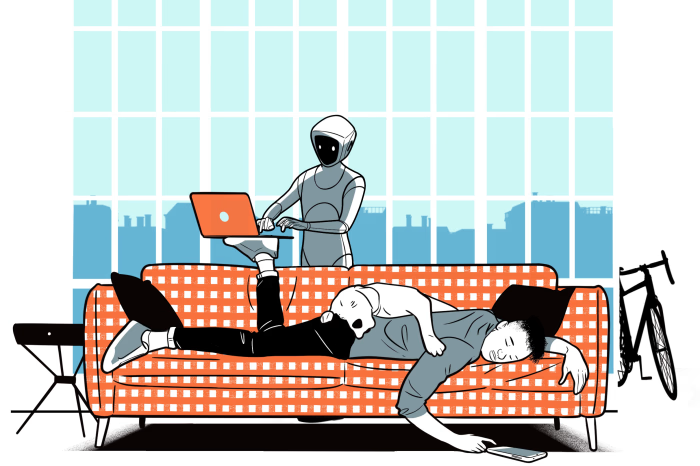
| The year is 2035, and this is a slice of daily life: | Năm 2035, và đây là một lát cắt của cuộc sống thường nhật: |
| Every office is run by AI. Every corporate presentation, email, slideshow, it’s all generated by AI. Every question in the office is met with frantic typing. Every answer is copied into reports. Most of the top 20 songs on the radio is AI-generated music. The top films and cinemas are produced in a few days using artificial intelligence, of course. Studying is a thing of the past. Students must only learn the best way to use their domain-specific AI tools. | Mọi văn phòng đều được điều hành bởi AI. Mọi bài thuyết trình, email, bản trình chiếu — tất cả đều do AI tạo ra. Mọi câu hỏi trong văn phòng đều được đáp lại bằng những tiếng gõ bàn phím vội vã. Mọi câu trả lời được sao chép vào các báo cáo. Phần lớn trong số 20 bài hát hàng đầu trên sóng radio là nhạc do AI sáng tác. Những bộ phim ăn khách nhất ngoài rạp được sản xuất chỉ trong vài ngày, tất nhiên cũng nhờ vào trí tuệ nhân tạo. Việc học tập truyền thống đã trở thành chuyện quá khứ. Giờ đây, học sinh chỉ cần biết cách sử dụng thành thạo các công cụ AI chuyên ngành của mình. |
| And you get it by now: because everything you need in this new world is a prompt away. | Và đến lúc này thì bạn cũng đã hiểu: trong thế giới mới này, mọi thứ bạn cần chỉ cách một câu lệnh mà thôi. |
| In the last century, this all would have sounded a little cartoonish, but in 2025, it’s pretty easy to see how this all could happen. With this technology seemingly baked into every single piece of tech that we use today, are we going to slowly stop relying on our brains? Will we stop solving problems ourselves? Over the next decade, will AI gradually soften our brains, rendering us incapable of thinking for ourselves? In other words, is AI making us dumber? | Vào thế kỷ trước, tất cả những điều này có thể sẽ nghe như truyện tranh viễn tưởng, nhưng đến năm 2025, thật dễ để thấy mọi thứ hoàn toàn có thể trở thành hiện thực. Khi công nghệ này gần như đã được tích hợp vào từng thiết bị chúng ta sử dụng hằng ngày, liệu chúng ta có đang dần ngừng dựa vào bộ não của chính mình? Liệu chúng ta sẽ thôi tự giải quyết vấn đề? Trong thập kỷ tới, liệu AI sẽ từ từ làm “mềm” trí óc chúng ta, khiến chúng ta mất dần khả năng tự suy nghĩ? Nói cách khác, có phải AI đang khiến chúng ta kém thông minh hơn? |
| AI language models: left to our own devices | Các mô hình ngôn ngữ AI: khi chúng ta chỉ còn dựa vào các thiết bị công nghệ |
| To be clear, AI is doing some incredible things in science, physics, and medicine. But the story here is about consumer-grade AI, the run-of-the-mill stuff that today is known as AI slob. Something to keep in mind throughout this episode is the word “overuse”. That’s the theme here. And don’t worry, this video isn’t completely negative. At the end, I’ll share some tips on how you can avoid the pitfalls of AI use. | Cần nói rõ rằng AI đang tạo ra những bước tiến đáng kinh ngạc trong khoa học, vật lý và y học. Nhưng câu chuyện ở đây xoay quanh AI dành cho người tiêu dùng, những công cụ phổ thông mà ngày nay được gọi bằng cái tên “AI đại trà”. Một điều bạn nên ghi nhớ suốt tập này là từ “lạm dụng” — đó chính là chủ đề chính. Và đừng lo, video này không hoàn toàn mang màu sắc tiêu cực. Cuối cùng, tôi sẽ chia sẻ một vài mẹo giúp bạn tránh được những cạm bẫy khi sử dụng AI. |
| Now, to kick things off, context-wise, and to set the tone for the episode, let’s start with the fundamental problem. It’s about the way the human brain naturally adapts to technology. I’m going to start with an app that most of us use, Google Maps. A 2020 study found that despite economic benefits, heavy GPS use can weaken spatial memory. Funnily enough, those impaired didn’t believe that they had a poor sense of direction, even though the data proved otherwise. | Để bắt đầu, về mặt bối cảnh và cũng để định hình tinh thần cho tập này, hãy bắt đầu với vấn đề cốt lõi. Đó là cách bộ não con người tự nhiên thích ứng với công nghệ. Tôi sẽ lấy ví dụ từ một ứng dụng mà hầu hết chúng ta đều sử dụng: Google Maps. Một nghiên cứu năm 2020 cho thấy rằng, mặc dù mang lại lợi ích kinh tế, việc sử dụng GPS quá thường xuyên có thể làm suy yếu khả năng ghi nhớ không gian. Điều thú vị là những người bị ảnh hưởng lại không tin rằng mình có khả năng định hướng kém, mặc dù dữ liệu đã chứng minh điều ngược lại. |
| As we all know, convenience often comes at a price. And these simple GPS systems aren’t even AI. It’s just an app on your phone that helps with directions. But yet, overuse can damage our memory. As we’ll later see in this episode, AI is a whole different kettle of fish. | Như chúng ta đều biết, sự tiện lợi thường đi kèm với một cái giá. Và những hệ thống GPS đơn giản này thậm chí còn chưa phải là AI — chỉ là một ứng dụng trên điện thoại giúp bạn tìm đường. Thế nhưng, việc lạm dụng vẫn có thể làm tổn hại đến trí nhớ của chúng ta. Như bạn sẽ thấy ở phần sau của tập này, AI còn là một câu chuyện hoàn toàn khác. |
| Meanwhile, around the same time as the study 5 years ago, a professor by the name of David Rafo had become increasingly concerned with the quality of his students’ written assessments. The academic structure was weak. The whole faculty could tell that the students were disinterested. Then suddenly during the pandemic, he noticed that the writing quality of a number of his students improved significantly. But the professor smelt a rat. Something felt off. A slight improvement would have made more sense. But the leap was so extreme that it felt unnatural. | Cùng thời điểm với nghiên cứu cách đây 5 năm, một giáo sư tên là David Rafo bắt đầu ngày càng lo ngại về chất lượng các bài luận của sinh viên. Cấu trúc học thuật yếu kém. Toàn bộ giảng viên đều nhận thấy sự thiếu nhiệt tình từ phía sinh viên. Rồi đột nhiên, trong thời kỳ đại dịch, ông nhận thấy chất lượng bài viết của một số sinh viên bỗng cải thiện rõ rệt. Nhưng giáo sư đã sinh nghi. Có điều gì đó không ổn. Một sự cải thiện nhẹ nhàng thì còn hợp lý, nhưng bước nhảy vọt này lại quá bất thường, đến mức mang cảm giác không tự nhiên. |
| Rafio decided to ask his students directly. Upon his discovery that they were using AI, he remarked: | Rafo quyết định hỏi thẳng sinh viên của mình. Khi phát hiện ra rằng họ đang sử dụng AI, ông đã nhận xét: |
| “I realized it was the tools that improved their writing and not their writing skills. “Skills” being the operative word here.” | “Tôi nhận ra rằng chính các công cụ đã cải thiện bài viết của họ, chứ không phải kỹ năng viết. ‘Kỹ năng’ mới là từ khóa ở đây.” |
| The Portland professor didn’t outright shame the use of AI, but he did say it was a mixed bag: | Vị giáo sư ở Portland không hoàn toàn chỉ trích việc sử dụng AI, nhưng ông cho rằng đó là một con dao hai lưỡi: |
| “AI enables us to get work done quickly and efficiently by rapidly gathering and organizing information across written communications, developing designs, and providing suggestions on how to address difficult issues and problems.” | “AI giúp chúng ta hoàn thành công việc một cách nhanh chóng và hiệu quả bằng cách thu thập và tổ chức thông tin trong các tài liệu viết, phát triển thiết kế và đưa ra các gợi ý về cách giải quyết những vấn đề khó khăn.” |
| But he added a caveat: | Nhưng ông cũng đưa ra một lời cảnh báo: |
| “Our mental and cognitive abilities are like muscles, so they need to be regularly used to remain strong and vibrant. Truly, it would take an extraordinary person to have the discipline necessary to stay mentally strong and vibrant when engaging with the technologies that are available.” | “Năng lực tư duy và nhận thức của chúng ta cũng giống như cơ bắp, cần được rèn luyện thường xuyên để duy trì sức mạnh và sự linh hoạt. Thực sự, phải là một người có kỷ luật phi thường mới có thể giữ cho tinh thần mạnh mẽ và minh mẫn khi tiếp xúc với những công nghệ hiện có.” |
| And that’s an interesting point to consider. With the chronic overuse of artificial intelligence, would there be a kind of mental atrophy from a lack of cognitive exercise? And furthermore, as he states, it’s actually an uphill battle to resist the temptation of having things done easier and hence this atrophy. This conversation is an important one to have. | Và đó là một quan điểm rất đáng để suy ngẫm. Với việc lạm dụng trí tuệ nhân tạo một cách triền miên, liệu có xảy ra hiện tượng teo mòn trí tuệ do thiếu vận động nhận thức? Và hơn nữa, như ông đã chỉ ra, việc chống lại sự cám dỗ của sự dễ dàng — và do đó chống lại sự thoái hóa trí tuệ — thực sự là một cuộc chiến đầy khó khăn. Đây là một cuộc thảo luận rất quan trọng mà chúng ta cần phải thực hiện. |
| As Dr. Anne McKe, Alzheimer’s researcher, said in the Diary of a CEO podcast, staying mentally active and in control is an important habit to prevent dementia: | Như Tiến sĩ Anne McKe, nhà nghiên cứu về bệnh Alzheimer, đã chia sẻ trong podcast “Diary of a CEO”, việc duy trì sự chủ động và hoạt động tinh thần là một thói quen quan trọng để ngăn ngừa chứng mất trí: |
| “Over 50% of people that live to the age of 85, if you’d looked at their brains, half of them would have Alzheimer’s disease. Not everyone gets the symptoms of Alzheimer’s disease at 85, but they’d have the pathology. | “Hơn 50% những người sống đến tuổi 85, nếu bạn quan sát não bộ của họ, thì một nửa trong số đó sẽ có bệnh lý Alzheimer. Không phải ai cũng xuất hiện triệu chứng của bệnh Alzheimer ở tuổi 85, nhưng họ sẽ mang trong mình những tổn thương bệnh lý này. |
| Now, things you can do to lessen the symptoms of Alzheimer’s disease are using your brain, challenging your brain because high cognitive reserve, high cognitive ability gives you strength, brain strength, brain resilience against these diseases. | Những việc bạn có thể làm để giảm nhẹ các triệu chứng của bệnh Alzheimer là sử dụng bộ não của mình, thử thách bộ não, bởi vì khả năng nhận thức cao và dự trữ nhận thức lớn sẽ mang lại cho bạn sức mạnh trí não, khả năng chống chịu của não bộ trước những căn bệnh này. |
| So even if you have pathology, you can circumvent the areas of injury, the areas that aren’t working well and and know and not experience the symptoms. So that’s one thing.” | Vì vậy, ngay cả khi bạn đã có tổn thương bệnh lý, bạn vẫn có thể vượt qua những vùng não bị tổn thương, những khu vực hoạt động không hiệu quả, và vẫn nhận thức bình thường mà không xuất hiện triệu chứng. Đó là một điểm rất quan trọng.” |
| Knowing that information, this next clip highlights the exact applications we don’t want to encourage. | Biết được thông tin đó, đoạn clip tiếp theo sẽ nêu bật chính xác những cách ứng dụng mà chúng ta không nên khuyến khích. |
| ________________ | ________________ |
| [In a presentation about Google’s Gemini AI-powered Glasses] | [Trong một buổi thuyết trình về Kính Google Gemini tích hợp AI] |
| “So you guys may have noticed I snuck a peek back at the shelf a moment ago. I wasn’t paying attention, but let’s see if Gemini was.” | “Có thể các bạn đã để ý, vừa rồi tôi lén nhìn lại kệ một chút. Tôi đã không chú ý, nhưng hãy xem liệu Gemini có để ý không nhé.” |
| – “Hey, did you happen to catch the title of the white book that was on the shelf behind me?” | – “Này, bạn có tình cờ thấy tựa cuốn sách trắng trên kệ phía sau tôi không?” |
| – “The white book is Atomic Habits by James Clear.” | – “Cuốn sách trắng là *Atomic Habits* của James Clear.” |
| – “That is absolutely right.” | – “Chính xác hoàn toàn.” |
| ________________ | ________________ |
| It is prudent to gain some awareness of how revolutionary tech progressively makes us more dependent—something that has been quite prevalent in the 21st century. In fact, there’s actually a wide range of studies on the effects of using calculators for basic maths, or autocorrect damaging students ability to punctuate and spell effectively. So, when it comes to systems such as ChatGPT, LLaMA, Grok, and other language models that do the actual thinking for us, you can see now that we’re stepping into uncharted territory. | Chúng ta cần có sự tỉnh táo để nhận thức rằng công nghệ mang tính cách mạng đang ngày càng khiến chúng ta trở nên lệ thuộc hơn — một hiện tượng khá phổ biến trong thế kỷ 21. Thực tế, đã có rất nhiều nghiên cứu về tác động của việc sử dụng máy tính cầm tay đối với khả năng làm toán cơ bản, hay việc tự động sửa lỗi chính tả làm suy giảm khả năng chấm câu và đánh vần của học sinh. Vì vậy, khi xét đến các hệ thống như ChatGPT, LLaMA, Grok và các mô hình ngôn ngữ khác — những công cụ thực sự thay chúng ta suy nghĩ — bạn có thể thấy rõ rằng chúng ta đang bước vào một vùng lãnh thổ hoàn toàn mới. |
| Cognitive offloading | Buông bỏ “gánh nặng” của việc tư duy |
| By now, you’ve probably heard that all things clerical or repetitive are expected to be replaced by AI, and this includes jobs like data entry, bookkeeping, and customer service. Well, in some ways, that shift has already begun. And the results are worrying. Aside from generated answers being factually wrong, a new study showed how increased reliance on AI resulted in a phenomenon known as “cognitive offloading”. Basically, using external tools, resources, or systems to reduce the mental effort expelled for tasks. They surveyed over 600 participants across multiple demographics to see how AI affected their critical thinking skills. They noted that: | Chắc hẳn đến giờ bạn đã nghe nói rằng tất cả những công việc mang tính chất hành chính hoặc lặp đi lặp lại đều được dự đoán sẽ bị AI thay thế, bao gồm các công việc như nhập liệu, kế toán và chăm sóc khách hàng. Thực tế, ở một số phương diện, sự thay đổi này đã bắt đầu diễn ra. Và kết quả thì đáng lo ngại. Ngoài việc các câu trả lời do AI tạo ra đôi khi sai lệch về mặt thực tế, một nghiên cứu mới còn cho thấy sự phụ thuộc ngày càng tăng vào AI dẫn đến hiện tượng gọi là “buông bỏ gánh nặng của việc tư duy”. Nói đơn giản, đó là việc sử dụng các công cụ, tài nguyên hoặc hệ thống bên ngoài để giảm bớt nỗ lực tư duy khi thực hiện các nhiệm vụ. Họ đã khảo sát hơn 600 người thuộc nhiều nhóm nhân khẩu học khác nhau để tìm hiểu tác động của AI đối với kỹ năng tư duy phản biện, và đã ghi nhận rằng: |
| “Frequent AI users were more likely to offload mental tasks, relying on the technology for problem solving and decision-making, rather than engaging in independent critical thinking. Over time, participants who relied heavily on AI tools demonstrated reduced ability to critically evaluate information or develop nuanced conclusions.” | “Những người thường xuyên sử dụng AI có xu hướng muốn buông bỏ gánh nặng của các nhiệm vụ tư duy, dựa dẫm vào công nghệ để giải quyết vấn đề và ra quyết định, thay vì tự mình tư duy phản biện. Theo thời gian, những người phụ thuộc nhiều vào các công cụ AI thể hiện khả năng suy xét thông tin và đưa ra kết luận sâu sắc kém hơn.” |
| Believe it or not, this has already started to affect the way society functions, even when it comes to administering justice. In 2023, the Detroit Police Department was notified about a liquor store robbery. The surveillance footage was poor, so with the limited information, the department turned to a facial recognition vendor called Data Works Plus, a criminal database manager founded 25 years ago. They now use AI to make law enforcement easier. When the scan of the footage was completed, the AI facial recognition analysis pinged a match from a 2015 mug shot. | Tin hay không thì tùy bạn, điều này đã bắt đầu ảnh hưởng đến cách xã hội vận hành, ngay cả trong việc thực thi công lý. Năm 2023, Sở Cảnh sát Detroit nhận được thông báo về một vụ cướp ở một cửa hàng rượu. Đoạn video giám sát rất mờ, nên với lượng thông tin hạn chế, họ đã tìm đến một nhà cung cấp dịch vụ nhận dạng khuôn mặt có tên Data Works Plus — một đơn vị quản lý cơ sở dữ liệu tội phạm đã được thành lập 25 năm trước. Hiện tại, họ sử dụng AI để hỗ trợ việc thực thi pháp luật. Khi quá trình quét đoạn phim hoàn tất, phân tích nhận dạng khuôn mặt bằng AI đã xác định được một kết quả trùng khớp với ảnh hồ sơ tội phạm từ năm 2015. |
| It was of Porsche Woodruff. She’d been arrested previously for an expired license. When the police arrived to arrest Porsche, she was reasonably surprised. She pointed to her stomach as she was 8 months pregnant at the time, definitely in no shape to commit a violent felony. Acting solely based on data works analytics, the police wrongly arrested her, which led to Porsche suffering from dehydration and labor complications. Ultimately, the case was dismissed due to insufficient evidence. | Đó là Porsche Woodruff. Cô từng bị bắt trước đó vì giấy phép lái xe hết hạn. Khi cảnh sát đến để bắt giữ Porsche, cô hoàn toàn bất ngờ. Cô chỉ vào bụng mình — lúc đó cô đang mang thai 8 tháng — rõ ràng không thể nào thực hiện một trọng tội bạo lực. Chỉ dựa vào phân tích từ Data Works, cảnh sát đã bắt nhầm người, dẫn đến việc Porsche bị mất nước và gặp biến chứng trong quá trình chuyển dạ. Cuối cùng, vụ án đã bị hủy bỏ do thiếu bằng chứng. |
| But sadly, this isn’t even the first time that even just the Detroit Police Department has succumbed to cognitive offloading when investigating crimes. They currently face three lawsuits of wrongful arrests based on the use of data works AI, and there are many such cases. | Đáng buồn thay, đây thậm chí không phải là lần đầu tiên ngay cả Sở Cảnh sát Detroit rơi vào tình trạng “buông bỏ gánh nặng của việc tư duy” khi điều tra các vụ án. Hiện tại, họ đang đối mặt với ba vụ kiện liên quan đến việc bắt giữ nhầm người do sử dụng AI của Data Works, và còn rất nhiều trường hợp tương tự khác. |
| From the outside looking in, it might seem obvious: The police were just being negligent. | Nhìn từ bên ngoài, có thể mọi chuyện trông có vẻ rõ ràng: đây chỉ đơn giản là một ca nơi cảnh sát làm việc cẩu thả, thiếu trách nhiệm. |
| And they were. But the issue is much bigger. | Và đúng là họ đã thiếu trách nhiệm. Nhưng vấn đề thực sự còn lớn hơn nhiều. |
| This technology is being sold as a reliable alternative. And that’s the real problem: People trust AI because it makes life easier. | Công nghệ này đang được quảng bá như một giải pháp thay thế đáng tin cậy. Và đó mới chính là vấn đề cốt lõi: con người tin tưởng AI vì nó khiến cuộc sống trở nên dễ dàng hơn. |
| Just like in the GPS study, the effects are hard to notice when it becomes part of our daily routine. It’s the convenience. It’s so tempting. | Giống như trong nghiên cứu về GPS, những tác động tiêu cực rất khó nhận ra khi công nghệ trở thành một phần trong thói quen hằng ngày của chúng ta. Chính sự tiện lợi ấy mới thực sự cuốn hút. |
| But hey, want to see cognitive offloading in action? Just head over to X/ Twitter and look at the replies to tweets over there. You’ll see people asking the Grok AI to explain the simplest of posts. Many users simply can’t be bothered thinking for themselves anymore. They would rather trust an AI to find the answer. Whether this is perceived as progress or not is up to you. | Nhưng này, bạn muốn tận mắt thấy hiện tượng “buông bỏ gánh nặng của việc tư duy” diễn ra thế nào không? Hãy vào X/Twitter và xem phần bình luận dưới các bài đăng. Bạn sẽ thấy nhiều người yêu cầu AI Grok giải thích những bài viết đơn giản nhất. Rất nhiều người giờ đây chẳng buồn tự suy nghĩ nữa. Họ thà tin vào câu trả lời của AI còn hơn. Việc coi đây là một bước tiến hay không, hoàn toàn phụ thuộc vào góc nhìn của bạn. |
| Now, that being said, I could see how asking an AI on social media could be useful to save time, but the overuse and asking the AI to explain simple posts is a bit worrying. | Tuy nhiên, phải nói rằng, tôi hiểu việc hỏi AI trên mạng xã hội đôi khi cũng hữu ích để tiết kiệm thời gian. Nhưng việc lạm dụng và nhờ AI giải thích cả những bài đăng đơn giản thì quả thật rất đáng lo ngại. |
| But even if you think you’re not the kind of person to do that, there’s something interesting beyond this that the rest of us can learn from. | Nhưng ngay cả khi bạn nghĩ rằng mình không phải kiểu người sẽ làm vậy, vẫn còn một điều thú vị mà tất cả chúng ta có thể rút ra từ chuyện này. |
| When you think about it, we are all surrendering to algorithms for decision-making daily. Think of how algorithms work on platforms like Instagram, Facebook, Twitter, Tik Tok, and even YouTube. It’s even possibly how you found this video. But the fact of the matter is that today, people tend to surrender their agency all the time. They simply don’t realize it. The more we rely on these algorithms, the less we ask ourselves what we actually want. Ultimately, the algorithm decides, not us. | Nếu bạn nghĩ kỹ, chúng ta đều đang dần giao phó việc ra quyết định cho các thuật toán mỗi ngày. Hãy nghĩ về cách các thuật toán vận hành trên các nền tảng như Instagram, Facebook, Twitter, TikTok, và cả YouTube. Thậm chí rất có thể đó cũng là cách bạn tìm thấy video này. Nhưng sự thật là ngày nay, con người có xu hướng từ bỏ quyền chủ động của mình một cách liên tục — chỉ là họ không nhận ra. Càng dựa vào các thuật toán, chúng ta càng ít tự hỏi mình thực sự muốn gì. Cuối cùng, chính thuật toán quyết định, chứ không phải chúng ta. |
| Alec Watson, from the channel Technology Connections, calls this “algorithmic complacency”. | Alec Watson, từ kênh Technology Connections, gọi hiện tượng này là “sự dễ dãi tạo bởi thuật toán”. |
| “I want to talk about how we decide what we want to see, watch, and do on the internet because, well, I’m not sure we realize just how infrequently we are actually deciding for ourselves these days. I’m going to be focusing on something which feels new and troubling. I’m starting to see evidence that an increasing number of folks actually PREFER to let a computer program decide what they will see when they log on, even when they know they have alternatives. I felt it needed a name. I’ve chosen to call it ‘algorithmic complacency.’ | “Tôi muốn nói về cách chúng ta quyết định mình muốn xem, muốn làm gì trên internet, bởi vì, thật ra, tôi không chắc chúng ta nhận ra mình ngày càng ít khi thực sự tự quyết định. Tôi sẽ tập trung vào một điều đang dần trở nên mới mẻ và đáng lo ngại. Tôi bắt đầu nhận thấy ngày càng nhiều người thực sự THÍCH để một chương trình máy tính quyết định những gì họ sẽ xem khi họ đăng nhập, ngay cả khi họ biết rằng mình có nhiều lựa chọn khác. Tôi cảm thấy hiện tượng này cần phải có một cái tên. Và tôi đã chọn gọi nó là “sự dễ dãi tạo bởi thuật toán.” |
| Think for a moment about what your experience on the internet is like these days, and if you’re old enough, how it differs from a couple of decades ago. The internet used to only exist through a web browser on a desktop computer, maybe a laptop if you’re fancy. It was a dark time. Back then, Google was just a happy little search engine which helped you find websites. And when you found a cool website which you liked, you’d use your web browser to bookmark that website. That would make sure you could get back to it later without having to search for it again, like writing a note to yourself. In other words, the internet was still very manual, and you were in charge of navigating it, and curating your own experience with it.” | Hãy dành một chút thời gian suy nghĩ về trải nghiệm của bạn trên internet ngày nay, và nếu bạn đủ lớn, hãy nhớ lại nó khác thế nào so với vài thập kỷ trước. Hồi đó, internet chỉ tồn tại thông qua trình duyệt web trên máy tính để bàn, hoặc nếu bạn “xịn” hơn một chút thì là trên laptop. Đó là một thời kỳ khá đen tối. Khi ấy, Google chỉ đơn giản là một công cụ tìm kiếm vui vẻ giúp bạn tìm các trang web. Và khi bạn tìm được một trang web hay ho mà mình thích, bạn sẽ dùng trình duyệt để đánh dấu trang đó. Nhờ vậy, bạn có thể quay lại sau mà không cần tìm kiếm lại — giống như tự viết một lời nhắc cho chính mình. Nói cách khác, internet thời đó vẫn rất thủ công, và bạn là người hoàn toàn làm chủ việc điều hướng cũng như tự tạo dựng trải nghiệm riêng của mình.” |
| For the generations entering adulthood in the 2020s, they tend to trust algorithms more than they trust other humans. This shows why students who used AI during and after the pandemic to skip basic learning skills often carried that habit into their jobs. As we’ll see near the end of this episode, many now rely on extra tools to cover gaps in their abilities. | Đối với những thế hệ bước vào tuổi trưởng thành trong thập niên 2020, họ có xu hướng tin tưởng các thuật toán hơn là tin tưởng con người khác. Điều này lý giải vì sao nhiều sinh viên đã sử dụng AI trong và sau đại dịch để bỏ qua việc học các kỹ năng cơ bản, và rồi mang thói quen đó vào công việc của mình. Như chúng ta sẽ thấy ở cuối tập này, hiện nay nhiều người đang phụ thuộc vào các công cụ bổ trợ để bù đắp cho những lỗ hổng trong năng lực của bản thân. |
| So, here’s a question for you: Is this working smarter, or is this slowly eroding long-term mental strength? | Vậy nên, xin dành cho bạn một câu hỏi: Đây có phải là làm việc thông minh hơn, hay là đang âm thầm bào mòn sức mạnh trí tuệ về lâu dài? |
| As always, it’s quite nuanced. | Như thường lệ, câu trả lời không hề đơn giản. |
| Currently, for simple, repetitive tasks where AI doesn’t make mistakes, it can indeed save time. But if people continue to use AI to do all of their thinking for them, they’ll barely be thinking at all. And in that way, AI can make you dull. And this is especially true when it begins to replace critical thinking altogether. | Hiện tại, đối với những công việc đơn giản, lặp đi lặp lại mà AI không mắc lỗi, nó thực sự có thể giúp tiết kiệm thời gian. Nhưng nếu con người tiếp tục để AI suy nghĩ thay cho mình trong mọi việc, thì họ sẽ dần mất đi khả năng tự suy nghĩ. Và theo cách đó, AI có thể khiến bạn trở nên trì trệ. Điều này đặc biệt đúng khi AI bắt đầu thay thế hoàn toàn quá trình tư duy phản biện. |
| Since the mid-90s, the internet brought us into the information age, now amplified by search engines, social media, and YouTube. Now, with AI synthesizing that information into knowledge, we’ve entered the knowledge age. And that sounds great in theory, but if that knowledge is flawed and most people can’t tell, our grasp on reality starts to slip. | Kể từ giữa những năm 90, internet đã đưa chúng ta bước vào kỷ nguyên thông tin, được khuếch đại thêm bởi các công cụ tìm kiếm, mạng xã hội và YouTube. Giờ đây, với việc AI tổng hợp thông tin thành tri thức, chúng ta đã bước vào kỷ nguyên tri thức. Nghe thì rất tuyệt trên lý thuyết, nhưng nếu tri thức đó bị sai lệch và phần lớn mọi người không nhận ra, thì sự hiểu biết của chúng ta về thực tại sẽ dần trở nên lệch lạc. |
| We already saw this with the launch of AI overviews by Google last year. You all know it. It’s that little AI generated block that you see at the top of your Google search results. At launch, it was a disaster. From calling Obama the first Muslim commander-in-chief to calling snakes “mammals”, or saying that “eating one rock a day is healthy”, it revealed the glaring shortcomings of AI. | Chúng ta đã từng chứng kiến điều này khi Google ra mắt tính năng AI Overviews vào năm ngoái. Bạn hẳn đã thấy rồi — đó là khung trả lời do AI tạo ra xuất hiện ngay đầu kết quả tìm kiếm của Google. Khi mới ra mắt, nó thực sự là một thảm họa. Từ việc gọi Obama là “tổng tư lệnh người Hồi giáo đầu tiên” cho đến việc tuyên bố rằng rắn là “động vật có vú”, hay khuyên rằng “ăn một hòn đá mỗi ngày là tốt cho sức khỏe”, những lỗi này đã phơi bày rõ những điểm yếu nghiêm trọng của AI. |
| Now in a few years, this technology could be near perfect; but for now, trust is compromised, because at the time of writing, hallucinations and bad sources remain a fundamental issue. | Trong vài năm tới, công nghệ này có thể sẽ tiến gần đến sự hoàn hảo; nhưng hiện tại, niềm tin đã bị lung lay, bởi vì vào thời điểm này, việc AI bịa đặt thông tin và sử dụng nguồn tin kém chất lượng vẫn là một vấn đề cốt lõi. |
| It’s a real problem because people go along and take this information and then post them on other platforms as facts. And that’s the crux here. AI is fundamentally different from the other technologies that we mentioned earlier because it still gets a lot wrong. | Đây là một vấn đề thực sự nghiêm trọng, vì mọi người cứ thế tiếp nhận những thông tin đó rồi đăng lại trên các nền tảng khác như thể đó là sự thật. Và đó mới chính là điểm mấu chốt. AI về bản chất khác hẳn so với những công nghệ mà chúng ta đã đề cập trước đó, bởi vì nó vẫn còn mắc rất nhiều sai sót. |
| 70% of people say that they trust AI summaries of news, and 36% believe that the models give factually accurate answers, but a BBC investigation last year found that over half of the AI-generated summaries from ChatGPT, Copilot, Gemini, and Perplexity had “significant issues”. Even just simple tasks like asking ChatGPT to make a passage look nicer can end up distorting the original meaning of the text. | Có đến 70% người cho biết họ tin tưởng các bản tóm tắt tin tức do AI tạo ra, và 36% tin rằng các mô hình này đưa ra câu trả lời đúng sự thật. Tuy nhiên, một cuộc điều tra của BBC vào năm ngoái cho thấy hơn một nửa số bản tóm tắt do ChatGPT, Copilot, Gemini và Perplexity tạo ra đều có “vấn đề nghiêm trọng”. Ngay cả những nhiệm vụ đơn giản như yêu cầu ChatGPT làm cho một đoạn văn nghe hay hơn cũng có thể dẫn đến việc làm sai lệch ý nghĩa gốc của văn bản. |
| And a lot of people wouldn’t know this. In early 2023, researchers at Oxford University studied what happens when AI reads and rewrites AI-generated content. After just two prompts, the quality dropped noticeably. By the 9th, the output was complete nonsense. They call this “model collapse”—a steady decline in which AI pollutes its own training data, distorting reality with each cycle. | Và rất nhiều người không hề biết điều này. Đầu năm 2023, các nhà nghiên cứu tại Đại học Oxford đã nghiên cứu hiện tượng xảy ra khi AI đọc và viết lại nội dung do AI tạo ra. Chỉ sau hai lần lặp lại, chất lượng nội dung đã suy giảm rõ rệt. Đến lần thứ chín, kết quả trở nên hoàn toàn vô nghĩa. Họ gọi hiện tượng này là “sự sụp đổ mô hình” — một quá trình suy thoái dần dần, trong đó AI tự làm ô nhiễm dữ liệu đào tạo của chính mình, bóp méo thực tại qua mỗi vòng lặp. |
| In a second, I’ll tell you why model collapse is so dangerous for the quality of the knowledge on the internet. But first, just take a listen to what one of the leaders of the study stated. In an email exchange. Dr. Ilas Shamalov, who ran the study, states: | Chút nữa thôi, tôi sẽ giải thích vì sao “sự sụp đổ mô hình” lại nguy hiểm đối với chất lượng tri thức trên internet. Nhưng trước hết, hãy nghe những gì một trong những người dẫn đầu nghiên cứu đã chia sẻ. Trong một trao đổi qua email, Tiến sĩ Ilas Shamalov, người trực tiếp thực hiện nghiên cứu, cho biết: |
| “It is surprising how fast model collapse kicks in, and how elusive it can be. At first, it affects minority data—data that is badly represented. It then affects diversity of the outputs and the variance reduces. Sometimes you observe small improvement for the majority data, which hides away the degradation in performance on minority data. Model collapse can have serious consequences.” | “Thật bất ngờ khi “sự sụp đổ mô hình” xảy ra nhanh đến vậy và lại khó nhận biết đến thế. Ban đầu, nó ảnh hưởng đến những dữ liệu thiểu số — những dữ liệu ít được đại diện. Sau đó, nó tác động đến sự đa dạng của đầu ra và làm giảm mức độ biến thiên. Đôi khi bạn sẽ thấy có sự cải thiện nhỏ đối với dữ liệu chiếm đa số, điều này che giấu sự suy giảm hiệu suất ở dữ liệu thiểu số. Sự sụp đổ mô hình có thể dẫn đến những hậu quả rất nghiêm trọng.” |
| But that isn’t the most troubling part of the story. According to a separate study conducted by researchers at Amazon Web Services, about 60% of internet content, as of this year, has been generated or translated by AI. In other words, if these numbers are even close to accurate, this technology is causing the internet to slowly eat itself, producing more and more inaccurate information with each cycle. | Nhưng đó vẫn chưa phải là phần đáng lo ngại nhất của câu chuyện. Theo một nghiên cứu riêng biệt do các nhà nghiên cứu tại Amazon Web Services thực hiện, tính đến năm nay, khoảng 60% nội dung trên internet đã được tạo ra hoặc dịch bởi AI. Nói cách khác, nếu những con số này thậm chí chỉ gần đúng, thì công nghệ này đang khiến internet dần tự “ăn mòn” chính mình, tạo ra ngày càng nhiều thông tin sai lệch qua từng vòng lặp. |
| What does this mean? | Điều này có nghĩa là gì? |
| Either AI technology improves so quickly that we avoid the worst case scenario, or the internet would just be inaccurate, incomprehensible, AI slop. All of this AI content being generated feeds into “The Dead Internet Theory”—a theory that suggests the vast majority of internet content has been replaced by bots and AI. There’s an entire episode dedicated to that topic on this channel, so you can check that out if you like. | Hoặc công nghệ AI phải phát triển nhanh chóng đến mức chúng ta tránh được kịch bản tồi tệ nhất, hoặc internet sẽ trở thành một mớ hỗn độn đầy thông tin sai lệch, vô nghĩa do AI tạo ra. Tất cả lượng nội dung AI đang được tạo ra này cũng góp phần củng cố “Thuyết Internet Chết” — một giả thuyết cho rằng phần lớn nội dung trên internet hiện nay đã bị thay thế bởi nội dung được tạo tự động bởi bot và AI. Có hẳn một tập riêng trên kênh này nói về chủ đề đó, nên nếu bạn muốn, có thể tìm xem thêm. |
| Now, AI might be a great distillery of knowledge in the future, but in its present state, it’s such early days. So much so that the technology might be on the precipice of setting us back. But it doesn’t have to be this way. As long as people begin to understand the limitations of current AI, and do acknowledge that although AI can be useful, it’s not ready to be a stand-in for your brain. | AI có thể sẽ trở thành một công cụ chắt lọc tri thức tuyệt vời trong tương lai, nhưng ở thời điểm hiện tại, công nghệ này vẫn còn rất non trẻ. Đến mức nó đang đứng trước nguy cơ kéo chúng ta thụt lùi. Tuy nhiên, điều đó không nhất thiết phải xảy ra. Miễn là mọi người bắt đầu hiểu rõ những giới hạn của AI hiện nay, và thừa nhận rằng, dù AI có thể hữu ích, nó vẫn chưa đủ để thay thế cho bộ não của chính chúng ta. |
| And that’s the purpose of this video. I’m not being a doomer here. I’m just trying to warn people to be aware of what could be coming. | Và đó chính là mục đích của video này. Tôi không phải đang cố gắng reo rắc sự bi quan, mà chỉ muốn cảnh báo mọi người hãy nhận thức rõ những gì có thể đang chờ đợi phía trước. |
| Jeffrey Hinton, who’s considered to be the godfather of AI, has said that while AI is well on its way to being an effective resource, large language models, like ChatGPT, haven’t gained the ability to tell the difference between the truth and a lie. | Jeffrey Hinton, người được mệnh danh là “cha đẻ của AI”, đã từng nói rằng, dù AI đang tiến rất gần đến việc trở thành một nguồn tài nguyên hiệu quả, nhưng các mô hình ngôn ngữ lớn như ChatGPT vẫn chưa có khả năng phân biệt đâu là sự thật và đâu là dối trá. |
| – “We’re at a transition point now where ChatGPT is this kind of confident idiot, and it’s also doesn’t really understand about truth. It’s been trained on lots of inconsistent data. It’s trying to predict what someone will say next on the web. And people have different opinions, and it has to have a kind of blend of all these opinions, so that it can model what anybody might say. It’s very different from a person who tries to have a consistent world view. Particularly if you want to act in the world. It’s good to have a consistent world view.” | – “Chúng ta hiện đang ở một giai đoạn chuyển giao, nơi mà ChatGPT giống như một “kẻ ngốc” nhưng lại rất tự tin — nó thực sự chưa hiểu gì về sự thật. Nó được huấn luyện trên một lượng lớn dữ liệu không nhất quán. Nó chỉ đang cố gắng dự đoán điều mà ai đó có thể nói tiếp theo trên internet. Và vì con người có rất nhiều quan điểm khác nhau, nên ChatGPT phải tìm cách pha trộn tất cả những ý kiến đó, để có thể mô phỏng bất cứ điều gì mà ai đó có thể nói. Điều này rất khác so với một con người, vì một con người sẽ luôn cố gắng xây dựng cho mình một thế giới quan nhất quán. Đặc biệt, nếu bạn muốn hành động hiệu quả trong thế giới thực, thì việc có một thế giới quan nhất quán là điều cực kỳ quan trọng.” |
| – “We got our own truths.” | – “Chúng ta ai cũng có “sự thật” của riêng mình.” |
| – “Well, that’s the problem, right? Because what you and I probably believe, unless you’re an extreme relativist, is there actually is a truth to the matter.” | – “Đúng vậy, và đó chính là vấn đề, đúng không nào? Bởi vì, trừ khi bạn là một người theo thuyết tương đối cực đoan, thì bạn và tôi có lẽ đều tin rằng thực ra luôn có một sự thật khách quan cho mỗi vấn đề.” |
| This might give some of us pause, but for younger generations, it’s already become too comfortable using these systems. AI is marketed as flawless, so why not rely on it for information? After all, all it’s doing is just making our lives easier. What’s the harm? It’s what humans have always done. And if we’re given the chance to let our minds rest, we often take it, no matter the cost. | Điều này có thể khiến một số người trong chúng ta phải ngập ngừng suy nghĩ, nhưng với các thế hệ trẻ, việc sử dụng những hệ thống này đã trở nên quá đỗi quen thuộc. AI được quảng bá như một công nghệ hoàn hảo, nên tại sao lại không dựa vào nó để tìm kiếm thông tin? Suy cho cùng, nó chỉ đang làm cho cuộc sống của chúng ta dễ dàng hơn. Có gì là nguy hiểm đâu? Đó vốn dĩ cũng là bản năng tự nhiên của con người — khi có cơ hội để cho tâm trí nghỉ ngơi, chúng ta thường sẽ nắm lấy, bất kể hậu quả ra sao. |
| As university professors continue to grapple with AI doing students homework for them, automation and the use of language models is no longer containable. Students coming into university are using AI almost like a right of passage. And students, like those in Rafo’s class have graduated, taking their habits with them to the workplace. | Khi các giáo sư đại học vẫn đang vật lộn với việc AI làm bài tập hộ cho sinh viên, thì việc tự động hóa và sử dụng các mô hình ngôn ngữ giờ đây đã không còn kiểm soát được nữa. Sinh viên mới vào đại học coi việc sử dụng AI gần như là một “nghi thức trưởng thành”. Và những sinh viên như trong lớp của Rafo đã tốt nghiệp, mang theo thói quen đó vào môi trường làm việc. |
| In fact, this is happening on a massive scale. Surveys conducted among employees aged 22 to as old as 39 have been using AI to lessen their workload. Gen Z has obviously taken the lead with this one, with some businesses finding out that over 90% of their employees use two or more tools weekly. | Thực tế, điều này đang diễn ra trên quy mô rất lớn. Các cuộc khảo sát cho thấy những nhân viên trong độ tuổi từ 22 đến 39 đang sử dụng AI để giảm bớt khối lượng công việc. Thế hệ Z rõ ràng đang dẫn đầu xu hướng này, với một số doanh nghiệp phát hiện ra rằng hơn 90% nhân viên của họ sử dụng hai công cụ AI trở lên mỗi tuần. |
| Now, this in itself isn’t necessarily a bad thing. Over half of younger employees surveyed about their AI use explained that corporate life can be unbearable with spending 30 minutes or more finding the right tone for an email. And a lot of people coming across this video have undoubtedly struggled with productive briefings about something discussed just 24 hours earlier, probably thinking, “Oh man, Robert wants to know about the team’s synergy again.” And this isn’t to mention that AI can increase productivity. It can help scale businesses, help with management, and cross team communication. | Bản thân điều này không hẳn là một điều xấu. Hơn một nửa số nhân viên trẻ được khảo sát về việc sử dụng AI cho biết rằng cuộc sống công sở đôi khi thật không chịu nổi, nhất là khi phải mất 30 phút hoặc hơn chỉ để tìm ra cách diễn đạt phù hợp cho một email. Và chắc chắn nhiều người xem video này cũng từng vật lộn với việc soạn thảo những bản tóm tắt công việc chỉ sau một cuộc họp cách đó chưa đầy 24 giờ, có lẽ trong đầu nghĩ: “Trời ơi, Robert lại muốn hỏi về sự gắn kết của đội nhóm nữa rồi.” Chưa kể, AI còn có thể giúp tăng năng suất, hỗ trợ mở rộng quy mô doanh nghiệp, quản lý tốt hơn và cải thiện giao tiếp giữa các bộ phận. |
| But this episode is focusing specifically on the overuse of LLMs, the AI slop, overusing it to such an extent that it substitutes for thinking with your own gray matter. Later, at the end of this episode, we’ll explore how to avoid being lulled into not thinking for yourself. | Tuy nhiên, tập này tập trung đặc biệt vào việc lạm dụng các mô hình ngôn ngữ lớn (LLMs), vào thứ “AI đại trà”, và việc sử dụng chúng đến mức thay thế hoàn toàn cho việc tự suy nghĩ bằng chính bộ não của mình. Ở phần cuối của tập này, chúng ta sẽ cùng tìm hiểu cách để tránh bị ru ngủ trong trạng thái thụ động, không còn tự mình tư duy. |
| But all of that being said, if incoming generations of workers aren’t careful, they’ll become overreliant and their creative muscles will begin to atrophy, much like those surrounding a broken leg. | Nhưng dù nói thế nào đi nữa, nếu các thế hệ lao động mới không cẩn thận, họ sẽ trở nên quá lệ thuộc, và những “cơ bắp sáng tạo” của họ sẽ bắt đầu teo lại, giống như các cơ quanh một chiếc chân bị gãy. |
| AI is a tool | AI là một công cụ |
| So before swearing off AI altogether, or getting paranoid about losing free agency, it’s important to remember: while these language models aren’t exactly like GPS or spellcheck, they are all tools—devices used to carry out a particular function. | Vì vậy, trước khi hoàn toàn quay lưng với AI hoặc trở nên hoang mang về việc đánh mất quyền tự chủ, điều quan trọng là phải nhớ rằng: mặc dù các mô hình ngôn ngữ này không hoàn toàn giống như GPS hay công cụ kiểm tra chính tả, nhưng suy cho cùng, chúng đều chỉ là công cụ — những thiết bị được tạo ra để thực hiện một chức năng cụ thể. |
| It might seem like an imminent threat, but the fear of automation isn’t new. And when it’s done properly, it ultimately makes us more productive. | Nguy cơ này có thể trông có vẻ cận kề, nhưng nỗi sợ trước tự động hóa thực ra không phải là điều mới mẻ. Và khi được sử dụng đúng cách, tự động hóa cuối cùng sẽ giúp chúng ta trở nên hiệu quả hơn. |
| Way back in 1979, Dan Bricklin and Bob Frankston created VisiCal, the first real spreadsheet program for personal computers. It aimed to speed up the processing of spreadsheets. A lot of people don’t know, but if one number changed in a massive spreadsheet, you’d have to recalculate the whole thing and write it down. | Từ năm 1979, Dan Bricklin và Bob Frankston đã tạo ra VisiCalc, chương trình bảng tính thực sự đầu tiên dành cho máy tính cá nhân. Nó được thiết kế để tăng tốc việc xử lý bảng tính. Nhiều người không biết rằng, trước đó, nếu chỉ một con số thay đổi trong một bảng tính khổng lồ, bạn sẽ phải tính toán lại toàn bộ bảng và ghi chép thủ công tất cả các kết quả. |
| VisiCal was seen as the first “killer app”, and was one of the key reasons why people started buying computers in the first place. Experienced computer buffs didn’t understand: Hey, I can already do most of this in BASIC, a computing language. But when accountants saw VisiCal, they cried. | VisiCalc được xem là “ứng dụng sát thủ” đầu tiên, và cũng là một trong những lý do chính khiến mọi người bắt đầu mua máy tính cá nhân. Những người am hiểu máy tính thời đó thì không hiểu nổi: “Này, tôi đã có thể làm hầu hết những thứ này bằng BASIC — một ngôn ngữ lập trình cơ bản — rồi mà.” Nhưng khi các kế toán nhìn thấy VisiCalc, họ đã không kìm được nước mắt. |
| Bricklin recalled one accountant saying: | Bricklin nhớ lại một người kế toán đã nói: |
| “He started shaking. He said, ‘This is what I do all day.’” | “Ông ấy bắt đầu run lên. Ông nói: ‘Đây chính là công việc tôi làm suốt cả ngày.’” |
| Of course, this automation didn’t eliminate accountants, and it just took people who actually understood it to make that change happen. And AI language models can do the same, as long as they’re handled responsibly. | Tất nhiên, sự tự động hóa này đã không loại bỏ nghề kế toán, mà chỉ đơn giản là cần những người thực sự hiểu rõ công nghệ để thúc đẩy sự thay đổi đó. Các mô hình ngôn ngữ AI cũng có thể mang lại tác động tương tự, miễn là chúng được sử dụng một cách có trách nhiệm. |
| The key is to use AI as more of a companion, rather than doing the thinking for you. And any answers should be taken with a grain of salt. As Oregon State computer science professor Thomas Dietrich put it: | Điều then chốt là hãy sử dụng AI như một người bạn đồng hành, chứ không phải để nó suy nghĩ thay cho bạn. Và bất kỳ câu trả lời nào từ AI cũng nên được đón nhận với một sự dè dặt nhất định. Như giáo sư khoa học máy tính Thomas Dietrich từ Đại học Bang Oregon đã nói: |
| “Although we want to interpret large language models, and use them as if they were knowledge bases, they’re actually not knowledge bases. They’re statistical models of knowledge bases.” | “Mặc dù chúng ta muốn nhìn nhận các mô hình ngôn ngữ lớn và sử dụng chúng như thể chúng là những kho tàng tri thức, nhưng thực tế chúng không phải vậy. Chúng chỉ là những mô hình thống kê của các kho tàng tri thức.” |
| Put simply, they’re designed to answer questions at length, even if they have nothing to offer. It will never say, “I don’t know.” | Nói một cách đơn giản, chúng được thiết kế để trả lời câu hỏi một cách dài dòng và chi tiết, ngay cả khi chúng không biết đủ nhiều để có thể trả lời. Một con chatbot AI sẽ không bao giờ nói rằng, “Tôi không biết.” |
| Undoubtedly, there’s so much sensationalism surrounding this new technology, and some of it isn’t unwarranted. As I said, it does have a massive future, but that time is not now. One of the key problems in the findings presented by professors, think tanks, labs, and other institutions, is that people trusted AI as their primary source. | Tất nhiên là có quá nhiều sự giật gân xung quanh công nghệ mới này, và một số trong đó không phải là không có cơ sở. Như tôi đã nói, nó có một tiềm năng to lớn, nhưng đó vẫn là chuyện của tương lai. Một trong những vấn đề chính trong các phát hiện được trình bày bởi các giáo sư, nhóm nghiên cứu, phòng thí nghiệm và các tổ chức khác là: mọi người hiện nay đang tin tưởng AI đến mức coi đó là nguồn thông tin chính của họ. |
| Before we end the video, I just wanted to share this image from a newspaper in 1988. | Trước khi kết thúc video, tôi muốn chia sẻ hình ảnh này từ một tờ báo năm 1988. |

| Trang 10A – The Daily Item — Sumter, Nam Carolina Thứ Bảy, ngày 5 tháng 4 năm 1988 Giáo viên tiểu học biểu tình phản đối việc dùng máy tính bỏ túi ở trường cấp một Các giáo viên cho rằng nếu học sinh sử dụng máy tính quá sớm, các em sẽ không nắm vững được các khái niệm toán học. Giáo viên toán phản đối việc dùng máy tính Tác giả: Jill Lawrence Biển hiệu trong ảnh: “CHỈ DÙNG Ở LỚP TRÊN” (cùng hình ảnh một chiếc máy tính với dòng chữ “TẮT”) |
| It shows elementary school teachers in a demonstration against the use of calculators in grade school. The demand wasn’t a blanket ban on calculators altogether from schools, but rather early use. This was so that young children could learn about the math concepts first. | Nó cho thấy giáo viên tiểu học trong một cuộc biểu tình phản đối việc sử dụng máy tính ở trường tiểu học. Yêu cầu của những người biểu tình không phải là cấm hoàn toàn máy tính ở trường học, mà là cấm sử dụng máy tính từ khi học sinh còn quá nhỏ. Điều này là để trẻ nhỏ có thể học các khái niệm toán học trước. |
| We need to treat AI similarly. It should be a tool that helps us get things done, and done more efficiently, but we shouldn’t lose our own ability to understand complex problems. No matter how sophisticated AI becomes, humans and their capacity to think critically will be necessary. We have authentic experiences, and a nuanced understanding of the world around us that is so complex. | Chúng ta cần đối xử với AI tương tự như vậy. Nó nên là một công cụ giúp chúng ta hoàn thành mọi việc và hoàn thành hiệu quả hơn, nhưng chúng ta không nên đánh mất khả năng hiểu các vấn đề phức tạp của chính mình. Cho dù AI có trở nên tinh vi đến đâu, con người và khả năng tư duy phản biện của họ vẫn là điều cần thiết. Chúng ta có những trải nghiệm đích thực và sự hiểu biết sâu sắc về thế giới xung quanh vốn rất phức tạp. |
| Until the AI overlords come, humans should value and treasure their abilities to think for themselves. After all, there’s a reason why the phrase from the first principle of René Descartes’s philosophy is so popular, because it truly defines the one thing that makes us humans. | Cho đến khi các lãnh chúa AI xuất hiện, con người nên trân trọng và nâng niu khả năng tự suy nghĩ của mình. Rốt cuộc, có một lý do tại sao cụm từ trong nguyên lý đầu tiên của triết lý René Descartes lại phổ biến đến vậy, vì nó thực sự định nghĩa một điều khiến chúng ta trở thành con người. |

| By ColdFusion Hi, my name is Dagogo Altraide and I create and narrate all the videos on here. This channel aims to let you experience the cutting edge of the world around us in a relaxed atmosphere. Learn the captivating stories about how our world came to be and also learn what’s happening in the cutting edge today. April 29, 2025 | Thực hiện bởi ColdFusion Xin chào, tên tôi là Dagogo Altraide và tôi tạo ra và tường thuật tất cả các video trên đây. Kênh này nhằm mục đích cho phép bạn trải nghiệm thế giới tiên tiến xung quanh chúng ta trong một bầu không khí thoải mái. Tìm hiểu những câu chuyện hấp dẫn về cách thế giới của chúng ta hình thành và cũng tìm hiểu những gì đang diễn ra trong thế giới tiên tiến ngày nay. 29 tháng 4 năm 2025 |
| Tập Đọc (literally means “Reading Together”) is a bilingual English-Vietnamese magazine featuring new word annotations, translations, spoken word versions (audio articles), and a free vocabulary list for the community. The project has been maintained since 2020 and has published over 100 issues to date. | Tập Đọc là một tạp chí song ngữ Tiếng Anh – Tiếng Việt, với chú thích từ mới, cung cấp bản dịch, phiên bản bài đọc nói (báo tiếng), và danh sách từ mới miễn phí cho cộng đồng. Dự án được duy trì từ năm 2020 đến nay, hiện đã ra trên 100 số. |
| Readers should be advised that the articles published in Tập Đọc do not necessarily reflect the views, attitudes, and perspectives of the editors. Readers are encouraged to form their own opinions and evaluations through a dialogue between themselves and the authors during their reading process. Only reading writers with whom one agrees is akin to only engaging in conversations with those who compliment you: it’s comfortable, but dangerous. | Các bài viết được đăng trên Tập Đọc không nhất thiết phản ánh quan điểm, thái độ và góc nhìn của người biên tập. Người đọc nên hình thành quan điểm và đánh giá của riêng mình trong cuộc đối thoại giữa bản thân người đọc và tác giả, trong quá trình đọc bài của riêng mình. Việc chỉ đọc những người viết mà ta đồng ý cũng giống như chỉ chịu nói chuyện với những ai khen mình vậy: dễ chịu, nhưng nguy hiểm. |
| If you wish to support any of my projects, I would be profoundly grateful. Any support, no matter how small, will be significantly meaningful in helping me stay motivated or continue these non-profit efforts. | Nếu bạn muốn ủng hộ bất cứ dự án nào của mình, mình xin rất biết ơn. Mọi sự ủng hộ, dù nhỏ, đều sẽ rất có ý nghĩa trong việc giúp mình có động lực, hoặc có khả năng tiếp tục các công việc phi lợi nhuận này. |
Please send your support to account number: 0491 0000 768 69. Account holder: Nguyễn Tiến Đạt, Vietcombank, Thăng Long branch. | Mọi ủng hộ xin gửi về số tài khoản: 0491 0000 768 69. Chủ tài khoản: Nguyễn Tiến Đạt, ngân hàng Vietcombank, chi nhánh Thăng Long. |
| Da Nang, April 30, 2025 Dat Nguyen | Đà Nẵng, ngày 30.4.2025 Nguyễn Tiến Đạt (sutucon) |
 |  |
Bạn có thể tải miễn phí bộ học liệu được xây dựng từ bài đọc này tại đây:
https://drive.google.com/drive/folders/1ZMfFhh0XxFgZqbirZsQnJXkAzdbap6tM?usp=sharing


BẢNG CHÚ THÍCH TỪ MỚI
| STT | Từ | Phiên âm | Nghĩa tiếng Anh | Nghĩa tiếng Việt | Câu ví dụ |
|---|---|---|---|---|---|
| 1 | unknowingly | /ʌnˈnəʊɪŋli/ | without realizing or being aware | một cách không nhận ra, vô thức | She unknowingly offended him with her comment. |
| 2 | cognitive strength | /ˈkɒɡnətɪv streŋθ/ | the mental ability to think, learn, and remember | sức mạnh nhận thức | Reading books regularly helps improve your cognitive strength. |
| 3 | consumer-grade AI tools | /kənˈsjuːmə ɡreɪd eɪ aɪ tuːlz/ | AI tools made for everyday people, not professionals | công cụ AI dành cho người tiêu dùng thông thường | Many apps today offer consumer-grade AI tools to help with writing. |
| 4 | boosting efficiency | /ˈbuːstɪŋ ɪˈfɪʃənsi/ | increasing how effectively something is done | tăng hiệu suất | Using AI is great for boosting efficiency at work. |
| 5 | eroding | /ɪˈrəʊdɪŋ/ | slowly damaging or weakening something | làm xói mòn, suy giảm | Over time, poor habits can start eroding your confidence. |
| 6 | critical thinking skills | /ˈkrɪtɪkəl ˈθɪŋkɪŋ skɪlz/ | the ability to analyze and evaluate ideas clearly and logically | kỹ năng tư duy phản biện | Schools try to develop students’ critical thinking skills. |
| 7 | problem-solving abilities | /ˈprɒbləm ˈsɒlvɪŋ əˈbɪlətiz/ | skills that help a person find solutions to problems | khả năng giải quyết vấn đề | Teamwork often improves our problem-solving abilities. |
| 8 | mental atrophy | /ˈmentl ˈætrəfi/ | loss of mental strength due to lack of use | sự teo lại tinh thần, giảm khả năng tư duy | Without practice, mental atrophy can occur. |
| 9 | corporate | /ˈkɔːpərət/ | related to a large company | thuộc về công ty lớn | She works in a corporate office in the city. |
| 10 | frantic | /ˈfræntɪk/ | done in a hurried, excited, or nervous way | điên cuồng, cuống cuồng | He made a frantic call to the doctor. |
| 11 | AI-generated | /ˌeɪ aɪ ˈdʒenəreɪtɪd/ | created or produced by artificial intelligence | được tạo ra bởi trí tuệ nhân tạo | This artwork is AI-generated. |
| 12 | artificial intelligence | /ˌɑːtɪˈfɪʃl ɪnˈtelɪdʒəns/ | computer systems that can think and learn like humans | trí tuệ nhân tạo | Artificial intelligence is changing the way we live. |
| 13 | domain-specific | /dəˈmeɪn spəˈsɪfɪk/ | designed for a particular field or subject | chuyên biệt theo lĩnh vực | Engineers use domain-specific AI tools in their work. |
| 14 | get it | /ɡet ɪt/ | to understand something | hiểu, nắm bắt | Don’t worry, you’ll get it after some practice. |
| 15 | prompt | /prɒmpt/ | a short instruction or question given to AI to get a response | lời nhắc, lệnh điều khiển (cho AI) | You can ask ChatGPT anything with a simple prompt. |
| 16 | cartoonish | /kɑːˈtuːnɪʃ/ | exaggerated in a silly or unrealistic way | giống hoạt hình, phóng đại | The villain had a cartoonish laugh. |
| 17 | baked into | /beɪkt ˈɪntuː/ | built into something as a part of it | được tích hợp sẵn | Security features are baked into the new system. |
| 18 | tech | /tek/ | short for “technology” | công nghệ | She works in the tech industry. |
| 19 | rendering | /ˈrendərɪŋ/ | causing someone or something to be in a certain condition | làm cho trở thành | The accident left him unconscious, rendering him unable to speak. |
| 20 | incapable of | /ɪnˈkeɪpəbl ɒv/ | not able to do something | không có khả năng | She is incapable of lying. |
| 21 | left to our own devices | /left tuː aʊə əʊn dɪˈvaɪsɪz/ | alone to decide or act without help or control | tự xoay sở, tự quyết định | When left to our own devices, we often follow habits. |
| 22 | run-of-the-mill stuff | /rʌn əv ðə mɪl stʌf/ | ordinary, not special | đồ bình thường, không có gì đặc biệt | That movie was just run-of-the-mill stuff. |
| 23 | AI slob | /eɪ aɪ slɒb/ | a humorous or critical term for people who overuse AI without thinking | kẻ lười suy nghĩ, lệ thuộc vào AI | Don’t be an AI slob—try solving problems yourself. |
| 24 | keep in mind | /kiːp ɪn maɪnd/ | remember and consider something | ghi nhớ, lưu ý | Keep in mind that this road is often busy. |
| 25 | pitfalls | /ˈpɪtfɔːlz/ | hidden dangers or problems in a situation | cạm bẫy, nguy cơ tiềm ẩn | There are many pitfalls in online learning. |
| 26 | to kick things off | /tu kɪk θɪŋz ɒf/ | to begin something | bắt đầu một điều gì đó | Let’s kick things off with a quick introduction. |
| 27 | context-wise | /ˈkɒntekst waɪz/ | in terms of the situation or background | về mặt bối cảnh | Context-wise, this topic is very relevant. |
| 28 | set the tone for | /set ðə təʊn fɔː/ | to create a particular mood or style | tạo không khí, phong cách ban đầu | His speech set the tone for the whole meeting. |
| 29 | fundamental | /ˌfʌndəˈmentl/ | very basic and important | cơ bản, nền tảng | Reading is a fundamental skill. |
| 30 | spatial memory | /ˈspeɪʃl ˈmeməri/ | the ability to remember the locations of things | trí nhớ không gian | GPS use can weaken your spatial memory. |
| 32 | Google Gemini AI powered Glasses | /ˈɡuːɡl ˈdʒɛmɪnaɪ ˌeɪ aɪ ˈɡlɑːsɪz/ | smart glasses that use Google’s AI technology | kính thông minh sử dụng AI của Google | He tested the new Google Gemini AI powered Glasses for reading books. |
| 33 | snuck a peek | /snʌk ə piːk/ | secretly looked at something | liếc trộm, nhìn lén | I snuck a peek at my birthday present. |
| 34 | catch | /kætʃ/ | notice or understand something quickly | bắt được, nhận ra | Did you catch what she said? |
| 35 | prudent | /ˈpruːdənt/ | careful and wise in making decisions | khôn ngoan, thận trọng | It’s prudent to save money for emergencies. |
| 36 | prevalent | /ˈprevələnt/ | very common or widespread | phổ biến | That belief is still prevalent today. |
| 37 | autocorrect | /ˈɔːtəʊkərekt/ | a software function that corrects spelling automatically | chức năng tự sửa chính tả | Autocorrect changed my message into something weird. |
| 38 | punctuate | /ˈpʌŋktʃueɪt/ | to use marks like commas or periods in writing | chấm câu | He doesn’t know how to punctuate a sentence properly. |
| 39 | spell | /spel/ | write or name the letters of a word | đánh vần | Can you spell your name for me? |
| 40 | stepping into uncharted territory | /ˈstepɪŋ ˈɪntuː ʌnˈtʃɑːtɪd ˈterɪtəri/ | entering a situation that is new or unknown | bước vào vùng đất chưa ai khám phá | Using AI in school is like stepping into uncharted territory. |
| 41 | clerical | /ˈklerɪkəl/ | related to office work like typing or filing | thuộc về văn phòng, hành chính | She handles all the clerical duties at work. |
| 42 | repetitive | /rɪˈpetətɪv/ | repeated many times and boring | lặp đi lặp lại, nhàm chán | The work is dull and repetitive. |
| 43 | data entry | /ˈdeɪtə ˈentri/ | typing data into a computer system | nhập dữ liệu | His job involves a lot of data entry. |
| 44 | bookkeeping | /ˈbʊkkiːpɪŋ/ | recording financial transactions | ghi sổ kế toán | She does bookkeeping for small businesses. |
| 45 | shift | /ʃɪft/ | a change from one state or condition to another | sự thay đổi | There has been a shift in how people work after the pandemic. |
| 46 | factually wrong | /ˈfæktʃuəli rɒŋ/ | not true; incorrect | sai về mặt thực tế | His answer was factually wrong. |
| 47 | reliance on | /rɪˈlaɪəns ɒn/ | dependence on someone or something | sự phụ thuộc vào | Our reliance on technology is growing. |
| 48 | phenomenon | /fəˈnɒmɪnən/ | something that happens or exists and is studied | hiện tượng | Climate change is a global phenomenon. |
| 49 | external | /ɪkˈstɜːnl/ | outside or coming from outside something | bên ngoài | External factors affected the result. |
| 50 | expelled | /ɪkˈspeld/ | used up energy or effort | tiêu hao (năng lượng, sức lực) | He expelled a lot of energy during the match. |
| 51 | demographics | /ˌdeməˈɡræfɪks/ | statistical data about a population | dữ liệu dân số học | The product targets young adult demographics. |
| 52 | offload | /ˈɒfləʊd/ | to get rid of something or shift responsibility | chuyển giao, trút bỏ | He offloaded the boring tasks to the intern. |
| 53 | problem solving | /ˈprɒbləm ˈsɒlvɪŋ/ | finding solutions to problems | giải quyết vấn đề | Problem solving is an important life skill. |
| 54 | decision-making | /dɪˈsɪʒən ˈmeɪkɪŋ/ | choosing what to do from different options | việc ra quyết định | AI can help with faster decision-making. |
| 55 | critically evaluate information | /ˈkrɪtɪkli ɪˈvæljueɪt ˌɪnfəˈmeɪʃn/ | think deeply about the quality and meaning of information | đánh giá thông tin một cách phản biện | Students need to critically evaluate information they find online. |
| 56 | develop nuanced conclusions | /dɪˈveləp ˈnjuːɑːnst kənˈkluːʒnz/ | form ideas with fine detail and understanding | rút ra kết luận tinh tế, có chiều sâu | Good writers develop nuanced conclusions in their essays. |
| 57 | Believe it or no | /bɪˈliːv ɪt ɔː nɒt/ | phrase to express surprise or something unexpected | tin hay không thì tùy bạn | Believe it or not, he won the lottery twice! |
| 58 | the way society functions | /ðə weɪ səˈsaɪəti ˈfʌŋkʃənz/ | how people and systems work together in a community | cách xã hội vận hành | Technology is changing the way society functions. |
| 59 | administering justice | /ədˈmɪnɪstərɪŋ ˈdʒʌstɪs/ | carrying out laws and making fair decisions | thực thi công lý | Police play a key role in administering justice. |
| 60 | a liquor store | /ə ˈlɪkə stɔː(r)/ | a shop that sells alcoholic drinks | cửa hàng rượu | He went to a liquor store to buy wine. |
| 61 | surveillance footage | /sɜːˈveɪləns ˈfʊtɪdʒ/ | video recordings from security cameras | cảnh quay giám sát | The police checked the surveillance footage after the robbery. |
| 63 | facial recognition | /ˈfeɪʃl ˌrekəɡˈnɪʃn/ | technology that identifies people using their face | nhận diện khuôn mặt | Facial recognition was used to find the suspect. |
| 64 | criminal database | /ˈkrɪmɪnəl ˈdeɪtəbeɪs/ | a collection of records of criminals | cơ sở dữ liệu tội phạm | Police checked the criminal database for matches. |
| 65 | law enforcement | /lɔː ɪnˈfɔːsmənt/ | the police or other agencies that enforce laws | lực lượng thực thi pháp luật | Law enforcement responded quickly to the call. |
| 66 | pinged | /pɪŋd/ | received a signal or alert, often digitally | được báo tín hiệu, phát hiện qua máy móc | The system pinged a match in the database. |
| 67 | mug shot | /mʌɡ ʃɒt/ | a photo of a person’s face taken by the police | ảnh chụp nghi phạm | His mug shot was used for identification. |
| 68 | an expired license | /æn ɪkˈspaɪəd ˈlaɪsns/ | a driving license that is no longer valid | giấy phép lái xe hết hạn | She was fined for driving with an expired license. |
| 69 | felony | /ˈfeləni/ | a serious crime like murder or robbery | trọng tội | Robbery is considered a felony in many countries. |
| 70 | dehydration | /ˌdiːhaɪˈdreɪʃn/ | the condition of not having enough water in the body | mất nước | He fainted due to dehydration. |
| 71 | labor complications | /ˈleɪbə ˌkɒmplɪˈkeɪʃnz/ | health problems during childbirth | biến chứng khi sinh | She was hospitalized due to labor complications. |
| 72 | the case was dismissed | /ðə keɪs wəz dɪsˈmɪst/ | the legal case was officially ended without a trial | vụ án bị bác bỏ | The case was dismissed for lack of evidence. |
| 73 | insufficient evidence | /ˌɪnsəˈfɪʃnt ˈevɪdəns/ | not enough proof to support a claim | bằng chứng không đủ | The judge ruled there was insufficient evidence. |
| 74 | succumbed to | /səˈkʌmd tuː/ | gave in to something, failed to resist | chịu thua, đầu hàng trước | He succumbed to pressure and quit. |
| 75 | lawsuits | /ˈlɔːsuːts/ | legal cases in court | vụ kiện | The company faced multiple lawsuits. |
| 76 | wrongful arrests | /ˈrɒŋfəl əˈrests/ | arrests made without proper legal reason | bắt giữ sai luật | She sued the police for wrongful arrest. |
| 77 | From the outside looking in | /frəm ði ˈaʊtsaɪd ˈlʊkɪŋ ɪn/ | from another person’s perspective | nhìn từ bên ngoài vào | From the outside looking in, it seems like a simple mistake. |
| 78 | being negligent | /ˈbiːɪŋ ˈneɡlɪdʒənt/ | failing to take proper care | tắc trách, cẩu thả | The doctor was sued for being negligent. |
| 79 | alternative | /ɔːlˈtɜːnətɪv/ | a different option | sự lựa chọn khác | We need to find an alternative to this method. |
| 80 | daily routine | /ˈdeɪli ruːˈtiːn/ | the usual activities someone does every day | thói quen hàng ngày | Exercise is part of my daily routine. |
| 81 | tempting | /ˈtemptɪŋ/ | appealing and hard to resist | hấp dẫn, dễ khiến người ta xiêu lòng | It’s tempting to use shortcuts instead of thinking. |
| 82 | posts | /pəʊsts/ | messages shared online | bài đăng | She shared several posts on Instagram. |
| 83 | can’t be bothered | /kɑːnt bi ˈbɒðəd/ | not willing to make the effort | lười, không buồn làm gì | He can’t be bothered to cook tonight. |
| 84 | perceived as | /pəˈsiːvd æz/ | seen or understood in a particular way | được xem là | He was perceived as arrogant by many people. |
| 85 | progress | /ˈprəʊɡres/ | forward movement or development | sự tiến bộ | Technology has brought a lot of progress. |
| 86 | that being said | /ðæt ˈbiːɪŋ sed/ | however; despite what was just mentioned | dù vậy, tuy nhiên | That being said, we should still be cautious. |
| 87 | worrying | /ˈwʌriɪŋ/ | causing concern or anxiety | đáng lo ngại | The results are worrying. |
| 88 | algorithms | /ˈælɡərɪðəmz/ | sets of rules used by computers to solve problems or make decisions | thuật toán | Algorithms decide what we see on social media. |
| 89 | platforms | /ˈplætfɔːmz/ | digital services or software environments | nền tảng (công nghệ) | Facebook and TikTok are popular platforms. |
| 90 | the fact of the matter | /ðə fækt əv ðə ˈmætə(r)/ | the true situation or most important point | sự thật, điều cốt lõi | The fact of the matter is, we rely too much on technology. |
| 91 | surrender their agency | /səˈrendə ðeər ˈeɪdʒənsi/ | give up their personal control or power | từ bỏ quyền tự quyết | Many people surrender their agency to technology. |
| 92 | complacency | /kəmˈpleɪsnsi/ | a feeling of being satisfied with yourself that prevents improvement | sự tự mãn, thỏa mãn thái quá | Complacency can stop you from growing. |
| 94 | differs from | /ˈdɪfəz frɒm/ | is not the same as | khác với | This method differs from the one we used before. |
| 95 | a web browser | /ə web ˈbraʊzə(r)/ | software used to access the internet | trình duyệt web | Chrome is a popular web browser. |
| 96 | a desktop computer | /ə ˈdesktɒp kəmˈpjuːtə(r)/ | a personal computer used on a desk | máy tính để bàn | I prefer using a desktop computer for work. |
| 97 | search engine | /sɜːtʃ ˈendʒɪn/ | a website that helps you find other websites | công cụ tìm kiếm | Google is the most popular search engine. |
| 98 | bookmark | /ˈbʊkmɑːk/ | to save a website to return to it later | đánh dấu trang web | I bookmarked the page so I could read it later. |
| 99 | manual | /ˈmænjuəl/ | done by hand or without automation | thủ công, bằng tay | Older cars have a manual transmission. |
| 100 | navigating | /ˈnævɪɡeɪtɪŋ/ | finding your way through something | điều hướng | Navigating the new website was difficult at first. |
| 101 | curating | /ˈkjʊəreɪtɪŋ/ | selecting and organizing information carefully | tuyển chọn và sắp xếp | She enjoys curating playlists of her favorite songs. |
| 102 | entering adulthood | /ˈentərɪŋ ˈædʌlthʊd/ | becoming an adult | bước vào tuổi trưởng thành | Teenagers face many changes when entering adulthood. |
| 103 | gaps | /ɡæps/ | missing parts or spaces | khoảng trống, lỗ hổng | There are still gaps in his knowledge of grammar. |
| 104 | nuanced | /ˈnjuːɑːnst/ | having small and precise differences | tinh tế, có sắc thái | Her view was more nuanced than others. |
| 105 | dull | /dʌl/ | not interesting or lively | tẻ nhạt, buồn chán | The lecture was so dull I almost fell asleep. |
| 106 | amplified | /ˈæmplɪfaɪd/ | increased in strength or effect | được khuếch đại | Social media has amplified his voice. |
| 107 | synthesizing | /ˈsɪnθəsaɪzɪŋ/ | combining different pieces into a whole | tổng hợp, hợp nhất | She’s good at synthesizing information from many sources. |
| 108 | flawed | /flɔːd/ | having mistakes or imperfections | có lỗi, thiếu sót | His logic is flawed. |
| 109 | grasp on reality | /ɡrɑːsp ɒn riˈæləti/ | understanding of what is true or real | sự nắm bắt thực tế | He’s losing his grasp on reality. |
| 110 | slip | /slɪp/ | to lose control or fall slightly | trượt khỏi, tuột | Don’t let your focus slip. |
| 111 | commander-in-chief | /kəˌmɑːndər ɪn ˈtʃiːf/ | top leader of the military | tổng tư lệnh | The president is also the commander-in-chief of the military. |
| 112 | mammals | /ˈmæmlz/ | animals that feed their babies with milk | động vật có vú | Dogs and humans are mammals. |
| 113 | glaring | /ˈɡleərɪŋ/ | very obvious | rõ ràng, hiển nhiên | There was a glaring error in the report. |
| 114 | shortcomings | /ˈʃɔːtkʌmɪŋz/ | faults or failures | khiếm khuyết, điểm yếu | He admitted his shortcomings during the interview. |
| 115 | hallucinations | /həˌluːsɪˈneɪʃnz/ | seeing or hearing things that are not real | ảo giác | Lack of sleep can cause hallucinations. |
| 116 | that’s the crux | /ðæts ðə krʌks/ | that is the main point or problem | đó là điểm mấu chốt | That’s the crux of the issue we’re discussing. |
| 117 | factually accurate | /ˈfæktʃuəli ˈækjərət/ | completely correct based on facts | chính xác về mặt dữ kiện | The report was not factually accurate. |
| 118 | distorting | /dɪˈstɔːtɪŋ/ | changing something to make it incorrect or unclear | bóp méo, làm sai lệch | The media is distorting the truth. |
| 119 | complete nonsense | /kəmˈpliːt ˈnɒnsəns/ | something that makes no sense at all | điều vô nghĩa | That explanation was complete nonsense. |
| 120 | model collapse | /ˈmɒdl kəˈlæps/ | a failure in an AI system where it worsens over time | hiện tượng suy sụp của mô hình AI | Model collapse makes AI less useful over time. |
| 121 | pollutes | /pəˈluːts/ | makes dirty or damaged | làm ô nhiễm | Misinformation pollutes the internet. |
| 122 | training data | /ˈtreɪnɪŋ ˈdeɪtə/ | the information used to teach an AI model | dữ liệu huấn luyện | The AI’s quality depends on its training data. |
| 123 | elusive | /ɪˈluːsɪv/ | hard to find, catch, or understand | khó nắm bắt | The solution to this issue is still elusive. |
| 125 | minority data | /maɪˈnɒrəti ˈdeɪtə/ | data representing a smaller or less common group | dữ liệu của nhóm thiểu số | AI models often struggle with minority data. |
| 126 | badly represented | /ˈbædli ˌreprɪˈzentɪd/ | not shown or included fairly or correctly | được thể hiện không chính xác | Many cultures are badly represented in media. |
| 127 | diversity | /daɪˈvɜːsəti/ | variety, especially of people or ideas | sự đa dạng | The company values diversity in its team. |
| 128 | outputs | /ˈaʊtpʊts/ | the results or products from a system or process | đầu ra, sản phẩm | The machine’s outputs were tested for quality. |
| 129 | variance | /ˈveəriəns/ | the amount of difference or change | sự dao động, sự thay đổi | There’s little variance in his performance. |
| 130 | majority data | /məˈdʒɒrəti ˈdeɪtə/ | data that represents the most common group | dữ liệu của nhóm đa số | The model performs well on majority data. |
| 131 | degradation | /ˌdeɡrəˈdeɪʃn/ | the process of becoming worse | sự suy giảm, xuống cấp | Water pollution leads to environmental degradation. |
| 132 | the worst case scenario | /ðə wɜːst keɪs səˈnɑːriəʊ/ | the most serious or negative possible outcome | kịch bản tồi tệ nhất | In the worst case scenario, the system will fail completely. |
| 133 | incomprehensible | /ˌɪnkɒmprɪˈhensəbl/ | impossible or very difficult to understand | không thể hiểu nổi | His explanation was almost incomprehensible. |
| 134 | distillery of knowledge | /dɪˈstɪləri əv ˈnɒlɪdʒ/ | a metaphor for a system that refines or filters knowledge | nơi tinh lọc kiến thức (nghĩa ẩn dụ) | AI may become a distillery of knowledge in the future. |
| 135 | present state | /ˈpreznt steɪt/ | current condition | tình trạng hiện tại | The system is not reliable in its present state. |
| 136 | on the precipice of | /ɒn ðə ˈpresəpɪs əv/ | about to experience something bad or dangerous | đứng bên bờ vực | We are on the precipice of a global crisis. |
| 137 | a stand-in for | /ə ˈstænd ɪn fɔː/ | a replacement or substitute for someone or something | người/vật thay thế | AI should not be a stand-in for human thinking. |
| 138 | a doomer | /ə ˈduːmə(r)/ | someone who is very negative or pessimistic about the future | người bi quan cực độ | I’m not a doomer, just realistic. |
| 139 | a transition point | /ə trænˈzɪʃn pɔɪnt/ | a time of change from one state to another | điểm chuyển giao | We are at a transition point in technology use. |
| 140 | flawless | /ˈflɔːləs/ | without any mistakes or problems | hoàn hảo, không có lỗi | The performance was flawless. |
| 141 | grapple with | /ˈɡræpl wɪð/ | struggle to deal with or understand something difficult | vật lộn với, đối mặt với | Teachers must grapple with how to use AI in class. |
| 142 | automation | /ˌɔːtəˈmeɪʃn/ | the use of machines to do tasks automatically | tự động hóa | Automation is changing the way we work. |
| 143 | containable | /kənˈteɪnəbl/ | able to be kept under control | có thể kiểm soát được | The virus is no longer containable. |
| 144 | a right of passage | /ə raɪt əv ˈpɑːsɪdʒ/ | an event or experience marking an important change or stage in life | nghi lễ/trải nghiệm chuyển tiếp quan trọng | Graduation is a common right of passage. |
| 145 | on a massive scale | /ɒn ə ˈmæsɪv skeɪl/ | happening in a very large way | trên quy mô lớn | AI is being adopted on a massive scale. |
| 146 | workload | /ˈwɜːkləʊd/ | the amount of work someone has to do | khối lượng công việc | His workload increased this week. |
| 147 | taken the lead | /ˈteɪkən ðə liːd/ | become the most active or important participant | dẫn đầu | Gen Z has taken the lead in using new technology. |
| 148 | in itself | /ɪn ɪtˈself/ | by itself; alone | tự bản thân nó | The idea in itself isn’t bad. |
| 149 | corporate life | /ˈkɔːpərət laɪf/ | life in a company job environment | cuộc sống công sở | Many people find corporate life stressful. |
| 150 | unbearable | /ʌnˈbeərəbl/ | too unpleasant or painful to accept | không thể chịu đựng được | The heat was unbearable. |
| 151 | briefings | /ˈbriːfɪŋz/ | short meetings or reports giving important information | cuộc họp/báo cáo ngắn gọn | The manager gave us daily briefings. |
| 152 | synergy | /ˈsɪnədʒi/ | combined effort that is more effective than individual efforts | sự hợp lực, cộng hưởng | Good teamwork creates synergy. |
| 153 | scale businesses | /skeɪl ˈbɪznəsɪz/ | grow businesses efficiently | mở rộng quy mô kinh doanh | AI tools help scale businesses faster. |
| 154 | substitutes for | /ˈsʌbstɪtjuːts fɔː/ | replaces something else | thay thế cho | AI is not a true substitute for human creativity. |
| 156 | gray matter | /ɡreɪ ˈmætə(r)/ | the part of the brain used for thinking | chất xám (nghĩa bóng: trí óc) | Use your gray matter to solve the problem. |
| 157 | being lulled into | /biːɪŋ lʌld ˈɪntuː/ | gradually led into a false sense of safety | bị ru ngủ, làm lơ là | People are being lulled into over-trusting AI. |
| 158 | swearing off | /ˈsweərɪŋ ɒf/ | deciding to stop doing something completely | thề từ bỏ | He swore off junk food last year. |
| 159 | getting paranoid about | /ˈɡetɪŋ ˈpærənɔɪd əˈbaʊt/ | becoming overly worried or suspicious about something | trở nên lo lắng/thái quá nghi ngờ | Don’t get paranoid about every little error. |
| 160 | losing free agency | /ˈluːzɪŋ friː ˈeɪdʒənsi/ | losing the ability to make your own choices | đánh mất quyền tự quyết | Some fear that AI means we’re losing free agency. |
| 161 | an imminent threat | /ən ˈɪmɪnənt θret/ | a danger that is about to happen soon | mối đe dọa sắp xảy ra | Climate change is an imminent threat. |
| 162 | ultimately | /ˈʌltɪmətli/ | in the end, finally | cuối cùng | Ultimately, it’s your choice. |
| 163 | spreadsheet program | /ˈspredʃiːt ˈprəʊɡræm/ | a computer program for organizing data in tables | phần mềm bảng tính | Excel is a popular spreadsheet program. |
| 164 | killer app | /ˈkɪlər æp/ | an app so useful it makes people adopt a new device | ứng dụng then chốt | VisiCalc was the first killer app for personal computers. |
| 165 | computer buffs | /kəmˈpjuːtə bʌfs/ | people who know a lot about computers | dân rành công nghệ | Computer buffs enjoyed coding in the early days. |
| 166 | accountants | /əˈkaʊntənts/ | people who manage money and financial records | kế toán | Accountants use spreadsheets daily. |
| 167 | eliminate | /ɪˈlɪmɪneɪt/ | remove or get rid of | loại bỏ | They aim to eliminate errors using AI. |
| 168 | companion | /kəmˈpæniən/ | something that goes with or supports something else | bạn đồng hành | Use AI as a companion, not a replacement. |
| 169 | be taken with a grain of salt | /biː ˈteɪkən wɪð ə ɡreɪn əv sɒlt/ | not fully believed or trusted | nên nghe với sự nghi ngờ | AI responses should be taken with a grain of salt. |
| 170 | interpret | /ɪnˈtɜːprət/ | explain the meaning of something | giải thích, hiểu | It’s hard to interpret vague answers. |
| 171 | knowledge bases | /ˈnɒlɪdʒ beɪsɪz/ | collections of information used for learning or reference | kho kiến thức | AI models are not real knowledge bases. |
| 172 | statistical models | /stəˈtɪstɪkl ˈmɒdlz/ | mathematical methods to predict or understand data | mô hình thống kê | These are statistical models, not intelligent beings. |
| 173 | at length | /ət leŋθ/ | in a detailed or long way | một cách dài dòng, chi tiết | She explained the issue at length. |
| 174 | have nothing to offer | /hæv ˈnʌθɪŋ tu ˈɒfə(r)/ | have no useful ideas or help | không có gì để đóng góp | That suggestion has nothing to offer. |
| 175 | sensationalism | /senˈseɪʃənəlɪzəm/ | exaggerating news to get attention | giật gân | The article was full of sensationalism. |
| 176 | unwarranted | /ʌnˈwɒrəntɪd/ | not reasonable or justified | không chính đáng | His fear of AI was unwarranted. |
| 177 | think tanks | /θɪŋk tæŋks/ | groups of experts who research and advise on topics | viện nghiên cứu chính sách | Several think tanks have studied AI’s risks. |
| 178 | primary | /ˈpraɪməri/ | main or most important | chính, chủ yếu | Our primary goal is to educate. |
| 179 | elementary school | /ˌelɪˈmentri skuːl/ | school for children aged about 6 to 11 | trường tiểu học | She teaches math in elementary school. |
| 180 | a demonstration | /ə ˌdemənˈstreɪʃn/ | a public protest or show of support | cuộc biểu tình/trình diễn | There was a demonstration against early calculator use. |
| 181 | grade school | /ɡreɪd skuːl/ | another term for elementary school | trường tiểu học | Calculators were banned in grade school. |
| 182 | a blanket ban | /ə ˈblæŋkɪt bæn/ | a total or complete ban | lệnh cấm hoàn toàn | They called for a blanket ban on cellphones. |
| 183 | altogether | /ˌɔːltəˈɡeðə(r)/ | completely | hoàn toàn | They banned calculators altogether in early grades. |
| 184 | math concepts | /mæθ ˈkɒnsepts/ | basic ideas in mathematics | khái niệm toán học | Children should learn math concepts before using calculators. |
| 185 | sophisticated | /səˈfɪstɪkeɪtɪd/ | complex and advanced | tinh vi, phức tạp | AI is becoming more sophisticated every year. |






 Tập Đọc
Leave a comment