Why is ChatGPT really a threat to the education system? In this article, which started as a video essay on YouTube by the channel “Esh Tatla,” the author explores the impact of ChatGPT on modern education, examining the fears it has stirred among educators, the historical context of technological advancements, and how AI might revolutionize learning by addressing the fundamental flaws in our outdated educational system.

When ChatGPT was launched back in 2022, it became the fastest-growing internet app of all time—an AI chatbot that could answer virtually any question within seconds. People began turning to ChatGPT instead of Google. Entrepreneurs began using ChatGPT as their personal assistant. Developers began using ChatGPT to replace themselves. And students—well, students began using ChatGPT to cheat.
- “Teachers are concerned about the new AI program, which can generate answers and write essays with perfect grammar.”
- “Students are using it to cheat on tests and even write essays. This new technology, which makes it easier to cheat.”
- “… raising questions in schools about its use and what is considered cheating.”
- “… artificial intelligence being used to cheat.”
- “… called ChatGPT.”
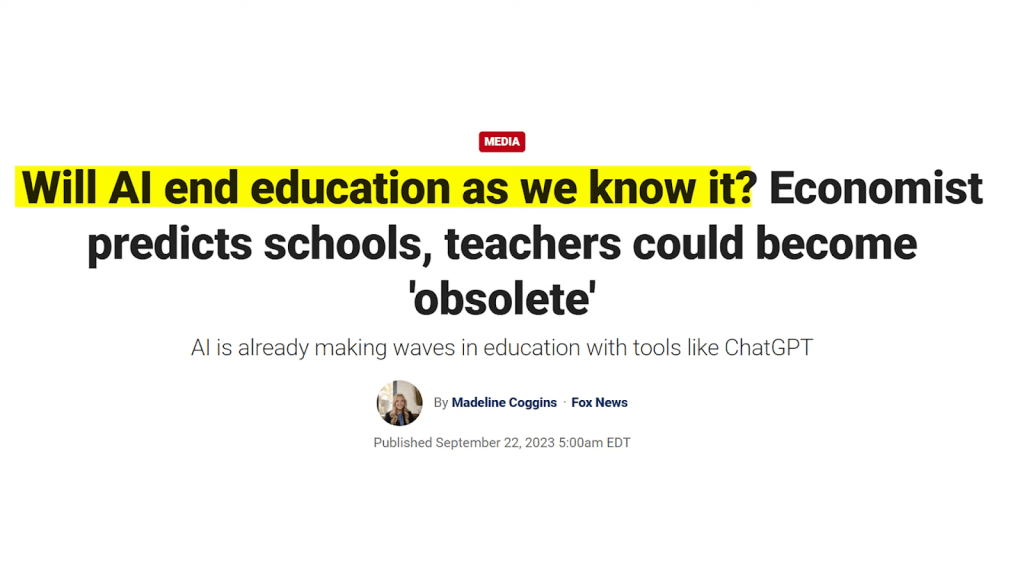
Experts claiming that ChatGPT could put an end to education as we know it. And they might be right, but not for the reason that you think.
Let’s start with the education system. At around the age of five, children are sent to school to prep for the real world. But the real world is changing very fast. Our current education system was modeled back in 1840, designed during the Industrial Age, where the goal of education was to mass-produce factory workers who were docile, obedient, and understood basic orders. And it worked well. It was an economically viable model that created agreeable workers. But 200 years later, we’ve moved a long way past the Industrial Age, yet classrooms still look identical.

200 years later, we’ve moved a long way past the Industrial Age, yet classrooms still look identical.
In 1956, educational psychologist Benjamin Bloom outlined a framework to better understand how we learn, hoping to start teaching students more effectively. He named it Bloom’s Taxonomy after himself. In short, it divided cognitive learning into six categories, ranked in a hierarchical order depending on how much thinking was required for each. Simply memorizing and recalling information doesn’t require much brain processing power, whereas tasks that emphasize creativity—like thinking outside the box—require much more thinking. The Industrial Age didn’t need people to think outside the box, so the education system was built on a low order of thinking.
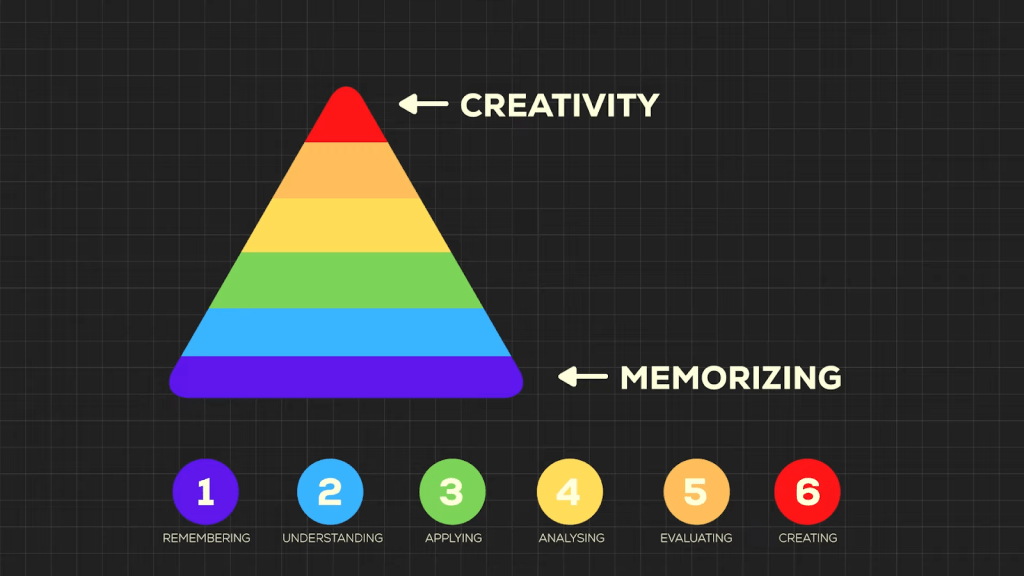
Bloom’s Taxonomy
This is the foundation of the classroom we see today: a 30-student-to-one-tutor environment where students are expected to passively absorb the information presented to them, and they are then assessed on their ability to remember that information in standardized tests. Yet now, in the 21st century, the world needs innovators. But it’s been forgotten that at the top of Bloom’s Taxonomy was creativity—the ability to imagine and build something from nothing. The current education system doesn’t acknowledge creativity. It wasn’t designed for it. In fact, it sucks it out of us.
In 1968, a study followed 1,600 children from the age of five until they were 15. The aim was to determine the effect that school had on creativity levels. In the study, creativity was determined by divergent thinking. Children were asked how many uses they could think of for everyday objects like a paperclip. The more uses they could think of, the more creative they were deemed to be. The average adult can think of maybe 10 to 15 uses, but the study found that before school, 98% of five-year-olds were classed as geniuses based on this measure of creativity. The same children were then retested at 10 years old and again at 15. The results were astounding. What we concluded, wrote George Land, the author of the study, is that non-creative behavior is being learned.
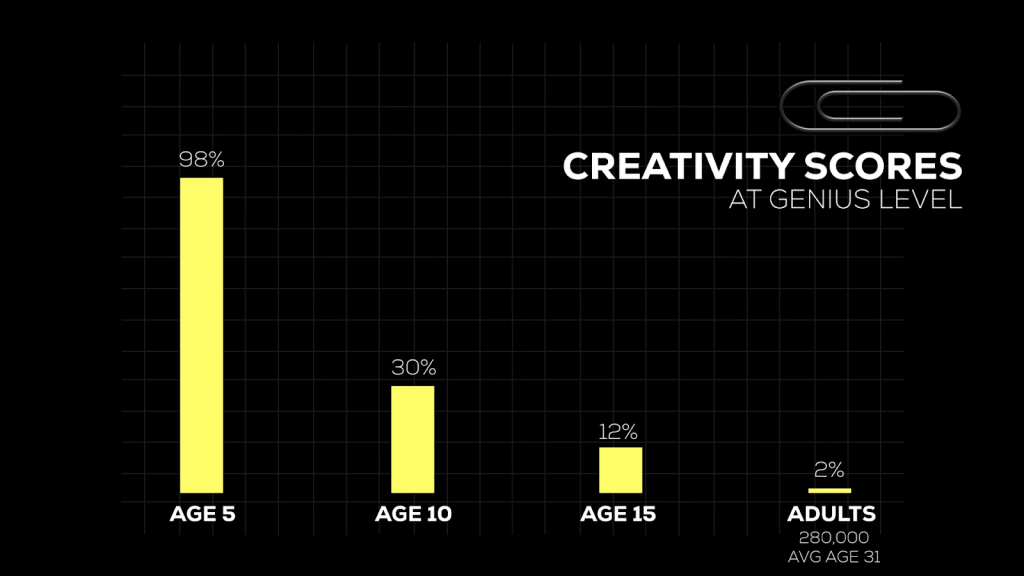
Our education system is broken and continues to churn out conformist, cookie-cutter people who can’t think for themselves—not just broken, but outdated too. So let’s fast forward to the present day. Educators are describing ChatGPT as a tool for cheating, but maybe they’ve just got an outdated definition of what cheating is.
Let me give you an example. In school, you’re told to sit down, stop talking, get out your books, go to page 69, and complete the questions. No peeking at the answers on the back. You’re rewarded for doing exactly what you’re told. In this scenario, cheating could look like you talking to your friend and sharing answers, otherwise known as collaboration. In the real world, cheating could be you googling how to work out a specific question, otherwise known as productive self-learning.
Do you see my point? There is no definitive definition of what cheating is. None of this is about cheating. It fundamentally comes down to one thing: fear. Specifically, a fear of AI.
“It’s a bit of an odd one that we thought that language, in a way, was quite human, quite unique, and quite special. And it turns out that it can be emulated quite effectively based purely on statistical models. That, I think, is a surprise for a lot of us. It’s quite unsettling as well.”
That’s Dr. Leis Potter. He’s the founder of GeekyMeds.com, the largest medical education platform in the world. They’ve been incorporating ChatGPT into their platform to help health professionals all around the world learn more effectively.
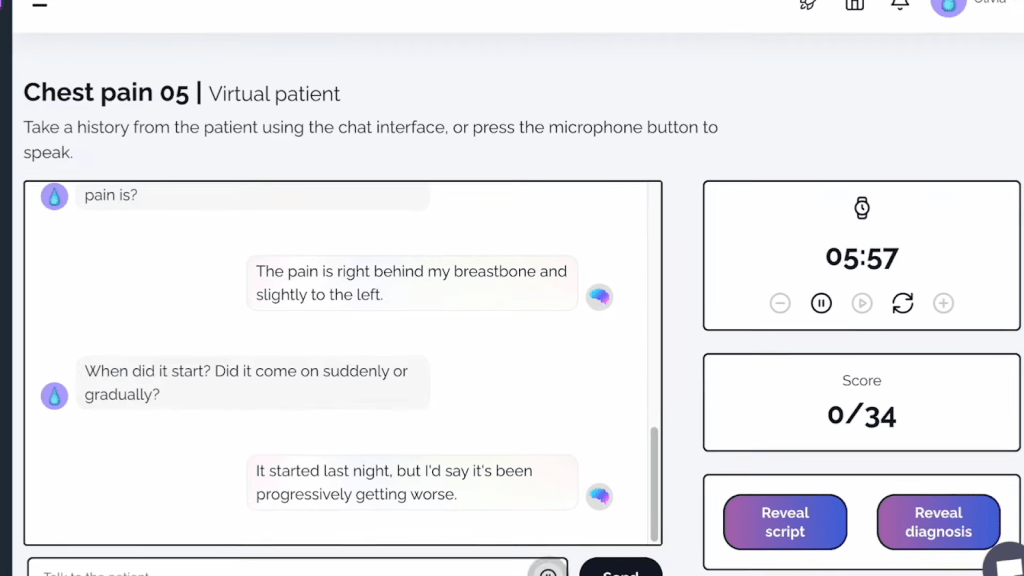
GeekyMeds.com, the largest medical education platform in the world. They’ve been incorporating ChatGPT into their platform to help health professionals all around the world learn more effectively.
We recently sat down and discussed this fear of AI in education.
“History is littered with these technological innovations that come about, and the current status quo and the people involved in that feel threatened and feel like, ‘Oh, is that going to take away my role, my skill set?’”
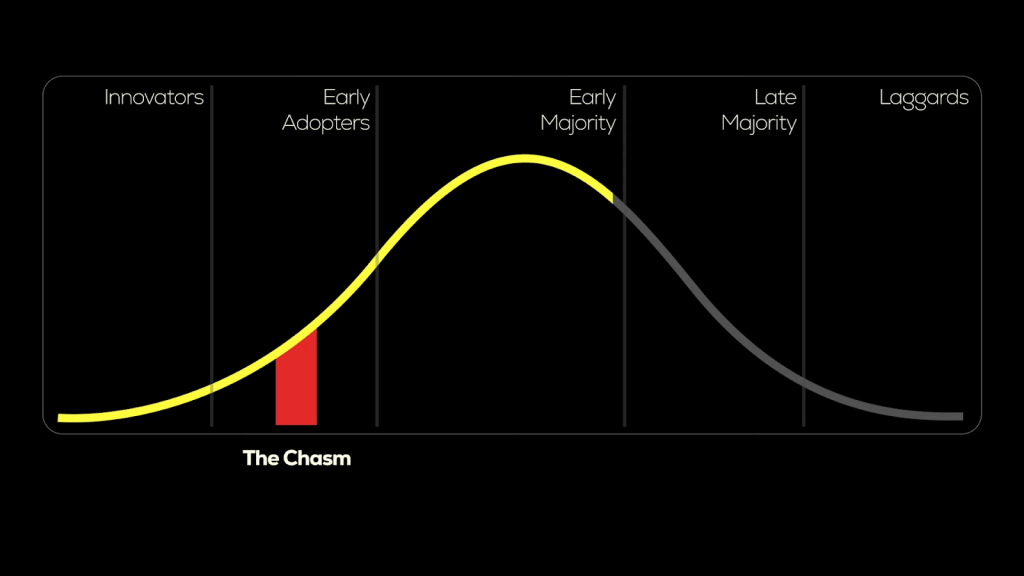
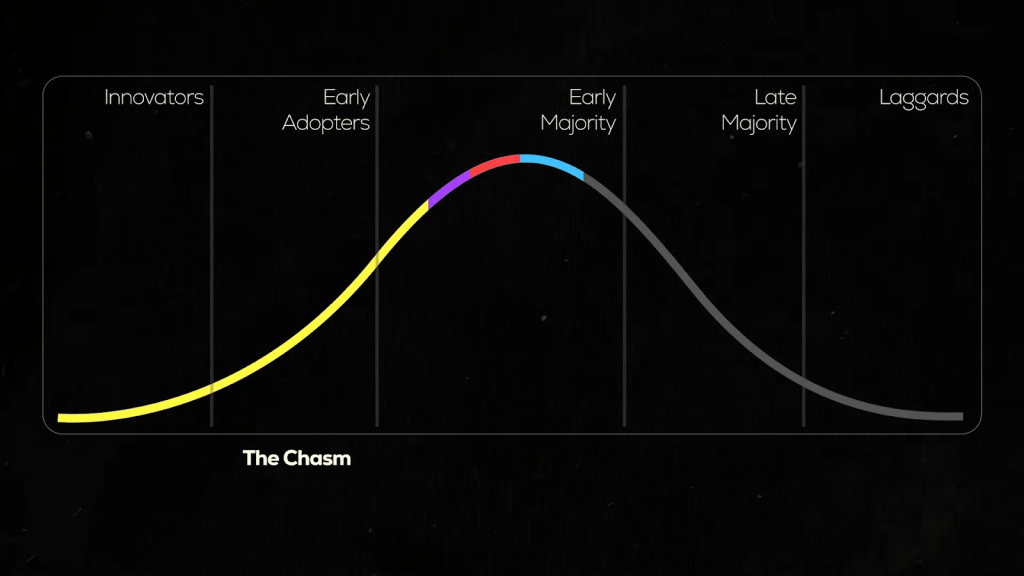
Whether it was the airplane, the television, the internet, or even writing on paper. The Greek philosopher Socrates spoke about how the invention of writing would promote forgetfulness. Whatever it was, history keeps on repeating itself. The adoption of something transformative is always met with resistance until something called “the chasm”. This is the point where the world begins to appreciate the transformative value an innovation has, and only once society has moved past the chasm do we begin to see mass adoption. Depending on the innovation, it could take society decades to move past it.

So the question is, how do we speed it up? We need to tackle the root cause. Firstly, why are people fearful in the first place?
“There’s a great example of the elevator. When that was invented, people previously pulled on ropes to lift you up. When the automated elevator came out, nobody would get in them because they were terrified of putting their lives in the hands of this machine.”
Let’s draw some parallels from the past. Back in 1825, people believed that trains would rip you apart and that high speeds would cause your body to melt.

We now, of course, know this isn’t true. But AI is feared for a very similar reason. People fear what they don’t know or understand. The lack of knowledge surrounding what AI actually is and what it does, as well as Hollywood pushing a narrative that AI will take over the world, is causing that same sense of rejection for the same reasons we saw with the train. Since the beginning of automation itself, people have feared that their jobs would be replaced by machines.
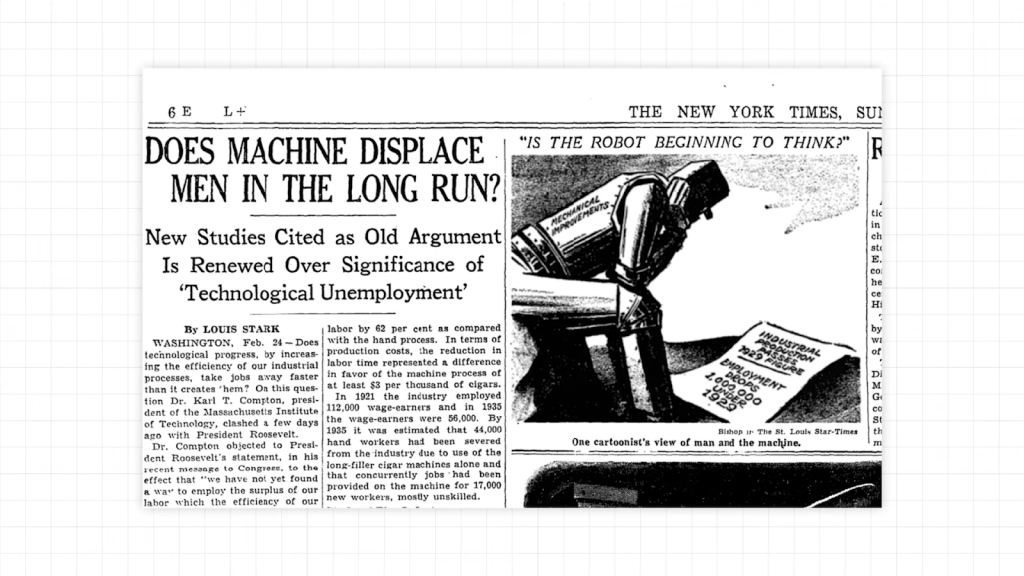
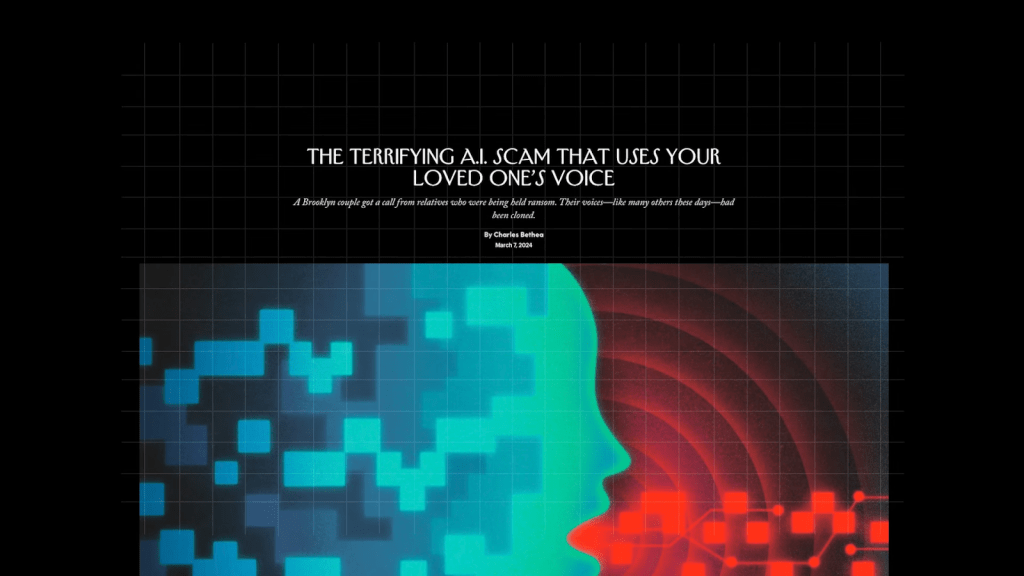
Two hundred years later, we’re still seeing these exact same headlines.

Perhaps the most relevant is the introduction of calculators in school. Back in 1966, there was a huge worry that using a calculator would diminish people’s abilities to think for themselves.

Sound familiar? It’s the exact same argument that educators are using when trying to ban ChatGPT.

In every single example throughout history, the same cycle repeats itself.

“If you look back, all that happens is that we adapt. Almost always, human plus technology is better than technology alone.”
With our minds now open, let’s explore how AI like ChatGPT can fix our broken education system. In 1984, Benjamin Bloom came up with the Two Sigma Problem. He found that students who received one-on-one tutoring performed two standard deviations better than students who learned in the traditional 30-to-1 classroom environment.

To give some context, that’s enough to turn an average student into an excellent student.
The problem part comes from the fact that it’s not realistic to provide every single person with their very own personal tutor for every single subject—from both an economic and practical point of view. Since 1984, educators from around the world have been scratching their heads, thinking of ways to overcome this problem. Until now.
AI tools like ChatGPT turn Benjamin Bloom’s Two Sigma Problem into a Two Sigma Opportunity—an opportunity for every single student to have their very own AI personal tutor.

“It’s like having multiple experts at your disposal, at any time of day, for minimal cost, to give you the answer.”
Imagine the possibility of an AI tutor that can adapt its teaching style to the level of understanding and learning pace of any student. It’s available 24/7, can assess a student’s level of understanding through quizzes and interactive discussions, tailor lesson plans accordingly, and break down geographical and socioeconomic barriers for students who previously couldn’t afford or access individualized tuition.


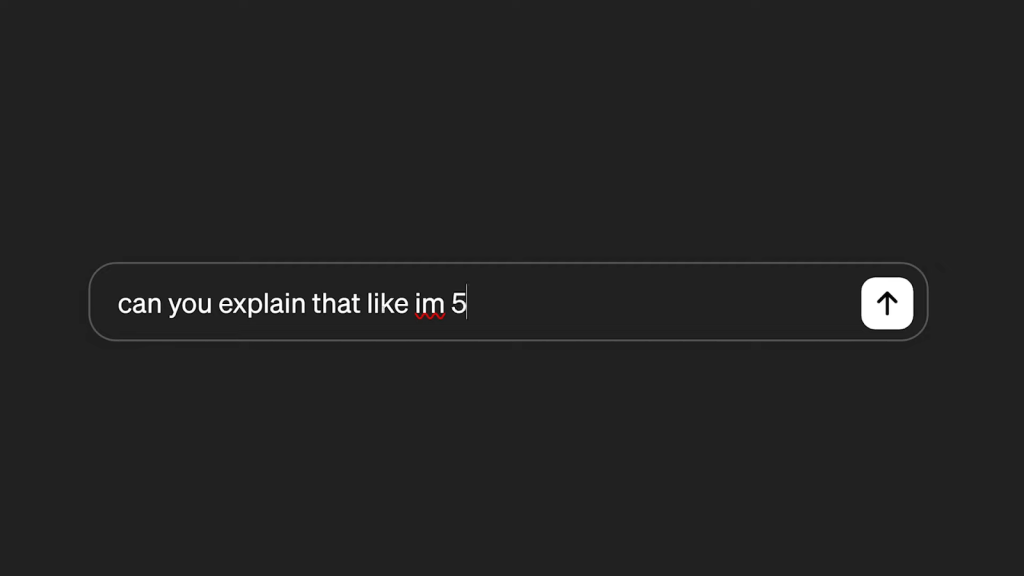
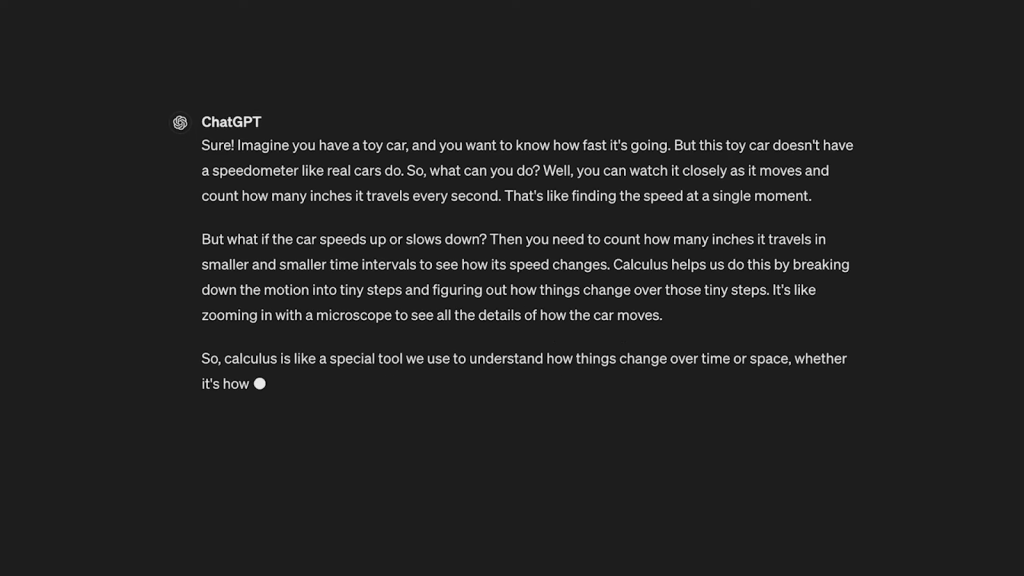
“These models are, at the minute, often used in the context of giant models like ChatGPT, where it’s ingested the entire internet, essentially. So it’s like someone having the whole internet in their brain and replying to you. But as you might imagine, in that situation, it ends up giving quite mediocre answers to most things because it’s drawing from such an enormous corpus of data that it becomes a bit of a “Well, it depends. Could be this, could be that.” Or it’s been tuned not to be too opinionated about specific things to avoid being completely off the mark and wrong.
Sal Khan, the founder of Khan Academy, is at the forefront of this push with their AI tool, Khanmigo.
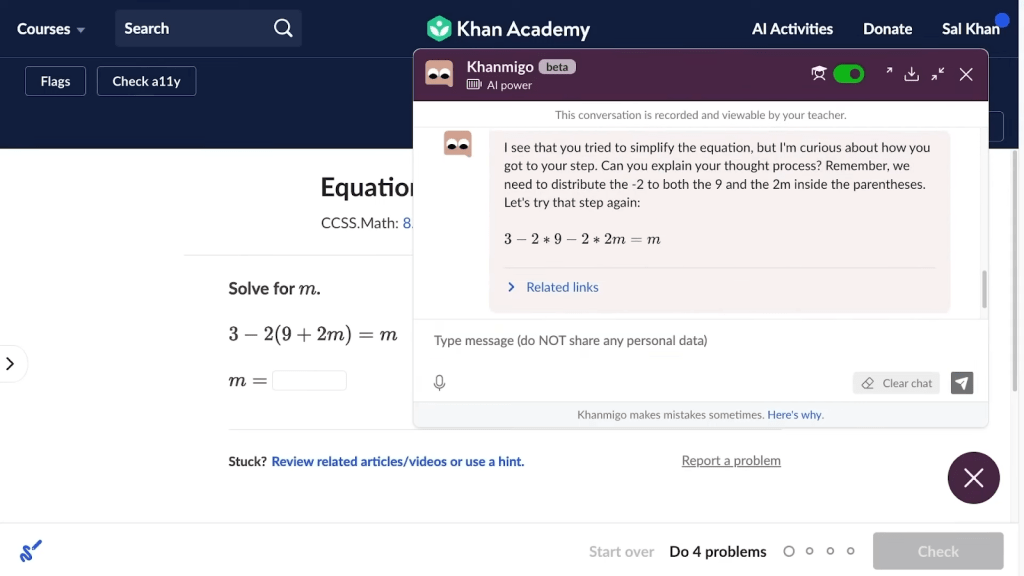
“Now, if the student makes a mistake, and this will surprise people who think large language models are not good at mathematics, it not only notices the mistake, but asks the student to explain their reasoning. It’s doing what I would say not just an average tutor would do, but an excellent tutor. It’s able to divine what is probably the misconception in that student’s mind.”
I’ve just finished five years of medical school, and the biggest barrier that I encountered when using ChatGPT to learn medicine was people saying that it can make stuff up or it just gives generic answers. So how do we overcome this in a field as complex as medicine?
“I think where we’re going with this are small, highly specialized models that run locally on your device so that they are lightning fast. Because they are constrained in their data set to your domain, they are very specific and accurate with their answers.”
Google, for example, came out with MedPaLM 2, their equivalent of ChatGPT trained on medical data. It ended up passing US medical exams with a score of 86.5%. For context, passing is usually considered anything more than 60%.

So, where does this leave us? I mentioned earlier that children lose their creativity as they progress in education. A large part of that is the emphasis put on memorization—the boring tasks or the tasks that don’t require much brain power.
“People will just have answers and tailored answers to their specific questions to allow them to move up to that next layer of knowledge.”
If we go back to Bloom’s Taxonomy, we now have the opportunity to let AI do those bottom layers of thinking. It frees up people’s minds to focus on the top layers.

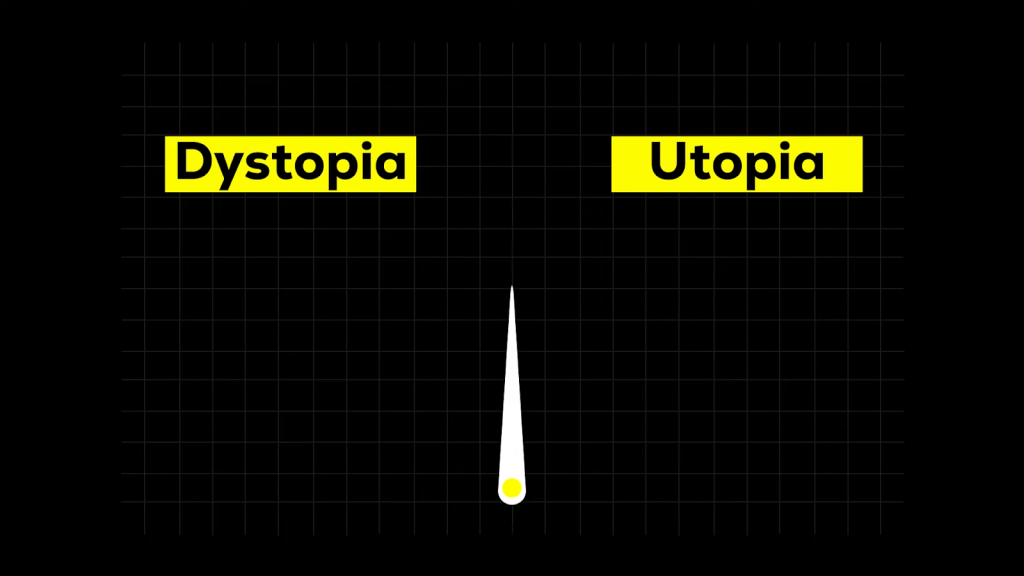
Our global challenges demand creative thinkers. The future could be guided by one of two narratives.

The first is a dystopian outlook guided by fear. We can let fear guide us, ban AI, or tighten regulations around it. That would probably mean banning ChatGPT in education and preventing our future generation from learning how to interact with it. But in this scenario, we build a generation that will struggle to learn how to use it, ultimately allowing the bad actors in the world to have better AI than the good actors.
Or we can reimagine the education system. Of course, it’s going to require some humility to acknowledge that our current education system is broken and consistently failing our future generations. But AI is the catalyst needed to reimagine what it should be. It is the fix that the world is in desperate need of.
To end, Sal Khan puts it perfectly:
“Perhaps the most poetic use case is if AI, artificial intelligence, can be used to enhance HI, human intelligence, human potential, and human purpose.”
If you’d like to watch the full podcast I recorded with Dr. Leis Potter, it’s out on Spotify and Apple Podcasts now. Check it out—the link is in the description. My name is Ash, and I’m a recently graduated medical doctor who’s taking a video journalistic approach to exploring the future of science, health, and tech.
If you enjoyed this documentary, please subscribe to the channel, and you can check out my latest video where I dissect the science and delve into why AIC is not a miracle weight loss drug.
Until next time, see you soon.
By Esh Tatla (https://www.youtube.com/@eshtatla)
Video journalist exploring the future of science, health and tech. I explore my curiosities and share my findings with my audience – telling stories in a dynamic engaging way that hasn’t been done before in the health/bio space. Always grounded in the medical literature and fact! If that sounds interesting, consider subscribing! It would make my day 🙂
May 11, 2024
Bạn có thể tải miễn phí bộ học liệu được xây dựng từ bài đọc này tại đây:
https://drive.google.com/drive/folders/1w4MwS0xCV0oimyGiNCCeomwlbDmrxFe8?usp=sharing
Tập Đọc (literally means “Reading Together”) is a bilingual English-Vietnamese journal featuring new word annotations, translations, spoken word versions (audio articles), and a free vocabulary list for the community. The project has been maintained since 2020 and has published over 90 issues to date.
Readers should be advised that the articles published in Tập Đọc do not necessarily reflect the views, attitudes, and perspectives of the editors. Readers are encouraged to form their own opinions and evaluations through a dialogue between themselves and the authors during their reading process. Only reading writers with whom one agrees is akin to only engaging in conversations with those who compliment you: it’s comfortable, but dangerous.
Hope this helps.
If you wish to support any of my projects, I would be profoundly grateful. Any support, no matter how small, will be significantly meaningful in helping me stay motivated or continue these non-profit efforts.
Please send your support to account number: 0491 0000 768 69. Account holder: Nguyễn Tiến Đạt, Vietcombank, Thăng Long branch.

Đà Nẵng, June 3, 2024
Nguyễn Tiến Đạt (sutucon)
BẢNG CHÚ THÍCH TỪ MỚI
| STT | Từ | Loại từ | Phiên âm | Nghĩa tiếng Anh | Nghĩa tiếng Việt |
|---|---|---|---|---|---|
| 1 | impact | noun | /ˈɪmpækt/ | the strong effect or influence that something has on a situation or person | tác động |
| 2 | examining | verb (present participle) | /ɪɡˈzæmɪnɪŋ/ | inspecting or looking at something carefully in order to understand it better | kiểm tra |
| 3 | stirred | verb (past tense) | /stɜːd/ | caused strong feelings or reactions among people | khuấy động |
| 4 | historical context | noun phrase | /hɪˈstɒrɪkᵊl/ /ˈkɒntɛkst/ | the background, environment, or circumstances in which an event occurs, including the time period and relevant cultural, political, or social conditions | bối cảnh lịch sử |
| 5 | technological advancements | noun phrase | /ˌtɛknəˈlɒʤɪkᵊl/ /ədˈvɑːnsmənts/ | the development and improvement of technology over time | tiến bộ công nghệ |
| 6 | revolutionize | verb | /ˌrɛvəˈluːʃnaɪz/ | to change something fundamentally or completely | cách mạng hóa |
| 7 | fundamental | adjective | /ˌfʌndəˈmɛntᵊl/ | serving as an essential or core part of something | cơ bản |
| 8 | outdated | adjective | /aʊtˈdeɪtɪd/ | no longer current, in use, or fashionable; old-fashioned | lỗi thời |
| 9 | virtually | adverb | /ˈvɜːʧuəli/ | nearly; almost | hầu như |
| 10 | entrepreneurs | noun | /ˌɒntrəprəˈnɜːz/ | individuals who create, organize, and operate businesses, taking on financial risks to do so | doanh nhân |
| 11 | concerned | adjective | /kənˈsɜːnd/ | worried or anxious about something | lo ngại |
| 12 | generate | verb | /ˈʤɛnəreɪt/ | to produce or create something | tạo ra |
| 13 | artificial intelligence (AI) | noun phrase | /ˌɑːtɪˈfɪʃᵊl/ /ɪnˈtɛlɪʤᵊns/ (/eɪ-aɪ/) | the simulation of human intelligence processes by computer systems | trí tuệ nhân tạo (AI) |
| 14 | prep | verb | /prɛp/ | to prepare or get ready for something | chuẩn bị |
| 15 | modeled | verb (past tense) | /ˈmɒdᵊld/ | designed or shaped based on a particular example or pattern | mô phỏng |
| 16 | mass-produce | verb | /ˈmæsprəˌdjuːs/ | to manufacture large quantities of standardized products, often using assembly line or automated technology | sản xuất hàng loạt |
| 17 | docile | adjective | /ˈdəʊsaɪl/ | submissive and easy to manage or control | dễ bảo |
| 18 | obedient | adjective | /əˈbiːdiənt/ | complying with or following commands, orders, or instructions | vâng lời |
| 19 | economically viable | adjective phrase | /ˌiːkəˈnɒmɪkᵊli/ /ˈvaɪəbᵊl/ | capable of working successfully and profitably from a financial standpoint | khả thi về kinh tế |
| 20 | agreeable | adjective | /əˈɡrɪəbᵊl/ | willing to agree or accept something; pleasant | dễ chịu |
| 21 | identical | adjective | /aɪˈdɛntɪkᵊl/ | exactly the same in every detail | giống hệt |
| 22 | outlined | verb (past tense) | /ˈaʊtlaɪnd/ | described or summarized the main points or features of something | phác thảo |
| 23 | framework | noun | /ˈfreɪmwɜːk/ | a basic structure underlying a system, concept, or text | khuôn khổ |
| 24 | taxonomy | noun | /tækˈsɒnəmi/ | a classification into ordered categories or a system of classification | phân loại học |
| 25 | cognitive | adjective | /ˈkɒɡnɪtɪv/ | related to mental processes such as thinking, understanding, learning, and remembering | nhận thức |
| 26 | a hierarchical order | noun phrase | /ə/ /ˌhaɪəˈrɑːkɪkᵊl/ /ˈɔːdə/ | an arrangement of items or elements ranked according to levels of importance or authority | thứ tự phân cấp |
| 27 | memorizing | verb (present participle) | /ˈmɛməraɪzɪŋ/ | learning and remembering information exactly | ghi nhớ |
| 28 | recalling | verb (present participle) | /rɪˈkɔːlɪŋ/ | bringing information back into one’s mind from memory | hồi tưởng |
| 29 | thinking outside the box | idiom | /ˈθɪŋkɪŋ/ /ˌaʊtˈsaɪd/ /ðə/ /bɒks/ | thinking in a creative and unconventional manner | suy nghĩ sáng tạo |
| 30 | passively | adverb | /ˈpæsɪvli/ | accepting or allowing what happens without active response or resistance | thụ động |
| 31 | absorb | verb | /əbˈzɔːb/ | take in or soak up (information, ideas, or knowledge) | hấp thụ |
| 32 | standardized tests | noun phrase | /ˈstændədaɪzd/ /tɛsts/ | tests administered and scored in a consistent manner to measure the performance of students | bài kiểm tra tiêu chuẩn hóa |
| 33 | innovators | noun | /ˈɪnəveɪtəz/ | people who introduce new ideas, methods, or products | nhà đổi mới |
| 34 | acknowledge | verb | /əkˈnɒlɪʤ/ | recognize the existence or validity of something | thừa nhận |
| 35 | determine | verb | /dɪˈtɜːmɪn/ | to establish or ascertain something exactly, typically as a result of research or calculation | xác định |
| 36 | divergent thinking | noun phrase | /daɪˈvɜːʤᵊnt/ /ˈθɪŋkɪŋ/ | a thought process or method used to generate creative ideas by exploring many possible solutions | tư duy phân kỳ |
| 37 | deemed | verb (past tense) | /diːmd/ | considered or judged in a specified way | cho rằng |
| 38 | geniuses | noun | /ˈʤiːniəsɪz/ | people with exceptional intellectual or creative abilities | thiên tài |
| 39 | astounding | adjective | /əˈstaʊndɪŋ/ | very surprising or shocking | đáng kinh ngạc |
| 40 | churn out | phrasal verb | /ʧɜːn/ /aʊt/ | produce large quantities of something quickly and often carelessly | sản xuất nhanh |
| 41 | conformist | noun | /kənˈfɔːmɪst/ | a person who conforms to accepted behavior or established practices | người theo chủ nghĩa tuân thủ |
| 42 | cookie-cutter | adjective | /ˈkʊki/-/ˈkʌtə/ | lacking originality or individuality | thiếu tính sáng tạo |
| 43 | outdated | adjective | /aʊtˈdeɪtɪd/ | no longer current, in use, or fashionable; old-fashioned (repeated term) | lỗi thời (repeated term) |
| 44 | peeking | verb (present participle) | /ˈpiːkɪŋ/ | looking quickly or furtively, especially through a small opening or from a concealed location | nhìn trộm |
| 45 | scenario | noun | /sɪˈnɑːriəʊ/ | an imagined or projected sequence of events, especially any of several detailed plans or possibilities | kịch bản |
| 46 | collaboration | noun | /kəˌlæbəˈreɪʃᵊn/ | working together with others to achieve a common goal | hợp tác |
| 47 | googling | verb (present participle) | /ˈɡuːɡᵊlɪŋ/ | searching for information on the internet using the google search engine | tìm kiếm trên Google |
| 48 | productive | adjective | /prəˈdʌktɪv/ | yielding positive results or outcomes; efficient | năng suất |
| 49 | definitive definition | noun phrase | /dɪˈfɪnɪtɪv/ /ˌdɛfɪˈnɪʃᵊn/ | the most authoritative and complete explanation of the meaning of a word or concept | định nghĩa dứt khoát |
| 50 | fundamentally | adverb | /ˌfʌndəˈmɛntᵊli/ | at a basic or essential level | cơ bản |
| 51 | comes down to one thing | idiom | /kʌmz/ /daʊn/ /tə/ /wʌn/ /θɪŋ/ | ultimately depends on or is determined by a single factor | phụ thuộc vào một điều duy nhất |
| 52 | it’s a bit of an odd one that | phrase | /ɪts/ /ə/ /bɪt/ /əv/ /ən/ /ɒd/ /wʌn/ /ðæt/ | a phrase indicating something unusual or unexpected | hơi kỳ quặc |
| 53 | unique | adjective | /juːˈniːk/ | being the only one of its kind; unlike anything else | độc nhất |
| 54 | it can be emulated | phrase | /ɪt/ /kən/ /bi/ /ˈɛmjəleɪtɪd/ | it can be imitated or reproduced | có thể được mô phỏng |
| 55 | purely | adverb | /ˈpjʊəli/ | entirely; completely | hoàn toàn |
| 56 | statistical models | noun phrase | /stəˈtɪstɪkᵊl/ /ˈmɒdᵊlz/ | mathematical representations or simulations of data that use statistical methods to predict or explain real-world phenomena | mô hình thống kê |
| 57 | unsettling | adjective | /ʌnˈsɛtᵊlɪŋ/ | causing anxiety or discomfort | gây lo lắng |
| 58 | incorporating | verb (present participle) | /ɪnˈkɔːpᵊreɪtɪŋ/ | including or integrating as part of something | kết hợp |
| 59 | platform | noun | /ˈplætfɔːm/ | a software or technology used as a base upon which other applications, processes, or technologies are developed | nền tảng |
| 60 | history is littered with | idiom | /ˈhɪstᵊri/ /z/ /ˈlɪtəd/ /wɪð/ | history contains many examples of | lịch sử đầy rẫy |
| 61 | the current status quo | noun phrase | /ðə/ /ˈkʌrᵊnt/ /ˈsteɪtəs/ /kwəʊ/ | the existing state of affairs or accepted norms | tình trạng hiện tại |
| 62 | skill set | noun phrase | /skɪl/ /sɛt/ | a person’s range of skills or abilities | bộ kỹ năng |
| 63 | promote | verb | /prəˈməʊt/ | encourage or support the development of something | thúc đẩy |
| 64 | forgetfulness | noun | /fəˈɡɛtfᵊlnəs/ | the inability to remember things | chứng hay quên |
| 65 | history keeps on repeating itself | idiom | /ˈhɪstᵊri/ /kiːps/ /ɒn/ /rɪˈpiːtɪŋ/ /ɪtˈsɛlf/ | similar events or patterns recur throughout history | lịch sử lặp lại |
| 66 | adoption | noun | /əˈdɒpʃᵊn/ | the act of accepting or starting to use something new | áp dụng |
| 67 | transformative | adjective | /trænsˈfɔːmətɪv/ | causing a major change or transformation | mang tính biến đổi |
| 68 | met with resistance | verb phrase | /mɛt/ /wɪð/ /rɪˈzɪstᵊns/ | encountered opposition or refusal | gặp phải sự kháng cự |
| 69 | the chasm | noun phrase | /ðə/ /kæzm/ | a metaphorical gap or division that must be crossed for new innovations to be widely accepted | sự ngăn cách lớn |
| 70 | appreciate | verb | /əˈpriːʃieɪt/ | recognize the full worth or value of something | đánh giá cao |
| 71 | innovation | noun | /ˌɪnəˈveɪʃᵊn/ | a new method, idea, product, or process | đổi mới |
| 72 | mass adoption | noun phrase | /mæs/ /əˈdɒpʃᵊn/ | widespread acceptance and use of a new technology or practice | sự chấp nhận rộng rãi |
| 73 | tackle | verb | /ˈtækᵊl/ | address or deal with a problem or challenge | giải quyết |
| 74 | the root cause | noun phrase | /ðə/ /ruːt/ /kɔːz/ | the fundamental reason for the occurrence of a problem | nguyên nhân gốc rễ |
| 75 | fearful | adjective | /ˈfɪəfᵊl/ | feeling afraid or anxious | sợ hãi |
| 76 | automated | adjective | /ˈɔːtəmeɪtɪd/ | operated by machines or computers without human intervention | tự động |
| 77 | terrified | adjective | /ˈtɛrɪfaɪd/ | extremely scared or frightened | kinh hoàng |
| 78 | draw some parallels | idiom | /drɔː/ /səm/ /ˈpærəlɛlz/ | find similarities or comparisons between different situations | so sánh |
| 79 | pushing a narrative | idiom | /ˈpʊʃɪŋ/ /ə/ /ˈnærətɪv/ | promoting a particular story or perspective | thúc đẩy một câu chuyện |
| 80 | sense of rejection | noun phrase | /sɛns/ /əv/ /rɪˈʤɛkʃᵊn/ | feeling of being dismissed or not accepted | cảm giác bị từ chối |
| 81 | automation | noun | /ˌɔːtəˈmeɪʃᵊn/ | the use of technology to perform tasks without human intervention | tự động hóa |
| 82 | diminish | verb | /dɪˈmɪnɪʃ/ | reduce or lessen in importance, size, or strength | giảm bớt |
| 83 | one-on-one tutoring | noun phrase | /wʌn/-/ɒn/-/wʌn/ /ˈtjuːtərɪŋ/ | personalized instruction provided by a tutor to a single student | dạy kèm một kèm một |
| 84 | two standard deviations better than | statistical phrase | /tuː/ /ˈstændəd/ /ˌdiːviˈeɪʃᵊnz/ /ˈbɛtə/ /ðæn/ | a statistical measure indicating a significant difference in performance, typically representing a notable improvement | tốt hơn hai độ lệch chuẩn |
| 85 | to give some context | idiom | /tə/ /ɡɪv/ /səm/ /ˈkɒntɛkst/ | to provide background information to help understand a situation or concept | để cung cấp bối cảnh |
| 86 | multiple | adjective | /ˈmʌltɪpᵊl/ | more than one; several | nhiều |
| 87 | experts | noun | /ˈɛkspɜːts/ | people with a high level of knowledge or skill in a particular field | chuyên gia |
| 88 | at your disposal | idiom | /ət/ /jə/ /dɪˈspəʊzᵊl/ | available for use whenever needed | có sẵn để sử dụng |
| 89 | for minimal cost | phrase | /fə/ /ˈmɪnɪmᵊl/ /kɒst/ | requiring little expense | với chi phí tối thiểu |
| 90 | adapt | verb | /əˈdæpt/ | adjust or modify to suit new conditions | thích nghi |
| 91 | learning pace | noun phrase | /ˈlɜːnɪŋ/ /peɪs/ | the speed at which a person learns or understands new information | tốc độ học tập |
| 92 | assess | verb | /əˈsɛs/ | evaluate or measure the nature, ability, or quality of something | đánh giá |
| 93 | geographical and socioeconomic barriers | noun phrase | /ˌʤiəˈɡræfɪkᵊl/ /ənd/ /ˌsəʊsiəʊɛkəˈnɒmɪk/ /ˈbæriəz/ | obstacles related to location and economic status that prevent access to opportunities or resources | rào cản địa lý và kinh tế xã hội |
| 94 | couldn’t afford | phrase | /ˈkʊdᵊnt/ /əˈfɔːd/ | lacked the financial means to pay for something | không đủ khả năng chi trả |
| 95 | access | verb | /ˈæksɛs/ | obtain or make use of something | tiếp cận |
| 96 | individualized tuition | noun phrase | /ˌɪndɪˈvɪʤuəlaɪzd/ /tjuˈɪʃᵊn/ | customized or personalized instruction tailored to an individual’s needs | học phí cá nhân hóa |
| 97 | at the minute | idiom | /ət/ /ðə/ /ˈmɪnɪt/ | currently; at this moment | hiện tại |
| 98 | it’s ingested the entire internet, essentially | phrase | /ɪts/ /ɪnˈʤɛstɪd/ /ði/ /ɪnˈtaɪər/ /ˈɪntənɛt/, /ɪˈsɛnʃᵊli/ | it has processed and incorporated vast amounts of information from the internet | nó đã tiếp nhận toàn bộ internet |
| 99 | mediocre | adjective | /ˌmiːdiˈəʊkə/ | of average or low quality; not very good | tầm thường |
| 100 | enormous | adjective | /ɪˈnɔːməs/ | very large in size, quantity, or extent | khổng lồ |
| 101 | corpus of data | noun phrase | /ˈkɔːpəs/ /əv/ /ˈdeɪtə/ | a large collection of texts or information used for analysis | kho dữ liệu |
| 102 | opinionated | adjective | /əˈpɪnjəneɪtɪd/ | holding strong personal views or beliefs | có quan điểm |
| 103 | off the mark | idiom | /ɒf/ /ðə/ /mɑːk/ | incorrect or inaccurate | sai lệch |
| 104 | at the forefront | idiom | /ət/ /ðə/ /ˈfɔːfrʌnt/ | leading or in an advanced position in a particular field or activity | đi đầu |
| 105 | large language models | noun phrase | /lɑːʤ/ /ˈlæŋɡwɪʤ/ /ˈmɒdᵊlz/ | ai systems trained on vast amounts of text data to understand and generate human language | mô hình ngôn ngữ lớn |
| 106 | reasoning | noun | /ˈriːzᵊnɪŋ/ | the process of thinking about something in a logical way to form a conclusion or judgment | lập luận |
| 107 | divine | verb | /dɪˈvaɪn/ | to discover or deduce by intuition or insight | suy đoán |
| 108 | misconception | noun | /ˌmɪskənˈsɛpʃᵊn/ | a mistaken belief or idea | sự hiểu lầm |
| 109 | make stuff up | idiom | /meɪk/ /stʌf/ /ʌp/ | create false or inaccurate information | bịa đặt |
| 110 | gives generic answers | verb phrase | /ɡɪvz/ /ʤɪˈnɛrɪk/ /ˈɑːnsəz/ | provides responses that are not specific or detailed | đưa ra câu trả lời chung chung |
| 111 | field | noun | /fiːld/ | an area of study or professional practice | lĩnh vực |
| 112 | highly specialized models | noun phrase | /ˈhaɪli/ /ˈspɛʃᵊlaɪzd/ /ˈmɒdᵊlz/ | ai systems designed for specific tasks or domains | mô hình chuyên biệt cao |
| 113 | run locally on your device | phrase | /rʌn/ /ˈləʊkᵊli/ /ɒn/ /jə/ /dɪˈvaɪs/ | operate on a user’s personal computer or device rather than relying on remote servers | chạy cục bộ trên thiết bị của bạn |
| 114 | lightning fast | idiom | /ˈlaɪtnɪŋ/ /fɑːst/ | extremely quick in speed or performance | nhanh như chớp |
| 115 | they are constrained | verb phrase | /ðeɪ/ /ə/ /kənˈstreɪnd/ | they are limited or restricted | họ bị hạn chế |
| 116 | data set | noun phrase | /ˈdeɪtə/ /sɛt/ | a collection of related data | tập dữ liệu |
| 117 | domain | noun | /dəˈmeɪn/ | a specific area of knowledge or activity | miền, lĩnh vực |
| 118 | equivalent | adjective | /ɪˈkwɪvᵊlᵊnt/ | something that is equal in value, function, or meaning | tương đương |
| 119 | emphasis | noun | /ˈɛmfəsɪs/ | special importance or attention given to something | nhấn mạnh |
| 120 | memorization | noun | /ˌmɛməraɪˈzeɪʃᵊn/ | the process of learning something so that it can be remembered exactly | ghi nhớ |
| 121 | tailored answers | noun phrase | /ˈteɪləd/ /ˈɑːnsəz/ | customized or personalized responses | câu trả lời được tùy chỉnh |
| 122 | a dystopian outlook | noun phrase | /ə/ /dɪsˈtəʊpiən/ /ˈaʊtlʊk/ | a pessimistic view of the future characterized by suffering or injustice | quan điểm bi quan |
| 123 | tighten regulations | verb phrase | /ˈtaɪtᵊn/ /ˌrɛɡjəˈleɪʃᵊnz/ | make rules or laws more strict | thắt chặt quy định |
| 124 | interact | verb | /ˌɪntərˈækt/ | communicate or work together with someone or something | tương tác |
| 125 | scenario | noun | /sɪˈnɑːriəʊ/ | an imagined or projected sequence of events, especially any of several detailed plans or possibilities | kịch bản |
| 126 | the bad actors in the world | idiom | /ðə/ /bæd/ /ˈæktəz/ /ɪn/ /ðə/ /wɜːld/ | individuals or groups that engage in harmful or unethical behavior | những kẻ xấu trên thế giới |
| 127 | reimagine | verb | /ˌriːɪˈmæʤɪn/ | rethink or recreate something in a new or different way | hình dung lại |
| 128 | humility | noun | /hjuːˈmɪləti/ | the quality of having a modest or low view of one’s importance | sự khiêm tốn |
| 129 | consistently | adverb | /kənˈsɪstᵊntli/ | in a way that does not change; always the same | nhất quán |
| 130 | the catalyst needed | noun phrase | /ðə/ /ˈkætəlɪst/ /ˈniːdɪd/ | the essential factor that triggers a significant change or action | chất xúc tác cần thiết |
| 131 | poetic | adjective | /pəʊˈɛtɪk/ | having qualities that are expressive, beautiful, or deeply meaningful | đầy tính thi vị |
| 132 | enhance | verb | /ɪnˈhɑːns/ | improve or increase in quality, value, or extent | nâng cao |
| 133 | journalistic | adjective | /ˌʤɜːnəˈlɪstɪk/ | relating to the profession or practice of reporting, writing, and editing news | báo chí |
| 134 | documentary | noun | /ˌdɒkjəˈmɛntᵊri/ | a film, tv program, or media production that provides a factual report on a particular subject | phim tài liệu |
| 135 | dissect | verb | /dɪˈsɛkt/ | analyze in great detail | phân tích chi tiết |
| 136 | delve into | phrasal verb | /dɛlv/ /ˈɪntuː/ | investigate or research deeply and thoroughly | đào sâu vào |
BÀI TẬP ĐIỀN TỪ
| STT | Câu điền từ | Bản dịch tiếng Việt |
|---|---|---|
| 1 | He failed to ………………………………………………………… the significance of the discovery. | Anh ta đã không nhận thức được tầm quan trọng của phát hiện. |
| 2 | The internet has ………………………………………………………… the way we access information. | Internet đã cách mạng hóa cách chúng ta truy cập thông tin. |
| 3 | The new policy had a significant ………………………………………………………… on the company’s operations. | Chính sách mới đã có ảnh hưởng đáng kể đến hoạt động của công ty. |
| 4 | The devices ………………………………………………………… by available resources. | Các thiết bị bị giới hạn bởi nguồn lực có sẵn. |
| 5 | The detective was able to ………………………………………………………… the truth. | Thám tử đã có thể khám phá sự thật. |
| 6 | The online course allows students to learn at their own …………………………………………………………. | Khóa học trực tuyến cho phép học sinh học theo tốc độ học tập của riêng họ. |
| 7 | He began his speech by …………………………………………………………. | Anh ấy bắt đầu bài phát biểu của mình bằng để đưa ra một số bối cảnh. |
| 8 | Factories ………………………………………………………… products without considering quality. | Các nhà máy sản xuất hàng loạt sản phẩm mà không quan tâm đến chất lượng. |
| 9 | The worst-case ………………………………………………………… involves a total system failure. | Trường hợp xấu nhất liên quan đến một sự cố hệ thống toàn bộ. |
| 10 | Some fear that ………………………………………………………… could become a reality. | Một số lo ngại rằng quang cảnh ảm đạm có thể trở thành hiện thực. |
| 11 | Students need to ………………………………………………………… for their exams well in advance. | Học sinh cần chuẩn bị cho kỳ thi của mình từ trước. |
| 12 | The artist aims to ………………………………………………………… traditional forms of art. | Nghệ sĩ hướng tới tái tưởng tượng các hình thức nghệ thuật truyền thống. |
| 13 | She ………………………………………………………… delivers high-quality work. | Cô ấy liên tục thực hiện công việc chất lượng cao. |
| 14 | Her work in the medical ………………………………………………………… is groundbreaking. | Công việc của cô ấy trong lĩnh vực y tế là mang tính đột phá. |
| 15 | The new ………………………………………………………… helped organize the vast information into manageable categories. | Cách phân loại mới đã giúp tổ chức lượng thông tin rộng lớn thành các danh mục có thể quản lý được. |
| 16 | The researchers created a comprehensive …………………………………………………………. | Các nhà nghiên cứu đã tạo ra một bộ dữ liệu toàn diện. |
| 17 | Successful ………………………………………………………… often leads to innovative solutions. | Sự hợp tác thành công thường dẫn đến các giải pháp đổi mới. |
| 18 | She had trouble ………………………………………………………… the names of all her classmates. | Cô ấy gặp khó khăn trong việc nhớ lại tên của tất cả bạn cùng lớp. |
| 19 | He is very ………………………………………………………… and often debates with others. | Anh ấy rất có ý kiến và thường tranh luận với người khác. |
| 20 | Despite the challenges, the ………………………………………………………… remains unchanged. | Mặc dù có những thách thức, tình trạng hiện tại vẫn không thay đổi. |
| 21 | Many suburban houses look ………………………………………………………… and lack uniqueness. | Nhiều ngôi nhà ngoại ô trông giống nhau và thiếu sự độc đáo. |
| 22 | The system is fully ………………………………………………………… to reduce human error. | Hệ thống được tự động hóa hoàn toàn để giảm thiểu lỗi của con người. |
| 23 | The new technology can be ………………………………………………………… by other companies. | Công nghệ mới có thể được bắt chước bởi các công ty khác. |
| 24 | ………………………………………………………… can be a significant obstacle in education. | Rào cản địa lý và xã hội có thể là trở ngại lớn trong giáo dục. |
| 25 | Society needs to address ………………………………………………………… to ensure security. | Xã hội cần giải quyết những kẻ xấu trên thế giới để đảm bảo an ninh. |
| 26 | He tends to ………………………………………………………… when he doesn’t know the answer. | Anh ấy có xu hướng bịa đặt khi không biết câu trả lời. |
| 27 | The twins were ………………………………………………………… in appearance and behavior. | Cặp song sinh giống hệt nhau về ngoại hình và hành vi. |
| 28 | ………………………………………………………… is a common study technique. | Ghi nhớ là một kỹ thuật học tập phổ biến. |
| 29 | The professor ………………………………………………………… the key points of the lecture. | Giáo sư đã tóm tắt các điểm chính của bài giảng. |
| 30 | It’s important to ………………………………………………………… when analyzing historical events. | Rất quan trọng phải rút ra một số điểm tương đồng khi phân tích các sự kiện lịch sử. |
| 31 | The company aims to ………………………………………………………… sustainable practices. | Công ty hướng tới khuyến khích các thực hành bền vững. |
| 32 | The program offers ………………………………………………………… to meet students’ needs. | Chương trình cung cấp học phí cá nhân hóa để đáp ứng nhu cầu của học sinh. |
| 33 | His skills are ………………………………………………………… to those of a senior manager. | Kỹ năng của anh ấy tương đương với những người quản lý cấp cao. |
| 34 | The proposal was ………………………………………………………… from several stakeholders. | Đề xuất đã gặp phản đối từ một số bên liên quan. |
| 35 | I can’t talk right now; I’m busy …………………………………………………………. | Tôi không thể nói chuyện ngay bây giờ; tôi đang bận vào phút này. |
| 36 | ………………………………………………………… is more effective than group lessons. | Gia sư một-kèm-một hiệu quả hơn là học nhóm. |
| 37 | Politicians often ………………………………………………………… to gain support. | Các chính trị gia thường đưa ra một lập luận để giành được sự ủng hộ. |
| 38 | He is ………………………………………………………… about the outcome of the experiment. | Anh ấy quan ngại về kết quả của thí nghiệm. |
| 39 | Children are expected to be ………………………………………………………… in school. | Trẻ em được kỳ vọng sẽ ngoan ngoãn ở trường. |
| 40 | The project places ………………………………………………………… on sustainable practices. | Dự án đặt nhấn mạnh vào các thực hành bền vững. |
| 41 | She was ………………………………………………………… of the risks involved. | Cô ấy đã sợ hãi về các rủi ro liên quan. |
| 42 | The movie ………………………………………………………… strong emotions among viewers. | Bộ phim đã khuấy động cảm xúc mạnh mẽ trong số khán giả. |
| 43 | His expertise in the ………………………………………………………… is well-recognized. | Sự am hiểu của anh ấy trong lĩnh vực được công nhận rộng rãi. |
| 44 | This invention is ………………………………………………………… for the industry. | Phát minh này mang tính chuyển đổi cho ngành. |
| 45 | The ………………………………………………………… of new technologies is often slow. | Việc áp dụng công nghệ mới thường diễn ra chậm. |
| 46 | They plan to ………………………………………………………… the topic in their next meeting. | Họ dự định đào sâu vào chủ đề trong cuộc họp tiếp theo. |
| 47 | The ………………………………………………………… of the problem was a software bug. | Nguyên nhân gốc rễ của vấn đề là một lỗi phần mềm. |
| 48 | She completed ………………………………………………………… tasks within a short time. | Cô ấy đã hoàn thành nhiều nhiệm vụ trong thời gian ngắn. |
| 49 | Some animals are naturally ………………………………………………………… and easy to train. | Một số động vật tự nhiên dễ bảo và dễ huấn luyện. |
| 50 | He was ………………………………………………………… through the door to see what was happening inside. | Anh ấy đang nhìn trộm qua cửa để xem chuyện gì đang xảy ra bên trong. |
| 51 | Companies often use ………………………………………………………… to manage their staff effectively. | Các công ty thường sử dụng một trật tự phân cấp để quản lý nhân viên hiệu quả. |
| 52 | The new policy might be ………………………………………………………… for change. | Chính sách mới có thể là tác nhân cần thiết cho sự thay đổi. |
| 53 | The AI provided ………………………………………………………… based on the user’s input. | Trí tuệ nhân tạo đã cung cấp các câu trả lời phù hợp dựa trên đầu vào của người dùng. |
| 54 | Innovative thinkers often succeed by …………………………………………………………. | Những người suy nghĩ sáng tạo thường thành công bằng cách tư duy khác biệt. |
| 55 | The editor’s job is to ………………………………………………………… the articles thoroughly. | Nhiệm vụ của biên tập viên là phân tích kỹ lưỡng các bài báo. |
| 56 | The movie was ………………………………………………………… and not worth watching. | Bộ phim này tầm thường và không đáng để xem. |
| 57 | There is a common ………………………………………………………… about the causes of the event. | Có một hiểu lầm phổ biến về nguyên nhân của sự kiện. |
| 58 | Understanding the ………………………………………………………… is essential for interpreting historical events accurately. | Hiểu bối cảnh lịch sử là cần thiết để diễn giải chính xác các sự kiện lịch sử. |
| 59 | They say …………………………………………………………, but it’s not always the case. | Họ nói lịch sử luôn lặp lại chính nó, nhưng không phải lúc nào cũng vậy. |
| 60 | Solar panels ………………………………………………………… electricity from sunlight. | Các tấm pin mặt trời sản xuất điện từ ánh sáng mặt trời. |
| 61 | The task was ………………………………………………………… impossible to complete on time. | Nhiệm vụ này hoàn toàn không thể hoàn thành đúng hạn. |
| 62 | Students often ………………………………………………………… with their teachers. | Học sinh thường tương tác với giáo viên của họ. |
| 63 | Factories ………………………………………………………… goods to meet high consumer demand. | Các nhà máy sản xuất hàng loạt để đáp ứng nhu cầu tiêu dùng cao. |
| 64 | A business plan must be ………………………………………………………… to attract investors. | Một kế hoạch kinh doanh phải có tính kinh tế để thu hút nhà đầu tư. |
| 65 | Governments may ………………………………………………………… to protect public interest. | Các chính phủ có thể siết chặt quy định để bảo vệ lợi ích công cộng. |
| 66 | They hired ………………………………………………………… to improve their business strategy. | Họ đã thuê chuyên gia để cải thiện chiến lược kinh doanh của mình. |
| 67 | We need ………………………………………………………… to ensure the product’s success. | Chúng ta cần sự chấp nhận rộng rãi để đảm bảo thành công của sản phẩm. |
| 68 | She often ………………………………………………………… instead of specific ones. | Cô ấy thường đưa ra câu trả lời chung chung thay vì cụ thể. |
| 69 | Being a ………………………………………………………… can limit one’s creativity and potential. | Là một người tuân thủ có thể hạn chế sự sáng tạo và tiềm năng của một người. |
| 70 | The results were ………………………………………………………… and left everyone in awe. | Kết quả kinh ngạc và khiến mọi người đều sửng sốt. |
| 71 | Teachers must ………………………………………………………… students’ progress accurately. | Giáo viên phải đánh giá tiến bộ của học sinh một cách chính xác. |
| 72 | ………………………………………………………… play a crucial role in driving progress in various fields. | Các nhà đổi mới đóng vai trò quan trọng trong việc thúc đẩy tiến bộ trong nhiều lĩnh vực. |
| 73 | The researchers collected an ………………………………………………………… of information. | Các nhà nghiên cứu đã thu thập một lượng to lớn thông tin. |
| 74 | Many students ………………………………………………………… to pay for college. | Nhiều sinh viên không có khả năng trả học phí đại học. |
| 75 | The social media ………………………………………………………… is crucial for modern communication. | Nền tảng mạng xã hội rất quan trọng đối với giao tiếp hiện đại. |
| 76 | Technology can help ………………………………………………………… information easily. | Công nghệ có thể giúp truy cập thông tin dễ dàng. |
| 77 | Researchers must ………………………………………………………… the cause of the problem accurately. | Các nhà nghiên cứu phải xác định nguyên nhân của vấn đề một cách chính xác. |
| 78 | Good ………………………………………………………… skills are essential for critical analysis. | Kỹ năng lập luận tốt là cần thiết cho phân tích phê bình. |
| 79 | ………………………………………………………… can limit access to quality education. | Rào cản địa lý và xã hội có thể hạn chế quyền truy cập vào giáo dục chất lượng. |
| 80 | Scientists use ………………………………………………………… to make predictions about the future. | Các nhà khoa học sử dụng mô hình thống kê để đưa ra dự đoán về tương lai. |
| 81 | ………………………………………………………… abilities are crucial for problem-solving and decision-making. | Khả năng nhận thức rất quan trọng cho việc giải quyết vấn đề và ra quyết định. |
| 82 | A solid ………………………………………………………… is crucial for any successful project. | Một khung làm việc vững chắc là cần thiết cho bất kỳ dự án thành công nào. |
| 83 | Every human being is ………………………………………………………… in their own way. | Mọi con người đều độc đáo theo cách của riêng họ. |
| 84 | Resources are ………………………………………………………… for the project. | Người ta có sẵn sàng các nguồn lực cho dự án. |
| 85 | ………………………………………………………… involves generating multiple solutions to a single problem. | Tư duy phân kỳ liên quan đến việc tạo ra nhiều giải pháp cho một vấn đề duy nhất. |
| 86 | The dictionary provides the ………………………………………………………… of each term. | Từ điển cung cấp định nghĩa rõ ràng của mỗi thuật ngữ. |
| 87 | She ………………………………………………………… completed the project on her own. | Cô ấy hầu như đã hoàn thành dự án một mình. |
| 88 | It is essential to ………………………………………………………… issues before they escalate. | Rất cần thiết phải xử lý các vấn đề trước khi chúng trở nên tồi tệ hơn. |
| 89 | The new policy might ………………………………………………………… employees’ motivation. | Chính sách mới có thể làm giảm động lực của nhân viên. |
| 90 | The new ………………………………………………………… is expected to change the industry. | Sáng kiến mới đổi mới được kỳ vọng sẽ thay đổi ngành. |
| 91 | Scientists are ………………………………………………………… the data to find patterns and trends. | Các nhà khoa học đang kiểm tra dữ liệu để tìm các mẫu và xu hướng. |
| 92 | A possible ………………………………………………………… is a major breakthrough in research. | Một kịch bản có thể là một bước đột phá lớn trong nghiên cứu. |
| 93 | The children were ………………………………………………………… of the dark. | Các em nhỏ đã sợ hãi bóng tối. |
| 94 | ………………………………………………………… are known for their ability to take risks and innovate. | Các doanh nhân được biết đến với khả năng chấp nhận rủi ro và đổi mới. |
| 95 | A ………………………………………………………… aspect of education is critical thinking. | Một khía cạnh cơ bản của giáo dục là tư duy phản biện. |
| 96 | ………………………………………………………… like Albert Einstein have changed the world with their ideas. | Thiên tài như Albert Einstein đã thay đổi thế giới với những ý tưởng của mình. |
| 97 | The new model performed ………………………………………………………… than the previous one. | Mẫu mới hoạt động tốt hơn hai độ lệch chuẩn so với mẫu trước. |
| 98 | He showed great ………………………………………………………… during the discussion. | Anh ấy thể hiện sự khiêm tốn lớn trong cuộc thảo luận. |
| 99 | There is ………………………………………………………… between old and new technologies. | Có một khoảng cách giữa công nghệ cũ và mới. |
| 100 | . The committee found the proposal quite …………………………………………………………. | Ủy ban thấy đề xuất khá hợp lý. |
| 101 | ………………………………………………………… is being used to develop smarter home devices. | Trí tuệ nhân tạo (AI) đang được sử dụng để phát triển các thiết bị gia đình thông minh hơn. |
| 102 | Her answer was completely …………………………………………………………. | Câu trả lời của cô ấy hoàn toàn không chính xác. |
| 103 | The students spent hours ………………………………………………………… vocabulary for the test. | Học sinh dành hàng giờ ghi nhớ từ vựng cho kỳ thi. |
| 104 | The sculpture was ………………………………………………………… after an ancient Greek statue. | Bức tượng được mô phỏng theo một bức tượng Hy Lạp cổ đại. |
| 105 | The findings were …………………………………………………………, raising concerns among experts. | Các phát hiện đã gây bất an, làm dấy lên mối lo ngại trong giới chuyên gia. |
| 106 | The service is available …………………………………………………………. | Dịch vụ này có sẵn với chi phí tối thiểu. |
| 107 | Employees need a diverse ………………………………………………………… to excel in their roles. | Nhân viên cần một bộ kỹ năng đa dạng để xuất sắc trong vai trò của mình. |
| 108 | ………………………………………………………… is transforming various industries. | Tự động hóa đang biến đổi nhiều ngành công nghiệp. |
| 109 | The committee ………………………………………………………… the proposal as impractical. | Ủy ban đã cho rằng đề xuất này không thực tế. |
| 110 | The new software can ………………………………………………………… quickly and accurately. | Phần mềm mới có thể chạy trực tiếp trên thiết bị của bạn một cách nhanh chóng và chính xác. |
| 111 | ………………………………………………………… can perform complex tasks efficiently. | Mô hình chuyên biệt cao có thể thực hiện các nhiệm vụ phức tạp một cách hiệu quả. |
| 112 | The company is ………………………………………………………… in the tech industry. | Công ty đang ở vị trí hàng đầu trong ngành công nghệ. |
| 113 | Nowadays, ………………………………………………………… is a common way to find information quickly. | Ngày nay, tìm kiếm trên Google là một cách phổ biến để tìm thông tin nhanh chóng. |
| 114 | His argument was ………………………………………………………… flawed. | Lập luận của anh ấy cơ bản là sai lầm. |
| 115 | Many old technologies are now ………………………………………………………… and seldom used. | Nhiều công nghệ cũ bây giờ đã lỗi thời và ít được sử dụng. |
| 116 | ………………………………………………………… help measure students’ academic performance objectively. | Các bài kiểm tra chuẩn hóa giúp đo lường thành tích học tập của học sinh một cách khách quan. |
| 117 | Many people feel a ………………………………………………………… when their ideas are rejected. | Nhiều người cảm thấy cảm giác bị từ chối khi ý tưởng của họ bị bác bỏ. |
| 118 | A ………………………………………………………… work environment can lead to better results. | Một môi trường làm việc năng suất có thể dẫn đến kết quả tốt hơn. |
| 119 | The new policy ………………………………………………………… elements from various successful models. | Chính sách mới kết hợp các yếu tố từ nhiều mô hình thành công. |
| 120 | ………………………………………………………… wars and conflicts that could have been avoided. | Lịch sử đầy rẫy những cuộc chiến tranh và xung đột có thể đã tránh được. |
| 121 | His writing style is ………………………………………………………… and evocative. | Phong cách viết của anh ấy thi vị và gợi cảm. |
| 122 | We need to ………………………………………………………… the hard work of our team members. | Chúng ta cần công nhận sự nỗ lực của các thành viên trong nhóm. |
| 123 | The success of the project ………………………………………………………… teamwork. | Thành công của dự án phụ thuộc vào một điều: làm việc nhóm. |
| 124 | Recent ………………………………………………………… have drastically changed how we communicate. | Tiến bộ công nghệ gần đây đã thay đổi hoàn toàn cách chúng ta giao tiếp. |
| 125 | Good students ………………………………………………………… knowledge from their textbooks. | Học sinh giỏi hấp thụ kiến thức từ sách giáo khoa của họ. |
| 126 | He listened ………………………………………………………… as the teacher explained the concept. | Anh ấy lắng nghe thụ động khi giáo viên giải thích khái niệm. |
ĐÁP ÁN
- He failed to appreciate the significance of the discovery.
- The internet has revolutionized the way we access information.
- The new policy had a significant impact on the company’s operations.
- The devices are constrained by available resources.
- The detective was able to divine the truth.
- The online course allows students to learn at their own learning pace.
- He began his speech by to give some context.
- Factories churn out products without considering quality.
- The worst-case scenario involves a total system failure.
- Some fear that a dystopian outlook could become a reality.
- Students need to prep for their exams well in advance.
- The artist aims to reimagine traditional forms of art.
- She consistently delivers high-quality work.
- Her work in the medical domain is groundbreaking.
- The new taxonomy helped organize the vast information into manageable categories.
- The researchers created a comprehensive data set.
- Successful collaboration often leads to innovative solutions.
- She had trouble recalling the names of all her classmates.
- He is very opinionated and often debates with others.
- Despite the challenges, the current status quo remains unchanged.
- Many suburban houses look cookie-cutter and lack uniqueness.
- The system is fully automated to reduce human error.
- The new technology can be emulated by other companies.
- Geographical and socioeconomic barriers can be a significant obstacle in education.
- Society needs to address the bad actors in the world to ensure security.
- He tends to make stuff up when he doesn’t know the answer.
- The twins were identical in appearance and behavior.
- Memorization is a common study technique.
- The professor outlined the key points of the lecture.
- It’s important to draw some parallels when analyzing historical events.
- The company aims to promote sustainable practices.
- The program offers individualized tuition to meet students’ needs.
- His skills are equivalent to those of a senior manager.
- The proposal was met with resistance from several stakeholders.
- I can’t talk right now; I’m busy at the minute.
- One-on-one tutoring is more effective than group lessons.
- Politicians often push a narrative to gain support.
- He is concerned about the outcome of the experiment.
- Children are expected to be obedient in school.
- The project places emphasis on sustainable practices.
- She was fearful of the risks involved.
- The movie stirred strong emotions among viewers.
- His expertise in the field is well-recognized.
- This invention is transformative for the industry.
- The adoption of new technologies is often slow.
- They plan to delve into the topic in their next meeting.
- The root cause of the problem was a software bug.
- She completed multiple tasks within a short time.
- Some animals are naturally docile and easy to train.
- He was peeking through the door to see what was happening inside.
- Companies often use a hierarchical order to manage their staff effectively.
- The new policy might be the catalyst needed for change.
- The AI provided tailored answers based on the user’s input.
- Innovative thinkers often succeed by thinking outside the box.
- The editor’s job is to dissect the articles thoroughly.
- The movie was mediocre and not worth watching.
- There is a common misconception about the causes of the event.
- Understanding the historical context is essential for interpreting historical events accurately.
- They say history keeps on repeating itself, but it’s not always the case.
- Solar panels generate electricity from sunlight.
- The task was purely impossible to complete on time.
- Students often interact with their teachers.
- Factories mass-produce goods to meet high consumer demand.
- A business plan must be economically viable to attract investors.
- Governments may tighten regulations to protect public interest.
- They hired experts to improve their business strategy.
- We need mass adoption to ensure the product’s success.
- She often gives generic answers instead of specific ones.
- Being a conformist can limit one’s creativity and potential.
- The results were astounding and left everyone in awe.
- Teachers must assess students’ progress accurately.
- Innovators play a crucial role in driving progress in various fields.
- The researchers collected an enormous of information.
- Many students couldn’t afford to pay for college.
- The social media platform is crucial for modern communication.
- Technology can help access information easily.
- Researchers must determine the cause of the problem accurately.
- Good reasoning skills are essential for critical analysis.
- Geographical and socioeconomic barriers can limit access to quality education.
- Scientists use statistical models to make predictions about the future.
- Cognitive abilities are crucial for problem-solving and decision-making.
- A solid framework is crucial for any successful project.
- Every human being is unique in their own way.
- Resources are at your disposal for the project.
- Divergent thinking involves generating multiple solutions to a single problem.
- The dictionary provides the definitive definition of each term.
- She virtually completed the project on her own.
- It is essential to tackle issues before they escalate.
- The new policy might diminish employees’ motivation.
- The new innovation is expected to change the industry.
- Scientists are examining the data to find patterns and trends.
- A possible scenario is a major breakthrough in research.
- The children were terrified of the dark.
- Entrepreneurs are known for their ability to take risks and innovate.
- A fundamental aspect of education is critical thinking.
- Geniuses like Albert Einstein have changed the world with their ideas.
- The new model performed two standard deviations better than the previous one.
- He showed great humility during the discussion.
- There is a chasm between old and new technologies.
- The committee found the proposal quite agreeable.
- Artificial intelligence (AI) is being used to develop smarter home devices.
- Her answer was completely off the mark.
- The students spent hours memorizing vocabulary for the test.
- The sculpture was modeled after an ancient Greek statue.
- The findings were unsettling, raising concerns among experts.
- The service is available for minimal cost.
- Employees need a diverse skill set to excel in their roles.
- Automation is transforming various industries.
- The committee deemed the proposal as impractical.
- The new software can run locally on your device quickly and accurately.
- Highly specialized models can perform complex tasks efficiently.
- The company is at the forefront in the tech industry.
- Nowadays, googling is a common way to find information quickly.
- His argument was fundamentally flawed.
- Many old technologies are now outdated and seldom used.
- Standardized tests help measure students’ academic performance objectively.
- Many people feel a sense of rejection when their ideas are rejected.
- A productive work environment can lead to better results.
- The new policy incorporates elements from various successful models.
- History is littered with wars and conflicts that could have been avoided.
- His writing style is poetic and evocative.
- We need to acknowledge the hard work of our team members.
- The success of the project comes down to one thing: teamwork.
- Recent technological advancements have drastically changed how we communicate.
- Good students absorb knowledge from their textbooks.
- He listened passively as the teacher explained the concept.
Lý do thực sự các trường học ghét ChatGPT
Tại sao ChatGPT lại thực sự là một mối đe dọa đối với hệ thống giáo dục? Trong bài viết này, xuất phát từ một video tiểu luận trên YouTube của kênh “Esh Tatla,” tác giả tìm hiểu tác động của ChatGPT đối với giáo dục hiện đại, xem xét những nỗi sợ hãi mà nó đã gây ra trong cộng đồng giáo viên, bối cảnh lịch sử của các tiến bộ công nghệ, và cách mà AI có thể cách mạng hóa việc học tập bằng cách giải quyết những khuyết điểm cơ bản trong hệ thống giáo dục lỗi thời của chúng ta.
Khi ChatGPT ra mắt vào năm 2022, nó đã trở thành ứng dụng internet phát triển nhanh nhất mọi thời đại—một chatbot AI có thể trả lời hầu như mọi câu hỏi chỉ trong vài giây. Mọi người bắt đầu chuyển sang dùng ChatGPT thay vì Google. Các doanh nhân bắt đầu sử dụng ChatGPT như một trợ lý cá nhân. Các lập trình viên bắt đầu dùng ChatGPT để thay thế công việc của mình. Và học sinh—chà, học sinh bắt đầu sử dụng ChatGPT để gian lận.
- “Giáo viên lo ngại về chương trình AI mới này, có thể tạo ra câu trả lời và viết bài luận với ngữ pháp hoàn hảo.”
- “Học sinh đang dùng nó để gian lận trong các bài kiểm tra và thậm chí viết bài luận. Công nghệ mới này làm việc gian lận trở nên dễ dàng hơn.”
- “… dấy lên những câu hỏi trong trường học về việc sử dụng nó và thế nào là gian lận.”
- “… trí tuệ nhân tạo đang được sử dụng để gian lận.”
- “… gọi là ChatGPT.”
Các chuyên gia cho rằng ChatGPT có thể chấm dứt nền giáo dục như chúng ta đã biết. Và họ có thể đúng, nhưng không phải vì lý do mà bạn nghĩ.
Hãy bắt đầu với hệ thống giáo dục. Khi khoảng năm tuổi, trẻ em được gửi đến trường để chuẩn bị cho cuộc sống thực. Nhưng thế giới thực đang thay đổi rất nhanh. Hệ thống giáo dục hiện tại của chúng ta được thiết kế từ năm 1840, trong Thời đại Công nghiệp, nơi mục tiêu của giáo dục là tạo ra công nhân nhà máy ngoan ngoãn, biết vâng lời và hiểu các mệnh lệnh cơ bản. Và nó đã hoạt động tốt. Đó là một mô hình kinh tế khả thi tạo ra những công nhân dễ chịu. Nhưng 200 năm sau, chúng ta đã đi rất xa so với Thời đại Công nghiệp, nhưng các lớp học vẫn trông giống hệt.

200 năm sau, chúng ta đã đi rất xa so với Thời đại Công nghiệp, nhưng các lớp học vẫn trông giống hệt.
Năm 1956, nhà tâm lý học giáo dục Benjamin Bloom đã phác thảo một khung để hiểu rõ hơn cách chúng ta học, hy vọng sẽ dạy học sinh hiệu quả hơn. Ông đặt tên nó là Bloom’s Taxonomy. Nói ngắn gọn, nó chia việc học thành sáu cấp độ, xếp hạng theo mức độ suy nghĩ cần thiết cho mỗi cấp độ. Chỉ cần ghi nhớ và nhớ lại thông tin không đòi hỏi nhiều công suất xử lý não, trong khi những nhiệm vụ yêu cầu sự sáng tạo—như suy nghĩ ngoài lề—đòi hỏi nhiều suy nghĩ hơn. Thời đại Công nghiệp không cần người suy nghĩ ngoài lề, vì vậy hệ thống giáo dục được xây dựng trên nền tảng tư duy thấp.

Bloom’s Taxonomy
Đây là nền tảng của lớp học mà chúng ta thấy ngày nay: một môi trường 30 học sinh trên một giáo viên, nơi học sinh được mong đợi thụ động hấp thụ thông tin được trình bày cho họ, và sau đó họ được đánh giá dựa trên khả năng nhớ lại thông tin đó trong các bài kiểm tra tiêu chuẩn. Nhưng bây giờ, trong thế kỷ 21, thế giới cần những nhà sáng tạo. Nhưng đã bị lãng quên rằng ở đỉnh của Bloom’s Taxonomy là sự sáng tạo—khả năng tưởng tượng và xây dựng một cái gì đó từ không có gì. Hệ thống giáo dục hiện tại không công nhận sự sáng tạo. Nó không được thiết kế cho nó. Thực tế, nó làm mất đi sự sáng tạo của chúng ta.
Năm 1968, một nghiên cứu theo dõi 1.600 trẻ em từ năm tuổi cho đến khi họ 15 tuổi. Mục đích là xác định ảnh hưởng của trường học đối với mức độ sáng tạo. Trong nghiên cứu, sự sáng tạo được xác định bằng suy nghĩ phân kỳ. Trẻ em được yêu cầu nghĩ ra bao nhiêu cách sử dụng cho các vật dụng hàng ngày như kẹp giấy. Càng nhiều cách sử dụng mà chúng có thể nghĩ ra, chúng càng được coi là sáng tạo. Người lớn trung bình có thể nghĩ ra khoảng 10 đến 15 cách sử dụng, nhưng nghiên cứu phát hiện rằng trước khi vào trường, 98% trẻ năm tuổi được xếp vào hàng thiên tài dựa trên thước đo sáng tạo này. Cùng những đứa trẻ đó sau đó được kiểm tra lại vào 10 tuổi và một lần nữa vào 15 tuổi. Kết quả thật đáng kinh ngạc. Điều mà chúng tôi kết luận, viết George Land, tác giả của nghiên cứu, là hành vi không sáng tạo đang được học.

Hệ thống giáo dục của chúng ta bị hỏng và tiếp tục tạo ra những con người rập khuôn, không thể suy nghĩ cho bản thân—không chỉ bị hỏng, mà còn lỗi thời. Vậy hãy tua nhanh đến ngày nay. Các nhà giáo dục đang mô tả ChatGPT như một công cụ gian lận, nhưng có lẽ họ chỉ có định nghĩa lỗi thời về gian lận là gì. Hãy để tôi cho bạn một ví dụ. Trong trường học, bạn được yêu cầu ngồi xuống, ngừng nói chuyện, lấy sách ra, mở trang 69 và hoàn thành các câu hỏi. Không được nhìn vào câu trả lời ở mặt sau. Bạn được khen thưởng vì làm chính xác những gì bạn được yêu cầu. Trong tình huống này, gian lận có thể trông giống như bạn nói chuyện với bạn bè và chia sẻ câu trả lời, còn được gọi là hợp tác. Trong thế giới thực, gian lận có thể là bạn tra Google để tìm cách giải một câu hỏi cụ thể, còn được gọi là tự học hiệu quả.
Bạn thấy ý tôi không? Không có định nghĩa cụ thể về gian lận là gì. Tất cả điều này không phải là về gian lận. Nó về cơ bản là sợ hãi. Cụ thể, là nỗi sợ AI.
“Đó là một điều hơi kỳ lạ mà chúng ta nghĩ rằng ngôn ngữ, theo một cách nào đó, khá nhân bản, khá độc đáo và khá đặc biệt. Và hóa ra nó có thể được bắt chước khá hiệu quả dựa trên các mô hình thống kê. Điều đó, tôi nghĩ, là một bất ngờ đối với nhiều người trong chúng ta. Nó cũng khá khó chịu.”
Đó là Tiến sĩ Leis Potter. Ông là người sáng lập GeekyMeds.com, nền tảng giáo dục y khoa lớn nhất thế giới. Họ đã tích hợp ChatGPT vào nền tảng của mình để giúp các chuyên gia y tế trên khắp thế giới học hiệu quả hơn.

GeekyMeds.com, nền tảng giáo dục y khoa lớn nhất thế giới. Họ đã tích hợp ChatGPT vào nền tảng của mình để giúp các chuyên gia y tế trên khắp thế giới học hiệu quả hơn.
Chúng tôi gần đây đã ngồi lại và thảo luận về nỗi sợ AI trong giáo dục.
“Lịch sử đầy rẫy những đổi mới công nghệ này xuất hiện, và hiện trạng hiện tại và những người liên quan đến đó cảm thấy bị đe dọa và cảm thấy như, ‘Ồ, liệu điều đó có lấy đi vai trò của tôi, bộ kỹ năng của tôi không?’”
Cho dù đó là máy bay, truyền hình, internet hay thậm chí viết trên giấy. Nhà triết học Hy Lạp Socrates đã nói về việc phát minh ra việc viết sẽ thúc đẩy sự quên lãng. Bất cứ điều gì, lịch sử cứ lặp đi lặp lại. Việc chấp nhận một điều gì đó mang tính biến đổi luôn gặp phải sự kháng cự cho đến một cái gọi là sự đứt gãy. Đây là điểm mà thế giới bắt đầu đánh giá cao giá trị biến đổi mà một đổi mới mang lại, và chỉ khi xã hội vượt qua sự đứt gãy thì chúng ta mới bắt đầu thấy sự chấp nhận rộng rãi. Tùy thuộc vào đổi mới, có thể mất hàng thập kỷ để xã hội vượt qua nó.
Vậy câu hỏi đặt ra là, làm thế nào để chúng ta tăng tốc điều đó? Chúng ta cần giải quyết nguyên nhân gốc rễ. Đầu tiên, tại sao mọi người lại sợ hãi ngay từ đầu?
“Có một ví dụ tuyệt vời về thang máy. Khi nó được phát minh, mọi người trước đó kéo dây để nâng bạn lên. Khi thang máy tự động ra đời, không ai dám vào vì họ sợ hãi đặt mạng sống của mình vào tay máy móc này.”
Hãy rút ra một số điều tương tự từ quá khứ. Vào năm 1825, mọi người tin rằng tàu hỏa sẽ xé nát bạn và tốc độ cao sẽ khiến cơ thể bạn tan chảy.
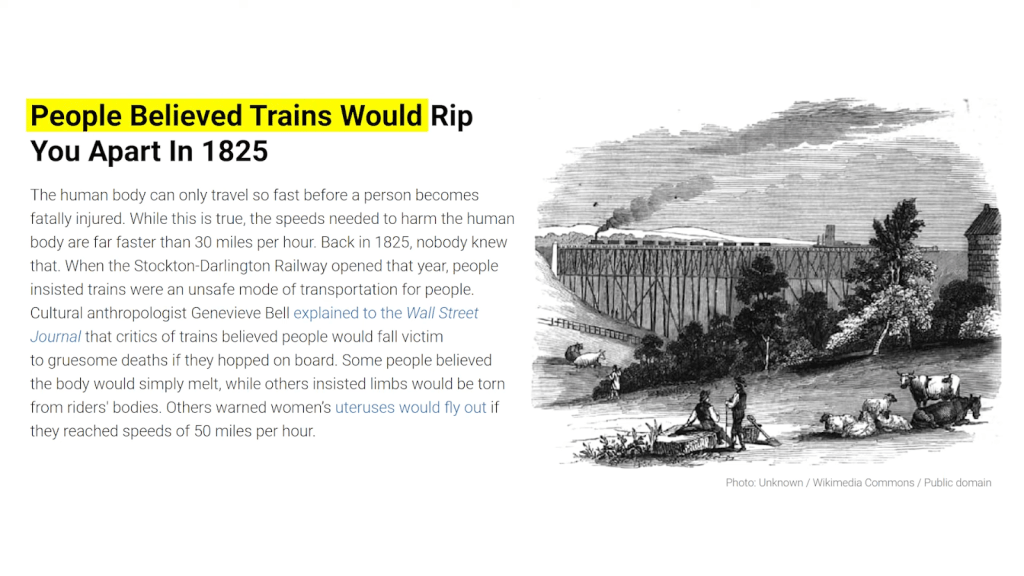
Chúng ta bây giờ, tất nhiên, biết rằng điều này không đúng. Nhưng AI bị sợ hãi vì lý do tương tự. Mọi người sợ những gì họ không biết hoặc không hiểu. Thiếu kiến thức về AI thực sự là gì và nó làm gì, cũng như Hollywood đẩy mạnh một câu chuyện rằng AI sẽ chiếm lĩnh thế giới, đang gây ra cảm giác từ chối tương tự vì những lý do mà chúng ta đã thấy với tàu hỏa. Kể từ khi bắt đầu tự động hóa, mọi người đã sợ rằng công việc của họ sẽ bị thay thế bởi máy móc.

Hai trăm năm sau, chúng ta vẫn thấy những tiêu đề giống hệt.
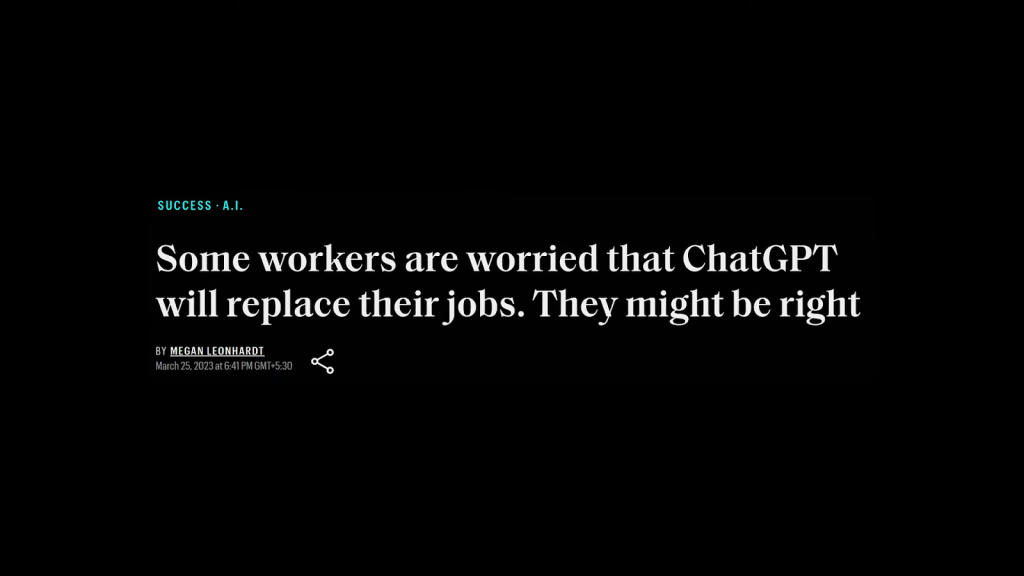
Có lẽ điều liên quan nhất là việc giới thiệu máy tính trong trường học. Vào năm 1966, có một lo ngại lớn rằng việc sử dụng máy tính sẽ làm giảm khả năng suy nghĩ của con người.
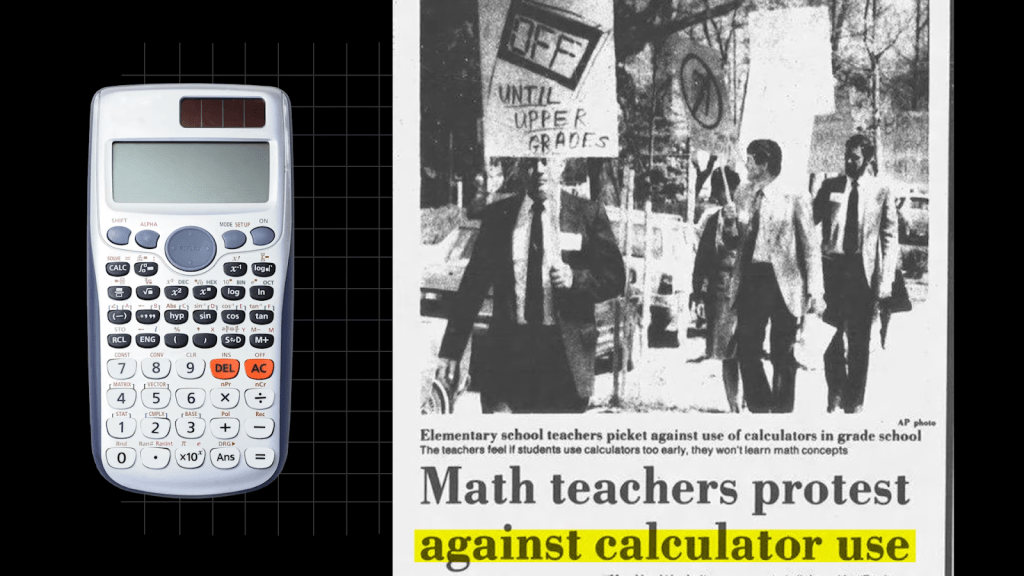
Nghe quen không? Đó là lập luận chính xác mà các nhà giáo dục đang sử dụng khi cố gắng cấm ChatGPT.
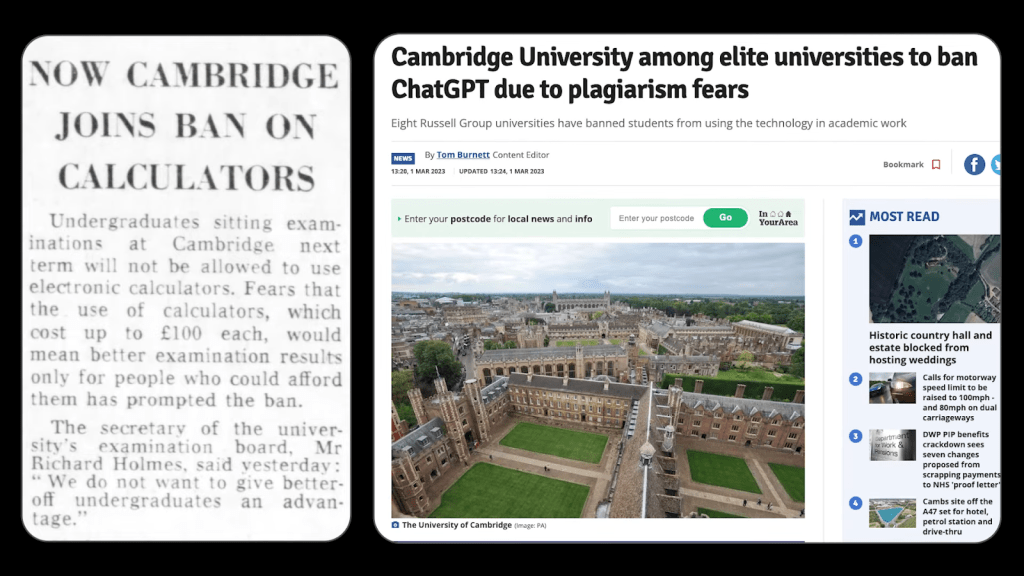
Trong mọi ví dụ xuyên suốt lịch sử, cùng một chu kỳ cứ lặp đi lặp lại.
“Nếu bạn nhìn lại, tất cả những gì xảy ra là chúng ta thích nghi. Hầu như luôn luôn, con người cộng với công nghệ tốt hơn là công nghệ một mình”
Với đầu óc chúng ta bây giờ mở ra, hãy khám phá cách AI như ChatGPT có thể sửa chữa hệ thống giáo dục bị hỏng của chúng ta. Năm 1984, Benjamin Bloom đã đưa ra Vấn đề Hai Sigma. Ông nhận thấy rằng những học sinh nhận được gia sư một kèm một đạt được kết quả cao hơn hai độ lệch chuẩn so với những học sinh học trong môi trường lớp học truyền thống 30 học sinh trên một giáo viên.

Để cung cấp một số bối cảnh, đó là đủ để biến một học sinh trung bình thành một học sinh xuất sắc.
Phần vấn đề đến từ thực tế là không thực tế để cung cấp cho mỗi người một gia sư riêng cho mọi môn học—từ cả góc độ kinh tế và thực tiễn. Kể từ năm 1984, các nhà giáo dục trên khắp thế giới đã vò đầu bứt tai, nghĩ cách để vượt qua vấn đề này. Cho đến bây giờ.
Các công cụ AI như ChatGPT biến Vấn đề Hai Sigma của Benjamin Bloom thành Cơ hội Hai Sigma—một cơ hội để mỗi học sinh có một gia sư AI riêng..

“Giống như có nhiều chuyên gia túc trực bên bạn vào bất kỳ thời điểm nào trong ngày, với chi phí tối thiểu, sẵn sàng đưa ra câu trả lời.”
Hãy tưởng tượng khả năng có một gia sư AI có thể điều chỉnh phong cách giảng dạy của nó theo mức độ hiểu biết và tốc độ học của bất kỳ học sinh nào. Nó có sẵn 24/7, có thể đánh giá mức độ hiểu biết của học sinh thông qua các bài kiểm tra và thảo luận tương tác, điều chỉnh kế hoạch bài học phù hợp, và phá vỡ các rào cản địa lý và kinh tế xã hội cho những học sinh trước đây không thể chi trả hoặc tiếp cận gia sư cá nhân hóa.
“Các mô hình này hiện tại thường được sử dụng trong bối cảnh các mô hình khổng lồ như ChatGPT, nơi nó đã tiếp nhận toàn bộ internet về cơ bản. Vì vậy, giống như ai đó có cả internet trong đầu và trả lời bạn. Nhưng như bạn có thể tưởng tượng, trong tình huống đó, nó kết thúc việc đưa ra các câu trả lời khá trung bình cho hầu hết mọi thứ vì nó đang rút ra từ một khối lượng dữ liệu khổng lồ như vậy nên nó trở thành một ‘Ừ thì, nó phụ thuộc. Có thể là thế này, có thể là thế kia.’ Hoặc nó đã được điều chỉnh để không quá ý kiến về những điều cụ thể để tránh hoàn toàn sai lệch và sai.
Sal Khan, người sáng lập Khan Academy, đang đi đầu trong việc đẩy mạnh này với công cụ AI của họ, Khanmigo.

“Bây giờ, nếu học sinh mắc lỗi, và điều này sẽ khiến mọi người ngạc nhiên khi nghĩ rằng các mô hình ngôn ngữ lớn không giỏi về toán học, nó không chỉ nhận ra lỗi mà còn yêu cầu học sinh giải thích lý do của họ. Nó đang làm những gì mà tôi sẽ nói không chỉ là một gia sư trung bình mà còn là một gia sư xuất sắc. Nó có thể suy đoán điều gì có thể là sự hiểu lầm trong đầu học sinh đó.”
Tôi vừa hoàn thành năm năm học y khoa, và rào cản lớn nhất mà tôi gặp phải khi sử dụng ChatGPT để học y là mọi người nói rằng nó có thể bịa ra hoặc chỉ đưa ra các câu trả lời chung chung. Vậy làm thế nào để chúng ta khắc phục điều này trong một lĩnh vực phức tạp như y học?
“Tôi nghĩ rằng chúng ta đang đi đến những mô hình nhỏ, chuyên biệt cao chạy cục bộ trên thiết bị của bạn để chúng nhanh như chớp. Vì chúng bị giới hạn trong tập dữ liệu của bạn, chúng rất cụ thể và chính xác với các câu trả lời của mình.”
Google, ví dụ, đã phát hành MedPaLM 2, tương đương với ChatGPT được đào tạo trên dữ liệu y khoa. Nó đã vượt qua các kỳ thi y khoa của Mỹ với điểm số 86,5%. Để cung cấp bối cảnh, đạt điểm được coi là bất kỳ điều gì hơn 60%.

Vậy điều này để chúng ta ở đâu? Tôi đã đề cập trước đó rằng trẻ em mất đi sự sáng tạo khi chúng tiến bộ trong giáo dục. Một phần lớn của điều đó là sự nhấn mạnh vào việc ghi nhớ—những nhiệm vụ nhàm chán hoặc những nhiệm vụ không đòi hỏi nhiều năng lực tư duy.
“Mọi người sẽ chỉ có câu trả lời và câu trả lời được điều chỉnh cho các câu hỏi cụ thể của họ để cho phép họ tiến lên tầng kiến thức tiếp theo.”
Nếu chúng ta quay lại Bloom’s Taxonomy, bây giờ chúng ta có cơ hội để để AI thực hiện những tầng suy nghĩ dưới cùng đó. Nó giải phóng tâm trí của mọi người để tập trung vào các tầng trên cùng.

Các thách thức toàn cầu của chúng ta đòi hỏi những người suy nghĩ sáng tạo. Tương lai có thể được hướng dẫn bởi một trong hai câu chuyện.
Câu chuyện đầu tiên là một viễn cảnh u ám được dẫn dắt bởi nỗi sợ hãi. Chúng ta có thể để nỗi sợ hãi dẫn đường, cấm AI, hoặc thắt chặt các quy định xung quanh nó. Điều đó có thể có nghĩa là cấm ChatGPT trong giáo dục và ngăn thế hệ tương lai học cách tương tác với nó. Nhưng trong kịch bản này, chúng ta xây dựng một thế hệ sẽ khó khăn để học cách sử dụng nó, cuối cùng cho phép những người xấu trên thế giới có AI tốt hơn những người tốt.

Hoặc chúng ta có thể tái tưởng tượng hệ thống giáo dục. Tất nhiên, nó sẽ yêu cầu một chút khiêm tốn để thừa nhận rằng hệ thống giáo dục hiện tại của chúng ta bị hỏng và liên tục thất bại với các thế hệ tương lai của chúng ta. Nhưng AI là chất xúc tác cần thiết để tái tưởng tượng nó nên là gì. Đó là giải pháp mà thế giới đang rất cần.
Để kết thúc, Sal Khan nói điều này một cách hoàn hảo:
“Có lẽ ứng dụng thơ mộng nhất là nếu AI, trí tuệ nhân tạo, có thể được sử dụng để nâng cao HI, trí tuệ con người, tiềm năng con người, và mục đích con người.”
Nếu bạn muốn xem toàn bộ podcast mà tôi đã ghi âm với Tiến sĩ Leis Potter, nó hiện đã có trên Spotify và Apple Podcasts. Kiểm tra nó—liên kết có trong mô tả. Tên tôi là Ash, và tôi là một bác sĩ y khoa mới tốt nghiệp đang tiếp cận khám phá tương lai của khoa học, y tế, và công nghệ bằng cách làm video nhật ký.
Nếu bạn thích phim tài liệu này, hãy đăng ký kênh, và bạn có thể xem video mới nhất của tôi nơi tôi phân tích khoa học và đi sâu vào lý do tại sao AIC không phải là một loại thuốc giảm cân thần kỳ.
Hẹn gặp lại lần sau, chào tạm biệt.
Viết bởi Esh Tatla (https://www.youtube.com/@eshtatla)
Nhà báo video khám phá tương lai của khoa học, y tế và công nghệ. Tôi khám phá sự tò mò của mình và chia sẻ những phát hiện của mình với khán giả—kể những câu chuyện theo cách động và lôi cuốn chưa từng có trước đây trong không gian y học/sinh học. Luôn dựa trên tài liệu y khoa và sự thật! Nếu điều đó nghe thú vị, hãy xem xét đăng ký! Điều đó sẽ làm tôi rất vui 🙂
Ngày 11 tháng 5 năm 2024
The REAL Reason Schools Hate ChatGPT
Tập Đọc là một báo song ngữ Tiếng Anh – Tiếng Việt, với chú thích từ mới, cung cấp bản dịch, phiên bản bài đọc nói (báo tiếng), và danh sách từ mới miễn phí cho cộng đồng. Dự án được duy trì từ năm 2020 đến nay, hiện đã ra trên 90 số.
Các bài viết được đăng trên Tập Đọc không nhất thiết phản ánh quan điểm, thái độ và góc nhìn của người biên tập. Người đọc nên hình thành quan điểm và đánh giá của riêng mình trong cuộc đối thoại giữa bản thân người đọc và tác giả, trong quá trình đọc bài của riêng mình. Việc chỉ đọc những người viết mà ta đồng ý cũng giống như chỉ chịu nói chuyện với những ai khen mình vậy: dễ chịu, nhưng nguy hiểm.
Hope this helps.
Nếu bạn muốn ủng hộ bất cứ dự án nào của mình, mình xin rất biết ơn. Mọi sự ủng hộ, dù nhỏ, đều sẽ rất có ý nghĩa trong việc giúp mình có động lực, hoặc có khả năng tiếp tục các công việc phi lợi nhuận này.
Mọi ủng hộ xin gửi về số tài khoản: 0491 0000 768 69. Chủ tài khoản: Nguyễn Tiến Đạt, ngân hàng Vietcombank, chi nhánh Thăng Long.

Đà Nẵng, ngày 3.6.2024
Nguyễn Tiến Đạt (sutucon)







 Tập Đọc
Leave a comment