Why has the Israel-Gaza conflict persisted for so long? In this article, published by BBC News this April, the author delves into the historical context, key events, and ongoing tensions that continue to fuel the enduring struggle between Israelis and Palestinians.

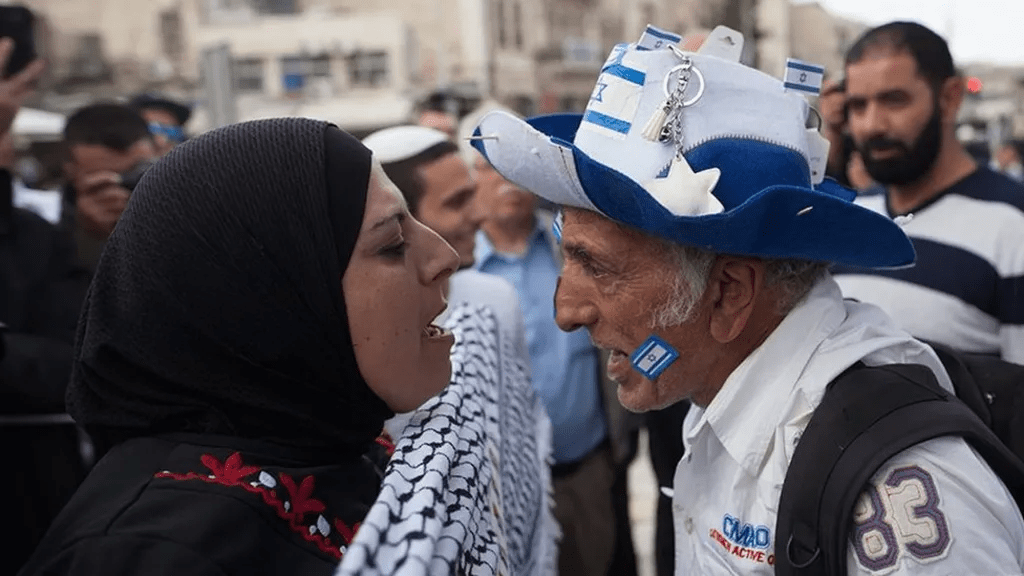
A pro-Palestinian woman confronts a man who sided with Israel. Source: Getty Images
The Palestinian militant group Hamas launched an unprecedented assault on Israel on October 7, 2023, with hundreds of gunmen infiltrating communities near the Gaza Strip. About 1,200 people were killed, and more than 250 were taken to Gaza as hostages, according to Israeli tallies. More than 33,000 Palestinians in Gaza have been killed in air and artillery strikes carried out by the Israeli military in response, Gaza’s Hamas-run health ministry says.
What was Israel before 1948?
Britain took control of the area known as Palestine following the defeat of the Ottoman Empire, which ruled that part of the Middle East, in World War One. The land was inhabited by a Jewish minority and Arab majority, as well as other, smaller ethnic groups. Tensions between the two peoples grew when the international community gave the UK the task of establishing a “national home” in Palestine for Jewish people. This stemmed from the Balfour Declaration of 1917, a pledge made by then Foreign Secretary Arthur Balfour to Britain’s Jewish community. The declaration was enshrined in the British mandate over Palestine and endorsed by the newly created League of Nations, the forerunner of the United Nations, in 1922.

A Haganah (Jewish Underground) fighter just before the start of the Israeli War of Independence 1948. Source: Getty Images
To Jews, Palestine was their ancestral home, but Palestinian Arabs also claimed the land and opposed the move. Between the 1920s and 1940s, the number of Jews arriving there grew, with many fleeing from persecution in Europe, especially the Nazi Holocaust in World War Two. Violence between Jews and Arabs, and against British rule, also increased. In 1947, the UN voted for Palestine to be split into separate Jewish and Arab states, with Jerusalem becoming an international city. That plan was accepted by Jewish leaders but rejected by the Arab side and never implemented.

The soldiers of allied Arab Legion forces fire on fighters of the Haganah, the Jewish Agency self-defence force, in March 1948. Source: Getty Images
How and why was Israel created?
In 1948, unable to solve the problem, Britain withdrew, and Jewish leaders declared the creation of the State of Israel. It was intended to be a safe haven for Jews fleeing persecution, as well as a national homeland for Jews. Fighting between Jewish and Arab militias had been intensifying for months, and the day after Israel declared statehood, five Arab countries attacked. Hundreds of thousands of Palestinians fled or were forced out of their homes in what they call Al Nakba, or the “Catastrophe.”
By the time the fighting ended in a ceasefire the following year, Israel controlled most of the territory. Jordan occupied land which became known as the West Bank, and Egypt occupied Gaza. Jerusalem was divided between Israeli forces in the West and Jordanian forces in the East. Because there was never a peace agreement, there were more wars and fighting in the following decades. In a war in 1967, Israel occupied East Jerusalem and the West Bank, as well as most of the Syrian Golan Heights, Gaza, and the Egyptian Sinai Peninsula.

Map showing the 1949 Armistice Lines
Most Palestinian refugees and their descendants live in Gaza and the West Bank, as well as in neighboring Jordan, Syria, and Lebanon. Neither they nor their descendants have been allowed by Israel to return to their homes—Israel says this would overwhelm the country and threaten its existence as a Jewish state. Israel still occupies the West Bank and claims the whole of Jerusalem as its capital, while the Palestinians claim East Jerusalem as the capital of a hoped-for future Palestinian state. The US is one of only a handful of countries to recognize the city as Israel’s capital.

Crowd of people on Israeli flag. Source: Getty Images

Israel
9.8 million
Population
- 73.6% Jews
- 21.1% Arabs
- 5.3% Other
Source: Israel Central Bureau of Statistics
In the past 50 years, Israel has built settlements in the West Bank and East Jerusalem, where more than 700,000 Jews now live. Settlements are held to be illegal under international law—that is the position of the UN Security Council and the UK government, among others—although Israel rejects this.

Map showing Israel’s boundaries today and Palestinian territories

Israeli military commanders arrive in East Jerusalem during the Six Day War in 1967. Source: Getty Images
What is the Gaza Strip?
Gaza is a narrow strip of land sandwiched between Israel and the Mediterranean Sea, but with a short southern border with Egypt. Just 41 km (25 miles) long and 10 km wide, it has more than two million inhabitants and is one of the most densely populated places on Earth. In the wake of the 1948-49 war, Gaza was occupied by Egypt for 19 years. Israel occupied Gaza in the 1967 war and stayed until 2005, during that time building Jewish settlements. Israel withdrew its troops and settlers in 2005, though it retained control over its airspace, shared border, and shoreline. The UN still considers the territory to be occupied by Israel.
Where is the Gaza Strip?

What are the main problems between Israelis and Palestinians?
There are a number of issues which the two sides cannot agree on. These include:
- What should happen to Palestinian refugees
- Whether Jewish settlements in the occupied West Bank should stay or be removed
- Whether the two sides should share Jerusalem
- Perhaps most tricky of all – whether a Palestinian state should be created alongside Israel
What efforts have been made to resolve these problems?
Israel-Palestinian peace talks were held on and off between the 1990s and 2010s, interspersed with outbreaks of violence. A negotiated peace did seem possible in the early days. A series of secret talks in Norway became the Oslo peace process, forever symbolized by a ceremony on the White House lawn in 1993 presided over by President Bill Clinton. In a historic moment, the Palestinians recognized the State of Israel and Israel recognized its historical enemy, the Palestine Liberation Organisation (PLO), as the sole representative of the Palestinian people. A self-governing Palestinian Authority was set up.
Cracks soon appeared, though, with then opposition leader Benjamin Netanyahu calling Oslo a mortal threat to Israel. The Israelis accelerated their project to settle Jews in the occupied Palestinian territories. The recently emerged Palestinian militant group Hamas sent suicide bombers to kill people in Israel and wreck the chances of a deal. The atmosphere in Israel turned ugly, culminating in Israeli Prime Minister Yitzhak Rabin’s assassination by a Jewish extremist on November 4, 1995.
In the 2000s, attempts were made to revive the peace process—including in 2003 when a roadmap was devised by world powers with the ultimate goal of a two-state solution, but this was never implemented. Peace efforts finally stalled in 2014, when talks failed between the Israelis and Palestinians in Washington. The most recent peace plan—prepared by the US when Donald Trump was president—was called “the deal of the century” by Prime Minister Netanyahu, but was dismissed by the Palestinians as one-sided and never got off the ground.

Peace seemed possible in the early 1990s when the Oslo accords were signed. Source: Getty Images
Why are Israel and Gaza at war now?

Israel flags flying and a Palestinian scarf with “Palestine” written on it. Source: Getty Images
Gaza is ruled by Hamas, an Islamist group that is committed to the destruction of Israel and is designated as a terrorist group by the UK and many other countries. Hamas won the Palestinians’ last elections in 2006 and seized control of Gaza the following year by ousting the rival Fatah movement of West Bank-based President Mahmoud Abbas. Since then, militants in Gaza have fought several wars with Israel, which along with Egypt has maintained a partial blockade on the strip to isolate Hamas and try to stop attacks, particularly the indiscriminate firing of rockets towards Israeli cities.
Palestinians in Gaza say Israel’s restrictions and its air strikes on heavily populated areas amount to collective punishment. This year (2024) has been the deadliest on record for Palestinians in the occupied West Bank and East Jerusalem, the UN says. Palestinians also complain of the restrictions and military actions being carried out there in response to deadly attacks on Israelis. These tensions could have been one of the reasons for Hamas’s latest attack. But the militants may also have been seeking to boost their popularity among ordinary Palestinians, including by using hostages to pressure Israel to free some of the estimated 4,500 Palestinians held in its prisons.
Who supports who in the Israel-Hamas war?
The US, the European Union, and other Western countries have all condemned the Hamas attack on Israel. The US, Israel’s closest ally, has over the years given the Jewish state more than $260 billion in military and economic aid, and has promised additional equipment, air defense missiles, guided bombs, and ammunition. It also sent two aircraft carrier strike groups to the eastern Mediterranean to deter Israel’s enemies, particularly Lebanon’s Hezbollah movement, from opening a second front in the war.
The US has, however, criticized Israel over the scale of the Palestinian death toll, and sharp differences have emerged between the two allies over the war. Russia and China have both refused to condemn Hamas and say they are maintaining contact with both sides in the conflict. Russian President Vladimir Putin has blamed US policy for the absence of peace in the Middle East. Iran, Israel’s arch-enemy, is a key supporter of Hamas, as well as Hezbollah, whose militants have been exchanging fire with Israeli forces almost daily since Hamas’s attack. Questions have been asked about Iran’s role in the Hamas’ attack, after reports said it gave the go-ahead days before. Tehran has, however, denied any involvement.
By BBC News, 5 April 2024
https://www.bbc.com/news/newsbeat-44124396
Bạn có thể tải miễn phí bộ học liệu được xây dựng từ bài đọc này tại đây:
https://drive.google.com/drive/folders/1y-r99KdnuW6voANoKBdnlObHNv7BvTg-?usp=sharing
Tập Đọc (literally means “Reading Together”) is a bilingual English-Vietnamese journal featuring new word annotations, translations, spoken word versions (audio articles), and a free vocabulary list for the community. The project has been maintained since 2020 and has published over 90 issues to date.
Readers should be advised that the articles published in Tập Đọc do not necessarily reflect the views, attitudes, and perspectives of the editors. Readers are encouraged to form their own opinions and evaluations through a dialogue between themselves and the authors during their reading process. Only reading writers with whom one agrees is akin to only engaging in conversations with those who compliment you: it’s comfortable, but dangerous.
Hope this helps.
If you wish to support any of my projects, I would be profoundly grateful. Any support, no matter how small, will be significantly meaningful in helping me stay motivated or continue these non-profit efforts.
Please send your support to account number: 0491 0000 768 69. Account holder: Nguyễn Tiến Đạt, Vietcombank, Thăng Long branch.

Đà Nẵng, Tuesday, May 21, 2024
Nguyễn Tiến Đạt (sutucon)
BẢNG CHÚ THÍCH TỪ MỚI
| STT | Từ | Loại từ | Phiên âm | Nghĩa tiếng Anh | Nghĩa tiếng Việt |
|---|---|---|---|---|---|
| 1 | persisted | verb | /pəˈsɪstɪd/ | continued to exist or endure over a prolonged period | kéo dài |
| 2 | historical context | noun phrase | /hɪˈstɒrɪkᵊl/ /ˈkɒntɛkst/ | the background, conditions, or circumstances in which events occur, providing insight into their significance | bối cảnh lịch sử |
| 3 | tensions | noun (plural) | /ˈtɛnʃᵊnz/ | strained relations or hostilities between groups or individuals | căng thẳng |
| 4 | fuel | verb | /ˈfjuːəl/ | to sustain or stimulate an activity or conflict | kích động |
| 5 | enduring | adjective | /ɪnˈdjʊərɪŋ/ | lasting over a long period | bền bỉ, lâu dài |
| 6 | Israelis | noun (plural) | /ɪzˈreɪliz/ | citizens or natives of israel | người israel |
| 7 | Palestinians | noun (plural) | /ˌpæləˈstɪniənz/ | people from the region of palestine | người palestine |
| 8 | pro-Palestinian | adjective | /prəʊ/-/ˌpæləˈstɪniən/ | supporting or advocating for the rights and interests of palestinians | ủng hộ palestine |
| 9 | confronts | verb | /kənˈfrʌnts/ | faces or challenges someone, especially in a hostile or argumentative way | đối mặt |
| 10 | militant group | noun phrase | /ˈmɪlɪtᵊnt/ /ɡruːp/ | an organization that uses aggressive and violent tactics to achieve its aims | nhóm chiến binh |
| 11 | unprecedented | adjective | /ʌnˈprɛsɪdəntɪd/ | never done or known before | chưa từng có |
| 12 | assault | noun | /əˈsɔːlt/ | a sudden, violent attack | tấn công |
| 13 | gunmen | noun (plural) | /ˈɡʌnmən/ | individuals armed with guns | tay súng |
| 14 | infiltrating | verb | /ˈɪnfɪltreɪtɪŋ/ | entering or gaining access to a place or group surreptitiously | thâm nhập |
| 15 | hostages | noun (plural) | /ˈhɒstɪʤɪz/ | people seized or held as security for the fulfillment of a condition | con tin |
| 16 | tallies | noun (plural) | /ˈtæliz/ | counts or records of numbers or amounts | số liệu thống kê |
| 17 | artillery | noun | /ɑːˈtɪlᵊri/ | large-caliber guns used in warfare on land | pháo binh |
| 18 | strikes | noun (plural) | /straɪks/ | attacks, typically by aircraft or missiles | cuộc tấn công |
| 19 | the Ottoman Empire | proper noun | /ði/ /ˈɒtəmən/ /ˈɛmpaɪə/ | a former turkish empire that controlled much of southeastern europe, western asia, and north africa between the 14th and early 20th centuries | đế chế ottoman |
| 20 | inhabited | verb (past participle) | /ɪnˈhæbɪtɪd/ | lived in or occupied | cư ngụ |
| 21 | Jewish | adjective | /ˈʤuːɪʃ/ | relating to the jews or their culture or religion | do thái |
| 22 | minority | noun | /maɪˈnɒrəti/ | a smaller group within a population | thiểu số |
| 23 | Arab | adjective | /ˈærəb/ | relating to the people of arabia or their culture | ả rập |
| 24 | majority | noun | /məˈʤɒrəti/ | the larger number or part of a group | đa số |
| 25 | ethnic groups | noun (plural) | /ˈɛθnɪk/ /ɡruːps/ | communities or populations sharing common cultural traits | nhóm sắc tộc |
| 26 | peoples | noun (plural) | /ˈpiːpᵊlz/ | groups of human beings sharing common cultures or nationalities | dân tộc |
| 27 | stemmed from | verb (phrasal) | /stɛmd/ /frɒm/ | originated or derived from | bắt nguồn từ |
| 28 | declaration | noun | /ˌdɛkləˈreɪʃᵊn/ | a formal statement or announcement | tuyên bố |
| 29 | pledge | noun | /plɛʤ/ | a solemn promise or undertaking | cam kết |
| 30 | foreign secretary | noun phrase | /ˈfɒrən/ /ˈsɛkrətᵊri/ | a government official responsible for foreign affairs | ngoại trưởng |
| 31 | enshrined | verb (past participle) | /ɪnˈʃraɪnd/ | preserved or cherished as sacred | được khắc ghi |
| 32 | mandate | noun | /ˈmændeɪt/ | an official order or commission to do something | ủy nhiệm |
| 33 | endorsed | verb (past participle) | /ɪnˈdɔːst/ | supported or approved | tán thành |
| 34 | forerunner | noun | /ˈfɔːˌrʌnə/ | a person or thing that precedes the coming or development of someone or something else | tiền thân |
| 35 | ancestral home | noun phrase | /ænˈsɛstrəl/ /həʊm/ | the place where one’s ancestors lived | quê hương tổ tiên |
| 36 | fleeing | verb (present participle) | /ˈfliːɪŋ/ | running away from danger or persecution | chạy trốn |
| 37 | persecution | noun | /ˌpɜːsɪˈkjuːʃᵊn/ | hostility and ill-treatment, especially because of race or political or religious beliefs | sự ngược đãi |
| 38 | the nazi holocaust | proper noun | /ðə/ /ˈnɑːtsi/ /ˈhɒləkɔːst/ | the genocide of six million jews and millions of other minorities by nazi germany during world war ii | thảm họa diệt chủng của đức quốc xã |
| 39 | states | noun (plural) | /steɪts/ | distinct political entities | quốc gia |
| 40 | rejected | verb (past participle) | /rɪˈʤɛktɪd/ | refused to accept or consider | từ chối |
| 41 | implemented | verb (past participle) | /ˈɪmplɪmɛntɪd/ | put into effect or action | thực hiện |
| 42 | soldiers | noun (plural) | /ˈsəʊlʤəz/ | members of an army | binh lính |
| 43 | allied | adjective | /əˈlaɪd/ | joined by or relating to members of an alliance | đồng minh |
| 44 | withdrew | verb (past tense) | /wɪðˈdruː/ | pulled out or removed | rút lui |
| 45 | a safe haven | noun phrase | /ə/ /seɪf/ /ˈheɪvᵊn/ | a place of refuge or security | nơi an toàn |
| 46 | national homeland | noun phrase | /ˈnæʃᵊnᵊl/ /ˈhəʊmlænd/ | a country established for a particular national group | quê hương quốc gia |
| 47 | militias | noun (plural) | /mɪˈlɪʃəz/ | military forces that are raised from the civil population | dân quân |
| 48 | intensifying | verb (present participle) | /ɪnˈtɛnsɪfaɪɪŋ/ | becoming stronger or more extreme | gia tăng |
| 49 | statehood | noun | /ˈsteɪthʊd/ | the condition of being an independent nation | tư cách quốc gia |
| 50 | catastrophe | noun | /kəˈtæstrəfi/ | a sudden and widespread disaster | thảm họa |
| 51 | ceasefire | noun | /ˈsiːsˌfaɪə/ | a temporary suspension of fighting | ngừng bắn |
| 52 | territory | noun | /ˈtɛrɪtᵊri/ | an area of land under the jurisdiction of a ruler or state | lãnh thổ |
| 53 | occupied | verb (past participle) | /ˈɒkjəpaɪd/ | taken control of by military force | chiếm đóng |
| 54 | a peace agreement | noun phrase | /ə/ /piːs/ /əˈɡriːmənt/ | a formal accord ending a state of war | hiệp định hòa bình |
| 55 | refugees | noun (plural) | /ˌrɛfjʊˈʤiːz/ | people who have been forced to leave their country to escape war, persecution, or natural disaster | người tị nạn |
| 56 | descendants | noun (plural) | /dɪˈsɛndᵊnts/ | people who are descended from a particular ancestor | hậu duệ |
| 57 | overwhelm | verb | /ˌəʊvəˈwɛlm/ | to be too strong or powerful for | áp đảo |
| 58 | threaten | verb | /ˈθrɛtᵊn/ | to pose a danger to | đe dọa |
| 59 | existence | noun | /ɪɡˈzɪstᵊns/ | the state of being real or alive | sự tồn tại |
| 60 | a handful of | idiom | /ə/ /ˈhændfʊl/ /ɒv/ | a small number or amount | một vài |
| 61 | bureau | noun | /ˈbjʊərəʊ/ | an office or agency providing a specific service | cơ quan |
| 62 | statistics | noun (plural) | /stəˈtɪstɪks/ | numerical data or information | thống kê |
| 63 | settlements | noun (plural) | /ˈsɛtᵊlmənts/ | communities established in a new area | khu định cư |
| 64 | the UN Security Council | proper noun | /ði/ /ˌʌn/ /sɪˈkjʊərəti/ /ˈkaʊnsᵊl/ | a body of the united nations responsible for maintaining international peace and security | hội đồng bảo an liên hợp quốc |
| 65 | rejects | verb | /ˈriːʤɛkts/ | refuses to accept | bác bỏ |
| 66 | boundaries | noun (plural) | /ˈbaʊndᵊriz/ | lines that mark the limits of an area | ranh giới |
| 67 | narrow | adjective | /ˈnærəʊ/ | of small width in relation to length | hẹp |
| 68 | sandwiched between | verb (past participle, idiom) | /ˈsænwɪʤd/ /bɪˈtwiːn/ | placed or squeezed between two other things | kẹp giữa |
| 69 | the Mediterranean sea | proper noun | /ðə/ /ˌmɛdɪtᵊrˈeɪniən/ /siː/ | a sea connected to the atlantic ocean surrounded by the mediterranean region | biển địa trung hải |
| 70 | densely populated | adjective | /ˈdɛnsli/ /ˈpɒpjəleɪtɪd/ | having a high population density | đông đúc |
| 71 | in the wake of | idiom | /ɪn/ /ðə/ /weɪk/ /ɒv/ | following as a result | sau khi |
| 72 | troops | noun (plural) | /truːps/ | soldiers or armed forces | quân đội |
| 73 | settlers | noun (plural) | /ˈsɛtləz/ | people who move to a new place to live | người định cư |
| 74 | retained | verb (past participle) | /rɪˈteɪnd/ | kept possession of | duy trì |
| 75 | airspace | noun | /ˈɛəˌspeɪs/ | the space above a country that is controlled by its government | không phận |
| 76 | shared border | noun phrase | /ʃeəd/ /ˈbɔːdə/ | a boundary that is shared between two countries | biên giới chung |
| 77 | shoreline | noun | /ˈʃɔːˌlaɪn/ | the edge of a sea, lake, or other large body of water | bờ biển |
| 78 | resolve | verb | /rɪˈzɒlv/ | to find a solution to a problem | giải quyết |
| 79 | peace talks | noun (plural) | /piːs/ /tɔːks/ | discussions aimed at achieving peace | đàm phán hòa bình |
| 80 | on and off | idiom | /ɒn/ /ənd/ /ɒf/ | intermittently | lúc có lúc không |
| 81 | interspersed | verb (past participle) | /ˌɪntəˈspɜːst/ | scattered among or between other things | xen kẽ |
| 82 | outbreaks | noun (plural) | /ˈaʊtbreɪks/ | sudden occurrences of something unwelcome, such as war or disease | bùng phát |
| 83 | symbolized | verb (past participle) | /ˈsɪmbəlaɪzd/ | represented or stood for | tượng trưng |
| 84 | accelerated | verb (past participle) | /əkˈsɛləreɪtɪd/ | increased in speed or rate | tăng tốc |
| 85 | suicide bombers | noun (plural) | /ˈsuːɪsaɪd/ /ˈbɒməz/ | individuals who carry out bomb attacks, sacrificing their own lives | kẻ đánh bom tự sát |
| 86 | wreck | verb | /rɛk/ | to destroy or ruin | phá hoại |
| 87 | culminating in | verb (present participle) | /ˈkʌlmɪneɪtɪŋ/ /ɪn/ | resulting in | đỉnh điểm là |
| 88 | assassination | noun | /əˌsæsɪˈneɪʃᵊn/ | the killing of a prominent person for political or ideological reasons | ám sát |
| 89 | extremist | noun | /ɪkˈstriːmɪst/ | a person who holds extreme or fanatical political or religious views | cực đoan |
| 90 | revive | verb | /rɪˈvaɪv/ | to bring back to life or consciousness | hồi sinh |
| 91 | roadmap | noun | /ˈrəʊdˌmæp/ | a plan or strategy intended to achieve a particular goal | lộ trình |
| 92 | devised | verb (past participle) | /dɪˈvaɪzd/ | planned or invented by careful thought | hoạch định |
| 93 | ultimate | adjective | /ˈʌltɪmət/ | being the best or most extreme example of its kind | cuối cùng |
| 94 | stalled | verb (past participle) | /stɔːld/ | stopped or brought to a standstill | đình trệ |
| 95 | dismissed | verb (past participle) | /dɪˈsmɪst/ | rejected or refused to consider | bác bỏ |
| 96 | one-sided | adjective | /ˌwʌnˈsaɪdɪd/ | unfairly balanced or biased | một phía |
| 97 | got off the ground | idiom | /ɡɒt/ /ɒf/ /ðə/ /ɡraʊnd/ | started to be successful or operational | bắt đầu thành công |
| 98 | Islamist | adjective | /ˈɪzlɑːmɪst/ | advocating or supporting islamic fundamentalism | hồi giáo cực đoan |
| 99 | seized control of | verb (past tense, phrasal) | /siːzd/ /kənˈtrəʊl/ /ɒv/ | took over by force | chiếm quyền kiểm soát |
| 100 | ousting | verb (present participle) | /ˈaʊstɪŋ/ | driving out or expelling someone from a position or place | lật đổ |
| 101 | blockade | noun | /blɒkˈeɪd/ | an act or means of sealing off a place to prevent goods or people from entering or leaving | phong tỏa |
| 102 | isolate | verb | /ˈaɪsəleɪt/ | to separate from others | cô lập |
| 103 | indiscriminate | adjective | /ˌɪndɪˈskrɪmɪnət/ | done at random or without careful judgment | bừa bãi |
| 104 | restrictions | noun (plural) | /rɪˈstrɪkʃᵊnz/ | limits or controls on what people can do | hạn chế |
| 105 | air strikes | noun (plural) | /eə/ /straɪks/ | attacks carried out by aircraft | cuộc không kích |
| 106 | heavily populated areas | noun phrase | /ˈhɛvᵊli/ /ˈpɒpjəleɪtɪd/ /ˈeəriəz/ | regions with a large number of inhabitants | khu vực đông dân cư |
| 107 | amount to | verb (phrasal) | /əˈmaʊnt/ /tu/ | to add up to a certain amount or number | đồng nghĩa với |
| 108 | collective punishment | noun phrase | /kəˈlɛktɪv/ /ˈpʌnɪʃmənt/ | punishing a group of people for the actions of one or more other individuals | trừng phạt tập thể |
| 109 | deadliest | adjective (superlative) | /ˈdɛdliɪst/ | causing the most deaths | chết chóc nhất |
| 110 | on record | idiom | /ɒn/ /ˈrɛkɔːd/ | officially documented | được ghi nhận |
| 111 | in response to | idiom | /ɪn/ /rɪˈspɒns/ /tu/ | as a reaction to something | phản ứng với |
| 112 | seeking to | verb (present participle) | /ˈsiːkɪŋ/ /tu/ | trying to achieve or obtain something | cố gắng |
| 113 | boost | verb | /buːst/ | to increase or improve something | tăng cường |
| 114 | ordinary | adjective | /ˈɔːdᵊnᵊri/ | common or usual | bình thường |
| 115 | condemned | verb (past participle) | /kənˈdɛmd/ | expressed complete disapproval of | lên án |
| 116 | aid | noun | /eɪd/ | assistance, especially financial | viện trợ |
| 117 | air defense missiles | noun (plural) | /eə/ /dɪˈfɛns/ /ˈmɪsaɪlz/ | missiles designed to destroy or intercept enemy aircraft | tên lửa phòng không |
| 118 | guided bombs | noun (plural) | /ˈɡaɪdɪd/ /bɒmz/ | bombs directed to their target by a guidance system | bom dẫn đường |
| 119 | ammunition | noun | /ˌæmjəˈnɪʃᵊn/ | a supply of bullets and shells | đạn dược |
| 120 | aircraft carrier | noun | /ˈeəkrɑːft/ /ˈkæriə/ | a large warship that carries aircraft and serves as a base for them | tàu sân bay |
| 121 | deter | verb | /dɪˈtɜː/ | to prevent or discourage someone from doing something | ngăn chặn |
| 122 | front | noun | /frʌnt/ | the line or area where armies face each other in war | mặt trận |
| 123 | criticized | verb (past participle) | /ˈkrɪtɪsaɪzd/ | expressed disapproval of | chỉ trích |
| 124 | the scale of | noun phrase | /ðə/ /skeɪl/ /ɒv/ | the size or extent of something | quy mô của |
| 125 | death toll | noun phrase | /dɛθ/ /təʊl/ | the number of deaths resulting from a particular cause | số người chết |
| 126 | absence | noun | /ˈæbsᵊns/ | the lack of something | sự vắng mặt |
| 127 | arch-enemy | noun | /ˌɑːʧˈɛnəmi/ | a principal or main enemy | kẻ thù không đội trời chung |
| 128 | gave the go-ahead | idiom | /ɡeɪv/ /ðə/ /ˈɡəʊəhɛd/ | authorized or approved | cho phép |
| 129 | on and off | idiom | /ɒn/ /ənd/ /ɒf/ | intermittently or sporadically | lúc có lúc không |
BÀI TẬP ĐIỀN TỪ
| STT | Câu điền từ | Bản dịch tiếng Việt |
|---|---|---|
| 1 | The conflict between the two nations has ………………………………………………………… for decades, with no resolution in sight. | Xung đột giữa hai quốc gia đã kéo dài trong nhiều thập kỷ mà không có giải pháp trước mắt. |
| 2 | The ………………………………………………………… in the region face constant threats from surrounding countries. | Người Israel trong khu vực phải đối mặt với các mối đe dọa liên tục từ các nước xung quanh. |
| 3 | The ………………………………………………………… controlled much of Southeast Europe and the Middle East. | Đế chế Ottoman kiểm soát phần lớn Đông Nam Âu và Trung Đông. |
| 4 | The ………………………………………………………… of the leader shocked the nation. | Vụ vụ ám sát người lãnh đạo đã gây chấn động cả nước. |
| 5 | The proposal was ………………………………………………………… by the majority of the assembly. | Đề xuất này đã được thông qua bởi đa số hội đồng. |
| 6 | The rebels ………………………………………………………… the capital after days of fighting. | Phiến quân nắm quyền kiểm soát thủ đô sau nhiều ngày giao tranh. |
| 7 | The king’s ………………………………………………………… now rule different parts of the empire. | Hậu duệ của nhà vua hiện cai trị các phần khác nhau của đế chế. |
| 8 | The debate was criticized for being too …………………………………………………………. | Cuộc tranh luận bị chỉ trích là quá một chiều. |
| 9 | The international ………………………………………………………… has been extended for another year. | Nhiệm vụ quốc tế đã được gia hạn thêm một năm. |
| 10 | The camp provided ………………………………………………………… for those displaced by the conflict. | Trại cung cấp nơi trú ẩn an toàn cho những người phải di dời do xung đột. |
| 11 | The ………………………………………………………… the damage was unprecedented. | Quy mô thiệt hại là chưa từng có. |
| 12 | The meeting was ………………………………………………………… with several breaks for discussion. | Cuộc họp được xen kẽ với một số lần nghỉ giải lao để thảo luận. |
| 13 | The ………………………………………………………… caused massive destruction in the city center. | Những kẻ đánh bom tự sát đã gây ra sự tàn phá lớn ở trung tâm thành phố. |
| 14 | The troops ………………………………………………………… from the region after the peace agreement was signed. | Quân đội rút khỏi khu vực sau khi thỏa thuận hòa bình được ký kết. |
| 15 | Talks ………………………………………………………… due to lack of consensus. | Các cuộc đàm phán bị đình trệ do thiếu sự đồng thuận. |
| 16 | Political leaders often ………………………………………………………… nationalistic sentiments to gain support. | Các nhà lãnh đạo chính trị thường thúc đẩy tình cảm dân tộc để giành được sự ủng hộ. |
| 17 | The old traditions have been ………………………………………………………… in the modern era. | Những truyền thống cũ đã được giữ lại trong thời kỳ hiện đại. |
| 18 | The ancient city is considered an ………………………………………………………… for many people. | Thành phố cổ được coi là nhà tổ tiên của nhiều người. |
| 19 | The general deployed ………………………………………………………… to the front lines. | Vị tướng đã triển khai quân đội ra tiền tuyến. |
| 20 | The opposition ………………………………………………………… the government’s decision to raise taxes. | Phe đối lập bác bỏ quyết định tăng thuế của chính phủ. |
| 21 | The ………………………………………………………… between the two communities have only worsened over the years. | Căng thẳng giữa hai cộng đồng chỉ trở nên tồi tệ hơn trong những năm qua. |
| 22 | The project finally ………………………………………………………… after months of planning. | Dự án cuối cùng đã khởi công sau nhiều tháng lập kế hoạch. |
| 23 | The warring parties agreed to a ………………………………………………………… to discuss peace terms. | Các bên tham chiến đã đồng ý ngừng bắn để thảo luận về các điều kiện hòa bình. |
| 24 | The central ………………………………………………………… released new economic data yesterday. | Cục trung ương đã công bố dữ liệu kinh tế mới ngày hôm qua. |
| 25 | The government condemned the ………………………………………………………… carried out by the military. | Chính phủ lên án các cuộc đình công do quân đội thực hiện. |
| 26 | ………………………………………………………… the storm, many homes were damaged. | Sau cơn bão, nhiều ngôi nhà bị hư hại. |
| 27 | Foreign ………………………………………………………… is crucial for the country’s development. | Viện trợ nước ngoài rất quan trọng cho sự phát triển của đất nước. |
| 28 | The rights of minorities are ………………………………………………………… in the new constitution. | Quyền của người thiểu số được ghi rõ trong hiến pháp mới. |
| 29 | The ………………………………………………………… peace talks have yet to yield any tangible results. | Các cuộc đàm phán hòa bình kéo dài vẫn chưa mang lại kết quả rõ ràng nào. |
| 30 | The terrorists demanded the release of ………………………………………………………… in exchange for information. | Những kẻ khủng bố yêu cầu thả con tin để đổi lấy thông tin. |
| 31 | The country’s ………………………………………………………… is at risk due to political instability. | Sự tồn tại của đất nước đang gặp rủi ro do bất ổn chính trị. |
| 32 | The new law was introduced ………………………………………………………… the recent incidents. | Luật mới được đưa ra để đáp lại những sự cố gần đây. |
| 33 | According to official …………………………………………………………, the number of casualties has risen sharply. | Theo số liệu chính thức, số thương vong đã tăng mạnh. |
| 34 | The policy of ………………………………………………………… has been heavily criticized by human rights groups. | Chính sách trừng phạt tập thể đã bị các nhóm nhân quyền chỉ trích nặng nề. |
| 35 | The ………………………………………………………… community celebrates several important holidays throughout the year. | Cộng đồng Do Thái kỷ niệm một số ngày lễ quan trọng trong năm. |
| 36 | The ………………………………………………………… goal is to achieve world peace. | Mục tiêu cuối cùng là đạt được hòa bình thế giới. |
| 37 | The ………………………………………………………… protest attracted a large crowd in the city center. | Cuộc biểu tình ủng hộ Palestine đã thu hút một lượng lớn đám đông ở trung tâm thành phố. |
| 38 | The ………………………………………………………… movement has gained significant support recently. | Phong trào Hồi giáo gần đây đã nhận được sự ủng hộ đáng kể. |
| 39 | The ………………………………………………………… passage made it difficult for large ships to navigate. | Lối đi hẹp khiến tàu lớn khó di chuyển. |
| 40 | The natural ………………………………………………………… devastated the coastal town. | Thảm họa thiên nhiên tàn phá thị trấn ven biển. |
| 41 | The government issued a ………………………………………………………… declaring a state of emergency. | Chính phủ đã ban hành tuyên bố tuyên bố tình trạng khẩn cấp. |
| 42 | The defense system includes advanced …………………………………………………………. | Hệ thống phòng thủ bao gồm tên lửa phòng không tiên tiến. |
| 43 | The ………………………………………………………… played a key role in the naval operation. | Tàu sân bay đóng một vai trò quan trọng trong hoạt động hải quân. |
| 44 | The changes ………………………………………………………… a complete overhaul of the system. | Những thay đổi tương đương với một cuộc đại tu hoàn chỉnh của hệ thống. |
| 45 | The ………………………………………………………… passed a resolution condemning the attacks. | Hội đồng Bảo an Liên Hợp Quốc đã thông qua nghị quyết lên án các vụ tấn công. |
| 46 | The ………………………………………………………… outlined steps towards achieving sustainable development. | Lộ trình vạch ra các bước hướng tới đạt được sự phát triển bền vững. |
| 47 | The company’s ………………………………………………………… to reduce carbon emissions was widely praised. | Cam kết của công ty về việc giảm lượng khí thải carbon đã được ca ngợi rộng rãi. |
| 48 | The ………………………………………………………… met with diplomats to discuss international relations. | Bộ trưởng Ngoại giao đã gặp gỡ các nhà ngoại giao để thảo luận về quan hệ quốc tế. |
| 49 | New ………………………………………………………… are being established in disputed territories. | Các khu định cư mới đang được thành lập tại các vùng lãnh thổ tranh chấp. |
| 50 | The ………………………………………………………… claimed by the invaders has rich natural resources. | Lãnh thổ bị quân xâm lược tuyên bố có tài nguyên thiên nhiên phong phú. |
| 51 | Efforts to ………………………………………………………… the traditional culture have been successful. | Những nỗ lực hồi sinh văn hóa truyền thống đã thành công. |
| 52 | The ………………………………………………………… has been blamed for several recent attacks. | Nhóm chiến binh đã bị đổ lỗi cho một số cuộc tấn công gần đây. |
| 53 | The international community ………………………………………………………… the violent crackdown on protesters. | Cộng đồng quốc tế lên án việc đàn áp bạo lực đối với người biểu tình. |
| 54 | The proposal was ………………………………………………………… by the council due to budget constraints. | Đề xuất đã bị hội đồng từ chối do hạn chế về ngân sách. |
| 55 | The new policy was successfully ………………………………………………………… last year. | Chính sách mới đã được thực hiện thành công vào năm ngoái. |
| 56 | The committee ………………………………………………………… for the new project. | Ủy ban đã đồng ý cho dự án mới. |
| 57 | The organization is ………………………………………………………… expand its operations internationally. | Tổ chức này đang tìm cách mở rộng hoạt động của mình ra quốc tế. |
| 58 | The government is facing challenges in ………………………………………………………… the opposition party. | Chính phủ đang phải đối mặt với những thách thức trong việc lật đổ đảng đối lập. |
| 59 | The protests ………………………………………………………… violent clashes with the police. | Các cuộc biểu tình lên đến đỉnh điểm là các cuộc đụng độ bạo lực với cảnh sát. |
| 60 | The recognition of the territory’s ………………………………………………………… is still disputed. | Việc công nhận tư cách quốc gia của lãnh thổ vẫn còn bị tranh cãi. |
| 61 | The city is one of the most ………………………………………………………… areas in the world. | Thành phố này là một trong những khu vực đông dân nhất trên thế giới. |
| 62 | The military arsenal was upgraded with …………………………………………………………. | Kho vũ khí quân sự đã được nâng cấp với bom dẫn đường. |
| 63 | The ………………………………………………………… group has been linked to several terrorist activities. | Nhóm cực đoan có liên quan đến một số hoạt động khủng bố. |
| 64 | The United Nations consists of 193 member …………………………………………………………. | Liên Hợp Quốc bao gồm 193 quốc gia thành viên. |
| 65 | ………………………………………………………… have started farming the newly available land. | Người định cư đã bắt đầu canh tác trên vùng đất mới có được. |
| 66 | Local ………………………………………………………… were formed to protect the village from invaders. | Dân quân địa phương được thành lập để bảo vệ ngôi làng khỏi quân xâm lược. |
| 67 | The ………………………………………………………… of leadership has led to chaos in the organization. | Sự vắng mặt của người lãnh đạo đã dẫn đến sự hỗn loạn trong tổ chức. |
| 68 | The country sees its neighboring nation as an …………………………………………………………. | Đất nước này coi quốc gia láng giềng của mình là kẻ thù không đội trời chung. |
| 69 | The ………………………………………………………… was strategically placed to target enemy forces. | Pháo binh được bố trí một cách chiến lược để nhắm vào lực lượng địch. |
| 70 | The troops advanced to the ………………………………………………………… to engage the enemy. | Quân ta tiến ra mặt trận giao chiến với địch. |
| 71 | The troops were supplied with enough ………………………………………………………… for the mission. | Quân đội đã được cung cấp đủ đạn dược cho nhiệm vụ. |
| 72 | Indigenous ………………………………………………………… often have unique traditions and languages. | Dân tộc bản địa thường có truyền thống và ngôn ngữ độc đáo. |
| 73 | Many refugees are ………………………………………………………… their war-torn countries. | Nhiều người tị nạn đang chạy trốn đất nước bị chiến tranh tàn phá của họ. |
| 74 | The hurricane destroyed much of the ………………………………………………………… along the coast. | Cơn bão đã phá hủy phần lớn đường bờ biển dọc theo bờ biển. |
| 75 | The military conducted several ………………………………………………………… on enemy bases. | Quân đội đã tiến hành một số cuộc không kích vào các căn cứ của đối phương. |
| 76 | The ………………………………………………………… population in the country faces various challenges. | Dân số thiểu số trong nước phải đối mặt với nhiều thách thức khác nhau. |
| 77 | The ………………………………………………………… conflict resulted in many casualties. | Cuộc xung đột chết chóc nhất dẫn đến nhiều thương vong. |
| 78 | Many ………………………………………………………… continue to live in refugee camps in neighboring countries. | Nhiều người Palestine tiếp tục sống trong các trại tị nạn ở các nước láng giềng. |
| 79 | The team ………………………………………………………… a new strategy to tackle the issue. | Nhóm nghĩ ra một chiến lược mới để giải quyết vấn đề. |
| 80 | This year is recorded as the ………………………………………………………… for natural disasters. | Năm nay được ghi nhận là kỷ lục nguy hiểm nhất về thiên tai. |
| 81 | The region has been ………………………………………………………… by foreign powers for centuries. | Khu vực này đã bị các thế lực nước ngoài chiếm đóng trong nhiều thế kỷ. |
| 82 | The bombing targeted ………………………………………………………… in the city. | Vụ đánh bom nhắm vào các khu vực đông dân cư trong thành phố. |
| 83 | The policy changes are expected to ………………………………………………………… public safety. | Những thay đổi chính sách dự kiến sẽ đe dọa an toàn công cộng. |
| 84 | Technological advancements have ………………………………………………………… the pace of development. | Những tiến bộ công nghệ đã tăng tốc tốc độ phát triển. |
| 85 | The ………………………………………………………… attacks caused significant civilian casualties. | Các cuộc tấn công bừa bãi đã gây ra thương vong đáng kể cho dân thường. |
| 86 | The spy was caught ………………………………………………………… the enemy’s headquarters. | Điệp viên bị bắt xâm nhập vào sở chỉ huy của địch. |
| 87 | The village is ………………………………………………………… two large mountains. | Ngôi làng kẹp giữa hai ngọn núi lớn. |
| 88 | The ………………………………………………………… forces joined to fight against a common enemy. | Các lực lượng đồng minh tham gia chiến đấu chống lại kẻ thù chung. |
| 89 | The event was described as an ………………………………………………………… disaster, never seen before. | Sự kiện này được mô tả là một thảm họa chưa từng có, chưa từng thấy trước đây. |
| 90 | Both sides signed ………………………………………………………… to end hostilities. | Cả hai bên đã ký một thỏa thuận hòa bình để chấm dứt tình trạng thù địch. |
| 91 | ………………………………………………………… on imports have been tightened to boost local production. | Hạn chế về nhập khẩu đã được thắt chặt để thúc đẩy sản xuất trong nước. |
| 92 | The dove ………………………………………………………… peace and hope for the future. | Chim bồ câu tượng trưng hòa bình và hy vọng cho tương lai. |
| 93 | ………………………………………………………… have been ongoing for over a decade. | Các cuộc đàm phán hòa bình đã diễn ra trong hơn một thập kỷ. |
| 94 | The wheel was a ………………………………………………………… to modern transportation methods. | Bánh xe là tiền thân của các phương pháp vận chuyển hiện đại. |
| 95 | The group has faced years of ………………………………………………………… for their beliefs. | Nhóm này đã phải đối mặt với nhiều năm sự đàn áp vì đức tin của họ. |
| 96 | The conflict has been ………………………………………………………… over the past few months. | Cuộc xung đột đã tăng cường trong vài tháng qua. |
| 97 | The student ………………………………………………………… his teacher about the unfair grading policy. | Học sinh đối chất với giáo viên của mình về chính sách chấm điểm không công bằng. |
| 98 | The problem ………………………………………………………… years of neglect and mismanagement. | Vấn đề bắt nguồn từ nhiều năm bỏ bê và quản lý yếu kém. |
| 99 | The earthquake’s ………………………………………………………… continues to rise. | Số người chết do trận động đất tiếp tục gia tăng. |
| 100 | The river forms the natural ………………………………………………………… between the two countries. | Con sông tạo thành ranh giới tự nhiên giữa hai nước. |
| 101 | The recent ………………………………………………………… of violence has worried the international community. | Những đợt bùng phát bạo lực gần đây đã khiến cộng đồng quốc tế lo lắng. |
| 102 | The sudden influx of migrants threatens to ………………………………………………………… local resources. | Dòng người di cư đột ngột đe dọa áp đảo nguồn tài nguyên địa phương. |
| 103 | ………………………………………………………… citizens often bear the brunt of political instability. | Những công dân bình thường thường phải gánh chịu hậu quả của sự bất ổn chính trị. |
| 104 | Negotiations have been held ………………………………………………………… for years. | Các cuộc đàm phán đã được tổ chức trong nhiều năm. |
| 105 | The new measures aim to ………………………………………………………… the spread of the disease. | Các biện pháp mới nhằm mục đích cách ly sự lây lan của căn bệnh này. |
| 106 | The flood ………………………………………………………… several buildings and homes. | Lũ lụt đã phá hủy một số tòa nhà và nhà cửa. |
| 107 | The island was ………………………………………………………… by a few families before it became a tourist destination. | Hòn đảo này là nơi sinh sống của một số gia đình trước khi trở thành một địa điểm du lịch. |
| 108 | The suggestion was ………………………………………………………… by the committee as impractical. | Đề xuất đã bị ủy ban bác bỏ vì không thực tế. |
| 109 | The ………………………………………………………… serves as a symbol of unity for the nation. | Quê hương là biểu tượng của sự đoàn kết của dân tộc. |
| 110 | The ………………………………………………………… were trained to handle various combat situations. | Những người lính đã được huấn luyện để xử lý các tình huống chiến đấu khác nhau. |
| 111 | The army launched an ………………………………………………………… on the rebel stronghold early this morning. | Quân đội đã phát động một cuộc tấn công vào thành trì của phiến quân vào sáng sớm nay. |
| 112 | The ………………………………………………………… were seen fleeing the scene after the robbery. | Các tay súng được nhìn thấy đã bỏ trốn khỏi hiện trường sau vụ cướp. |
| 113 | The decision was heavily ………………………………………………………… by the public. | Quyết định này đã bị dư luận chỉ trích nặng nề. |
| 114 | The peace process was ………………………………………………………… due to renewed fighting. | Tiến trình hòa bình đang diễn ra rồi tắt do giao tranh tái diễn. |
| 115 | The new policy aims to ………………………………………………………… illegal activities. | Chính sách mới nhằm mục đích ngăn chặn các hoạt động bất hợp pháp. |
| 116 | The government aims to ………………………………………………………… the economy with new reforms. | Chính phủ đặt mục tiêu thúc đẩy nền kinh tế bằng những cải cách mới. |
| 117 | The ………………………………………………………… League includes 22 member states. | Liên đoàn Ả Rập bao gồm 22 quốc gia thành viên. |
| 118 | Only ………………………………………………………… countries have adopted this new technology. | Chỉ một số ít quốc gia đã áp dụng công nghệ mới này. |
| 119 | Many ………………………………………………………… fled their homes due to the ongoing conflict. | Nhiều người tị nạn đã phải rời bỏ nhà cửa do xung đột đang diễn ra. |
| 120 | The country is home to several ………………………………………………………… with distinct cultures. | Đất nước này là quê hương của một số dân tộc với nền văn hóa riêng biệt. |
| 121 | The country controls the ………………………………………………………… over its entire territory. | Quốc gia này kiểm soát không phận trên toàn bộ lãnh thổ của mình. |
| 122 | The latest ………………………………………………………… show a significant increase in unemployment. | Thống kê mới nhất cho thấy tỷ lệ thất nghiệp gia tăng đáng kể. |
| 123 | The ………………………………………………………… of the population supports the new policy. | Đa số dân chúng ủng hộ chính sách mới. |
| 124 | The mediator helped the two sides ………………………………………………………… their differences. | Người hòa giải đã giúp hai bên giải quyết những khác biệt. |
| 125 | The two nations share a …………………………………………………………, leading to cultural exchanges. | Hai quốc gia có chung biên giới chung, dẫn đến trao đổi văn hóa. |
| 126 | The ………………………………………………………… is an important route for international trade. | Biển Địa Trung Hải là tuyến đường quan trọng cho thương mại quốc tế. |
| 127 | The naval ………………………………………………………… prevented any ships from entering the port. | Phong tỏa hải quân đã ngăn cản bất kỳ tàu nào vào cảng. |
| 128 | The ………………………………………………………… resulted in the deaths of six million Jews. | Cuộc tàn sát của Đức Quốc xã dẫn đến cái chết của sáu triệu người Do Thái. |
| 129 | To fully understand the current issues, we must consider the …………………………………………………………. | Để hiểu đầy đủ các vấn đề hiện tại, chúng ta phải xem xét bối cảnh lịch sử. |
ĐÁP ÁN
- The conflict between the two nations has persisted for decades, with no resolution in sight.
- The Israelis in the region face constant threats from surrounding countries.
- The Ottoman Empire controlled much of Southeast Europe and the Middle East.
- The assassination of the leader shocked the nation.
- The proposal was endorsed by the majority of the assembly.
- The rebels seized control of the capital after days of fighting.
- The king’s descendants now rule different parts of the empire.
- The debate was criticized for being too one-sided.
- The international mandate has been extended for another year.
- The camp provided a safe haven for those displaced by the conflict.
- The scale of the damage was unprecedented.
- The meeting was interspersed with several breaks for discussion.
- The suicide bombers caused massive destruction in the city center.
- The troops withdrew from the region after the peace agreement was signed.
- Talks stalled due to lack of consensus.
- Political leaders often fuel nationalistic sentiments to gain support.
- The old traditions have been retained in the modern era.
- The ancient city is considered an ancestral home for many people.
- The general deployed troops to the front lines.
- The opposition rejects the government’s decision to raise taxes.
- The tensions between the two communities have only worsened over the years.
- The project finally got off the ground after months of planning.
- The warring parties agreed to a ceasefire to discuss peace terms.
- The central bureau released new economic data yesterday.
- The government condemned the strikes carried out by the military.
- In the wake of the storm, many homes were damaged.
- Foreign aid is crucial for the country’s development.
- The rights of minorities are enshrined in the new constitution.
- The enduring peace talks have yet to yield any tangible results.
- The terrorists demanded the release of hostages in exchange for information.
- The country’s existence is at risk due to political instability.
- The new law was introduced in response to the recent incidents.
- According to official tallies, the number of casualties has risen sharply.
- The policy of collective punishment has been heavily criticized by human rights groups.
- The Jewish community celebrates several important holidays throughout the year.
- The ultimate goal is to achieve world peace.
- The pro-Palestinian protest attracted a large crowd in the city center.
- The Islamist movement has gained significant support recently.
- The narrow passage made it difficult for large ships to navigate.
- The natural catastrophe devastated the coastal town.
- The government issued a declaration declaring a state of emergency.
- The defense system includes advanced air defense missiles.
- The aircraft carrier played a key role in the naval operation.
- The changes amount to a complete overhaul of the system.
- The UN Security Council passed a resolution condemning the attacks.
- The roadmap outlined steps towards achieving sustainable development.
- The company’s pledge to reduce carbon emissions was widely praised.
- The Foreign Secretary met with diplomats to discuss international relations.
- New settlements are being established in disputed territories.
- The territory claimed by the invaders has rich natural resources.
- Efforts to revive the traditional culture have been successful.
- The militant group has been blamed for several recent attacks.
- The international community condemned the violent crackdown on protesters.
- The proposal was rejected by the council due to budget constraints.
- The new policy was successfully implemented last year.
- The committee gave the go-ahead for the new project.
- The organization is seeking to expand its operations internationally.
- The government is facing challenges in ousting the opposition party.
- The protests culminated in violent clashes with the police.
- The recognition of the territory’s statehood is still disputed.
- The city is one of the most densely populated areas in the world.
- The military arsenal was upgraded with guided bombs.
- The extremist group has been linked to several terrorist activities.
- The United Nations consists of 193 member states.
- Settlers have started farming the newly available land.
- Local militias were formed to protect the village from invaders.
- The absence of leadership has led to chaos in the organization.
- The country sees its neighboring nation as an arch-enemy.
- The artillery was strategically placed to target enemy forces.
- The troops advanced to the front to engage the enemy.
- The troops were supplied with enough ammunition for the mission.
- Indigenous peoples often have unique traditions and languages.
- Many refugees are fleeing their war-torn countries.
- The hurricane destroyed much of the shoreline along the coast.
- The military conducted several air strikes on enemy bases.
- The minority population in the country faces various challenges.
- The deadliest conflict resulted in many casualties.
- Many Palestinians continue to live in refugee camps in neighboring countries.
- The team devised a new strategy to tackle the issue.
- This year is recorded as the deadliest on record for natural disasters.
- The region has been occupied by foreign powers for centuries.
- The bombing targeted heavily populated areas in the city.
- The policy changes are expected to threaten public safety.
- Technological advancements have accelerated the pace of development.
- The indiscriminate attacks caused significant civilian casualties.
- The spy was caught infiltrating the enemy’s headquarters.
- The village is sandwiched between two large mountains.
- The allied forces joined to fight against a common enemy.
- The event was described as an unprecedented disaster, never seen before.
- Both sides signed a peace agreement to end hostilities.
- Restrictions on imports have been tightened to boost local production.
- The dove symbolized peace and hope for the future.
- Peace talks have been ongoing for over a decade.
- The wheel was a forerunner to modern transportation methods.
- The group has faced years of persecution for their beliefs.
- The conflict has been intensifying over the past few months.
- The student confronts his teacher about the unfair grading policy.
- The problem stemmed from years of neglect and mismanagement.
- The earthquake’s death toll continues to rise.
- The river forms the natural boundaries between the two countries.
- The recent outbreaks of violence have worried the international community.
- The sudden influx of migrants threatens to overwhelm local resources.
- Ordinary citizens often bear the brunt of political instability.
- Negotiations have been held on and off for years.
- The new measures aim to isolate the spread of the disease.
- The flood wrecked several buildings and homes.
- The island was inhabited by a few families before it became a tourist destination.
- The suggestion was dismissed by the committee as impractical.
- The national homeland serves as a symbol of unity for the nation.
- The soldiers were trained to handle various combat situations.
- The army launched an assault on the rebel stronghold early this morning.
- The gunmen were seen fleeing the scene after the robbery.
- The decision was heavily criticized by the public.
- The peace process was on and off due to renewed fighting.
- The new policy aims to deter illegal activities.
- The government aims to boost the economy with new reforms.
- The Arab League includes 22 member states.
- Only a handful of countries have adopted this new technology.
- Many refugees fled their homes due to the ongoing conflict.
- The country is home to several ethnic groups with distinct cultures.
- The country controls the airspace over its entire territory.
- The latest statistics show a significant increase in unemployment.
- The majority of the population supports the new policy.
- The mediator helped the two sides resolve their differences.
- The two nations share a shared border, leading to cultural exchanges.
- The Mediterranean Sea is an important route for international trade.
- The naval blockade prevented any ships from entering the port.
- The Nazi Holocaust resulted in the deaths of six million Jews.
- To fully understand the current issues, we must consider the historical context.
CUỘC CHIẾN CỦA ISRAEL TẠI GAZA: NGUỒN CƠN CỦA XUNG ĐỘT
Tại sao xung đột Israel-Gaza kéo dài lâu đến vậy? Trong bài viết này được BBC News xuất bản vào tháng 4 này, tác giả đi sâu vào bối cảnh lịch sử, các sự kiện quan trọng và những căng thẳng đang diễn ra tiếp tục thúc đẩy cuộc đấu tranh lâu dài giữa người Israel và người Palestine.
Một phụ nữ ủng hộ Palestine đối đầu với một người đàn ông đứng về phía Israel. Nguồn: Getty Images
Nhóm chiến binh Palestine Hamas đã phát động một cuộc tấn công chưa từng có vào Israel vào ngày 7 tháng 10, với hàng trăm tay súng xâm nhập vào các cộng đồng gần Dải Gaza. Theo thống kê của Israel, khoảng 1.200 người đã thiệt mạng và hơn 250 người bị bắt đến Gaza làm con tin. Bộ Y tế do Hamas điều hành ở Gaza cho biết hơn 33.000 người Palestine ở Gaza đã thiệt mạng trong các cuộc không kích và pháo kích do quân đội Israel thực hiện để đáp trả.
Israel đã từng thế nào trước năm 1948?
Sau khi Đế chế Ottoman bị đánh bại trong Thế chiến thứ nhất, Anh Quốc đã tiếp quản khu vực được gọi là Palestine. Khu vực này có dân cư chủ yếu là người Ả Rập và một số ít người Do Thái, cùng với một số nhóm dân tộc nhỏ khác. Căng thẳng giữa hai dân tộc ngày càng tăng khi cộng đồng quốc tế giao cho Anh nhiệm vụ thành lập một “ngôi nhà quốc gia” cho người Do Thái tại Palestine. Điều này xuất phát từ Tuyên bố Balfour năm 1917, một lời cam kết của Bộ trưởng Ngoại giao Arthur Balfour đối với cộng đồng người Do Thái ở Anh. Tuyên bố này đã được ghi trong ủy trị của Anh tại Palestine và được Hội Quốc Liên, tiền thân của Liên Hợp Quốc, xác nhận vào năm 1922.
Một chiến binh Haganah (Người Do Thái ngầm) ngay trước khi bắt đầu Chiến tranh giành độc lập của Israel năm 1948. Nguồn: Getty Images
Đối với người Do Thái, Palestine là quê hương tổ tiên của họ, nhưng người Ả Rập Palestine cũng tuyên bố chủ quyền đất đai và phản đối sự di dời này. Từ những năm 1920 đến 1940, số lượng người Do Thái đến đây ngày càng tăng, nhiều người trong số họ chạy trốn khỏi sự đàn áp ở châu Âu, đặc biệt là cuộc diệt chủng của Đức Quốc xã trong Thế chiến thứ hai. Bạo lực giữa người Do Thái và người Ả Rập, cũng như chống lại sự cai trị của Anh, cũng gia tăng. Năm 1947, Liên Hợp Quốc bỏ phiếu chia Palestine thành hai quốc gia riêng biệt cho người Do Thái và người Ả Rập, với Jerusalem trở thành một thành phố quốc tế. Kế hoạch này được các nhà lãnh đạo Do Thái chấp nhận nhưng bị phía Ả Rập bác bỏ và không bao giờ được thực hiện.
Những người lính của lực lượng Quân đoàn Ả Rập đồng minh bắn vào các chiến binh của Haganah, lực lượng tự vệ của Cơ quan Do Thái, vào tháng 3 năm 1948. Nguồn: Getty Images
Israel được thành lập như thế nào và vì sao?
Năm 1948, không thể giải quyết vấn đề, Anh rút lui và các lãnh đạo Do Thái tuyên bố thành lập Nhà nước Israel. Đây được coi là nơi an toàn cho người Do Thái chạy trốn sự bức hại và cũng là quê hương quốc gia của họ. Cuộc giao tranh giữa các lực lượng dân quân Do Thái và Ả Rập đã leo thang trong nhiều tháng, và ngay sau khi Israel tuyên bố độc lập, năm quốc gia Ả Rập đã tấn công. Hàng trăm ngàn người Palestine đã phải chạy trốn hoặc bị buộc phải rời bỏ nhà cửa, điều mà họ gọi là Al Nakba, hay “Thảm họa.”
Khi cuộc chiến kết thúc bằng lệnh ngừng bắn vào năm sau, Israel đã kiểm soát phần lớn lãnh thổ. Jordan chiếm vùng đất gọi là Bờ Tây và Ai Cập chiếm Gaza. Jerusalem bị chia cắt giữa lực lượng Israel ở phía Tây và lực lượng Jordan ở phía Đông. Vì không có hiệp định hòa bình nào được ký kết, chiến tranh và xung đột tiếp tục diễn ra trong những thập kỷ sau đó. Trong cuộc chiến năm 1967, Israel chiếm đóng Đông Jerusalem và Bờ Tây, cũng như phần lớn Cao nguyên Golan của Syria, Gaza và Bán đảo Sinai của Ai Cập.
Bản đồ thể hiện Đường đình chiến năm 1949
Hầu hết người tị nạn Palestine và con cháu của họ hiện đang sống tại Gaza và Bờ Tây, cũng như ở các quốc gia láng giềng như Jordan, Syria và Lebanon. Cả họ và con cháu đều không được Israel cho phép trở về quê hương của mình, vì Israel cho rằng điều này sẽ làm đất nước bị quá tải và đe dọa đến sự tồn tại của nước này như một quốc gia Do Thái. Israel vẫn đang chiếm đóng Bờ Tây và tuyên bố Jerusalem là thủ đô của mình, trong khi người Palestine coi Đông Jerusalem là thủ đô tương lai của một nhà nước Palestine đầy hy vọng. Mỹ là một trong số ít quốc gia công nhận thành phố này là thủ đô của Israel.
Đám đông người dân trên lá cờ Israel. Nguồn: Getty Images
Israel
9,8 triệu
Dân số
- 73,6% người Do Thái
- 21,1% người Ả Rập
- 5,3% khác
Nguồn: Cục Thống kê Trung ương Israel
Trong 50 năm qua, Israel đã xây dựng các khu định cư ở Bờ Tây và Đông Jerusalem, hiện có hơn 700.000 người Do Thái sinh sống. Các khu định cư này bị coi là bất hợp pháp theo luật pháp quốc tế – đó là quan điểm của Hội đồng Bảo an Liên Hợp Quốc và chính phủ Anh, cùng nhiều nước khác – mặc dù Israel bác bỏ quan điểm này.
Bản đồ thể hiện ranh giới của Israel ngày nay và lãnh thổ của người Palestine
Các chỉ huy quân sự Israel đến Đông Jerusalem trong Chiến tranh Sáu ngày năm 1967. Nguồn: Getty Images
Dải Gaza là gì?
Gaza là một dải đất hẹp nằm giữa Israel và biển Địa Trung Hải, với biên giới ngắn phía nam giáp Ai Cập. Dải đất này chỉ dài 41 km và rộng 10 km, nhưng có hơn hai triệu dân cư, khiến nó trở thành một trong những nơi đông dân nhất trên thế giới. Sau cuộc chiến tranh năm 1948-49, Gaza bị Ai Cập chiếm đóng trong 19 năm. Israel chiếm đóng Gaza trong cuộc chiến năm 1967 và duy trì sự hiện diện cho đến năm 2005, trong thời gian đó họ đã xây dựng các khu định cư của người Do Thái. Năm 2005, Israel đã rút quân và người định cư, tuy nhiên vẫn kiểm soát không phận, biên giới chung và bờ biển của Gaza. Liên Hợp Quốc vẫn coi vùng lãnh thổ này đang bị Israel chiếm đóng.
Dải Gaza ở đâu?
Vấn đề chính giữa người Israel và người Palestine là gì?
Có một số vấn đề mà hai bên không thể đồng thuận. Bao gồm:
- Số phận của người tị nạn Palestine
- Liệu các khu định cư Do Thái ở Bờ Tây bị chiếm đóng nên giữ lại hay xóa bỏ
- Việc chia sẻ Jerusalem giữa hai bên
- Và, có lẽ khó khăn nhất, là việc thành lập một nhà nước Palestine bên cạnh Israel
Đã có những nỗ lực nào được thực hiện để giải quyết các vấn đề này?
Các cuộc đàm phán hòa bình giữa Israel và Palestine đã diễn ra liên tục từ những năm 1990 đến thập niên 2010, xen kẽ với những đợt bùng phát bạo lực. Trong những ngày đầu, việc đạt được một nền hòa bình thông qua thương lượng dường như là khả thi. Một loạt các cuộc đàm phán bí mật tại Na Uy đã trở thành tiến trình hòa bình Oslo, được biểu tượng hóa mãi mãi qua buổi lễ trên bãi cỏ Nhà Trắng năm 1993 do Tổng thống Bill Clinton chủ trì. Trong một khoảnh khắc lịch sử, người Palestine đã công nhận Nhà nước Israel và Israel đã công nhận kẻ thù lịch sử của mình, Tổ chức Giải phóng Palestine (PLO), là đại diện duy nhất của nhân dân Palestine. Một Chính quyền Palestine tự trị đã được thành lập.
Tuy nhiên, các rạn nứt đã sớm xuất hiện khi lãnh đạo phe đối lập lúc đó là Benjamin Netanyahu gọi Oslo là mối đe dọa chết người đối với Israel. Người Israel đã đẩy nhanh dự án định cư người Do Thái tại các vùng lãnh thổ Palestine bị chiếm đóng. Nhóm chiến binh Palestine mới nổi Hamas đã cử những kẻ đánh bom liều chết đến giết người ở Israel, làm suy giảm cơ hội đạt được thỏa thuận. Bầu không khí ở Israel trở nên căng thẳng, đỉnh điểm là vụ Thủ tướng Israel Yitzhak Rabin bị một kẻ cực đoan Do Thái ám sát vào ngày 4 tháng 11 năm 1995.
Vào những năm 2000, đã có nhiều nỗ lực khôi phục tiến trình hòa bình, bao gồm cả vào năm 2003 khi các cường quốc thế giới đề xuất lộ trình với mục tiêu cuối cùng là giải pháp hai nhà nước, nhưng lộ trình này chưa bao giờ được thực hiện. Những nỗ lực hòa bình cuối cùng đã bị đình trệ vào năm 2014, khi các cuộc đàm phán giữa Israel và Palestine ở Washington thất bại. Kế hoạch hòa bình gần đây nhất – được Mỹ chuẩn bị khi Donald Trump còn là tổng thống – được Thủ tướng Netanyahu gọi là “thỏa thuận thế kỷ”, nhưng bị người Palestine bác bỏ là thiên vị và chưa bao giờ được thực hiện.
Hòa bình dường như có thể đạt được vào đầu những năm 1990 khi hiệp định Oslo được ký kết. Nguồn: Getty Images
Tại sao giữa Israel và Gaza lại có chiến tranh?
Cờ Israel tung bay và một chiếc khăn quàng cổ của người Palestine có viết chữ “Palestine” trên đó. Nguồn: Getty Images
Gaza hiện do Hamas kiểm soát, một nhóm Hồi giáo cam kết tiêu diệt Israel và bị Anh cùng nhiều quốc gia khác coi là nhóm khủng bố. Hamas đã thắng trong cuộc bầu cử cuối cùng của người Palestine vào năm 2006 và nắm quyền kiểm soát Gaza vào năm sau bằng cách lật đổ phong trào Fatah của Tổng thống Mahmoud Abbas ở Bờ Tây. Kể từ đó, các chiến binh ở Gaza đã nhiều lần giao chiến với Israel, nước này cùng với Ai Cập đã duy trì phong tỏa một phần dải Gaza để cô lập Hamas và ngăn chặn các cuộc tấn công, đặc biệt là việc bắn tên lửa bừa bãi vào các thành phố của Israel.
Người Palestine ở Gaza cho rằng các hạn chế của Israel và các cuộc không kích của họ vào các khu vực đông dân cư là hành động trừng phạt tập thể. Liên Hợp Quốc cho biết năm nay là năm đẫm máu nhất đối với người Palestine ở Bờ Tây và Đông Jerusalem bị chiếm đóng. Người Palestine cũng phàn nàn về những hạn chế và các hành động quân sự ở khu vực này để đáp trả các cuộc tấn công chết người nhằm vào người Israel. Những căng thẳng này có thể là một trong những lý do cho cuộc tấn công mới nhất của Hamas. Tuy nhiên, các chiến binh cũng có thể đang tìm cách tăng cường sự ủng hộ từ người dân Palestine, bao gồm cả việc sử dụng con tin để gây áp lực buộc Israel phải thả khoảng 4.500 người Palestine đang bị giam giữ trong các nhà tù của họ.
Ai ủng hộ ai trong cuộc chiến Israel-Hamas?
Mỹ, Liên minh châu Âu và các nước phương Tây khác đều lên án vụ tấn công của Hamas vào Israel. Mỹ, đồng minh thân cận nhất của Israel, trong nhiều năm qua đã viện trợ quân sự và kinh tế cho Israel hơn 260 tỷ USD, và còn hứa cung cấp thêm thiết bị, tên lửa phòng không, bom dẫn đường và đạn dược. Mỹ cũng đã điều hai nhóm tàu sân bay tới phía đông Địa Trung Hải để răn đe kẻ thù của Israel, đặc biệt là phong trào Hezbollah của Lebanon, không mở mặt trận thứ hai trong cuộc chiến.
Tuy nhiên, Mỹ đã chỉ trích Israel về số lượng người Palestine thiệt mạng, và có sự khác biệt rõ rệt giữa hai đồng minh về cuộc chiến này. Nga và Trung Quốc đều từ chối lên án Hamas và cho biết họ đang duy trì liên lạc với cả hai bên trong cuộc xung đột. Tổng thống Nga Vladimir Putin đã đổ lỗi cho chính sách của Mỹ khiến tình hình Trung Đông không có hòa bình. Iran, kẻ thù không đội trời chung của Israel, là một trong những người ủng hộ chính của Hamas, cũng như Hezbollah, lực lượng dân quân của họ đã đấu súng với lực lượng Israel gần như hàng ngày kể từ cuộc tấn công của Hamas. Có nhiều câu hỏi được đặt ra về vai trò của Iran trong cuộc tấn công của Hamas, sau khi có báo cáo cho biết họ đã chấp thuận vài ngày trước đó. Tuy nhiên, Tehran phủ nhận mọi sự liên quan.
Viết bởi BBC News, ngày 5 tháng 4 năm 2024
https://www.bbc.com/news/newsbeat-44124396
Tập Đọc là một báo song ngữ Tiếng Anh – Tiếng Việt, với chú thích từ mới, cung cấp bản dịch, phiên bản bài đọc nói (báo tiếng), và danh sách từ mới miễn phí cho cộng đồng. Dự án được duy trì từ năm 2020 đến nay, hiện đã ra trên 90 số.
Các bài viết được đăng trên Tập Đọc không nhất thiết phản ánh quan điểm, thái độ và góc nhìn của người biên tập. Người đọc nên hình thành quan điểm và đánh giá của riêng mình trong cuộc đối thoại giữa bản thân người đọc và tác giả, trong quá trình đọc bài của riêng mình. Việc chỉ đọc những người viết mà ta đồng ý cũng giống như chỉ chịu nói chuyện với những ai khen mình vậy: dễ chịu, nhưng nguy hiểm.
Hope this helps.
Nếu bạn muốn ủng hộ bất cứ dự án nào của mình, mình xin rất biết ơn. Mọi sự ủng hộ, dù nhỏ, đều sẽ rất có ý nghĩa trong việc giúp mình có động lực, hoặc có khả năng tiếp tục các công việc phi lợi nhuận này.
Mọi ủng hộ xin gửi về số tài khoản: 0491 0000 768 69. Chủ tài khoản: Nguyễn Tiến Đạt, ngân hàng Vietcombank, chi nhánh Thăng Long.

Đà Nẵng, ngày 22.5.2024
Nguyễn Tiến Đạt (sutucon)



 Tập Đọc
Leave a comment