This article by the late Bernard B. Fall is an account of one of the most significant battles to take place in Vietnam. A conflict between Communist Viet Minh forces and a French-established garrison, it occurred in a town called “Seat of the Border County Prefecture” or, in Vietnamese, Dien Bien Phu. Bernard Fall wrote that in comparison with other world battles, Dien Bien Phu could hardly qualify as a major battle, let alone a decisive one. Yet, he said, that is exactly what it was. The siege occurred while the 1954 Geneva Conference was ironing out agreements between the major powers, including the future of Indochina. When Viet Minh forces overran Dien Bien Phu on May 7, 1954, it was, according to Fall, the end of French military influence in Asia.

French troops near Dien Bien Phu, Vietnam
* This article was written in 1964, ten years after the Battle of Dien Bien Phu ended on 7 May 1954.
On May 7, 1954, the end of the battle for the jungle fortress of Dien Bien Phu marked the end of French military influence in Asia, just as the sieges of Port Arthur, Corregidor and Singapore had, to a certain extent, broken the spell of Russian, American and British hegemony in Asia.
The Asians, after centuries of subjugation, had beaten the white man at his own game. Today, 10 years after Dien Bien Phu, Viet Cong guerrillas in South Vietnam again challenge the West’s ability to withstand a potent combination of political and military pressure in a totally alien environment.
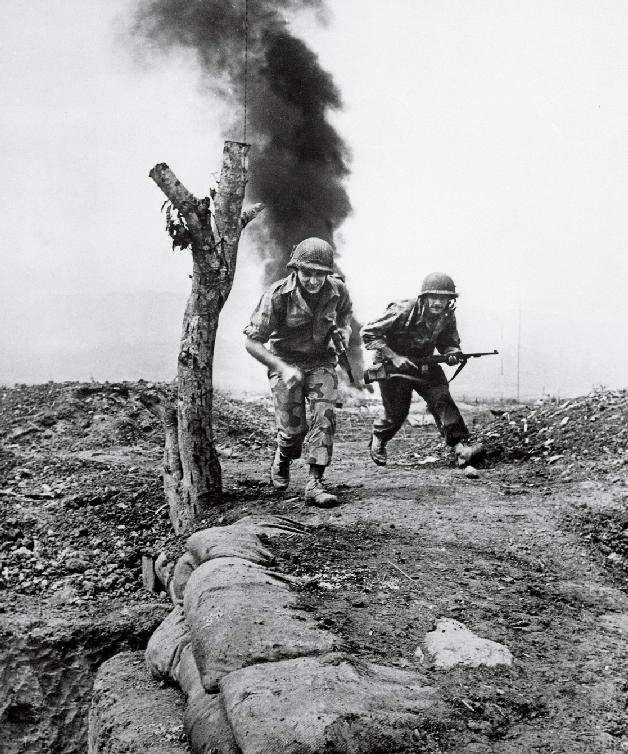
On the third day of shelling at Dien Bien Phu, French paratroopers run for cover. “We’re done for,” said one commander. “We’re heading for a massacre.”
On that day in May 1954 it had become apparent by 10 a.m. that Dien Bien Phu’s position was hopeless. French artillery and mortars had been progressively silenced by murderously accurate Communist Viet Minh artillery fire, and the monsoon rains had slowed down supply drops to a trickle and transformed the French trenches and dugouts into bottomless quagmires. The surviving officers and men, many of whom had lived for 54 days on a steady diet of instant coffee and cigarettes, were in a catatonic state of exhaustion.
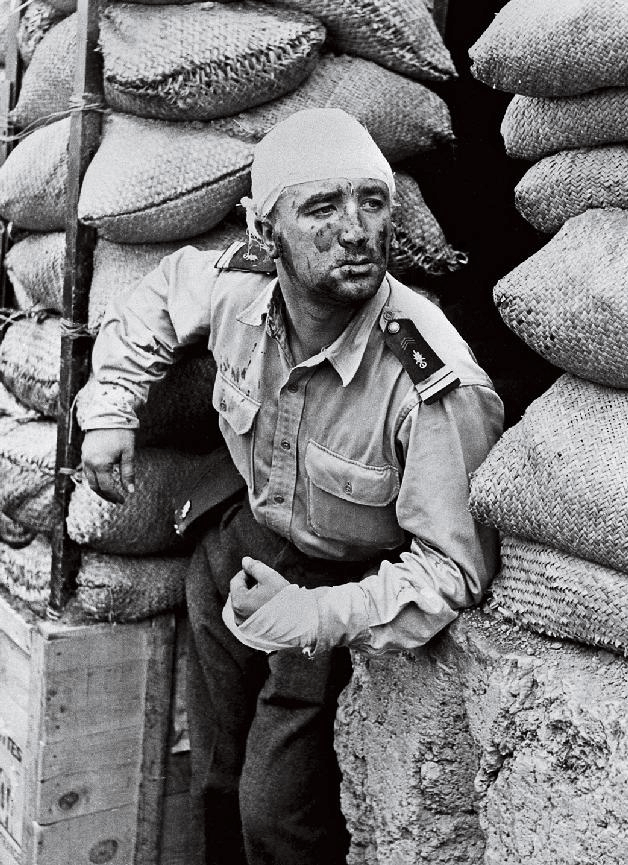
During a brief lull in the shelling, a wounded French lieutenant emerges from a makeshift underground infirmary.
While their commander, Brig. Gen. Christian de la Croix de Castries, reported the situation over the radiotelephone to General René Cogny, his theater commander 220 miles away in Hanoi, in a high-pitched but curiously impersonal voice, the end obviously had come for the fortress. De Castries ticked off a long list of 800-man battalions, which had been reduced to companies of 80 men, and of companies that were reduced to the size of weak platoons. All he could hope for was to hold out until nightfall in order to give the surviving members of his command a chance to break out into the jungle under the cover of darkness, while he himself would stay with the more than 5,000 severely wounded (out of a total of 15,094 men inside the valley) and face the enemy.
By 3 p.m., however, it had become obvious that the fortress would not last until nightfall. Communist forces, in human-wave attacks, were swarming over the last remaining defenses. De Castries polled the surviving unit commanders within reach, and the consensus was that a breakout would only lead to a senseless piecemeal massacre in the jungle. The decision was made then to fight on to the end, as long as the ammunition lasted, and let individual units be overrun after destruction of their heavy weapons. This was approved by the French senior commander in Hanoi at about 5 p.m., but with the proviso that the men in Isabelle, the southernmost strongpoint closest to the jungle, and to friendly forces in Laos, should be given a chance to make a break for it.
Cogny’s last conversation with de Castries dealt with the problem of what to do with the wounded piled up under the incredible conditions in the various strongpoints and in the fortress’ central hospital — originally built to contain 42 wounded. There had been suggestions that an orderly surrender be arranged, to save the wounded the added anguish of falling into enemy hands as isolated individuals. But Cogny was adamant on that point:
“Mon vieux, of course you have to finish the whole thing now. But what you have done until now surely is magnificent. Don’t spoil it by hoisting the white flag. You are going to be submerged by the enemy, but no surrender, no white flag.”
“All right, mon général, I only wanted to preserve the wounded.”
“Yes, I know. Well, do as best you can, leaving it to your subordinate units to act for themselves. What you have done is too magnificent to do such a thing. You understand, mon vieux.”
There was a silence. Then de Castries said his final words:
“Bien, mon général.”
“Well, good-bye, mon vieux,” said Cogny. “I’ll see you soon.”
A few minutes later, de Castries’ radio operator methodically smashed his set with the butt of his Colt .45 pistol. Thus the last word to come out of the main fortress, as it was being overrun, came at 5:50 p.m. from the radio operator of the 31st Combat Engineer Battalion, using his code name:
“This is Yankee Metro. We’re blowing up everything around here. Au revoir.”
Strongpoint Isabelle never had a chance. While the main defenses of Dien Bien Phu were being mopped up, strong Viet Minh forces already had tightened their grip around the 1,000 Legionnaires, Algerians and Frenchmen preparing their breakout. At 9:40 p.m., a French surveillance aircraft reported to Hanoi that it saw the strongpoint’s depots blowing up and that heavy artillery fire was visible close by. The breakout had been detected. At 1:50 a.m. on May 8, 1954, came the last message from the doomed garrison, relayed by the watchdog aircraft to Hanoi:
“Sortie failed—Stop—Can no longer communicate with you—Stop and end.”
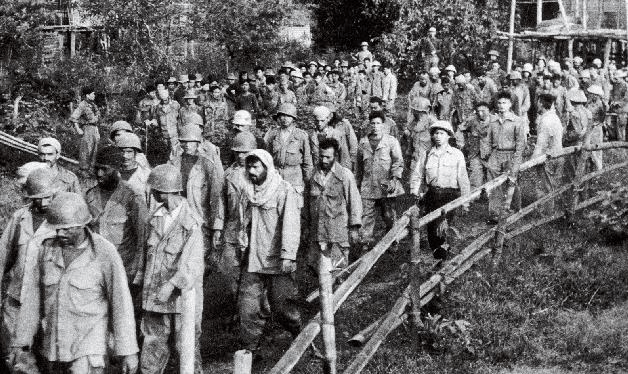
Viet Minh march past the camera some of the ten thousand prisoners who surrendered to them at Dien Bien Phu. They include troops from French colonies in North and West Africa as well as France, Germany, and Indochina.
The great battle in the valley of Dien Bien Phu was over. Close to 10,000 captured troops were to begin the grim death march to the Viet Minh prison camps 300 miles to the east. Few would survive. About 2,000 lay dead all over the battlefield in graves left unmarked to this day. Only 73 made good their escape from the various shattered strongpoints to be rescued by the pro-French guerrilla units awaiting them in the Laotian jungle. Eight thousand miles away, in Geneva, the Vietnamese and Red Chinese delegations attending the nine-power conference that was supposed to settle both the Korean and the Indochinese conflicts toasted the event with pink Chinese champagne.
What had happened at Dien Bien Phu was simply that a momentous gamble had been attempted by the French high command and had backfired badly. The Indochina War, which had broken out in December 1946 after Ho Chi Minh’s Viet Minh forces felt that France would not agree to Vietnam’s eventual independence, had bogged down into a hopeless seesaw.
Until Red China’s victorious forces arrived on Vietnam’s borders in December 1949, there had been at least a small hope that the French-supported Vietnamese nationalist government, headed by ex-emperor Bao Dai, could wean away from the Communist-led Viet Minh the allegiance of much of Vietnam’s population. But with the existence of a Red Chinese sanctuary for the Viet Minh forces, that became militarily impossible. By October 1950, 23 regular Viet Minh battalions, equipped with excellent American artillery coming from Chinese Nationalist stocks left on the mainland, smashed the French defense lines along the Chinese border and inflicted on France its biggest colonial defeat since Montcalm died before Quebec in 1759. Within weeks, the French position in northern Vietnam had shrunk to a fortified perimeter around the Red River Delta, a continuous belt of Communist-held territory from the Chinese border to within 100 miles of Saigon. For all practical purposes the Indochina War was lost then and there.
What changed the aspect of the war for a time was the influx of American aid, which began with the onset of the Korean War. With communism now a menace at both ends of the Far Eastern arc, the Indochina War changed from a colonial war into a crusade—but a crusade without a real cause. Independence, given too grudgingly to the Vietnamese nationalist regime, remained the catchword of the adversary.
Militarily, disaster had temporarily been averted. The key Red River Delta was more or less held by the French—at least during the daytime, for at night the enemy was everywhere—and the rice-rich Mekong Delta in South Vietnam, where anti-Communist Buddhist sects were fighting on the French side, was held more solidly by Western forces in 1953-54 than in 1963-64.
In Laos the situation was just as grim then as it is now: The Laotian and French forces held the Mekong valley and the airfields of the Plain of Jars, and the enemy held the rest. Only Cambodia, then as now, was almost at peace: Prince Sihanouk (then king) had received independence from France in 1953 and galvanized his people into fighting against the guerrillas. They were so successful that, at the ensuing Geneva cease-fire conference, Cambodia did not have to surrender a province as a regroupment area for Communist forces.
This totally stalemated situation required the French to create a military situation that would permit cease-fire negotiations on a basis of equality with the enemy. To achieve this, the French commander in chief, General Henri Navarre, had to win a victory over the hard core of Communist regular divisions, whose continued existence posed a constant threat of invasion to the Laotian kingdom and to the vital Red River Delta with its capital city of Hanoi and the thriving port of Haiphong. And to destroy those divisions and prevent their invasions into Laos, one had to, in American military parlance, “find ’em and fix ’em.”
General Navarre felt that the way to achieve this was by offering the Communists a target sufficiently tempting for their regular divisions to pounce at, but sufficiently strong to resist the onslaught once it came. That was the rationale for the creation of a garrison at Dien Bien Phu and for the battle that took place there.
There were other considerations also. Laos had signed a treaty with France in which the latter promised to defend it. Dien Bien Phu was to be the lock on the back door leading into Laos. Dien Bien Phu was also to be the test for a new theory of Navarre’s. Rather than defend immobile lines, he wanted to create throughout Indochina land-air bases from which highly mobile units would sally forth and decimate the enemy in his own rear areas, just as the Viet Minh guerrillas were doing in French rear areas. All of that rode on Dien Bien Phu: the freedom of Laos, a senior commander’s reputation, the survival of some of France’s best troops and — above all — a last chance to come out of that frustrating eight-year-long jungle war with something other than a total defeat.
But Navarre, an armor officer formed on the European battlefields, apparently (this was the judgment of the French government committee that later investigated the disaster) had failed to realize that there are no blocking positions in a country lacking European-type roads. Since the Viet Minh relied largely on human porters for their frontline units, they could easily bypass such bottlenecks as Dien Bien Phu or the Plain of Jars while bottling up the forces contained in those strongholds.
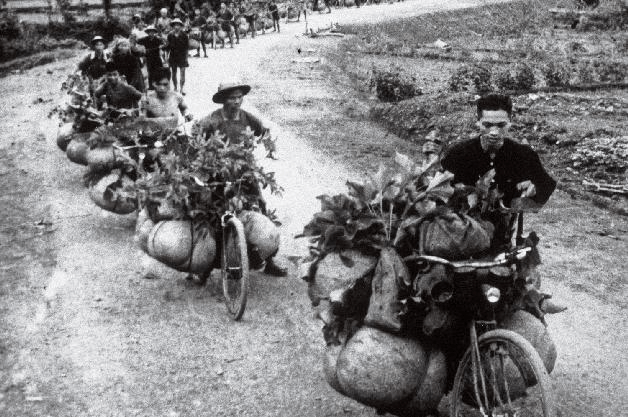
Twenty thousand men on specially reinforced bicycles carried rice and vegetables and other supplies to the Viet Minh at the front. “This method of transportation,” General Giap remembered, “greatly surprised the enemy’s army and completely upset his original calculations.”
The results were evident. Soon after French forces arrived at Dien Bien Phu on November 20, 1953, two of General Vo Nguyen Giap‘s regular 10,000-man divisions blocked the Dien Bien Phu garrison, while a third bypassed Dien Bien Phu and smashed deep into Laos. On Christmas Day 1953, Indochina, for the first time in the eight-year war, was literally cut in two. The offensive stabs for which Dien Bien Phu had been specifically planned became little else but desperate sorties against an invisible enemy. By the time the battle started in earnest on March 13, 1954, the garrison already had suffered 1,037 casualties without any tangible result.
Inside the fortress, the charming tribal village by the Nam Yum River had soon disappeared along with all the bushes and trees in the valley, to be used either as firewood or as construction materials for the bunkers. Even the residence of the French governor was dismantled in order to make use of the bricks, for engineering materials were desperately short from the beginning.
Major André Sudrat, the chief engineer at Dien Bien Phu, was faced with a problem that he knew to be mathematically unsolvable. By normal military engineering standards, the materials necessary to protect a battalion against the fire of the 105mm howitzers the Viet Minh now possessed amounted to 2,550 tons, plus 500 tons of barbed wire. He estimated that to protect the 12 battalions there initially (five others were parachuted in during the battle), he would need 36,000 tons of engineering materials — which would mean using all available transport aircraft for a period of five months. When he was told that he was allocated a total of about 3,300 tons of airlifted materials, Sudrat simply shrugged his shoulders. In that case, I’ll fortify the command post, the signal center, and the X-ray room in the hospital; and let’s hope that the Viet has no artillery.
As it turned out, the Viet Minh had more than 200 artillery pieces, reinforced during the last week of the siege by Russian Katyusha multiple rocket launchers. Soon the combination of monsoon rains, which set in around mid-April, and Viet Minh artillery fire smashed to rubble the neatly arranged dugouts and trenches shown to eminent visitors and journalists during the early days of the siege. Essentially, the battle of Dien Bien Phu degenerated into a brutal artillery duel, which the enemy would have won sooner or later. The French gun crews and artillery pieces, working entirely in the open so as to allow the pieces all-around fields of fire, were destroyed one by one; replaced, they were destroyed once more, and at last fell silent.
The artillery duel became the great tragedy of the battle. Colonel Charles Piroth, the jovial one-armed commander of the French artillery inside the fortress, had guaranteed that his 24 105mm light howitzers could match anything the Communists had, and that his battery of four 155mm medium field howitzers would definitely muzzle whatever would not be destroyed by the lighter pieces and the fighter-bombers. As it turned out, the Viet Minh artillery was so superbly camouflaged that to this day it is doubtful whether French counterbattery fire silenced more than a handful of the enemy’s fieldpieces.
When, on March 13, 1954, at 5:10 p.m., Communist artillery smothered strongpoint Beatrice without noticeable damage from French counterbattery fire, Piroth knew the fortress was doomed. And as deputy to General de Castries, he felt he had contributed to the air of overconfidence that had prevailed in the valley prior to the attack. (Had not de Castries, in the manner of his ducal forebears, sent a written challenge to enemy commander Giap?)
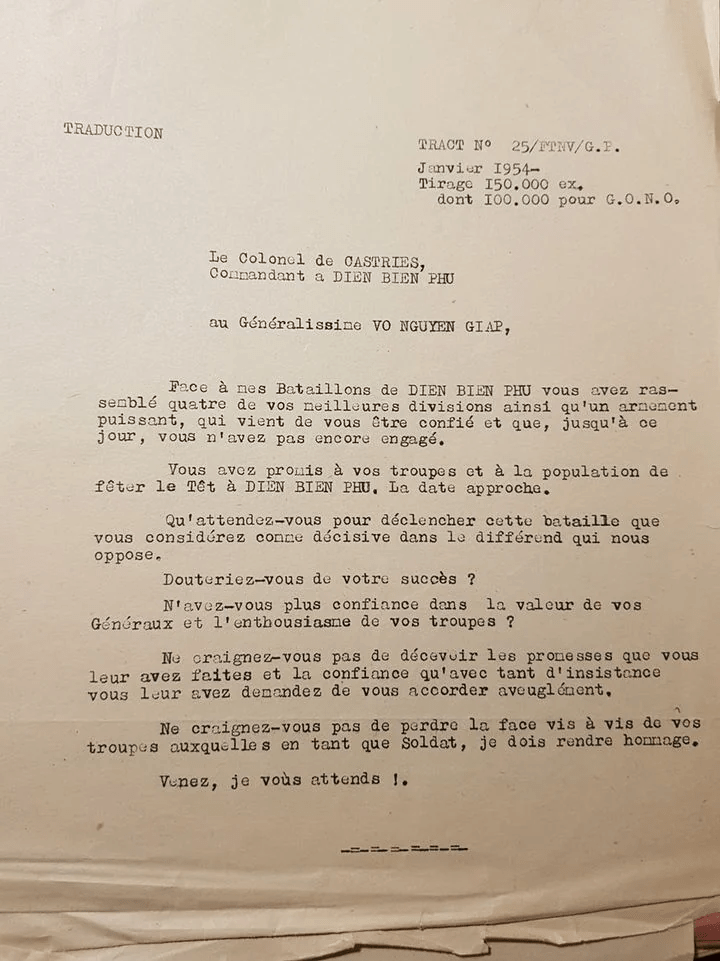
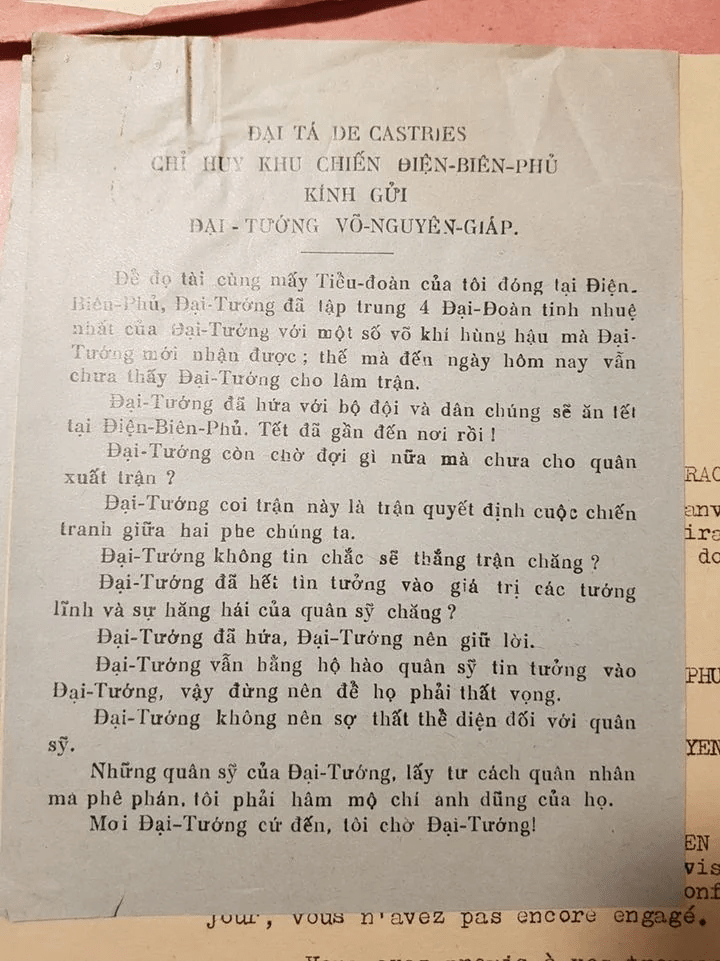
De Castries letter in 1954 (in French and in Vietnamese) to openly invite and dare General Vo Nguyen Giap to attack Dien Bien Phu.
“I am responsible. I am responsible,” he was heard to murmur as he went about his duties. During the night of March 14–15, he committed suicide by blowing himself up with a hand grenade, since he could not charge his pistol with one hand.
Originally, the fortress had been designed to protect its main airstrip against marauding Viet Minh units, not to withstand the onslaught of four Communist divisions. There never was, as press maps of the time erroneously showed, a continuous battle line covering the whole valley. Four of the eight strongpoints were from one to three miles away from the center of the position. The interlocking fire of their artillery and mortars, supplemented by a squadron of 10 tanks (flown in piecemeal and reassembled on the spot), was to prevent them from being picked off one by one.
This also proved to be an illusion. General Vo Nguyen Giap decided to take Dien Bien Phu by an extremely efficient mixture of 19th-century siege techniques (sinking TNT-laden mineshafts under French bunkers, for example) and modern artillery patterns plus human-wave attacks. The outlying posts, which protected the key airfield, were captured within the first few days of the battle. French losses proved so great that the reinforcements parachuted in after the airfield was destroyed for good on March 27 never sufficed to mount the counterattacks necessary to reconquer the outposts.

Adding to the misery of the French troops trapped at Dien Bien Phu were day-and-night exhortations to surrender, broadcast from the surrounding hills.
From then onward the struggle for Dien Bien Phu became a battle of attrition. The garrison’s only hope lay in the breakthrough of a relief column from Laos or Hanoi (a hopeless concept in view of the terrain and distances involved) or in the destruction of the siege force through massive aerial bombardment. For a time, a U.S. Air Force strike was considered, but the idea was dropped for about the same reasons that make a similar attack against North Vietnam today rather risky.
Like Stalingrad, Dien Bien Phu slowly starved on its airlift tonnage. When the siege began, it had about eight days’ worth of supplies on hand but required 200 tons a day to maintain minimum levels. The sheer magnitude of preparing that mass of supplies for parachuting was solved only by superhuman feats of the airborne supply units on the outside — efforts more than matched by the heroism of the soldiers inside the valley, who had to crawl into the open, under fire, to collect the containers.
But as the position shrank every day (it finally was the size of a ballpark), the bulk of the supplies fell into Communist hands. Even de Castries’ new general’s stars, dropped to him by General Cogny with a bottle of champagne, landed in enemy territory.
The airdrops were a harrowing experience in that narrow valley, which permitted only straight approaches. Communist anti-aircraft artillery played havoc among the lumbering transport planes as they slowly disgorged their loads. A few figures tell how murderous the air war around Dien Bien Phu was: Of the 420 aircraft available in all of Indochina then, 62 were lost in connection with Dien Bien Phu and 167 sustained hits. Some of the American civilian pilots who flew the run said that Viet Minh flak was as dense as anything encountered during World War II over the Ruhr River. When the battle ended, the 82,926 parachutes expended in supplying the fortress covered the battlefield like freshly fallen snow—or like a burial shroud.
The net effect of Dien Bien Phu on France’s military posture in Indochina could not be measured in losses alone. It was to little avail to say that France had lost only 5 percent of its battle force, that the equipment losses had already been more than made good by American supplies funneled in while the battle was raging and that even the manpower losses had been made up by reinforcements from France and new drafts of Vietnamese. Even the fact, which the unfortunate Navarre invoked later, that the attack on Dien Bien Phu cost the enemy close to 25,000 casualties and delayed its attack on the vital Red River Delta by four months, held little water in the face of the wave of defeatism that swept not only French public opinion at home but also that of her allies.
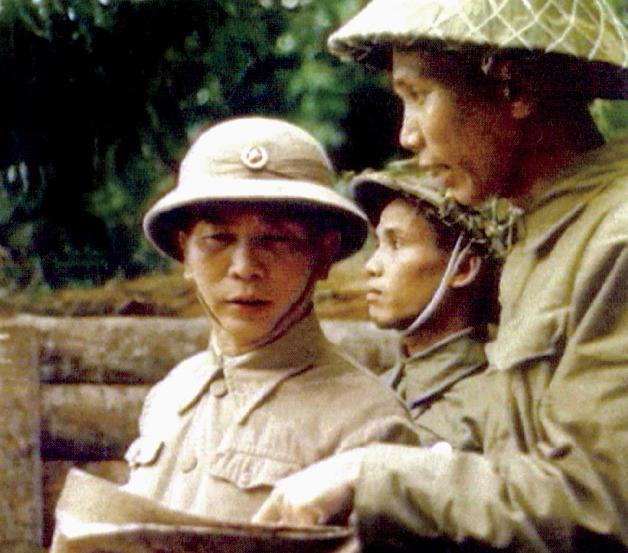
General Vo Nguyen Giap (left) in a still from a Soviet-made propaganda film about Dien Bien Phu
Historically, Dien Bien Phu was, as one French senior officer masterfully understated, never more than an unfortunate accident. It proved little else but that an encircled force, no matter how valiant, will succumb if its support system fails. But as other revolutionary wars—from Algeria to the British defeats in Cyprus and Palestine—have conclusively shown, it does not take pitched, set-piece battles to lose such wars. They can be lost just as conclusively through a series of very small engagements, such as those now fought in South Vietnam, if the local government and its population lose confidence in the eventual outcome of the contest—and that was the case both for the French and for their Vietnamese allies after Dien Bien Phu.
Still, as the French themselves demonstrated in Algeria, where they never again let themselves be maneuvered into such desperate military straits, revolutionary wars are fought for political objectives, and big showdown battles are necessary neither for victory nor for defeat in that case. This now seems finally to have been understood in the South Vietnam war as well, and U.S. Secretary of Defense Robert McNamara may well have thought of Dien Bien Phu when he stated in his major Vietnam policy speech of March 26, 1964, that we have learned that in Vietnam, political and economic progress are the sine qua non of military success…. One may only hope that the lesson has been learned in time.
On May 7, 1954, however, the struggle for Indochina was almost over for France. As a French colonel surveyed the battlefield from a slit trench near his command post, a small white flag, probably a handkerchief, appeared on top of a rifle hardly 50 feet away from him, followed by the flat-helmeted head of a Viet Minh soldier.
“You’re not going to shoot anymore?” said the Viet Minh in French.
“No, I’m not going to shoot anymore,” said the colonel.
“C’est fini?” said the Viet Minh.
“Oui, c’est fini,” said the colonel.
And all around them, as on some gruesome Judgment Day, soldiers, French and enemy alike, began to crawl out of their trenches and stand erect for the first time in 54 days, as firing ceased everywhere.
The sudden silence was deafening.

An image of Viet Minh troops planting their flag over the captured French headquarters at Dien Bien Phu, May 7, 1954. It is claimed to be from Roman Karmen’s movie still.
By Bernard B. Fall
At his untimely death in 1967, Bernard B. Fall was widely considered the greatest civilian expert on the war in Vietnam. His “Hell in a Very Small Place: The Siege of Dien Bien Phu” and “Street Without Joy” are still on the short list of the most essential books about the French phase of the war, and are indispensable to understanding the American phase.
May 3, 1964
https://www.nytimes.com/1964/05/03/archives/dienbienphu-battle-to-remember.html
Bạn có thể tải miễn phí bộ học liệu được xây dựng từ bài đọc này tại đây:
https://drive.google.com/drive/folders/1Y-mF7kRsFCgvsC0eG_5_90dZP9Tz1x0Q?usp=sharing
Tập Đọc (literally means “Reading Together”) is a bilingual English-Vietnamese journal featuring new word annotations, translations, spoken word versions (audio articles), and a free vocabulary list for the community. The project has been maintained since 2020 and has published over 80 issues to date.
Readers should be advised that the articles published in Tập Đọc do not necessarily reflect the views, attitudes, and perspectives of the editors. Readers are encouraged to form their own opinions and evaluations through a dialogue between themselves and the authors during their reading process. Only reading writers with whom one agrees is akin to only engaging in conversations with those who compliment you: it’s comfortable, but dangerous.
Hope this helps.
If you wish to support any of my projects, I would be profoundly grateful. Any support, no matter how small, will be significantly meaningful in helping me stay motivated or continue these non-profit efforts.
Please send your support to account number: 0491 0000 768 69. Account holder: Nguyễn Tiến Đạt, Vietcombank, Thăng Long branch.

Đà Nẵng, Tuesday, May 7, 2024
Nguyễn Tiến Đạt (sutucon)
BẢNG CHÚ THÍCH TỪ MỚI
| STT | Từ | Loại từ | Phiên âm | Nghĩa tiếng Anh | Nghĩa tiếng Việt |
|---|---|---|---|---|---|
| 1 | account | noun | /əˈkaʊnt/ | a report or description of an event or experience | lời mô tả |
| 2 | garrison | noun | /ˈɡærɪsᵊn/ | a body of troops stationed in a particular location, especially a fortified military post | đồn trú |
| 3 | qualify | verb | /ˈkwɒlɪfaɪ/ | to be eligible or suitable for a certain position or condition | đủ điều kiện |
| 4 | decisive | adjective | /dɪˈsaɪsɪv/ | conclusive in its outcome; determining the final result | quyết định |
| 5 | siege | noun | /siːʤ/ | a military operation in which enemy forces surround a town or building, cutting off essential supplies, with the aim of compelling the surrender of those inside | bao vây |
| 6 | ironing out agreements | verb phrase (idiomatic) | /ˈaɪənɪŋ/ /aʊt/ /əˈɡriːmənts/ | resolving issues or finalizing details in negotiations to reach a consensus | làm phẳng các thỏa thuận |
| 7 | Indochina | noun | / ˈɪn doʊˈtʃaɪ nə / | a geographical term for an area in southeast asia roughly covering modern-day vietnam, laos, and cambodia | Đông Dương |
| 8 | troops | noun (plural) | /truːps/ | soldiers or armed forces | quân đội |
| 9 | fortress | noun | /ˈfɔːtrəs/ | a heavily protected and fortified building or strategic location | pháo đài |
| 10 | spell | noun | /spɛl/ | a period or state of successful influence or control | giai đoạn |
| 11 | hegemony | noun | /hɪˈɡɛməni/ | leadership or dominance, especially by one country or social group over others | bá quyền |
| 12 | subjugation | noun | /ˌsʌbʤʊˈɡeɪʃᵊn/ | the action of bringing someone or something under domination or control | sự chinh phục |
| 13 | guerrillas | noun (plural) | /ɡəˈrɪləz/ | members of a small independent group taking part in irregular fighting, typically against larger regular forces | du kích |
| 14 | withstand | verb | /wɪðˈstænd/ | remain undamaged or unaffected by; resist | chống chịu |
| 15 | potent | adjective | /ˈpəʊtᵊnt/ | having great power, influence, or effect | mạnh mẽ |
| 16 | alien | adjective | /ˈeɪliən/ | belonging to a foreign country or nation | ngoại lai |
| 17 | shelling | noun (gerund) | /ˈʃɛlɪŋ/ | bombarding with artillery | bắn phá |
| 18 | paratroopers | noun (plural) | /ˈpærəˌtruːpəz/ | soldiers trained to parachute into an operation | lính dù |
| 19 | run for cover | verb phrase (idiomatic) | /rʌn/ /fə/ /ˈkʌvə/ | to quickly move to a place where one is less exposed to danger | chạy trốn |
| 20 | we’re done for | phrase (idiomatic) | /wɪə/ /dʌn/ /fɔː/ | an expression indicating that there is no hope left; doomed | chúng ta đã xong |
| 21 | commander | noun | /kəˈmɑːndə/ | a person in authority, especially over a body of troops or a military operation | chỉ huy |
| 22 | massacre | noun | /ˈmæsəkə/ | an indiscriminate and brutal slaughter of many people | thảm sát |
| 23 | apparent | adjective | /əˈpærᵊnt/ | clearly visible or understood; obvious | rõ ràng |
| 24 | artillery | noun | /ɑːˈtɪlᵊri/ | large-caliber guns used in warfare on land | pháo binh |
| 25 | mortars | noun (plural) | /ˈmɔːtəz/ | a type of artillery, a portable, muzzle-loading cannon used to fire shells at low velocities, short ranges, and high arcing trajectories | loại súng cối |
| 26 | monsoon rains | noun phrase | /mɒnˈsuːn/ /reɪnz/ | seasonal rains which occur in tropical regions, usually heavy and causing widespread flooding | mưa mùa |
| 27 | to a trickle | noun phrase (idiomatic) | /tu/ /ə/ /ˈtrɪkᵊl/ | to reduce to a very small amount; diminish significantly | cạn kiệt |
| 28 | trenches | noun (plural) | /ˈtrɛnʧɪz/ | long, narrow ditches dug into the ground where soldiers shelter from enemy fire | hào |
| 29 | dugouts | noun (plural) | /ˈdʌɡaʊts/ | sheltered places, especially a pit dug in the ground, used by troops in warfare to shelter from enemy fire | hầm trú ẩn |
| 30 | quagmires | noun (plural) | /ˈkwæɡmaɪəz/ | a soft boggy area of land that gives way underfoot or a complex or hazardous situation from which it is difficult to free oneself | lầy lội |
| 31 | catatonic | adjective | / ˌkæt əˈtɒn ɪk / | relating to or characterized by catatonia, a state of immobility and stupor | hôn mê |
| 32 | exhaustion | noun | /ɪɡˈzɔːsʧᵊn/ | a state of extreme physical or mental fatigue | kiệt sức |
| 33 | lull | noun | /lʌl/ | a temporary interval of quiet or lack of activity | lắng |
| 34 | lieutenant | noun | /lɛfˈtɛnənt/ | a junior officer rank in the army, navy, or air force | thiếu úy |
| 35 | makeshift | adjective | /ˈmeɪkʃɪft/ | serving as a temporary substitute; sufficient for the time being | tạm bợ |
| 36 | infirmary | noun | /ɪnˈfɜːmᵊri/ | a place in a large institution for the care of those who are ill | phòng bệnh |
| 37 | brig gen | noun (abbreviation) | /brɪɡ/ /ʤɛn/ | abbreviation for brigadier general, a senior rank in the army | thiếu tướng |
| 38 | radiotelephone | noun | /ˈreɪdiəʊ/ /ˈtɛlɪfəʊn/ | a system for transmitting voices over a distance using radio | điện thoại vô tuyến |
| 39 | theater commander | noun phrase | /ˈθɪətə/ /kəˈmɑːndə/ | the officer in charge of all the military operations in a specific geographic area | chỉ huy trưởng |
| 40 | impersonal | adjective | /ɪmˈpɜːsᵊnᵊl/ | not influenced by, showing, or involving personal feelings | khách quan |
| 41 | battalions | noun (plural) | /bəˈtæliənz/ | large groups of soldiers, usually 300 to 800, forming part of a brigade | tiểu đoàn |
| 42 | companies | noun (plural) | /ˈkʌmpəniz/ | subdivisions of military battalions, typically commanded by a major or captain | công ty (trong quân đội) |
| 43 | platoons | noun (plural) | /pləˈtuːnz/ | sub-units of a company in the army, typically composed of around 20 to 50 soldiers | đội |
| 44 | break out | verb phrase | /breɪk/ /aʊt/ | to escape from confinement or a difficult situation | phá vỡ |
| 45 | severely wounded | adjective phrase | /sɪˈvɪəli/ /ˈwuːndɪd/ | suffering from very serious injuries | trọng thương |
| 46 | human-wave attacks | noun phrase | /ˈhjuːmən/-/weɪv/ /əˈtæks/ | military assaults by densely concentrated infantry formations, often designed to overwhelm the enemy by sheer number | tấn công sóng người |
| 47 | swarming over | verb phrase (participle) | /ˈswɔːmɪŋ/ /ˈəʊvə/ | moving in a mass or crowd, usually in a chaotic manner | đổ xô |
| 48 | polled | verb (past participle) | /pəʊld/ | to record the opinion or vote of | thăm dò ý kiến |
| 49 | the consensus | noun phrase | /ðə/ /kənˈsɛnsəs/ | general agreement among a group of people | sự đồng thuận |
| 50 | a breakout | noun phrase | /ə/ /ˈbreɪkaʊt/ | an escape from confinement or besiegement, especially by groups of people | phá vỡ |
| 51 | senseless | adjective | /ˈsɛnsləs/ | lacking common sense; wildly unreasonable | vô lý |
| 52 | piecemeal | adjective | /ˈpiːsmiːl/ | characterized by unsystematic partial measures taken over a period of time | từng phần |
| 53 | ammunition | noun | /ˌæmjəˈnɪʃᵊn/ | a supply of bullets and shells | đạn dược |
| 54 | overrun | verb | /ˌəʊvəˈrʌn/ | spread over or occupy (a place) in large numbers | tràn ngập |
| 55 | senior commander | noun phrase | /ˈsiːniə/ /kəˈmɑːndə/ | the highest-ranking officer in a particular area or operation | chỉ huy cao cấp |
| 56 | with the proviso that | conjunction phrase | /wɪð/ /ðə/ /prəˈvaɪzəʊ/ /ðæt/ | provided that; on the condition that | với điều kiện là |
| 57 | southernmost | adjective | /ˈsʌðənməʊst/ | situated furthest to the south | cực nam |
| 58 | strongpoint | noun | /strɒŋ/ /pɔɪnt/ | a fortified position strategically important to a military operation | điểm mạnh |
| 59 | friendly forces | noun phrase | /ˈfrɛndli/ /ˈfɔːsɪz/ | military forces allied or on the same side | lực lượng thân thiện |
| 60 | make a break for it | verb phrase (idiomatic) | /meɪk/ /ə/ /breɪk/ /fər/ /ɪt/ | to suddenly run in an attempt to escape | bỏ chạy |
| 61 | the wounded | noun phrase | /ðə/ /ˈwuːndɪd/ | those who have been injured, especially in a battle | người bị thương |
| 62 | originally | adverb | /əˈrɪʤᵊnᵊli/ | at first; in the beginning | ban đầu |
| 63 | anguish | noun | /ˈæŋɡwɪʃ/ | severe mental or physical pain or suffering | đau đớn |
| 64 | isolated individuals | noun phrase | /ˈaɪsəleɪtɪd/ /ˌɪndɪˈvɪʤuəlz/ | persons who are alone and without support or help | cá nhân cô lập |
| 65 | adamant | adjective | /ˈædəmənt/ | refusing to be persuaded or to change one’s mind; very determined | kiên quyết |
| 66 | magnificent | adjective | /mæɡˈnɪfɪsᵊnt/ | extremely beautiful, elaborate, or impressive | tráng lệ |
| 67 | spoil | verb | /spɔːɪl/ | diminish or destroy the value or quality of something | làm hỏng |
| 68 | hoisting the white flag | verb phrase (participle) | /ˈhɔɪstɪŋ/ /ðə/ /waɪt/ /flæɡ/ | a symbol of surrender, indicating cessation of fighting and submission to the opponent | giương cờ trắng |
| 69 | submerged | adjective | /səbˈmɜːʤd/ | overwhelmed or covered completely | chìm ngập |
| 70 | preserve | verb | /prɪˈzɜːv/ | maintain (something) in its original or existing state | bảo tồn |
| 71 | subordinate | noun/adjective | /səˈbɔːdɪnət/ | lower in rank or position; a person under the authority or control of another within an organization | cấp dưới |
| 72 | radio operator | noun phrase | /ˈreɪdiəʊ/ /ˈɒpᵊreɪtə/ | a person who operates a radio transmission and reception equipment | người điều khiển radio |
| 73 | methodically | adverb | /məˈθɒdɪkᵊli/ | in an orderly or systematic manner | có phương pháp |
| 74 | pistol | noun | /ˈpɪstᵊl/ | a small firearm designed to be held in one hand | súng ngắn |
| 75 | being mopped up | passive participle phrase | /ˈbiːɪŋ/ /mɒpt/ /ʌp/ | a military term used to describe the process of clearing up remaining enemy resistance after the major part of a battle has been won | quét sạch |
| 76 | tightened their grip around | verb phrase | /ˈtaɪtᵊnd/ /ðeə/ /ɡrɪp/ /əˈraʊnd/ | to gain more control or become more forceful | siết chặt quyền kiểm soát |
| 77 | legionnaires | noun | /ˌliːʤəˈneəz/ | soldiers in a legion, particularly referring to the french foreign legion | lính đoàn |
| 78 | surveillance aircraft | noun phrase | /səˈveɪləns/ /ˈeəkrɑːft/ | an aircraft used for monitoring and gathering information, typically for military or security purposes | máy bay do thám |
| 79 | doomed | adjective | /duːmd/ | destined to fail or suffer a disastrous fate | bị định đoạt |
| 80 | relayed | verb (past tense) | /ˌrɪˈleɪd/ | transmitted a message or information to another person or place | truyền đạt |
| 81 | watchdog aircraft | noun phrase | /ˈwɒʧdɒɡ/ /ˈeəkrɑːft/ | an aircraft assigned to oversee or monitor a particular area or operation | máy bay giám sát |
| 82 | sortie | noun | /ˈsɔːti/ | a sudden attack made by troops coming out from a position of defense | đợt tấn công |
| 83 | grim | adjective | /ɡrɪm/ | harsh and forbidding, often used to describe a serious, dire situation | khắc nghiệt |
| 84 | death march | noun phrase | /dɛθ/ /mɑːʧ/ | a forced march of prisoners, typically under harsh conditions, with many expected not to survive | hành trình tử thần |
| 85 | prison camps | noun phrase | /ˈprɪzᵊn/ /kæmps/ | places where prisoners of war or political prisoners are detained | trại tù nhân |
| 86 | made good | verb phrase (past tense) | /meɪd/ /ɡʊd/ | successfully managed to escape or achieve a goal | thành công |
| 87 | shattered | verb (past tense)/adjective | /ˈʃætəd/ | broken into pieces; severely damaged | vỡ vụn |
| 88 | pro-french | adjective | /prəʊ/-/frɛnʧ/ | supporting or favoring france or french policies | ủng hộ Pháp |
| 89 | guerrilla | noun | /ɡəˈrɪlə/ | a member of a small independent group taking part in irregular fighting, typically against larger regular forces | du kích |
| 90 | units | noun | /ˈjuːnɪts/ | groups organized for particular purposes, especially military ones | đơn vị |
| 91 | laotian | adjective/noun | /ˈlaʊʃᵊn/ | pertaining to laos, a country in southeast asia | người Lào |
| 92 | delegations | noun | /ˌdɛlɪˈɡeɪʃᵊnz/ | groups of people sent to represent others, typically at a conference or formal event | phái đoàn |
| 93 | toasted | verb (past tense) | /ˈtəʊstɪd/ | raised a glass and drank in honor of a particular occasion or event | nâng ly |
| 94 | momentous | adjective | /məʊˈmɛntəs/ | of great importance or significance, especially in its bearing on the future | trọng đại |
| 95 | gamble | verb/noun | /ˈɡæmbᵊl/ | a risky action or decision taken in the hope of a desired result | mạo hiểm |
| 96 | high command | noun phrase | /haɪ/ /kəˈmɑːnd/ | the top leaders or highest ranks in a military organization | chỉ huy cao cấp |
| 97 | backfired | verb (past tense) | /ˌbækˈfaɪəd/ | had the opposite effect to what was intended or expected | phản tác dụng |
| 98 | bogged down | verb phrase (past participle) | /bɒɡd/ /daʊn/ | slowed down and made difficult; hindered by obstacles or complications | bị sa lầy |
| 99 | wean away | verb phrase | /wiːn/ /əˈweɪ/ | gradually reduce dependence on something | cai |
| 100 | allegiance | noun | /əˈliːʤᵊns/ | loyalty or commitment to a group, cause, or nation | lòng trung thành |
| 101 | sanctuary | noun | /ˈsæŋkʧʊəri/ | a place of refuge or safety | nơi trú ẩn |
| 102 | inflicted | verb (past tense) | /ɪnˈflɪktɪd/ | caused (something unpleasant or painful) to be suffered by someone or something | gây ra |
| 103 | fortified | verb (past participle)/adjective | /ˈfɔːtɪfaɪd/ | strengthened against attack | củng cố |
| 104 | perimeter | noun | /pəˈrɪmɪtə/ | the outer limits or edge of an area or surface | chu vi |
| 105 | territory | noun | /ˈtɛrɪtᵊri/ | an area of land under the jurisdiction of a ruler or state | lãnh thổ |
| 106 | for all practical purposes | adverbial phrase | /fər/ /ɔːl/ /ˈpræktɪkᵊl/ /ˈpɜːpəsɪz/ | in every important respect; practically | về mọi mặt thực tế |
| 107 | influx | noun | /ˈɪnflʌks/ | an arrival or entry of large numbers of people or things | sự tràn vào |
| 108 | aid | noun/verb | /eɪd/ | assistance, typically of a practical nature | sự giúp đỡ |
| 109 | onset | noun | /ˈɒnsɛt/ | the beginning or start | sự bắt đầu |
| 110 | menace | noun/verb | /ˈmɛnəs/ | a threat or danger | mối đe dọa |
| 111 | the far eastern arc | noun phrase | /ðə/ /fɑːr/ /ˈiːstᵊn/ /ɑːk/ | a term possibly referring to a geographical area in east asia forming a curved shape | vùng cung Đông Á |
| 112 | a colonial war | noun phrase | /ə/ /kəˈləʊniəl/ /wɔː/ | a war fought by a colonizing power to maintain or extend its control over foreign colonies | cuộc chiến thuộc địa |
| 113 | a crusade | noun | /ə/ /kruːˈseɪd/ | a vigorous campaign for political, social, or religious change | cuộc vận động mạnh mẽ |
| 114 | grudgingly | adverb | /ˈɡrʌʤɪŋli/ | reluctantly or resentfully | miễn cưỡng |
| 115 | regime | noun | /reɪˈʒiːm/ | a government, especially an authoritarian one | chế độ |
| 116 | the catchword | noun phrase | /ðə/ /ˈkæʧwɜːd/ | a popular or trendy word or phrase | từ khóa |
| 117 | adversary | noun | /ˈædvəsᵊri/ | one’s opponent in a contest, conflict, or dispute | đối thủ |
| 118 | averted | verb (past tense) | /əˈvɜːtɪd/ | prevented or turned away | ngăn chặn |
| 119 | sects | noun | /sɛkts/ | groups of people with somewhat different religious beliefs from those of a larger group to which they belong | các giáo phái |
| 120 | solidly | adverb | /ˈsɒlɪdli/ | firmly, with strength and reliability | vững chắc |
| 121 | the plain of jars | noun phrase | /ðə/ /pleɪn/ /əv/ /ʤɑːz/ | a historic area in laos known for its large group of iron age megalithic artifacts | Cao nguyên Lọ Mọ |
| 122 | galvanized | verb (past participle)/adjective | /ˈɡælvənaɪzd/ | stimulated into action; motivated | kích động |
| 123 | ensuing | adjective | /ɪnˈsjuːɪŋ/ | following immediately afterward | tiếp theo |
| 124 | cease-fire | noun | /ˈsiːsˌfaɪə/ | a temporary suspension of fighting; a truce | ngừng bắn |
| 125 | conference | noun | /ˈkɒnfᵊrᵊns/ | a formal meeting for discussion, typically involving multiple people or groups | hội nghị |
| 126 | province | noun | /ˈprɒvɪns/ | a principal administrative division of certain countries or empires | tỉnh |
| 127 | a regroupment area | noun phrase | /ə/ /ˌriːˈɡruːpmənt/ /ˈeəriə/ | a designated zone where troops gather or reorganize | khu vực tái tổ chức |
| 128 | stalemated situation | noun phrase | /ˈsteɪlˈmeɪtɪd/ /ˌsɪʧuˈeɪʃᵊn/ | a situation in which further action or progress by opposing parties seems impossible | tình thế bế tắc |
| 129 | permit | verb/noun | /ˈpɜːmɪt/ | allow or authorize | cho phép |
| 130 | on a basis of equality | prepositional phrase | /ɒn/ /ə/ /ˈbeɪsɪs/ /əv/ /iˈkwɒləti/ | in a manner that ensures equal status, rights, and opportunities | trên cơ sở bình đẳng |
| 131 | posed a constant threat | verb phrase | /pəʊzd/ /ə/ /ˈkɒnstᵊnt/ /θrɛt/ | represented an ongoing and serious danger | tạo ra mối đe dọa liên tục |
| 132 | invasion | noun | /ɪnˈveɪʒᵊn/ | an instance of invading a country or region with an armed force | sự xâm lược |
| 133 | vital | adjective | /ˈvaɪtᵊl/ | absolutely necessary or important; essential | thiết yếu |
| 134 | thriving | verb (present participle)/adjective | /ˈθraɪvɪŋ/ | flourishing; successful | phát triển thịnh vượng |
| 135 | parlance | noun | /ˈpɑːləns/ | a particular way of speaking or using words, especially a way common to those with a particular job or interest | ngôn ngữ chuyên môn |
| 136 | sufficiently | adverb | /səˈfɪʃᵊntli/ | adequately; enough | đủ |
| 137 | tempting | adjective | /ˈtɛmptɪŋ/ | attractive or appealing | hấp dẫn |
| 138 | pounce at | verb phrase | /paʊns/ /æt/ | to attack suddenly | nhảy vào |
| 139 | resist | verb | /rɪˈzɪst/ | withstand the action or effect of | chống lại |
| 140 | onslaught | noun | /ˈɒnslɔːt/ | a fierce or destructive attack | cuộc tấn công |
| 141 | rationale | noun | /ˌræʃəˈnɑːl/ | the underlying reason or explanation | lý do chính đáng |
| 142 | garrison | noun | /ˈɡærɪsᵊn/ | the troops stationed in a fortress or town to defend it | đồn trú |
| 143 | treaty | noun | /ˈtriːti/ | a formally concluded and ratified agreement between countries | hiệp ước |
| 144 | immobile | adjective | /ɪˈməʊbaɪl/ | not moving; stationary | bất động |
| 145 | mobile | adjective | /ˈməʊbaɪl/ | able to move or be moved freely or easily | di động |
| 146 | sally forth | verb phrase | /ˈsæli/ /fɔːθ/ | to set out from a position or place on a task or mission | tiến ra |
| 147 | decimate | verb | /ˈdɛsɪmeɪt/ | to destroy or kill a large part of (originally one tenth) | tàn phá |
| 148 | rear areas | noun phrase | /rɪər/ /ˈeəriəz/ | the zone of a battlefield away from the fighting, used for logistics and management | khu vực hậu phương |
| 149 | reputation | noun | /ˌrɛpjəˈteɪʃᵊn/ | the beliefs or opinions that are generally held about someone or something | danh tiếng |
| 150 | an armor officer | noun phrase | /ən/ /ˈɑːmər/ /ˈɒfɪsə/ | a military officer specializing in armored or mechanized troops | sĩ quan lục quân |
| 151 | human porters | noun phrase | /ˈhjuːmən/ /ˈpɔːtəz/ | people who carry supplies, especially in regions difficult for vehicles to access | người vận chuyển |
| 152 | frontline | noun | /ˈfrʌntlaɪn/ | the military line or part closest to the area of conflict | tiền tuyến |
| 153 | bypass | verb | /ˈbaɪpɑːs/ | go around or avoid | đi vòng |
| 154 | bottlenecks | noun | /ˈbɒtᵊlnɛks/ | a narrow section that impedes traffic flow | điểm nghẽn |
| 155 | bottling up | verb phrase | /ˈbɒtᵊlɪŋ/ /ʌp/ | to confine or restrict within a limited area | giam cầm |
| 156 | strongholds | noun | /ˈstrɒŋhəʊldz/ | fortified places; fortresses | pháo đài |
| 157 | reinforced | adjective | /ˌriːɪnˈfɔːst/ | strengthened or enhanced with additional support, typically for increased durability or effectiveness | tăng cường |
| 158 | supplies | noun | /səˈplaɪz/ | materials, equipment, or provisions needed for a particular purpose, especially for a group or activity | nguồn cung cấp |
| 159 | offensive | noun | /əˈfɛnsɪv/ | an aggressive military operation aimed at gaining control or achieving a specific objective | cuộc tấn công |
| 160 | desperate | adjective | /ˈdɛspᵊrət/ | showing a willingness to take extreme measures due to a sense of urgency or necessity, often in dire situations | tuyệt vọng |
| 161 | in earnest | adverbial phrase | /ɪn/ /ˈɜːnɪst/ | beginning to happen or perform seriously and intensely | nghiêm túc |
| 162 | suffered | verb | /ˈsʌfəd/ | experienced or underwent pain, injury, or loss | chịu đựng |
| 163 | casualties | noun | /ˈkæʒjuəltiz/ | individuals killed or injured in a war or accident | thương vong |
| 164 | tangible | adjective | /ˈtænʤəbᵊl/ | perceptible by touch or clear and definite enough to be easily seen or noticed | hữu hình |
| 165 | fortress | noun | /ˈfɔːtrəs/ | a heavily protected and fortified building or place, designed to resist attacks | pháo đài |
| 166 | charming | adjective | /ˈʧɑːmɪŋ/ | pleasant or attractive | duyên dáng |
| 167 | tribal | adjective | /ˈtraɪbᵊl/ | relating to, or characteristic of a tribe or tribes | bộ lạc |
| 168 | residence | noun | /ˈrɛzɪdᵊns/ | a place where someone lives; a home | nơi ở |
| 169 | governor | noun | /ˈɡʌvᵊnə/ | an official appointed to govern a town, region, or state | thống đốc |
| 170 | dismantled | verb | /dɪˈsmæntᵊld/ | taken apart or disassembled | tháo dỡ |
| 171 | make use of | verb phrase | /meɪk/ /juːz/ /ɒv/ | to utilize for a purpose or benefit | tận dụng |
| 172 | unsolvable | adjective | /ˌʌnˈsɒlvəbᵊl/ | not able to be solved or resolved | không thể giải quyết |
| 173 | howitzers | noun | /ˈhaʊɪtsəz/ | a type of artillery piece characterized by a relatively short barrel and the use of comparatively small propellant charges to propel projectiles over high trajectories | pháo binh |
| 174 | amounted to | verb phrase | /əˈmaʊntɪd/ /tu/ | equaled in total; added up to | tổng cộng |
| 175 | barbed wire | noun | /bɑːbd/ /ˈwaɪə/ | strong wire with barbs at regular intervals used to prevent passage | dây thép gai |
| 176 | estimated | verb | /ˈɛstɪmeɪtɪd/ | roughly calculated or judged the value, number, quantity, or extent of | ước tính |
| 177 | initially | adverb | /ɪˈnɪʃᵊli/ | at the beginning; first | ban đầu |
| 178 | parachuted | verb | /ˈpærəʃuːtɪd/ | dropped from an aircraft by parachute | nhảy dù |
| 179 | engineering materials | noun phrase | /ˌɛnʤɪˈnɪərɪŋ/ /məˈtɪəriəlz/ | substances used in the construction or manufacture of structures, especially large ones such as roads, bridges, or buildings | vật liệu kỹ thuật |
| 180 | allocated | verb | /ˈæləʊkeɪtɪd/ | distributed according to a plan or set apart for a special purpose | phân bổ |
| 181 | airlifted materials | noun phrase | /ˈeəlɪftɪd/ /məˈtɪəriəlz/ | items transported by aircraft, typically for logistical support in inaccessible areas | vật liệu vận chuyển bằng đường không |
| 182 | fortify | verb | /ˈfɔːtɪfaɪ/ | strengthen or secure (a place) against attack | củng cố |
| 183 | command post | noun | /kəˈmɑːnd/ /pəʊst/ | a place from which military operations are directed | bộ chỉ huy |
| 184 | signal center | noun | /ˈsɪɡnᵊl/ /ˈsɛntə/ | a facility from which communications and signals are coordinated and managed | trung tâm tín hiệu |
| 185 | multiple rocket launchers | noun phrase | /ˈmʌltɪpᵊl/ /ˈrɒkɪt/ /ˈlɔːnʧəz/ | weapons that fire rockets in rapid succession, typically used to deliver explosives to a target area | bệ phóng rocket đa năng |
| 186 | dugouts | noun | /ˈdʌɡaʊts/ | sheltered places, often underground, used by troops to protect themselves from the enemy | hầm trú ẩn |
| 187 | eminent | adjective | /ˈɛmɪnənt/ | famous and respected within a particular sphere or profession | nổi bật |
| 188 | degenerated | verb | /dɪˈʤɛnəreɪtɪd/ | declined or deteriorated physically, mentally, or morally | suy thoái |
| 189 | duel | noun | /ˈdjuːəl/ | a contest between two parties, typically involving combat between two individuals | cuộc đấu |
| 190 | jovial | adjective | /ˈʤəʊviəl/ | cheerful and friendly | vui vẻ |
| 191 | one-armed | adjective | /ˌwʌnˈɑːmd/ | having only one arm | một tay |
| 192 | battery | noun | /ˈbætᵊri/ | a set of units of equipment, typically artillery, grouped together to facilitate their operation | đại đội pháo |
| 193 | muzzle | verb | /ˈmʌzᵊl/ | to restrain or block | bịt miệng |
| 194 | fighter-bombers | noun | /ˈfaɪtə/-/ˈbɒməz/ | aircraft designed to attack ground and naval targets, capable of engaging in air-to-air combat | máy bay chiến đấu-bom |
| 195 | superbly | adverb | /suːˈpɜːbli/ | excellently; in a splendid manner | tuyệt vời |
| 196 | camouflaged | verb | /ˈkæmʊflɑːʒd/ | disguised or concealed by means of camouflage | ngụy trang |
| 197 | counterbattery | adjective (used attributively in noun phrases) | /ˈkaʊntə/ /ˈbætᵊri/ | directed against an enemy’s artillery | phản pháo |
| 198 | silenced | verb | /ˈsaɪlənst/ | stopped from firing through force or authority | làm câm lặng |
| 199 | fieldpieces | noun | /fiːld/ /ˈpiːsɪz/ | mobile artillery pieces | pháo đài di động |
| 200 | smothered | verb | /ˈsmʌðəd/ | completely covered or overwhelmed | bị bao phủ |
| 201 | counterbattery fire | noun phrase | /ˈkaʊntə/ /ˈbætᵊri/ /faɪə/ | artillery fire aimed at neutralizing or destroying the enemy’s artillery | pháo kích phản công |
| 202 | deputy | noun | /ˈdɛpjəti/ | a person appointed to assist or act for another in a subordinate capacity | phó, phụ tá |
| 203 | overconfidence | noun | /ˌəʊvəˈkɒnfɪdᵊns/ | excessively confident; having too much confidence | tự tin thái quá |
| 204 | prevailed | verb | /prɪˈveɪld/ | proved more powerful or effective; predominated | chiếm ưu thế, thắng thế |
| 205 | prior to | preposition phrase | /ˈpraɪə/ /tu/ | before a particular time or event | trước khi |
| 206 | ducal | adjective | /ˈdjuːkᵊl/ | pertaining to or befitting a duke | thuộc về hoặc xứng với công tước |
| 207 | forebears | noun | /fɔːˈbeəz/ | ancestors | tổ tiên |
| 208 | dare | verb | /deə/ | challenge or provoke someone to do something that requires courage | thách thức |
| 209 | murmur | verb | /ˈmɜːmə/ | speak or say something in a soft, low voice, typically in a manner that is not intended to be heard clearly | thì thầm, nói nhỏ |
| 210 | airstrip | noun | /ˈeəstrɪp/ | a narrow strip of land prepared for the landing and take-off of aircraft | đường băng |
| 211 | marauding | verb (participle) | /məˈrɔːdɪŋ/ | going about in search of things to steal or people to attack | đi cướp bóc |
| 212 | onslaught | noun | /ˈɒnslɔːt/ | a fierce or destructive attack | cuộc tấn công dữ dội |
| 213 | erroneously | adverb | /ɪˈrəʊniəsli/ | in error; mistakenly | một cách sai lầm |
| 214 | interlocking | verb (participle) | /ˌɪntəˈlɒkɪŋ/ | fitting together cohesively | khớp vào nhau |
| 215 | supplemented | verb (past participle) | /ˈsʌplɪmɛntɪd/ | added to something else in order to enhance or complete it | bổ sung |
| 216 | squadron | noun | /ˈskwɒdrən/ | a group of warships or aircraft operating together under the same command | phi đội |
| 217 | piecemeal | adjective | /ˈpiːsmiːl/ | done or happening in stages or one step at a time | từng phần, từng bước một |
| 218 | reassembled | verb (past participle) | /ˌriːəˈsɛmbᵊld/ | put together again | lắp ráp lại |
| 219 | on the spot | idiom (adverbial phrase) | /ɒn/ /ðə/ /spɒt/ | immediately or at the place where an event is happening | tại chỗ, ngay lập tức |
| 220 | laden | verb (past participle, also used as an adjective) | /ˈleɪdᵊn/ | heavily loaded or weighed down | chất đầy, nặng trĩu |
| 221 | mineshafts | noun (plural) | /maɪn/ /ʃɑːfts/ | excavations in the earth from which minerals or coal can be extracted | hầm mỏ |
| 222 | bunkers | noun (plural) | /ˈbʌŋkəz/ | reinforced underground shelters, typically used in wartime | hầm trú ẩn |
| 223 | outlying | adjective | /ˈaʊtˌlaɪɪŋ/ | situated far from a center; located on the outskirts | xa trung tâm |
| 224 | sufficed | verb (past) | /səˈfaɪst/ | was enough or adequate | đủ |
| 225 | mount the counterattacks | verb phrase | /maʊnt/ /ðə/ /ˈkaʊntərəˌtæks/ | organize and initiate attacks in response to a previous attack | tổ chức phản công |
| 226 | reconquer | verb | /ˌriːˈkɒŋkə/ | conquer again or take back | chinh phục lại |
| 227 | misery | noun | /ˈmɪzəri/ | extreme distress or suffering caused by need, physical force, or other negative conditions | khổ sở, đau khổ |
| 228 | exhortations | noun (plural) | /ˌɛɡzɔːˈteɪʃᵊnz/ | communications urging someone to do something, often given passionately | lời kêu gọi, thúc giục |
| 229 | broadcast | verb (past and past participle) | /ˈbrɔːdkɑːst/ | transmitting a message, often via radio or television, to a wide audience | phát sóng |
| 230 | a battle of attrition | noun phrase | /ə/ /ˈbætᵊl/ /əv/ /əˈtrɪʃᵊn/ | a military strategy where one side aims to win by wearing down its enemy to the point of collapse through continuous losses in personnel and material | trận chiến tiêu hao |
| 231 | a relief column | noun phrase | /ə/ /rɪˈliːf/ /ˈkɒləm/ | a group of troops sent to deliver a besieged force from an enemy’s blockade | đoàn quân tiếp viện |
| 232 | aerial bombardment | noun phrase | /ˈeəriəl/ /bɒmˈbɑːdmənt/ | bombing an area from aircraft, often aimed at military targets or strategic locations | oanh kích từ không |
| 233 | sheer | adjective | /ʃɪə/ | absolute or complete, emphasizing the extent of something | hoàn toàn, tuyệt đối |
| 234 | magnitude | noun | /ˈmæɡnɪtjuːd/ | the great size or extent of something; often used to describe scale or importance | tầm vóc, quy mô |
| 235 | airborne | adjective | /ˈeəbɔːn/ | in the air; specifically relating to aircraft or airborne troops (military units delivered by parachute from aircraft) | lực lượng nhảy dù, trên không |
| 236 | crawl | verb | /krɔːl/ | to move forward on the hands and knees or by dragging the body close to the ground | bò |
| 237 | harrowing | adjective | /ˈhærəʊɪŋ/ | extremely distressing or disturbing experiences | đau đớn, kinh hoàng |
| 238 | permitted | verb (past participle) | /pəˈmɪtɪd/ | allowed or given the freedom to do something | được phép |
| 239 | played havoc | verb phrase | /pleɪd/ /ˈhævək/ | caused great disorder or disruption | gây ra hỗn loạn |
| 240 | lumbering | verb (participle) | /ˈlʌmbərɪŋ/ | moving in a slow, heavy, awkward way | lộn xộn, chậm chạp |
| 241 | disgorged | verb (past) | /dɪsˈɡɔːʤd/ | ejected or threw out (often used to describe cargo from a plane or contents from a stomach) | phun ra, nôn ra |
| 242 | murderous | adjective | /ˈmɜːdᵊrəs/ | extremely dangerous and deadly | chết người, ác liệt |
| 243 | sustained hits | noun phrase | /səˈsteɪnd/ /hɪts/ | endured attacks or impacts, usually causing damage | chịu đựng các đòn tấn công |
| 244 | civilian pilots | noun phrase | /sɪˈvɪljən/ /ˈpaɪləts/ | pilots who are not members of the armed forces | phi công dân sự |
| 245 | flak | noun | /flæk/ | anti-aircraft fire | pháo phòng không |
| 246 | expended | verb (past participle) | /ɪkˈspɛndɪd/ | used up or consumed | tiêu hao |
| 247 | burial shroud | noun phrase | /ˈbɛriəl/ /ʃraʊd/ | a cloth used to wrap a body for burial | khăn liệm |
| 248 | to little avail | adverbial phrase | /tə/ /ˈlɪtᵊl/ /əˈveɪl/ | with little or no success; ineffective | ít hiệu quả |
| 249 | made good | verb phrase | /meɪd/ /ɡʊd/ | compensated for a loss or deficiency | bù đắp |
| 250 | funneled in | verb phrase | /ˈfʌnᵊld/ /ɪn/ | directed or channeled towards a specific end | đưa vào |
| 251 | manpower | noun | /ˈmænˌpaʊə/ | the number of people available for work or military service | nhân lực |
| 252 | reinforcements | noun (plural) | /ˌriːɪnˈfɔːsmənts/ | additional troops sent to strengthen a military force | quân viện trợ |
| 253 | unfortunate | adjective | /ʌnˈfɔːʧᵊnət/ | having or marked by bad fortune or luck | không may, rủi ro |
| 254 | invoked | verb (past participle) | /ɪnˈvəʊkt/ | called upon or cited as authority | cầu khẩn, kêu gọi |
| 255 | held little water | verb phrase | /hɛld/ /ˈlɪtᵊl/ /ˈwɔːtə/ | was not convincing or hard to believe | không thuyết phục |
| 256 | in the face of | prepositional phrase | /ɪn/ /ðə/ /feɪs/ /ɒv/ | when confronted with something, especially difficulties | đối mặt với |
| 257 | defeatism | noun | /dɪˈfiːtɪzᵊm/ | a state of mind that accepts and expects defeat too readily | tư tưởng bại trận |
| 258 | propaganda film | noun phrase | /ˌprɒpəˈɡændə/ /fɪlm/ | a movie intended to spread particular doctrines or practices, often biased or misleading | phim tuyên truyền |
| 259 | masterfully | adverb | /ˈmɑːstəfᵊli/ | in a very skillful and proficient manner | điêu luyện, tài tình |
| 260 | understated | verb (past participle) | /ˌʌndəˈsteɪtɪd/ | presented or expressed in a subtle and effective way | nói giảm nhẹ |
| 261 | encircled | verb (past participle) | /ɪnˈsɜːkᵊld/ | surrounded by forces, making escape difficult | bao vây |
| 262 | valiant | adjective | /ˈvæliənt/ | showing courage and determination | dũng cảm, quả cảm |
| 263 | succumb | verb | /səˈkʌm/ | fail to resist pressure, temptation, or some other negative force | không chống cự nổi, đầu hàng |
| 264 | conclusively | adverb | /kənˈkluːsɪvli/ | in a manner that leaves no doubt; decisively | một cách dứt khoát |
| 265 | pitched | verb (past participle) | /pɪʧt/ | (in this context) intense or fierce | quyết liệt |
| 266 | set-piece | noun | /sɛt/-/piːs/ | a carefully planned and executed operation or performance, often in military or theatrical settings | kế hoạch chi tiết, cẩn thận |
| 267 | contest | noun | /ˈkɒntɛst/ | a competition or battle between two or more parties | cuộc thi, tranh tài |
| 268 | be maneuvered into | verb phrase | /bi/ /məˈnuːvəd/ /ˈɪntuː/ | to be strategically or deceitfully moved into an unfavorable position or situation | bị dồn vào thế bất lợi |
| 269 | straits | noun (plural) | /streɪts/ | difficult or dire circumstances | hoàn cảnh khó khăn |
| 270 | sine qua non | noun phrase | /saɪn/ /kweɪ/ /nɒn/ | an essential condition; something that is absolutely necessary | điều kiện tiên quyết |
| 271 | handkerchief | noun | /ˈhæŋkəʧiːf/ | a small square of cloth used for wiping the face or hands or as an accessory | khăn tay |
| 272 | gruesome | adjective | /ˈɡruːsəm/ | causing horror or repulsion; extremely unpleasant | ghê rợn, kinh khủng |
| 273 | judgment day | noun phrase | /ˈʤʌʤmənt/ /deɪ/ | a religious concept denoting the day of final and infinite judgment by god of all humanity | ngày tận thế |
| 274 | trenches | noun (plural) | /ˈtrɛnʧɪz/ | long, narrow ditches dug in the ground where troops are sheltered from enemy fire | hào, chiến hào |
| 275 | stand erect | verb phrase | /stænd/ /ɪˈrɛkt/ | to stand up straight | đứng thẳng |
| 276 | ceased | verb (past) | /siːst/ | stopped or ended | ngừng, dừng lại |
| 277 | deafening | adjective | /ˈdɛfnɪŋ/ | extremely loud, enough to cause deafness | chói tai |
BÀI TẬP ĐIỀN TỪ
| STT | Câu điền từ | Bản dịch tiếng Việt |
|---|---|---|
| 1 | He remained in a ………………………………………………………… state for hours after hearing the tragic news. | Anh ấy vẫn ở trạng thái hôn mê trong nhiều giờ sau khi nghe tin bi thảm. |
| 2 | After the battle, ………………………………………………………… were taken to the nearby medical facility for urgent care. | Sau trận chiến, những người bị thương được đưa đến cơ sở y tế gần đó để cấp cứu. |
| 3 | The ………………………………………………………… of the city lasted for two months before supplies ran critically low. | Cuộc bao vây thành phố kéo dài trong hai tháng trước khi nguồn cung cấp cạn kiệt nghiêm trọng. |
| 4 | Many religious texts describe ………………………………………………………… as a time of reckoning and final decisions. | Nhiều văn bản tôn giáo mô tả ngày phán xét là thời điểm phán xét và đưa ra quyết định cuối cùng. |
| 5 | The business has been ………………………………………………………… ever since the new manager took over. | Công việc kinh doanh đã phát triển mạnh kể từ khi người quản lý mới tiếp quản. |
| 6 | His involvement in the ………………………………………………………… to promote literacy won widespread acclaim. | Sự tham gia của ông vào cuộc thập tự chinh nhằm nâng cao khả năng đọc viết đã giành được sự hoan nghênh rộng rãi. |
| 7 | The ………………………………………………………… she explored was unknown and full of mysteries. | Lãnh thổ mà cô khám phá vẫn chưa được biết đến và đầy bí ẩn. |
| 8 | Pilots flying over the battlefield often faced intense …………………………………………………………. | Các phi công bay qua chiến trường thường phải đối mặt với pháo phòng không dữ dội. |
| 9 | The planned ………………………………………………………… was essential in ensuring rapid deployment of troops. | Đường băng theo kế hoạch là cần thiết để đảm bảo việc triển khai quân đội nhanh chóng. |
| 10 | The army planned to ………………………………………………………… the territory it had lost earlier in the war. | Quân đội đã lên kế hoạch tái chiếm lãnh thổ mà họ đã mất trước đó trong chiến tranh. |
| 11 | The construction of a new lane was proposed to address the ………………………………………………………… caused by the narrow bridge. | Việc xây dựng một làn đường mới được đề xuất để giải quyết nút thắt cổ chai do cây cầu hẹp gây ra. |
| 12 | The mistake was ………………………………………………………… believed to be the fault of the software. | Lỗi được nhầm cho là lỗi của phần mềm. |
| 13 | The report was ………………………………………………………… with data from recent studies to provide a comprehensive overview. | Báo cáo đã được bổ sung dữ liệu từ các nghiên cứu gần đây để cung cấp một cái nhìn tổng quan toàn diện. |
| 14 | The structure was ………………………………………………………… after the earthquake caused it to collapse. | Cấu trúc đã được lắp ráp lại sau khi trận động đất khiến nó sụp đổ. |
| 15 | The ………………………………………………………… of living in poverty can lead to long-term psychological effects. | Nỗi đau khổ của việc sống trong nghèo đói có thể dẫn đến những ảnh hưởng tâm lý lâu dài. |
| 16 | The ………………………………………………………… oversees all strategic decisions in the region. | Chỉ huy chiến trường giám sát mọi quyết định chiến lược trong khu vực. |
| 17 | The ………………………………………………………… housed 300 soldiers who were prepared for the imminent attack. | Đơn vị đồn trú chứa 300 binh sĩ đã chuẩn bị sẵn sàng cho cuộc tấn công sắp xảy ra. |
| 18 | World War I was largely a …………………………………………………………, with both sides incurring massive losses. | Chiến tranh thế giới thứ nhất phần lớn là một trận chiến tiêu hao, với cả hai bên đều chịu tổn thất nặng nề. |
| 19 | ………………………………………………………… are often recruited to handle domestic flights and air shows. | Phi công dân sự thường được tuyển dụng để điều khiển các chuyến bay nội địa và triển lãm hàng không. |
| 20 | During the war, soldiers used ………………………………………………………… to protect their encampments. | Trong chiến tranh, binh lính dùng dây thép gai để bảo vệ đồn lũy của mình. |
| 21 | A small ………………………………………………………… was left behind to secure the fort. | Một đơn vị đồn trú nhỏ được bỏ lại để bảo vệ pháo đài. |
| 22 | The ………………………………………………………… was tasked with securing the area. | Các đơn vị được giao nhiệm vụ bảo vệ khu vực. |
| 23 | The ………………………………………………………… is responsible for making strategic decisions during wartime. | Bộ chỉ huy cấp cao chịu trách nhiệm đưa ra các quyết định chiến lược trong thời chiến. |
| 24 | The new policies are …………………………………………………………, applying equally to everyone in the company. | Các chính sách mới không mang tính cá nhân, áp dụng bình đẳng cho mọi người trong công ty. |
| 25 | The military vehicles were ………………………………………………………… to blend into the forest during the operation. | Các phương tiện quân sự được ngụy trang để lẩn vào rừng trong quá trình hành quân. |
| 26 | Many soldiers ………………………………………………………… severe injuries during the prolonged battle. | Nhiều binh sĩ bị bị thương nặng trong trận chiến kéo dài. |
| 27 | During World War I, soldiers spent weeks at a time in ………………………………………………………… to protect themselves from enemy fire. | Trong Thế chiến thứ nhất, binh lính phải dành hàng tuần trong chiến hào để bảo vệ mình khỏi hỏa lực của kẻ thù. |
| 28 | The speech ………………………………………………………… the community to strive for better living conditions. | Bài phát biểu đã kích động cộng đồng phấn đấu để có được điều kiện sống tốt hơn. |
| 29 | The elephant ………………………………………………………… through the dense forest, brushing aside small trees and bushes. | Con voi đi xuyên qua khu rừng rậm rạp, gạt bỏ những cây nhỏ và bụi rậm. |
| 30 | The various ………………………………………………………… within the community held different religious ceremonies. | Các giáo phái khác nhau trong cộng đồng đã tổ chức các nghi lễ tôn giáo khác nhau. |
| 31 | The body was wrapped in a traditional ………………………………………………………… before being laid to rest. | Thi thể được bọc trong một tấm vải liệm truyền thống trước khi được an nghỉ. |
| 32 | The troops ………………………………………………………… the city, cutting off all supply routes. | Quân bao vây thành phố, cắt đứt mọi tuyến đường tiếp tế. |
| 33 | The artillery ………………………………………………………… was strategically positioned on the ridge. | Pháo binh khẩu đội được bố trí chiến lược trên sườn núi. |
| 34 | The daring pilot ………………………………………………………… his escape through the enemy lines. | Người phi công dũng cảm đã thực hiện thành công việc trốn thoát qua phòng tuyến của kẻ thù. |
| 35 | The city saw an ………………………………………………………… of tourists during the festival. | Thành phố đã chứng kiến một lượng lớn khách du lịch trong lễ hội. |
| 36 | The company ………………………………………………………… the new product and decided to proceed with its launch. | Công ty đã thăm dò ý kiến sản phẩm mới và quyết định tiếp tục ra mắt sản phẩm này. |
| 37 | The small village was ………………………………………………………… by tourists during the summer festival. | Ngôi làng nhỏ đã bị khách du lịch tràn ngập trong lễ hội mùa hè. |
| 38 | Local ………………………………………………………… were key to the resistance efforts in the forested areas. | Du kích địa phương là chìa khóa cho các nỗ lực kháng chiến ở các khu vực có rừng. |
| 39 | The ………………………………………………………… managed to send a distress signal just before the equipment failed. | Nhà điều hành đài phát thanh đã cố gắng gửi tín hiệu cấp cứu ngay trước khi thiết bị bị hỏng. |
| 40 | The expedition team was short on …………………………………………………………, leading to a delay in their schedule. | Đội thám hiểm thiếu vật tư, dẫn đến lịch trình của họ bị chậm trễ. |
| 41 | Taking such a ………………………………………………………… could lead to either significant profit or substantial loss. | Việc tham gia canh bạc như vậy có thể dẫn đến lợi nhuận đáng kể hoặc thua lỗ đáng kể. |
| 42 | The cat was ready to ………………………………………………………… on the mouse at any moment. | Con mèo đã sẵn sàng vồ con chuột bất cứ lúc nào. |
| 43 | The region was being ………………………………………………………… by enemy forces, making movement almost impossible. | Khu vực này đang bị quân địch đóng chai, khiến việc di chuyển gần như không thể. |
| 44 | The ………………………………………………………… played a crucial role in the battle, targeting key enemy installations. | Máy bay ném bom chiến đấu đóng một vai trò quan trọng trong trận chiến, nhắm vào các cơ sở quan trọng của kẻ thù. |
| 45 | The empire’s ………………………………………………………… of the neighboring lands was brutal and thorough. | Sự chinh phục các vùng đất lân cận của đế chế rất tàn bạo và triệt để. |
| 46 | The enemy launched an ………………………………………………………… that lasted several hours. | Kẻ thù đã phát động một cuộc tấn công kéo dài vài giờ. |
| 47 | Disaster was ………………………………………………………… by the quick response of the emergency services. | Thảm họa đã được ngăn chặn nhờ phản ứng nhanh chóng của các dịch vụ khẩn cấp. |
| 48 | She cried out in ………………………………………………………… when she heard the distressing news. | Cô ấy đã khóc trong đau đớn khi nghe được tin đau buồn. |
| 49 | He ………………………………………………………… agreed to help, despite his initial reluctance. | Anh ấy miễn cưỡng đồng ý giúp đỡ, bất chấp sự miễn cưỡng ban đầu. |
| 50 | They used heavy ………………………………………………………… to bombard the fort throughout the night. | Họ sử dụng pháo binh hạng nặng để bắn phá pháo đài suốt đêm. |
| 51 | The prisoner managed to ………………………………………………………… during the night. | Người tù đã vượt ngục trong đêm. |
| 52 | The scientist’s discovery was a ………………………………………………………… turning point in the field of medicine. | Khám phá của nhà khoa học này là một bước ngoặt quan trọng trong lĩnh vực y học. |
| 53 | The ………………………………………………………… warriors were feared for their sudden raids. | Các chiến binh hành quân rất sợ hãi vì những cuộc đột kích bất ngờ của họ. |
| 54 | Many ………………………………………………………… have been criticized for their harsh conditions. | Nhiều trại tù đã bị chỉ trích vì điều kiện khắc nghiệt. |
| 55 | The ………………………………………………………… soldier adapted his equipment to fit his needs. | Người lính một tay đã điều chỉnh trang bị của mình cho phù hợp với nhu cầu của mình. |
| 56 | Deep underground, the miners worked tirelessly in the ………………………………………………………… where coal was abundant. | Sâu dưới lòng đất, những người thợ mỏ làm việc không mệt mỏi trong các hầm mỏ nơi có rất nhiều than. |
| 57 | Despite being old, the truck is surprisingly …………………………………………………………. | Dù đã cũ nhưng chiếc xe tải vẫn di động một cách đáng ngạc nhiên. |
| 58 | The ………………………………………………………… delight of winning the lottery was evident in her expression. | Niềm vui sướng tột độ khi trúng số được thể hiện rõ trên nét mặt của cô ấy. |
| 59 | ………………………………………………………… are critical components in the development of sustainable buildings. | Vật liệu kỹ thuật là thành phần quan trọng trong việc phát triển các tòa nhà bền vững. |
| 60 | Finding themselves in dire …………………………………………………………, the crew had to make difficult decisions. | Nhận thấy mình đang ở trong tình thế khó khăn, phi hành đoàn đã phải đưa ra những quyết định khó khăn. |
| 61 | The ………………………………………………………… flew over the area to monitor enemy activities. | Máy bay giám sát bay qua khu vực để theo dõi hoạt động của địch. |
| 62 | Soldiers spent weeks in the …………………………………………………………, braving the elements and enemy fire. | Những người lính đã trải qua nhiều tuần trong chiến hào, bất chấp các yếu tố và hỏa lực của kẻ thù. |
| 63 | Soldiers must ensure they have enough ………………………………………………………… before entering combat. | Các binh sĩ phải đảm bảo có đủ đạn dược trước khi tham chiến. |
| 64 | The two nations signed a ………………………………………………………… to end the conflict. | Hai quốc gia đã ký một hiệp ước để chấm dứt xung đột. |
| 65 | During the storm, the streets were ………………………………………………………… with water. | Trong cơn bão, đường phố bị ngập trong nước. |
| 66 | The offer was so ………………………………………………………… that I wanted to accept it immediately. | Lời đề nghị quá hấp dẫn đến mức tôi muốn chấp nhận ngay lập tức. |
| 67 | The government has ………………………………………………………… on its policies regarding immigration. | Chính phủ đã thắt chặt các chính sách liên quan đến nhập cư. |
| 68 | Their efforts to repair the relationship were, unfortunately, …………………………………………………………. | Thật không may, những nỗ lực của họ để hàn gắn mối quan hệ không có kết quả. |
| 69 | The mystery of the locked room was considered ………………………………………………………… by the detective. | Bí ẩn về căn phòng bị khóa được thám tử coi là không thể giải đáp được. |
| 70 | Soldiers gathered in the ………………………………………………………… to prepare for the coming battle. | Những người lính tập trung tại khu vực tập hợp để chuẩn bị cho trận chiến sắp tới. |
| 71 | After running the marathon, she collapsed from …………………………………………………………. | Sau khi chạy marathon, cô ấy ngã gục vì kiệt sức. |
| 72 | The general ordered the ………………………………………………………… to prepare for the overnight march. | Đại tướng ra lệnh cho quân chuẩn bị cho cuộc hành quân qua đêm. |
| 73 | He was appointed governor of the northern …………………………………………………………. | Ông được bổ nhiệm làm thống đốc tỉnh phía bắc. |
| 74 | The ………………………………………………………… was tasked with a reconnaissance mission over the coast. | Phi đội được giao nhiệm vụ trinh sát trên bờ biển. |
| 75 | Few could comprehend the ………………………………………………………… of the disaster until they saw the destruction firsthand. | Ít ai có thể hiểu được mức độ lớn của thảm họa cho đến khi họ tận mắt chứng kiến sự tàn phá. |
| 76 | The company was divided into three ………………………………………………………… before the operation commenced. | Công ty được chia thành ba công ty trước khi bắt đầu hoạt động. |
| 77 | There was a brief ………………………………………………………… in fighting, allowing some civilians to escape the area. | Giao tranh có một khoảng thời gian tạm lắng ngắn ngủi, cho phép một số thường dân trốn thoát khỏi khu vực. |
| 78 | Everyone needs some form of ………………………………………………………… when times get tough. | Mọi người đều cần một số hình thức viện trợ khi gặp khó khăn. |
| 79 | The hill was subjected to constant ………………………………………………………… as the enemy tried to weaken the defenses. | Ngọn đồi liên tục bị pháo kích khi kẻ thù cố gắng làm suy yếu lực lượng phòng thủ. |
| 80 | The soldiers were trained to operate ………………………………………………………… from their concealed positions. | Những người lính được huấn luyện để vận hành súng cối từ các vị trí được che giấu của họ. |
| 81 | The ………………………………………………………… are known for their discipline and endurance. | Lính lê dương được biết đến với tính kỷ luật và sức chịu đựng. |
| 82 | Tourists are fascinated by ………………………………………………………… and its ancient artifacts. | Khách du lịch bị mê hoặc bởi đồng bằng lọ và những hiện vật cổ xưa ở đó. |
| 83 | After buying the house, they made it their permanent …………………………………………………………. | Sau khi mua căn nhà, họ biến nó thành nơi ở lâu dài của mình. |
| 84 | They ………………………………………………………… to their success in the championship game. | Họ nâng chúc thành công trong trận tranh chức vô địch. |
| 85 | The two companies spent weeks ………………………………………………………… before signing the new partnership agreement. | Hai công ty đã dành nhiều tuần sắp xếp các thỏa thuận trước khi ký thỏa thuận hợp tác mới. |
| 86 | Sustainability became ………………………………………………………… among environmental groups. | Tính bền vững đã trở thành khẩu hiệu giữa các nhóm môi trường. |
| 87 | After the battle, the area was ………………………………………………………… by the remaining forces. | Sau trận chiến, khu vực này đã được lực lượng còn lại dọn sạch. |
| 88 | It was an ………………………………………………………… situation that required immediate action. | Đó là một tình huống không may cần phải hành động ngay lập tức. |
| 89 | The ………………………………………………………… of enemy forces was repelled after intense fighting. | Cuộc tấn công của quân địch đã bị đẩy lùi sau những trận giao tranh ác liệt. |
| 90 | The knight swore ………………………………………………………… to the king, promising to defend the realm. | Người hiệp sĩ đã thề trung thành với nhà vua, hứa sẽ bảo vệ vương quốc. |
| 91 | The general called for ………………………………………………………… as the battle intensified. | Vị tướng kêu gọi tiếp viện khi trận chiến ngày càng căng thẳng. |
| 92 | The dark clouds looming over the city were a ………………………………………………………… to the upcoming storm. | Những đám mây đen bao phủ thành phố là mối đe dọa cho cơn bão sắp tới. |
| 93 | Many materials can ………………………………………………………… the heat, but this particular metal can. | Nhiều vật liệu có thể chống lại nhiệt, nhưng kim loại đặc biệt này thì có thể. |
| 94 | The officer drew his ………………………………………………………… and ordered the suspects to halt. | Viên cảnh sát rút súng lục và ra lệnh cho các nghi phạm dừng lại. |
| 95 | All questions about the new project were ………………………………………………………… into the meeting’s agenda. | Tất cả các câu hỏi về dự án mới đã được đưa vào chương trình nghị sự của cuộc họp. |
| 96 | The company ………………………………………………………… the revenue from the first quarter of the year. | Công ty ước tính doanh thu từ quý đầu tiên của năm. |
| 97 | He walked around the ………………………………………………………… of the park before entering. | Anh ấy đi vòng quanh chu vi của công viên trước khi bước vào. |
| 98 | The law does not ………………………………………………………… smoking in this area. | Luật pháp không cho phép hút thuốc ở khu vực này. |
| 99 | The ………………………………………………………… landed behind enemy lines to secure the bridge. | Lính dù đổ bộ vào phía sau phòng tuyến địch để bảo vệ cây cầu. |
| 100 | The project ………………………………………………………… due to poor planning and coordination. | Dự án phản tác dụng do lập kế hoạch và điều phối kém. |
| 101 | The structure was built to ………………………………………………………… extreme weather conditions. | Cấu trúc được xây dựng để chịu được điều kiện thời tiết khắc nghiệt. |
| 102 | The ………………………………………………………… problems were dealt with more efficiently. | Các vấn đề sau đó đã được giải quyết hiệu quả hơn. |
| 103 | To ………………………………………………………… the castle against possible invasions, a moat was dug around it. | Để củng cố lâu đài chống lại những cuộc xâm lược có thể xảy ra, một con hào đã được đào xung quanh nó. |
| 104 | The defeated army began …………………………………………………………, signaling their surrender. | Đội quân bại trận bắt đầu giương cờ trắng, ra hiệu đầu hàng. |
| 105 | The castle was ………………………………………………………… with an additional stone wall to protect its inhabitants. | Lâu đài đã được củng cố bằng một bức tường đá bổ sung để bảo vệ cư dân của nó. |
| 106 | The negotiations finally started ………………………………………………………… when both parties agreed to compromise. | Cuộc đàm phán cuối cùng đã bắt đầu một cách nghiêm túc khi cả hai bên đồng ý thỏa hiệp. |
| 107 | Helicopters are designed to be …………………………………………………………, allowing them to drop troops into combat zones. | Máy bay trực thăng được thiết kế để có thể bay trên không, cho phép chúng thả quân vào khu vực chiến đấu. |
| 108 | The ………………………………………………………… issued a decree that all public spaces were to be cleaned weekly. | Thống đốc đã ban hành sắc lệnh rằng tất cả các không gian công cộng phải được dọn dẹp hàng tuần. |
| 109 | The ………………………………………………………… was agreed upon after long negotiations. | Ngưng bắn đã được thống nhất sau nhiều cuộc đàm phán kéo dài. |
| 110 | He ………………………………………………………… into the jungle for his first mission. | Anh ấy đã nhảy dù vào rừng để thực hiện nhiệm vụ đầu tiên của mình. |
| 111 | When the alarms sounded, everyone had to …………………………………………………………. | Khi chuông báo động vang lên, mọi người phải chạy tìm chỗ ẩn nấp. |
| 112 | His plan was ………………………………………………………… from the beginning, with little chance of success. | Kế hoạch của anh ta đã bị hủy diệt ngay từ đầu, với rất ít cơ hội thành công. |
| 113 | The chef prepared the meal …………………………………………………………, impressing all the guests. | Đầu bếp đã chuẩn bị bữa ăn tuyệt vời, gây ấn tượng với tất cả các vị khách. |
| 114 | The message was ………………………………………………………… to all the members of the team. | Tin nhắn đã được chuyển tiếp tới tất cả các thành viên trong nhóm. |
| 115 | The new route allowed the drivers to ………………………………………………………… the busy city center, avoiding heavy traffic. | Tuyến đường mới cho phép người lái xe bỏ qua trung tâm thành phố sầm uất, tránh tình trạng giao thông đông đúc. |
| 116 | The ………………………………………………………… details of the crime scene were difficult for the jury to watch. | Các chi tiết khủng khiếp của hiện trường vụ án rất khó để bồi thẩm đoàn theo dõi. |
| 117 | His health ………………………………………………………… after years of hardship and neglect. | Sức khỏe của ông suy thoái sau nhiều năm gian khổ và bị bỏ rơi. |
| 118 | During wartime, ………………………………………………………… is crucial for sustaining an effective army. | Trong thời chiến, nhân lực là yếu tố quan trọng để duy trì một quân đội hiệu quả. |
| 119 | Progress on the new infrastructure project has been ………………………………………………………… by legal issues. | Tiến độ của dự án cơ sở hạ tầng mới đã bị sa lầy bởi các vấn đề pháp lý. |
| 120 | Despite his fatigue, he managed to ………………………………………………………… and salute the flag. | Dù mệt mỏi nhưng anh vẫn cố gắng đứng thẳng và chào cờ. |
| 121 | The building was ………………………………………………………… built to withstand the harsh climate. | Tòa nhà được xây dựng vững chắc để chịu được khí hậu khắc nghiệt. |
| 122 | As …………………………………………………………, he was responsible for all the tanks in the regiment. | Với tư cách là một sĩ quan thiết giáp, anh ấy chịu trách nhiệm về tất cả các xe tăng trong trung đoàn. |
| 123 | The trucks were ………………………………………………………… with supplies, ready for the long journey ahead. | Những chuyến xe chất đầy đồ tiếp tế, sẵn sàng cho chặng đường dài phía trước. |
| 124 | Only those who pass the exam will ………………………………………………………… to compete in the final round. | Chỉ những người vượt qua kỳ thi mới đủ điều kiện để tranh tài ở vòng chung kết. |
| 125 | The ………………………………………………………… to the international summit discussed trade policies. | Các phái đoàn tham dự hội nghị thượng đỉnh quốc tế đã thảo luận về các chính sách thương mại. |
| 126 | The old maritime law was ………………………………………………………… to justify the navy’s actions. | Luật hàng hải cũ được viện dẫn để biện minh cho hành động của hải quân. |
| 127 | The political debate turned into a heated ………………………………………………………… as each candidate argued their point. | Cuộc tranh luận chính trị đã trở thành một cuộc tranh cãi nảy lửa khi mỗi ứng cử viên tranh luận về quan điểm của mình. |
| 128 | The debate became a ………………………………………………………… battle of words, with both sides passionately defending their views. | Cuộc tranh luận đã trở thành một cuộc khẩu chiến gay gắt, với việc cả hai bên đều nhiệt tình bảo vệ quan điểm của mình. |
| 129 | He ………………………………………………………… for the loss by donating generously to the community fund. | Anh ấy đã bù đắp khoản lỗ bằng cách quyên góp hào phóng cho quỹ cộng đồng. |
| 130 | He used his ………………………………………………………… to wipe the sweat from his brow as he worked in the hot sun. | Anh ấy dùng khăn tay để lau mồ hôi trên trán khi làm việc dưới trời nắng nóng. |
| 131 | The technician worked ………………………………………………………… to restore the system. | Kỹ thuật viên đã làm việc có phương pháp để khôi phục hệ thống. |
| 132 | The set ………………………………………………………… during the play was critically acclaimed for its realism. | Bối cảnh cố định trong vở kịch được giới phê bình đánh giá cao vì tính hiện thực của nó. |
| 133 | Supplies and command tents are usually set up in the …………………………………………………………. | Lều tiếp tế và chỉ huy thường được dựng ở khu vực hậu phương. |
| 134 | The old machine was finally ………………………………………………………… after being deemed unsafe. | Chiếc máy cũ cuối cùng đã bị tháo dỡ sau khi được cho là không an toàn. |
| 135 | The ………………………………………………………… made critical decisions during the battle that led to their victory. | Chỉ huy đã đưa ra những quyết định quan trọng trong trận chiến dẫn đến chiến thắng của họ. |
| 136 | The vase fell and ………………………………………………………… into hundreds of pieces. | Chiếc bình rơi xuống và vỡ thành trăm mảnh. |
| 137 | The ………………………………………………………… nature of the assault resulted in high casualties. | Tính chất giết người của cuộc tấn công đã dẫn đến thương vong cao. |
| 138 | The ………………………………………………………… of the neighboring country prompted an immediate military response. | Cuộc xâm lược nước láng giềng đã thúc đẩy phản ứng quân sự ngay lập tức. |
| 139 | For …………………………………………………………, the old lawnmower works just as well as a new one. | Đối với tất cả các mục đích thực tế, máy cắt cỏ cũ hoạt động tốt như máy cắt cỏ mới. |
| 140 | The …………………………………………………………-………………………………………………………… overwhelmed the enemy’s defenses. | Các cuộc tấn công bằng sóng người áp đảo hàng phòng thủ của kẻ thù. |
| 141 | The decision was made …………………………………………………………, right after the incident occurred. | Quyết định được đưa ra tại chỗ, ngay sau khi sự việc xảy ra. |
| 142 | The ………………………………………………………… was given command of the new naval base. | Trung úy được giao quyền chỉ huy căn cứ hải quân mới. |
| 143 | ………………………………………………………… fought over colonial possessions dragged on for decades. | **Một cuộc chiến tranh thuộc địa tranh giành tài sản thuộc địa kéo dài hàng thập kỷ. |
| 144 | The epidemic ………………………………………………………… the population of the village. | Dịch bệnh làm suy giảm dân số của làng. |
| 145 | Even ………………………………………………………… overwhelming odds, she completed the project on time. | Ngay cả đối mặt với những khó khăn áp đảo, cô ấy vẫn hoàn thành dự án đúng thời hạn. |
| 146 | In a ………………………………………………………… attempt, the stranded climber began descending the mountain without proper gear. | Trong một nỗ lực tuyệt vọng, người leo núi bị mắc kẹt bắt đầu đi xuống núi mà không có dụng cụ thích hợp. |
| 147 | Clean water is ………………………………………………………… for the survival of the village. | Nước sạch là quan trọng cho sự sống còn của ngôi làng. |
| 148 | Industrial pollution can ………………………………………………………… the beauty of natural landscapes. | Ô nhiễm công nghiệp có thể làm hỏng vẻ đẹp của cảnh quan thiên nhiên. |
| 149 | The technology was ………………………………………………………… very basic and primitive. | Công nghệ này ban đầu rất cơ bản và thô sơ. |
| 150 | The dialogue in the film was ………………………………………………………… to highlight the emotional restraint of the characters. | Lời thoại trong phim được nói nhẹ nhàng để làm nổi bật sự kiềm chế cảm xúc của các nhân vật. |
| 151 | The total cost of the project ………………………………………………………… more than a million dollars. | Tổng chi phí của dự án lên tới hơn một triệu đô la. |
| 152 | The soldiers were forced into a ………………………………………………………… across the desert. | Những người lính bị buộc phải tiến hành cuộc hành quân tử thần băng qua sa mạc. |
| 153 | Survivors described the accident as a ………………………………………………………… experience. | Những người sống sót mô tả vụ tai nạn là một trải nghiệm đau khổ. |
| 154 | The tragic ………………………………………………………… left the village in mourning, with hundreds of civilians lost. | Vụ thảm sát bi thảm khiến ngôi làng chìm trong tang tóc, với hàng trăm thường dân thiệt mạng. |
| 155 | The ………………………………………………………… scientist received an award for his contributions to physics. | Nhà khoa học nổi tiếng đã nhận được giải thưởng cho những đóng góp của ông cho vật lý. |
| 156 | A ………………………………………………………… must always follow the instructions of their superior officer. | Cấp dưới phải luôn tuân theo chỉ dẫn của sĩ quan cấp trên. |
| 157 | The visitors were struck by the ………………………………………………………… beauty of the ancient castle. | Du khách bị ấn tượng bởi vẻ đẹp tráng lệ của lâu đài cổ. |
| 158 | Old ………………………………………………………… were still used in some rural areas for ceremonial purposes. | Những đồ đồng cũ vẫn được sử dụng ở một số vùng nông thôn cho mục đích nghi lễ. |
| 159 | Museums work hard to ………………………………………………………… art in its original state. | Các viện bảo tàng làm việc chăm chỉ để bảo tồn tác phẩm nghệ thuật ở trạng thái ban đầu. |
| 160 | In legal …………………………………………………………, these terms have very specific meanings. | Trong cách nói pháp lý, những thuật ngữ này có ý nghĩa rất cụ thể. |
| 161 | The ………………………………………………………… managed all radio communications during the operation. | Trung tâm tín hiệu quản lý tất cả các liên lạc vô tuyến trong quá trình hoạt động. |
| 162 | The music abruptly …………………………………………………………, leaving a sudden silence. | Âm nhạc đột ngột ngưng, để lại sự im lặng đột ngột. |
| 163 | The artist painted the landscape …………………………………………………………. | Người nghệ sĩ đã vẽ phong cảnh một cách điêu luyện. |
| 164 | Trust is the ………………………………………………………… of any strong relationship. | Niềm tin là điều kiện thiết yếu của bất kỳ mối quan hệ bền chặt nào. |
| 165 | The ………………………………………………………… was sent to observe any suspicious activities in the region. | Máy bay giám sát đã được cử đi để quan sát mọi hoạt động đáng ngờ trong khu vực. |
| 166 | The army deployed ………………………………………………………… to target strategic enemy positions effectively. | Quân đội đã triển khai nhiều bệ phóng tên lửa để nhắm vào các vị trí chiến lược của địch một cách hiệu quả. |
| 167 | The prisoners made ………………………………………………………… from the camp during the chaos. | Các tù nhân đã đào thoát khỏi trại trong lúc hỗn loạn. |
| 168 | After the incident, the witness provided a detailed ………………………………………………………… of what had happened. | Sau sự việc, nhân chứng đã cung cấp tài khoản chi tiết về những gì đã xảy ra. |
| 169 | The container ………………………………………………………… its contents onto the dock as the workers stood back. | Thùng chứa đã đổ đồ đạc của nó xuống bến tàu khi các công nhân lùi lại. |
| 170 | Soldiers built ………………………………………………………… to protect themselves from enemy fire. | Những người lính xây dựng đào để bảo vệ mình khỏi hỏa lực của kẻ thù. |
| 171 | Everyone loved visiting Mrs. Thompson’s garden, known for its ………………………………………………………… appearance. | Mọi người đều thích đến thăm bà |
| 172 | The government ………………………………………………………… important updates about the health crisis across all media platforms. | Chính phủ phát sóng những cập nhật quan trọng về cuộc khủng hoảng sức khỏe trên tất cả các nền tảng truyền thông. |
| 173 | Historians often refer to this region as …………………………………………………………. | Các nhà sử học thường gọi khu vực này là vòng cung viễn đông. |
| 174 | Unable to ………………………………………………………… the temptation, he finally agreed to join his friends. | Không thể khuất phục trước sự cám dỗ, cuối cùng anh ấy đã đồng ý tham gia cùng bạn bè. |
| 175 | Using a …………………………………………………………, the stranded hikers called for help. | Sử dụng điện thoại vô tuyến, những người đi bộ đường dài bị mắc kẹt đã kêu cứu. |
| 176 | The medieval ………………………………………………………… stood unyielding against the relentless siege. | Pháo đài thời trung cổ đứng vững trước cuộc vây hãm không ngừng. |
| 177 | The ancient ………………………………………………………… was built on the hill to defend the city from invaders. | Pháo đài cổ được xây dựng trên đồi để bảo vệ thành phố khỏi quân xâm lược. |
| 178 | The CEO’s decision was …………………………………………………………, ending all further discussion about the merger. | Quyết định của CEO là quyết định, chấm dứt mọi cuộc thảo luận sâu hơn về việc sáp nhập. |
| 179 | The agreement was signed …………………………………………………………. | Thỏa thuận đã được ký kết trên cơ sở bình đẳng. |
| 180 | The small meal ………………………………………………………… to keep him going until dinner. | Bữa ăn nhỏ đủ để anh có thể tiếp tục cho đến bữa tối. |
| 181 | This medicine is quite …………………………………………………………; even a small dose can have significant effects. | Thuốc này khá mạnh; ngay cả một liều nhỏ cũng có thể có tác dụng đáng kể. |
| 182 | You may borrow the car ………………………………………………………… you return it with a full tank of gas. | Bạn có thể mượn chiếc xe với điều kiện là bạn phải trả lại khi xăng đầy. |
| 183 | They built a ………………………………………………………… shelter out of spare materials they found around the site. | Họ đã xây dựng một nơi trú ẩn tạm thời bằng những vật liệu dự phòng mà họ tìm thấy xung quanh địa điểm. |
| 184 | As soon as the gates opened, people started ………………………………………………………… the arena. | Ngay khi cánh cổng mở ra, mọi người bắt đầu tràn vào đấu trường. |
| 185 | The argument was ………………………………………………………… under the heavy sounds of the city. | Cuộc tranh cãi bị bóp nghẹt dưới những âm thanh nặng nề của thành phố. |
| 186 | After the campaign, the political party had ………………………………………………………… most of its financial resources. | Sau chiến dịch, đảng chính trị đã tiêu tốn phần lớn nguồn tài chính của mình. |
| 187 | The decisions made by the politician were considered ………………………………………………………… because they lacked any logical reasoning. | Những quyết định của chính trị gia được coi là vô nghĩa vì chúng thiếu bất kỳ lý luận logic nào. |
| 188 | The ………………………………………………………… was dispatched urgently to assist the troops surrounded by the enemy. | Đoàn cứu trợ được điều động khẩn cấp để hỗ trợ quân bị địch bao vây. |
| 189 | The repairs were made …………………………………………………………, extending the project’s timeline significantly. | Việc sửa chữa được thực hiện từng phần, kéo dài đáng kể tiến độ của dự án. |
| 190 | Many governments handle reforms in a ………………………………………………………… manner, addressing issues little by little. | Nhiều chính phủ xử lý các cải cách một cách từng phần, giải quyết từng vấn đề một. |
| 191 | The sculpture’s features were …………………………………………………………, making it possible to feel the outlines by touch. | Các đặc điểm của tác phẩm điêu khắc là hữu hình, giúp bạn có thể cảm nhận được các đường nét bằng cách chạm vào. |
| 192 | The guard was instructed to ………………………………………………………… the prisoner from speaking during the trial. | Người bảo vệ được hướng dẫn bịt miệng tù nhân không được nói trong phiên tòa. |
| 193 | The ………………………………………………………… culture is rich with traditional practices and beliefs. | Văn hóa Lào rất phong phú với các tập tục và tín ngưỡng truyền thống. |
| 194 | The general operated from a ………………………………………………………… located in a secured bunker. | Vị tướng này hoạt động từ một trạm chỉ huy nằm trong một hầm trú ẩn an toàn. |
| 195 | His facial expression remained ………………………………………………………… as he delivered the news. | Vẻ mặt của anh ấy vẫn nghiêm khắc khi anh ấy đưa ra tin tức. |
| 196 | The pieces of the puzzle were …………………………………………………………, forming a clear image. | Các mảnh ghép đã lồng vào nhau, tạo thành một hình ảnh rõ ràng. |
| 197 | The storm ………………………………………………………… with the family’s travel plans, causing numerous delays. | Cơn bão đã tàn phá kế hoạch du lịch của gia đình, gây ra nhiều sự chậm trễ. |
| 198 | She knew her main ………………………………………………………… in the debate would be extremely skilled. | Cô biết đối thủ chính của mình trong cuộc tranh luận sẽ cực kỳ tài giỏi. |
| 199 | After the last supply route was cut, the soldier muttered, “………………………………………………………….” | Sau khi con đường tiếp tế cuối cùng bị cắt, người lính lẩm bẩm, “**chúng ta xong việc rồi.” |
| 200 | During the flood, emergency ………………………………………………………… were crucial to delivering food to the affected areas. | Trong trận lũ lụt, vật liệu được vận chuyển bằng máy bay khẩn cấp là rất quan trọng để cung cấp thực phẩm cho các khu vực bị ảnh hưởng. |
| 201 | He was ………………………………………………………… during the battle, requiring immediate medical attention. | Anh ta bị thương nặng trong trận chiến, cần được chăm sóc y tế ngay lập tức. |
| 202 | The ship ………………………………………………………… multiple hits but remained afloat. | Con tàu đánh liên tục nhưng vẫn nổi. |
| 203 | After the accident, he remained ………………………………………………………… for several hours. | Sau vụ tai nạn, anh ấy vẫn bất động trong vài giờ. |
| 204 | The ………………………………………………………… for this policy needs to be clearly communicated to everyone. | Lý do cho chính sách này cần được truyền đạt rõ ràng tới mọi người. |
| 205 | She was skillfully ………………………………………………………… into admitting fault during the negotiation. | Cô ấy đã khéo léo nhận lỗi trong quá trình đàm phán. |
| 206 | Several soldiers were treated at the base ………………………………………………………… after the battle. | Một số binh sĩ đã được điều trị tại bệnh xá căn cứ sau trận chiến. |
| 207 | The generals decided to ………………………………………………………… after the enemy’s initial attack. | Các tướng quyết định tăng cường phản công sau đợt tấn công đầu tiên của địch. |
| 208 | The gun was ………………………………………………………… after it jammed during the fight. | Súng đã im lặng sau khi bị kẹt trong cuộc chiến. |
| 209 | The troops made a ………………………………………………………… from the fort to engage the enemy. | Quân đội đã xuất kích từ pháo đài để giao chiến với kẻ thù. |
| 210 | The ………………………………………………………… of the conflict was marked by sudden and intense fighting. | Sự khởi đầu của cuộc xung đột được đánh dấu bằng những cuộc giao tranh bất ngờ và dữ dội. |
| 211 | The general launched a major ………………………………………………………… to regain control of the lost territory. | Vị tướng đã phát động một cuộc tấn công lớn để giành lại quyền kiểm soát lãnh thổ đã mất. |
| 212 | The negotiations reached a ………………………………………………………… with no clear resolution in sight. | Các cuộc đàm phán đã đi đến một tình huống bế tắc mà không có giải pháp rõ ràng nào trước mắt. |
| 213 | After the festival, the crowd dissipated …………………………………………………………. | Sau lễ hội, đám đông giải tán nhỏ giọt. |
| 214 | The soldier’s ………………………………………………………… actions saved many lives during the battle. | Hành động dũng cảm của người lính đã cứu sống nhiều người trong trận chiến. |
| 215 | The army is organized into several ………………………………………………………… each consisting of several hundred soldiers. | Quân đội được tổ chức thành nhiều tiểu đoàn, mỗi tiểu đoàn gồm vài trăm binh sĩ. |
| 216 | The ………………………………………………………… flooded the streets, causing delays throughout the city. | Những cơn mưa gió mùa làm ngập đường phố, gây ra sự chậm trễ trên toàn thành phố. |
| 217 | The story focuses on ………………………………………………………… who struggle to connect with society. | Câu chuyện tập trung vào những cá nhân bị cô lập đấu tranh để kết nối với xã hội. |
| 218 | During World War II, many people sought safety in ………………………………………………………… to escape the bombings. | Trong Thế chiến thứ hai, nhiều người tìm kiếm sự an toàn trong boongke để thoát khỏi các vụ đánh bom. |
| 219 | The historical novel describes a ………………………………………………………… between two rival knights. | Cuốn tiểu thuyết lịch sử mô tả một cuộc đấu tay đôi giữa hai hiệp sĩ đối thủ. |
| 220 | His ………………………………………………………… disposition made him popular at social gatherings. | Tính cách vui vẻ của anh ấy khiến anh ấy trở nên nổi tiếng trong các cuộc tụ họp xã hội. |
| 221 | The ………………………………………………………… customs include unique dances and songs that have been passed down through generations. | Phong tục bộ lạc bao gồm các điệu múa và bài hát độc đáo được truyền qua nhiều thế hệ. |
| 222 | The ………………………………………………………… were essential in providing backup during the operation. | Lực lượng thiện chiến rất cần thiết trong việc hỗ trợ trong quá trình hoạt động. |
| 223 | The rebels established their ………………………………………………………… in the dense forests, making it hard for the army to penetrate. | Phiến quân đã thiết lập thành trì của họ trong rừng rậm, khiến quân đội khó xâm nhập. |
| 224 | During the 1950s, the political landscape of ………………………………………………………… was heavily influenced by external powers. | Trong những năm 1950, bối cảnh chính trị của Đông Dương bị ảnh hưởng nặng nề bởi các thế lực bên ngoài. |
| 225 | The ………………………………………………………… gave the order to advance at dawn. | Chỉ huy cấp cao ra lệnh tiến quân vào lúc bình minh. |
| 226 | The ………………………………………………………… noise of the machinery made conversation impossible in the factory. | Tiếng ồn ù tai của máy móc khiến cuộc trò chuyện trong nhà máy không thể thực hiện được. |
| 227 | The evidence was presented so ………………………………………………………… that the jury reached a verdict within an hour. | Bằng chứng được đưa ra một cách thuyết phục đến mức bồi thẩm đoàn đã đưa ra phán quyết trong vòng một giờ. |
| 228 | They felt like ………………………………………………………… in the country they had moved to, unfamiliar with the customs and language. | Họ cảm thấy như người ngoài hành tinh ở đất nước mà họ đã chuyển đến, xa lạ với phong tục và ngôn ngữ. |
| 229 | The baby ………………………………………………………… across the floor, heading straight for the colorful toys. | Em bé bò trên sàn, hướng thẳng tới những món đồ chơi đầy màu sắc. |
| 230 | The clinic aims to ………………………………………………………… new mothers from using outdated parenting techniques. | Phòng khám nhằm mục đích cai sữa những bà mẹ mới sinh khỏi việc sử dụng các kỹ thuật nuôi dạy con lỗi thời. |
| 231 | The argument …………………………………………………………, and few believed his story. | Lập luận không mấy thuyết phục, và ít người tin vào câu chuyện của anh ta. |
| 232 | The small nation struggled to maintain its ………………………………………………………… in the face of larger, more powerful neighbors. | Quốc gia nhỏ đấu tranh để duy trì quyền bá chủ của mình trước các nước láng giềng lớn hơn, mạnh hơn. |
| 233 | The oppressive ………………………………………………………… made it difficult for citizens to express themselves freely. | Chế độ áp bức đã khiến người dân khó có thể tự do bày tỏ ý kiến. |
| 234 | The factory was located in an ………………………………………………………… area, making it difficult for the workers to commute. | Nhà máy nằm ở khu vực ngoại ô nên việc đi lại của công nhân gặp nhiều khó khăn. |
| 235 | It was ………………………………………………………… to everyone in the room that the project had failed. | Mọi người trong phòng đều rõ ràng rằng dự án đã thất bại. |
| 236 | His attitude of ………………………………………………………… made him unpopular during the discussions about the company’s future. | Thái độ chủ nghĩa thất bại của anh ấy khiến anh ấy không được ưa chuộng trong các cuộc thảo luận về tương lai của công ty. |
| 237 | Students are ………………………………………………………… to discuss their assignments with their peers. | Học sinh được được phép thảo luận về bài tập của mình với các bạn cùng lớp. |
| 238 | The ………………………………………………………… typically operate in the jungles, using hit-and-run tactics. | Du kích thường hoạt động trong rừng rậm, sử dụng chiến thuật đánh rồi bỏ chạy. |
| 239 | The coach’s ………………………………………………………… were crucial in motivating the team during the final match. | Lời khuyên của huấn luyện viên rất quan trọng trong việc thúc đẩy toàn đội trong trận đấu cuối cùng. |
| 240 | The accident resulted in several …………………………………………………………, prompting an investigation into safety measures. | Vụ tai nạn đã gây ra một số thương vong, buộc phải điều tra về các biện pháp an toàn. |
| 241 | In a desperate move, the fugitive decided to ………………………………………………………… from the police. | Trong một động thái tuyệt vọng, kẻ chạy trốn đã quyết định trốn tránh cảnh sát. |
| 242 | The bridge was ………………………………………………………… by adding steel beams to ensure it could support heavier vehicles. | Cây cầu đã được gia cố bằng cách thêm các dầm thép để đảm bảo nó có thể hỗ trợ các phương tiện nặng hơn. |
| 243 | The ………………………………………………………… focused on new strategies for global health. | Hội nghị tập trung vào các chiến lược mới cho sức khỏe toàn cầu. |
| 244 | The enemy’s ………………………………………………………… efforts were effective in disrupting our artillery. | Những nỗ lực phản pháo của địch đã có tác dụng làm gián đoạn pháo binh của ta. |
| 245 | The presence of armed guards …………………………………………………………. | Sự hiện diện của lực lượng bảo vệ có vũ trang đặt ra một mối đe dọa thường xuyên. |
| 246 | The ………………………………………………………… coordinated all artillery operations during the campaign. | Chuẩn tướng đã điều phối mọi hoạt động pháo binh trong chiến dịch. |
| 247 | The platoon encountered resistance as they tried to secure the village. | Trung đội gặp phải sự kháng cự khi họ cố gắng bảo vệ ngôi làng. |
| 248 | The country experienced a brief ………………………………………………………… of economic growth under the new policy. | Đất nước đã trải qua một giai đoạn tăng trưởng kinh tế ngắn ngủi dưới chính sách mới. |
| 249 | The city underwent heavy ………………………………………………………… during the conflict, causing widespread devastation. | Thành phố đã trải qua các cuộc oanh tạc từ trên không nặng nề trong cuộc xung đột, gây ra sự tàn phá trên diện rộng. |
| 250 | The army established a ………………………………………………………… near the bridge to control enemy movements. | Quân đội thiết lập một điểm mạnh gần cầu để kiểm soát sự di chuyển của địch. |
| 251 | The ………………………………………………………… sentiment has been growing among the citizens. | Tình cảm thân Pháp ngày càng gia tăng trong người dân. |
| 252 | The resources provided were ………………………………………………………… to complete the project. | Các nguồn lực được cung cấp đủ để hoàn thành dự án. |
| 253 | The ………………………………………………………… found themselves navigating through steep mountain passes, carrying essential gear for the climbers. | Những người khuân vác con người phải di chuyển qua những con đường đèo dốc, mang theo những thiết bị cần thiết cho những người leo núi. |
| 254 | The harsh weather ………………………………………………………… considerable damage on the old farm. | Thời tiết khắc nghiệt gây ra thiệt hại đáng kể cho trang trại cũ. |
| 255 | The scientist was able to ………………………………………………………… the new software for data analysis. | Nhà khoa học đã có thể tận dụng phần mềm mới để phân tích dữ liệu. |
| 256 | Resources were ………………………………………………………… among the departments according to their needs. | Các nguồn lực đã được phân bổ giữa các phòng ban theo nhu cầu của họ. |
| 257 | The situation turned into a political …………………………………………………………, with no easy solution in sight. | Tình hình đã trở thành một vũng lầy chính trị, không có giải pháp dễ dàng nào trước mắt. |
| 258 | She has a strong ………………………………………………………… for honesty and integrity. | Cô ấy có danh tiếng mạnh mẽ về sự trung thực và chính trực. |
| 259 | The ………………………………………………………… depicted heroic victories and enemy defeats. | Phim tuyên truyền miêu tả những chiến thắng anh hùng và sự thất bại của kẻ thù. |
| 260 | The ………………………………………………………… provided a safe place for the scouts during the heavy shelling. | Những chiếc đào đã cung cấp một nơi an toàn cho các trinh sát trong cuộc pháo kích dữ dội. |
| 261 | The ………………………………………………………… point of the country is known for its unique wildlife. | Điểm cực nam của đất nước được biết đến với đời sống hoang dã độc đáo. |
| 262 | Despite the objections, he remained ………………………………………………………… about his decision to move forward with the plan. | Bất chấp sự phản đối, anh ấy vẫn kiên quyết về quyết định tiếp tục kế hoạch của mình. |
| 263 | The knights would ………………………………………………………… to confront their adversaries. | Các hiệp sĩ sẽ tiến ra để đối đầu với kẻ thù của họ. |
| 264 | Soldiers at the ………………………………………………………… were constantly on alert due to the nearby enemy activity. | Những người lính ở tiền tuyến thường xuyên cảnh giác trước hoạt động của kẻ thù gần đó. |
| 265 | There was ………………………………………………………… among the team members regarding the new policy. | Đã có sự đồng thuận giữa các thành viên trong nhóm về chính sách mới. |
| 266 | Many people seek a quiet ………………………………………………………… when life becomes too stressful. | Nhiều người tìm kiếm một nơi trú ẩn yên tĩnh khi cuộc sống trở nên quá căng thẳng. |
| 267 | The artillery unit was equipped with ………………………………………………………… to defend the hill. | Đơn vị pháo binh được trang bị lựu pháo để bảo vệ ngọn đồi. |
ĐÁP ÁN
- He remained in a catatonic state for hours after hearing the tragic news.
- After the battle, the wounded were taken to the nearby medical facility for urgent care.
- The siege of the city lasted for two months before supplies ran critically low.
- Many religious texts describe judgment day as a time of reckoning and final decisions.
- The business has been thriving ever since the new manager took over.
- His involvement in the crusade to promote literacy won widespread acclaim.
- The territory she explored was unknown and full of mysteries.
- Pilots flying over the battlefield often faced intense flak.
- The planned airstrip was essential in ensuring rapid deployment of troops.
- The army planned to reconquer the territory it had lost earlier in the war.
- The construction of a new lane was proposed to address the bottlenecks caused by the narrow bridge.
- The mistake was erroneously believed to be the fault of the software.
- The report was supplemented with data from recent studies to provide a comprehensive overview.
- The structure was reassembled after the earthquake caused it to collapse.
- The misery of living in poverty can lead to long-term psychological effects.
- The theater commander oversees all strategic decisions in the region.
- The garrison housed 300 soldiers who were prepared for the imminent attack.
- World War I was largely a battle of attrition, with both sides incurring massive losses.
- Civilian pilots are often recruited to handle domestic flights and air shows.
- During the war, soldiers used barbed wire to protect their encampments.
- A small garrison was left behind to secure the fort.
- The units was tasked with securing the area.
- The high command is responsible for making strategic decisions during wartime.
- The new policies are impersonal, applying equally to everyone in the company.
- The military vehicles were camouflaged to blend into the forest during the operation.
- Many soldiers suffered severe injuries during the prolonged battle.
- During World War I, soldiers spent weeks at a time in trenches to protect themselves from enemy fire.
- The speech galvanized the community to strive for better living conditions.
- The elephant lumbered through the dense forest, brushing aside small trees and bushes.
- The various sects within the community held different religious ceremonies.
- The body was wrapped in a traditional burial shroud before being laid to rest.
- The troops encircled the city, cutting off all supply routes.
- The artillery battery was strategically positioned on the ridge.
- The daring pilot made good his escape through the enemy lines.
- The city saw an influx of tourists during the festival.
- The company polled the new product and decided to proceed with its launch.
- The small village was overrun by tourists during the summer festival.
- Local guerrillas were key to the resistance efforts in the forested areas.
- The radio operator managed to send a distress signal just before the equipment failed.
- The expedition team was short on supplies, leading to a delay in their schedule.
- Taking such a gamble could lead to either significant profit or substantial loss.
- The cat was ready to pounce at the mouse at any moment.
- The region was being bottled up by enemy forces, making movement almost impossible.
- The fighter-bombers played a crucial role in the battle, targeting key enemy installations.
- The empire’s subjugation of the neighboring lands was brutal and thorough.
- The enemy launched an onslaught that lasted several hours.
- Disaster was averted by the quick response of the emergency services.
- She cried out in anguish when she heard the distressing news.
- He grudgingly agreed to help, despite his initial reluctance.
- They used heavy artillery to bombard the fort throughout the night.
- The prisoner managed to break out during the night.
- The scientist’s discovery was a momentous turning point in the field of medicine.
- The marauding warriors were feared for their sudden raids.
- Many prison camps have been criticized for their harsh conditions.
- The one-armed soldier adapted his equipment to fit his needs.
- Deep underground, the miners worked tirelessly in the mineshafts where coal was abundant.
- Despite being old, the truck is surprisingly mobile.
- The sheer delight of winning the lottery was evident in her expression.
- Engineering materials are critical components in the development of sustainable buildings.
- Finding themselves in dire straits, the crew had to make difficult decisions.
- The surveillance aircraft flew over the area to monitor enemy activities.
- Soldiers spent weeks in the trenches, braving the elements and enemy fire.
- Soldiers must ensure they have enough ammunition before entering combat.
- The two nations signed a treaty to end the conflict.
- During the storm, the streets were submerged with water.
- The offer was so tempting that I wanted to accept it immediately.
- The government has tightened their grip around its policies regarding immigration.
- Their efforts to repair the relationship were, unfortunately, to little avail.
- The mystery of the locked room was considered unsolvable by the detective.
- Soldiers gathered in the regroupment area to prepare for the coming battle.
- After running the marathon, she collapsed from exhaustion.
- The general ordered the troops to prepare for the overnight march.
- He was appointed governor of the northern province.
- The squadron was tasked with a reconnaissance mission over the coast.
- Few could comprehend the magnitude of the disaster until they saw the destruction firsthand.
- The company was divided into three companies before the operation commenced.
- There was a brief lull in fighting, allowing some civilians to escape the area.
- Everyone needs some form of aid when times get tough.
- The hill was subjected to constant shelling as the enemy tried to weaken the defenses.
- The soldiers were trained to operate mortars from their concealed positions.
- The legionnaires are known for their discipline and endurance.
- Tourists are fascinated by the plain of jars and its ancient artifacts.
- After buying the house, they made it their permanent residence.
- They toasted to their success in the championship game.
- The two companies spent weeks ironing out agreements before signing the new partnership agreement.
- Sustainability became the catchword among environmental groups.
- After the battle, the area was being mopped up by the remaining forces.
- It was an unfortunate situation that required immediate action.
- The onslaught of enemy forces was repelled after intense fighting.
- The knight swore allegiance to the king, promising to defend the realm.
- The general called for reinforcements as the battle intensified.
- The dark clouds looming over the city were a menace to the upcoming storm.
- Many materials can resist the heat, but this particular metal can.
- The officer drew his pistol and ordered the suspects to halt.
- All questions about the new project were funneled in into the meeting’s agenda.
- The company estimated the revenue from the first quarter of the year.
- He walked around the perimeter of the park before entering.
- The law does not permit smoking in this area.
- The paratroopers landed behind enemy lines to secure the bridge.
- The project backfired due to poor planning and coordination.
- The structure was built to withstand extreme weather conditions.
- The ensuing problems were dealt with more efficiently.
- To fortify the castle against possible invasions, a moat was dug around it.
- The defeated army began hoisting the white flag, signaling their surrender.
- The castle was fortified with an additional stone wall to protect its inhabitants.
- The negotiations finally started in earnest when both parties agreed to compromise.
- Helicopters are designed to be airborne, allowing them to drop troops into combat zones.
- The governor issued a decree that all public spaces were to be cleaned weekly.
- The cease-fire was agreed upon after long negotiations.
- He parachuted into the jungle for his first mission.
- When the alarms sounded, everyone had to run for cover.
- His plan was doomed from the beginning, with little chance of success.
- The chef prepared the meal superbly, impressing all the guests.
- The message was relayed to all the members of the team.
- The new route allowed the drivers to bypass the busy city center, avoiding heavy traffic.
- The gruesome details of the crime scene were difficult for the jury to watch.
- His health degenerated after years of hardship and neglect.
- During wartime, manpower is crucial for sustaining an effective army.
- Progress on the new infrastructure project has been bogged down by legal issues.
- Despite his fatigue, he managed to stand erect and salute the flag.
- The building was solidly built to withstand the harsh climate.
- As an armor officer, he was responsible for all the tanks in the regiment.
- The trucks were laden with supplies, ready for the long journey ahead.
- Only those who pass the exam will qualify to compete in the final round.
- The delegations to the international summit discussed trade policies.
- The old maritime law was invoked to justify the navy’s actions.
- The political debate turned into a heated contest as each candidate argued their point.
- The debate became a pitched battle of words, with both sides passionately defending their views.
- He made good for the loss by donating generously to the community fund.
- He used his handkerchief to wipe the sweat from his brow as he worked in the hot sun.
- The technician worked methodically to restore the system.
- The set set-piece during the play was critically acclaimed for its realism.
- Supplies and command tents are usually set up in the rear areas.
- The old machine was finally dismantled after being deemed unsafe.
- The commander made critical decisions during the battle that led to their victory.
- The vase fell and shattered into hundreds of pieces.
- The murderous nature of the assault resulted in high casualties.
- The invasion of the neighboring country prompted an immediate military response.
- For all practical purposes, the old lawnmower works just as well as a new one.
- The human-wave attacks overwhelmed the enemy’s defenses.
- The decision was made on the spot, right after the incident occurred.
- The lieutenant was given command of the new naval base.
- **A colonial war fought over colonial possessions dragged on for decades.
- The epidemic decimated the population of the village.
- Even in the face of overwhelming odds, she completed the project on time.
- In a desperate attempt, the stranded climber began descending the mountain without proper gear.
- Clean water is vital for the survival of the village.
- Industrial pollution can spoil the beauty of natural landscapes.
- The technology was originally very basic and primitive.
- The dialogue in the film was understated to highlight the emotional restraint of the characters.
- The total cost of the project amounted to more than a million dollars.
- The soldiers were forced into a death march across the desert.
- Survivors described the accident as harrowing experience.
- The tragic massacre left the village in mourning, with hundreds of civilians lost.
- The eminent scientist received an award for his contributions to physics.
- A subordinate must always follow the instructions of their superior officer.
- The visitors were struck by the magnificent beauty of the ancient castle.
- Old fieldpieces were still used in some rural areas for ceremonial purposes.
- Museums work hard to preserve art in its original state.
- In legal parlance, these terms have very specific meanings.
- The signal center managed all radio communications during the operation.
- The music abruptly ceased, leaving a sudden silence.
- The artist painted the landscape masterfully.
- Trust is the sine qua non of any strong relationship.
- The watchdog aircraft was sent to observe any suspicious activities in the region.
- The army deployed multiple rocket launchers to target strategic enemy positions effectively.
- The prisoners made a breakout from the camp during the chaos.
- After the incident, the witness provided a detailed account of what had happened.
- The container disgorged its contents onto the dock as the workers stood back.
- Soldiers built dugouts to protect themselves from enemy fire.
- Everyone loved visiting Mrs
- The government broadcast important updates about the health crisis across all media platforms.
- Historians often refer to this region as the far eastern arc.
- Unable to succumb the temptation, he finally agreed to join his friends.
- Using a radiotelephone, the stranded hikers called for help.
- The medieval fortress stood unyielding against the relentless siege.
- The ancient fortress was built on the hill to defend the city from invaders.
- The CEO’s decision was decisive, ending all further discussion about the merger.
- The agreement was signed on a basis of equality.
- The small meal sufficed to keep him going until dinner.
- This medicine is quite potent; even a small dose can have significant effects.
- You may borrow the car with the proviso that you return it with a full tank of gas.
- They built a makeshift shelter out of spare materials they found around the site.
- As soon as the gates opened, people started swarming over the arena.
- The argument was smothered under the heavy sounds of the city.
- After the campaign, the political party had expended most of its financial resources.
- The decisions made by the politician were considered senseless because they lacked any logical reasoning.
- The relief column was dispatched urgently to assist the troops surrounded by the enemy.
- The repairs were made piecemeal, extending the project’s timeline significantly.
- Many governments handle reforms in a piecemeal manner, addressing issues little by little.
- The sculpture’s features were tangible, making it possible to feel the outlines by touch.
- The guard was instructed to muzzle the prisoner from speaking during the trial.
- The Laotian culture is rich with traditional practices and beliefs.
- The general operated from a command post located in a secured bunker.
- His facial expression remained grim as he delivered the news.
- The pieces of the puzzle were interlocking, forming a clear image.
- The storm played havoc with the family’s travel plans, causing numerous delays.
- She knew her main adversary in the debate would be extremely skilled.
- After the last supply route was cut, the soldier muttered, “**we’re done for.”
- During the flood, emergency airlifted materials were crucial to delivering food to the affected areas.
- He was severely wounded during the battle, requiring immediate medical attention.
- The ship sustained hits but remained afloat.
- After the accident, he remained immobile for several hours.
- The rationale for this policy needs to be clearly communicated to everyone.
- She was skillfully be maneuvered into admitting fault during the negotiation.
- Several soldiers were treated at the base infirmary after the battle.
- The generals decided to mount the counterattacks after the enemy’s initial attack.
- The gun was silenced after it jammed during the fight.
- The troops made a sortie from the fort to engage the enemy.
- The onset of the conflict was marked by sudden and intense fighting.
- The general launched a major offensive to regain control of the lost territory.
- The negotiations reached a stalemated situation with no clear resolution in sight.
- After the festival, the crowd dissipated to a trickle.
- The soldier’s valiant actions saved many lives during the battle.
- The army is organized into several battalions each consisting of several hundred soldiers.
- The monsoon rains flooded the streets, causing delays throughout the city.
- The story focuses on isolated individuals who struggle to connect with society.
- During World War II, many people sought safety in bunkers to escape the bombings.
- The historical novel describes a duel between two rival knights.
- His jovial disposition made him popular at social gatherings.
- The tribal customs include unique dances and songs that have been passed down through generations.
- The friendly forces were essential in providing backup during the operation.
- The rebels established their strongholds in the dense forests, making it hard for the army to penetrate.
- During the 1950s, the political landscape of Indochina was heavily influenced by external powers.
- The senior commander gave the order to advance at dawn.
- The deafening noise of the machinery made conversation impossible in the factory.
- The evidence was presented so conclusively that the jury reached a verdict within an hour.
- They felt like aliens in the country they had moved to, unfamiliar with the customs and language.
- The baby crawled across the floor, heading straight for the colorful toys.
- The clinic aims to wean away new mothers from using outdated parenting techniques.
- The argument held little water, and few believed his story.
- The small nation struggled to maintain its hegemony in the face of larger, more powerful neighbors.
- The oppressive regime made it difficult for citizens to express themselves freely.
- The factory was located in an outlying area, making it difficult for the workers to commute.
- It was apparent to everyone in the room that the project had failed.
- His attitude of defeatism made him unpopular during the discussions about the company’s future.
- Students are permitted to discuss their assignments with their peers.
- The guerrilla typically operate in the jungles, using hit-and-run tactics.
- The coach’s exhortations were crucial in motivating the team during the final match.
- The accident resulted in several casualties, prompting an investigation into safety measures.
- In a desperate move, the fugitive decided to make a break for it from the police.
- The bridge was reinforced by adding steel beams to ensure it could support heavier vehicles.
- The conference focused on new strategies for global health.
- The enemy’s counterbattery efforts were effective in disrupting our artillery.
- The presence of armed guards posed a constant threat.
- The Brig Gen coordinated all artillery operations during the campaign.
- The platoon encountered resistance as they tried to secure the village.
- The country experienced a brief spell of economic growth under the new policy.
- The city underwent heavy aerial bombardment during the conflict, causing widespread devastation.
- The army established a strongpoint near the bridge to control enemy movements.
- The pro-French sentiment has been growing among the citizens.
- The resources provided were sufficiently to complete the project.
- The human porters found themselves navigating through steep mountain passes, carrying essential gear for the climbers.
- The harsh weather inflicted considerable damage on the old farm.
- The scientist was able to make use of the new software for data analysis.
- Resources were allocated among the departments according to their needs.
- The situation turned into a political quagmire, with no easy solution in sight.
- She has a strong reputation for honesty and integrity.
- The propaganda film depicted heroic victories and enemy defeats.
- The dugouts provided a safe place for the scouts during the heavy shelling.
- The southernmost point of the country is known for its unique wildlife.
- Despite the objections, he remained adamant about his decision to move forward with the plan.
- The knights would sally forth to confront their adversaries.
- Soldiers at the frontline were constantly on alert due to the nearby enemy activity.
- There was the consensus among the team members regarding the new policy.
- Many people seek a quiet sanctuary when life becomes too stressful.
- The artillery unit was equipped with howitzers to defend the hill.
TRẬN CHIẾN ĐÁNG NHỚ TẠI ĐIỆN BIÊN PHỦ
Bài viết này của cố nhà báo Bernard B. Fall này tái hiện một trong những trận đánh trọng yếu nhất đã diễn ra trên đất Việt Nam. Cuộc xung đột này giữa lực lượng Việt Minh và một đơn vị do Pháp đặt tại một thị trấn được gọi là “Điện Biên Phủ”, nghĩa là “tỉnh lỵ biên giới”. Bernard Fall đã từng viết, nếu so sánh với các trận chiến khác trên thế giới thì Điện Biên Phủ khó có thể được coi là một trận chiến lớn hay có tính chất quyết định. Tuy nhiên, trên thực tế, đó chính là điều đã xảy ra. Cuộc vây hãm này diễn ra trong khi Hội nghị Geneva năm 1954 đang được tiến hành để thảo luận các thỏa thuận giữa các cường quốc, bao gồm cả vấn đề tương lai của Đông Dương. Theo lời của Fall, khi lực lượng Việt Minh chiếm được Điện Biên Phủ vào ngày 7 tháng 5 năm 1954, nó đã đánh dấu sự kết thúc của ảnh hưởng quân sự Pháp tại châu Á.

Quân Pháp gần Điện Biên Phủ, Việt Nam
* Bài viết này được viết vào năm 1964, mười năm sau khi trận Điện Biên Phủ kết thúc vào ngày 7 tháng 5 năm 1954.
Ngày 7 tháng 5 năm 1954, trận đánh lịch sử tại pháo đài Điện Biên Phủ đã đánh dấu sự kết thúc của sự hiện diện quân sự Pháp tại châu Á, giống như những cuộc vây hãm ở Port Arthur, Corregidor và Singapore đã, ở một mức độ nào đó, phá vỡ sự thống trị của Nga, Mỹ và Anh tại châu lục này.
Người châu Á, sau hàng thế kỷ bị đô hộ, đã đánh bại người da trắng trong chính trò chơi của họ. Ngày nay, mười năm sau Điện Biên Phủ, lực lượng Việt Cộng ở miền Nam Việt Nam tiếp tục thách thức khả năng của phương Tây chống lại sự kết hợp gồm áp lực chính trị và quân sự trong một môi trường hoàn toàn xa lạ.
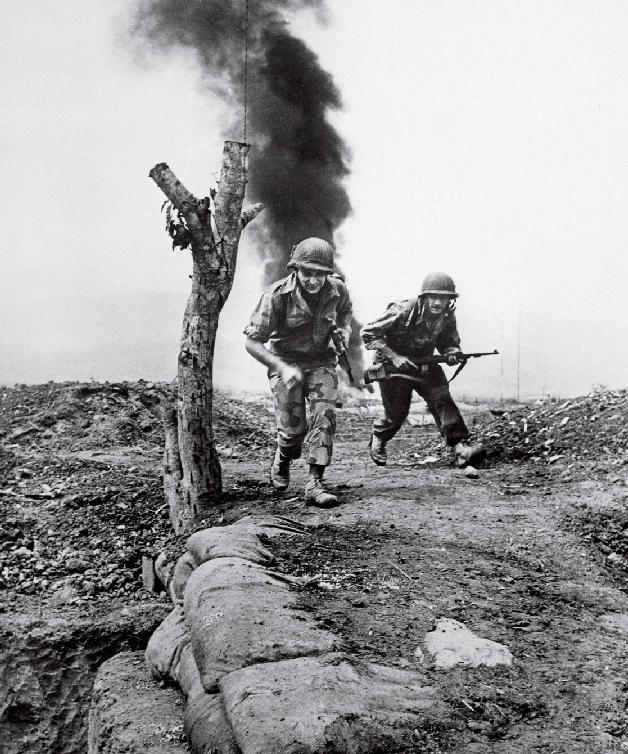
Vào ngày thứ ba pháo kích ở Điện Biên Phủ, lính dù Pháp chạy tìm chỗ ẩn nấp. “Chúng ta tiêu rồi,” một chỉ huy nói. “Chúng ta đang tiến tới một cuộc thảm sát.”
Vào cái ngày tháng 5 năm 1954 đó, đến 10 giờ sáng, thế trận tại Điện Biên Phủ đã trở nên hoàn toàn vô vọng với người Pháp. Hỏa lực pháo binh và súng cối của họ đã dần bị dập tắt bởi những phát súng pháo của những người Cộng sản Việt Minh với độ chính xác chết người. Cơn mưa gió mùa đã khiến việc thả dù tiếp tế giảm xuống mức tối thiểu, và biến các chiến hào và hầm ngầm của quân Pháp thành những bãi lầy sâu không đáy. Các sĩ quan và binh sĩ còn sống, nhiều người trong số họ đã trải qua 54 ngày chỉ với cà phê hòa tan và thuốc lá, lúc này đã kiệt sức đến mức thất thần.
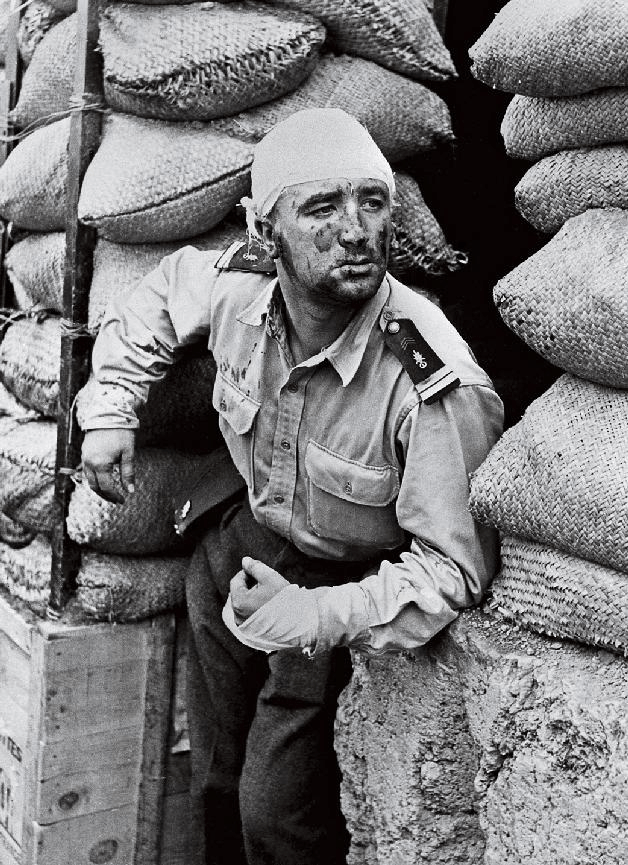
Trong lúc pháo kích tạm lắng, một trung úy Pháp bị thương xuất hiện từ một bệnh xá tạm bợ dưới lòng đất.
Khi chỉ huy của họ, Thiếu tướng Christian de la Croix de Castries, đã báo cáo tình hình qua điện thoại vô tuyến cho Tướng René Cogny, người chỉ huy chiến dịch cách đó 220 dặm ở Hà Nội, bằng giọng nói cao nhưng lạnh lùng đến không ngờ, rõ ràng là pháo đài đã đến hồi kết. De Castries đã liệt kê một danh sách dài các tiểu đoàn 800 người, giờ chỉ còn lại những đại đội 80 người, và từng đại đội mà giờ chỉ còn như những trung đội yếu ớt. Ông chỉ hy vọng cầm cự được đến tối để những người còn lại có thể lợi dụng bóng tối mà mở một cuộc đột phá, mở đường máu chạy thoát vào rừng rậm, trong khi bản thân ông ta sẽ ở lại với hơn 5.000 người bị thương nặng (trong tổng số 15.094 người ở trong thung lũng) để đối mặt với kẻ thù.
Đến 3 giờ chiều, đã rõ ràng là pháo đài không thể tồn tại đến tối. Những người Cộng sản, với chiến thuật biển người, đang lấn át những hàng phòng thủ cuối cùng. De Castries đã hội ý với các chỉ huy đơn vị còn sống sót mà ông ta có thể liên lạc được, và mọi người đều đồng ý rằng một cuộc đột phá mở đường máu chỉ có thể dẫn đến việc sau đó lần lượt từng nhóm nhỏ sẽ bị thảm sát một cách vô nghĩa trong rừng. Quyết định cuối cùng là sẽ chiến đấu đến cùng, chỉ cần đạn dược còn, và để từng đơn vị bị đánh bại sau khi hủy hoại vũ khí nặng của họ. Lệnh này đã được chỉ huy cao cấp Pháp tại Hà Nội phê duyệt vào khoảng 5 giờ chiều, nhưng với điều kiện là những người ở cứ điểm Isabelle, điểm phòng thủ cực nam gần rừng và gần nhất với các lực lượng đồng minh ở Lào, sẽ được cơ hội thoát thân.
Cuộc điện đàm cuối cùng của Cogny với de Castries là để giải quyết vấn đề phải làm gì với số người bị thương chất đống dưới điều kiện khắc nghiệt tại các cứ điểm và bệnh viện trung tâm của pháo đài — ban đầu chỉ được thiết kế để chứa 42 người bị thương. Có ý kiến đề nghị nên tổ chức một cuộc đầu hàng có tổ chức để tránh cho những người bị thương phải chịu thêm khổ sở nếu họ rơi vào tay quân địch như những cá nhân cô độc. Tuy nhiên, Cogny đã kiên quyết từ chối:
“Mon vieux, tất nhiên giờ đây ông phải hoàn tất mọi thứ. Nhưng những gì ông đã làm đến giờ này là thực sự tuyệt vời. Đừng làm hỏng nó bằng việc giương cờ trắng đầu hàng. Ông sẽ bị quân địch vùi lấp, nhưng đừng đầu hàng, đừng để cờ trắng được phất lên.”
“Vâng, mon général, tôi chỉ muốn bảo vệ những người bị thương mà thôi.”
“Đúng, tôi hiểu. Vậy thì hãy cố gắng hết sức, để cho các đơn vị dưới quyền của ông tự quyết định. Những gì ông đã làm là quá tuyệt vời, đừng làm điều đó. Ông hiểu chứ, mon vieux?”
Sau một khoảng lặng, de Castries đã nói những lời cuối cùng của mình:
“Bien, mon général.”
Sau đó, Cogny nói:
“Tạm biệt, mon vieux, tôi sẽ sớm gặp lại ông.”
Vài phút sau, người vận hành radio của de Castries đã dùng đáy súng Colt.45 đập nát bộ đàm. Do đó, thông điệp cuối cùng từ pháo đài chính khi đang trong cảnh tượng hỗn loạn được phát đi vào lúc 5 giờ 50 chiều, bởi người điều hành radio thuộc Tiểu đoàn Kỹ sư Chiến đấu 31, dưới mật danh của mình:
“Đây là Yankee Metro. Chúng tôi đang phá hủy mọi thứ xung quanh. Au revoir.”
Nhưng rồi cứ điểm Isabelle cũng chẳng thể có cơ hội nào cả. Trong khi các tuyến phòng thủ chính của Điện Biên Phủ đang bị càn quét, lực lượng Việt Minh hùng mạnh đã siết chặt vòng vây xung quanh 1.000 lính Lê dương, Algeria và Pháp đang chuẩn bị để đột phá mở đường máu chạy thoát vào rừng. Vào lúc 9 giờ 40 tối, một máy bay trinh sát Pháp đã báo cáo về Hà Nội rằng nó nhìn thấy các kho hàng tại điểm tập kết đang bốc cháy và pháo binh đang nã pháo gần đó. Cuộc đột phá đã bị phát hiện. Vào lúc 1 giờ 50 sáng ngày 8 tháng 5 năm 1954, thông điệp cuối cùng từ toán lính kẹt lại được chiếc máy bay giám sát chuyển tiếp về Hà Nội:
“Đột phá thất bại—Dừng—Không thể liên lạc được nữa—Dừng và kết thúc.”
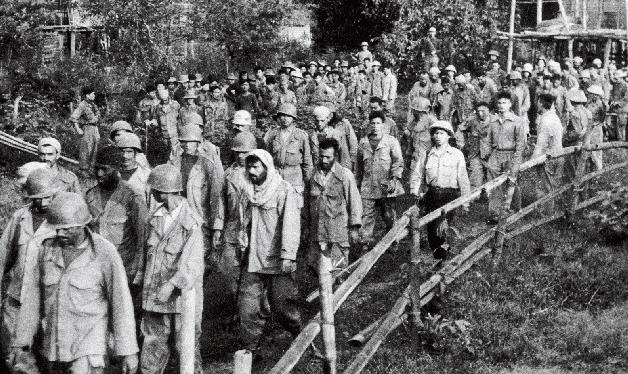
Một số trong số mười nghìn tù nhân đã đầu hàng lực lượng Việt Minh tại Điện Biên Phủ. Họ bao gồm quân đội từ các thuộc địa của Pháp ở Bắc và Tây Phi cũng như Pháp, Đức và Đông Dương.
Trận đại chiến tại thung lũng Điện Biên Phủ đã kết thúc. Gần 10.000 binh sĩ bị bắt giờ phải bắt đầu cuộc hành trình tử thần 300 dặm đến các trại tù của Việt Minh về phía đông. Số người sống sót rất ít. Khoảng 2.000 người đã chết nằm rải rác khắp chiến trường trong những ngôi mộ không đánh dấu, vẫn còn vô danh cho đến tận ngày nay. Chỉ có 73 người thành công trong việc thoát khỏi các điểm phòng thủ bị tàn phá để được các đơn vị du kích thân Pháp cứu thoát trong rừng rậm Lào. Cách xa tám nghìn dặm, tại Geneva, các phái đoàn của Việt Nam và Trung Quốc đang tham dự hội nghị chín quốc gia, được cho là để giải quyết cả cuộc xung đột tại Triều Tiên lẫn Đông Dương, đã cùng nhau nâng ly mừng chiến thắng bằng rượu sâm banh màu hồng của Trung Quốc.
Điều xảy ra tại Điện Biên Phủ chỉ là một canh bạc đầy mạo hiểm của bộ chỉ huy cấp cao Pháp, một canh bạc mà Pháp đã thất bại nghiêm trọng. Cuộc chiến tại Đông Dương, bắt đầu từ tháng 12 năm 1946 sau khi lực lượng Việt Minh do Hồ Chí Minh lãnh đạo cảm nhận rằng Pháp sẽ không chấp nhận độc lập cuối cùng cho Việt Nam, đã sa lầy vào một tình thế bấp bênh không lối thoát.
Cho đến khi Hồng quân Trung Quốc chiến thắng tiến vào biên giới Việt Nam vào tháng 12 năm 1949, ít nhất còn chút hy vọng cho Pháp rằng chính phủ dân tộc chủ nghĩa Việt Nam do Pháp hỗ trợ, dưới sự lãnh đạo của cựu hoàng Bảo Đại, có thể lấy lại lòng trung thành của phần lớn dân chúng Việt Nam từ tay Việt Minh do những người Cộng sản lãnh đạo. Nhưng với sự xuất hiện của một nơi trú ẩn an toàn cho quân Việt Minh do Trung Quốc hậu thuẫn, điều này đã trở nên bất khả thi về mặt quân sự. Vào tháng 10 năm 1950, 23 tiểu đoàn chính quy của Việt Minh, được trang bị pháo binh Mỹ tốt nhất từ kho dự trữ của Quốc dân Đảng Trung Quốc trên đại lục, đã đánh bại hàng phòng thủ của Pháp dọc theo biên giới Trung Quốc và gây ra thất bại thuộc địa tồi tệ nhất cho Pháp kể từ khi Montcalm tử trận trước Quebec vào năm 1759. Chỉ trong vài tuần, tình thế của Pháp tại miền Bắc Việt Nam đã thu hẹp lại chỉ còn là một vòng phòng thủ quanh đồng bằng sông Hồng, với một dải lãnh thổ liên tục do những người Cộng sản kiểm soát từ biên giới Trung Quốc đến gần Sài Gòn chỉ cách 100 dặm. Thực chất, cuộc chiến ở Đông Dương đã thua ngay từ đó.
Sự thay đổi diễn ra khi viện trợ từ Mỹ bắt đầu được đổ vào, được khơi mào kể từ khi Chiến tranh Triều Tiên bắt đầu. Với việc chủ nghĩa cộng sản được nhìn nhận như một mối đe dọa ở cả hai đầu của vòng cung Viễn Đông, Chiến tranh Đông Dương đã chuyển từ một cuộc chiến thuộc địa sang một cuộc thập tự chinh—nhưng lại là một cuộc thập tự chinh không có mục đích thực sự. Thứ “độc lập” mà Pháp miễn cưỡng trao cho chế độ dân tộc chủ nghĩa Việt Nam chỉ là thứ rất hình thức, và hai từ “độc lập” vẫn tiếp tục trở thành tuyên ngôn chiến đấu của phe cách mạng do Việt Minh lãnh đạo.
Về mặt quân sự, thảm họa đã tạm thời được ngăn chặn. Vùng trọng yếu là đồng bằng sông Hồng được Pháp kiểm soát—ít nhất là vào ban ngày, bởi vì vào ban đêm, kẻ thù của họ có mặt khắp mọi nơi. Và vùng đồng bằng sông Cửu Long giàu có ở miền Nam, nơi các giáo phái Phật giáo chống cộng đang chiến đấu bên cạnh người Pháp, đã được các lực lượng phương Tây kiểm soát chắc chắn hơn nhiều vào các năm 1953-54 so với năm 1963-64.
Ở Lào, tình hình lúc bấy giờ cũng khốc liệt như hiện nay: Lực lượng Lào và Pháp kiểm soát thung lũng sông Mê Kông và các sân bay trên Cánh đồng Chum, trong khi phe đối lập nắm giữ phần còn lại. Chỉ có Campuchia, dù là ngày xưa hay bây giờ, vẫn gần như yên bình: Hoàng tử Sihanouk (lúc đó là vua) đã đạt được độc lập từ Pháp vào năm 1953 và đã khích lệ nhân dân của mình chiến đấu chống lại các nhóm du kích. Họ thành công đến mức tại hội nghị ngừng bắn Geneva sau đó, Campuchia không cần phải nhượng một tỉnh nào làm khu vực tái tụ cho lực lượng Cộng sản.
Tình thế bế tắc này buộc người Pháp phải tạo ra một tình thế quân sự để có thể đàm phán ngừng bắn trên cơ sở ngang hàng với kẻ thù. Để làm được điều này, Tổng tư lệnh Pháp, Tướng Henri Navarre, cần phải giành chiến thắng trước lực lượng nòng cốt của những người Cộng sản, khi những lực lượng này liên tục đe dọa tấn công vào vương quốc Lào và khu vực Đồng bằng sông Hồng, nơi có thủ đô Hà Nội và thành phố cảng phồn thịnh Hải Phòng. Và để tiêu diệt các đoàn quân đó và ngăn chặn họ xâm nhập vào Lào, người ta cần phải “find ’em and fix ’em” (“tìm và tiêu diệt”), theo ngôn ngữ quân sự của Mỹ.
Tướng Navarre tin rằng, cách để thực hiện điều này là tạo ra một mục tiêu đủ hấp dẫn để thu hút sự tấn công của các quân đoàn chính quy Cộng sản, nhưng cũng đủ mạnh để chống trả khi cuộc tấn công bắt đầu. Đây chính là lý do quân Pháp cho thiết lập một pháo đài tại Điện Biên Phủ và tại sao trận chiến lại diễn ra tại đây.
Cũng có những lý do khác nữa. Lào đã ký một hiệp ước với Pháp, trong đó Pháp cam kết sẽ bảo vệ Lào. Điện Biên Phủ được coi là chốt chặn ở cửa sau dẫn vào Lào. Điện Biên Phủ cũng là phép thử cho một học thuyết chiến tranh mới của Navarre. Thay vì bảo vệ những tuyến địa hình cố định, ông ta muốn xây dựng các căn cứ không quân – bộ binh trên khắp Đông Dương, từ đó các đơn vị cơ động cao sẽ xuất kích và tiêu diệt kẻ thù ngay tại hậu phương của họ, giống như cách mà các đội quân du kích Việt Minh đang làm với hậu phương của Pháp. Tất cả những điều đó đều gắn liền với Điện Biên Phủ: sự tự do của Lào, danh tiếng của một chỉ huy cấp cao, sự sống sót của những quân đoàn giỏi nhất của Pháp và – quan trọng nhất – cơ hội cuối cùng để kết thúc cuộc chiến trong rừng rậm kéo dài tám năm mà tránh không phải chịu một thất bại hoàn toàn.
Nhưng Navarre, một sĩ quan thiết giáp đã được rèn giũa trên các chiến trường châu Âu, dường như đã không nhận ra rằng (đây là nhận định của ủy ban điều tra thảm họa sau này của chính phủ Pháp) không có vị trí nào có thể chặn đường liên vận được ở một quốc gia vốn ngay từ đầu đã không có con đường liên vận nào (ít nhất là đường liên vận theo kiểu châu Âu truyền thống). Do quân Việt Minh chủ yếu dựa vào sức người để vận chuyển hàng hóa cho các đơn vị tuyến đầu, họ có thể dễ dàng lách qua các điểm nghẽn như Điện Biên Phủ hay Cánh đồng Chum, đồng thời bao vây các lực lượng trong các pháo đài đó.
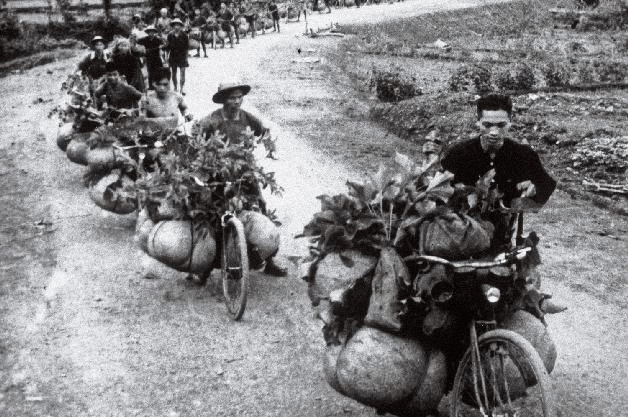
Hai mươi nghìn người đã dùng những chiếc xe đạp được gia cố đặc biệt để chở gạo, rau củ và các nhu yếu phẩm khác cho quân Việt Minh ở mặt trận. Tướng Giáp nhớ lại: “Phương thức vận chuyển này đã gây bất ngờ lớn cho quân địch, và làm đảo lộn hoàn toàn những tính toán của họ”.
Kết quả đã hiện rõ ngay lập tức. Ngay khi quân Pháp chỉ vừa mới đặt chân đến Điện Biên Phủ vào ngày 20 tháng 11 năm 1953, hai sư đoàn 10.000 quân của Đại tướng Võ Nguyên Giáp đã bao vây doanh trại Điện Biên Phủ, trong khi sư đoàn thứ ba đã lách qua Điện Biên Phủ để tiến sâu vào Lào. Đến ngày Giáng sinh năm 1953, lần đầu tiên sau 8 năm chiến tranh, Đông Dương bị chia cắt làm đôi. Những cuộc tấn công được lên kế hoạch chi tiết cho Điện Biên Phủ cuối cùng chỉ còn là những cuộc đột kích tuyệt vọng chống lại kẻ địch không hình không ảnh. Đến khi trận đánh chính thức bắt đầu vào ngày 13 tháng 3 năm 1954, doanh trại này đã phải chịu 1.037 thương vong mà không đạt được thành tựu đáng kể nào.
Bên trong pháo đài, ngôi làng bộ lạc xinh đẹp bên bờ sông Nam Yum đã nhanh chóng biến mất cùng với những bụi cây và hàng cây trong thung lũng, chúng được sử dụng làm củi hoặc nguyên liệu xây dựng cho các hầm trú ẩn. Thậm chí cả ngôi nhà của viên thống đốc người Pháp cũng đã được tháo dỡ để lấy gạch, vì nguồn cung cấp vật liệu xây dựng từ đầu đã rất khan hiếm.
Thiếu tá André Sudrat, kỹ sư trưởng tại Điện Biên Phủ, đứng trước một bài toán mà ông biết chắc là không thể giải được. Theo tiêu chuẩn kỹ thuật quân sự bình thường, lượng vật liệu cần thiết để bảo vệ chỉ 1 tiểu đoàn khỏi đạn pháo 105mm mà Việt Minh đang sở hữu lên đến 2.550 tấn, cộng thêm 500 tấn dây thép gai. Ông ước tính rằng để bảo vệ đủ 12 tiểu đoàn ban đầu tại đây (và thêm 5 tiểu đoàn nữa đã được nhảy dù vào trong trận đánh), ông sẽ cần 36.000 tấn vật liệu kỹ thuật, tức là sử dụng tất cả máy bay vận tải có sẵn trong vòng năm tháng. Khi được thông báo rằng chỉ có khoảng 3.300 tấn vật liệu được chuyển bằng đường không, Sudrat chỉ còn biết lắc đầu. Trong trường hợp này, ông quyết định sẽ củng cố sở chỉ huy, trung tâm tín hiệu và phòng chụp X-quang tại bệnh viện; và hi vọng rằng Việt Minh không có pháo.
Thật ra, Việt Minh đã sở hữu hơn 200 khẩu pháo, và trong tuần cuối cùng của cuộc bao vây, họ còn được tăng cường bởi các bệ phóng tên lửa đa nòng Katyusha của Nga. Sự kết hợp giữa mưa gió mùa bắt đầu vào giữa tháng Tư và hỏa lực pháo kích của Việt Minh đã biến những hầm trú ẩn và hào chống trú được bố trí gọn gàng thành đống đổ nát. Về bản chất, trận Điện Biên Phủ đã trở thành một cuộc đấu pháo dữ dội, và không sớm thì muộn, phe Việt Minh sẽ là người chiến thắng. Đội ngũ pháo thủ và các khẩu pháo của Pháp, vốn hoạt động hoàn toàn ngoài trời để có thể bắn ra xung quanh, đã bị phá hủy từng cái một; dù được thay thế, chúng lại bị phá hủy một lần nữa và cuối cùng đã tắt tiếng hoàn toàn.
Cuộc đấu pháo đã trở thành bi kịch lớn nhất của trận chiến. Đại tá Charles Piroth, người chỉ huy pháo binh Pháp luôn vui vẻ và chỉ còn một tay, đã cam đoan rằng 24 khẩu pháo hạng nhẹ 105mm của ông có thể đối đầu với bất cứ thứ gì của những người Cộng sản, và bốn khẩu pháo trường cỡ trung 155mm của ông sẽ tiêu diệt những thứ không bị các khẩu nhỏ hơn và máy bay chiến đấu phá hủy. Tuy nhiên, pháo binh Việt Minh được ngụy trang quá tinh vi đến nỗi cho đến ngày nay vẫn còn nghi ngờ liệu pháo đáp trả của Pháp có thể “làm câm lặng” được bao nhiêu khẩu pháo của địch.
Vào lúc 17 giờ 10 phút ngày 13 tháng 3 năm 1954, pháo binh của những người Cộng sản đã bao phủ cứ điểm Beatrice mà không chịu tổn thất nào đáng kể từ pháo phản công của Pháp, Piroth đã nhận ra rằng pháo đài này không thể bảo vệ được nữa. Là phó tướng của Tướng de Castries, ông cảm thấy mình đã góp phần vào bầu không khí tự tin quá mức đã thống trị thung lũng trước cuộc tấn công. (Chẳng phải chính de Castries, theo phong cách của tổ tiên hầu tước của mình, đã từng gửi thư thách đấu đến tướng Giáp của phe đối phương*?)
* Chú thích của người dịch: Thư khiêu chiến của Đờ cát gửi đến Đại tướng Võ Nguyên Giáp ở trận Điện Biên Phủ
Giữa tháng 12/1953, hai bộ chỉ huy quân Pháp và Việt Nam quyết định chọn Điện Biên Phủ làm điểm quyết chiến chiến lược cho cục diện chiến tranh Đông Dương. Hai bên dốc toàn lực cho trận đánh quyết định.
Tuy nhiên, một ngày trước giờ G, Đại tướng Võ Nguyên Giáp quyết định chuyển từ phương án “Đánh nhanh, Thắng nhanh” thành “Đánh chắc, Thắng chắc”, rút toàn quân ra chuẩn bị lại. Đồng thời ông đã điều Đại đoàn 308 đánh sang Lào vừa để nghi binh, thu hút quân đội Pháp tạo điều kiện rút quân và bố trí lại lực lượng và cũng vừa để phá thế trận liên hoàn Luang Phrabang – Xốp Nao – Điện Biên Phủ.
Trước dự đoán rằng khả năng Việt Nam sẽ từ bỏ Điện Biên Phủ, qua truyền đơn, Đại tá De Castries đã gửi tới Đại tướng Võ Nguyên Giáp một bức thư khiêu chiến, được viết bằng cả tiếng Pháp và tiếng Việt. Được biết có 150.000 bản được in ra dự trù cho việc sau khi chiến thắng Việt Minh quân Pháp sẽ gửi tặng làm kỷ niệm cho các viện bảo tàng, tặng binh lính và rải nhiều nơi ở Việt Nam. Tuy nhiên chúng đã bị tiêu hủy gần hết và số còn lại hiện được lưu giữ tại bảo tàng quân sự Pháp.
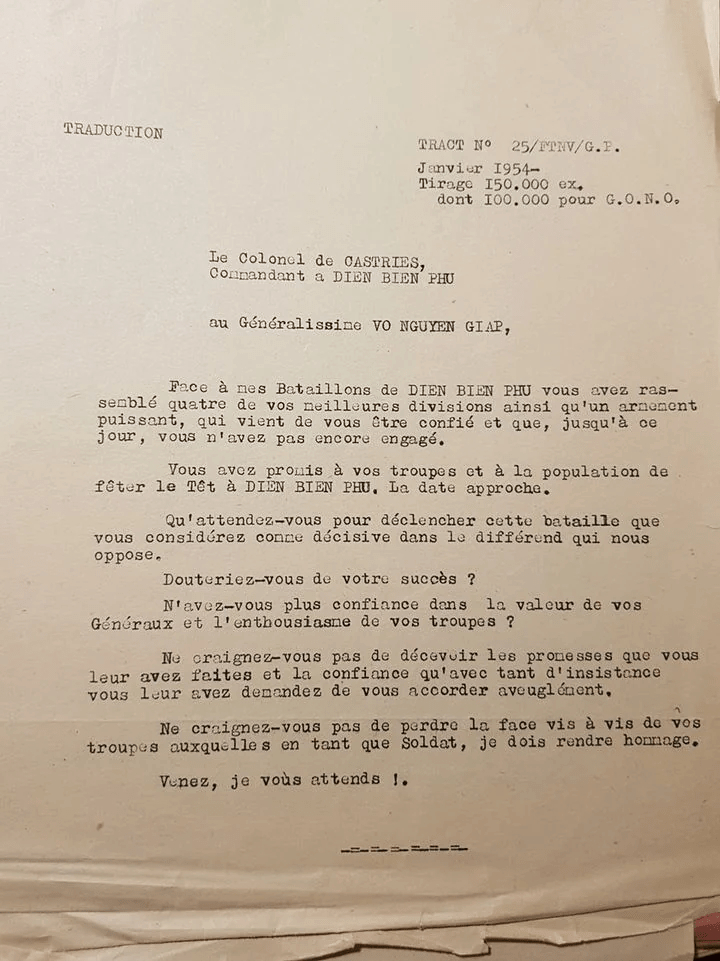
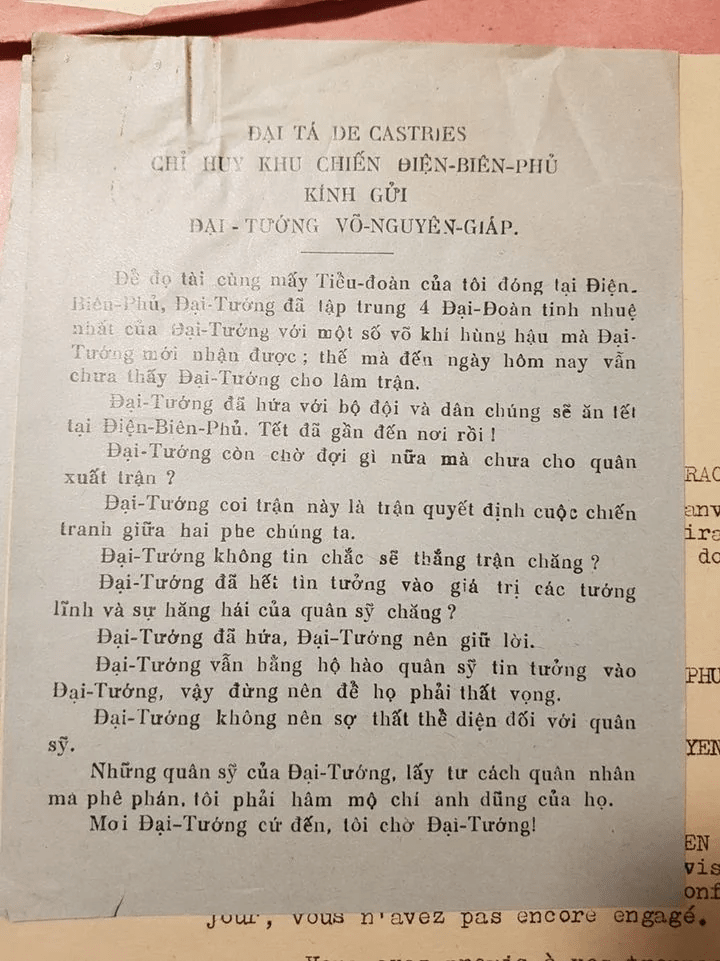
Thư mà De Castries (bằng tiếng Pháp và tiếng Việt) công khai mời gọi và thách tướng Võ Nguyên Giáp tấn công Điện Biên Phủ.
“Tôi chịu trách nhiệm. Tôi chịu trách nhiệm,” người ta nghe thấy ông ta lẩm bẩm như vậy khi đang làm nhiệm vụ. Trong đêm từ 14 đến 15 tháng 3, ông đã tự sát bằng cách tự mình kích nổ một quả lựu đạn, vì ông không thể nạp đạn vào súng chỉ với một tay.
Ban đầu, pháo đài được xây dựng nhằm bảo vệ đường băng chính khỏi những cuộc phá hoại của các đơn vị Việt Minh, chứ không phải để chống lại sự tấn công dữ dội của bốn sư đoàn Cộng sản. Không bao giờ có, như những bản đồ báo chí thời bấy giờ đã sai lầm cho thấy, một tuyến chiến đấu liên tục bao phủ toàn bộ thung lũng. Bốn trong số tám cứ điểm cách trung tâm từ một đến ba dặm. Hỏa lực chéo của pháo và súng cối của họ, được hỗ trợ bởi một phi đội gồm 10 xe tăng (được chuyển từng phần và ráp lại tại chỗ), sẽ ngăn chặn việc chúng bị tiêu diệt lần lượt.
Điều này cuối cùng cũng chỉ là ảo tưởng. Tướng Võ Nguyên Giáp đã quyết định chiếm Điện Biên Phủ bằng một sự pha trộn cực kỳ hiệu quả của các kỹ thuật bao vây thế kỷ 19 (chẳng hạn như dùng thuốc nổ TNT để đánh sập các đường hầm dưới các boong-ke của quân Pháp) và kỹ thuật pháo binh hiện đại, cộng thêm chiến thuật biển người. Các tiền đồn ngoại vi, vốn được thiết kế để bảo vệ sân bay trọng yếu, thì đã bị chiếm trong những ngày đầu tiên của trận chiến. Tổn thất của quân Pháp quá lớn đến nỗi lực lượng tiếp viện được nhảy dù xuống sau khi sân bay bị phá hủy hoàn toàn vào ngày 27 tháng 3 không đủ sức để tiến hành những cuộc phản công cần thiết nhằm tái chiếm các tiền đồn.
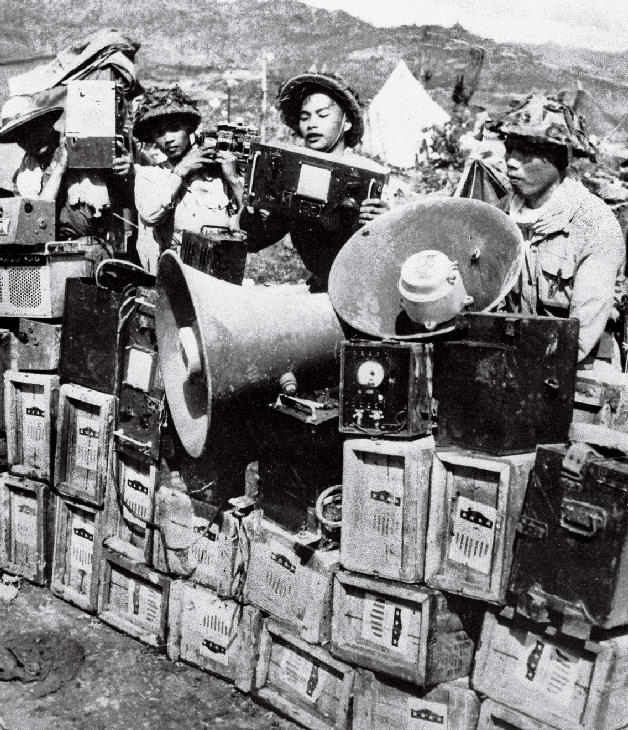
Thêm vào nỗi khốn cùng của quân Pháp bị mắc kẹt ở Điện Biên Phủ là những lời kêu gọi đầu hàng ngày đêm được truyền đi từ loa phóng thanh đặt ở các ngọn đồi xung quanh.
Từ đó trở đi, cuộc chiến tại Điện Biên Phủ đã trở thành một cuộc chiến tiêu hao. Hy vọng duy nhất của quân Pháp tại Điện Biên Phủ là đột phá từ Lào hoặc Hà Nội, một ý tưởng hầu như bất khả thi do địa hình và khoảng cách. Một phương án khác là dùng oanh tạc dữ dội từ không quân, nhưng cuối cùng cũng bị loại bỏ vì những rủi ro tương tự như khi tấn công Bắc Việt Nam ngày nay.
Giống như trường hợp của Stalingrad, căn cứ của Pháp tại Điện Biên Phủ dần dần cạn kiệt lương thực, dù vẫn được tiếp tế từ trên không. Khi vòng vây được thiết lập, họ chỉ có đủ nguồn cung cho 8 ngày, trong khi cần tới 200 tấn mỗi ngày để duy trì mức hoạt động tối thiểu. Việc chuẩn bị lượng hàng khổng lồ để thả dù đã đòi hỏi những nỗ lực phi thường của các đơn vị tiếp tế trên không, cộng thêm sự liều chết của những lính Pháp trong thung lũng, những người phải mạo hiểm ra ngoài dưới làn đạn để thu gom hàng tiếp tế thả dù từ máy bay.
Tuy nhiên, khi khu vực chiếm giữ ngày càng thu hẹp lại (cuối cùng chỉ còn bằng một sân bóng chày), hầu hết hàng tiếp tế thả từ máy bay đều rơi vào tay những người Cộng sản. Thậm chí những ngôi sao để thăng cấp tướng mới cho de Castries, được Tướng Cogny gửi kèm theo một chai sâm banh, cũng để lạc nốt vào tay địch.
Việc thả hàng từ máy bay không vận ở thung lũng hẹp này là rất nguy hiểm, vì địa hình nơi đây chỉ cho phép các máy bay tiếp cận theo một hướng thẳng. Pháo đài phòng không của những người Cộng sản đã làm nên cảnh tượng kinh hoàng với những chiếc máy bay vận tải ì ạch khi chúng từ từ thả hàng. Vài con số thể hiện sự khốc liệt của cuộc chiến tranh không trên Điện Biên Phủ: Trong số 420 máy bay có sẵn ở Đông Dương lúc bấy giờ, có 62 chiếc bị rơi và 167 chiếc bị trúng đạn. Một số phi công Mỹ dân sự bay trên tuyến này đã nói rằng pháo phòng không của Việt Minh dày đặc không kém những gì họ từng chứng kiến trong Thế chiến II trên sông Ruhr. Khi cuộc chiến kết thúc, 82.926 chiếc dù đã được dùng để tiếp tế phủ trắng chiến trường như một lớp tuyết mới rơi – hoặc như một tấm khăn liệm trên một xác chết.
Ảnh hưởng thực sự của Điện Biên Phủ đối với tình hình quân sự của Pháp ở Đông Dương không chỉ đơn thuần có thể đo đếm bằng số lượng tổn thất. Không có an ủi gì với người Pháp khi họ nói với nhau rằng quân Pháp chỉ mất 5% lực lượng chiến đấu, rằng thiệt hại về trang thiết bị đã được Mỹ bù đắp trong khi trận chiến diễn ra, và thậm chí cả tổn thất về nhân lực cũng đã được khôi phục nhờ sự gia tăng quân từ Pháp và tuyển mộ mới ở Việt Nam. Ngay cả việc tấn công vào Điện Biên Phủ đã khiến những người Cộng sản thiệt hại gần 25.000 người và làm trì hoãn cuộc tấn công vào vùng đồng bằng sông Hồng quan trọng của họ tới bốn tháng, cũng không thể làm dịu đi làn sóng bi quan lan truyền không chỉ trong dư luận Pháp mà còn ở cả các đồng minh.
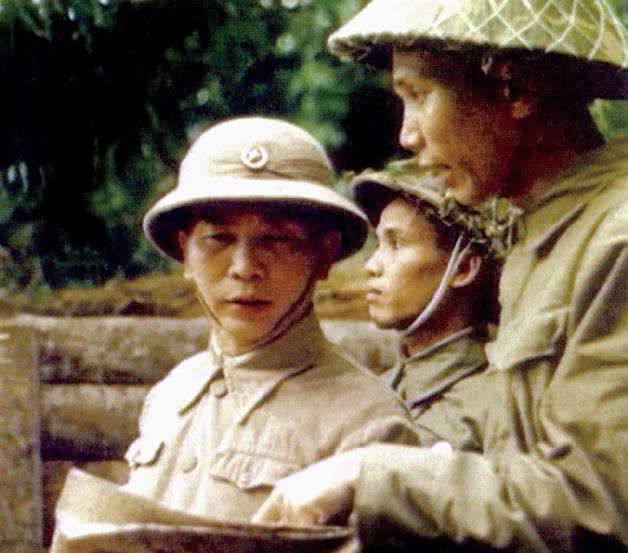
Đại tướng Võ Nguyên Giáp (trái) trong một cảnh phim tuyên truyền về Điện Biên Phủ do Liên Xô sản xuất.
Trong lịch sử, Điện Biên Phủ chỉ được xem như một sự cố không may mắn, theo cách diễn đạt cố tình hạ thấp một cách khéo léo của một viên sĩ quan cao cấp người Pháp. Trận chiến chỉ chứng minh rằng, bất kể dũng cảm đến đâu, một lực lượng bị bao vây cũng sẽ thất bại nếu hệ thống hậu cần của họ suy yếu. Nhưng như các cuộc chiến cách mạng khác, từ Algeria đến những thất bại của người Anh tại Síp và Palestine đã chứng minh, không cần đến những trận đánh lớn mới có thể thua cuộc. Các cuộc chiến này cũng có thể bị thua qua hàng loạt những cuộc giao tranh nhỏ, như những gì đang diễn ra ở miền Nam Việt Nam, nếu chính quyền và người dân địa phương mất niềm tin vào kết cục của cuộc chiến — điều này đã xảy ra với cả người Pháp và những đồng minh Việt Nam của họ sau thất bại tại Điện Biên Phủ.
Tuy nhiên, như người Pháp đã thể hiện ở Algeria, nơi họ không bao giờ để mình rơi vào tình thế bế tắc như vậy nữa, các cuộc chiến tranh cách mạng được tiến hành vì mục tiêu chính trị, và không nhất thiết phải thông qua các trận đánh lớn để đạt được thắng lợi hay thất bại. Điều này giờ đây cũng đã được hiểu rõ trong cuộc chiến ở miền Nam Việt Nam, và có lẽ Bộ trưởng Quốc phòng Hoa Kỳ Robert McNamara cũng đã nghĩ về Điện Biên Phủ khi ông phát biểu trong bài diễn văn chính sách Việt Nam quan trọng vào ngày 26 tháng 3 năm 1964, rằng: chúng ta đã học được rằng ở Việt Nam, sự tiến bộ về chính trị và kinh tế là điều kiện tiên quyết cho thành công quân sự. Người ta chỉ có thể hy vọng rằng bài học này đã được tiếp thu kịp thời.
Tuy nhiên, vào ngày 7 tháng 5 năm 1954, cuộc đấu tranh cho Đông Dương của Pháp gần như đã kết thúc. Từ một chiếc hào gần sở chỉ huy, một đại tá Pháp quan sát chiến trường, thì một lá cờ trắng nhỏ, có thể là một chiếc khăn tay, được giương lên trên một khẩu súng trường cách ông chỉ khoảng 15 mét, theo sau là chiếc đầu đội mũ cối của một người lính Việt Minh.
“Anh không bắn nữa à?” người lính Việt Minh hỏi bằng tiếng Pháp.
“Không, tôi không bắn nữa,” đại tá đáp.
“C’est fini?” người lính Việt Minh hỏi.
“Oui, c’est fini”, đại tá đáp.
Và xung quanh họ, như trong một Ngày Tận thế kinh hoàng, các binh sĩ, cả Pháp lẫn những đối phương Việt Minh của họ, bắt đầu bò ra khỏi hào và đứng dậy lần đầu tiên sau 54 ngày, khi tiếng súng ngừng bắn khắp mọi nơi.
Sự im lặng đột ngột lớn đến mức làm câm lặng tất cả mọi người.
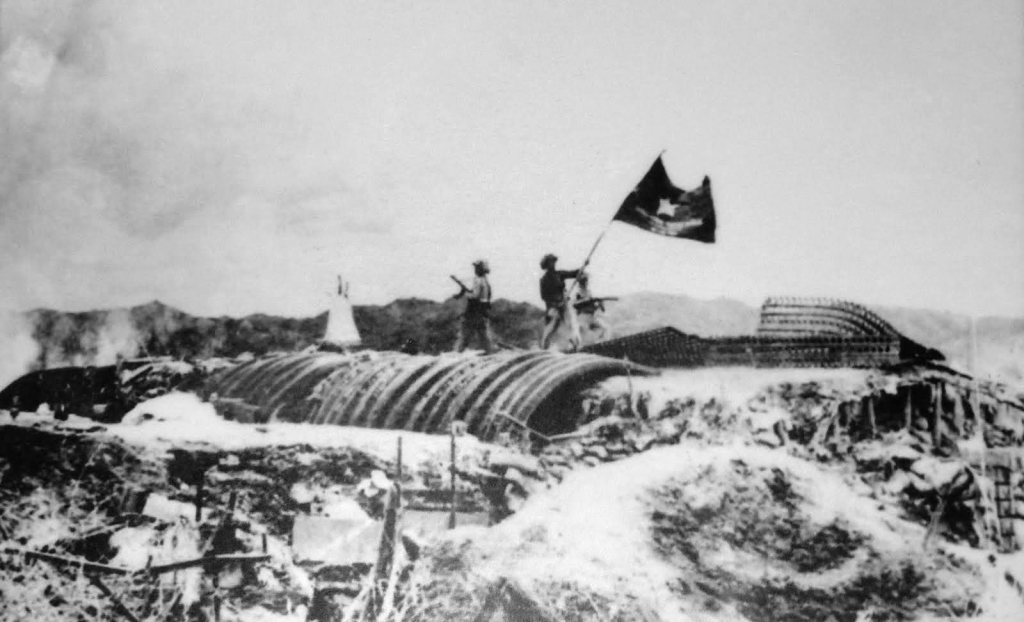
Quân đội Nhân dân Việt Nam phất cờ chiến thắng trên nóc trung tâm phòng ngự của Tập đoàn cứ điểm Điện Biên Phủ.
Viết bởi Bernard B. Fall
Bernard B. Fall, qua đời bất ngờ vào năm 1967, được đánh giá là chuyên gia dân sự hàng đầu về cuộc chiến tranh tại Việt Nam. Hai tác phẩm của ông, “Hell in a Very Small Place: The Siege of Dien Bien Phu” (“Địa Ngục Trong Một Vùng Đất Hẹp: Cuộc Vây Hãm Điện Biên Phủ”) và “Street Without Joy” (“Con Đường Không Niềm Vui”), vẫn là những cuốn sách không thể thiếu trong số những tài liệu quan trọng nhất về giai đoạn Pháp can thiệp vào cuộc chiến tại Việt Nam, và cũng là chìa khóa để hiểu sâu sắc về giai đoạn Mỹ tham chiến sau này.
Bài viết này được đăng trên tờ báo The New York Times, in lần đầu vào ngày 3 tháng 5 năm 1964.
https://www.nytimes.com/1964/05/03/archives/dienbienphu-battle-to-remember.html
Tập Đọc là một báo song ngữ Tiếng Anh – Tiếng Việt, với chú thích từ mới, cung cấp bản dịch, phiên bản bài đọc nói (báo tiếng), và danh sách từ mới miễn phí cho cộng đồng. Dự án được duy trì từ năm 2020 đến nay, hiện đã ra trên 80 số.
Các bài viết được đăng trên Tập Đọc không nhất thiết phản ánh quan điểm, thái độ và góc nhìn của người biên tập. Người đọc nên hình thành quan điểm và đánh giá của riêng mình trong cuộc đối thoại giữa bản thân người đọc và tác giả, trong quá trình đọc bài của riêng mình. Việc chỉ đọc những người viết mà ta đồng ý cũng giống như chỉ chịu nói chuyện với những ai khen mình vậy: dễ chịu, nhưng nguy hiểm.
Hope this helps.
Nếu bạn muốn ủng hộ bất cứ dự án nào của mình, mình xin rất biết ơn. Mọi sự ủng hộ, dù nhỏ, đều sẽ rất có ý nghĩa trong việc giúp mình có động lực, hoặc có khả năng tiếp tục các công việc phi lợi nhuận này.
Mọi ủng hộ xin gửi về số tài khoản: 0491 0000 768 69. Chủ tài khoản: Nguyễn Tiến Đạt, ngân hàng Vietcombank, chi nhánh Thăng Long.

Đà Nẵng, ngày 7.5.2024
Nguyễn Tiến Đạt (sutucon)







 Tập Đọc
Leave a comment