During the siege of Leningrad, a group of Russian botanists holed up in a secret vault starved to death rather than consume the greatest collection of seeds they were guarding for a post-apocalyptic world. Worse, Nikolay Vavilov, the man who had collected the seeds, also died of hunger in Stalin’s gulag.

Soviet agronomist and geneticist Nikolai Vavilov, 1930.
It looked more like a decadent hotel than a scientific institute. The Soviet Union’s Bureau of Applied Botany was housed in a grand, three-story building just off the majestic St. Isaac’s Square in Leningrad (modern-day St. Petersburg). It had dozens of elegant windows and a cream-colored façade with arches and pillars. It screamed high tea and starched collars.
But that appearance was misleading. Starting in the 1920s the bureau established itself as the premier institution in the world for studying and protecting the global heritage of human food crops—essentially, it was the Fort Knox of agriculture.
The bureau’s mission to protect the world’s food supply sprang from its director, biologist Nikolai Vavilov. Born in Russia in 1887, Vavilov witnessed some terrible force—drought, insects, disease, brutal cold—lay waste to crops across the country every few years during his childhood. One famine alone killed 400,000 people.
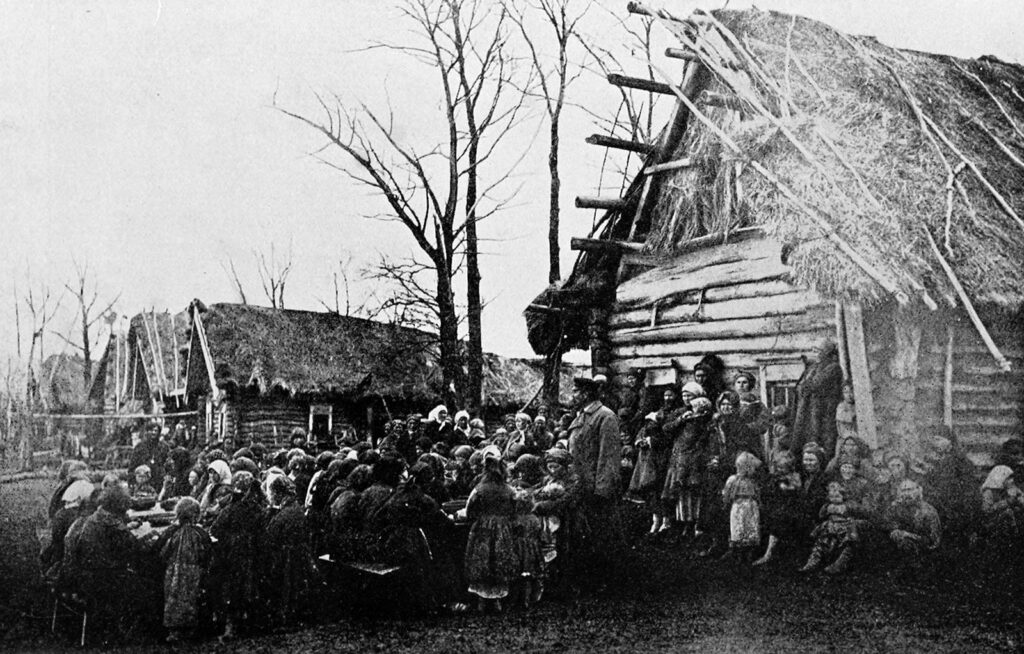
A peasant village during the Russian famine of 1891–1892, from Clara Barton’s “The Red Cross in Peace and War” (1899). – Internet Archive
As he got older, Vavilov became obsessed with stopping famines and determined that the best solution involved the new field of genetics. In short, he reasoned that modern domesticated crops were susceptible to natural disasters because they were frighteningly inbred and lacked the genetic diversity to withstand hardships. Wild crops, in contrast, were usually more diverse and therefore hardier. By crossing wild and domesticated species, then, Vavilov hoped to make food crops hardier, too. This goal made Vavilov an early champion of what scientists now call biodiversity.
To achieve these crosses, Vavilov first had to gather the wild crops—and not just in the Soviet Union. Famines killed people across the globe. Unfortunately, even back in the early 1900s, human development was eradicating many rare varieties of wild food species. Vavilov leapt into action and in the 1920s began collecting and storing in Leningrad as many seeds, grains, fruits, nuts, and tubers as he could.
Clad in an Indiana Jones–style fedora and sporting a black mustache, he took collecting trips to five different continents. He eventually made 115 expeditions to 64 countries, collecting 380,000 samples. The variety he amassed was astounding. As one historian wrote of Vavilov’s collection, “some seeds were dull-coated while others glistened like jewels. . . . The tubers, roots, and bulbs came in all sorts of textures, from knobby and gnarled to as smooth and burnished as a clay pot.” Fruits collected “exuded nearly every fragrance imaginable to a perfume chemist—musky, fermented, citric, and floral.”
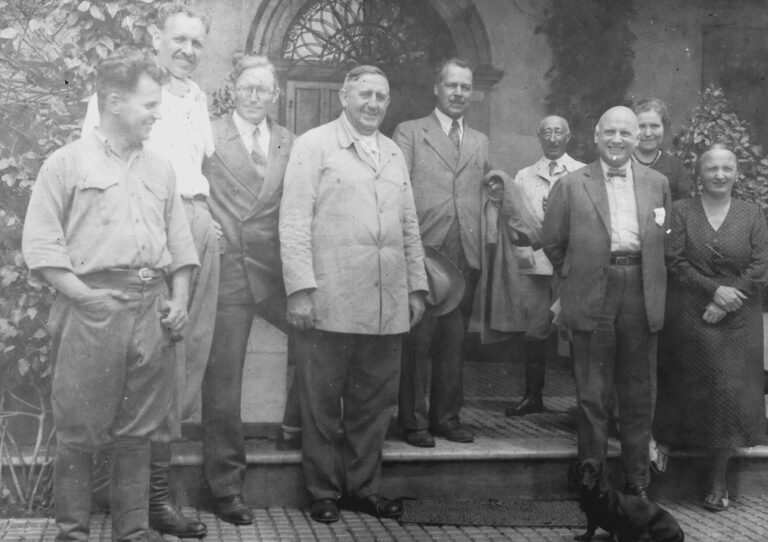
Vavilov (center) visiting agronomist Alberto Boerger (to Vavilov’s right) at La Estanzuela experimental station in Uruguay, January 1937. – Archivos del CIAAB/Wikimedia Commons
To replenish the seeds and tubers and whatnot, every so often Vavilov would send them out to fields, orchards, or paddies around the vast Soviet empire and have technicians grow them. The workers would harvest the resulting crops and send fresh samples back. The logistics were formidable, but by 1939 Vavilov had a humming empire of his own—25,000 workers under his command, all directed from the stately building in Leningrad.
But within a few years, that enterprise collapsed.
The problem was that Soviet apparatchiks despised genetics. To them the classic nature-versus-nurture debate in science—whether inborn genetic traits or outward environmental factors shape life more profoundly—was no debate at all. More specifically, the Soviets wanted to sweep away old human institutions and replace them with modern, supposedly “rational” ones. In doing so, they even hoped to build a new type of human—the New Soviet Man, a selfless, heroic worker. In other words, they hoped that by remaking the environment they could remake humankind.
Genetics, however, indirectly threatened this vision. Genetics emphasized fixed, inborn traits, implying that perhaps humans could not be refashioned so easily. Nowadays, most scientists view the nature-versus-nurture debate as too simplistic, but at the time, it was perhaps the debate in biology. And as good Marxists, top Soviet scientists declared that, because environmental factors were crucial to building the Soviet Man, genetics was therefore dangerous. Some Soviet officials went so far as to deny the existence of genes entirely.
One official was especially fanatic about stamping out genetics—Trofim Lysenko, a loathsome toady of Joseph Stalin. Lysenko first rose to fame as a young man when he published reports on new farming methods he had developed that produced unprecedently high yields of peas during harsh Soviet winters—reports he almost certainly faked. He was soon boasting of plans to grow lemon trees in Siberia, since of course inborn traits (e.g., sensitivity to certain temperatures) didn’t matter to plants as long as you “educated” them properly.
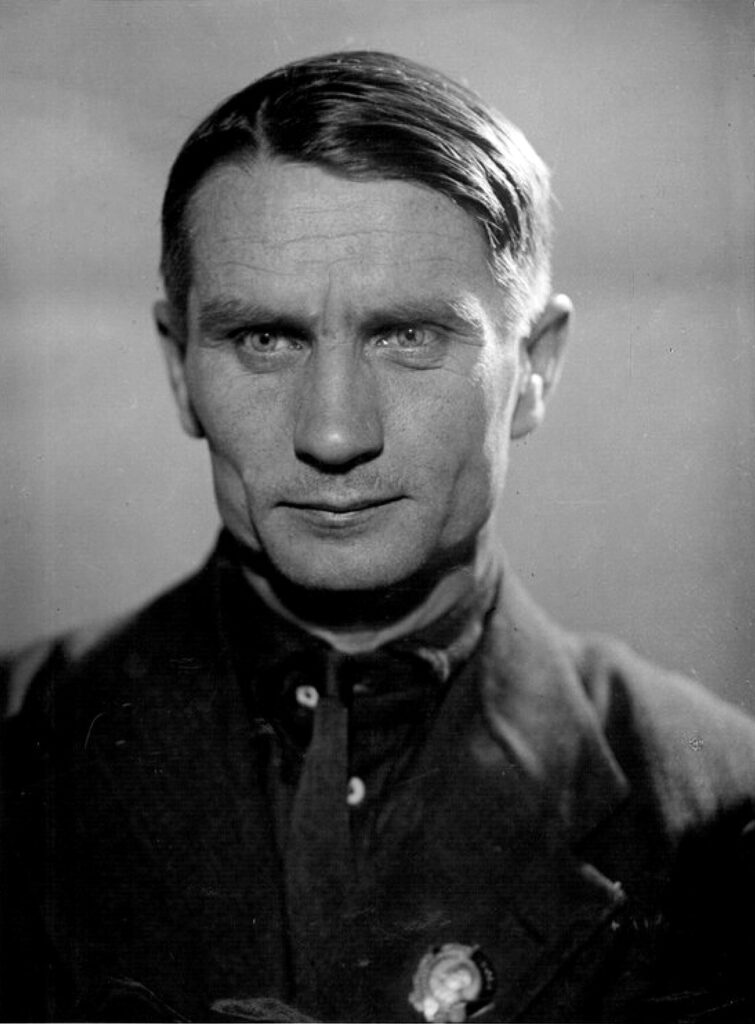
Trofim Lysenko, 1938 – Wikimedia Commons
As Lysenko rose through the ranks, he also proved himself ruthless in stamping out opposition to his “science,” denouncing his rivals as spies and traitors. Eventually Lysenko used his influence to become the head of Soviet agriculture, at which point he pushed to outlaw genetics research and education in the Soviet Union. True to his autocratic nature, he declared that anyone who didn’t renounce the science would be arrested and thrown in jail.
Vavilov, as a famous geneticist, was soon targeted. One day in 1940, while he was collecting seeds in Ukraine, Soviet security agents arrested him and whisked him off to the Gulag. Not even his wife and children knew exactly where he ended up. The arrest left his colleagues at the Bureau of Applied Botany trembling. They had every reason to fear they would be next.
Meanwhile, other threats to the bureau were looming in Europe. In June 1941, Nazi Germany invaded the Soviet Union. Leningrad was a major target of the Germans—in part because of Vavilov’s bureau. However despicable, Nazi scientists appreciated the power of genetics. (To a fault, in fact: they essentially committed the opposite error of Lysenko in arguing that nurturing and environment counted for nothing and genes alone determine our fate.) The Nazis knew that Vavilov had gathered a priceless trove of agricultural riches. They were eager to get their grubby hands on the bureau’s seeds and start experimenting.
Imagine what this knowledge must have done for morale at the bureau. Their boss had already been disappeared, and their own government had demonized them and called them traitors for their research. Now Nazis were marching on Leningrad, eager to steal their life’s work. Who wouldn’t despair?
Then things got worse. The battle for Leningrad deteriorated into a slog, and the Nazis laid siege to the city. Instead of shells and guns, their main weapon now would be the very thing Vavilov had worked his whole life to prevent—famine. They intended to starve the Russians into submission.
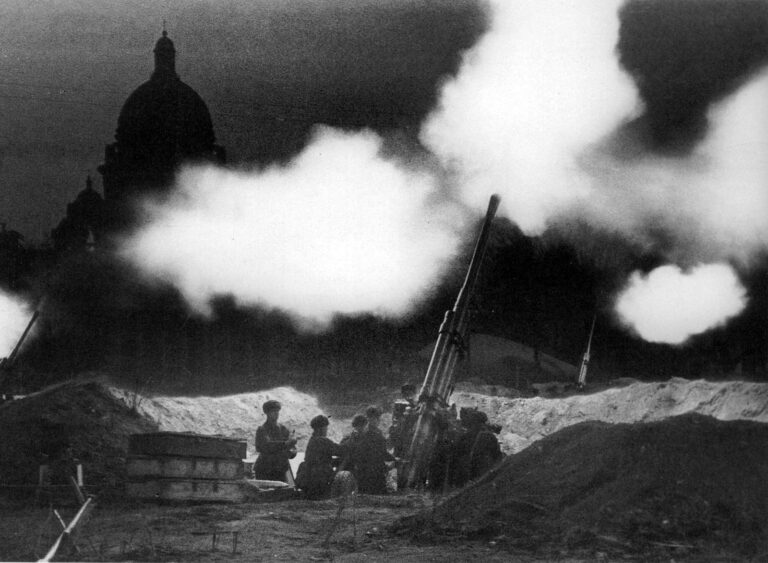
Soviet antiaircraft guns firing during the Siege of Leningrad, November 1941. The guns are positioned in close proximity to the Bureau of Applied Botany and St. Issac’s Cathedral, visible in the background. – Wikimedia Commons
During the first few months of the siege, people in the city pulled together. They ate tinned goods and stores of grains and tightened their belts to get by. Then supplies started dwindling. Rationing went into effect, then strict rationing, with adults limited to a quarter-pound of bread per day. Residents started hunting dogs and cats. Soon they were reduced to eating lipstick, leather hats, and fur coats.
The only food in the whole city, in fact, lay inside the bureau. Incredibly, though, the scientists there never dipped into their stores to ease their hunger pangs. They were starving while surrounded by food—they worked with food, thought about food, touched food every day. Yet none of them ever put a morsel to their lips. As one later said, “It was hard to walk. It was unbearably hard to get up in the morning, even to move your hands and feet… but it was not in the least difficult to refrain from eating up the collection.” This wasn’t just stirring rhetoric, either. One emaciated scientist actually died at his desk, holding a packet of nutritious peanuts in his hand.
How could they fight off such temptation? Why didn’t they say to hell with the Nazis, and to hell with Soviet officials who hated them, and eat the crops and save themselves? Probably because they weren’t thinking about themselves. They were thinking about bigger things.
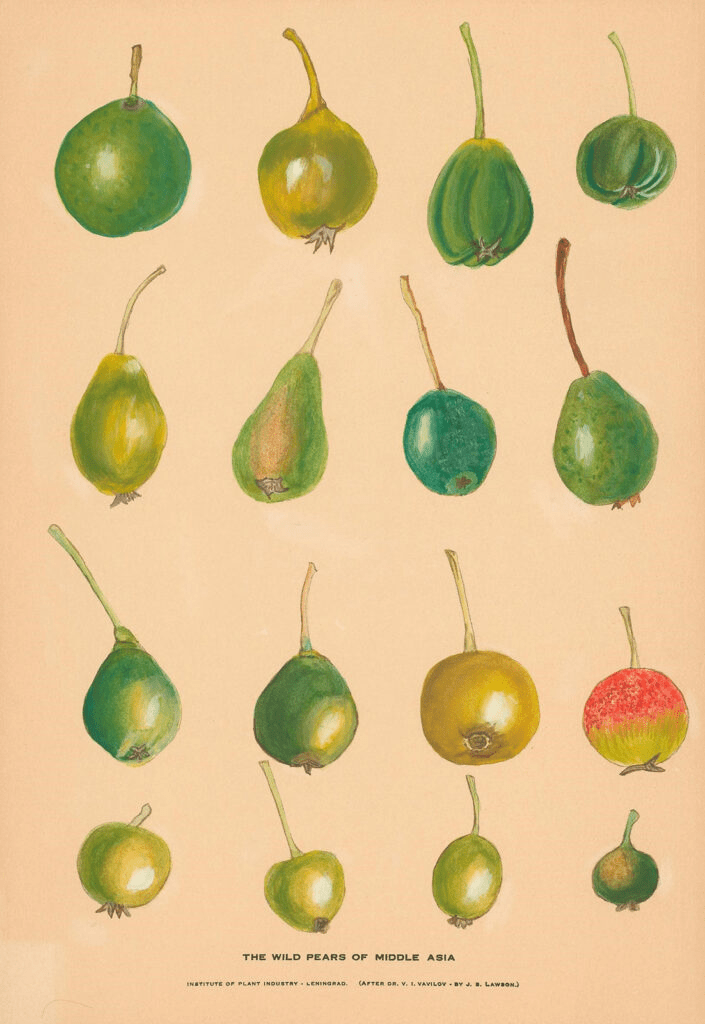
Illustrations by J. S. Lawson of wild pears collected in central Asia by the Bureau of Applied Botany, one of a group of six panels Vavilov gave to Cornell University pomologist Richard Wellington at the International Genetics Congress in 1932 – Biodiversity Heritage Library
First, they were thinking about the world after the war. Nations would need help getting back on their feet and feeding their people, especially in places where crops had been wiped out. They could help with that.
They were also looking at the broad sweep of human history. Ever since the first farmers planted seeds some 10,000 years ago, there’s been an unbroken chain of crop plantings through time. The bureau scientists saw themselves as stewards of this heritage—arguably the most important heritage of humankind. Eating the seeds would have been tantamount to snapping that chain.
So the scientists waited, and they watched, and they gradually died. A rice scientist, a potato scientist, the peanut scientist clutching that packet, and six more. In all, 700,000 people starved in Leningrad during the 872-day siege. But it’s hard to find any deaths more poignant than those nine food scientists.
The siege finally lifted in January 1944, when the battered Nazi army withdrew. The city was jubilant. Food, real food, flooded in, and people could eat their fill for the first time in years.
But it was a bittersweet moment for the surviving bureau scientists. They were happy to forget the gnawing hunger and constant temptation, certainly. But they were crushed at the loss of their colleagues. They were also disheartened to finally learn the fate of their guiding light, Nikolai Vavilov.
After the arrest in Ukraine, Gulag interrogators grilled Vavilov mercilessly, often for 12 hours at a stretch. They were determined to make him confess to the “crime” of not conforming his science to their politics. But as one historian commented, “Vavilov, unlike Galileo . . . refused to repudiate his beliefs.” Speaking for his colleagues, he looked his interrogators in the eye and said, “We shall go into the pyre—we shall burn. But we shall not retreat from our convictions.” Try as they might, the agents could not break him.
At least not mentally. Starting in spring 1942, Gulag administrators essentially did to Vavilov what the Nazis tried to do to Leningrad—starve him into submission. They fed him nothing but mashed cabbage and moldy flour day after day. The man who had sampled wild apples in Kazakhstan, wild barley in Ethiopia, and wild potatoes in Chile was reduced to eating flavorless mush, and little of it. His muscles wasted away, turning his arms and legs to sticks. His cheeks collapsed inward, boils erupted on his skin. He had labored for decades to end famine, and finally succumbed to starvation himself in January 1943. He was 55 years old.
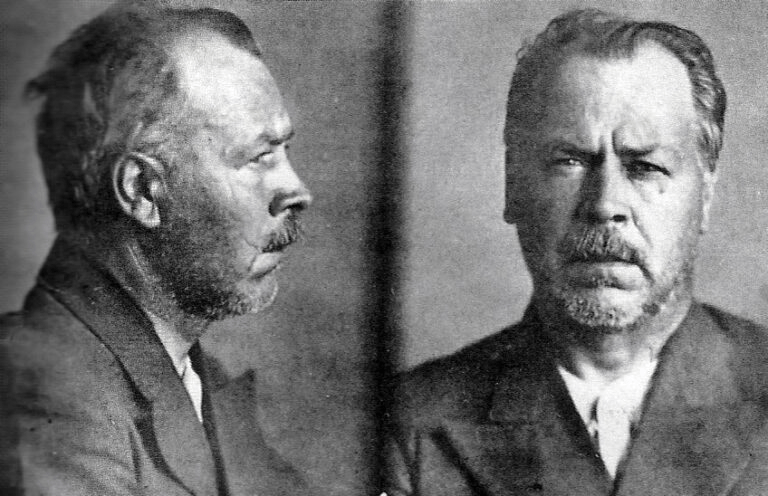
Mug shots of Vavilov during his imprisonment, 1942 – Central Archive of the Federal Security Service of the Russian Federation/Wikimedia Commons
Nowadays, Vavilov is revered as a hero in Russia—at least by most people. Despite its ups and downs, his bureau still exists, renamed as the N. I. Vavilov All-Russian Scientific Research Institute of Plant Genetic Resources (VIR in Russian). Scientists across the globe have embraced Vavilov’s insight that genetic biodiversity is the key to a healthy food future. This has led to the founding of even bigger and more sophisticated agricultural stockpiles, such as the so-called doomsday seed vault in Svalbard, Norway. Fittingly, the VIR has donated seeds and other specimens to Svalbard—presumably many of them dating back to Vavilov’s early collecting trips.
Despite—or perhaps because of—Vavilov’s celebrity outside of Russia, his main tormentor, Trofim Lysenko, has enjoyed a shocking revival of his own within Russia. Instead of being denounced as a know-nothing murderer, he’s celebrated as a hero and patriot. This rehabilitation goes hand in hand with the country’s lurch toward autocratic, strongman politics reminiscent of Joseph Stalin’s day. The authors of a recent article on the Lysenko revival note that “the current enmity between Russia and the West has contributed to bolstering of pro-Lysenko arguments” in which geneticists “are depicted as pseudo-scientists and charlatans, performing tasks assigned to them by globalist agendas that are hostile to Russia. Opponents of Lysenko are called ‘traitors of the nation.’”
Russia’s increasing descent into autocracy also, of course, led to the recent invasion of Ukraine, disrupting food supplies there and sending the prices of Ukrainian wheat and Russian oil skyrocketing—all of which again raise the specter of famine.
Other threats exist as well. Despite advances in technology, crops today are more inbred than ever—and therefore even more vulnerable to pests and disease. Climate change could make things even worse as our weather grows more extreme: crops such as bananas, chocolate, and coffee are already threatened with extinction. Vavilov’s vision to preserve biodiversity is therefore more important than ever. Humankind has been farming for 10,000 years. And if we manage to last 10,000 more, we just might have Vavilov—and the incredible strength of the starving scientists of Leningrad—to thank for keeping us going.
By Sam Kean
Sam Keanis a best-selling science author. His latest book is “The Icepick Surgeon: Murder, Fraud, Sabotage, Piracy, and Other Dastardly Deeds Perpetrated in the Name of Science”.
September 27, 2022
https://www.sciencehistory.org/stories/magazine/the-tragedy-of-the-worlds-first-seed-bank
Bạn có thể tải miễn phí bộ học liệu được xây dựng từ bài đọc này tại đây:
https://drive.google.com/drive/folders/12-v-tfhX2oG4rkMZEwzWh4nP9RPXv-JN?usp=sharing
Tập Đọc (literally means “Reading Together”) is a bilingual English-Vietnamese journal featuring new word annotations, translations, spoken word versions (audio articles), and a free vocabulary list for the community. The project has been maintained since 2020 and has published over 80 issues to date.
Readers should be advised that the articles published in Tập Đọc do not necessarily reflect the views, attitudes, and perspectives of the editors. Readers are encouraged to form their own opinions and evaluations through a dialogue between themselves and the authors during their reading process. Only reading writers with whom one agrees is akin to only engaging in conversations with those who compliment you: it’s comfortable, but dangerous.
Hope this helps.
If you wish to support any of my projects, I would be profoundly grateful. Any support, no matter how small, will be significantly meaningful in helping me stay motivated or continue these non-profit efforts.
Please send your support to account number: 0491 0000 768 69. Account holder: Nguyễn Tiến Đạt, Vietcombank, Thăng Long branch.

Đà Nẵng, Thursday, April 17, 2024
Nguyễn Tiến Đạt (sutucon)
BẢNG CHÚ THÍCH TỪ MỚI
| STT | Từ | Loại từ | Phiên âm | Nghĩa tiếng Anh | Nghĩa tiếng Việt |
|---|---|---|---|---|---|
| 1 | starved | verb (past participle) | /stɑːvd/ | to suffer or die from extreme or prolonged lack of food. | chết đói |
| 2 | siege | noun | /siːʤ/ | a military operation in which enemy forces surround a town or building, cutting off essential supplies, with the aim of compelling those inside to surrender | bao vây, vây hãm |
| 3 | botanists | noun (plural) | /ˈbɒtənɪsts/ | scientists who study plant life | nhà thực vật học |
| 4 | holed up | phrasal verb | /həʊld/ /ʌp/ | to take refuge or hide in a safe place | trốn trong |
| 5 | vault | noun | /vɔːlt/ | a secure room or compartment, often used for storing valuable items | hầm bảo quản, kho bạc |
| 6 | consume | verb | /kənˈsjuːm/ | to eat, drink, or ingest something | tiêu thụ |
| 7 | post-apocalyptic world | noun phrase | /pəʊst/ /əˈpɒkəlɪptɪk/ /wɜːld/ | a time period or setting after a catastrophic disaster that has dramatically changed or destroyed civilization | thế giới hậu tận thế |
| 8 | gulag | noun | /ˈɡuː.læɡ/ | a system of labor camps maintained in the Soviet Union from 1930 to 1955 in which many people died | trại lao động cưỡng bức |
| 9 | agronomist | noun | /əɡˈrɒnəmɪst/ | a scientist who studies the production and use of plants for food, fuel, fiber, and land reclamation | nhà nông học |
| 10 | geneticist | noun | /ʤəˈnɛtɪkɪst/ | a scientist who studies genetics, the science of genes, heredity, and variation in living organisms | nhà di truyền học |
| 11 | decadent | adjective | /ˈdɛkədᵊnt/ | characterized by or reflecting a state of moral or cultural decline | suy đồi |
| 12 | scientific institute | noun phrase | /ˌsaɪənˈtɪfɪk/ /ˈɪnstɪtjuːt/ | an organization established to conduct scientific research | viện nghiên cứu khoa học |
| 13 | grand | adjective | /ɡrænd/ | impressive and large or important in scale | lớn lao, tráng lệ |
| 14 | majestic | adjective | /məˈʤɛstɪk/ | having or showing impressive beauty or dignity | uy nghi, hùng vĩ |
| 15 | façade | noun | /fəˈsɑːd/ | the face of a building, especially the principal front that looks onto a street or open space | mặt tiền |
| 16 | arches | noun (plural) | /ˈɑːʧɪz/ | structures, typically curved, that span an opening and support weight from above | các vòm |
| 17 | pillars | noun (plural) | /ˈpɪləz/ | tall vertical structures of stone, wood, or metal, used as a support for a building, or as an ornament or monument | cột trụ |
| 18 | misleading | adjective | /mɪsˈliːdɪŋ/ | giving the wrong idea or impression | gây hiểu nhầm |
| 19 | bureau | noun | /ˈbjʊərəʊ/ | an office or department for transacting particular business | cục, văn phòng |
| 20 | premier | adjective | /ˈprɛmiə/ | first in importance, order, or position; leading | hàng đầu |
| 21 | heritage | noun | /ˈhɛrɪtɪʤ/ | property that is or may be inherited; an inheritance | di sản |
| 22 | fort knox | proper noun | /fɔːt/ /nɒks/ | a secure us army post in kentucky, known for housing a large portion of the united states’ gold reserves | kho vàng kiên cố nhất thế giới, nơi cục dự trữ vàng Mỹ có một kho chứa tiền vàng và châu báu vô cùng kiên cố, nằm kế cận tòa nhà bưu chính quân đội Mỹ ở Fort Knox (tiểu bang Kentucky). |
| 23 | sprang from | phrasal verb | /spræŋ/ /frɒm/ | originated or arose from | bắt nguồn từ |
| 24 | drought | noun | /draʊt/ | a prolonged period of abnormally low rainfall, leading to a shortage of water | hạn hán |
| 25 | lay waste to | phrasal verb | /leɪ/ /weɪst/ /tu/ | destroy or ruin something | tàn phá |
| 26 | famine | noun | /ˈfæmɪn/ | extreme scarcity of food | nạn đói |
| 27 | obsessed with | adjective phrase | /əbˈsɛst/ /wɪð/ | preoccupied constantly or to a troubling extent | ám ảnh với |
| 28 | genetics | noun | /ʤɪˈnɛtɪks/ | the study of heredity and the variation of inherited characteristics | di truyền học |
| 29 | domesticated crops | noun phrase | /dəʊˈmɛstɪkeɪtɪd/ /krɒps/ | plants selectively bred and cultivated by humans to suit agricultural needs | cây trồng thuần hóa |
| 30 | susceptible to | adjective phrase | /səˈsɛptəbᵊl/ /tu/ | likely or liable to be influenced or harmed by a particular thing | dễ bị ảnh hưởng bởi |
| 31 | inbred | adjective | /ˌɪnˈbrɛd/ | resulting from or involved in inbreeding (breeding from closely related individuals) | giao phối cận huyết |
| 32 | genetic diversity | noun phrase | /ʤəˈnɛtɪk/ /daɪˈvɜːsəti/ | the total number of genetic characteristics in the genetic makeup of a species | đa dạng di truyền |
| 33 | biodiversity | noun | /ˌbaɪəʊdaɪˈvɜːsəti/ | the variety of plant and animal life in the world or in a particular habitat | đa dạng sinh học |
| 34 | eradicating | verb (gerund or present participle) | /ɪˈrædɪkeɪtɪŋ/ | destroying completely; putting an end to | tiêu diệt |
| 35 | varieties | noun (plural) | /vəˈraɪətiz/ | different types or forms of people or things, typically of the same general class | các giống, các loại |
| 36 | species | noun (plural) | /ˈspiːʃiːz/ | a group of living organisms consisting of similar individuals capable of exchanging genes or interbreeding | loài |
| 37 | leapt into action | phrasal verb | /lɛpt/ /ˈɪntə/ /ˈækʃᵊn/ | to start doing something suddenly and energetically | bắt đầu hành động một cách đột ngột |
| 38 | grains | noun (plural) | /ɡreɪnz/ | small, hard seeds, especially the seeds of plants such as wheat, corn, oats, or rice | hạt, ngũ cốc |
| 39 | tubers | noun (plural) | /ˈʧuːbəz/ | the thickened part of an underground stem of a plant, such as a potato, which stores nutrients | củ |
| 40 | fedora | noun | /fɪˈdəʊrə/ | a low, soft felt hat with a curled brim and the crown creased lengthwise | mũ fedora (no specific Vietnamese term; use transliteration) |
| 41 | sporting | verb (present participle) | /ˈspɔːtɪŋ/ | wearing or displaying (a distinctive or noticeable item) | đeo, mang (phụ thuộc vào ngữ cảnh) |
| 42 | mustache | noun | /məˈstɑːʃ/ | facial hair grown on the upper lip | ria mép |
| 43 | expeditions | noun (plural) | /ˌɛkspəˈdɪʃᵊnz/ | journeys or voyages undertaken by a group of people with a particular purpose, especially that of exploration, research, or war | các cuộc thám hiểm |
| 44 | samples | noun (plural) | /ˈsɑːmpᵊlz/ | a small part or quantity intended to show what the whole is like | mẫu vật |
| 45 | amassed | verb (past participle) | /əˈmæst/ | gathered together or accumulated over a period of time | tích lũy |
| 46 | astounding | adjective | /əˈstaʊndɪŋ/ | surprisingly impressive or notable | kinh ngạc |
| 47 | historian | noun | /hɪˈstɔːriən/ | an expert in or student of history | nhà sử học |
| 48 | dull-coated | adjective | /dʌl/-/ˈkəʊtɪd/ | having a dull, not shiny, surface or appearance | phủ lớp bóng mờ |
| 49 | glistened | verb (past participle) | /ˈɡlɪsᵊnd/ | shone brightly, especially with reflected light | lấp lánh |
| 50 | bulbs | noun (plural) | /bʌlbz/ | the round, underground part of some plants, consisting of a short stem surrounded by fleshy scale leaves, from which flowers and leaves are developed | củ (trong ngữ cảnh thực vật) |
| 51 | textures | noun | /ˈtɛksʧəz/ | the feel, appearance, or consistency of a surface or a substance | kết cấu |
| 52 | knobby | adjective | /ˈnɒbi/ | full of or covered with knobs or lumps | nhiều nốt |
| 53 | gnarled | adjective | /nɑːld/ | knobbly, rough, and twisted, especially with age | gồ ghề, xoắn |
| 54 | smooth | adjective | /smuːð/ | having an even and regular surface; free from perceptible projections, lumps, or indentations | mịn, nhẵn |
| 55 | burnished | adjective (past participle used as an adjective) | /ˈbɜːnɪʃt/ | polished by rubbing | bóng loáng, đánh bóng |
| 56 | exuded | verb (past tense) | /ɪɡˈzjuːdɪd/ | discharge or emit (a liquid or gas) slowly and steadily | tiết ra |
| 57 | fragrance | noun | /ˈfreɪɡrᵊns/ | a pleasant, sweet smell | hương thơm |
| 58 | imaginable | adjective | /ɪˈmæʤɪnəbᵊl/ | capable of being imagined or conceived by the mind | có thể tưởng tượng được |
| 59 | chemist | noun | /ˈkɛmɪst/ | a scientist trained in the study of chemistry | nhà hóa học |
| 60 | musky | adjective | /ˈmʌski/ | having a strong, earthy, or musk-like smell | có mùi xạ hương |
| 61 | fermented | adjective (past participle used as an adjective) | /fəˈmɛntɪd/ | undergone the process of fermentation, where sugars are converted into alcohol or organic acids | lên men |
| 62 | citric | adjective | /ˈsɪtrɪk/ | of or relating to citrus fruits or their acid | thuộc về cam chanh |
| 63 | floral | adjective | /ˈflɔːrəl/ | pertaining to flowers | thuộc về hoa |
| 64 | replenish | verb | /rɪˈplɛnɪʃ/ | fill (something) up again | bổ sung, làm đầy lại |
| 65 | and whatnot | phrase (idiomatic) | /ənd/ /ˈwɒtnɒt/ | and other similar things; et cetera | và những thứ khác |
| 66 | every so often | adverbial phrase | /ˈɛvri/ /səʊ/ /ˈɒfᵊn/ | occasionally; at intervals | thỉnh thoảng |
| 67 | fields | noun (plural) | /fiːldz/ | areas of open land, especially used for cultivation or pasture | cánh đồng |
| 68 | orchards | noun (plural) | /ˈɔːʧədz/ | a piece of land planted with fruit trees | vườn cây ăn quả |
| 69 | paddies | noun (plural) | /ˈpædiz/ | wet land on which rice is grown | ruộng lúa |
| 70 | harvest | noun | /ˈhɑːvɪst/ | the process or period of gathering in crops | thu hoạch |
| 71 | the logistics | noun phrase | /ðə/ /ləʊˈʤɪstɪks/ | the detailed organization and implementation of a complex operation | hậu cần |
| 72 | formidable | adjective | /ˈfɔːmɪdəbᵊl/ | inspiring fear or respect through being impressively large, powerful, intense, or capable | đáng sợ, oai vệ |
| 73 | humming | adjective (present participle used as an adjective) | /ˈhʌmɪŋ/ | busy with activity | ồn ào, nhộn nhịp |
| 74 | under his command | prepositional phrase | /ˈʌndə/ /hɪz/ /kəˈmɑːnd/ | directed or controlled by him | dưới quyền chỉ huy của ông ấy |
| 75 | stately | adjective | /ˈsteɪtli/ | having a dignified, unhurried, and grand manner; majestic in manner and appearance | oai nghiêm, tráng lệ |
| 76 | enterprise | noun | /ˈɛntəpraɪz/ | a project or undertaking, typically one that is difficult or requires effort | doanh nghiệp, doanh trại |
| 77 | collapsed | verb (past tense) | /kəˈlæpst/ | fell down or in; gave way | sụp đổ |
| 78 | soviet apparatchiks | noun phrase | /ˈsəʊviət/ apparatchiks | derogatory term for a full-time, professional functionary of the soviet communist party or government, typically an unquestioning follower | quan chức cộng sản Liên Xô |
| 79 | despised | verb (past participle used as an adjective) | /dɪˈspaɪzd/ | feel contempt or a deep repugnance for | khinh bỉ |
| 80 | inborn | adjective | /ˌɪnˈbɔːn/ | existing from birth | bẩm sinh |
| 81 | genetic traits | noun phrase | /ʤəˈnɛtɪk/ /treɪts/ | characteristics that are influenced by genes passed from parent to offspring | đặc điểm di truyền |
| 82 | profoundly | adverb | /prəˈfaʊndli/ | to a profound extent; extremely | sâu sắc |
| 83 | sweep away | verb phrase | /swiːp/ /əˈweɪ/ | eliminate or remove swiftly and suddenly | quét sạch |
| 84 | rational | adjective | /ˈræʃᵊnᵊl/ | based on or in accordance with reason or logic | có lý, hợp lý |
| 85 | selfless | adjective | /ˈsɛlfləs/ | concerned more with the needs and wishes of others than with one’s own | vị tha, không ích kỷ |
| 86 | heroic | adjective | /hɪˈrəʊɪk/ | having the characteristics of a hero, such as courage | anh hùng |
| 87 | humankind | noun | /ˈhjuːmənˈkaɪnd/ | the human race; human beings collectively | loài người |
| 88 | vision | noun | /ˈvɪʒᵊn/ | the ability to think about or plan the future with imagination or wisdom | tầm nhìn |
| 89 | fixed | adjective (past participle used as an adjective) | /fɪkst/ | fastened securely in position | cố định |
| 90 | be refashioned | verb phrase (passive) | /bi/ /ˌriːˈfæʃᵊnd/ | to be reshaped or altered | được tái tạo, cải tạo |
| 91 | simplistic | adjective | /sɪmˈplɪstɪk/ | treating complex issues and problems as if they were much simpler than they really are | đơn giản hóa |
| 92 | marxists | noun (plural) | /ˈmɑːksɪsts/ | followers of the political and economic theories of karl marx and friedrich engels | chủ nghĩa Marx |
| 93 | declared | verb (past tense) | /dɪˈkleəd/ | announced officially | tuyên bố |
| 94 | officials | noun (plural) | /əˈfɪʃᵊlz/ | people holding public office or having official duties, especially within a government | các quan chức |
| 95 | fanatic | noun | /fəˈnætɪk/ | a person filled with excessive and single-minded zeal, especially for an extreme religious or political cause | cuồng tín |
| 96 | stamping out | verb phrase | /ˈstæmpɪŋ/ /aʊt/ | put an end to or suppress something | dập tắt |
| 97 | loathsome | adjective | /ˈləʊðsəm/ | causing hatred or disgust; repulsive | ghê tởm, đáng ghét |
| 98 | toady | noun | /ˈtəʊdi/ | a person who behaves obsequiously to someone important | bợ đỡ |
| 99 | rose through the ranks | verb phrase | /rəʊz/ /θruː/ /ðə/ /ræŋks/ | to move up through the levels of a hierarchy | thăng tiến qua các cấp bậc |
| 100 | ruthless | adjective | /ˈruːθləs/ | having or showing no pity or compassion for others | tàn nhẫn |
| 101 | denouncing | verb (gerund) | /dɪˈnaʊnsɪŋ/ | publicly declare to be wrong or evil | lên án |
| 102 | rivals | noun (plural) | /ˈraɪvᵊlz/ | people or things competing with another for the same objective or for superiority in the same field of activity | đối thủ |
| 103 | spies | noun (plural) | /spaɪz/ | people who secretly collect and report information on the activities, movements, and plans of an enemy or competitor | gián điệp |
| 104 | outlaw | verb | /ˈaʊtlɔː/ | make illegal; ban | cấm đoán |
| 105 | autocratic | adjective | /ˌɔːtəʊˈkrætɪk/ | relating to a ruler who has absolute power | độc tài |
| 106 | renounce | verb | /rɪˈnaʊns/ | formally declare one’s abandonment of (a claim, right, or possession) | từ bỏ |
| 107 | targeted | adjective (past participle) | /ˈtɑːɡɪtɪd/ | selected as an object of attention or attack | nhắm vào |
| 108 | whisked off | verb phrase (past tense) | /wɪskt/ /ɒf/ | take or move (someone or something) in a particular direction suddenly and quickly | lấy đi nhanh |
| 109 | trembling | verb (present participle) | /ˈtrɛmblɪŋ/ | shaking or quivering, typically as a result of anxiety, excitement, or frailty | run rẩy |
| 110 | looming | verb (present participle) | /ˈluːmɪŋ/ | appearing as a shadowy form, especially one that is large or threatening | hiện ra mập mờ |
| 111 | nazi germany | proper noun (noun phrase) | /ˈnɑːtsi/ /ˈʤɜːməni/ | the period when germany was under the dictatorship of adolf hitler through the nazi party from 1933 to 1945 | nước Đức Quốc xã |
| 112 | despicable | adjective | /ˈdɛspɪkəbᵊl/ | deserving hatred and contempt; morally reprehensible | đáng khinh |
| 113 | appreciated | verb (past participle) | /əˈpriːʃieɪtɪd/ | recognized the full worth or importance of something | đánh giá cao |
| 114 | to a fault | idiom | /tu/ /ə/ /fɔːlt/ | to an excessive degree; excessively | quá mức |
| 115 | essentially | adverb | /ɪˈsɛnʃᵊli/ | used to emphasize the basic, fundamental, or intrinsic nature of a person, thing, or situation | cơ bản |
| 116 | priceless | adjective | /ˈpraɪsləs/ | so precious that its value cannot be determined | vô giá |
| 117 | trove | noun | /trəʊv/ | a store of valuable or delightful things | kho báu |
| 118 | riches | noun (plural) | /ˈrɪʧɪz/ | abundant and valuable possessions or wealth | của cải |
| 119 | grubby | adjective | /ˈɡrʌbi/ | dirty; grimy | dơ bẩn |
| 120 | morale | noun | /məˈrɑːl/ | the confidence, enthusiasm, and discipline of a person or group at a particular time | tinh thần |
| 121 | demonized | verb (past participle) | /ˈdiː.mə.naɪzd/ | portrayed as wicked and threatening | quỷ hoá |
| 122 | marching | verb (present participle) | /ˈmɑːʧɪŋ/ | walking along steadily and rhythmically as part of a group | diễu hành |
| 123 | life’s work | noun phrase | /laɪfs/ /wɜːk/ | the main occupation or function that a person is dedicated to during their life | công việc cả đời |
| 124 | despair | noun | /dɪˈspeə/ | the complete loss or absence of hope | tuyệt vọng |
| 125 | deteriorated | verb (past participle) | /dɪˈtɪərɪəreɪtɪd/ | became progressively worse | xuống cấp |
| 126 | slog | noun | /slɒɡ/ | a spell of difficult, tiring work or travel | vất vả |
| 127 | laid siege | verb phrase (past tense) | /leɪd/ /siːʤ/ | surrounded a place with armed forces to capture it or force its surrender | bao vây |
| 128 | shells | noun (plural) | /ʃɛlz/ | explosive artillery projectiles | đạn pháo |
| 129 | starve | verb | /stɑːv/ | suffer or die from extreme or prolonged lack of food | đói kém |
| 130 | submission | noun | /səbˈmɪʃᵊn/ | the action of accepting or yielding to a superior force or to the will or authority of another person | phục tùng |
| 131 | antiaircraft guns | noun phrase (plural) | /ˌæntiˈeəkrɑːft/ /ɡʌnz/ | artillery used to defend against enemy aircraft | pháo phòng không |
| 132 | in close proximity to | prepositional phrase | /ɪn/ /kləʊz/ /prɒkˈsɪməti/ /tu/ | very near to something | gần kề |
| 133 | tinned goods | noun phrase (plural) | /tɪnd/ /ɡʊdz/ | food products preserved and sold in sealed metal containers | thực phẩm đóng hộp |
| 134 | tightened their belts | verb phrase (past tense, idiomatic) | /ˈtaɪtᵊnd/ /ðeə/ /bɛlts/ | used figuratively to describe the need to economize or spend less money | thắt lưng buộc bụng |
| 135 | supplies | noun (plural) | /səˈplaɪz/ | a stock of resources or materials | nguồn cung cấp |
| 136 | dwindling | verb (present participle) | /ˈdwɪndᵊlɪŋ/ | diminishing gradually in size, amount, or strength | suy giảm |
| 137 | rationing | noun | /ˈræʃnɪŋ/ | the controlled distribution of scarce resources, goods, or services | phân phối hạn chế |
| 138 | went into effect | verb phrase (past tense) | /wɛnt/ /ˈɪntə/ /ɪˈfɛkt/ | became operative; began to apply or be used | bắt đầu có hiệu lực |
| 139 | ease | verb | /iːz/ | make less severe or serious | làm dịu bớt |
| 140 | a morsel | noun phrase | /ə/ /ˈmɔːsᵊl/ | a small piece or amount of food | một miếng nhỏ |
| 141 | unbearably hard | adjective phrase | /ʌnˈbeərəbᵊli/ /hɑːd/ | extremely difficult to endure | khó chịu đến mức không chịu nổi |
| 142 | not in the least | adverbial phrase | /nɒt/ /ɪn/ /ðə/ /liːst/ | not at all; absolutely not | không hề một chút |
| 143 | refrain from | verb phrase | /rɪˈfreɪn/ /frɒm/ | stop oneself from doing something | kiềm chế không làm gì đó |
| 144 | stirring rhetoric | noun phrase | /ˈstɜːrɪŋ/ /ˈrɛtərɪk/ | language designed to move people emotionally | ngôn từ xúc động |
| 145 | emaciated | adjective | /ɪˈmeɪsieɪtɪd/ | abnormally thin or weak, especially because of illness or lack of food | kiệt sức |
| 146 | nutritious | adjective | /njuːˈtrɪʃəs/ | efficient as food; nourishing | bổ dưỡng |
| 147 | temptation | noun | /tɛmpˈteɪʃᵊn/ | a desire to do something, especially something wrong or unwise | cám dỗ |
| 148 | to hell with | idiom | /tə/ /hɛl/ /wɪð/ | used to express disregard or dismissal | cứ mặc kệ |
| 149 | pomologist | noun | /pəˈmɒləʤɪst/ | a scientist who studies and cultivates fruit | nhà nghiên cứu trái cây |
| 150 | the broad sweep | noun phrase | /ðə/ /brɔːd/ /swiːp/ | an extensive range or scope covering a wide area or encompassing a large number | phạm vi rộng |
| 151 | stewards | noun (plural) | /ˈstjuːədz/ | people who manage another’s property or financial affairs; ones who administer anything as the agents of others | người quản lý |
| 152 | heritage | noun | /ˈhɛrɪtɪʤ/ | valued objects and qualities such as historic buildings and cultural traditions that have been passed down from previous generations | di sản |
| 153 | tantamount to | idiom (used as an adjective phrase) | /ˈtæntəmaʊnt/ /tu/ | equivalent in seriousness to; virtually the same as | tương đương với |
| 154 | poignant | adjective | /ˈpɔɪnjənt/ | evoking a keen sense of sadness or regret | đau lòng |
| 155 | battered | adjective | /ˈbætəd/ | injured by repeated blows or punishment | bị đánh đập |
| 156 | withdrew | verb (past tense) | /wɪðˈdruː/ | pulled back or moved away or backward | rút lui |
| 157 | jubilant | adjective | /ˈʤuːbɪlənt/ | feeling or expressing great happiness and triumph | hân hoan |
| 158 | eat their fill | idiom (used as a verb phrase) | /iːt/ /ðeə/ /fɪl/ | to eat as much as one desires | ăn no nê |
| 159 | bittersweet | adjective | /ˈbɪtəswiːt/ | arousing pleasure tinged with sadness or pain | ngọt ngào nhưng buồn bã |
| 160 | gnawing | adjective (participle) | /ˈnɔːɪŋ/ | persistently worrying or distressing | cắn rứt |
| 161 | disheartened | adjective | /dɪsˈhɑːtᵊnd/ | having lost determination or confidence; dispirited | nản lòng |
| 162 | guiding light | noun phrase | /ˈɡaɪdɪŋ/ /laɪt/ | a person or thing that serves as an inspiration or guide | ngọn đèn dẫn đường |
| 163 | interrogators | noun (plural) | /ɪnˈtɛrəʊɡeɪtəz/ | people who question someone closely, aggressively, or formally | người thẩm vấn |
| 164 | grilled | verb (past participle used as an adjective) | /ɡrɪld/ | questioned intensely and aggressively | thẩm vấn gắt gao |
| 165 | mercilessly | adverb | /ˈmɜːsɪləsli/ | in a way that shows no mercy; harshly or pitilessly | tàn nhẫn |
| 166 | at a stretch | idiom (used as an adverb phrase) | /ət/ /ə/ /strɛʧ/ | continuously over a period of time | liên tục trong một khoảng thời gian |
| 167 | confess | verb | /kənˈfɛs/ | admit or state that one has committed a crime or is at fault in some way | thú nhận |
| 168 | conforming | verb (present participle) | /kənˈfɔːmɪŋ/ | comply with rules, standards, or laws | tuân theo |
| 169 | repudiate | verb | /rɪˈpjuːdieɪt/ | refuse to accept; reject | từ chối |
| 170 | convictions | noun (plural) | /kənˈvɪkʃᵊnz/ | firm beliefs or opinions | niềm tin |
| 171 | pyre | noun | /ˈpaɪə/ | a heap of combustible material, especially one for burning a corpse as part of a funeral ceremony | đống lửa thiêu |
| 172 | retreat | verb (can also be a noun) | /rɪˈtriːt/ | withdraw from enemy forces as a result of their superior power or after a defeat | rút lui |
| 173 | agents | noun (plural) | /ˈeɪʤᵊnts/ | people who act on behalf of another, in particular | tay sai, chỉ điểm tay chân, bộ hạ |
| 174 | mentally | adverb | /ˈmɛntəli/ | in a manner relating to the mind | về mặt tinh thần |
| 175 | mashed cabbage | noun phrase | /mæʃt/ /ˈkæbɪʤ/ | cabbage that has been boiled and then crushed into a soft mass | bắp cải nghiền |
| 176 | moldy flour | noun phrase | /ˈməʊldi/ /flaʊə/ | flour that has developed mold, typically rendering it unfit for consumption | bột mốc |
| 177 | barley | noun | /ˈbɑːli/ | a cereal grain that is globally significant as a basic food and component of various beverages | lúa mạch |
| 178 | flavorless mush | noun phrase | /ˈfleɪvələs/ /mʌʃ/ | food with little to no taste, typically soft or pulpy | thức ăn nhạt nhẽo |
| 179 | starvation | noun | /stɑːˈveɪʃᵊn/ | suffering or death caused by hunger | nạn đói |
| 180 | mug shots | noun (plural) | /mʌɡ/ /ʃɒts/ | photographs of a person’s face made for an official purpose, especially police records | ảnh chân dung |
| 181 | revered | verb (past participle used as an adjective) | /rɪˈvɪəd/ | felt deep respect or admiration for | kính trọng |
| 182 | ups and downs | noun phrase | /ʌps/ /ənd/ /daʊnz/ | a sequence of good and bad experiences | thăng trầm |
| 183 | insight | noun | /ˈɪnsaɪt/ | the capacity to gain an accurate and deep understanding of someone or something | cái nhìn sâu sắc |
| 184 | stockpiles | noun (plural) | /ˈstɒkpaɪlz/ | large accumulated stocks of goods or materials | kho dự trữ |
| 185 | so-called | adjective | /ˈsəʊˈkɔːld/ | used to introduce a new term or nickname | cái gọi là |
| 186 | doomsday | noun | /ˈduːmzdeɪ/ | referring to the day on which the world will end or a disastrous event will occur | ngày tận thế |
| 187 | fittingly | adverb | /ˈfɪtɪŋli/ | in a way that is suitable or appropriate for the situation or circumstances | phù hợp |
| 188 | specimens | noun (plural) | /ˈspɛsɪmənz/ | individual items or parts representative of a class or whole | mẫu vật |
| 189 | presumably | adverb | /prɪˈzjuːməbli/ | used to convey that what is asserted is very likely though not known for certain | có lẽ |
| 190 | celebrity | noun | /səˈlɛbrəti/ | a famous person, especially in entertainment or sport | người nổi tiếng |
| 191 | tormentor | noun | /tɔːˈmɛntə/ | a person who inflicts severe mental or physical suffering on someone | kẻ hành hạ |
| 192 | murderer | noun | /ˈmɜːdᵊrə/ | a person who unlawfully kills another human being | kẻ giết người |
| 193 | patriot | noun | /ˈpætriət/ | a person who vigorously supports their country and is prepared to defend it against enemies or detractors | người yêu nước |
| 194 | rehabilitation | noun | /ˌriːəˌbɪlɪˈteɪʃᵊn/ | the action of restoring someone to health or normal life through training and therapy after imprisonment, addiction, or illness | phục hồi |
| 195 | goes hand in hand with | idiom (used as a verb phrase) | /ɡəʊz/ /hænd/ /ɪn/ /hænd/ /wɪð/ | occurs together or simultaneously | đi đôi với |
| 196 | lurch | verb (can also be a noun) | /lɜːʧ/ | an abrupt uncontrolled movement, especially an unsteady tilt or roll | lảo đảo |
| 197 | autocratic | adjective | /ˌɔːtəʊˈkrætɪk/ | relating to a ruler who has absolute power | độc tài |
| 198 | strongman politics | noun phrase | /ˈstrɒŋ.mæn/ /ˈpɒlətɪks/ | political leadership characterized by centralized control, authoritarian practices, and often a single dominant leader | chính trị độc tài |
| 199 | reminiscent of | adjective phrase | /ˌrɛmɪˈnɪsᵊnt/ /ɒv/ | tending to remind one of something | nhắc nhở về |
| 200 | enmity | noun | /ˈɛnməti/ | the state or feeling of being actively opposed or hostile to someone or something | thù địch |
| 201 | bolstering | verb (present participle) | /ˈbəʊlstərɪŋ/ | support or strengthen | củng cố |
| 202 | depicted | verb (past participle used as an adjective) | /dɪˈpɪktɪd/ | represented or characterized in words or art | miêu tả |
| 203 | pseudo-scientists | noun (plural) | /ˈsjuːdəʊ/-/ˈsaɪəntɪsts/ | individuals who claim to be scientists but do not adhere to valid scientific methods or principles | nhà khoa học giả |
| 204 | charlatans | noun (plural) | /ˈʃɑːlətᵊnz/ | people who falsely claim to have special knowledge or skills | kẻ lừa đảo |
| 205 | agendas | noun (plural) | /əˈʤɛndəz/ | a list of items to be discussed at a formal meeting | chương trình nghị sự |
| 206 | hostile | adjective | /ˈhɒstaɪl/ | unfriendly; antagonistic | thù địch |
| 207 | descent | noun | /dɪˈsɛnt/ | the origin or background of a person in terms of family or nationality | nguồn gốc |
| 208 | invasion | noun | /ɪnˈveɪʒᵊn/ | an instance of invading a country or region with an armed force | xâm lược |
| 209 | specter | noun | /ˈspɛktə/ | something widely feared as a possible unpleasant or dangerous occurrence | bóng ma |
BÀI TẬP ĐIỀN TỪ
| STT | Câu điền từ | Bản dịch tiếng Việt |
|---|---|---|
| 1 | She cried in ___ when she realized she had lost everything. | Cô đã khóc trong tuyệt vọng khi nhận ra mình đã mất tất cả. |
| 2 | Many populations ___ during prolonged sieges. | Nhiều người dân chết đói trong các cuộc bao vây kéo dài. |
| 3 | The soldiers were ___ towards the battlefield. | Những người lính đang hành quân về phía chiến trường. |
| 4 | She ______ dishonest people who manipulate others for their own gain. | Cô ấy khinh thường những người không trung thực, thao túng người khác để trục lợi. |
| 5 | His ___ at the rally captivated everyone. | Lời hùng biện khuấy động của anh ấy tại cuộc biểu tình đã làm say mê tất cả mọi người. |
| 6 | Drug ____ often requires both medical intervention and psychological support. | Ma túy phục hồi chức năng thường cần cả sự can thiệp của y tế và hỗ trợ tâm lý. |
| 7 | The ____ asked many tough questions, trying to get to the truth of the matter. | Những người thẩm vấn đã hỏi nhiều câu hỏi khó, cố gắng tìm ra sự thật của vấn đề. |
| 8 | Archaeologists uncovered a ___ of ancient coins in the old cellar. | Các nhà khảo cổ đã phát hiện ra một kho báu đồng xu cổ trong hầm cũ. |
| 9 | The sculpture had a rough, ______ texture, making it fascinating to touch. | Tác phẩm điêu khắc có kết cấu thô ráp, có nốt sần, tạo cảm giác thú vị khi chạm vào. |
| 10 | Over the years, he ___ a significant collection of art from around the world. | Qua nhiều năm, anh ấy đã tích lũy một bộ sưu tập nghệ thuật đáng kể từ khắp nơi trên thế giới. |
| 11 | History is full of ____ who deceived people to gain fame and wealth. | Lịch sử đầy rẫy những kẻ lang băm lừa dối người dân để đạt được danh vọng và giàu có. |
| 12 | The debate was so ______ moving that it changed many people’s opinions on the subject. | Cuộc tranh luận rất cảm động đến nỗi nó đã thay đổi quan điểm của nhiều người về chủ đề này. |
| 13 | After graduating with a degree in biochemistry, he worked as a ______ in a large pharmaceutical company. | Sau khi tốt nghiệp chuyên ngành hóa sinh, anh ấy làm nhà hóa học trong một công ty dược phẩm lớn. |
| 14 | His argument was clear and ______, making it easy to follow. | Lập luận của ông rất rõ ràng và hợp lý, khiến người ta dễ dàng theo dõi. |
| 15 | Despite being ___, the two tech companies collaborated on several projects. | Mặc dù là đối thủ nhưng hai công ty công nghệ đã hợp tác trong một số dự án. |
| 16 | The media often ___ the celebrity as a dangerous influence. | Các phương tiện truyền thông thường quỷ hóa người nổi tiếng như một người có ảnh hưởng nguy hiểm. |
| 17 | The novel explores the ____ of life through its complex characters. | Cuốn tiểu thuyết khám phá những thăng trầm của cuộc sống thông qua các nhân vật phức tạp. |
| 18 | She planted rows of lavender because she loved the plant’s ______. | Cô ấy trồng những hàng hoa oải hương vì cô ấy yêu thích mùi thơm của cây. |
| 19 | She arranged a beautiful ______ display for the spring festival. | Cô ấy đã sắp xếp một màn hoa đẹp mắt cho lễ hội mùa xuân. |
| 20 | The organization focused on ______ poverty and illiteracy in the region. | Tổ chức này tập trung vào việc xóa bỏ tình trạng nghèo đói và mù chữ trong khu vực. |
| 21 | He visits his hometown ______ to check on his elderly parents. | Anh ấy về thăm quê hương thường xuyên để thăm cha mẹ già. |
| 22 | The advertising campaign was ___ due to its controversial content. | Chiến dịch quảng cáo đã được nhắm mục tiêu do nội dung gây tranh cãi của nó. |
| 23 | The newly opened hotel was ___ in its decorations and architecture. | Khách sạn mới khai trương rất lớn về lối trang trí và kiến trúc. |
| 24 | Farmers often cultivate different ___ of the same crop to achieve the best results. | Nông dân thường trồng các giống khác nhau của cùng một loại cây trồng để đạt được kết quả tốt nhất. |
| 25 | The museum displayed ancient ____ to represent the civilization. | Bảo tàng trưng bày mẫu vật cổ xưa để đại diện cho nền văn minh. |
| 26 | The movie’s ending was ____, leaving the audience both moved and reflective. | Cái kết của bộ phim thật thấm thía, khiến khán giả vừa xúc động vừa suy ngẫm. |
| 27 | The freshly washed car ___ under the bright sunlight. | Chiếc xe mới rửa lóng lánh dưới ánh nắng chói chang. |
| 28 | A ___ diet is vital for healthy development. | Một chế độ ăn uống dinh dưỡng rất quan trọng cho sự phát triển khỏe mạnh. |
| 29 | During the cold war, ______ were often criticized for their blind loyalty to the regime. | Trong thời kỳ chiến tranh lạnh, các quan chức Liên Xô thường bị chỉ trích vì lòng trung thành mù quáng với chế độ. |
| 30 | The dictator ruled ____, showing no regard for human rights. | Kẻ độc tài cai trị không thương tiếc, không hề quan tâm đến nhân quyền. |
| 31 | ___ animals often have less genetic variability, which can lead to health issues. | Động vật con lai thường có ít biến đổi di truyền hơn, điều này có thể dẫn đến các vấn đề về sức khỏe. |
| 32 | The meeting had a long ____ that included budget reviews and staff assignments. | Cuộc họp có chương trình nghị sự dài bao gồm việc xem xét ngân sách và phân công nhân sự. |
| 33 | Large ______ of land in the countryside are ideal for farming. | Những cánh đồng đất rộng ở nông thôn là nơi lý tưởng để canh tác. |
| 34 | His approach to governance was ____ of ____. | Cách tiếp cận quản trị của ông gợi nhớ đến chính trị độc tài. |
| 35 | Many believe ____ will be brought about by climate change. | Nhiều người tin rằng ngày tận thế sẽ do biến đổi khí hậu gây ra. |
| 36 | The government has ______ the new policy on healthcare. | Chính phủ đã tuyên bố chính sách mới về chăm sóc sức khỏe. |
| 37 | Certain ______ are known to influence eye color and hair texture. | Một số đặc điểm di truyền được biết là có ảnh hưởng đến màu mắt và kết cấu tóc. |
| 38 | After the robbery, the criminals ___ in an abandoned warehouse. | Sau vụ cướp, bọn tội phạm ẩn náu trong một nhà kho bỏ hoang. |
| 39 | An ___ may work to improve the yield of crops through better soil management. | Một nhà nông học có thể làm việc để cải thiện năng suất cây trồng thông qua quản lý đất tốt hơn. |
| 40 | Eventually, he had to ____ to taking shortcuts to finish the work on time. | Cuối cùng, anh ấy phải thú nhận đã đi đường tắt để hoàn thành công việc đúng hạn. |
| 41 | The ___ of the old theatre was preserved during the renovation to maintain its historic charm. | Mặt tiền của nhà hát cũ được bảo tồn trong quá trình cải tạo để duy trì nét duyên dáng lịch sử của nó. |
| 42 | During the war, he was seen as a ____ for his acts of bravery. | Trong chiến tranh, ông được coi là một người yêu nước vì hành động dũng cảm của mình. |
| 43 | The old tree was ______ and sturdy, looking like it had survived many storms. | Cây cổ thụ xương xẩu và cứng cáp, trông như đã sống sót qua bao cơn bão. |
| 44 | When the fire alarm rang, the employees ___ to evacuate the building. | Khi chuông báo cháy vang lên, các nhân viên đã bắt tay vào hành động sơ tán khỏi tòa nhà. |
| 45 | The character in the novel was so ______ that readers felt a strong dislike for him. | Nhân vật trong tiểu thuyết quá đáng ghê tởm đến nỗi người đọc cảm thấy rất ghét anh ta. |
| 46 | Within the realm of fantasy, any kind of creature is ______. | Trong lĩnh vực tưởng tượng, bất kỳ loại sinh vật nào cũng có thể tưởng tượng được. |
| 47 | The rainforest is known for its high ___, with countless species coexisting. | Rừng nhiệt đới được biết đến với sự đa dạng sinh học cao, với vô số loài cùng tồn tại. |
| 48 | The conclusion of their long relationship was ____, filled with happy memories but sad endings. | Cái kết cho mối quan hệ lâu dài của họ là buồn vui lẫn lộn, tràn ngập những kỷ niệm hạnh phúc nhưng lại có những kết thúc buồn. |
| 49 | The ______ believe that the state should control all means of production. | Những người theo chủ nghĩa Marx tin rằng nhà nước nên kiểm soát mọi phương tiện sản xuất. |
| 50 | She was criticized for ____ too strictly to outdated policies. | Cô ấy bị chỉ trích vì tuân thủ quá nghiêm ngặt những chính sách lỗi thời. |
| 51 | Many households have ___ since the economic crisis began. | Nhiều hộ gia đình đã thắt lưng buộc bụng kể từ khi cuộc khủng hoảng kinh tế bắt đầu. |
| 52 | The ___ mountains reflected the sunset, creating a breathtaking scene. | Những ngọn núi hùng vĩ phản chiếu ánh hoàng hôn, tạo nên một khung cảnh ngoạn mục. |
| 53 | His ___ rule meant that no one dared to question his decisions. | Sự cai trị chuyên quyền của ông có nghĩa là không ai dám đặt câu hỏi về các quyết định của ông. |
| 54 | The artisan ______ the metal until it gleamed under the workshop lights. | Người nghệ nhân đánh bóng kim loại cho đến khi nó sáng lấp lánh dưới ánh đèn xưởng. |
| 55 | He was a ______, always eager to please his superiors. | Anh ta là một người ngốc nghếch, luôn mong muốn làm hài lòng cấp trên của mình. |
| 56 | Many modern ___ are resistant to pests and diseases. | Nhiều cây trồng thuần hóa hiện đại có khả năng kháng sâu bệnh. |
| 57 | Literature often reflects the hopes, dreams, and fears of ______. | Văn học thường phản ánh những hy vọng, ước mơ và nỗi sợ hãi của nhân loại. |
| 58 | Banks often store their most valuable assets in a ___ to prevent theft. | Các ngân hàng thường cất giữ những tài sản có giá trị nhất của họ trong một kho tiền để ngăn chặn hành vi trộm cắp. |
| 59 | Maintaining ___ within a species is crucial for adapting to environmental changes. | Duy trì đa dạng di truyền trong một loài là rất quan trọng để thích ứng với những thay đổi môi trường. |
| 60 | They ____ the traditional beliefs of their community, seeking a more modern lifestyle. | Họ bác bỏ những tín ngưỡng truyền thống của cộng đồng mình, tìm kiếm một lối sống hiện đại hơn. |
| 61 | The old building ______ under the weight of the heavy snow. | Tòa nhà cũ sụp đổ dưới sức nặng của tuyết dày. |
| 62 | Cultural ___ includes languages, customs, and artifacts passed down through generations. | Di sản văn hóa bao gồm ngôn ngữ, phong tục và hiện vật được truyền qua nhiều thế hệ. |
| 63 | She ______ after years of hard work and dedication to the company. | Cô ấy đã thăng tiến sau nhiều năm làm việc chăm chỉ và cống hiến cho công ty. |
| 64 | The local ___ handles all queries related to land registration. | Cục địa phương xử lý mọi thắc mắc liên quan đến đăng ký đất đai. |
| 65 | Potato plants develop ___ that can be replanted or used as food. | Cây khoai tây phát triển củ có thể trồng lại hoặc sử dụng làm thực phẩm. |
| 66 | Many people visit Greece to connect with their ____ by exploring ancient ruins and participating in traditional festivals. | Nhiều người đến thăm Hy Lạp để kết nối với di sản của họ bằng cách khám phá những di tích cổ và tham gia các lễ hội truyền thống. |
| 67 | ___ were caught attempting to infiltrate the corporate headquarters. | Điệp viên bị bắt khi đang cố gắng xâm nhập vào trụ sở công ty. |
| 68 | Many ____ contribute nothing new to scientific debates. | Nhiều nhà khoa học giả không đóng góp gì mới cho các cuộc tranh luận khoa học. |
| 69 | As the ___ scientist in his field, his opinions were highly respected. | Là nhà khoa học hàng đầu trong lĩnh vực của mình, ý kiến của ông rất được tôn trọng. |
| 70 | His ____ leadership style was often criticized by advocates for democracy. | Phong cách lãnh đạo chuyên quyền của ông thường bị những người ủng hộ dân chủ chỉ trích. |
| 71 | The thought of losing her job was ____ at her mind day and night. | Ý nghĩ mất việc cứ giày vò tâm trí cô ngày đêm. |
| 72 | Everyone ___ her efforts to improve the neighborhood. | Mọi người đánh giá cao những nỗ lực của cô để cải thiện khu phố. |
| 73 | The local park managers acted as good ____, ensuring the preservation of natural resources for future generations. | Các nhà quản lý công viên địa phương đóng vai trò là những người quản lý tốt, đảm bảo việc bảo tồn tài nguyên thiên nhiên cho các thế hệ tương lai. |
| 74 | The old model will soon ______ to meet modern standards. | Mẫu cũ sẽ sớm được đổi mới để đáp ứng các tiêu chuẩn hiện đại. |
| 75 | His hands were ___ after working in the garden all day. | Bàn tay của anh ấy bẩn thỉu sau khi làm việc ngoài vườn cả ngày. |
| 76 | The ancient Romans built ___ that still stand today as architectural marvels. | Người La Mã cổ đại đã xây dựng những mái vòm mà ngày nay vẫn còn tồn tại như những tuyệt tác kiến trúc. |
| 77 | Managing ______ in a global company requires thorough planning and coordination. | Quản lý hậu cần trong một công ty toàn cầu đòi hỏi phải lập kế hoạch và phối hợp kỹ lưỡng. |
| 78 | The police released the ____ of the suspected thief. | Cảnh sát đã công bố ảnh chụp cốc của kẻ tình nghi là tên trộm. |
| 79 | His latest ______ involves developing eco-friendly packaging. | Doanh nghiệp mới nhất của anh ấy liên quan đến việc phát triển bao bì thân thiện với môi trường. |
| 80 | Despite the danger, her ______ efforts during the rescue were praised by the community. | Bất chấp nguy hiểm, nỗ lực vị tha của cô trong quá trình giải cứu đã được cộng đồng khen ngợi. |
| 81 | His unique ______ for the city’s future included green spaces and modern public transport. | Tầm nhìn độc đáo của ông về tương lai của thành phố bao gồm không gian xanh và phương tiện giao thông công cộng hiện đại. |
| 82 | The ____ “healthy” snack was actually filled with sugar. | Món ăn nhẹ được gọi là “tốt cho sức khỏe” thực ra lại chứa đầy đường. |
| 83 | The movie depicted a ___ where society had to rebuild itself from scratch. | Bộ phim mô tả một thế giới hậu tận thế nơi xã hội phải tự xây dựng lại từ đầu. |
| 84 | ___ was marked by extreme ideologies and aggressive expansions. | Đức Quốc xã được đánh dấu bằng những hệ tư tưởng cực đoan và sự bành trướng hung hãn. |
| 85 | The new policy ___ last Monday. | Chính sách mới đã có hiệu lực vào thứ Hai tuần trước. |
| 86 | The success of the new product was ___, surpassing everyone’s expectations. | Sự thành công của sản phẩm mới thật đáng kinh ngạc, vượt qua sự mong đợi của mọi người. |
| 87 | After the trial, he made his ___ to the court’s decision. | Sau phiên tòa, anh ta đã phục tùng quyết định của tòa án. |
| 88 | The laboratory was located ___ to the chemical storage facility. | Phòng thí nghiệm được đặt gần cơ sở lưu trữ hóa chất. |
| 89 | It’s important to ___ enough nutrients daily to maintain health. | Điều quan trọng là phải tiêu thụ đủ chất dinh dưỡng hàng ngày để duy trì sức khỏe. |
| 90 | The troops were ordered to fire ___ at the enemy. | Quân đội được lệnh bắn đạn vào kẻ thù. |
| 91 | A good comedy can ___ the mood of an anxious crowd. | Một vở hài kịch hay có thể làm dịu tâm trạng của một đám đông đang lo lắng. |
| 92 | The dictator was ______ in his methods, often resorting to violence to suppress opposition. | Nhà độc tài tàn nhẫn trong phương pháp của mình, thường dùng đến bạo lực để đàn áp phe đối lập. |
| 93 | Team ___ was low after the project failed to meet expectations. | Tinh thần của nhóm xuống thấp sau khi dự án không đáp ứng được kỳ vọng. |
| 94 | They decided to include chips, dip, ______ in the picnic basket. | Họ quyết định thêm khoai tây chiên, nước chấm, và những thứ khác vào giỏ đi dã ngoại. |
| 95 | The community ____ the old church for its historical significance. | Cộng đồng tôn kính nhà thờ cũ vì ý nghĩa lịch sử của nó. |
| 96 | A mysterious scent ______ from the potion, filling the room with a unique aroma. | Một mùi hương bí ẩn toát ra từ lọ thuốc, khiến căn phòng tràn ngập hương thơm độc đáo. |
| 97 | During the medieval period, a ___ was a common military strategy to conquer castles. | Trong thời trung cổ, bao vây là một chiến lược quân sự phổ biến để chinh phục các lâu đài. |
| 98 | Many considered her grandmother to be the ____ of the family, always offering wisdom and direction. | Nhiều người coi bà ngoại là ánh sáng dẫn đường của gia đình, luôn đưa ra sự khôn ngoan và chỉ dẫn. |
| 99 | She held an ____ toward anyone who disagreed with her views. | Cô ấy có thái độ thù địch với bất kỳ ai không đồng ý với quan điểm của cô ấy. |
| 100 | The scientists focused on ___ the disease that was killing the crops. | Các nhà khoa học tập trung vào việc tiêu diệt căn bệnh đang giết chết mùa màng. |
| 101 | Real estate ____ often facilitate deals between buyers and sellers. | Đại lý bất động sản thường tạo điều kiện thuận lợi cho các giao dịch giữa người mua và người bán. |
| 102 | The event was ____ named “The Final Showdown.” | Sự kiện này được đặt tên một cách phù hợp là “The Final Showdown.” |
| 103 | Ancient Greek temples were often supported by large ___. | Những ngôi đền Hy Lạp cổ đại thường được hỗ trợ bởi những trụ cột lớn. |
| 104 | After years of conflict, the old building was ____ and nearly in ruins. | Sau nhiều năm xung đột, tòa nhà cũ bị đập nát và gần như đổ nát. |
| 105 | After the failed product launch, the team felt ____ and unsure of their next steps. | Sau khi ra mắt sản phẩm thất bại, nhóm cảm thấy chán nản và không chắc chắn về bước tiếp theo của mình. |
| 106 | She solved the puzzle ____, without any physical help. | Cô ấy đã giải được câu đố về mặt tinh thần mà không cần bất kỳ sự trợ giúp nào về thể chất. |
| 107 | Rice is typically grown in _______, which are common in Asia. | Lúa thường được trồng ở các cánh đồng, phổ biến ở Châu Á. |
| 108 | His ___ is to revolutionize the way we use renewable energy. | Công trình cả đời của anh ấy là cách mạng hóa cách chúng ta sử dụng năng lượng tái tạo. |
| 109 | ___ is a fundamental branch of biology concerned with the properties of organisms and their genes. | Di truyền học là một nhánh cơ bản của sinh học liên quan đến các đặc tính của sinh vật và gen của chúng. |
| 110 | Feeling overwhelmed by the crowd, she ____ to the quiet of her garden. | Cảm thấy choáng ngợp trước đám đông, cô rút lui về khu vườn yên tĩnh của mình. |
| 111 | After the flood, they found ____ in their food supplies. | Sau trận lụt, họ tìm thấy bột bị mốc trong nguồn cung cấp thực phẩm của mình. |
| 112 | The ___ were positioned strategically around the city. | Súng phòng không được bố trí ở vị trí chiến lược xung quanh thành phố. |
| 113 | They built up ____ of food to prepare for the winter. | Họ tích trữ dự trữ thực phẩm để chuẩn bị cho mùa đông. |
| 114 | A severe ___ can devastate crops, leading to food shortages. | Một hạn hán nghiêm trọng có thể tàn phá mùa màng, dẫn đến tình trạng thiếu lương thực. |
| 115 | The newly appointed ______ began their duties at the city hall today. | Các quan chức mới được bổ nhiệm đã bắt đầu nhiệm vụ của họ tại tòa thị chính ngày hôm nay. |
| 116 | His research covers ___ of topics related to environmental science. | Nghiên cứu của ông bao trùm một phạm vi rộng các chủ đề liên quan đến khoa học môi trường. |
| 117 | The explorers were ___ after being lost in the wilderness for a week without food. | Các nhà thám hiểm đã bị bỏ đói sau khi bị lạc trong vùng hoang dã suốt một tuần mà không có thức ăn. |
| 118 | Tulips and onions grow from ___, which store energy over the winter. | Hoa tulip và hành tây mọc lên từ củ, chúng dự trữ năng lượng trong mùa đông. |
| 119 | His ____ into human nature was profound, making him a great psychologist. | Cái nhìn sâu sắc của ông về bản chất con người rất sâu sắc, khiến ông trở thành một nhà tâm lý học vĩ đại. |
| 120 | After the meeting, she was ___ to the airport to catch her flight. | Sau cuộc gặp, cô ấy được đưa ra sân bay để bắt chuyến bay. |
| 121 | In times of war, ____ becomes a dire threat to civilians. | Trong thời kỳ chiến tranh, nạn đói trở thành mối đe dọa nghiêm trọng đối với dân thường. |
| 122 | The ___ in the region forced many people to migrate in search of food. | Nạn đói trong vùng đã buộc nhiều người phải di cư để tìm kiếm lương thực. |
| 123 | ____ is a versatile grain, often used in breads and beers. | Lúa mạch là một loại ngũ cốc đa năng, thường được sử dụng trong bánh mì và bia. |
| 124 | His attitude towards the newcomers was surprisingly ____. | Thái độ của anh ấy đối với những người mới đến thật thù địch một cách đáng ngạc nhiên. |
| 125 | What is ___ is not always visible to the naked eye. | Về cơ bản không phải lúc nào cũng có thể nhìn thấy được bằng mắt thường. |
| 126 | The team collected ___ from the field to analyze back in the lab. | Nhóm đã thu thập mẫu từ hiện trường để phân tích trong phòng thí nghiệm. |
| 127 | The new law aimed to ___ the sale of endangered animal products. | Luật mới nhằm mục đích ngoài vòng pháp luật việc bán các sản phẩm động vật có nguy cơ tuyệt chủng. |
| 128 | The trek through the jungle was a real ___. | Chuyến đi xuyên rừng thực sự là một công việc vất vả. |
| 129 | The farmers are busy with the wheat ______ this season. | Nông dân đang bận rộn với việc thu hoạch lúa mì trong mùa này. |
| 130 | Emergency ___ were sent to the affected area after the flood. | Vật tư khẩn cấp đã được gửi đến khu vực bị ảnh hưởng sau lũ lụt. |
| 131 | The new strain of the virus is particularly ___ to young children. | Chủng vi rút mới đặc biệt dễ bị ảnh hưởng bởi trẻ nhỏ. |
| 132 | The castle was ______, with its tall columns and majestic gardens. | Lâu đài trang nghiêm, với những cây cột cao và những khu vườn hùng vĩ. |
| 133 | Many folk tales ___ ancient myths or legends. | Nhiều câu chuyện dân gian bắt nguồn từ thần thoại hoặc truyền thuyết cổ xưa. |
| 134 | The boat gave a sudden ____ to the left, throwing several passengers off balance. | Con thuyền đột ngột lắc sang trái, khiến một số hành khách mất thăng bằng. |
| 135 | During the war, ___ were a common item in every household. | Trong thời chiến, đồ hộp là vật dụng thông thường trong mỗi gia đình. |
| 136 | The general was known to be a ______ opponent; few dared to challenge his authority. | Vị tướng này được biết đến là một đối thủ đáng gờm; ít người dám thách thức quyền lực của ông. |
| 137 | Giving in to ___ can often lead to regret. | Đầu hàng sự cám dỗ thường có thể dẫn đến hối tiếc. |
| 138 | The advertisement was somewhat ___, making it seem like the product could do more than it actually could. | Quảng cáo có phần gây hiểu lầm, khiến có vẻ như sản phẩm có thể làm được nhiều hơn những gì nó thực sự có thể làm được. |
| 139 | ___ the consequences! he exclaimed, deciding to go on an adventure. | Kệ thây hậu quả! anh kêu lên, quyết định thực hiện một cuộc phiêu lưu. |
| 140 | The new mayor promised to ______ corruption within the city council. | Thị trưởng mới hứa sẽ quét sạch tình trạng tham nhũng trong hội đồng thành phố. |
| 141 | After months at sea, the sailors were ___ and weak. | Sau nhiều tháng lênh đênh trên biển, các thủy thủ hốc hác và yếu ớt. |
| 142 | Winning the championship left the team ____ with joy. | Việc giành được chức vô địch khiến toàn đội tưng bừng niềm vui. |
| 143 | He worked on the project for five hours ____. | Anh ấy đã làm việc cho dự án này trong năm giờ liền không nghỉ. |
| 144 | His ____ in honesty influenced all his business dealings. | Niềm tin về sự trung thực của anh ấy đã ảnh hưởng đến mọi giao dịch kinh doanh của anh ấy. |
| 145 | The novel described a ___ society obsessed with material wealth and pleasure. | Cuốn tiểu thuyết mô tả một xã hội suy đồi bị ám ảnh bởi của cải vật chất và thú vui. |
| 146 | A ___ specializes in the study and cultivation of various types of fruit. | Một nhà nghiên cứu về cây trồng chuyên nghiên cứu và trồng nhiều loại trái cây. |
| 147 | They were ____ the new project’s support with additional funds. | Họ đang tăng cường sự hỗ trợ cho dự án mới bằng nguồn vốn bổ sung. |
| 148 | Whole ___ are essential in a balanced diet, providing necessary nutrients. | Ngũ cốc nguyên hạt rất cần thiết trong chế độ ăn uống cân bằng, cung cấp các chất dinh dưỡng cần thiết. |
| 149 | He is ____ wealthy, according to company rumors. | Theo tin đồn của công ty, anh ấy có lẽ giàu có. |
| 150 | As a ____, she often used fear to control her younger siblings. | Là một kẻ hành hạ, cô thường dùng nỗi sợ hãi để kiểm soát những đứa em của mình. |
| 151 | The building had ___ over the years, becoming unsafe. | Tòa nhà đã xuống cấp theo năm tháng, trở nên không an toàn. |
| 152 | The soup turned into a ____ after too much boiling. | Súp đã trở thành một thứ bột nhão mất vị sau khi đun sôi quá nhiều. |
| 153 | The explorer was known for ___ a ___ wherever he went. | Nhà thám hiểm này nổi tiếng với việc để một bộ ria mép ở bất cứ nơi nào ông đến. |
| 154 | His actions were widely regarded as ___ by the community. | Hành động của anh ta bị cộng đồng coi là đáng khinh. |
| 155 | The ____ of economic collapse haunts many countries today. | Bóng ma sự sụp đổ kinh tế đang ám ảnh nhiều quốc gia ngày nay. |
| 156 | His views on the issue were criticized as being too ______. | Quan điểm của ông về vấn đề này bị chỉ trích là quá đơn giản. |
| 157 | He became ___ with collecting rare books, spending all his free time at auctions. | Anh ấy trở nên ám ảnh với việc sưu tập những cuốn sách quý hiếm, dành toàn bộ thời gian rảnh rỗi của mình cho các cuộc đấu giá. |
| 158 | The pirate amassed incredible ___ throughout his adventures. | Tên cướp biển đã tích lũy được sự giàu có đáng kinh ngạc trong suốt cuộc phiêu lưu của mình. |
| 159 | Lemon juice is often noted for its high ______ content. | Nước chanh thường được chú ý vì hàm lượng citric cao. |
| 160 | The cellar held a ______ odor due to the many years of wine production. | Hầm rượu có mùi xạ hương do sản xuất rượu vang nhiều năm. |
| 161 | The ____ received a life sentence for his crimes. | Kẻ giết người đã nhận bản án chung thân cho tội ác của mình. |
| 162 | The activist was arrested after publicly ___ the government’s policy. | Nhà hoạt động đã bị bắt sau khi công khai tố cáo chính sách của chính phủ. |
| 163 | All the pictures were ______ to the wall, ensuring they wouldn’t fall off. | Tất cả các bức tranh đều được cố định vào tường, đảm bảo chúng không bị rơi ra. |
| 164 | The army ___ the city for months, cutting off all supplies. | Quân đội bao vây thành phố trong nhiều tháng, cắt đứt mọi nguồn cung cấp. |
| 165 | Despite its ___ appearance, the old coin was extremely valuable. | Mặc dù có vẻ ngoài được phủ xỉn màu nhưng đồng xu cũ lại cực kỳ có giá trị. |
| 166 | He was ___ interested in attending the meeting. | Anh ấy không hề quan tâm đến việc tham dự cuộc họp. |
| 167 | He disliked the ____ they served at the cafeteria; it was tasteless and unappealing. | Anh ấy không thích món bắp cải nghiền họ phục vụ ở căng tin; nó thật vô vị và không hấp dẫn. |
| 168 | The story ____ him as a generous leader, though some say otherwise. | Câu chuyện mô tả ông là một nhà lãnh đạo hào phóng, mặc dù một số người lại nói khác. |
| 169 | The soldiers, ______, carried out the orders without question. | Những người lính, dưới sự chỉ huy của ông, thực hiện mệnh lệnh mà không thắc mắc. |
| 170 | The office was always ______ with the sound of keyboards clicking and phones ringing. | Văn phòng luôn ồn ào với tiếng bàn phím bấm và tiếng điện thoại reo. |
| 171 | He is generous ___, often giving more than he can afford. | Anh ấy rất hào phóng với một lỗi lầm, thường cho đi nhiều hơn những gì anh ấy có thể mua được. |
| 172 | The ___ of essential goods was necessary during the war. | Việc phân phối những hàng hóa thiết yếu là cần thiết trong chiến tranh. |
| 173 | The antique vase was considered ___ by the museum. | Chiếc bình cổ được bảo tàng coi là vô giá. |
| 174 | A ___ often has facilities dedicated to specific areas of research like physics or chemistry. | Một viện khoa học thường có cơ sở vật chất dành riêng cho các lĩnh vực nghiên cứu cụ thể như vật lý hoặc hóa học. |
| 175 | The ___ was a harsh reality for those who lived through it in the Soviet Union. | Trại lao động cưỡng bức là một thực tế khắc nghiệt đối với những người sống qua nó ở Liên Xô. |
| 176 | The army had to ____ when they realized they were outnumbered. | Quân đội đã phải rút lui khi nhận ra mình bị áp đảo về số lượng. |
| 177 | He stood ___ as he awaited the results of the election. | Anh ấy đứng run rẩy khi chờ đợi kết quả của cuộc bầu cử. |
| 178 | The workload was ___, but she managed to get through it. | Khối lượng công việc khó đến mức không thể chịu nổi, nhưng cô ấy đã vượt qua được. |
| 179 | He savored every ___ of his meal. | Anh ấy thưởng thức từng miếng trong bữa ăn của mình. |
| 180 | The ______ is located at the edge of the village, filled with rows of apple and pear trees. | Vườn cây ăn trái nằm ở rìa làng, tràn ngập những hàng cây táo và lê. |
| 181 | Her family celebrated her ____ from three different cultures. | Gia đình cô đã tôn vinh gốc của cô từ ba nền văn hóa khác nhau. |
| 182 | The police ____ the suspect about his whereabouts on the night of the robbery. | Cảnh sát tra hỏi nghi phạm về nơi ở của anh ta vào đêm xảy ra vụ cướp. |
| 183 | Conservation efforts are crucial to protect endangered ___ from extinction. | Những nỗ lực bảo tồn là rất quan trọng để bảo vệ loài có nguy cơ tuyệt chủng khỏi sự tuyệt chủng. |
| 184 | Please ___ from making any sudden movements during the flight. | Vui lòng không thực hiện bất kỳ chuyển động đột ngột nào trong chuyến bay. |
| 185 | Success in sports often ____ with maintaining a healthy lifestyle. | Thành công trong thể thao thường đi đôi với việc duy trì lối sống lành mạnh. |
| 186 | He stopped to ______ his water bottle at the spring before continuing his hike. | Anh ấy dừng lại bổ sung chai nước của mình ở suối trước khi tiếp tục chuyến đi bộ. |
| 187 | The ___ is responsible for documenting the events of the past and interpreting their significance. | Nhà sử học chịu trách nhiệm ghi lại các sự kiện trong quá khứ và giải thích ý nghĩa của chúng. |
| 188 | Lying under oath is ____ to committing perjury. | Nói dối là tương đương với phạm tội khai man. |
| 189 | The invading army ___ the city, leaving it in ruins. | Đội quân xâm lược làm hoang tàn thành phố, khiến nó trở thành đống đổ nát. |
| 190 | The shape of the creature was ___ through the fog. | Hình dạng của sinh vật đó hiện ra mập mờ qua màn sương mù. |
| 191 | A ___ might study how certain traits are passed from parents to offspring. | Một nhà di truyền học có thể nghiên cứu cách thức các đặc điểm nhất định được truyền từ cha mẹ sang con cái. |
| 192 | The ______ process is essential in the production of good wine and beer. | Quá trình lên men rất cần thiết trong việc sản xuất rượu và bia ngon. |
| 193 | The revolutionary was a ______, ready to die for his beliefs. | Nhà cách mạng là một kẻ cuồng tín, sẵn sàng chết vì niềm tin của mình. |
| 194 | ___ is famous for its massive underground vaults containing the nation’s gold reserves. | Fort Knox nổi tiếng với những hầm ngầm khổng lồ chứa trữ lượng vàng của quốc gia. |
| 195 | He looked quite stylish, ___ a classic ___ as he walked downtown. | Anh ấy trông khá phong cách, đội chiếc mũ phớt cổ điển khi đi dạo trong trung tâm thành phố. |
| 196 | ___ specialize in the study of various plant species and their environments. | Các nhà thực vật học chuyên nghiên cứu các loài thực vật khác nhau và môi trường của chúng. |
| 197 | At the buffet, everyone was encouraged to ____ until they were completely satisfied. | Tại bữa tiệc buffet, mọi người được khuyến khích ăn cho no cho đến khi hoàn toàn hài lòng. |
| 198 | The ____ of the small nation led to years of conflict. | Cuộc xâm lược của quốc gia nhỏ bé đã dẫn đến nhiều năm xung đột. |
| 199 | He believed his musical talent was ______, as everyone in his family was good at it. | Anh ấy tin rằng tài năng âm nhạc của mình là bẩm sinh, vì mọi người trong gia đình anh ấy đều giỏi về nó. |
| 200 | The ____ was prepared for the hero as a final tribute. | Lò thiêu đã được chuẩn bị cho người anh hùng như một sự tri ân cuối cùng. |
| 201 | She decided to ___ her claim to the family estate. | Cô quyết định từ bỏ quyền sở hữu tài sản của gia đình. |
ĐÁP ÁN
- She cried in despair when she realized she had lost everything.
- Many populations starve during prolonged sieges.
- The soldiers were marching towards the battlefield.
- She despised dishonest people who manipulate others for their own gain.
- His stirring rhetoric at the rally captivated everyone.
- Drug rehabilitation often requires both medical intervention and psychological support.
- The interrogators asked many tough questions, trying to get to the truth of the matter.
- Archaeologists uncovered a trove of ancient coins in the old cellar.
- The sculpture had a rough, knobby texture, making it fascinating to touch.
- Over the years, he amassed a significant collection of art from around the world.
- History is full of charlatans who deceived people to gain fame and wealth.
- The debate was so profoundly moving that it changed many people’s opinions on the subject.
- After graduating with a degree in biochemistry, he worked as a chemist in a large pharmaceutical company.
- His argument was clear and rational, making it easy to follow.
- Despite being rivals, the two tech companies collaborated on several projects.
- The media often demonized the celebrity as a dangerous influence.
- The novel explores the ups and downs of life through its complex characters.
- She planted rows of lavender because she loved the plant’s fragrance.
- She arranged a beautiful floral display for the spring festival.
- The organization focused on stamping out poverty and illiteracy in the region.
- He visits his hometown every so often to check on his elderly parents.
- The advertising campaign was targeted due to its controversial content.
- The newly opened hotel was grand in its decorations and architecture.
- Farmers often cultivate different varieties of the same crop to achieve the best results.
- The museum displayed ancient specimens to represent the civilization.
- The movie’s ending was poignant, leaving the audience both moved and reflective.
- The freshly washed car glistened under the bright sunlight.
- A nutritious diet is vital for healthy development.
- During the cold war, soviet apparatchiks were often criticized for their blind loyalty to the regime.
- The dictator ruled mercilessly, showing no regard for human rights.
- Inbred animals often have less genetic variability, which can lead to health issues.
- The meeting had a long agenda that included budget reviews and staff assignments.
- Large fields of land in the countryside are ideal for farming.
- His approach to governance was reminiscent of strongman politics.
- Many believe doomsday will be brought about by climate change.
- The government has declared the new policy on healthcare.
- Certain genetic traits are known to influence eye color and hair texture.
- After the robbery, the criminals holed up in an abandoned warehouse.
- An agronomist may work to improve the yield of crops through better soil management.
- Eventually, he had to confess to taking shortcuts to finish the work on time.
- The façade of the old theatre was preserved during the renovation to maintain its historic charm.
- During the war, he was seen as a patriot for his acts of bravery.
- The old tree was gnarled and sturdy, looking like it had survived many storms.
- When the fire alarm rang, the employees leapt into action to evacuate the building.
- The character in the novel was so loathsome that readers felt a strong dislike for him.
- Within the realm of fantasy, any kind of creature is imaginable.
- The rainforest is known for its high biodiversity, with countless species coexisting.
- The conclusion of their long relationship was bittersweet, filled with happy memories but sad endings.
- The Marxists believe that the state should control all means of production.
- She was criticized for conforming too strictly to outdated policies.
- Many households have tightened their belts since the economic crisis began.
- The majestic mountains reflected the sunset, creating a breathtaking scene.
- His autocratic rule meant that no one dared to question his decisions.
- The artisan burnished the metal until it gleamed under the workshop lights.
- He was a toady, always eager to please his superiors.
- Many modern domesticated crops are resistant to pests and diseases.
- Literature often reflects the hopes, dreams, and fears of humankind.
- Banks often store their most valuable assets in a vault to prevent theft.
- Maintaining genetic diversity within a species is crucial for adapting to environmental changes.
- They repudiated the traditional beliefs of their community, seeking a more modern lifestyle.
- The old building collapsed under the weight of the heavy snow.
- Cultural heritage includes languages, customs, and artifacts passed down through generations.
- She rose through the ranks after years of hard work and dedication to the company.
- The local bureau handles all queries related to land registration.
- Potato plants develop tubers that can be replanted or used as food.
- Many people visit Greece to connect with their heritage by exploring ancient ruins and participating in traditional festivals.
- Spies were caught attempting to infiltrate the corporate headquarters.
- Many pseudo-scientists contribute nothing new to scientific debates.
- As the premier scientist in his field, his opinions were highly respected.
- His autocratic leadership style was often criticized by advocates for democracy.
- The thought of losing her job was gnawing at her mind day and night.
- Everyone appreciated her efforts to improve the neighborhood.
- The local park managers acted as good stewards, ensuring the preservation of natural resources for future generations.
- The old model will soon be refashioned to meet modern standards.
- His hands were grubby after working in the garden all day.
- The ancient Romans built arches that still stand today as architectural marvels.
- Managing the logistics in a global company requires thorough planning and coordination.
- The police released the mug shots of the suspected thief.
- His latest enterprise involves developing eco-friendly packaging.
- Despite the danger, her selfless efforts during the rescue were praised by the community.
- His unique vision for the city’s future included green spaces and modern public transport.
- The so-called “healthy” snack was actually filled with sugar.
- The movie depicted a post-apocalyptic world where society had to rebuild itself from scratch.
- Nazi Germany was marked by extreme ideologies and aggressive expansions.
- The new policy went into effect last Monday.
- The success of the new product was astounding, surpassing everyone’s expectations.
- After the trial, he made his submission to the court’s decision.
- The laboratory was located in close proximity to the chemical storage facility.
- It’s important to consume enough nutrients daily to maintain health.
- The troops were ordered to fire shells at the enemy.
- A good comedy can ease the mood of an anxious crowd.
- The dictator was ruthless in his methods, often resorting to violence to suppress opposition.
- Team morale was low after the project failed to meet expectations.
- They decided to include chips, dip, and whatnot in the picnic basket.
- The community revered the old church for its historical significance.
- A mysterious scent exuded from the potion, filling the room with a unique aroma.
- During the medieval period, a siege was a common military strategy to conquer castles.
- Many considered her grandmother to be the guiding light of the family, always offering wisdom and direction.
- She held an enmity toward anyone who disagreed with her views.
- The scientists focused on eradicating the disease that was killing the crops.
- Real estate agents often facilitate deals between buyers and sellers.
- The event was fittingly named “The Final Showdown.”
- Ancient Greek temples were often supported by large pillars.
- After years of conflict, the old building was battered and nearly in ruins.
- After the failed product launch, the team felt disheartened and unsure of their next steps.
- She solved the puzzle mentally, without any physical help.
- Rice is typically grown in paddies, which are common in Asia.
- His life’s work is to revolutionize the way we use renewable energy.
- Genetics is a fundamental branch of biology concerned with the properties of organisms and their genes.
- Feeling overwhelmed by the crowd, she withdrew to the quiet of her garden.
- After the flood, they found moldy flour in their food supplies.
- The antiaircraft guns were positioned strategically around the city.
- They built up stockpiles of food to prepare for the winter.
- A severe drought can devastate crops, leading to food shortages.
- The newly appointed officials began their duties at the city hall today.
- His research covers the broad sweep of topics related to environmental science.
- The explorers were starved after being lost in the wilderness for a week without food.
- Tulips and onions grow from bulbs, which store energy over the winter.
- His insight into human nature was profound, making him a great psychologist.
- After the meeting, she was whisked off to the airport to catch her flight.
- In times of war, starvation becomes a dire threat to civilians.
- The famine in the region forced many people to migrate in search of food.
- Barley is a versatile grain, often used in breads and beers.
- His attitude towards the newcomers was surprisingly hostile.
- What is essentially is not always visible to the naked eye.
- The team collected samples from the field to analyze back in the lab.
- The new law aimed to outlaw the sale of endangered animal products.
- The trek through the jungle was a real slog.
- The farmers are busy with the wheat harvest this season.
- Emergency supplies were sent to the affected area after the flood.
- The new strain of the virus is particularly susceptible to young children.
- The castle was stately, with its tall columns and majestic gardens.
- Many folk tales sprang from ancient myths or legends.
- The boat gave a sudden lurch to the left, throwing several passengers off balance.
- During the war, tinned goods were a common item in every household.
- The general was known to be a formidable opponent; few dared to challenge his authority.
- Giving in to temptation can often lead to regret.
- The advertisement was somewhat misleading, making it seem like the product could do more than it actually could.
- To hell with the consequences! he exclaimed, deciding to go on an adventure.
- The new mayor promised to sweep away corruption within the city council.
- After months at sea, the sailors were emaciated and weak.
- Winning the championship left the team jubilant with joy.
- He worked on the project for five hours at a stretch.
- His convictions in honesty influenced all his business dealings.
- The novel described a decadent society obsessed with material wealth and pleasure.
- A pomologist specializes in the study and cultivation of various types of fruit.
- They were bolstering the new project’s support with additional funds.
- Whole grains are essential in a balanced diet, providing necessary nutrients.
- He is presumably wealthy, according to company rumors.
- As a tormentor, she often used fear to control her younger siblings.
- The building had deteriorated over the years, becoming unsafe.
- The soup turned into a flavorless mush after too much boiling.
- The explorer was known for sporting a mustache wherever he went.
- His actions were widely regarded as despicable by the community.
- The specter of economic collapse haunts many countries today.
- His views on the issue were criticized as being too simplistic.
- He became obsessed with collecting rare books, spending all his free time at auctions.
- The pirate amassed incredible riches throughout his adventures.
- Lemon juice is often noted for its high citric content.
- The cellar held a musky odor due to the many years of wine production.
- The murderer received a life sentence for his crimes.
- The activist was arrested after publicly denouncing the government’s policy.
- All the pictures were fixed to the wall, ensuring they wouldn’t fall off.
- The army laid siege to the city for months, cutting off all supplies.
- Despite its dull-coated appearance, the old coin was extremely valuable.
- He was not in the least interested in attending the meeting.
- He disliked the mashed cabbage they served at the cafeteria; it was tasteless and unappealing.
- The story depicted him as a generous leader, though some say otherwise.
- The soldiers, under his command, carried out the orders without question.
- The office was always humming with the sound of keyboards clicking and phones ringing.
- He is generous to a fault, often giving more than he can afford.
- The rationing of essential goods was necessary during the war.
- The antique vase was considered priceless by the museum.
- A scientific institute often has facilities dedicated to specific areas of research like physics or chemistry.
- The gulag was a harsh reality for those who lived through it in the Soviet Union.
- The army had to retreat when they realized they were outnumbered.
- He stood trembling as he awaited the results of the election.
- The workload was unbearably hard, but she managed to get through it.
- He savored every morsel of his meal.
- The orchards is located at the edge of the village, filled with rows of apple and pear trees.
- Her family celebrated her descent from three different cultures.
- The police grilled the suspect about his whereabouts on the night of the robbery.
- Conservation efforts are crucial to protect endangered species from extinction.
- Please refrain from making any sudden movements during the flight.
- Success in sports often goes hand in hand with maintaining a healthy lifestyle.
- He stopped to replenish his water bottle at the spring before continuing his hike.
- The historian is responsible for documenting the events of the past and interpreting their significance.
- Lying under oath is tantamount to committing perjury.
- The invading army lay waste to the city, leaving it in ruins.
- The shape of the creature was looming through the fog.
- A geneticist might study how certain traits are passed from parents to offspring.
- The fermented process is essential in the production of good wine and beer.
- The revolutionary was a fanatic, ready to die for his beliefs.
- Fort Knox is famous for its massive underground vaults containing the nation’s gold reserves.
- He looked quite stylish, sporting a classic fedora as he walked downtown.
- Botanists specialize in the study of various plant species and their environments.
- At the buffet, everyone was encouraged to eat their fill until they were completely satisfied.
- The invasion of the small nation led to years of conflict.
- He believed his musical talent was inborn, as everyone in his family was good at it.
- The pyre was prepared for the hero as a final tribute.
- She decided to renounce her claim to the family estate.
HỌ THÀ CHẾT ĐÓI DÙ XUNG QUANH TOÀN ĐỒ ĂN
Trong thời kỳ bao vây Leningrad, một nhóm các nhà bảo tồn thực vật người Nga đã ẩn nấp trong một hầm giấu bí mật và đã chọn chết đói thay vì sử dụng những bộ sưu tập hạt giống quý giá mà họ được giao phó bảo vệ, với hy vọng dùng chúng cho một thế giới sau thảm họa. Còn đáng buồn hơn, Nikolay Vavilov – người đã thu thập những hạt giống này, cũng đã qua đời vì đói trong một trại lao động của Stalin.

Nhà nông học và nhà di truyền học Liên Xô Nikolai Vavilov, 1930.
Tòa nhà này trông giống như một khách sạn sa sút, điêu tàn hơn là một viện nghiên cứu khoa học. Viện Thực vật học Ứng dụng của Liên Xô được đặt trong một công trình ba tầng nguy nga, sừng sững tại Quảng trường St. Isaac huy hoàng ở Leningrad (nay là St. Petersburg). Công trình này có hàng chục ô cửa sổ thanh lịch và mặt tiền màu kem được trang trí bằng những vòm cung và cột trụ, toát lên vẻ đẳng cấp của buổi trà chiều và áo sơ mi cứng cáp.
Tuy nhiên, vẻ ngoài lộng lẫy ấy lại che giấu một sự thật khác. Từ những năm 1920, viện đã khẳng định vị thế của mình như một tổ chức hàng đầu thế giới trong lĩnh vực nghiên cứu và bảo vệ di sản lương thực toàn cầu của nhân loại – đúng vậy, nó chính là “Fort Knox” của ngành nông nghiệp.
Sứ mệnh bảo vệ nguồn thực phẩm toàn cầu của viện bắt nguồn từ giám đốc, nhà sinh vật học Nikolai Vavilov. Sinh ra ở Nga vào năm 1887, Vavilov từng chứng kiến những thảm họa thiên nhiên như hạn hán, dịch bệnh, sâu bệnh, và rét buốt đã hủy hoại mùa màng ở khắp nơi quanh đất nước, cứ mỗi vài năm lại xảy ra một lần trong suốt thời thơ ấu của ông. Riêng một trận đói đã cướp đi sinh mạng của 400.000 người.
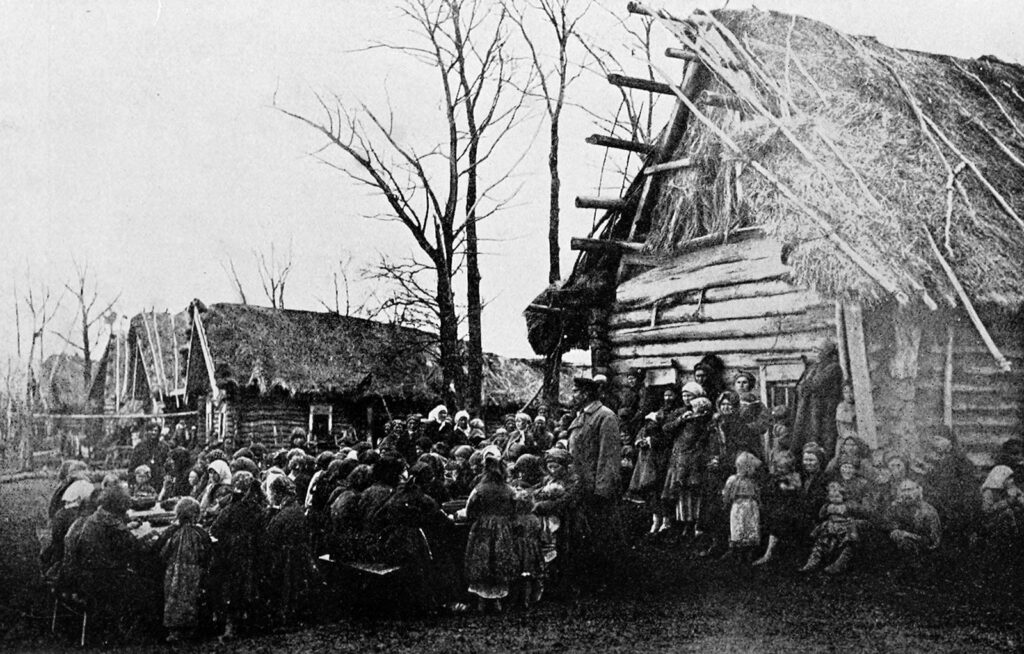
Một ngôi làng nông dân trong nạn đói ở Nga năm 1891–1892, từ “Hội chữ thập đỏ trong hòa bình và chiến tranh” (1899) của Clara Barton. – Internet Archive
Khi trưởng thành, Vavilov bị ám ảnh bởi việc ngăn chặn nạn đói và cho rằng giải pháp tốt nhất là ứng dụng ngành di truyền học mới nổi. Ông nhận định rằng, các loại cây trồng hiện đại dễ bị ảnh hưởng bởi thiên tai do chúng quá cận huyết và thiếu đa dạng gen để chống chọi với những khó khăn. Trong khi đó, các loại cây hoang dã lại có sự đa dạng hơn và vì thế cũng cứng cáp hơn. Thế nên, bằng cách lai giữa các loài hoang dã và thuần hóa, Vavilov hi vọng sẽ làm cho cây lương thực cũng trở nên cứng cáp hơn. Mục tiêu này đã khiến Vavilov trở thành người tiên phong trong việc bảo tồn đa dạng sinh học.
Để thực hiện điều này, Vavilov phải thu thập các loại cây dại – không chỉ trong Liên Xô mà trên toàn thế giới, vì nạn đói đã cướp đi sinh mạng của nhiều người khắp nơi. Đáng tiếc là ngay từ đầu thế kỷ 20, sự phát triển của con người đã dẫn đến việc tuyệt chủng của nhiều loài thực vật hoang dã quý hiếm. Vavilov không ngần ngại hành động và vào những năm 1920, ông bắt đầu thu thập và lưu trữ tại Leningrad càng nhiều hạt giống, ngũ cốc, trái cây, quả hạch, và củ quả càng tốt.
Mặc chiếc mũ phớt kiểu Indiana Jones và để ria mép màu đen, ông đã đi khắp năm châu để sưu tầm. Cuối cùng, ông đã thực hiện 115 chuyến thám hiểm đến 64 quốc gia, thu thập được 380.000 mẫu. Sự đa dạng mà ông tích lũy được quả là đáng kinh ngạc. Như một nhà sử học đã viết về bộ sưu tập của Vavilov, “một số hạt giống có màu mờ đục, trong khi những hạt khác lại lấp lánh như những viên đá quý… Các loại củ, rễ, và bóng có vô vàn kết cấu, từ xù xì, nham nhở đến mịn màng, bóng loáng như chiếc bình gốm.” Những loại trái cây được thu thập “phát ra hầu hết mọi mùi hương mà một nhà hóa học nước hoa có thể tưởng tượng ra – từ mùi xạ hương, lên men, cam quýt đến hương hoa.”
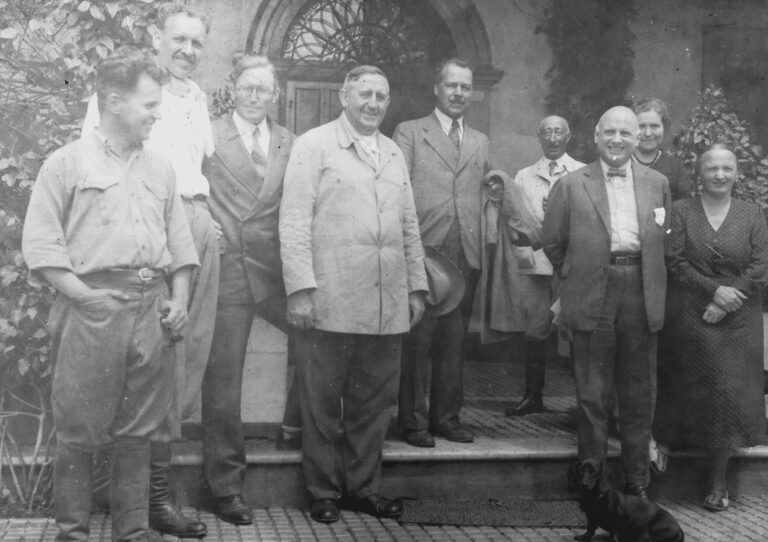
Vavilov (giữa) đến thăm nhà nông học Alberto Boerger (bên phải Vavilov) tại trạm thí nghiệm La Estanzuela ở Uruguay, tháng 1 năm 1937 – Archivos del CIAAB/Wikimedia Commons
Để bổ sung hạt giống và củ quả, Vavilov thường xuyên gửi chúng tới các đồng ruộng, vườn ươm hoặc đồng lúa khắp đế quốc rộng lớn của Liên Xô để các kỹ thuật viên trồng chúng. Những người lao động này sẽ thu hoạch sản phẩm và gửi lại mẫu mới. Dù công tác hậu cần rất phức tạp, nhưng đến năm 1939, Vavilov đã có một đế chế riêng của mình với 25.000 công nhân dưới quyền, tất cả đều được điều hành từ tòa nhà oai nghiêm ở Leningrad.
Tuy nhiên, chỉ trong vài năm, cả công cuộc oai vệ đó đã sụp đổ.
Vấn đề nằm ở chỗ các quan chức Liên Xô khinh thường di truyền học. Đối với họ, cuộc tranh luận cổ điển về “nature-versus-nurture” (bản chất hay sự nuôi dưỡng) trong khoa học – liệu đặc điểm di truyền bẩm sinh hay các yếu tố môi trường bên ngoài có ảnh hưởng sâu sắc hơn đến cuộc sống – không hề là một cuộc tranh luận. Cụ thể hơn, họ muốn dẹp bỏ các thể chế lỗi thời của con người và thay thế chúng bằng những thể chế hiện đại, được cho là “hợp lý”. Trong quá trình đó, họ còn hy vọng tạo ra một kiểu người mới – Con người Xô Viết Mới, một người lao động anh hùng, không vụ lợi. Nói cách khác, họ hy vọng rằng bằng cách tái tạo môi trường, họ có thể tái tạo loài người.
Tuy nhiên, di truyền học lại gián tiếp đe dọa tầm nhìn này. Ngành này nhấn mạnh các đặc điểm cố định, bẩm sinh, ngụ ý rằng con người có thể không được tái tạo dễ dàng như vậy. Ngày nay, hầu hết các nhà khoa học coi cuộc tranh luận về tự nhiên và nuôi dưỡng là quá đơn giản, nhưng vào thời điểm đó, đó có lẽ là cuộc tranh cãi lớn nhất trong sinh học. Và như những người Mác xít giỏi, các nhà khoa học hàng đầu của Liên Xô đã tuyên bố rằng, do yếu tố môi trường có vai trò quan trọng trong việc xây dựng Con người Xô Viết, nên di truyền học do đó là nguy hiểm. Một số quan chức Liên Xô còn đi xa đến mức phủ nhận hoàn toàn sự tồn tại của gen.
Một quan chức đặc biệt cuồng tín trong việc loại bỏ di truyền học là Trofim Lysenko, một kẻ bợ đỡ ghê tởm của Joseph Stalin. Lysenko lần đầu tiên nổi tiếng khi còn trẻ, khi ông công bố các báo cáo về các phương pháp canh tác mới mà ông phát triển, tạo ra năng suất đậu cao chưa từng có trong mùa đông khắc nghiệt của Liên Xô – những báo cáo mà chắc chắn là giả mạo. Ông ta đã sớm khoe khoang về kế hoạch trồng cây chanh ở Siberia, bởi vì tất nhiên các đặc điểm bẩm sinh (chẳng hạn như độ nhạy cảm với nhiệt độ nhất định) không quan trọng với cây cối miễn là bạn “giáo dục” chúng đúng cách.
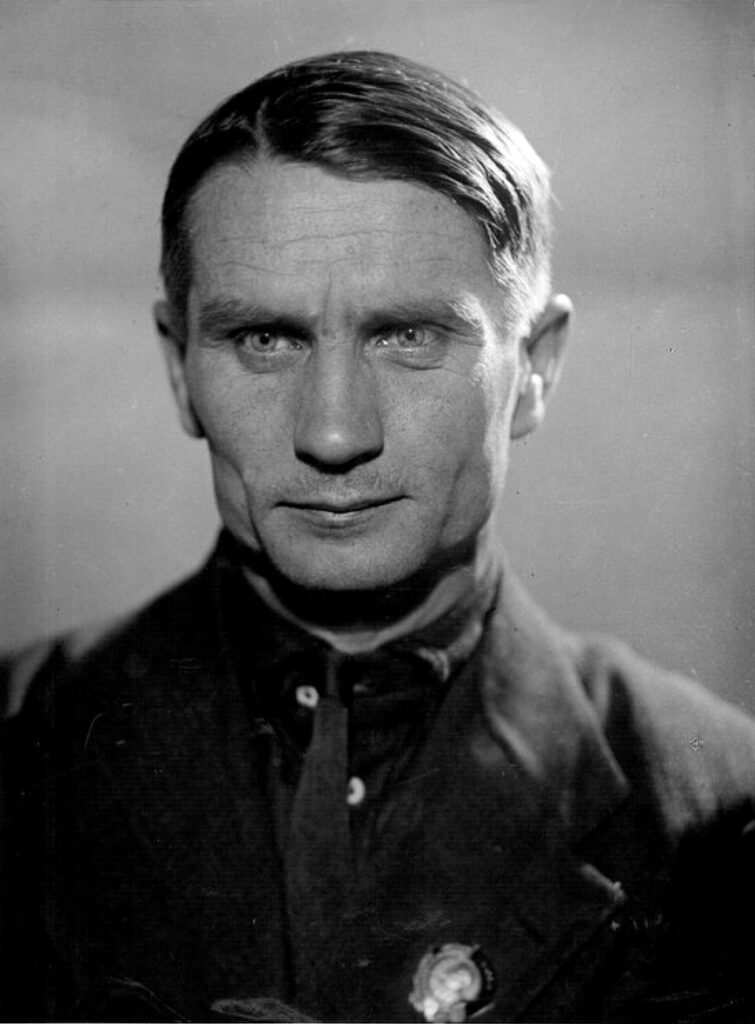
Trofim Lysenko, 1938 – Wikimedia Commons
Khi Lysenko leo lên các bậc cao hơn, ông cũng tỏ ra vô cùng tàn nhẫn trong việc dẹp bỏ những phản đối đối với “khoa học” của mình, cáo buộc các đối thủ của mình là gián điệp và phản bội. Cuối cùng, Lysenko đã dùng ảnh hưởng của mình để trở thành người đứng đầu ngành nông nghiệp Liên Xô, và tại đây ông đã thúc đẩy việc cấm di truyền học và giáo dục di truyền trong Liên Xô. Trung thành với tính cách độc đoán của mình, ông tuyên bố rằng bất kỳ ai không từ bỏ khoa học này đều sẽ bị bắt và tống vào tù.
Vavilov, một nhà di truyền học nổi tiếng, nhanh chóng trở thành mục tiêu. Một ngày năm 1940, khi ông đang thu thập hạt giống ở Ukraine, các nhân viên an ninh Liên Xô đã bắt giữ ông và đưa ông vào Gulag. Ngay cả vợ và các con của ông cũng không biết chính xác ông đã bị đưa đến đâu. Vụ bắt giữ khiến các đồng nghiệp của ông tại Viện Thực vật học Ứng dụng hoảng sợ. Họ có đầy đủ lý do để sợ rằng mình sẽ là người tiếp theo.
Trong khi đó, các mối đe dọa khác đối với Viện cũng đang nổi lên ở châu Âu. Vào tháng Sáu năm 1941, Đức Quốc xã đã xâm lược Liên Xô. Leningrad trở thành một trong những mục tiêu chính của người Đức – một phần là vì viện của Vavilov. Dù khinh thường đến mấy, các nhà khoa học Đức Quốc xã vẫn nhận thức được sức mạnh của di truyền học. (Thực tế, quân Đức Quốc xã lại mắc phải sai lầm ngược lại với Lysenko, chúng cho rằng môi trường và nuôi dưỡng không quan trọng, và chỉ riêng gen mới quyết định số phận của chúng ta.) Chúng biết rằng Vavilov đã thu thập được một kho tàng nông nghiệp vô giá. Chúng háo hức chạm vào những hạt giống của Viện và bắt đầu thí nghiệm.
Hãy tưởng tượng điều này đã ảnh hưởng như thế nào đến tinh thần của những người làm việc tại Viện. Người sếp của họ đã bị biến mất, và chính phủ của họ đã vu khống họ là kẻ phản bội vì công trình nghiên cứu của họ. Bây giờ, quân Đức Quốc xã đang tiến về Leningrad, sẵn sàng cướp đi công trình của đời họ. Ai mà không cảm thấy tuyệt vọng?
Sau đó, tình hình càng trở nên tồi tệ hơn. Cuộc chiến giành Leningrad đã chuyển thành một cuộc chiến kéo dài, và quân Đức đã bao vây thành phố. Thay vì sử dụng đạn dược và súng ống, vũ khí chính của chúng lúc này là chính thứ mà Vavilov đã cả đời cố gắng ngăn chặn – nạn đói. Chúng dự định sẽ làm cho người Nga phải đầu hàng bằng cách bỏ đói họ.
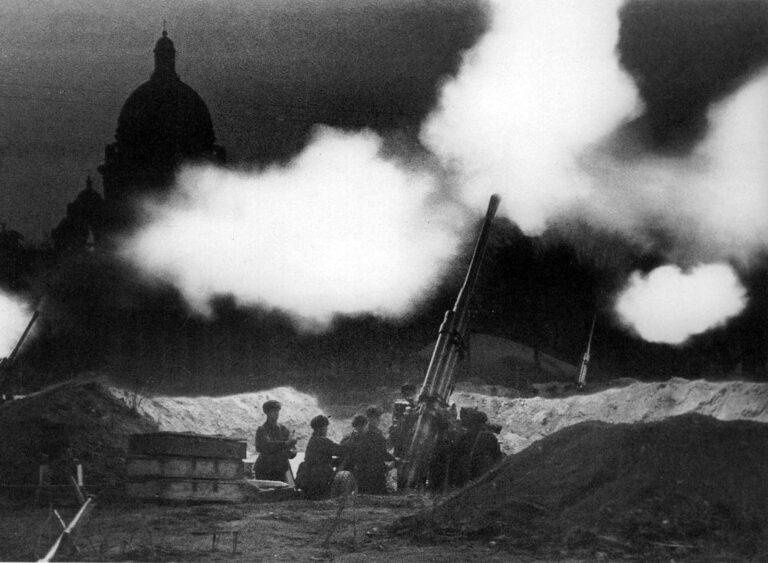
Pháo phòng không của Liên Xô bắn trong Cuộc vây hãm Leningrad, tháng 11 năm 1941. Những khẩu súng này được đặt gần Cục Thực vật học Ứng dụng và Nhà thờ St. Issac, có thể nhìn thấy ở phía sau. – Wikimedia Commons
Trong những tháng đầu của cuộc bao vây, người dân trong thành phố đã đoàn kết với nhau. Họ tiêu thụ đồ hộp và dự trữ ngũ cốc, thắt chặt chi tiêu để sống sót. Nhưng rồi nguồn cung cấp bắt đầu cạn kiệt. Việc phân phối khẩu phần bắt đầu được áp dụng, tiếp theo là phân phối khẩu phần một cách gắt gao, với mỗi người lớn chỉ được phép nhận một phần tư pound bánh mì mỗi ngày. Người dân bắt đầu săn bắt chó mèo. Không lâu sau, họ thậm chí còn ăn cả son môi, mũ da và áo khoác lông.
Trên thực tế, nguồn thực phẩm duy nhất trong toàn thành phố nằm trong viện. Tuy nhiên, điều đáng kinh ngạc là các nhà khoa học ở đó chưa bao giờ dùng đến kho dự trữ của mình để giảm bớt cơn đói. Họ chết đói trong khi xung quanh là thức ăn – họ làm việc với thức ăn, nghĩ về thức ăn, chạm vào thức ăn mỗi ngày. Nhưng không ai trong số họ dám ăn một miếng. Như một người đã nói sau này: “Việc đi lại thật khó khăn. Thật khó để đứng dậy vào buổi sáng, thậm chí là cử động tay chân… nhưng chúng tôi không hề thấy khó khăn khi kiềm chế không ăn kho dự trữ.” Điều này không chỉ là lời nói suông. Một nhà khoa học gầy gò đã chết ngay tại bàn làm việc, cầm trên tay một gói đậu phộng giàu dinh dưỡng.
Làm sao họ có thể cưỡng lại sự cám dỗ đó? Tại sao họ không phản đối Đức Quốc xã, phản đối những quan chức Liên Xô ghét bỏ họ và ăn những nông sản kia để tự cứu lấy mình? Có lẽ vì họ không nghĩ về bản thân. Họ nghĩ đến những điều lớn hơn.
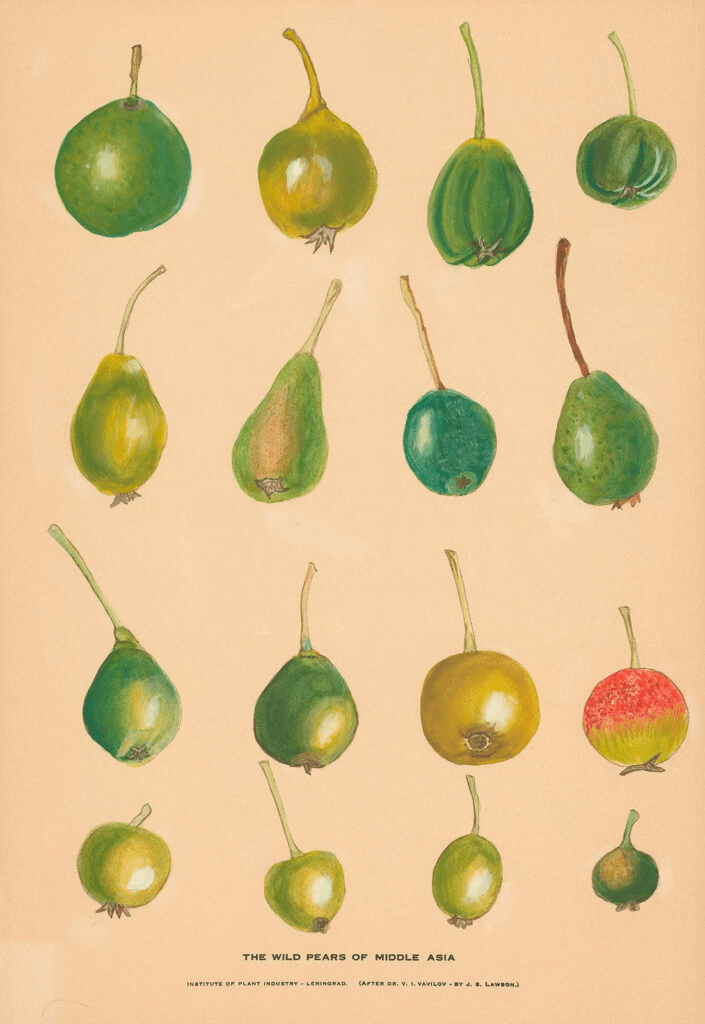
Những bức tranh minh họa của J. S. Lawson về những quả lê dại được Cục Thực vật học Ứng dụng sưu tầm ở Trung Á, một trong nhóm sáu bức tranh mà Vavilov đã tặng cho nhà nghiên cứu về trái cây Richard Wellington của Đại học Cornell tại Đại hội Di truyền Quốc tế năm 1932 – Thư viện Di sản Đa dạng Sinh học
Đầu tiên, họ hướng suy nghĩ về thế giới sau chiến tranh. Các quốc gia sẽ cần sự giúp đỡ để phục hồi và nuôi dưỡng người dân, nhất là những nơi mùa màng bị hủy hoại. Họ có thể góp phần vào việc này.
Họ còn nhìn vào bức tranh lớn của lịch sử nhân loại. Kể từ khi những nông dân đầu tiên gieo hạt cách đây khoảng 10.000 năm, đã có một chuỗi liên tục của việc trồng trọt kéo dài qua thời gian. Các nhà khoa học của Viện thấy mình như những người bảo tồn di sản này—có lẽ là di sản quan trọng nhất của loài người. Việc ăn những hạt giống ấy sẽ giống như phá vỡ chuỗi liên kết đó.
Vì thế, các nhà khoa học đã kiên nhẫn chờ đợi, quan sát và dần dà chết đi. Một nhà khoa học nghiên cứu về lúa, một nhà khoa học về khoai tây, nhà khoa học về đậu phộng ôm gói hạt, và sáu người khác. Tổng cộng, 700,000 người đã chết đói ở Leningrad trong suốt 872 ngày bao vây. Nhưng có lẽ không có cái chết nào đau đớn hơn cái chết của chín nhà khoa học thực phẩm này.
Cuộc bao vây cuối cùng kết thúc vào tháng Một năm 1944, khi quân Đức Quốc xã rút lui. Thành phố bùng nổ trong niềm vui chiến thắng. Thức ăn thật sự, đã tràn vào, và mọi người lần đầu tiên sau nhiều năm mới có thể ăn no.
Nhưng đây là một khoảnh khắc vui buồn lẫn lộn đối với những nhà khoa học còn sống sót của Viện. Họ mừng vì đã thoát khỏi cơn đói khát dai dẳng và sự cám dỗ liên tục. Nhưng họ cũng đau lòng vì sự mất mát của các đồng nghiệp. Họ càng thất vọng khi biết được số phận của người đồng hành, Nikolai Vavilov.
Sau vụ bắt giữ ở Ukraine, các điều tra viên Gulag đã tra hỏi Vavilov không khoan nhượng, thường xuyên kéo dài đến 12 giờ một lần. Họ quyết tâm bắt ông nhận tội “không làm cho khoa học của mình phù hợp với chính trị”. Nhưng như một nhà sử học đã nhận xét, “Vavilov, không giống như Galileo, đã từ chối bác bỏ niềm tin của mình.” Thay mặt cho các đồng nghiệp, ông đã nhìn thẳng vào mắt những người thẩm vấn và nói, “Chúng tôi sẽ đi vào đống lửa – chúng tôi sẽ cháy. Nhưng chúng tôi sẽ không lùi bước khỏi niềm tin của mình.” Dù có cố gắng, các điều tra viên cũng không thể làm gục ông.
Ít nhất là về mặt tinh thần. Bắt đầu từ mùa xuân năm 1942, những người quản lý Gulag đã làm với Vavilov những gì mà Đức Quốc xã đã cố gắng làm với Leningrad—bỏ đói ông để buộc ông phải đầu hàng. Hàng ngày họ chỉ cho ông ăn bắp cải nghiền và bột mì mốc. Người đã từng nếm thử táo dại ở Kazakhstan, lúa mạch dại ở Ethiopia và khoai tây dại ở Chile giờ đây phải ăn những thứ bột nhão vô vị, và chỉ một chút. Cơ bắp của ông bị teo lại, biến đôi tay và chân thành những cành khô. Má mặt ông hóp vào, mụn nhọt bùng phát trên da. Ông đã dành hàng thập kỷ để chấm dứt nạn đói và cuối cùng cũng tự mình chết vì đói vào tháng Một năm 1943. Ông qua đời ở tuổi 55.
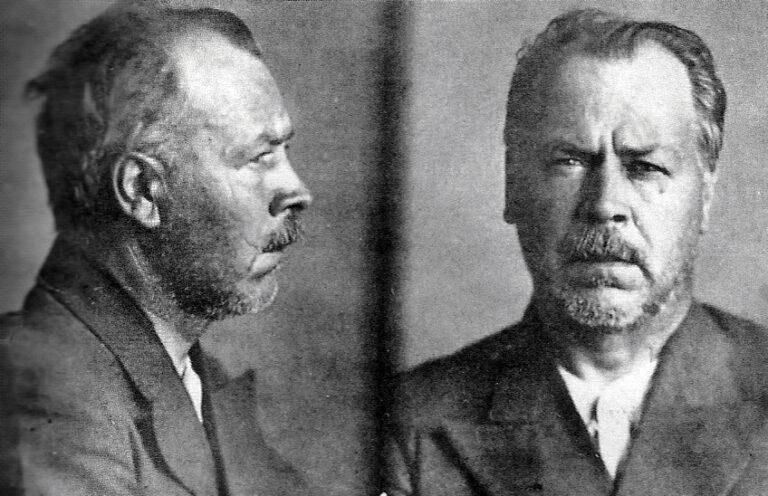
Những bức ảnh chụp Vavilov trong thời gian ông bị giam giữ, 1942 – Cơ quan Lưu trữ Trung ương của Cơ quan An ninh Liên bang Nga/Wikimedia Commons
Ngày nay, Vavilov được ngưỡng mộ như một anh hùng tại Nga – ít nhất là bởi đa số mọi người. Dù có nhiều thăng trầm, viện của ông vẫn còn đó, hiện mang tên Viện Nghiên cứu Khoa học Toàn Nga về Tài nguyên Di truyền Thực vật N. I. Vavilov (VIR trong tiếng Nga). Các nhà khoa học trên toàn thế giới đã công nhận quan điểm của Vavilov rằng đa dạng sinh học di truyền là chìa khóa cho một tương lai thực phẩm bền vững. Điều này đã thúc đẩy việc thành lập các kho dự trữ nông nghiệp lớn hơn và tinh vi hơn, như kho hạt giống ngày tận thế ở Svalbard, Na Uy. Thật phù hợp khi VIR đã quyên góp hạt giống và các mẫu vật khác cho Svalbard—có lẽ nhiều trong số đó là từ những chuyến thu thập sớm nhất của Vavilov.
Bất chấp – hoặc có thể do – danh tiếng của Vavilov bên ngoài Nga, kẻ đã từng hành hạ ông, Trofim Lysenko, lại được hồi sinh một cách đáng kinh ngạc tại Nga. Thay vì bị chỉ trích là kẻ giết người mù quáng, ông ta lại được ca ngợi như một anh hùng và người yêu nước. Sự phục hồi này diễn ra song song với xu hướng chính trị độc tài, mạnh mẽ ở Nga, nhắc nhở về thời kỳ của Joseph Stalin. Các tác giả của một bài báo gần đây về sự trở lại của Lysenko chỉ ra rằng “mối thù địch hiện tại giữa Nga và phương Tây đã góp phần củng cố lập luận ủng hộ Lysenko”, trong đó các nhà di truyền học “được mô tả là những nhà khoa học giả mạo và lừa đảo, thực hiện các nhiệm vụ do các chương trình toàn cầu hóa thù địch với Nga giao phó. Những người phản đối Lysenko được gọi là ‘kẻ phản bội dân tộc’.”
Sự trượt dài của Nga vào chế độ độc tài cũng dẫn đến cuộc xâm lược Ukraine gần đây, làm gián đoạn nguồn cung cấp thực phẩm tại đó và đẩy giá lúa mì Ukraine và dầu Nga lên cao – tất cả lại một lần nữa dấy lên nguy cơ nạn đói.
Các mối đe dọa khác cũng tồn tại. Dù có tiến bộ trong công nghệ, các loại cây trồng ngày nay vẫn bị thuần hóa cao hơn bao giờ hết và do đó càng dễ bị sâu bệnh tấn công. Biến đổi khí hậu có thể làm cho mọi thứ trở nên tồi tệ hơn khi thời tiết ngày càng khắc nghiệt hơn: các loại cây như chuối, chocolate và cà phê đã bị đe dọa tuyệt chủng. Vì vậy, tầm nhìn của Vavilov về bảo tồn đa dạng sinh học càng trở nên quan trọng hơn bao giờ hết. Loài người đã canh tác trong 10.000 năm. Và nếu chúng ta có thể tồn tại thêm 10.000 năm nữa, chúng ta có thể phải cảm ơn Vavilov – và sức mạnh phi thường của các nhà khoa học đang đói ở Leningrad – đã giúp chúng ta tiếp tục tồn tại.
Viết bởi Sam Kean
Sam Keanis là tác giả khoa học có sách bán chạy nhất. Cuốn sách mới nhất của ông là Bác sĩ phẫu thuật bằng cái đục băng: Giết người, Lừa đảo, Phá hoại, Cướp biển và Những hành động đê hèn khác được thực hiện nhân danh Khoa học.
Ngày 27 tháng 9 năm 2022
https://www.sciencehistory.org/stories/magazine/the-tragedy-of-the-worlds-first-seed-bank
Tập Đọc là một báo song ngữ Tiếng Anh – Tiếng Việt, với chú thích từ mới, cung cấp bản dịch, phiên bản bài đọc nói (báo tiếng), và danh sách từ mới miễn phí cho cộng đồng. Dự án được duy trì từ năm 2020 đến nay, hiện đã ra trên 80 số.
Các bài viết được đăng trên Tập Đọc không nhất thiết phản ánh quan điểm, thái độ và góc nhìn của người biên tập. Người đọc nên hình thành quan điểm và đánh giá của riêng mình trong cuộc đối thoại giữa bản thân người đọc và tác giả, trong quá trình đọc bài của riêng mình. Việc chỉ đọc những người viết mà ta đồng ý cũng giống như chỉ chịu nói chuyện với những ai khen mình vậy: dễ chịu, nhưng nguy hiểm.
Hope this helps.
Nếu bạn muốn ủng hộ bất cứ dự án nào của mình, mình xin rất biết ơn. Mọi sự ủng hộ, dù nhỏ, đều sẽ rất có ý nghĩa trong việc giúp mình có động lực, hoặc có khả năng tiếp tục các công việc phi lợi nhuận này.
Mọi ủng hộ xin gửi về số tài khoản: 0491 0000 768 69. Chủ tài khoản: Nguyễn Tiến Đạt, ngân hàng Vietcombank, chi nhánh Thăng Long.

Đà Nẵng, ngày 17.1.2024
Nguyễn Tiến Đạt (sutucon)





 Tập Đọc
Leave a comment