A tool of cold tricksters or wise therapists? Whether divining ancient wisdoms or elevating the art of cold reading, tarot is a form of therapy, much like psychoanalysis. In this exploration of the history of tarot, James McConnachie explores the positives and negatives of this popular form of cartomancy.
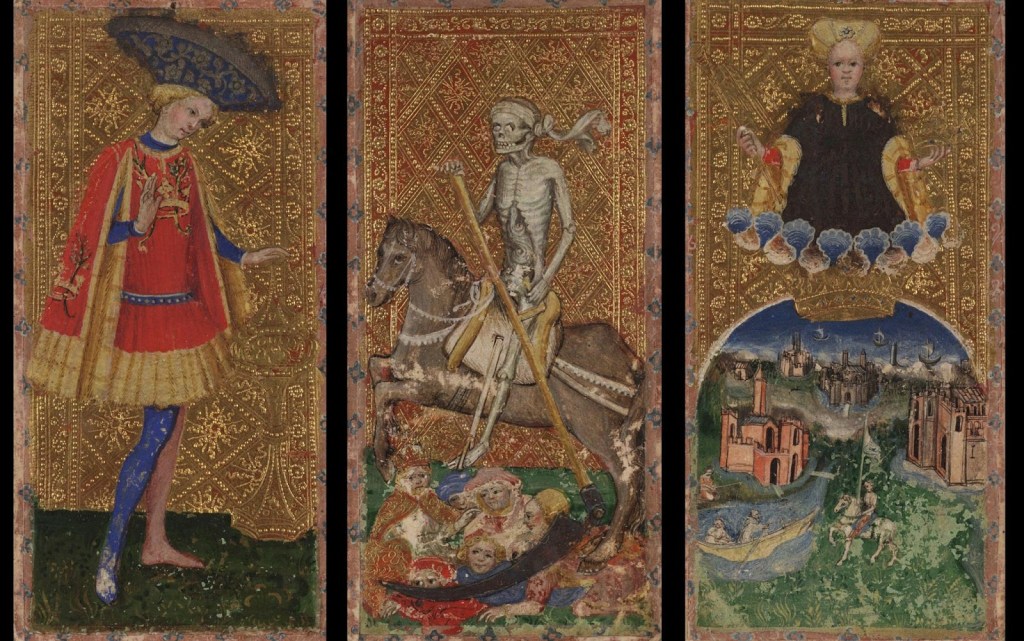
Cards from the Visconti di Modrone set, Italy, 1466. Courtesy the Beinecke Rare Book and Manuscript Library, Yale University
There are clues that this is no ordinary suburban living room. For one, we’re in Glastonbury. Then there’s the perfumed candle, the Buddha figure, the cloth draped over the television and, not least, the worn little wooden box that sits atop an occasional table hung with black silk. Inside it are 78 tarot cards. I have come to Glastonbury as a ‘querent’ – which is what tarot practitioners call a customer. A querent, traditionally, comes with a question. I have several. Assuming that tarot cards do not work as a method of reading the future, why does tarot persist? How has tarot survived as an object, a practice, a text, and a peculiarly velvety strand in European popular culture? Where did something so strange, dream-like and overburdened with symbolism come from?
In Glastonbury’s bookshops, alongside sections on stone circles, crystals and Kabbalah, I find whole shelves devoted to tarotology. Most books are by practitioners, repeating versions of the same origin myth. Tarot cards encode ancient wisdom, chiefly ancient Egyptian (but incorporating influences from Kabbalah to Celtic). Some tarotologists identify Romany fortunetellers as the custodians of that wisdom, drawing on the old European belief that ‘gypsies’ are of Egyptian origin.
The notion that tarot cards somehow survived the cultural wreck of ancient Egypt has a surprisingly specific origin: Paris, 1781, when France seethed with secret societies and private clubs. Some were radically political, as would soon bear fruit. Many more had pretensions to having privileged access to occult traditions.
Freemasonry was the most fashionable of these societies, with its claims to a heritage deriving from the Knights Templar, and back further, from the architects of Solomon’s temple itself. But it bobbed in a rich esoteric stew that looks familiar to any observer of the present-day ‘New Age’: Rosicrucianism, theosophy, Swedenborgianism, Mesmerism, Martinism, Hermeticism (believed to derive ultimately from the ancient Egyptian god Thoth). Esoteric ideas and traditions were widely explored, elaborated and, often, invented.
The mood has been dubbed ‘anti-Enlightenment’ – or Counter-Enlightenment, to use Isaiah Berlin’s term. It owes something to the Romantic taste for the exotic and mystical, though anti-clerical and anti-authoritarian impulses were present too. Delving into ‘dark’ mysteries was conceived as an intellectual and ethical riposte to the hyper-rationalism of ‘enlightened’ secularism. Emanuel Schikaneder’s libretto for Mozart’s opera The Magic Flute (1791) frames the opposition neatly by setting the crepuscular, murderously matriarchal Queen of the Night against Sarastro, the rationalist, Masonic, Isis-and-Osiris-worshipping priest of the Sun.
Ancient Egypt was particularly fashionable in early 1780s Paris. (And not just in Paris: the Great Seal of the United States, with its prominent pyramid and Masonic eye, was designed in 1782.) Between 1781 and 1785, the Italian charlatan Giuseppe Balsamo, the self-styled Count Cagliostro, founded his own Egyptian ‘rite’ of Freemasonry. A fashionable Cagliostro lodge was reported in 1785 as being decorated with statues of Egyptian gods, hieroglyphics, a stuffed ibis and an embalmed crocodile.
Another prominent Parisian Freemason – as well as scholar and Protestant pastor – was Antoine Court de Gébelin. In 1781, he published the eighth volume of his Le Monde primitif, analysé et comparé avec le monde moderne, in which he unwearyingly sought etymological and allegorical correspondences through history. At one much-cited moment he lurches into anecdote. He visited a ‘Madame la C d’H’, he says, and found her playing cards with other ladies. Court de Gébelin was seized by an overwhelming conviction. Imagine, he suggests:
‘If I was to announce that an ancient Egyptian work still exists today, a book that escaped the flames which devoured their superb libraries, and that contained the purest teaching on the most interesting of subjects … If I added that this book was widespread across much of Europe, and that for several centuries it had been in all our hands … that the fruit of such an exquisite wisdom was looked upon as a heap of extravagant figures that signified nothing other than themselves … would you not think that I was amusing myself by playing with the credulity of my readers?’
Au contraire, Court de Gébelin insisted, this matter was ‘très-vrai’. Tarot cards amounted to a secret book of 78 pages – the remnant of the ‘lost’, magical Book of Thoth. It had never been noticed before because the cards had been so ‘little dignified by attention’.
What is striking about Court de Gébelin’s revelation is that Madame la C d’H and her friends were not using the cards for divination – no one had thought of that yet – but simply as playing cards. The jeu de tarot involved bidding for contracts and taking tricks, rather like bridge.
The tarot deck contained four main suits of swords, cups, coins and batons, which correspond to spades, hearts, diamonds and clubs. The card ‘Le Fou’ (madman, or joker) acts as a sort of super-trump, and an extra ‘knight’ card sits between Jack and Queen. More significantly, tarot decks also contained a separate suit of elaborately depicted figures, named ‘trumps’. In fact, the game was known simply as ‘trumps’, in English, which expresses how mystical it was.
The four suits have been speculatively linked to the four castes of Vedic India, the four ‘estates’ of medieval society (nobility, clergy, burghers, peasants), Plato’s four cardinal virtues of Fortitude, Prudence, Temperance and Justice – and many other tetrads besides. With better evidence, they have been traced to the early Chinese playing-card symbols of Cash, Strings of Cash, Myriads of Strings, and Tens of Myriads.
However, the immediate source for the suits of European tarot was uncovered in 1939, when the archaeologist Leo Mayer found a 15th-century deck of Mamluk tarot cards in Istanbul’s Topkapi Palace. The correspondences revealed are temptingly neat. Children inducted into the Mamluk military slave retinue progressed through the ranks from page to equerry to khassakiyah, or elite soldier. The most trusted khassakiyah carried symbols of office, including the cup (the cup-bearer), sword (sword-bearer), and polo stick – emblems that were frequently depicted on coins. The polo stick was presumably translated into the baton or club by mystified Italian Renaissance card-makers who made the first European tarot decks, copied from the east.
The Mamluk origin theory is the best on offer, but it is not definitive. Nor does it explain the separate suit of 21 named trumps: the Magician, Empress, Tower, Moon and so on – 22, including the Fool. They emerged later, in the aristocratic courts of the Italian Renaissance – as is suggested by tarot’s original name. In 15th-century Italy, the cards were known as trionfi. They drew from the imagery of the ‘triumphs’, or allegorically themed carnival parades, of which modern carnival floats are the descendants.
Even at the very birth of tarot, card-makers cherrypicked from diverse traditions, seizing on the allegories that suited them
Tarot historians – few of them orthodox scholars – have long sought to reduce the symbolism of the triumphs, or ‘trumps’, to a single system. In 1966, the librarian Gertrude Moakley pinned them to Petrarch’s much-depicted poem sequence I Trionfi, which charted the procession of the allegorical figures Love, Chastity, Death, Fame, Time and Eternity. In 1972, the writer on the occult Paul Huson linked them to the late-medieval artistic tradition of the Danse Macabre, in which a host of tarot-like characters – the Pope, Emperor, Death – processed to the grave. Most recently, in A Cultural History of Tarot (2009), the Australian scholar Helen Farley detailed close allegorical correspondences between the trumps and the values asserted by Filippo Maria Visconti, the early 15th-century Duke of Milan whose court produced the most influential painted deck.
However, Farley admits that tarot’s themes were ‘drawn from a common pool of symbolism’. Which allegorical figure made it to which pack might have been arbitrary or accidental. The late 15th-century deck known as the ‘Sola-Busca’ was probably Venetian or Ferrarese, featured a cast of predominantly Classical characters, and drew on alchemical ideas. An early 97-card Florentine deck also incorporated extra trumps whose names were drawn from the three theological virtues (Faith, Hope, Charity), the four elements and 12 signs of the zodiac, while the ‘standard’ Visconti-Sforza deck, for some reason, has only three of the cardinal virtues: Prudence is missing.
Even at the very birth of tarot, then, card-makers were cherrypicking from diverse traditions, and seizing on the allegories that suited them. The beguiling obscurity of the symbolism lent itself to the process. So it’s almost surprising that the idea of using tarot for divination took so long to emerge. But, like the cards’ supposed ancient Egyptian origin, this notion belongs very specifically to the 1780s.
Shortly after Court de Gébelin went to press, Jean-Baptiste Alliette, a seller of prints and entrepreneurial astrologer, wrote a series of books and manuscripts under the pseudonym ‘Etteilla’ (which is ‘Alliette’, reversed), offering ‘A Way to Entertain Oneself with a Pack of Cards’. His method was to renumber the cards so as to ‘correctly’ render their Hermetic-Egyptian-astrological significance, and then follow the techniques of cartonomancie, or card-drawing, as detailed in his previous publications. A reader might thus ascribe particular meanings to the cards drawn, according to which way round they faced.
Etteilla’s method might have vanished, had it not been taken up by the man who did more than any other to translate the esoteric ideas of the anti-Enlightenment 18th century into the occult ideas of the spiritualist-minded 19th century. Alphonse-Louis Constant was a failed trainee priest and once-imprisoned radical who became obsessed by kabbalistic ideas, and he wrote under the name of Éliphas Lévi, which was how he rendered his name in Hebrew.
Constant/Lévi was struck by the coincidence between the number of tarot trumps, the letters in the Hebrew alphabet, and the paths along the kabbalistic Tree of Life: 22. He devised a system of arcane correspondences, disgorging a fresh wave of potential symbolic associations between individual cards and occult wisdom traditions, incorporating astrology, Mesmerism and alchemy, as well as the Kabbalah. Lévi wrote that a prisoner with no books, but only the tarot and the knowledge of how to use it, could ‘acquire universal wisdom, and speak on any subject with unequalled knowledge and inexhaustible eloquence’.
Tarot’s association with gaming is as significant as its links with the occult
The Anglophone occultists who read Lévi took him at his word. The great propagators of his ‘kabbalistic’ tarotology were members of the late 19th-century Hermetic Order of the Golden Dawn. This fashionable magical-esoteric society included such luminaries and poets as Aleister Crowley, William Butler Yeats and Arthur Edward Waite. Crowley brought notoriety, and an all-devouring syncretism: his own ‘Thoth tarot’ deck, illustrated by Lady Frieda Harris, was exhibited in 1942 at London’s fashionable Berkeley Galleries. The contribution of Yeats and Waite was even more influential. Together, they introduced ‘Celtic’ and Arthurian strands to tarot symbolism, while Waite also devised the tarot divination deck that has since become virtually standard in the Anglophone world, in collaboration with a US artist, Pamela Colman Smith.
If the tarot deck has been subjected to intense research, much of it imaginative, the techniques that tarot readers use are rarely discussed. This might be because of their embarrassingly prosaic origin. Informal cartomancy, or fortunetelling using playing cards, is probably as old as cards themselves, and relates to folk practices including Bibliomancy, or opening the Bible at random, and the Biblical casting or Roman drawing of lots. Cartomancy began to reach a mass market, however, not long after the birth of ‘occult’ tarot in the 1780s.
The major figure seems to have been the early 19th-century celebrity fortuneteller Marie Anne Lenormand. She used a 36-card deck derived not from ancient Egypt or the Kabbalah, but from a German parlour game published in around 1800: the Game of Hope. The cards would be laid out in a square, and players would move their tokens around the cards as on a conventional board, seeking to get home.
For all its neglect, tarot’s association with gaming is as significant as its links with the occult. When the philosopher Michael Dummett wrote the first scholarly, and skeptical, history of tarot in 1980, he attracted stung responses for his focus on the game, not its occult significations. The poet William Empson, no less, wrote to the London Review of Books in September 1980 to protest that ‘nobody in the Renaissance would invent such a random thing without making it symbolical’; that ‘the picture cards of the tarot are rather aggressively mysterious’; and that the tarot pack was unlikely ‘used merely for games’. Dummett replied that: ‘Intellectuals, scholars and other serious-minded people are prone to consider playing games a trivial occupation,’ yet in the courts of early Renaissance Italy, by contrast, ‘men and women did not despise games as trifling, but cultivated them and took them seriously, by which I do not mean portentously.’
The same is true of tarot today. There is a hardcore of occult-minded tarotologists, but many others dabble, collect or simply play. Anecdotally, tarot appears to be relatively popular among adolescents and young people. This is certainly the last time I heard anyone talking about it – and it is what the anthropologist Laura Miller found in her 2011 study of tarotto, ‘an under-analysed girls’ culture pastime’ in Japan. The cards now sit alongside other commodified and highly marketed occult play objects, notably the ouija board (itself dreamed up and marketed as a parlour game by a US inventor and lawyer in the 1890s). Tarot cards, in short, are a packaged form of folk wisdom you can buy for a small sum. They mostly come with a Little White Book tucked into the box, offering a basic guide to methods and interpretations.
Committed tarot readers divide broadly into two schools: those who think that the cards help them access unconscious wisdom (the ‘soft’ version), and those who believe that the deck channels the supernatural or even incorporates its own spiritual power (the ‘hard’ school). This presumably explains the practice of wrapping the cards in a black or otherwise precious cloth (that, or apeing the religious practices surrounding holy books for visual effect).
Julie, my tarot reader, encompasses both soft and hard positions. She says that the cards are ‘just a tool’. Of course, ‘they all have meanings’, and the position of the card in the layout ‘gives me an explanation as to why the card is there’ – but she also wants to trust ‘the other side of my brain, which is the feminine, intuitive, meditative’ side. A reading, for her, is about ‘tuning into’ her ‘gut instincts’, not predicting the future: ‘The future is not set in stone,’ she says, ‘you have options, and sometimes what a reading is about is helping you to see those options.’
Before I met Julie, and before researching tarot, I had assumed that ‘card reading’ is nothing more than a ‘cold reading’ of the client, not unlike the Sherlock Holmesian trick of paying close attention to physical and social clues – of proffering canny guesses in such a way that they can be quickly developed or withdrawn. Ray Hyman’s classic article for the Skeptical Inquirer in 1977 outlines the ‘stock spiel’ in 13 tips, including: ‘gain the client’s cooperation in advance’ and ‘use the technique of ‘fishing’ – this being ‘simply a device for getting the subject to tell you about himself. Then you rephrase what he has told you into a coherent sketch and feed it back to him.” Tarot cards were covered under tip 5 – ‘use a gimmick’ – which allows the cold-reader to dazzle, distract and stall for time, while appearing to consult the cards.
The true power of tarot reading, however, is not based on simple or cynical guesswork. The querent is complicit in the process. What drives this complicity was first measured in 1949, when the psychologist Bertram Forer asked his students in Los Angeles to fill out what he told them was a personality test, the ‘Diagnostic Interest Blank’. When Forer handed back the ‘results’, he told his students that they were based on the tests. In fact, he had culled 13 broad-brush statements from published horoscopes, including such devastating insights as ‘You have a great deal of unused capacity which you have not turned to your advantage’ and ‘At times you are extroverted, affable, sociable, while at other times you are introverted, wary, reserved.’ No! You too?
Every student was asked to assess the test’s accuracy on a scale of 0 to 5, where 5 indicated perfection. Their average score, astonishingly, was 4.26. Feeling smugly sure that I wouldn’t have fallen for it myself, I spoke to the psychologist Christopher French, who researches paranormal beliefs at Goldsmiths, University of London. He told me that most of the 13 personality descriptions in Forer’s original test are ‘two-headed statements that describe the human condition – and that’s why they resonate so much’. If they don’t describe you, French delightedly tells his own students, ‘you’re probably a psychopath’. But the universality of the statements is only part of the point: Forer’s experiment demonstrated that the statements were not perceived as universal but as highly individual.
When a tarot reading is momentarily inaccurate, we ignore or forget it. When it hits the mark, we are struck by its success
The advantages that the ‘Forer effect’ offers the tarot reader are obvious, especially given the later finding that, when ‘a lot of mumbo jumbo is associated with the procedure’, as Hyman puts it, the effect is reinforced, not weakened.
Confirmation bias is also at work. We prefer to have our existing beliefs confirmed, and selectively pay attention to statements that perform this happy function for us. So when a tarot reading is momentarily inaccurate, we ignore or forget it. When it hits the mark, we are struck by its success.
Tarot reading works, ultimately, because we make ourselves the willing victims of our cognitive biases. Under the influence of false-pattern detection, or apophenia, we turn the string of necessarily disconnected statements made by a medium or tarot reader into a coherent narrative in which we are the hero. (And plain old flattery amplifies the effect. I certainly came away from my reading feeling pleased with the thoughtful, insightful, loving nature Julie so rightly identified.) It has long been advantageous to our species to pay close attention to the context within which messages emerge. But as Hyman sums up: ‘This powerful mechanism can go astray in situations where there is no actual message being conveyed.’
Still, the question remains as to whether tarot readers are well-meaning but credulous, or cynical and exploitative. It is surely relevant that the Forer effect was quickly renamed the ‘Barnum effect’ by the psychologist Paul Meehl, after the circus impresario and serial hoaxster P T Barnum. Alongside his own entertainments – the ‘Fiji Mermaid’, the original ‘Tom Thumb’ – Barnum devoted time to exposing what he regarded as the more culpable fraudulence of spirit mediums and clairvoyants: his book The Humbugs of the World (1866) had the universally scouring subtitle An Account of Humbugs, Delusions, Impositions, Quackeries, Deceits and Deceivers Generally, in All Ages.
During my own reading, I couldn’t help but notice Julie’s version of the contractual small print. ‘It’s like tuning in a radio station,’ Julie warned. ‘Sometimes the information I get through might not be terribly clear, so I might ask for clarity … And if I’m going off on the wrong track, you must say.’ She guarded against the possibility that my skepticism might derail things. ‘The more open you can be, the more I will pick up … It’s like an exchange of energies.’
While French insists that, typically, tarot is ‘an unintentional’ form of cold reading, Julie seemed to me to be entirely sincere. Her ‘cold reading’ of me could just as easily be described as her ‘gut instinct’. The ‘exchange of energies’ she sought could be rephrased as ‘a rich conversation’. And in stressing the importance of my openness to the experience she was saying nothing that a therapist would not say.
Tarot is not dissimilar to psychoanalysis, another invented tradition that depends on the client-practitioner relationship
Above all, Julie was both helpful and insightful. For instance, she nailed the fact that I was entirely skeptical about tarot, but had a smidgen of yearning nonetheless. And she rightly extrapolated the conflict I feel between analytical, cerebral kinds of writing, and the sort that is more intuitive – between my interest in belief systems, and my mistrust of them. She also made me think about family relationships in ways I am still turning over in my mind. There is a 30-second pause on the tape, at the end of the reading, when she asks if I have any questions. It isn’t a flabbergasted pause, but neither is it an embarrassed one; it is an absorbed silence. A querent one, you might say.
Perhaps in herself, Julie offers the best answer to my original question: ‘Why does tarot survive?’ In a sense, tarot does encode wisdom – albeit within an invented tradition rather than a secret one. It is a system for describing aspirations and emotional concerns. It is a closed system rather than one based on evidence but, as such, it is not dissimilar to psychoanalysis, another highly systematised, invented tradition whose clinical efficacy depends ultimately on the relationship between client and practitioner.
Carl Jung, certainly, was interested in tarot. (Though not well-informed: he thought the cards were derived from gypsies, and possibly also ‘distantly descended from the archetypes of transformation’– those ‘true and genuine symbols that cannot be exhaustively interpreted, either as signs or as allegories’.) In, or shortly before 1960, he experimented at his Zurich Institute with tarot and other forms of divination. But he spoke most lucidly about tarot in the private seminars he gave in the early 1930s:
They are psychological images, symbols with which one plays, as the unconscious seems to play with its contents. They combine in certain ways, and the different combinations correspond to the playful development of events in the history of mankind … therefore it is applicable for an intuitive method that has the purpose of understanding the flow of life, possibly even predicting future events, at all events lending itself to the reading of the conditions of the present moment.
In The Occult Tradition (2005), the historian David S Katz describes how deeply psychoanalytic theory, and Jung in particular, drank from the well of occult literature. The same combination of therapeutic aims and occult mystery was irresistible to the New Age too. Farley describes the cards as the ‘New Age tool par excellence’, able to shift fluidly from play to fortunetelling to ‘healing’.
Including self-healing. Julie described how she had suffered from anxiety and depression, and how her insight had grown from difficult life experiences. ‘I see my readings as being a form of healing,’ she said, ‘as long as I’m helping people, that is the main thing.’ Later that day, along Glastonbury’s high street, I climbed a set of stairs behind a bookshop, where a sign pointed to tarot readings, offered alongside shamanic balancing with voice/drum/rattles, soul reconnection, healing through creative writing and deep-tissue massage. This was no ordinary tarot, either. The leaflet advertised that the reader was ‘gifted from childhood with great empathy and the facility to connect intuitively with people’, and had ‘developed the ability to actively heal as they read’.
Maybe they had. It is easy to sound snobbish instead of skeptical. Lévi wrote of Lenormand that ‘her head was filled with ill-digested erudition’, though he admitted that ‘she was intuitive by instinct, which deceived her rarely’. Skeptics have since said the same of tarot card-readers. It would require a sociological study to be sure, but it is possible that tarot offers a means to practise therapy for people who in some way stand outside formal or orthodox educational systems. It certainly seems to flourish in places such as Brighton and Glastonbury, not Cambridge and Hampstead.
And in a larger sense, the occult pseudo-history of tarot grasps a whisp of truth along with its armfuls of chaff. The cards are not the last survival of an ancient and exotic wisdom tradition. They are not the lost Book of Thoth. They are, however, a fairly unique remnant of the esoteric wisdom traditions of the European Renaissance, and they offer a form of informal, popular, easily accessed therapy. Meditating on the meaning and relevance of the four virtues, of Time, Love and Death, of the Hanged Man, the Angel and the Wheel of Fortune, can be valuable. The same is true, even, of meditating on the Fool.
THE COMMENT SECTION:
| Procrastinating Writer As a one time tarot card reader and person who went for readings I think that the cards provide a context and a medium through which the tarot card reader reflects the seeker back at themselves. The querent is always telling the reader what it is that they need to hear, and a good reader will pick this up and tell it back to them. It is a form of the placebo effect, but based entirely in what the querent brings with them. The reader gives ‘permission’ to the querent to feel what they have to feel, do what they need to do and think what they need to think in order to solve their own situation. Without the reader and the reading the querent can’t get past their own internal self-blocking which is preventing progress or inhibiting activity. A good reader will help someone find their way. A bad reader will be useless or worse than useless because they’re breaking a therapeutic contract of an unspoken kind, created when the querent decides to place their trust in the reader. A nocebo effect can be emplaced, as well as a placebo effect. It pays to take care. The question about a benefit being a real benefit or not is good but misleading. It arises because there is a tendency to think of anything that is not explained by science as unreal or nonexistent or at best, imaginary, as if the imagination was of no consequence. You either have a benefit or you don’t. There are no ‘unreal’ benefits and no ‘unreal’ drawbacks. Thinking that you feel better and feeling better are not different things. Feeling better is an empirical statement of fact, regardless of the cause.I do not know exactly how this relationship works, I’ve just described as best I can what seems to me to go on. I do know from experience that it works, but everything depends on the individuals and the context. Of course it can fail, everyone can fail. As for the dismissal which says ‘they’re just telling you what you want to hear’ – of course! Of course they are. Because that’s what you NEED to hear to get you going. But their telling has the power of external validation, and a conviction, a reassurance, that you, for whatever reason, don’t allow yourself. |
| Marina Benjamin This is such a valuable response to the piece, not just for the light you through on how readings work, but for the insight that when it comes to emotional problems, feeling better and thinking that you feel better are one and the same thing. |
| gabriel romero ricardo I am a tarot reader and I was glad to see an article contemplate my views. I do in fact not only very much agree with the view that mystic practices are a sort of emotional ‘placebo’ (in a good way, hope that’s clear), but I also make sure that such a view is a part of my tarot reading style, and that that is clear to the asker. I am not a fan of overly mystical tarot readings, and proud myself in making them more practial, realistic and therapeutical. The symbols are a way to get the person talking, like most therapies. I’ve found that in most readings, when the person is really worried or anxious about something (which is usually the case when somebody asks for a tarot reading), as soon as I interpret the first card in the spread they go like ‘That’s it! that’s totally me right now!’ or ‘That’s EXACTLY what I was thinking’ even if, after further talking, I realize that that card in fact had nothing to do with what that person was living. The symbols in the card, along with a good read, get people talking about their problems and I mostly listen and give some advice that I just need to make a little juggling to fit with the cards. My approach is not THAT mystical, I would say, but still I love it and people genuinelly are thankful for it. By the way this is my first post here but I love this blog, best blog ever, seriously. |
| Nicola Williams Gabriel, you sound like my ideal tarot reader 🙂 |
| Darnell Nelson I have a question that I have been thinking about for a while. Is there a true difference between something that provides therapy in a definite, empirically supported, measurable way to someone, and something that simply makes someone *think* that they feel better? For instance, in the field of medicine, homeopathic treatments often make people think that they feel better, when really they do nothing helpful on a scientific level. This could also apply here to tarot. Even if there is not a scientific, empirical benefit to tarot and other mystical practices, wouldn’t the fact that people claim to benefit from them qualify them as therapeutic in a different, yet similar sense? In other words, are we to deny that a non-scientific therapy is not beneficial when people seem to benefit from it regardless? I hope that I have worded this question well enough that it is understood. |
| Jeff Hrusko I used tarot when I mentored troubled teens, not because I believe they held any magic, but to bring out what was on their minds. I’s something like ‘It says something is blocking your path, something that you will overcome, can you think of what it is? ‘I’ve found it very effective, and I never told them anything negative. I also never followed the official interpretation. I think this is called the Forer effect, wherein people see themselves when given information they are told is tailored to them… but the bottom line is, it helped them identify and overcome challenges. |
| Andrew Galley The most interesting part of this article, for me, was the historical aspect. Specifically, I think it’s fascinating how powerful an example tarotology is of investing something with a richer aura by claiming an implausibly ancient root. I don’t mean that in a snobby way; rather, it makes me think about how ‘the primordial’ – this sense of connecting with antiquity – is always part of the present. That is, the ancient is always-already-here, a kind of otherworld like what Jung was thinking of when he thought of the unconscious. See also: stories and myths about the beginning of the world that occur at no precisely-defined time in the past, including ‘once upon a time’. As an aside, the only tarot deck I ever owned myself was a novelty one tied explicitly to a game, and the suit of Cups was called the Primordial suit, representing this foundation-time (and also the end-times, the inverse of ‘once upon a time’ where we project prophecies of destruction and revelation…) |
| Nepomuk Onderdonk I see reason as a tool for investigating ‘surface’ issues of the most superficial layers of reality, and as an IT specialist I certainly utilize it for what it’s worth; but beyond those most superficial layers of truth, I learned a long time ago, from studying the Zen koans, that reason is an insufficient tool to plumb the depths of mystery, contrary to the assumptions of rationalists and materialists and atheists everywhere; and so I am a rationalist – in my little pinky, on my left hand; the rest of me is a grand irrationalist, a shaman, and that seems to me a much more ancient ‘tool’ to investigate being, a tool that we share with all other beings and not just the worldly minded camarilla of modern times of a subset of one species that like to call themselves ‘sapiens’, ‘depthless, antitragic, nonlinear, antinuminous, nonfoundational and anti-universalist, suspicious of absolutes’; And as an irrationalist I of course find I am held suspect by the cult of rationalists all around me, who are just as irrational as every other being as far as I can tell yet they cling to ‘reason’ and ‘scientism’ as if it were a religion, as if it were the only important aspect of our being, rendering any being not in their cult ‘irrelevant’, ‘uninteresting to science’ or ‘reason’. This cult seems to suspect that anyone outside itself is dangerous, murderous, their imaginations running away into a chaos of debauchery every time they imagine someone or something not reared within the confines of their cage, and therefore any of these worthy only of contempt and being cast aside, when to the contrary I find the ‘irrational’ world of the ancient scriptures and the spirit world of shamanism to be quite beautiful, peaceful, pure, clear, and profound, and I think it’s the ‘rationalists’ that are actually far more debaucherous, with a propensity for war as well as technology that debases the being of nature, all products of a frightful netherworld of ‘science’ and ‘reason’. Another curious tenet of the reason-ists is the requirement that any ‘spiritual: practice judged ‘valid’ has to adhere exactly to something ancient. In the book about Daoist immortalism ‘To live as long as Heaven and Earth’ the author relates a discussion from 5th century China by Ge Hong about this; there was then too a similar discussion, with half the shamans, or Daoist immortalism practitioners, trying to keep closely to long-passed-down methods, and the other half deciding that it was just as valid to create a new method, though often only after studying many of the different ideas that were passed down and then working out his own personal and private relationship to the Dao, the universe, often by trial and error as well as spontaneous insight, and they said that anything could be a valid method of communicating with the divine, providing it were sufficiently ‘clever and lofty’. I always thought, if I find myself inspired by something that I have discerned to be about the divinity of wholeness, and that inspiration is translated through myself into demonstration that helps myself and others, then doesn’t that make it magical? |
| Former User I don’t give a damn if there are therapeutic benefits to tarot and other mystic practices. George Bernard Shaw put it way better than I ever could: ‘The fact that a believer is happier than a skeptic is no more to the point than the fact that a drunken man is happier than a sober one. The happiness of credulity is a cheap and dangerous quality of happiness, and by no means a necessity of life.’ |
| Daniel Self Of course there are therapeutic benefits to tarot and other mystic practices. But, as others have said, there are therapeutic benefits to recreational drugs and benefits to various behaviors which are nonetheless considered unhealthy. Is it a good practice over all? I don’t know. I think what bothers me about tarot isn’t the mysticism, but rather the people using it in bad faith. If you believe tarot works, and you convince someone else that it works….good for you. I might think it impossibly silly, but at least there’s a slim chance that I could be wrong. But if you convince someone else that tarot works, while thinking to yourself that it’s just a bit of empathy and misdirection….that’s no good. You’re stringing them along. It’s deceptive, and the efficacy of the therapy depends on that deception. It doesn’t do to say, after a reading, ‘well, it’s just a bit of fun anway….’ or ‘sure had you going there, didn’t I?’ Even if you only concern yourself with the practicality of it, saying ‘it works, end of story’…..well…it works on others. Not on you, the reader, of course. You’re too astute. What happens when you need therapy? Do you need to be deceived by a more competent liar? Something tells me that’s not a desirable progression. |
| Tony Reardon Doesn’t the success of this technique depend on what is actually wrong with the individual? If someone is just a bit down, unsatisfied or even bored, then changing how they feel is the solution to their problem – their feeling was the problem. I suspect that most people ‘consult’ someone like a tarot reader in the same frame of mind as the author; pretty sceptical, partly curious, perhaps a bit of fun and not really because they have a problem that they are looking for solutions to. But if someone has what we might call real problems in their life, then feeling better is probably not a solution. For example, if someone is not getting on with their partner or at work or they have serious debts, etc. then they need solid, serious advice which may involve something beyond reflecting back and validating their own thinking. But then again, isn’t reflecting back your own thinking what ‘real’ psychiatrists do in psychoanalysis? |
| James McConnachie – AUTHOR Such an interesting response. I agree with most of what you say. There is a tendency to dismiss the complex reasons that send people to a tarot reading. And most people seem to me to be quite capable of holding scepticism and open-mindedness open in their minds at the same time. I think you’ve captured the breadth in your comment.Though I’d differentiate between psychoanalysts and psychiatrists, btw. The former seems to me to be a cult dressed up as a profession (albeit one practiced by some extraordinarily impressive people)… |
| Jan Limpens The problem is not, whether it works or not – they all may work on some level, but with the magical thinking that comes with it. Once this kind of thinking takes hold in a person, the subjected falls pray to all kinds of fallacies, often leading to bad acts and decisions. And it spreads to the subjects’ surroundings, like an infection, as only the successful parts will be comunicated. So while it may work, I consider the price to high, especially as there are inumerous non-magical alternatives around. |
| Hans Konstapel Most therepeutic practises have no benifits because they are not in line with life itself. Moving out of the stream of life is the main reason many people experience all kinds of mental & physical problems. Tarot and compable systems are a model of the cycle of life and give you therefore an opportunity to step back into the right phase of life. |
| Owen Roberts This article and comments are all based on a religious belief that psychic phenomena, such as telepathy, do not exist. There is no proof that psychic phenomena do not exist, anymore than there is proof they do. Any definite belief either way is therefore a statement of faith. Only agnosticism is rational. I have been reading Tarot for 35 years, and teach a 1-year course. I do not look at my client, only at the cards. I do not ask them questions to see if I am on the right track, or look for ‘tells’. I look only at the cards and talk as fast as I can. I tell people specific things, like ‘you’re eating too much rice’ – found out afterwords they were living on rice cakes, or ‘you get pain in the upper intestine 2 hours after breakfast each day because you’re glutten intolerant’ – the person had not mentioned any digestive issues and was shocked at the accuracy. I frequently have confirmed facts which I could not possibly know. I operate like this because I am channelling communication from the Angel of the Tarot, which I hear as a clear spoken voice in my right ear. None of what I do can be explained by this article. When I teach Tarot, most of the course is focused on developing psychic awareness so my students can operate as I do. I have a 90% success rate with students, using traditional techniques for developing psychic skills from western and indigenous shamanic traditions. Most Tarot readers are not at my level. They are poorly trained and fumble about as described. It takes years of hard work to get to the level I work at. However, there are many readers who work as I do, and we dispair at the worthless rubbish most readers offer. All the stuff about talking therapy etc is fine, and good luck to those who offer it. I don’t. I tell people things they couldn’t possibly know otherwise. And I don’t talk to them about this stuff, just pass on the messages. I don’t predict the future, because I don’t think it’s fixed, and therefore it’s not predictable. I do tell people where they are likley headed if nothing changes, but that’s the limit. Tarot cards are archetypes, so can be used in many psychotherapies. But the cards are merely physical representations of real living spiritual beings who can be engaged with. That’s the real Tarot. All this talking cure stuff is people making the best of it when they can’t consciously communicate with the beings of the immaterial dimensions. |
| Nicola Williams In an unglamorous car-boot sale in North Carolina, while driving across the United States in those post-university crisis years, I had my first tarot experience – and I hope it isn’t my last. Like the author I was skeptical but intrigued. I didn’t have a question that I could think of, but looking back it would have been something like ‘What do I do with my life?’ or ‘What next?’ I don’t remember the specifics of what we talked about, or which cards came up, but I left it with a clearer idea of what I might pursue next, and found the whole thing truly cathartic. My understanding of tarot, from that experience and in keeping with the author’s thesis, is that tarot is a kind of counselling – I ‘sought counsel’, and, as in therapy, I certainly didn’t get advice in the form of being told ‘what to do’. Rather, things were raised which struck a chord, as if I knew that was the answer all along. I think my experience of tarot is similar to an experience of reading poetry, or the Bible, or myths or horoscopes, or whatever. There are wisdoms to be uncovered that do help us navigate through life, and they do collect around certain themes, which, in tarot as in literature, seem to collect around certain images or archetypal characters. They help you tap into something that you kind of knew anyway, something you needed to hear, and which you are somehow granted permission to think deeper about, if only by the fact that it came from someone else’s lips. Far from anything supernatural, I found the process wonderfully and essentially human. An Aeon Idea by Abeba Birhane absolutely captured how I felt in that tarot session in this piece about how we become ourselves through dialogic interactions: ‘Think of that luminous moment when a poet captures something you’d felt but had never articulated; or when you’d struggled to summarise your thoughts, but they crystallised in conversation with a friend … Truth is not born nor is it to be found inside the head of an individual person, it is born between people collectively searching for truth.’ |
| paleologue O Most rationalists dismiss the Tarot as being mere woo-woo, without thinking about it very much. But in the hands of a skilled practitioner it can uncover secrets in an indivdual’s psyche that are scarily close to the truth. There used to be a street person up on Wisconsin Ave in DC who was allowed to hang out in a nice sidewalk cafe all day, every day, because he kept the place swept up (he had his own broom and dustbin) and he didn’t behave bizarrely. But also because the patrons, mostly older women living alone, coming there for tea, enjoyed his presence. And he used to read them, usually without cards, using Tarot terminology. Everybody called him Moon Man. It would be obvious to anyone that the guy was brain-damaged. Lots of what we would consider to be normal thought processes were totally beyond his scope. But his ability to read people– who they really were– was truly awesome. Like a good palm reader, he would take you back to your infancy, describe your first feelings and bring you back up through the years… until you realized for the first time, how you had become who you are today. He was a local treasure. Tarot works. Also the I Ching works, really well. But it’s just a vehicle for the astute reader. The magic is not in the cards… it’s in the reader. |
| Mark Green You should be aware that the term ‘gypsy’ is high offensive to the people it is intended to refer to, the Roma people. Please don’t use it. |
| Gerald Moonen I have been on the spiritual path for all my life. I have gone through self-actualisation, transcendence and spiritual realisation. My experience is that we are spirits that happen to live in a body and that we are here on earth in order to set our spirit free. In other wordes to become enlightened. I know that, if we are open to it, we get help from out spirit guides. I said I know instead of I believe as I have stopped believing in anything a very long time ago. My experience is that methods of chance can have the possebility to communicate with our spirit guides and thereby receive their guidnace. Tarot cards, fortune sticks in Asia and the I Ching all can be used like that. For me the I Ching has been the most instructive to me and everytime I had a questions the aswers were always totally spot on. I have had great support and direction from from my spiritguide(s) through the use of the I-Ching. |
| Lorraine Caplan This was particularly interesting to me as I reread Davies’ ‘Deptford Trilogy’ recently. It is richly Jungian and tarotesque. It has held up in a way that some books I have reread have not. |
| Dana Zikas I dabbled with tarot cards and astrology a bit in my youth. Strangely, and perhaps somewhat affirming, is that much of the views in this article, I espoused at a rather young age—perhaps 15 or 16! I haven’t done a ‘reading’ in many years, but I probably have 3 or 4 different decks away in the cupboards somewhere. I always really loved the various artistic interpretations of the cards. I even not too many years back, bought my young daughter a deck based on Tolkien! lol |
| harry smith I found it useful when I went to see a clairvoyant/spiritualist type person some twenty years ago but she used stones as well. She was no doubt doing a lot of cold reading techniques but I came away feeling had learnt a lot about myself and my life which still holds true today. Nothing ventured, nothing gained..depends on the person..plenty of frauds around. Also felt she was good at talking about the past and present but very shakey when it came to predicting the future with any absolute certainty! |
| Conrad Spoke There is one little thing the author ignored in the reader/querent relationship: money. Of all the services which a tarot reader presumes to perform – emotional insight, fortunetelling, healing – the one absolutely guaranteed result is to make the customer’s wallet lighter. |
| Paul H. I’m a traditional psychotherapist, and I know that what I do is not a scientific endeavor. But at least it pertains to reality, and isn’t a bunch of mumbo-jumbo off the wall interpretions. I’m sure the guys at scienceblogs.com are having a field day with this article. |
| S B People hold to all kinds of beliefs due to their possible instrumental efficacy, rather than their truth value. In other words, you can act AS IF something is true, to see what results from the belief. You can experiment with your life, and make your own choices based on how things go. That said, I’m not so sure I trust people to grasp how things actually went. Or is there no such thing as how something ‘actually’ went? Obviously we’re talking about quality of life, here, not more easily testable hypotheses like whether a ball will drop or fly away if I let go of it. |
| Ken Baskin I went through a period where I was readig tarot cards. I thought it was a hoot. Then I started getting people come up to me, thanking me profusely. THEN, I did a reading for my mother, whom I hadn’t talked to in months. She was astounded at how accurate my reading had been. As I thought about it, I realized that my reading was based as much on the context of the cards and the ‘vibes’ I was getting from the other person. My guess is that tarot cards can be therapeutic, but it’s not the cards that matter, it’s the reader. The cards enabled me to focus my conscious mind and provide a kind of base line of information on which to experience the other person on a non-rational level. |
By James McConnachie
James McConnachieis a British journalist, author and editor. His writing has appeared in The Sunday Times, The Spectator and New Scientist, among others. He is currently working on a biography of a mountain, to be published by Bloomsbury.
Edited by Marina Benjamin
24 May 2017
https://aeon.co/essays/tarot-cards-a-tool-of-cold-tricksters-or-wise-therapists
Bạn có thể tải miễn phí bộ học liệu được xây dựng từ bài đọc này tại đây:
https://drive.google.com/drive/folders/1fark4OxtumxEs0FsuypPnpyardNPuqRZ?usp=drive_link
Tập Đọc (literally means ‘Reading Together‘) is a bilingual English-Vietnamese journal featuring new word annotations, translations, spoken word versions (audio articles), and a free vocabulary list for the community. The project has been maintained since 2020 and has published over 80 issues to date.
Readers should be advised that the articles published in Tập Đọc do not necessarily reflect the views, attitudes, and perspectives of the editors. Readers are encouraged to form their own opinions and evaluations through a dialogue between themselves and the authors during their reading process. Only reading writers with whom one agrees is akin to only engaging in conversations with those who compliment you: it’s comfortable, but dangerous.
Hope this helps.
If you wish to support any of my projects, I would be profoundly grateful. Any support, no matter how small, will be significantly meaningful in helping me stay motivated or continue these non-profit efforts.
Please send your support to account number: 0491 0000 768 69. Account holder: Nguyễn Tiến Đạt, Vietcombank, Thăng Long branch.
Đà Nẵng, Monday, March 4, 2024
Nguyễn Tiến Đạt (sutucon)
BẢNG CHÚ THÍCH TỪ MỚI
| STT | Từ | Loại từ | Phiên âm | Nghĩa tiếng Anh | Nghĩa tiếng Việt |
|---|---|---|---|---|---|
| 1 | tricksters | noun phrase | /ˈtrɪkstəz/ | individuals who deceive or cheat others, often using clever methods or manipulation | kẻ lừa đảo |
| 2 | therapists | noun (plural) | /ˈθɛrəpɪsts/ | professionals who provide treatment and guidance to individuals, helping them overcome mental, emotional, or psychological challenges | nhà trị liệu |
| 3 | divining | gerund (verb acting as a noun) | /dɪˈvaɪnɪŋ/ | the practice of seeking knowledge of the future or the unknown by supernatural means | bói toán |
| 4 | cold reading | noun phrase | /kəʊld/ /ˈriːdɪŋ/ | a technique used by magicians, psychics, and other performers to give the impression that they know much more about a person than they actually do, often through high-probability guesses and picking up on cues from the person’s responses | đọc vị lạnh |
| 5 | therapy | noun | /ˈθɛrəpi/ | a treatment intended to relieve or heal a disorder, often referring to psychological counseling or psychotherapy | liệu pháp |
| 6 | psychoanalysis | noun | /ˌsaɪkəʊəˈnæləsɪs/ | a method of psychological therapy originated by sigmund freud, which emphasizes the exploration of unconscious conflicts and desires | phân tâm học |
| 7 | cartomancy | noun | /ˈkɑːtəmænsi/ | the practice of telling fortunes or predicting the future using a deck of cards, including tarot cards | bói bài |
| 8 | suburban | adjective | /səˈbɜːbᵊn/ | relating to or characteristic of a suburb, a residential area typically located on the outskirts of a city or large town | ngoại ô |
| 9 | persist | verb | /pəˈsɪst/ | to continue steadfastly or firmly in some state, purpose, course of action, or the existence of, despite obstacles or opposition | kiên trì |
| 10 | peculiarly | adverb | /pɪˈkjuːliəli/ | in a manner distinctive to something or someone; unusually or uniquely | đặc biệt |
| 11 | velvety | adjective | /ˈvɛlvəti/ | smooth, soft, and somewhat luxurious, similar to the texture of velvet | mềm mại như nhung |
| 12 | strand | noun | /strænd/ | a part or aspect of something more complex; in this context, it refers to an element within european popular culture | khía cạnh |
| 13 | dream-like | like | /driːm/-/laɪk/ | resembling a dream; surreal or fantastical | tựa như giấc mơ |
| 14 | symbolism | noun | /ˈsɪmbᵊlɪzᵊm/ | the use of symbols to represent ideas or qualities, often imbuing objects, figures, or colors with deeper meanings | biểu tượng học |
| 15 | stone circles | noun phrase | /stəʊn/ /ˈsɜːkᵊlz/ | prehistoric monuments consisting of a circle of standing stones, often used for ceremonies or marking astronomical events | vòng đá |
| 16 | kabbalah | noun | /kəˈbɑːlə/ | a mystical and esoteric interpretation of jewish religious teachings | kabbalah (often untranslated due to being a proper noun) |
| 17 | tarotology | noun | /ˈtærəʊˈɒlədʒi/ | the study and practice of using tarot cards, often for divination or spiritual guidance | học về bài tarot |
| 18 | practitioners | noun (plural) | /prækˈtɪʃnəz/ | individuals who actively engage in a particular profession or technique, especially in the fields of medicine or the occult | người thực hành |
| 19 | origin myth | noun phrase | /ˈɒrɪʤɪn/ /mɪθ/ | a story or explanation created to describe the beginning of a practice, culture, or phenomenon | thần thoại nguồn gốc |
| 20 | encode | verb | /ɪnˈkəʊd/ | to convert information or a message into a particular form or code, often for secrecy or to imbue it with a deeper meaning | mã hóa |
| 21 | chiefly | adverb | /ˈʧiːfli/ | primarily; mostly or largely | chủ yếu |
| 22 | incorporating | gerund (verb acting as a noun) | /ɪnˈkɔːpᵊreɪtɪŋ/ | including or integrating a part into a whole | kết hợp |
| 23 | celtic | adjective | /ˈkɛltɪk/ | relating to the celts, a group of indo-european peoples who once inhabited much of western europe | celtic (often untranslated due to being a proper noun or explained as liên quan đến người celt) |
| 24 | fortunetellers | noun (plural) | /ˈfɔːʧuːnˌtɛləz/ | individuals who claim to predict future events or reveal hidden information through various means, often considered a form of divination | thầy bói |
| 25 | custodians | noun (plural) | /kʌsˈtəʊdiənz/ | people who have the responsibility for or look after something, in this context, the keepers of ancient wisdom | người giữ gìn |
| 26 | notion | noun | /ˈnəʊʃᵊn/ | an idea, belief, or opinion | ý niệm |
| 27 | wreck | noun | /rɛk/ | the destruction or ruin of something, often used metaphorically to describe cultural or historical loss | phá hủy |
| 28 | seethed with | phrasal verb | /siːðd/ /wɪð/ | to be filled with intense but unexpressed anger; in this context, it refers to the turbulent or fervent state of society | sôi sục với |
| 29 | secret societies | noun phrase | /ˈsiːkrət/ /səˈsaɪətiz/ | organizations that conduct their affairs in secrecy, often with exclusive membership and rituals | hội kín |
| 30 | radically political | adjective phrase | /ˈrædɪkᵊli/ /pəˈlɪtɪkᵊl/ | pertaining to significant, fundamental political change or activism | chính trị cấp tiến |
| 31 | bear fruit | idiom (verb phrase) | /beə/ /fruːt/ | to yield results; to produce a positive outcome | mang lại kết quả |
| 32 | pretensions | noun (plural) | /prɪˈtɛnʃᵊnz/ | claims or assertions of a dubious nature, often to qualities or status | giả vờ |
| 33 | having privileged access to | phrase (participle phrase) | /ˈhævɪŋ/ /ˈprɪvɪlɪʤd/ /ˈæksɛs/ /tuː/ | having exclusive or special entry to something, typically knowledge or locations | có quyền truy cập đặc quyền vào |
| 34 | occult | adjective | /əˈkʌlt/ | relating to magical, mystical, or supernatural practices and phenomena | huyền bí |
| 35 | fashionable | adjective | /ˈfæʃᵊnəbᵊl/ | popular or in vogue at a particular time | thời trang |
| 36 | heritage | noun | /ˈhɛrɪtɪʤ/ | something that comes or belongs to one by reason of birth; an inherited lot or portion | di sản |
| 37 | bobbed | verb (past tense) | /bɒbd/ | moved up and down in a short, quick motion; in this context, it figuratively refers to fluctuating prominence within a cultural context | nhấp nhô |
| 38 | esoteric | adjective | /ˌɛsəʊˈtɛrɪk/ | intended for or likely to be understood by only a small number of people with a specialized knowledge or interest | bí truyền |
| 39 | stew | noun | /stjuː/ | a mix of various ingredients; in this context, a metaphor for a diverse mix of ideas and beliefs | hỗn hợp |
| 40 | mood | noun | /muːd/ | a temporary state of mind or feeling | tâm trạng |
| 41 | dubbed | verb (past tense) | /dʌbd/ | named or titled | được gọi là |
| 42 | exotic | adjective | /ɪɡˈzɒtɪk/ | originating in or characteristic of a distant foreign country; often used to describe something unusual or strikingly different | lạ mắt |
| 43 | mystical | adjective | /ˈmɪstɪkᵊl/ | relating to mysticism; spiritual or transcendental, beyond human comprehension | mystic |
| 44 | anti-clerical | adjective | /ˈænti/-/ˈklɛrɪkᵊl/ | opposed to the influence or activities of the clergy or the church in secular or political matters | chống giáo quyền |
| 45 | anti-authoritarian | adjective | /ˈænti/-/ɔːˌθɒrɪˈteəriən/ | opposed to authoritarianism, which is the enforcement or advocacy of strict obedience to authority at the expense of personal freedom | chống chế độ độc tài |
| 46 | riposte | noun | /rɪˈpəʊst/ | a quick and clever reply or retort; in this context, it can also mean a counteraction or response | đáp trả nhanh |
| 47 | hyper-rationalism | noun phrase | /ˈhaɪpə/-/ˈræʃᵊnᵊlɪzᵊm/ | an excessive reliance on or belief in reason and logic, often at the expense of emotional or spiritual aspects | chủ nghĩa lý trí quá mức |
| 48 | secularism | noun | /ˈsɛkjəlᵊrɪzᵊm/ | the principle of separation of the state from religious institutions | chủ nghĩa thế tục |
| 49 | libretto | noun | /lɪˈbrɛtəʊ/ | the text of an opera or other long vocal work | kịch bản opera |
| 50 | crepuscular | adjective | /krɪˈpʌskjələ/ | relating to twilight; dim or obscure | hoàng hôn |
| 51 | matriarchal | adjective | /ˌmeɪtriˈɑːkl/ | relating to a social system in which females hold primary power and roles of political leadership, moral authority, social privilege, and control of property | mẫu hệ |
| 52 | rationalist | noun | /ˈræʃᵊnᵊlɪst/ | a person who emphasizes reason and logic in gaining knowledge and understanding of the world | người theo chủ nghĩa lý trí |
| 53 | prominent | adjective | /ˈprɒmɪnənt/ | important; famous or widely known | nổi bật |
| 54 | charlatan | noun | /ˈʃɑːlətᵊn/ | a person who falsely pretends to have knowledge or skills, often for personal gain or fame | kẻ bịp bợm |
| 55 | count | noun | /kaʊnt/ | a european title of nobility, equivalent to a british earl | bá tước |
| 56 | rite | noun | /raɪt/ | a religious or other solemn ceremony or act | nghi lễ |
| 57 | lodge | noun | /lɒʤ/ | a branch or meeting place of a society or organization, especially a fraternal or charitable one | lô-gi |
| 58 | hieroglyphics | noun (plural) | /ˌhaɪərəʊˈɡlɪfɪks/ | writing consisting of hieroglyphs, which are characters in any system of writing in which symbols represent objects (such as tools, animals, or boats) and ideas | chữ tượng hình |
| 59 | embalmed | verb (past participle) | /ɪmˈbɑːmd/ | preserved a body from decay, originally with spices and now typically by arterial injection of a preservative | ươm xác |
| 60 | pastor | noun | /ˈpɑːstə/ | a clergyman or clergywoman who is in charge of a church and its congregation | mục sư |
| 61 | primitif | adjective | /pʀimitif/ | french for ‘primitive’, referring to the earliest times or stages in history or development | nguyên thủy |
| 62 | unwearyingly | adverb | /ʌnˈwɪəriɪŋli/ | without tiring; in a manner showing tireless effort or persistence | kiên trì không mệt mỏi |
| 63 | etymological | adjective | /ˌɛtɪməˈlɒʤɪkᵊl/ | related to the study of the origin of words and the way in which their meanings have changed throughout history | ngữ nghĩa học |
| 64 | allegorical | adjective | /ˌæləˈɡɒrɪkᵊl/ | pertaining to or containing allegory; symbolic, often representing a moral or spiritual truth | biểu tượng |
| 65 | correspondences | noun (plural) | /ˌkɒrɪˈspɒndənsɪz/ | relationships or connections between things, in which they correspond to each other or are analogous | sự tương ứng |
| 66 | lurches into | verb phrase | /ˈlɜːʧɪz/ /ˈɪntuː/ | to suddenly move or lean in a particular direction; metaphorically, to abruptly change the topic or focus | bước nhanh vào |
| 67 | anecdote | noun | /ˈænɪkdəʊt/ | a short and amusing or interesting story about a real incident or person | giai thoại |
| 68 | conviction | noun | /kənˈvɪkʃᵊn/ | a firmly held belief or opinion | niềm tin chắc chắn |
| 69 | devoured | verb (past tense) | /dɪˈvaʊəd/ | consumed destructively | nuốt chửng |
| 70 | superb | adjective | /suːˈpɜːb/ | excellent, splendid, or magnificent | tuyệt vời |
| 71 | exquisite | adjective | /ˈɛkskwɪzɪt/ | extremely beautiful and delicate | tinh tế |
| 72 | extravagant | adjective | /ɪkˈstrævəɡᵊnt/ | lacking restraint in spending money or using resources; excessive or elaborate | phung phí |
| 73 | credulity | noun | /krəˈdjuːləti/ | a tendency to be too ready to believe that something is real or true | sự cả tin |
| 74 | au contraire | idiom/phrase (in english context, borrowed from french) | /ˌō ˌkänˈtrer/ | french for ‘on the contrary’, used to express a contradiction | ngược lại |
| 75 | remnant | noun | /ˈrɛmnənt/ | a small remaining quantity of something | di tích |
| 76 | divination | noun | /ˌdɪvɪˈneɪʃᵊn/ | the practice of seeking knowledge of the future or the unknown by supernatural means | bói toán |
| 77 | bridge | noun | /brɪʤ/ | a card game involving bidding and trick-taking, played by four players in two partnerships | bài bridge |
| 78 | correspond | verb | /ˌkɒrɪˈspɒnd/ | to be similar to or equivalent to something | tương ứng |
| 79 | trump | noun | /trʌmp/ | in card games, a card that outranks all others | bài tẩy |
| 80 | mystical | adjective | /ˈmɪstɪkᵊl/ | relating to mystics or religious mysticism; inspiring a sense of spiritual mystery, awe, and fascination | huyền bí |
| 81 | castes | noun (plural) | /kɑːsts/ | hereditary classes of hindu society, distinguished by relative degrees of ritual purity or pollution and of social status | hệ thống đẳng cấp |
| 82 | nobility | noun | /nəʊˈbɪləti/ | the group of people belonging to the noble class in a country, especially those with a hereditary or honorary title | quý tộc |
| 83 | clergy | noun (collective singular or plural) | /ˈklɜːʤi/ | the body of all people ordained for religious duties, especially in the christian church | tăng lữ |
| 84 | burghers | noun (plural) | /ˈbɜːɡəz/ | members of the middle class in medieval times; town dwellers or citizens | dân thành thị |
| 85 | peasants | noun (plural) | /ˈpɛzᵊnts/ | small farmers or agricultural laborers of low social rank | nông dân |
| 86 | cardinal virtues | noun phrase | /ˈkɑːdɪnᵊl/ /ˈvɜːʧuːz/ | the four principal moral virtues—prudence, justice, fortitude, and temperance—that are viewed as the foundation of natural morality | đức tính cốt lõi |
| 87 | fortitude | noun | /ˈfɔːtɪtjuːd/ | courage in pain or adversity | dũng cảm |
| 88 | prudence | noun | /ˈpruːdᵊns/ | the quality of being prudent; cautiousness | thận trọng |
| 89 | temperance | noun | /ˈtɛmpᵊrᵊns/ | moderation or self-restraint, especially in eating and drinking | tiết độ |
| 90 | justice | noun | /ˈʤʌstɪs/ | the quality of being just, impartial, or fair | công bằng |
| 91 | tetrad | noun (plural) | /ˈtetrad/ | groups or sets of four | tứ bội |
| 92 | inducted | verb (past participle) | /ɪnˈdʌktɪd/ | formally admitted to a position or organization | được kết nạp |
| 93 | retinue | noun | /ˈrɛtɪnjuː/ | a group of advisers, assistants, or others accompanying an important person | đoàn tùy tùng |
| 94 | page | noun | /peɪʤ/ | a young attendant or servant, often in training for a knighthood | tiểu đồng; em nhỏ phục vụ (ở khách sạn, rạp hát… ) |
| 95 | equerry | noun | /ˈɛkwɛri/ | an officer of the household of a prince or noble who had charge over the stables; today, a personal attendant | sĩ quan chăm ngựa |
| 96 | elite | adjective (used as a noun in context, so it could be considered a noun or an adjective depending on usage) | /eɪˈliːt/ | a select part of a group that is superior to the rest in terms of ability or qualities | tinh hoa |
| 97 | emblems | noun (plural) | /ˈɛmbləmz/ | symbols representing an idea, quality, or entity | biểu tượng |
| 98 | presumably | adverb | /prɪˈzjuːməbli/ | used to convey that what is asserted is very likely though not known for certain | có lẽ |
| 99 | renaissance | noun | /rəˈneɪsᵊns/ | the period in european history marking the transition from the middle ages to modernity, characterized by an interest in classical scholarship and values | phục hưng |
| 100 | fool | noun (in this context, a specific tarot card) | /fuːl/ | a term used here to refer to one of the tarot cards, often symbolizing new beginnings, innocence, and a free spirit it is not associated with foolishness in a negative context but represents a journey’s starting point, innocence, and the willingness to step into the unknown | người ngốc (in this context, better translated as ‘lá bài người khờ’ for the tarot card meaning) |
| 101 | emerged | verb (past tense) | /ɪˈmɜːʤd/ | came into existence; became apparent or prominent | xuất hiện |
| 102 | aristocratic | adjective | /ˌærɪstəˈkrætɪk/ | pertaining to the aristocracy; relating to a class of people holding exceptional rank and privileges, especially the hereditary nobility | quý tộc |
| 103 | imagery | noun | /ˈɪmɪʤᵊri/ | visually descriptive or figurative language, especially in a literary work; the use of vivid or figurative language to represent objects, actions, or ideas | hình ảnh |
| 104 | allegorically | adverb | /ˌæləˈɡɒrɪkᵊli/ | in an allegorical manner; using allegory, which is a form of storytelling that uses symbolic figures, actions, or symbolic representation to convey a deeper meaning often related to moral, spiritual, or political issues | một cách ẩn dụ |
| 105 | carnival parades | noun phrase | /ˈkɑːnɪvᵊl/ /pəˈreɪdz/ | public celebrations featuring processions, music, dancing, and the use of masquerade, typically part of the carnival tradition, which is a festive season occurring before lent in christian countries | lễ hội diễu hành |
| 106 | descendants | noun (plural) | /dɪˈsɛndᵊnts/ | those who are descended from an ancestor; successors or offspring | hậu duệ |
| 107 | cherrypicked | verb (past tense, often used metaphorically) | /ˈtʃeri pɪkt/ | selectively chose (the best or most desirable items) from what is available | chọn lọc |
| 108 | diverse | adjective | /daɪˈvɜːs/ | showing a great deal of variety; very different | đa dạng |
| 109 | seizing | verb (gerund/participle form) | /ˈsiːzɪŋ/ | taking hold of suddenly and forcibly | nắm bắt |
| 110 | historians | noun (plural) | /hɪˈstɔːriənz/ | experts or scholars who study and write about the past | nhà sử học |
| 111 | orthodox scholars | noun phrase | /ˈɔːθədɒks/ /ˈskɒləz/ | scholars adhering to traditional or established beliefs, especially in religion | học giả chính thống |
| 112 | symbolism | noun | /ˈsɪmbᵊlɪzᵊm/ | the use of symbols to represent ideas or qualities | biểu tượng |
| 113 | poem sequence | noun phrase | /ˈpəʊɪm/ /ˈsiːkwəns/ | a series of poems that are connected to each other, either through their theme, narrative, or some other thematic link | chuỗi thơ |
| 114 | charted | verb (past tense) | /ˈʧɑːtɪd/ | described, recorded, or plotted the course of | được ghi chép |
| 115 | allegorical | adjective | /ˌæləˈɡɒrɪkᵊl/ | relating to or using allegory, which is a narrative that uses symbols to convey hidden or complex meanings | ẩn dụ |
| 116 | chastity | noun | /ˈʧæstəti/ | the state or practice of refraining from extramarital, or especially from all, sexual intercourse | sự trong trắng |
| 117 | eternity | noun | /ɪˈtɜːnəti/ | infinite or unending time | vĩnh cửu |
| 118 | processed | verb (past tense or participle) | /ˈprəʊsɛst/ | moved forward or onward in a series or sequence | được xử lý |
| 119 | arbitrary | adjective | /ˈɑːbɪtrəri/ | based on random choice or personal whim, rather than any reason or system | tùy tiện |
| 120 | predominantly | adverb | /prɪˈdɒmɪnəntli/ | mainly; for the most part | chủ yếu |
| 121 | incorporated | verb (past tense or participle) | /ɪnˈkɔːpᵊreɪtɪd/ | included within something else; combined | được tích hợp |
| 122 | theological virtues | noun phrase | /ˌθiːəˈlɒʤɪkᵊl/ /ˈvɜːʧuːz/ | in christian theology, the three virtues of faith, hope, and charity (or love) which are derived from divine origin and are central to christian moral life | đức tin, hy vọng, và bác ái |
| 123 | the zodiac | noun phrase | /ðə/ /ˈzəʊdiæk/ | a circle of twelve 30° divisions of celestial longitude that are centered upon the ecliptic, the apparent path of the sun across the celestial sphere over the course of the year these divisions are known as the signs of the zodiac | cung hoàng đạo |
| 124 | prudence | noun | /ˈpruːdᵊns/ | the quality of being prudent; cautiousness it is also one of the four cardinal virtues in classical philosophy and christian theology | sự thận trọng |
| 125 | beguiling | adjective | /bɪˈɡaɪlɪŋ/ | charming or enchanting, often in a deceptive way | quyến rũ |
| 126 | obscurity | noun | /əbˈskjʊərəti/ | the state of being unknown, inconspicuous, or unimportant | sự mờ nhạt |
| 127 | supposed | verb (past participle) or adjective | /səˈpəʊzd/ | generally assumed or believed to be the case, even without proof here’s a glossary for the words marked by the [] brackets in the text you’ve provided: | giả sử |
| 128 | entrepreneurial | adjective | /ˌɒntrəprəˈnɜːriəl/ | relating to the characteristic of taking financial risks in the hope of profit; engaging in or ready to engage in new business ventures | doanh nhân |
| 129 | astrologer | noun | /əˈstrɒləʤə/ | a person who uses astrology to tell others about their character or to predict their future astrology is the study of the movements and relative positions of celestial bodies interpreted as having an influence on human affairs and the natural world | nhà chiêm tinh |
| 130 | manuscripts | noun (plural) | /ˈmænjəskrɪpts/ | documents written by hand (or typed) before the invention of printing, or any document that is written and not yet published | bản thảo |
| 131 | pseudonym | noun | /ˈsjuːdənɪm/ | a fictitious name used by an author to conceal their identity; a pen name | bút danh |
| 132 | cartonomancie | noun | /kaʀtɔmɑ̃si/ | a form of divination or fortune-telling using cards, also known as cartomancy | bói bài |
| 133 | ascribe | verb (infinitive) | /əsˈkraɪb/ | to attribute something to a cause; to consider or declare that something is caused by something else | quy cho |
| 134 | esoteric | adjective | /ˌɛsəʊˈtɛrɪk/ | intended for or likely to be understood by only a small number of people with a specialized knowledge or interest | huyền bí |
| 135 | spiritualist-minded | adjective | /ˈspɪrɪʧuəlɪst/-/ˈmaɪndɪd/ | having an inclination towards spiritualism, which is a belief system or religion practicing the communication with the spirits of the dead, especially through mediums | hướng thần |
| 136 | kabbalistic | adjective | /ˌkæbəˈlɪstɪk/ | relating to the kabbalah, a mystical and esoteric interpretation of jewish religious texts | thuộc về kabbalah |
| 137 | hebrew | adjective or noun (when referring to the language) | /ˈhiːbruː/ | a semitic language of the northern central group, spoken in israel and by jewish people around the world in this context, it refers to the language used to render a name in a specific cultural or linguistic style | tiếng hê-bơ-rai |
| 138 | arcane | adjective | /ɑːˈkeɪn/ | known or understood by only a few; mysterious or secret | bí ẩn |
| 139 | disgorging | verb (gerund/participle form) | /dɪsˈɡɔːʤɪŋ/ | emitting or discharging forcefully; often used metaphorically to describe a process of releasing information or ideas prolifically and without restraint | phun trào |
| 140 | acquire | verb (infinitive) | /əˈkwaɪə/ | to buy or obtain (an object or asset) for oneself | thu nhận |
| 141 | unequalled | adjective | /ʌnˈiːkwəld/ | better than any other; without equal; unparalleled | không có đối thủ |
| 142 | inexhaustible | adjective | /ˌɪnɪɡˈzɔːstəbᵊl/ | unable to be used up because existing in abundance; limitless | bất tận |
| 143 | occultists | noun (plural) | /əˈkʌltɪsts/ | individuals who practice the occult, engaging in mystical, supernatural, or magical studies, practices, or phenomena | người theo chủ nghĩa huyền bí |
| 144 | propagators | noun (plural) | /ˈprɒpəɡeɪtəz/ | people who spread and promote an idea, theory, knowledge, etc, widely | người truyền bá |
| 145 | luminaries | noun (plural) | /ˈluːmɪnᵊriz/ | people who inspire or influence others, especially one prominent in a particular sphere | người lỗi lạc |
| 146 | notoriety | noun | /ˌnəʊtəˈraɪəti/ | the state of being famous or well known for some bad quality or deed | tiếng xấu |
| 147 | all-devouring | adjective | /ɔːl/-/dɪˈvaʊərɪŋ/ | consuming or engrossing everything | nuốt chửng tất cả |
| 148 | syncretism | noun | /ˈsɪŋkrɪtɪzᵊm/ | the amalgamation or attempted amalgamation of different religions, cultures, or schools of thought | sự đồng hóa |
| 149 | exhibited | verb (past tense or participle) | /ɪɡˈzɪbɪtɪd/ | shown publicly in an art gallery or museum | trưng bày |
| 150 | devised | verb (past tense) | /dɪˈvaɪzd/ | planned or invented by careful thought | được thiết kế |
| 151 | anglophone | adjective or noun (depending on context) | /ˈæŋɡləʊfəʊn/ | english-speaking; referring to people or countries where english is the language spoken by the majority of the population | người nói tiếng anh |
| 152 | subjected to | phrase (verb phrase) | /səbˈʤɛktɪd/ /tuː/ | creative and inventive, often involving new ideas or ways of thinking | phải chịu đựng |
| 153 | imaginative | adjective | /ɪˈmæʤɪnətɪv/ | creative and inventive, often involving new ideas or ways of thinking | sáng tạo |
| 154 | prosaic | adjective | /prəʊˈzeɪɪk/ | ordinary or dull; lacking in imagination or excitement | tầm thường |
| 155 | cartomancy | noun | /ˈkɑːtəmænsi/ | the practice of fortune-telling or divination using a deck of cards | bói bài |
| 156 | fortunetelling | noun | /ˈfɔː.tʃuːn/ /ˈtel.ɪŋ/ | the act of predicting the future, typically involving mystical or supernatural methods | xem bói |
| 157 | folk practices | noun phrase | /fəʊk/ /ˈpræktɪsɪz/ | traditional beliefs and activities that are passed down within a culture, often informally and orally | phong tục dân gian |
| 158 | bibliomancy | noun | /ˈbiblēəˌmansē/ | a form of divination that involves randomly selecting a passage from a book, often the bible, to predict the future or provide guidance | bói qua sách |
| 159 | drawing of lots | noun phrase | /ˈdrɔːɪŋ/ /ɒv/ /lɒts/ | a method of decision-making or selection that involves randomly choosing an option, often used to determine fate or divine will | bốc thăm |
| 160 | mass market | noun phrase | /mæs/ /ˈmɑːkɪt/ | products or services designed to appeal to a broad segment of the public, often widely available and affordable | thị trường đại chúng |
| 161 | derived | verb (past participle used as an adjective) | /dɪˈraɪvd/ | obtained or developed from a source; originating from | xuất phát từ |
| 162 | parlour game | noun phrase | /ˈpɑːlə/ /ɡeɪm/ | a social game played indoors, often involving wordplay, puzzles, or simple physical tasks, typically for entertainment in a domestic setting | trò chơi phòng khách |
| 163 | tokens | noun (plural) | /ˈtəʊkᵊnz/ | physical or digital objects that represent something else, such as a player’s position in a game | vật biểu tượng |
| 164 | neglect | noun | /nɪˈɡlɛkt/ | the state or fact of being ignored or not receiving proper attention or care | sự sao nhãng |
| 165 | philosopher | noun | /fɪˈlɒsəfə/ | a person engaged or learned in philosophy, especially as an academic discipline | nhà triết học |
| 166 | scholarly | adjective | /ˈskɒləli/ | involving or relating to serious academic study | học thuật |
| 167 | stung responses | noun phrase | /stʌŋ/ /rɪˈspɒnsɪz/ | sharp or painful reactions, often due to criticism or insult | phản ứng gay gắt |
| 168 | serious-minded | adjective | /ˈsɪəriəs/-/ˈmaɪndɪd/ | having a serious and thoughtful character or manner, often focused on important or complex issues | nghiêm túc |
| 169 | prone to | phrase (adjective phrase) | /prəʊn/ /tuː/ | likely or inclined to experience a particular condition or engage in a particular activity | có khuynh hướng |
| 170 | trivial | adjective | /ˈtrɪviəl/ | of little value or importance; insignificant | tầm thường |
| 171 | despise | verb | /dɪˈspaɪz/ | to feel a strong dislike for something or someone; to look down upon | khinh bỉ |
| 172 | trifling | adjective | /ˈtraɪflɪŋ/ | unimportant or trivial; of little value | không đáng kể |
| 173 | portentously | adverb | /pɔːˈtɛntəsli/ | in a manner that suggests something bad is going to happen; ominously | một cách điềm báo |
| 174 | hardcore | adjective | /ˈhɑːdˌkɔː/ | intensely loyal or committed to a particular activity or subject | cứng rắn |
| 175 | dabble | verb | /ˈdæbᵊl/ | to take part in an activity in a casual or superficial way | làm một cách nửa vời |
| 176 | anecdotally | adverb | /ˌænɪkˈdəʊtᵊli/ | based on personal accounts rather than facts or research | theo giai thoại |
| 177 | adolescents | noun (plural) | /ˌædəˈlɛsᵊnts/ | young people in the transition period from childhood to adulthood, typically between the ages of 13 and 19 | thanh thiếu niên |
| 178 | pastime | noun | /ˈpɑːstaɪm/ | a hobby or form of leisure activity that one engages in for enjoyment | trò tiêu khiển |
| 179 | commodified | verb (past participle used as an adjective) | /kəˈmädəˌfīd/ | turned into or treated as a commodity to be traded or marketed | được thương mại hóa |
| 180 | ouija board | noun phrase | /ˈwiː.dʒə ˌbɔːd/ | a board with letters, numbers, and other symbols, used to communicate with spirits through the movement of a planchette | bảng ouija |
| 181 | folk wisdom | noun phrase | /fəʊk/ /ˈwɪzdəm/ | knowledge, beliefs, and customs traditionally held by a community, passed down through generations | trí tuệ dân gian |
| 182 | interpretations | noun (plural) | /ɪnˌtɜːprəˈteɪʃᵊnz/ | the action of explaining the meaning of something; explanations or ways of understanding something | sự giải thích |
| 183 | schools | noun | /skuːlz/ | groups or factions adhering to particular doctrines, methods, or practices | trường phái |
| 184 | unconscious | adjective | /ʌnˈkɒnʃəs/ | not conscious; without awareness, sensation, or cognition | vô thức |
| 185 | channels | verb | /ˈʧænᵊlz/ | directs or conveys through a specific medium or pathway | kênh truyền |
| 186 | apeing | verb | /ˈeɪpɪŋ/ | imitating or mimicking, often in a way that is not original or without understanding the subtleties | bắt chước |
| 187 | encompasses | verb | /ɪnˈkʌmpəsɪz/ | includes comprehensively; surrounds or encloses | bao hàm |
| 188 | feminine | adjective | /ˈfɛmɪnɪn/ | having qualities traditionally associated with women, such as softness or delicacy | nữ tính |
| 189 | intuitive | adjective | /ɪnˈʧuːɪtɪv/ | known or perceived by intuition; directly apprehended | trực giác |
| 190 | meditative | adjective | /ˈmɛdɪtətɪv/ | of, involving, or absorbed in meditation or considered thought | thiền định |
| 191 | gut instincts | noun phrase | /ɡʌt/ /ˈɪnstɪŋkts/ | inherent instinctive impulses; natural or intuitive feelings | linh cảm |
| 192 | proffering | verb | /ˈprɒfərɪŋ/ | presenting for acceptance; offering | đề nghị |
| 193 | canny guesses | noun phrase | /ˈkæni/ /ˈɡɛsɪz/ | smart and shrewd estimations or predictions | đoán già đoán non |
| 194 | stock spiel | noun phrase | /stɒk/ /spiːl/ | a standard or routine speech or sales pitch | lời nói sáo rỗng |
| 195 | gimmick | noun | /ˈɡɪmɪk/ | a trick or device intended to attract attention, publicity, or trade | mánh lới |
| 196 | dazzle | verb | /ˈdæzᵊl/ | to impress deeply; astonish with delight | làm choáng ngợp |
| 197 | distract | verb | /dɪˈstrækt/ | to divert attention from something | làm phân tâm |
| 198 | stall for time | idiom | /stɔːl/ /fɔː/ /taɪm/ | to delay or divert attention to gain more time | trì hoãn thời gian |
| 199 | consult | verb | /kənˈsʌlt/ | to seek information or advice from | tham khảo |
| 200 | cynical | adjective | /ˈsɪnɪkᵊl/ | believing that people are motivated by self-interest; distrustful of human sincerity or integrity | hoài nghi |
| 201 | guesswork | noun | /ˈɡɛswɜːk/ | the process or results of guessing | đoán mò |
| 202 | complicit | adjective | /kəmˈplisət/ | involved with others in an illegal activity or wrongdoing | có liên đan |
| 203 | complicity | noun | /kəmˈplɪsəti/ | the state of being involved with others in an illegal activity or wrongdoing | sự cộng tác |
| 204 | culled | verb | /kʌld/ | selected from a large quantity; obtained from a variety of sources | lựa chọn |
| 205 | broad-brush | adjective | /brɔːd/-/brʌʃ/ | involving generalizations or lacking in detail | tổng quát |
| 206 | horoscopes | noun | /ˈhɒrəskəʊps/ | forecasts of a person’s future, typically including a delineation of character and circumstances, based on the relative positions of stars and planets at the time of that person’s birth | tử vi |
| 207 | devastating | adjective | /ˈdɛvəsteɪtɪŋ/ | highly destructive or damaging | tàn khốc |
| 208 | extroverted | adjective | /ˈɛkstrəʊˌvɜːtɪd/ | outgoing and socially confident | hướng ngoại |
| 209 | affable | adjective | /ˈæfəbᵊl/ | friendly, good-natured, or easy to talk to | dễ mến |
| 210 | sociable | adjective | /ˈsəʊʃəbᵊl/ | willing to talk and engage in activities with other people; friendly | hòa đồng |
| 211 | introverted | adjective | /ˌɪntrəʊˈvɜːtɪd/ | shy and reticent; tending to keep to oneself | hướng nội |
| 212 | wary | adjective | /ˈweəri/ | feeling or showing caution about possible dangers or problems | cảnh giác |
| 213 | reserved | adjective | /rɪˈzɜːvd/ | slow to reveal emotion or opinions | kín đáo |
| 214 | astonishingly | adverb | /əˈstɒnɪʃɪŋli/ | in a way that causes great surprise or wonder; amazingly | đáng kinh ngạc |
| 215 | smugly | adverb | /ˈsmʌɡli/ | in a way that shows excessive satisfaction or pride in oneself | tự mãn |
| 216 | paranormal | adjective | /ˌpærəˈnɔːməl/ | beyond the range of normal experience or scientific explanation | siêu nhiên |
| 217 | two-headed statements | noun phrase | /tuː/-/ˈhɛdɪd/ /ˈsteɪtmənts/ | ambiguous statements that can be interpreted in more than one way | câu nói đa nghĩa |
| 218 | resonate | verb | /ˈrɛzəˌneɪt/ | produce or be filled with a deep, full, reverberating sound or emotional response | vang dội |
| 219 | psychopath | noun | /ˈsaɪkəʊpæθ/ | a person suffering from chronic mental disorder with abnormal or violent social behavior | kẻ tâm thần |
| 220 | universality | noun | /ˌjuːnɪvɜːˈsæləti/ | the quality of being true or applicable in all situations | tính chất phổ quát |
| 221 | momentarily | adverb | /ˈməʊməntərɪli/ | for a very short time | trong chốc lát |
| 222 | inaccurate | adjective | /ɪnˈækjərət/ | not correct, exact, or accurate | không chính xác |
| 223 | mumbo jumbo | noun | /ˌmʌm.bəʊ ˈdʒʌm.bəʊ/ | language or ritual causing confusion or incomprehension; meaningless or incomprehensible talk or writing | lời nói mơ hồ |
| 224 | associated with | verb phrase | /əˈsəʊsieɪtɪd/ /wɪð/ | connected with something as a cause, effect, or accompaniment | liên kết với |
| 225 | the procedure | noun phrase | /ðə/ /prəˈsiːʤə/ | a series of actions conducted in a certain order or manner | quy trình |
| 226 | reinforced | verb | /ˌriːɪnˈfɔːst/ | strengthened or supported, especially with additional material | củng cố |
| 227 | weakened | verb | /ˈwiːkᵊnd/ | made weaker or less effective | yếu đi |
| 228 | confirmation bias | noun | /ˌkɒnfəˈmeɪʃᵊn/ /ˈbaɪəs/ | the tendency to interpret new evidence as confirmation of one’s existing beliefs or theories | thiên vị xác nhận |
| 229 | selectively | adverb | /sɪˈlɛktɪvli/ | in a way that involves the selection of only particular cases or instances | một cách chọn lọc |
| 230 | the willing victims | noun phrase | /ðə/ /ˈwɪlɪŋ/ /ˈvɪktɪmz/ | those who knowingly or unknowingly participate or engage in a situation that exploits them | nạn nhân tự nguyện |
| 231 | cognitive biases | noun | /ˈkɒɡnɪtɪv/ /ˈbaɪəsɪz/ | systematic patterns of deviation from norm or rationality in judgment | thiên vị nhận thức |
| 232 | false-pattern detection | noun phrase | /fɔːls/-/ˈpætᵊn/ /dɪˈtɛkʃᵊn/ | the tendency to perceive patterns where none actually exist | nhận diện mẫu sai |
| 233 | apophenia | noun | /ˌa-pə-ˈfē-nē-ə/ | the tendency to perceive connections and meaningfulness in random or unrelated phenomena | hiện tượng tìm kiếm mối liên hệ không tồn tại |
| 234 | coherent | adjective | /kəʊˈhɪərᵊnt/ | logical and consistent | mạch lạc |
| 235 | narrative | noun | /ˈnærətɪv/ | a spoken or written account of connected events; a story | câu chuyện |
| 236 | flattery | noun | /ˈflætəri/ | excessive and insincere praise, given especially to further one’s own interests | tâng bốc |
| 237 | amplifies | verb | /ˈæmplɪfaɪz/ | increases the volume or strength of (sound, an idea, a feeling, etc) | tăng cường |
| 238 | advantageous | adjective | /ˌædvənˈteɪʤəs/ | involving or creating favorable circumstances that increase the chances of success or effectiveness | có lợi |
| 239 | emerge | verb | /ɪˈmɜːʤ/ | move out of or away from something and come into view | xuất hiện |
| 240 | mechanism | noun | /ˈmɛkənɪzᵊm/ | a system of parts working together in a machine; a piece of machinery | cơ chế |
| 241 | go astray | idiom | /ɡəʊ/ /əˈstreɪ/ | to go in the wrong direction or have an unintended consequence | lạc lối |
| 242 | cynical | adjective | /ˈsɪnɪkᵊl/ | believing that people are motivated by self-interest; distrustful of human sincerity or integrity | hoài nghi |
| 243 | exploitative | adjective | /ɪkˈsplɔɪtətɪv/ | making use of a situation or person in an unfair or selfish way | bóc lột |
| 244 | impresario | noun | /ˌɪmprəˈsɑːriəʊ/ | a person who organizes and often finances concerts, plays, or operas | nhà tổ chức biểu diễn |
| 245 | serial | adjective | /ˈsɪəriəl/ | occurring in a series, one after another | liên tiếp |
| 246 | hoaxster | noun | /ˈhəʊk.sər/ | a person who carries out hoaxes, deceitful or fraudulent tricks | kẻ lừa đảo |
| 247 | culpable | adjective | /ˈkʌlpəbᵊl/ | deserving blame | có tội |
| 248 | fraudulence | noun | /ˈfrɔː.dʒə.ləns/ | the quality of being fraudulent; deceitfulness | sự gian lận |
| 249 | scouring | present participle/gerund (used as an adjective in this context) | /ˈskaʊərɪŋ/ | looking over thoroughly in search of someone or something | lùng sục |
| 250 | contractual | adjective | /kənˈtrækʧuəl/ | relating to a contract, a written or spoken agreement | thuộc về hợp đồng |
| 251 | small print | noun phrase | /smɔːl/ /prɪnt/ | the detailed terms and conditions; often used figuratively to refer to less noticeable details or conditions that could be important | điều khoản nhỏ |
| 252 | skepticism | noun | /ˈskɛptɪkɪzᵊm/ | doubt as to the truth of something | sự hoài nghi |
| 253 | derail | verb | /dɪˈreɪl/ | cause to leave its intended course | làm trật khỏi quỹ đạo |
| 254 | sincere | adjective | /sɪnˈsɪə/ | free from pretense or deceit; genuine feelings | chân thành |
| 255 | dissimilar | adjective | /ˌdɪˈsɪmɪlə/ | not alike; different | không giống nhau |
| 256 | psychoanalysis | noun | /ˌsaɪkəʊəˈnæləsɪs/ | a method of treating mental disorders by investigating the interaction of conscious and unconscious elements in the mind | phân tâm học |
| 257 | practitioner | noun | /prækˈtɪʃnə/ | a person actively engaged in an art, discipline, or profession | người hành nghề |
| 258 | insightful | adjective | /ˈɪnsaɪtfᵊl/ | having or showing an accurate and deep understanding | sâu sắc |
| 259 | a smidgen | noun phrase | /ə/ /ˈsmɪdʒ.ɪn/ | a small amount of something | một lượng nhỏ |
| 260 | yearning | noun | /ˈjɜːnɪŋ/ | a feeling of intense longing for something | khao khát |
| 261 | extrapolated | verb (past tense) | /ɪkˈstræpəleɪtɪd/ | extend the application of (a method or conclusion) to an unknown situation by assuming that existing trends will continue or similar methods will be applicable | suy luận |
| 262 | analytical | adjective | /ˌænəˈlɪtɪkᵊl/ | relating to or using analysis or logical reasoning | phân tích |
| 263 | cerebral | adjective | /ˈsɛrəbrᵊl/ | intellectual rather than emotional or physical | thuộc về não |
| 264 | intuitive | adjective | /ɪnˈʧuːɪtɪv/ | using or based on what one feels to be true even without conscious reasoning; instinctive | trực giác |
| 265 | mistrust | verb (can also be used as a noun, but verb in this context) | /ˌmɪsˈtrʌst/ | to have no confidence in something or someone | không tin tưởng |
| 266 | flabbergasted | adjective | /ˈflæbəɡɑːstɪd/ | greatly surprised or astonished | sửng sốt |
| 267 | encode | verb | /ɪnˈkəʊd/ | convert into a coded form | mã hóa |
| 268 | wisdom | noun | /ˈwɪzdəm/ | the quality of having experience, knowledge, and good judgment | trí tuệ |
| 269 | albeit | conjunction | /ɔːlˈbiːɪt/ | although | mặc dù |
| 270 | systematised | verb (past tense) | /ˈsɪstəmətaɪzd/ | arrange according to an organized system; make systematic | hệ thống hóa |
| 271 | clinical | adjective | /ˈklɪnɪkᵊl/ | relating to the observation and treatment of actual patients rather than theoretical or laboratory studies | lâm sàng |
| 272 | efficacy | noun | /ˈɛfɪkəsi/ | the ability to produce a desired or intended result | hiệu quả |
| 273 | ultimately | adverb | /ˈʌltɪmətli/ | finally; in the end | cuối cùng |
| 274 | well-informed | adjective | /wɛl/-/ɪnˈfɔːmd/ | having or showing a lot of knowledge about a particular subject or situation | hiểu biết |
| 275 | derived from | verb phrase | /dɪˈraɪvd/ /frɒm/ | obtained from a specified source | bắt nguồn từ |
| 276 | descended from | verb phrase | /dɪˈsɛndɪd/ /frɒm/ | to come down or be derived from an ancestor or predecessor | con cháu của |
| 277 | the archetypes | noun phrase | /ði/ /ˈɑːkɪtaɪps/ | very typical example of a certain person or thing; an original model from which others are copied | nguyên mẫu |
| 278 | genuine | adjective | /ˈʤɛnjuɪn/ | truly what something is said to be; authentic | chính hãng |
| 279 | exhaustively | adverb | /ɪɡˈzɔːstɪvli/ | in a thorough or complete way | một cách toàn diện |
| 280 | interpreted | verb (past tense) | /ɪnˈtɜːprɪtɪd/ | explain the meaning of | giải thích |
| 281 | lucidly | adverb | /ˈluːsɪdli/ | in a way that is easily understood; clearly | một cách rõ ràng |
| 282 | seminars | noun | /ˈsɛmɪnɑːz/ | a conference or other meeting for discussion or training | hội thảo |
| 283 | unconscious | adjective (can also be used as a noun, but adjective in this context) | /ʌnˈkɒnʃəs/ | the part of the mind that is inaccessible to the conscious mind but that affects behavior and emotions | vô thức |
| 284 | applicable | adjective | /ˈæplɪkəbᵊl/ | relevant or appropriate | có thể áp dụng |
| 285 | therapeutic | adjective | /ˌθɛrəˈpjuːtɪk/ | relating to the healing of disease | trị liệu |
| 286 | irresistible | adjective | /ˌɪrɪˈzɪstəbᵊl/ | too attractive and tempting to be resisted | không thể cưỡng lại được |
| 287 | par excellence | adverbial phrase | /pɑːr/ /ˈɛksᵊlᵊns/ | better or more than all others of the same kind | xuất sắc |
| 288 | fluidly | adverb | /ˈfluːɪdli/ | in a way that flows smoothly and effortlessly | một cách trôi chảy |
| 289 | shamanic | adjective | /ʃəˈmænɪk/ | relating to shamanism, a practice that involves a practitioner reaching altered states of consciousness in order to perceive and interact with a spirit world | thuật sư |
| 290 | soul reconnection | noun phrase | /səʊl/ /ˌriːkəˈnɛkʃᵊn/ | a spiritual or therapeutic practice aimed at re-establishing a person’s connection with their inner self or essence | kết nối lại tâm hồn |
| 291 | deep-tissue massage | noun phrase | /diːp/-/ˈtɪʃuː/ /ˈmæsɑːʒ/ | a type of massage therapy that focuses on realigning deeper layers of muscles and connective tissue | massage mô sâu |
| 292 | leaflet | noun | /ˈliːflɪt/ | a printed sheet of paper containing information or advertising, distributed free | tờ rơi |
| 293 | gifted | adjective | /ˈɡɪftɪd/ | having exceptional talent or natural ability | có tài năng bẩm sinh |
| 294 | empathy | noun | /ˈɛmpəθi/ | the ability to understand and share the feelings of another | sự đồng cảm |
| 295 | snobbish | adjective | /ˈsnɒbɪʃ/ | behaving in a way that shows you believe you are better than other people, often by having an exaggerated respect for social status, intellect, or taste | kiêu ngạo |
| 296 | ill-digested | adjective | /ɪl/-/daɪˈʤɛstɪd/ | poorly understood or assimilated, often referring to knowledge that has not been fully comprehended or integrated | tiêu hóa kém (contextually, might imply ‘không tiêu hóa được’ for knowledge not well assimilated) |
| 297 | erudition | noun | /ˌɛrʊˈdɪʃᵊn/ | deep, extensive knowledge or learning, especially as shown in a particular subject | học vấn sâu rộng |
| 298 | sociological | adjective | /ˌsəʊsiəˈlɒʤɪkᵊl/ | relating to sociology, which is the study of the development, structure, and functioning of human society | thuộc về xã hội học |
| 299 | orthodox | adjective | /ˈɔːθədɒks/ | conforming to established or traditional doctrines, especially in religion; conventional | chính thống |
| 300 | flourish | verb | /ˈflʌrɪʃ/ | to grow or develop in a healthy or vigorous way, often as a result of a particularly favorable environment | phát triển mạnh mẽ |
| 301 | pseudo-history | noun | /ˈsjuːdəʊ/-/ˈhɪstᵊri/ | a form of history that distorts facts or is based on unfounded theories, often to serve a particular agenda | lịch sử giả mạo |
| 302 | chaff | noun | /ʧɑːf/ | worthless things; trash | những thứ vô giá trị |
| 303 | exotic | adjective | /ɪɡˈzɒtɪk/ | originating in or characteristic of a distant foreign country; unfamiliar and striking because of being so different from one’s own culture | lạ lẫm, từ xa xứ |
| 304 | remnant | noun | /ˈrɛmnənt/ | a small remaining quantity of something, or a surviving trace | dấu vết, phần còn lại |
| 305 | esoteric | adjective | /ˌɛsəʊˈtɛrɪk/ | intended for or likely to be understood by only a small number of people with a specialized knowledge or interest | bí truyền, chỉ dành cho số ít người hiểu biết |
| 306 | meditating | verb | /ˈmɛdɪteɪtɪŋ/ | thinking deeply or focusing one’s mind for a period of time, in silence or with the aid of chanting, for religious or spiritual purposes or as a method of relaxation | thiền, suy ngẫm |
| 307 | relevance | noun | /ˈrɛləvᵊns/ | the quality or state of being closely connected or appropriate to what is being done or considered | sự liên quan |
BÀI TẬP ĐIỀN TỪ
| STT | Câu điền từ | Bản dịch tiếng Việt |
|---|---|---|
| 1 | The ………………………………………………………… by which memories are formed is still not fully understood. | Cơ chế hình thành ký ức vẫn chưa được hiểu đầy đủ. |
| 2 | The author wrote under a ………………………………………………………… to maintain privacy. | Tác giả viết dưới bút danh để duy trì sự riêng tư. |
| 3 | This method is particularly ………………………………………………………… for clients with specific types of anxiety. | Phương pháp này đặc biệt có thể áp dụng cho những khách hàng mắc các loại lo âu cụ thể. |
| 4 | The sculpture was ………………………………………………………… at the city’s annual art show. | Tác phẩm điêu khắc đã được trưng bày tại triển lãm nghệ thuật hàng năm của thành phố. |
| 5 | His approach to problem-solving is very …………………………………………………………, relying more on feeling than on analytical evidence. | Cách tiếp cận giải quyết vấn đề của anh ấy rất nữ tính, dựa nhiều vào cảm giác hơn là bằng chứng phân tích. |
| 6 | The opera’s ………………………………………………………… was praised for its poetic beauty and depth. | libretto của vở opera được khen ngợi vì vẻ đẹp thơ mộng và chiều sâu. |
| 7 | The ………………………………………………………… promised insights into one’s future and personality. | Tờ rơi hứa hẹn những hiểu biết sâu sắc về tương lai và tính cách của một người. |
| 8 | Only the ………………………………………………………… warriors were chosen for the king’s special missions. | Chỉ những chiến binh ưu tú mới được chọn cho những nhiệm vụ đặc biệt của nhà vua. |
| 9 | There are many different ………………………………………………………… of thought on how to approach environmental conservation. | Có nhiều trường phái suy nghĩ khác nhau về cách tiếp cận bảo tồn môi trường. |
| 10 | Practicing ………………………………………………………… can help maintain a balanced life. | Thực hành điều độ có thể giúp duy trì cuộc sống cân bằng. |
| 11 | Her research ………………………………………………………… the fields of psychology and neurology. | Nghiên cứu của cô bao gồm lĩnh vực tâm lý học và thần kinh học. |
| 12 | In a unique twist, the jester card serves as the ………………………………………………………… in this game. | Theo một cách độc đáo, quân bài hề đóng vai trò là con át chủ bài trong trò chơi này. |
| 13 | The study focuses on the ………………………………………………………… effects of meditation on brain function. | Nghiên cứu tập trung vào tác dụng não của thiền đối với chức năng của não. |
| 14 | After experiencing significant stress at work, Mark decided to see a ………………………………………………………… to help him navigate his feelings and develop coping strategies. | Sau khi trải qua căng thẳng đáng kể tại nơi làm việc, Mark quyết định đến gặp nhà trị liệu để giúp anh điều chỉnh cảm xúc và phát triển các chiến lược đối phó. |
| 15 | Despite his …………………………………………………………, the inventor’s contributions were undeniable. | Bất chấp tai tiếng của mình, những đóng góp của nhà phát minh là không thể phủ nhận. |
| 16 | Writing has always been a form of ………………………………………………………… for me. | Viết lách luôn là một hình thức kết nối lại tâm hồn đối với tôi. |
| 17 | The magician’s performance was …………………………………………………………, leaving the audience in awe. | Màn trình diễn của ảo thuật gia thật hấp dẫn, khiến khán giả phải kinh ngạc. |
| 18 | The revolutionary had a radical ………………………………………………………… that challenged the status quo and inspired others to think differently about society. | Nhà cách mạng có một khái niệm cấp tiến thách thức hiện trạng và truyền cảm hứng cho những người khác nghĩ khác về xã hội. |
| 19 | She spent hours ………………………………………………………… the internet for evidence to support her thesis. | Cô ấy đã dành hàng giờ truy lùng trên internet để tìm bằng chứng hỗ trợ cho luận điểm của mình. |
| 20 | The ………………………………………………………… played a crucial role in the community, providing spiritual guidance. | Các giáo sĩ đóng một vai trò quan trọng trong cộng đồng, cung cấp sự hướng dẫn về mặt tinh thần. |
| 21 | The ………………………………………………………… was invited to the royal wedding as a distinguished guest. | Bá tước được mời đến dự đám cưới hoàng gia với tư cách là khách quý. |
| 22 | The new policy ………………………………………………………… the company’s commitment to sustainability. | Chính sách mới củng cố cam kết của công ty về tính bền vững. |
| 23 | Archaeologists study tools from the ………………………………………………………… era to understand how ancient societies lived. | Các nhà khảo cổ học nghiên cứu các công cụ từ thời kỳ nguyên thủy để hiểu cách thức các xã hội cổ đại tồn tại. |
| 24 | The ………………………………………………………… feel of the fabric made the dress not only look luxurious but also extremely comfortable to wear. | Cảm giác mượt mà của vải khiến chiếc váy không chỉ trông sang trọng mà còn cực kỳ thoải mái khi mặc. |
| 25 | A ………………………………………………………… of enthusiasts continues to support the project, despite its challenges. | Một cốt lõi những người đam mê vẫn tiếp tục ủng hộ dự án, bất chấp những thách thức của nó. |
| 26 | His artwork is highly …………………………………………………………, featuring characters and worlds that seem to leap off the canvas. | Tác phẩm nghệ thuật của anh ấy có tính giàu trí tưởng tượng cao, mô tả các nhân vật và thế giới dường như nhảy ra khỏi bức vẽ. |
| 27 | The family gathered around to play their favorite …………………………………………………………, which involved guessing clues from drawings. | Cả gia đình quây quần bên nhau để chơi trò chơi trong phòng khách yêu thích của họ, bao gồm việc đoán các manh mối từ các bức vẽ. |
| 28 | Some philosophers believe the soul exists for …………………………………………………………. | Một số triết gia tin rằng linh hồn tồn tại mãi mãi. |
| 29 | The announcement was made …………………………………………………………, causing unnecessary panic among the residents. | Thông báo được đưa ra một cách rõ ràng, gây ra sự hoảng loạn không đáng có trong người dân. |
| 30 | The author’s controversial opinion elicited ………………………………………………………… from various critics. | Ý kiến gây tranh cãi của tác giả đã gây ra phản ứng gay gắt từ nhiều nhà phê bình khác nhau. |
| 31 | Many people seek ………………………………………………………… as a way to address and work through personal and emotional difficulties. | Nhiều người tìm kiếm liệu pháp như một cách để giải quyết và vượt qua những khó khăn cá nhân và cảm xúc. |
| 32 | Teachers are ………………………………………………………… of knowledge, spreading education everywhere. | Thầy cô là người truyền bá kiến thức, truyền bá giáo dục khắp nơi. |
| 33 | If we are not careful, our plans can easily …………………………………………………………. | Nếu không cẩn thận, kế hoạch của chúng ta có thể dễ dàng đi chệch hướng. |
| 34 | The success of the procedure was closely ………………………………………………………… the expertise of the team. | Sự thành công của quy trình gắn liền với chuyên môn của nhóm. |
| 35 | The principle of ………………………………………………………… ensures that everyone is treated fairly and justly. | Nguyên tắc công lý đảm bảo rằng mọi người đều được đối xử công bằng và chính đáng. |
| 36 | The politician’s sharp ………………………………………………………… to the criticism surprised everyone in the room. | Lời chỉ trích gay gắt của chính trị gia này đã làm mọi người trong phòng ngạc nhiên. |
| 37 | ………………………………………………………… were the backbone of the agricultural economy, working the land to produce food. | Nông dân là trụ cột của nền kinh tế nông nghiệp, khai thác đất để sản xuất lương thực. |
| 38 | His decision to move abroad seemed …………………………………………………………, without any apparent reason. | Quyết định chuyển ra nước ngoài của anh ấy dường như tùy tiện, không có lý do rõ ràng. |
| 39 | The movie’s ………………………………………………………… quality left viewers feeling as if they had stepped into another world entirely. | Chất lượng như mơ của bộ phim khiến người xem có cảm giác như thể họ đã hoàn toàn bước vào một thế giới khác. |
| 40 | Some people dismiss social media as …………………………………………………………, but it can have significant impacts on public opinion. | Một số người coi mạng xã hội là tầm thường, nhưng nó có thể có tác động đáng kể đến dư luận. |
| 41 | The new political movement was a ………………………………………………………… of various ideologies and beliefs. | Phong trào chính trị mới là một món hầm của nhiều hệ tư tưởng và niềm tin khác nhau. |
| 42 | He trusted his ………………………………………………………… rather than the advice given by others. | Anh ấy tin tưởng vào trực giác của mình hơn là lời khuyên của người khác. |
| 43 | ………………………………………………………… ………………………………………………………… often uphold traditional views in their research and teachings. | Các học giả chính thống thường đề cao quan điểm truyền thống trong nghiên cứu và giảng dạy của mình. |
| 44 | The study focused on the behaviors of ………………………………………………………… during the transition to high school. | Nghiên cứu tập trung vào hành vi của thanh thiếu niên trong quá trình chuyển tiếp lên trung học. |
| 45 | The art exhibit was absolutely …………………………………………………………, surpassing everyone’s expectations. | Triển lãm nghệ thuật thực sự tuyệt vời, vượt qua sự mong đợi của mọi người. |
| 46 | The ………………………………………………………… decorations in the restaurant added a unique charm to the dining experience. | Những đồ trang trí kỳ lạ trong nhà hàng đã tạo thêm nét quyến rũ độc đáo cho trải nghiệm ăn uống. |
| 47 | To protect sensitive information, the data was ………………………………………………………… using a complex algorithm, making it inaccessible to unauthorized users. | Để bảo vệ thông tin nhạy cảm, dữ liệu đã được mã hóa bằng thuật toán phức tạp, khiến người dùng trái phép không thể truy cập được. |
| 48 | His ………………………………………………………… experiences led him to believe in a reality beyond the physical world. | Những trải nghiệm thần bí của anh ấy đã khiến anh ấy tin vào một thực tại vượt ra ngoài thế giới vật chất. |
| 49 | The artist’s popularity was partly due to his ………………………………………………………… with the avant-garde movement. | Sự nổi tiếng của người nghệ sĩ một phần là do anh ta đồng lõa với phong trào tiên phong. |
| 50 | In ancient times, people used various forms of ………………………………………………………… to predict the future. | Vào thời cổ đại, người ta sử dụng nhiều hình thức bói toán khác nhau để dự đoán tương lai. |
| 51 | The book on ………………………………………………………… phenomena includes stories of haunted houses and psychic predictions. | Cuốn sách về hiện tượng huyền bí bao gồm những câu chuyện về những ngôi nhà ma ám và những lời tiên đoán tâm linh. |
| 52 | The book was dismissed as ………………………………………………………… by historians due to its lack of credible sources. | Cuốn sách đã bị các nhà sử học coi là giả lịch sử do thiếu nguồn đáng tin cậy. |
| 53 | She had a strong ………………………………………………………… that she was going to win the lottery one day. | Cô ấy có niềm tin mạnh mẽ rằng một ngày nào đó cô ấy sẽ trúng số. |
| 54 | She spends an hour every morning ………………………………………………………… on the day’s tasks to maintain her focus. | Cô dành một giờ mỗi sáng suy ngẫm về các công việc trong ngày để duy trì sự tập trung của mình. |
| 55 | Knowing the ………………………………………………………… origin of words can help us better understand their current meanings. | Biết nguồn gốc từ nguyên của từ có thể giúp chúng ta hiểu rõ hơn về ý nghĩa hiện tại của chúng. |
| 56 | His interest in avant-garde art ………………………………………………………… with the changing tastes of the art world. | Mối quan tâm của anh ấy đối với nghệ thuật tiên phong tăng lên cùng với thị hiếu đang thay đổi của thế giới nghệ thuật. |
| 57 | The artifact was …………………………………………………………, confirmed to be over 3,000 years old. | Hiện vật này là chính hãng, được xác nhận là hơn 3.000 năm tuổi. |
| 58 | It’s surprising how quickly people can suspend their ………………………………………………………… when they really want to believe in something. | Thật đáng ngạc nhiên khi mọi người có thể tạm dừng sự tin cậy của mình một cách nhanh chóng khi họ thực sự muốn tin vào điều gì đó. |
| 59 | He amused everyone at the dinner table with an ………………………………………………………… about his first day at school. | Anh ấy đã khiến mọi người trong bàn ăn thích thú với giai thoại về ngày đầu tiên đến trường. |
| 60 | Being ………………………………………………………… to our flaws makes it difficult to improve ourselves. | Trở thành nạn nhân sẵn sàng trước những khuyết điểm của chúng ta khiến việc cải thiện bản thân trở nên khó khăn. |
| 61 | The ………………………………………………………… card in a tarot deck symbolizes new beginnings and a willingness to embark on a journey. | Lá bài Fool trong bộ bài tarot tượng trưng cho sự khởi đầu mới và sự sẵn sàng dấn thân vào một cuộc hành trình. |
| 62 | The fire ………………………………………………………… the entire ancient library, leaving nothing behind. | Ngọn lửa nuốt chửng toàn bộ thư viện cổ, không để lại gì. |
| 63 | He was ………………………………………………………… about many subjects, making him an excellent teacher. | Anh ấy có kiến thức sâu rộng về nhiều môn học, khiến anh ấy trở thành một giáo viên xuất sắc. |
| 64 | The modern design of the building was ………………………………………………………… from ancient roman architecture. | Thiết kế hiện đại của tòa nhà bắt nguồn từ kiến trúc La Mã cổ đại. |
| 65 | The game’s mechanics allow for ………………………………………………………… interpretation and creativity by the players. | Cơ chế của trò chơi cho phép người chơi diễn giải và sáng tạo một cách trôi chảy. |
| 66 | The ………………………………………………………… in the contract were so tiny that they were almost impossible to read without a magnifying glass. | Chữ in nhỏ trong hợp đồng quá nhỏ đến mức gần như không thể đọc được nếu không có kính lúp. |
| 67 | The actor became ………………………………………………………… for his role in the blockbuster movie. | Nam diễn viên trở nên nổi bật nhờ vai diễn trong bộ phim bom tấn. |
| 68 | He was ………………………………………………………… choosing the evidence that supported his theory. | Anh ấy đang có chọn lọc lựa chọn bằng chứng ủng hộ lý thuyết của mình. |
| 69 | Engaging in ………………………………………………………… activities can help reduce stress and increase focus. | Tham gia vào các hoạt động thiền có thể giúp giảm căng thẳng và tăng khả năng tập trung. |
| 70 | The ancient manuscript has been ………………………………………………………… to numerous tests to verify its authenticity. | Bản thảo cổ đã được trải qua nhiều cuộc kiểm tra để xác minh tính xác thực của nó. |
| 71 | The chef prepared an ………………………………………………………… meal that delighted all our senses. | Đầu bếp đã chuẩn bị một bữa ăn tinh tế làm hài lòng mọi giác quan của chúng tôi. |
| 72 | The small business began to ………………………………………………………… after implementing an innovative marketing strategy. | Doanh nghiệp nhỏ bắt đầu phát triển sau khi thực hiện chiến lược tiếp thị sáng tạo. |
| 73 | Many ………………………………………………………… traditions are being questioned by the younger generation, seeking more inclusive practices. | Nhiều truyền thống chính thống đang bị thế hệ trẻ nghi ngờ, tìm kiếm những thực hành mang tính toàn diện hơn. |
| 74 | Despite his ………………………………………………………… to aristocracy, the man’s lineage was found to be quite ordinary. | Mặc dù có khuynh hướng thuộc tầng lớp quý tộc, dòng dõi của người đàn ông này được cho là khá bình thường. |
| 75 | The technology ………………………………………………………… the possibilities for remote learning. | Công nghệ khuếch đại khả năng học tập từ xa. |
| 76 | To ………………………………………………………… a rare painting, one must have both the resources and the opportunity. | Để có được một bức tranh hiếm, người ta phải có cả nguồn lực và cơ hội. |
| 77 | The concept of gravity ………………………………………………………… when Newton observed an apple fall from a tree. | Khái niệm về lực hấp dẫn nổi lên khi Newton quan sát một quả táo rơi từ trên cây xuống. |
| 78 | To ………………………………………………………… his nervousness, he began talking about unrelated topics. | Để đánh lạc hướng sự lo lắng của mình, anh ấy bắt đầu nói về những chủ đề không liên quan. |
| 79 | The old belief in astrology was considered ………………………………………………………… by many scientists. | Niềm tin cũ vào chiêm tinh học bị nhiều nhà khoa học coi là không chính xác. |
| 80 | The ………………………………………………………… claimed to have invented a perpetual motion machine, but it was soon debunked. | Trò lừa bịp tuyên bố đã phát minh ra một cỗ máy chuyển động vĩnh viễn, nhưng nó đã sớm bị vạch trần. |
| 81 | The movement’s ………………………………………………………… stance challenged the traditional power of the church in political affairs. | Lập trường chống giáo sĩ của phong trào đã thách thức quyền lực truyền thống của nhà thờ trong các vấn đề chính trị. |
| 82 | The custom of drinking tea is believed to be ………………………………………………………… asian cultures. | Phong tục uống trà được cho là bắt nguồn từ nền văn hóa châu Á. |
| 83 | Despite their ………………………………………………………… backgrounds, they found common ground and became friends. | Mặc dù có xuất thân khác nhau nhưng họ đã tìm thấy điểm chung và trở thành bạn bè. |
| 84 | He felt ………………………………………………………… about the new project, preferring to wait for more information. | Anh ấy cảm thấy cảnh giác về dự án mới và muốn chờ thêm thông tin. |
| 85 | The country’s commitment to ………………………………………………………… ensures that government affairs are kept separate from religious influences. | Cam kết của đất nước đối với chủ nghĩa thế tục đảm bảo rằng các công việc của chính phủ được tách biệt khỏi ảnh hưởng của tôn giáo. |
| 86 | The teachings of ………………………………………………………… offer a deeply mystical interpretation of traditional religious texts, emphasizing hidden meanings and connections. | Những lời dạy của Kabbalah đưa ra một cách giải thích huyền bí sâu sắc về các văn bản tôn giáo truyền thống, nhấn mạnh những ý nghĩa và mối liên hệ ẩn giấu. |
| 87 | The theory was dismissed as ………………………………………………………… by the scientific community. | Lý thuyết này đã bị cộng đồng khoa học bác bỏ vì cho là hoang mang. |
| 88 | Only a ………………………………………………………… of the original structure remains visible today. | Ngày nay chỉ còn lại tàn tích của cấu trúc ban đầu. |
| 89 | The ………………………………………………………… healing session aimed to restore the client’s emotional balance. | Buổi chữa bệnh pháp sư nhằm mục đích khôi phục lại sự cân bằng cảm xúc của khách hàng. |
| 90 | The scientist ………………………………………………………… the best examples for the experiment, ignoring the rest. | Nhà khoa học anh đào đã chọn những ví dụ tốt nhất cho thí nghiệm, bỏ qua những ví dụ còn lại. |
| 91 | She worked ………………………………………………………… on her project, barely taking any breaks. | Cô ấy làm việc không mệt mỏi cho dự án của mình, hầu như không có thời gian nghỉ ngơi. |
| 92 | Only a few understood the ………………………………………………………… references in the book. | Chỉ một số ít hiểu được những tài liệu tham khảo bí ẩn trong cuốn sách. |
| 93 | His paintings often use ………………………………………………………… strokes to convey movement. | Tranh của ông thường sử dụng nét cọ rộng để truyền tải chuyển động. |
| 94 | The psychic’s ability to perform ………………………………………………………… amazed the audience, as she seemed to know personal details about them without prior knowledge. | Khả năng thực hiện đọc lạnh của nhà ngoại cảm khiến khán giả ngạc nhiên, vì cô ấy dường như biết chi tiết cá nhân về họ mà không cần biết trước. |
| 95 | The ancient practice of ………………………………………………………… has been used for centuries to gain insight into future events and mysteries. | Thực hành bói toán cổ xưa đã được sử dụng trong nhiều thế kỷ để hiểu rõ hơn về các sự kiện và bí ẩn trong tương lai. |
| 96 | Consulting an ………………………………………………………… can provide insights into one’s personality or future. | Tư vấn một nhà chiêm tinh có thể cung cấp những hiểu biết sâu sắc về tính cách hoặc tương lai của một người. |
| 97 | His ………………………………………………………… work on the subject has been cited in numerous academic papers. | Công trình học thuật của ông về chủ đề này đã được trích dẫn trong nhiều bài báo học thuật. |
| 98 | Members of the ………………………………………………………… class often have titles like ‘Duke’ or ‘Countess.’ | Các thành viên của tầng lớp quý tộc thường có các danh hiệu như ‘Công tước’ hoặc ‘Nữ bá tước’. |
| 99 | ………………………………………………………… is used to determine personality traits and future events in some cultures. | Cung hoàng đạo được sử dụng để xác định đặc điểm tính cách và các sự kiện trong tương lai ở một số nền văn hóa. |
| 100 | The Pharaoh was ………………………………………………………… with great ceremony, preserving his body for the afterlife. | Pharaoh được ướp xác bằng nghi lễ trọng thể, bảo quản thi thể của ông cho thế giới bên kia. |
| 101 | ………………………………………………………… Is considered a form of divination that involves interpreting the symbols on cards. | Thuật bói toán được coi là một hình thức bói toán liên quan đến việc giải thích các ký hiệu trên các lá bài. |
| 102 | The ………………………………………………………… traditions of the region have influenced many aspects of its culture, from art and music to language and folklore. | Truyền thống Celtic của khu vực đã ảnh hưởng đến nhiều khía cạnh của văn hóa, từ nghệ thuật và âm nhạc đến ngôn ngữ và văn hóa dân gian. |
| 103 | Despite skepticism, some people regularly consult ………………………………………………………… to gain insights into their future or make decisions about their lives. | Bất chấp sự hoài nghi, một số người vẫn thường xuyên hỏi ý kiến thầy bói để hiểu rõ hơn về tương lai của họ hoặc đưa ra quyết định về cuộc sống của họ. |
| 104 | The scientist ………………………………………………………… from the data that climate change was accelerating. | Nhà khoa học ngoại suy từ dữ liệu cho thấy biến đổi khí hậu đang gia tăng. |
| 105 | His ………………………………………………………… about the effectiveness of the new policy was evident in the board meeting. | Sự hoài nghi của ông về tính hiệu quả của chính sách mới đã được thể hiện rõ trong cuộc họp hội đồng quản trị. |
| 106 | The art of ………………………………………………………… has fascinated people for generations, with tarot readings being a popular method for those seeking guidance. | Nghệ thuật bói toán đã mê hoặc con người qua nhiều thế hệ, với việc đọc tarot là một phương pháp phổ biến dành cho những người đang tìm kiếm sự hướng dẫn. |
| 107 | Medieval ………………………………………………………… were often merchants or craftsmen with a certain degree of wealth. | Những kẻ trộm thời Trung cổ thường là thương nhân hoặc thợ thủ công có mức độ giàu có nhất định. |
| 108 | Everyone was ………………………………………………………… when the magician disappeared from the stage in a flash. | Mọi người đều kinh ngạc khi ảo thuật gia biến mất khỏi sân khấu trong nháy mắt. |
| 109 | The poet’s ………………………………………………………… ………………………………………………………… explored the themes of love and loss across several poems. | Chuỗi bài thơ của nhà thơ khám phá chủ đề về tình yêu và sự mất mát qua một số bài thơ. |
| 110 | The museum’s collection of ………………………………………………………… artifacts fascinated visitors with items from far-off lands. | Bộ sưu tập hiện vật kỳ lạ của bảo tàng đã mê hoặc du khách với những món đồ từ những vùng đất xa xôi. |
| 111 | The documentary focuses ………………………………………………………… on wildlife conservation efforts. | Bộ phim tài liệu chủ yếu tập trung vào các nỗ lực bảo tồn động vật hoang dã. |
| 112 | Her ………………………………………………………… approach to research impressed her professors. | Cách tiếp cận phân tích của cô để nghiên cứu đã gây ấn tượng với các giáo sư của cô. |
| 113 | The ………………………………………………………… research on the drug shows promising results for future treatments. | Nghiên cứu lâm sàng về loại thuốc này cho thấy kết quả đầy hứa hẹn cho các phương pháp điều trị trong tương lai. |
| 114 | There’s something ………………………………………………………… about the old, abandoned mansion on the hill. | Có điều gì đó thần bí về ngôi biệt thự cũ bị bỏ hoang trên đồi. |
| 115 | The new software ………………………………………………………… data through various security layers to ensure confidentiality. | Dữ liệu kênh phần mềm mới thông qua các lớp bảo mật khác nhau để đảm bảo tính bảo mật. |
| 116 | The experienced ………………………………………………………… shared valuable insights during the workshop. | Học viên giàu kinh nghiệm đã chia sẻ những hiểu biết sâu sắc có giá trị trong hội thảo. |
| 117 | The story was an ………………………………………………………… representation of the battle between good and evil. | Câu chuyện là một sự thể hiện ngụ ngôn về cuộc chiến giữa thiện và ác. |
| 118 | The castle is a part of our national …………………………………………………………, passed down through generations. | Lâu đài là một phần di sản quốc gia của chúng tôi, được truyền qua nhiều thế hệ. |
| 119 | He has always been …………………………………………………………, believing in the power of communicating with spirits. | Anh ấy luôn có tư tưởng tâm linh, tin vào sức mạnh giao tiếp với các linh hồn. |
| 120 | ………………………………………………………… study the hidden aspects of reality, beyond the physical. | Những nhà huyền bí nghiên cứu những khía cạnh ẩn giấu của thực tại, vượt ra ngoài phạm vi vật chất. |
| 121 | The ability to ………………………………………………………… with others is a valuable skill in any profession. | Khả năng đồng cảm với người khác là một kỹ năng quý giá trong bất kỳ ngành nghề nào. |
| 122 | As ………………………………………………………… of the museum, it is their responsibility to preserve and share the knowledge contained within its walls. | Với tư cách là người trông coi bảo tàng, họ có trách nhiệm bảo tồn và chia sẻ kiến thức chứa đựng trong các bức tường của bảo tàng. |
| 123 | Dreams are thought to be expressions of the ………………………………………………………… mind. | Những giấc mơ được cho là biểu hiện của tâm trí vô thức. |
| 124 | Despite feeling anxious, she maintained a calm ………………………………………………………… throughout the interview. | Mặc dù cảm thấy lo lắng nhưng cô vẫn giữ được tâm trạng bình tĩnh trong suốt cuộc phỏng vấn. |
| 125 | The new policy was ………………………………………………………… into the company’s code of conduct. | Chính sách mới đã được kết hợp vào quy tắc ứng xử của công ty. |
| 126 | At the party, he was …………………………………………………………, easily mingling with everyone. | Trong bữa tiệc, anh ấy hướng ngoại, dễ dàng hòa nhập với mọi người. |
| 127 | The narrative suddenly ………………………………………………………… into a detailed description of the protagonist’s childhood. | Câu chuyện đột nhiên đi vào mô tả chi tiết về thời thơ ấu của nhân vật chính. |
| 128 | She became deeply engrossed in …………………………………………………………, using the cards not just for prediction but as a tool for personal reflection and growth. | Cô ấy trở nên say mê sâu sắc với tarotology, sử dụng các lá bài không chỉ để dự đoán mà còn như một công cụ để suy ngẫm và phát triển cá nhân. |
| 129 | The ancient manuscript was found in a state of …………………………………………………………, almost forgotten by time. | Bản thảo cổ được tìm thấy trong tình trạng không rõ nguồn gốc, gần như bị lãng quên theo thời gian. |
| 130 | The ………………………………………………………… trend this season is all about retro colors and minimalist designs. | Xu hướng thời trang mùa này là về màu sắc cổ điển và thiết kế tối giản. |
| 131 | The philosopher’s ideas were considered …………………………………………………………, understood by only a handful of his contemporaries. | Những ý tưởng của triết gia này được coi là bí truyền, chỉ một số ít người cùng thời với ông hiểu được. |
| 132 | The farmer used a machine to separate the wheat from the …………………………………………………………, discarding the useless parts. | Người nông dân dùng máy để tách lúa mì ra khỏi trấu, loại bỏ những phần không cần thiết. |
| 133 | Scientists often ………………………………………………………… certain phenomena to specific causes. | Các nhà khoa học thường gán những hiện tượng nhất định cho những nguyên nhân cụ thể. |
| 134 | The detective’s ………………………………………………………… led to the quick resolution of the case. | Phỏng đoán của thám tử đã dẫn đến việc giải quyết vụ án nhanh chóng. |
| 135 | The new species of bird was ………………………………………………………… ‘Azure-winged Magpie’ due to its distinctive blue feathers. | Loài chim mới này được mệnh danh là ‘Chim ác là cánh xanh’ do bộ lông màu xanh lam đặc biệt của nó. |
| 136 | The village ………………………………………………………… led the community in prayer every Sunday. | Mục sư làng hướng dẫn cộng đồng cầu nguyện vào mỗi Chúa nhật. |
| 137 | The story was told …………………………………………………………, with characters representing various moral virtues. | Câu chuyện được kể ngụ ngôn, với các nhân vật đại diện cho nhiều đức tính đạo đức khác nhau. |
| 138 | Magicians rely on a ………………………………………………………… to captivate their audience. | Các nhà ảo thuật dựa vào lời kể có sẵn để thu hút khán giả của họ. |
| 139 | The movement was ………………………………………………………… in its approach, aiming to bring about comprehensive changes to the political system. | Phong trào này mang tính chính trị triệt để trong cách tiếp cận của nó, nhằm mang lại những thay đổi toàn diện cho hệ thống chính trị. |
| 140 | The novel explores themes of …………………………………………………………, weaving a tale of magic and mystery. | Cuốn tiểu thuyết khám phá các chủ đề huyền bí, dệt nên một câu chuyện về ma thuật và bí ẩn. |
| 141 | Carl jung was fascinated by ………………………………………………………… and their role in the human psyche. | Carl jung bị mê hoặc bởi các nguyên mẫu và vai trò của chúng đối với tâm lý con người. |
| 142 | …………………………………………………………, It seems that more people are choosing to work remotely. | Anecdotally, có vẻ như ngày càng có nhiều người chọn làm việc từ xa. |
| 143 | The process was ………………………………………………………… to ensure accuracy and efficiency. | Quá trình này được hệ thống hóa để đảm bảo tính chính xác và hiệu quả. |
| 144 | The ………………………………………………………… implications of social media on youth culture are still being studied. | Những tác động xã hội học của truyền thông xã hội đối với văn hóa giới trẻ vẫn đang được nghiên cứu. |
| 145 | He was found ………………………………………………………… of fraud and sentenced to five years in prison. | Anh ta bị kết tội lừa đảo và bị kết án 5 năm tù. |
| 146 | The ancient ………………………………………………………… are believed to have served as significant ceremonial sites for the people who constructed them. | Vòng tròn đá cổ xưa được cho là đã từng là địa điểm tổ chức nghi lễ quan trọng cho những người xây dựng chúng. |
| 147 | ………………………………………………………… seeks to combine different beliefs into a cohesive whole. | Chủ nghĩa đồng bộ tìm cách kết hợp các niềm tin khác nhau thành một tổng thể gắn kết. |
| 148 | The existence of ………………………………………………………… has been a topic of fascination and controversy, with many speculating about their rituals and purposes. | Sự tồn tại của các hội kín là một chủ đề thu hút và gây tranh cãi, với nhiều suy đoán về các nghi lễ và mục đích của họ. |
| 149 | His ………………………………………………………… dismissed the importance of intuition in making decisions. | Chủ nghĩa siêu duy lý của ông đã bác bỏ tầm quan trọng của trực giác trong việc đưa ra quyết định. |
| 150 | Historians often look for ………………………………………………………… between events of different eras. | Các nhà sử học thường tìm kiếm sự tương ứng giữa các sự kiện ở các thời đại khác nhau. |
| 151 | The ancient text described a society divided into four …………………………………………………………. | Văn bản cổ mô tả một xã hội được chia thành bốn đẳng cấp. |
| 152 | Her apology seemed …………………………………………………………, making it easier to forgive her. | Lời xin lỗi của cô ấy có vẻ chân thành, khiến cô ấy dễ dàng tha thứ hơn. |
| 153 | ………………………………………………………… teachings offer a mystical perspective on spiritual matters. | Những lời dạy Kabbalah đưa ra một quan điểm thần bí về các vấn đề tâm linh. |
| 154 | The ………………………………………………………… period was marked by significant advances in art, science, and culture. | Thời kỳ Phục hưng được đánh dấu bằng những tiến bộ đáng kể trong nghệ thuật, khoa học và văn hóa. |
| 155 | Offering ………………………………………………………… can be an effective strategy in negotiations. | Đề nghị tâng bốc có thể là một chiến lược hiệu quả trong đàm phán. |
| 156 | The new museum exhibit was praised for ………………………………………………………… historical artifacts with interactive technology, creating an engaging experience for visitors. | Triển lãm bảo tàng mới được khen ngợi vì kết hợp các hiện vật lịch sử với công nghệ tương tác, tạo ra trải nghiệm hấp dẫn cho du khách. |
| 157 | In many religions, ………………………………………………………… is considered a virtue. | Trong nhiều tôn giáo, trinh khiết được coi là một đức tính tốt. |
| 158 | The programmer wrote a script to ………………………………………………………… the data before transmitting it securely. | Lập trình viên đã viết một tập lệnh để mã hóa dữ liệu trước khi truyền nó một cách an toàn. |
| 159 | ………………………………………………………… Is a practice where people use books, often religious texts, to find answers or guidance. | Bibliomancy là một phương pháp mà mọi người sử dụng sách, thường là văn bản tôn giáo, để tìm câu trả lời hoặc hướng dẫn. |
| 160 | Only a small ………………………………………………………… of the original forest remains untouched by development. | Chỉ một phần nhỏ tàn dư của khu rừng nguyên sinh vẫn chưa bị ảnh hưởng bởi quá trình phát triển. |
| 161 | Acting with ………………………………………………………… can help avoid unnecessary risks and mistakes. | Hành động thận trọng có thể giúp tránh được những rủi ro và sai lầm không đáng có. |
| 162 | The ………………………………………………………… was carefully preserved in the library’s rare collection. | Bản thảo được bảo quản cẩn thận trong bộ sưu tập quý hiếm của thư viện. |
| 163 | The ritual is filled with …………………………………………………………, none of which have any scientific basis. | Nghi lễ chứa đầy mumbo jumbo, không có thứ nào trong số đó có cơ sở khoa học. |
| 164 | The speech was so ………………………………………………………… that it left the audience in tears. | Bài phát biểu tàn khốc đến mức khiến khán giả rơi nước mắt. |
| 165 | The ………………………………………………………… lifestyle is often sought after for its balance between city amenities and a more peaceful, community-oriented environment. | Lối sống ngoại ô thường được ưa chuộng vì sự cân bằng giữa các tiện nghi của thành phố và môi trường yên bình hơn, hướng đến cộng đồng. |
| 166 | The salesman was ………………………………………………………… extra features to make the deal more attractive. | Người bán hàng đưa ra những tính năng bổ sung để làm cho giao dịch trở nên hấp dẫn hơn. |
| 167 | ………………………………………………………… knowledge is usually accessible only to those with specialized training. | Kiến thức Bí truyền thường chỉ có thể tiếp cận được đối với những người được đào tạo chuyên môn. |
| 168 | The festival was ………………………………………………………… a celebration of local music, but it also featured a variety of food and art from the region. | Lễ hội chủ yếu là một lễ kỷ niệm âm nhạc địa phương, nhưng nó cũng có nhiều loại ẩm thực và nghệ thuật của khu vực. |
| 169 | Their ………………………………………………………… towards the new policy prevented them from seeing its potential benefits. | Sự ngờ vực của họ đối với chính sách mới đã ngăn cản họ nhìn thấy những lợi ích tiềm tàng của nó. |
| 170 | The book aimed to preserve the ………………………………………………………… of the region, featuring old sayings and advice. | Cuốn sách nhằm mục đích bảo tồn trí tuệ dân gian của khu vực, bao gồm những câu nói và lời khuyên cổ. |
| 171 | The compromise was difficult, …………………………………………………………, they managed to reach an agreement. | Việc thỏa hiệp rất khó khăn, mặc dù họ đã đạt được thỏa thuận. |
| 172 | The ………………………………………………………… to decide the next leader was seen as a fair method by the community. | Việc rút thăm để quyết định người lãnh đạo tiếp theo được cộng đồng coi là một phương pháp công bằng. |
| 173 | Traditional ………………………………………………………… are often passed down through generations, preserving cultural heritage. | Những tập tục dân gian truyền thống thường được truyền qua nhiều thế hệ, bảo tồn di sản văn hóa. |
| 174 | Their ………………………………………………………… in the scam led to several arrests. | Đồng lõa của họ trong vụ lừa đảo đã dẫn đến một số vụ bắt giữ. |
| 175 | As the truth began to …………………………………………………………, the community’s anger turned to action. | Khi sự thật bắt đầu xuất hiện, sự tức giận của cộng đồng đã chuyển sang hành động. |
| 176 | A young ………………………………………………………… served the knights at the medieval castle. | Một trang trẻ phục vụ các hiệp sĩ tại lâu đài thời trung cổ. |
| 177 | The writer used rich ………………………………………………………… to describe the sunset, painting a picture with words. | Nhà văn đã dùng hình ảnh phong phú để miêu tả cảnh hoàng hôn, vẽ nên một bức tranh bằng ngôn từ. |
| 178 | A magician’s success often relies on their ability to ………………………………………………………… the audience with quick movements. | Thành công của một ảo thuật gia thường dựa vào khả năng làm lóa mắt khán giả bằng những chuyển động nhanh chóng. |
| 179 | The theories of one scientist may not always ………………………………………………………… with those of another. | Lý thuyết của một nhà khoa học có thể không phải lúc nào cũng tương ứng với lý thuyết của người khác. |
| 180 | Making ………………………………………………………… about someone’s preferences can often lead to misunderstandings. | Việc đoán mò về sở thích của ai đó thường có thể dẫn đến hiểu lầm. |
| 181 | This species of bird is ………………………………………………………… to cold environments and rarely seen in warmer climates. | Loài chim này dễ sống trong môi trường lạnh giá và hiếm khi được thấy ở những vùng có khí hậu ấm hơn. |
| 182 | His ………………………………………………………… for adventure led him to travel to some of the most remote places on earth. | Niềm khao khát phiêu lưu đã khiến anh đi du lịch đến một số nơi xa xôi nhất trên trái đất. |
| 183 | The ………………………………………………………… behind the annual music festival was praised for his ability to bring together diverse talents. | Ông bầu đằng sau lễ hội âm nhạc thường niên được khen ngợi vì khả năng tập hợp những tài năng đa dạng. |
| 184 | In the ………………………………………………………… society, women were revered and held the highest positions of power. | Trong xã hội mẫu hệ, phụ nữ được tôn kính và nắm giữ những vị trí quyền lực cao nhất. |
| 185 | The group’s ………………………………………………………… beliefs made them popular among those who valued individual freedoms over collective authority. | Niềm tin chống độc tài của nhóm khiến chúng trở nên phổ biến đối với những người coi trọng quyền tự do cá nhân hơn quyền lực tập thể. |
| 186 | The ………………………………………………………… consumerism of modern society is a frequent topic of criticism. | Chủ nghĩa tiêu dùng nuốt chửng tất cả của xã hội hiện đại là chủ đề thường xuyên bị chỉ trích. |
| 187 | Her review of the novel was …………………………………………………………, revealing layers of meaning I had missed. | Bài đánh giá của cô ấy về cuốn tiểu thuyết rất sâu sắc, tiết lộ những tầng ý nghĩa mà tôi đã bỏ lỡ. |
| 188 | The ………………………………………………………… agreement clearly stated the penalties for early termination of the service. | Thỏa thuận hợp đồng nêu rõ các hình phạt đối với việc chấm dứt dịch vụ sớm. |
| 189 | Despite her ………………………………………………………… demeanor, she is very passionate about her interests. | Mặc dù có thái độ dễ mến nhưng cô ấy rất đam mê sở thích của mình. |
| 190 | Freud’s theories on ………………………………………………………… have influenced many aspects of modern psychology. | Các lý thuyết của Freud về phân tâm học đã ảnh hưởng đến nhiều khía cạnh của tâm lý học hiện đại. |
| 191 | In many cultures, ………………………………………………………… play a crucial role in folklore, often outsmarting their opponents with cleverness rather than force. | Trong nhiều nền văn hóa, những kẻ lừa đảo đóng một vai trò quan trọng trong văn hóa dân gian, thường đánh bại đối thủ bằng sự thông minh hơn là vũ lực. |
| 192 | The student’s essay on quantum mechanics was criticized for being …………………………………………………………, showing a lack of deep understanding. | Bài luận của sinh viên về cơ học lượng tử bị chê là khó hiểu, thể hiện sự thiếu hiểu biết sâu sắc. |
| 193 | The ………………………………………………………… focused on the practical applications of philosophical theories. | Hội thảo tập trung vào ứng dụng thực tế của các lý thuyết triết học. |
| 194 | The concept of ………………………………………………………… appears in various cultural and philosophical contexts. | Khái niệm bộ tứ xuất hiện trong nhiều bối cảnh văn hóa và triết học khác nhau. |
| 195 | The success of the intervention depends ………………………………………………………… on the patient’s willingness to participate. | Sự thành công của can thiệp phụ thuộc cuối cùng vào sự sẵn lòng tham gia của bệnh nhân. |
| 196 | The police officer was commended for ………………………………………………………… the opportunity to catch the thief. | Viên cảnh sát được khen ngợi vì đã nắm bắt cơ hội bắt được tên trộm. |
| 197 | The Masonic ………………………………………………………… was known for its charity work and community service. | nhà nghỉ Masonic được biết đến với công việc từ thiện và phục vụ cộng đồng. |
| 198 | The results were …………………………………………………………, surprising everyone with how accurate they were. | Kết quả thật đáng kinh ngạc, làm mọi người ngạc nhiên về độ chính xác của chúng. |
| 199 | The music festival lineup was …………………………………………………………, featuring genres from hip hop to classical. | Đội hình lễ hội âm nhạc đa dạng, bao gồm các thể loại từ hip hop đến cổ điển. |
| 200 | The mistake was only …………………………………………………………, and the project proceeded smoothly. | Sai lầm chỉ là trong giây lát, và dự án đã tiến hành suôn sẻ. |
| 201 | Just add ………………………………………………………… of salt to the recipe at the end. | Chỉ cần thêm một chút muối vào công thức ở cuối. |
| 202 | The disagreement was over a ………………………………………………………… matter that could have easily been resolved. | Sự bất đồng là về một vấn đề chuyện vặt mà lẽ ra có thể dễ dàng giải quyết được. |
| 203 | ………………………………………………………… study and interpret historical events to help us understand our past. | Các nhà sử học nghiên cứu và giải thích các sự kiện lịch sử để giúp chúng ta hiểu về quá khứ của mình. |
| 204 | In literature, ………………………………………………………… is often used to convey complex themes and emotions through seemingly simple objects or characters. | Trong văn học, biểu tượng thường được sử dụng để truyền tải những chủ đề và cảm xúc phức tạp thông qua những đồ vật hoặc nhân vật tưởng chừng như đơn giản. |
| 205 | The concept of clean energy has been …………………………………………………………, with companies marketing a variety of eco-friendly products. | Khái niệm năng lượng sạch đã được hàng hóa hóa, với việc các công ty tiếp thị nhiều loại sản phẩm thân thiện với môi trường. |
| 206 | She explained the concept so ………………………………………………………… that everyone understood immediately. | Cô ấy giải thích khái niệm này một cách rõ ràng đến mức mọi người đều hiểu ngay. |
| 207 | The national flag is an ………………………………………………………… of our country’s independence. | Quốc kỳ là biểu tượng nền độc lập của nước ta. |
| 208 | The tale was an ………………………………………………………… one, filled with metaphors and hidden meanings. | Câu chuyện là một câu chuyện ngụ ngôn, chứa đầy ẩn dụ và ý nghĩa ẩn giấu. |
| 209 | The company’s ………………………………………………………… dealings led to a major scandal. | Các giao dịch lừa đảo của công ty đã dẫn đến một vụ bê bối lớn. |
| 210 | The strategy was ………………………………………………………… after months of research and planning. | Chiến lược này được nghĩ ra sau nhiều tháng nghiên cứu và lập kế hoạch. |
| 211 | This novel is just one ………………………………………………………… in the rich tapestry of European popular culture, offering a unique perspective on its themes. | Cuốn tiểu thuyết này chỉ là một sợi trong tấm thảm phong phú của văn hóa đại chúng châu Âu, mang đến một góc nhìn độc đáo về các chủ đề của nó. |
| 212 | …………………………………………………………, the evidence points to a different conclusion than what was initially assumed. | Có lẽ, bằng chứng chỉ ra một kết luận khác với những gì được giả định ban đầu. |
| 213 | The statement was a classic example of a …………………………………………………………, applicable to many people’s experiences. | Tuyên bố này là một ví dụ kinh điển về tuyên bố hai đầu, có thể áp dụng cho trải nghiệm của nhiều người. |
| 214 | Being ………………………………………………………… involves creating new businesses or products. | Trở thành khởi nghiệp liên quan đến việc tạo ra các hoạt động kinh doanh hoặc sản phẩm mới. |
| 215 | She reads her ………………………………………………………… every day, looking for signs of what to expect. | Cô ấy đọc tử vi của mình mỗi ngày, tìm kiếm những dấu hiệu cho thấy điều gì sẽ xảy ra. |
| 216 | The ………………………………………………………… teachings of the group were difficult for outsiders to understand. | Những lời dạy bí truyền của nhóm rất khó hiểu đối với người ngoài. |
| 217 | Honesty is one of the four ………………………………………………………… virtues, alongside courage, wisdom, and moderation. | Trung thực là một trong bốn đức tính cốt yếu, bên cạnh lòng dũng cảm, trí tuệ và sự chừng mực. |
| 218 | She is ………………………………………………………… a long line of artists and musicians. | Cô ấy hậu duệ của một dòng họ nghệ sĩ và nhạc sĩ lâu đời. |
| 219 | The ………………………………………………………… of this research to real-world problems makes it very valuable. | Sự liên quan của nghiên cứu này với các vấn đề trong thế giới thực khiến nó trở nên rất có giá trị. |
| 220 | The ………………………………………………………… ………………………………………………………… are central to many ethical discussions in philosophy. | Các đức tính thần học là trọng tâm của nhiều cuộc thảo luận về đạo đức trong triết học. |
| 221 | The new policies implemented by the city council are expected to ………………………………………………………… positive results within the next few years. | Các chính sách mới do hội đồng thành phố thực hiện dự kiến sẽ mang lại kết quả tích cực trong vòng vài năm tới. |
| 222 | The story was made ………………………………………………………… by the skillful weaving of facts and fiction. | Câu chuyện được tạo ra mạch lạc bằng cách khéo léo dệt nên các sự kiện và hư cấu. |
| 223 | The massage therapist specialized in ………………………………………………………… to relieve chronic back pain. | Chuyên gia trị liệu xoa bóp chuyên về xoa bóp mô sâu để giảm đau lưng mãn tính. |
| 224 | Columbus ………………………………………………………… his voyage across the Atlantic in his ship’s log. | Columbus đã lập biểu đồ chuyến đi xuyên Đại Tây Dương trong nhật ký tàu của mình. |
| 225 | He openly ………………………………………………………… the new policy, arguing that it would not solve the underlying issues. | Ông công khai khinh thường chính sách mới, cho rằng nó sẽ không giải quyết được các vấn đề cơ bản. |
| 226 | Members of the ………………………………………………………… were often landowners and held significant power. | Các thành viên của quý tộc thường là chủ đất và nắm giữ quyền lực đáng kể. |
| 227 | Their lifestyle was criticized for being too ………………………………………………………… and unsustainable. | Lối sống của họ bị chỉ trích là quá xa hoa và thiếu bền vững. |
| 228 | The ………………………………………………………… shared his wisdom, inspiring those around him to think more deeply about life. | Nhà triết học đã chia sẻ trí tuệ của mình, truyền cảm hứng cho những người xung quanh suy nghĩ sâu sắc hơn về cuộc sống. |
| 229 | Showing ………………………………………………………… in difficult situations is a sign of true character strength. | Thể hiện sự dũng cảm trong những tình huống khó khăn là dấu hiệu của sức mạnh cá tính thực sự. |
| 230 | The data for the report was ………………………………………………………… from various academic journals. | Dữ liệu cho báo cáo được chọn lọc từ nhiều tạp chí học thuật khác nhau. |
| 231 | Being a …………………………………………………………, she always sought logical explanations for natural phenomena. | Là một người theo chủ nghĩa duy lý, cô luôn tìm kiếm những lời giải thích hợp lý cho các hiện tượng tự nhiên. |
| 232 | The activist was known for ………………………………………………………… ideas with passion and intensity. | Nhà hoạt động này được biết đến với những ý tưởng loại bỏ một cách đầy đam mê và mãnh liệt. |
| 233 | Fishing became his favorite ………………………………………………………… after he retired. | Câu cá đã trở thành trò tiêu khiển yêu thích của ông sau khi ông nghỉ hưu. |
| 234 | The different ………………………………………………………… of the ancient text reveal its complexity and the various ways it can be understood. | Những giải thích khác nhau về văn bản cổ cho thấy sự phức tạp của nó và những cách hiểu khác nhau. |
| 235 | The artist’s work is ………………………………………………………… evocative, drawing viewers into a world that feels both familiar and utterly unique. | Tác phẩm của nghệ sĩ có sức gợi đặc biệt, lôi kéo người xem vào một thế giới vừa quen thuộc vừa hoàn toàn độc đáo. |
| 236 | The artist’s creativity seemed …………………………………………………………, always coming up with new ideas. | Sự sáng tạo của người nghệ sĩ dường như không có gì sánh bằng, luôn nảy ra những ý tưởng mới. |
| 237 | Despite its …………………………………………………………, the old library contains volumes of priceless manuscripts. | Bất chấp sự bỏ bê của nó, thư viện cũ vẫn chứa rất nhiều bản thảo vô giá. |
| 238 | Players use ………………………………………………………… to represent their characters in the board game. | Người chơi sử dụng mã thông báo để đại diện cho nhân vật của họ trong trò chơi cờ bàn. |
| 239 | Only a select few researchers have ………………………………………………………… to the ancient manuscripts stored in the library. | Chỉ một số ít nhà nghiên cứu được chọn mới có đặc quyền truy cập các bản thảo cổ được lưu trữ trong thư viện. |
| 240 | Despite numerous challenges and setbacks, she decided to ………………………………………………………… in her efforts to become a professional athlete. | Bất chấp vô số thử thách và thất bại, cô quyết định kiên trì nỗ lực trở thành một vận động viên chuyên nghiệp. |
| 241 | The notion of ………………………………………………………… in seeing patterns is a common psychological phenomenon. | Khái niệm phát hiện mẫu sai khi nhìn thấy mẫu là một hiện tượng tâm lý phổ biến. |
| 242 | She believes in the power of ………………………………………………………… decision-making. | Cô ấy tin vào sức mạnh của việc ra quyết định trực quan. |
| 243 | The community ………………………………………………………… with energy and anticipation for the upcoming festival, a testament to its vibrant culture. | Cộng đồng sôi sục năng lượng và sự mong đợi cho lễ hội sắp tới, một minh chứng cho nền văn hóa sôi động của nơi đây. |
| 244 | Many people consider it ………………………………………………………… to only drink expensive wines, thinking it shows they have good taste. | Nhiều người cho rằng chỉ uống những loại rượu đắt tiền là hợm hĩnh vì cho rằng điều đó chứng tỏ họ có gu thẩm mỹ tốt. |
| 245 | The concept of ………………………………………………………… is fascinating to psychologists and laypeople alike. | Khái niệm tính phổ quát rất hấp dẫn đối với các nhà tâm lý học cũng như người thường. |
| 246 | …………………………………………………………, the outcome of the experiment was the opposite of what was expected. | Au contraire, kết quả của thí nghiệm trái ngược với những gì được mong đợi. |
| 247 | In the meeting, she had to ………………………………………………………… her notes to provide accurate information. | Trong cuộc họp, cô phải tham khảo ghi chú của mình để cung cấp thông tin chính xác. |
| 248 | My grandparents love playing …………………………………………………………; it’s their favorite card game. | Ông bà tôi thích chơi cầu; đó là trò chơi bài yêu thích của họ. |
| 249 | The ………………………………………………………… was responsible for taking care of the horses. | Equerry chịu trách nhiệm chăm sóc ngựa. |
| 250 | Ancient ………………………………………………………… provided valuable insights into the civilization’s culture and beliefs. | Chữ tượng hình cổ xưa đã cung cấp những hiểu biết có giá trị về văn hóa và tín ngưỡng của nền văn minh này. |
| 251 | From childhood, she was known to be …………………………………………………………, feeling deeply the emotions of those around her. | Từ nhỏ, cô đã nổi tiếng là người có năng khiếu, cảm nhận sâu sắc cảm xúc của những người xung quanh. |
| 252 | Sometimes, following your ………………………………………………………… is the best decision you can make. | Đôi khi, làm theo bản năng ruột thịt của bạn là quyết định tốt nhất bạn có thể đưa ra. |
| 253 | Many modern artists are accused of ………………………………………………………… the styles of their predecessors. | Nhiều nghệ sĩ hiện đại bị buộc tội bắt chước phong cách của những người tiền nhiệm. |
| 254 | The Bible was originally written in …………………………………………………………, among other languages. | Kinh thánh ban đầu được viết bằng tiếng Do Thái, cùng với các ngôn ngữ khác. |
| 255 | The assembly line ………………………………………………………… smoothly through the factory, enhancing productivity. | Dây chuyền lắp ráp xử lý thông suốt xuyên suốt nhà máy, nâng cao năng suất. |
| 256 | Compared to her vivid dreams, her day-to-day life felt rather …………………………………………………………. | So với những giấc mơ sống động của cô, cuộc sống hàng ngày của cô có vẻ khá tầm thường. |
| 257 | ………………………………………………………… in their field, these scientists have made groundbreaking discoveries. | Những ngôi sao sáng trong lĩnh vực của họ, những nhà khoa học này đã có những khám phá mang tính đột phá. |
| 258 | The ………………………………………………………… of this particular tradition explains how the community’s unique customs and beliefs came to be. | Huyền thoại nguồn gốc của truyền thống đặc biệt này giải thích các phong tục và tín ngưỡng độc đáo của cộng đồng đã hình thành như thế nào. |
| 259 | New members were ………………………………………………………… into the organization with a special ceremony. | Các thành viên mới được giới thiệu vào tổ chức bằng một buổi lễ đặc biệt. |
| 260 | The documentary highlighted the ………………………………………………………… nature of some corporations that underpay their workers. | Bộ phim tài liệu nêu bật bản chất bóc lột của một số tập đoàn trả lương thấp cho công nhân của họ. |
| 261 | His ………………………………………………………… advice often helped others see solutions to their problems. | Lời khuyên khôn ngoan của ông thường giúp người khác nhìn ra giải pháp cho vấn đề của họ. |
| 262 | This detective series is known for its ………………………………………………………… storytelling, with each episode contributing to a larger narrative. | Loạt phim trinh thám này nổi tiếng với cách kể chuyện nối tiếp, với mỗi tập góp phần tạo nên một câu chuyện lớn hơn. |
| 263 | Healthcare ………………………………………………………… are essential in providing care and support to those in need, often working tirelessly to improve patients’ lives. | những người hành nghề chăm sóc sức khỏe rất cần thiết trong việc chăm sóc và hỗ trợ những người có nhu cầu, thường làm việc không mệt mỏi để cải thiện cuộc sống của bệnh nhân. |
| 264 | The ………………………………………………………… of passage into adulthood is celebrated differently across cultures. | Nghi thức bước vào tuổi trưởng thành được tổ chức khác nhau giữa các nền văn hóa. |
| 265 | The appeal of the novel was …………………………………………………………, drawing in readers who typically didn’t enjoy fantasy. | Sức hấp dẫn của cuốn tiểu thuyết là không thể cưỡng lại, thu hút những độc giả thường không thích truyện giả tưởng. |
| 266 | In literature, ………………………………………………………… is used to convey deeper meanings through objects or figures. | Trong văn học, biểu tượng được dùng để truyền tải những ý nghĩa sâu xa hơn thông qua đồ vật hoặc hình tượng. |
| 267 | His ………………………………………………………… on ancient greek philosophy impressed all his peers and professors. | Sự uyên bác của ông về triết học Hy Lạp cổ đại đã gây ấn tượng với tất cả các đồng nghiệp và giáo sư của ông. |
| 268 | The king’s ………………………………………………………… included advisers, knights, and servants. | Đoàn tùy tùng của nhà vua bao gồm các cố vấn, hiệp sĩ và người hầu. |
| 269 | Canada is an ………………………………………………………… country, with English as one of its two official languages. | Canada là một quốc gia nói tiếng Anh, với tiếng Anh là một trong hai ngôn ngữ chính thức. |
| 270 | She is …………………………………………………………, always focusing on the deeper meaning behind everyday events. | Cô ấy có đầu óc nghiêm túc, luôn tập trung vào ý nghĩa sâu sắc hơn đằng sau những sự kiện hàng ngày. |
| 271 | It is ………………………………………………………… that he will win the election, although the polls have not closed yet. | Người ta cho rằng ông ấy sẽ thắng cử, mặc dù các cuộc thăm dò vẫn chưa kết thúc. |
| 272 | She likes to ………………………………………………………… in painting, though she has never taken formal lessons. | Cô ấy thích học vẽ tranh, mặc dù cô ấy chưa bao giờ học chính thức. |
| 273 | Many cultures have their own methods of …………………………………………………………, using different tools and rituals. | Nhiều nền văn hóa có phương pháp bói riêng, sử dụng các công cụ và nghi lễ khác nhau. |
| 274 | Many people research their family trees to learn about their …………………………………………………………. | Nhiều người nghiên cứu cây phả hệ của họ để tìm hiểu về con cháu của họ. |
| 275 | The product quickly gained popularity and reached the ………………………………………………………… within months of its launch. | Sản phẩm nhanh chóng trở nên phổ biến và tiếp cận thị trường đại chúng trong vòng vài tháng kể từ khi ra mắt. |
| 276 | Making decisions with ………………………………………………………… means thinking them through carefully. | Đưa ra quyết định một cách thận trọng có nghĩa là phải suy nghĩ kỹ lưỡng. |
| 277 | ………………………………………………………… ………………………………………………………… are a highlight of the festivities in many cultures, showcasing elaborate costumes and dances. | Các cuộc diễu hành lễ hội là điểm nhấn của lễ hội ở nhiều nền văn hóa, trình diễn những bộ trang phục và điệu múa phức tạp. |
| 278 | ………………………………………………………… is a technique used in fortune-telling with cards. | Cartonomancie là một kỹ thuật được sử dụng trong bói bài. |
| 279 | The project was ………………………………………………………… when the lead engineer resigned unexpectedly. | Dự án trật bánh khi kỹ sư trưởng bất ngờ từ chức. |
| 280 | Recognizing one’s own ………………………………………………………… is crucial for personal growth. | Nhận ra khuynh hướng xác nhận của chính mình là rất quan trọng cho sự phát triển cá nhân. |
| 281 | Freud’s theories on ………………………………………………………… laid the groundwork for many modern psychological practices and therapies. | Các lý thuyết của Freud về phân tâm học đã đặt nền móng cho nhiều phương pháp thực hành và trị liệu tâm lý hiện đại. |
| 282 | Many people view politicians as …………………………………………………………, believing they are only interested in their own gain. | Nhiều người coi các chính trị gia là hoang mang, tin rằng họ chỉ quan tâm đến lợi ích riêng của mình. |
| 283 | As night fell, the forest entered a ………………………………………………………… phase, filled with shadows and half-seen shapes. | Khi màn đêm buông xuống, khu rừng bước vào giai đoạn hoàng hôn, tràn ngập bóng tối và những hình dạng mờ ảo. |
| 284 | The ………………………………………………………… claimed he could cure diseases with his homemade potions. | Charlatan tuyên bố rằng anh ta có thể chữa khỏi bệnh bằng thuốc tự chế của mình. |
| 285 | The old ship was a ………………………………………………………… of its former self, lying at the bottom of the ocean as a reminder of the dangers of the sea. | Con tàu cũ là một xác tàu trước đây, nằm dưới đáy đại dương như một lời nhắc nhở về sự nguy hiểm của biển cả. |
| 286 | Dreams are thought to connect us with our ………………………………………………………… desires and fears. | Những giấc mơ được cho là kết nối chúng ta với những ham muốn và nỗi sợ hãi vô thức của chúng ta. |
| 287 | The ………………………………………………………… was once considered a simple game but is now used by some as a means of communication with the spirit world. | Bàn cầu cơ từng được coi là một trò chơi đơn giản nhưng hiện nay được một số người sử dụng như một phương tiện giao tiếp với thế giới linh hồn. |
ĐÁP ÁN
- The mechanism by which memories are formed is still not fully understood.
- The author wrote under a pseudonym to maintain privacy.
- This method is particularly applicable for clients with specific types of anxiety.
- The sculpture was exhibited at the city’s annual art show.
- His approach to problem-solving is very feminine, relying more on feeling than on analytical evidence.
- The opera’s libretto was praised for its poetic beauty and depth.
- The leaflet promised insights into one’s future and personality.
- Only the elite warriors were chosen for the king’s special missions.
- There are many different schools of thought on how to approach environmental conservation.
- Practicing temperance can help maintain a balanced life.
- Her research encompasses the fields of psychology and neurology.
- In a unique twist, the jester card serves as the trump in this game.
- The study focuses on the cerebral effects of meditation on brain function.
- After experiencing significant stress at work, Mark decided to see a therapist to help him navigate his feelings and develop coping strategies.
- Despite his notoriety, the inventor’s contributions were undeniable.
- Writing has always been a form of soul reconnection for me.
- The magician’s performance was beguiling, leaving the audience in awe.
- The revolutionary had a radical notion that challenged the status quo and inspired others to think differently about society.
- She spent hours scouring the internet for evidence to support her thesis.
- The clergy played a crucial role in the community, providing spiritual guidance.
- The count was invited to the royal wedding as a distinguished guest.
- The new policy reinforced the company’s commitment to sustainability.
- Archaeologists study tools from the primitif era to understand how ancient societies lived.
- The velvety feel of the fabric made the dress not only look luxurious but also extremely comfortable to wear.
- A hardcore of enthusiasts continues to support the project, despite its challenges.
- His artwork is highly imaginative, featuring characters and worlds that seem to leap off the canvas.
- The family gathered around to play their favorite parlour game, which involved guessing clues from drawings.
- Some philosophers believe the soul exists for eternity.
- The announcement was made portentously, causing unnecessary panic among the residents.
- The author’s controversial opinion elicited stung responses from various critics.
- Many people seek therapy as a way to address and work through personal and emotional difficulties.
- Teachers are propagators of knowledge, spreading education everywhere.
- If we are not careful, our plans can easily go astray.
- The success of the procedure was closely associated with the expertise of the team.
- The principle of justice ensures that everyone is treated fairly and justly.
- The politician’s sharp riposte to the criticism surprised everyone in the room.
- Peasants were the backbone of the agricultural economy, working the land to produce food.
- His decision to move abroad seemed arbitrary, without any apparent reason.
- The movie’s dream-like quality left viewers feeling as if they had stepped into another world entirely.
- Some people dismiss social media as trivial, but it can have significant impacts on public opinion.
- The new political movement was a stew of various ideologies and beliefs.
- He trusted his intuitive rather than the advice given by others.
- Orthodox scholars often uphold traditional views in their research and teachings.
- The study focused on the behaviors of adolescents during the transition to high school.
- The art exhibit was absolutely superb, surpassing everyone’s expectations.
- The exotic decorations in the restaurant added a unique charm to the dining experience.
- To protect sensitive information, the data was encoded using a complex algorithm, making it inaccessible to unauthorized users.
- His mystical experiences led him to believe in a reality beyond the physical world.
- The artist’s popularity was partly due to his complicity with the avant-garde movement.
- In ancient times, people used various forms of divination to predict the future.
- The book on paranormal phenomena includes stories of haunted houses and psychic predictions.
- The book was dismissed as pseudo-history by historians due to its lack of credible sources.
- She had a strong conviction that she was going to win the lottery one day.
- She spends an hour every morning meditating on the day’s tasks to maintain her focus.
- Knowing the etymological origin of words can help us better understand their current meanings.
- His interest in avant-garde art bobbed with the changing tastes of the art world.
- The artifact was genuine, confirmed to be over 3,000 years old.
- It’s surprising how quickly people can suspend their credulity when they really want to believe in something.
- He amused everyone at the dinner table with an anecdote about his first day at school.
- Being the willing victims to our flaws makes it difficult to improve ourselves.
- The Fool card in a tarot deck symbolizes new beginnings and a willingness to embark on a journey.
- The fire devoured the entire ancient library, leaving nothing behind.
- He was well-informed about many subjects, making him an excellent teacher.
- The modern design of the building was derived from ancient roman architecture.
- The game’s mechanics allow for fluidly interpretation and creativity by the players.
- The small print in the contract were so tiny that they were almost impossible to read without a magnifying glass.
- The actor became prominent for his role in the blockbuster movie.
- He was selectively choosing the evidence that supported his theory.
- Engaging in meditative activities can help reduce stress and increase focus.
- The ancient manuscript has been subjected to numerous tests to verify its authenticity.
- The chef prepared an exquisite meal that delighted all our senses.
- The small business began to flourish after implementing an innovative marketing strategy.
- Many orthodox traditions are being questioned by the younger generation, seeking more inclusive practices.
- Despite his pretensions to aristocracy, the man’s lineage was found to be quite ordinary.
- The technology amplifies the possibilities for remote learning.
- To acquire a rare painting, one must have both the resources and the opportunity.
- The concept of gravity emerged when Newton observed an apple fall from a tree.
- To distract his nervousness, he began talking about unrelated topics.
- The old belief in astrology was considered inaccurate by many scientists.
- The hoaxster claimed to have invented a perpetual motion machine, but it was soon debunked.
- The movement’s anti-clerical stance challenged the traditional power of the church in political affairs.
- The custom of drinking tea is believed to be derived from asian cultures.
- Despite their dissimilar backgrounds, they found common ground and became friends.
- He felt wary about the new project, preferring to wait for more information.
- The country’s commitment to secularism ensures that government affairs are kept separate from religious influences.
- The teachings of Kabbalah offer a deeply mystical interpretation of traditional religious texts, emphasizing hidden meanings and connections.
- The theory was dismissed as cynical by the scientific community.
- Only a remnant of the original structure remains visible today.
- The shamanic healing session aimed to restore the client’s emotional balance.
- The scientist cherrypicked the best examples for the experiment, ignoring the rest.
- She worked unwearyingly on her project, barely taking any breaks.
- Only a few understood the arcane references in the book.
- His paintings often use broad-brush strokes to convey movement.
- The psychic’s ability to perform cold reading amazed the audience, as she seemed to know personal details about them without prior knowledge.
- The ancient practice of divining has been used for centuries to gain insight into future events and mysteries.
- Consulting an astrologer can provide insights into one’s personality or future.
- His scholarly work on the subject has been cited in numerous academic papers.
- Members of the aristocratic class often have titles like ‘Duke’ or ‘Countess.’
- The zodiac is used to determine personality traits and future events in some cultures.
- The Pharaoh was embalmed with great ceremony, preserving his body for the afterlife.
- Cartomancy is considered a form of divination that involves interpreting the symbols on cards.
- The Celtic traditions of the region have influenced many aspects of its culture, from art and music to language and folklore.
- Despite skepticism, some people regularly consult fortunetellers to gain insights into their future or make decisions about their lives.
- The scientist extrapolated from the data that climate change was accelerating.
- His skepticism about the effectiveness of the new policy was evident in the board meeting.
- The art of cartomancy has fascinated people for generations, with tarot readings being a popular method for those seeking guidance.
- Medieval burghers were often merchants or craftsmen with a certain degree of wealth.
- Everyone was flabbergasted when the magician disappeared from the stage in a flash.
- The poet’s poem sequence explored the themes of love and loss across several poems.
- The museum’s collection of exotic artifacts fascinated visitors with items from far-off lands.
- The documentary focuses predominantly on wildlife conservation efforts.
- Her analytical approach to research impressed her professors.
- The clinical research on the drug shows promising results for future treatments.
- There’s something mystical about the old, abandoned mansion on the hill.
- The new software channels data through various security layers to ensure confidentiality.
- The experienced practitioner shared valuable insights during the workshop.
- The story was an allegorical representation of the battle between good and evil.
- The castle is a part of our national heritage, passed down through generations.
- He has always been spiritualist-minded, believing in the power of communicating with spirits.
- Occultists study the hidden aspects of reality, beyond the physical.
- The ability to empathize with others is a valuable skill in any profession.
- As custodians of the museum, it is their responsibility to preserve and share the knowledge contained within its walls.
- Dreams are thought to be expressions of the unconscious mind.
- Despite feeling anxious, she maintained a calm mood throughout the interview.
- The new policy was incorporated into the company’s code of conduct.
- At the party, he was extroverted, easily mingling with everyone.
- The narrative suddenly lurches into a detailed description of the protagonist’s childhood.
- She became deeply engrossed in tarotology, using the cards not just for prediction but as a tool for personal reflection and growth.
- The ancient manuscript was found in a state of obscurity, almost forgotten by time.
- The fashionable trend this season is all about retro colors and minimalist designs.
- The philosopher’s ideas were considered esoteric, understood by only a handful of his contemporaries.
- The farmer used a machine to separate the wheat from the chaff, discarding the useless parts.
- Scientists often ascribe certain phenomena to specific causes.
- The detective’s guesswork led to the quick resolution of the case.
- The new species of bird was dubbed ‘Azure-winged Magpie’ due to its distinctive blue feathers.
- The village pastor led the community in prayer every Sunday.
- The story was told allegorically, with characters representing various moral virtues.
- Magicians rely on a stock spiel to captivate their audience.
- The movement was radically political in its approach, aiming to bring about comprehensive changes to the political system.
- The novel explores themes of occult, weaving a tale of magic and mystery.
- Carl jung was fascinated by the archetypes and their role in the human psyche.
- Anecdotally, it seems that more people are choosing to work remotely.
- The process was systematised to ensure accuracy and efficiency.
- The sociological implications of social media on youth culture are still being studied.
- He was found culpable of fraud and sentenced to five years in prison.
- The ancient stone circles are believed to have served as significant ceremonial sites for the people who constructed them.
- Syncretism seeks to combine different beliefs into a cohesive whole.
- The existence of secret societies has been a topic of fascination and controversy, with many speculating about their rituals and purposes.
- His hyper-rationalism dismissed the importance of intuition in making decisions.
- Historians often look for correspondences between events of different eras.
- The ancient text described a society divided into four castes.
- Her apology seemed sincere, making it easier to forgive her.
- Kabbalistic teachings offer a mystical perspective on spiritual matters.
- The Renaissance period was marked by significant advances in art, science, and culture.
- Offering flattery can be an effective strategy in negotiations.
- The new museum exhibit was praised for incorporating historical artifacts with interactive technology, creating an engaging experience for visitors.
- In many religions, chastity is considered a virtue.
- The programmer wrote a script to encode the data before transmitting it securely.
- Bibliomancy is a practice where people use books, often religious texts, to find answers or guidance.
- Only a small remnant of the original forest remains untouched by development.
- Acting with prudence can help avoid unnecessary risks and mistakes.
- The manuscript was carefully preserved in the library’s rare collection.
- The ritual is filled with mumbo jumbo, none of which have any scientific basis.
- The speech was so devastating that it left the audience in tears.
- The suburban lifestyle is often sought after for its balance between city amenities and a more peaceful, community-oriented environment.
- The salesman was proffering extra features to make the deal more attractive.
- Esoteric knowledge is usually accessible only to those with specialized training.
- The festival was chiefly a celebration of local music, but it also featured a variety of food and art from the region.
- Their mistrust towards the new policy prevented them from seeing its potential benefits.
- The book aimed to preserve the folk wisdom of the region, featuring old sayings and advice.
- The compromise was difficult, albeit, they managed to reach an agreement.
- The drawing of lots to decide the next leader was seen as a fair method by the community.
- Traditional folk practices are often passed down through generations, preserving cultural heritage.
- Their complicit in the scam led to several arrests.
- As the truth began to emerge, the community’s anger turned to action.
- A young page served the knights at the medieval castle.
- The writer used rich imagery to describe the sunset, painting a picture with words.
- A magician’s success often relies on their ability to dazzle the audience with quick movements.
- The theories of one scientist may not always correspond with those of another.
- Making canny guesses about someone’s preferences can often lead to misunderstandings.
- This species of bird is prone to cold environments and rarely seen in warmer climates.
- His yearning for adventure led him to travel to some of the most remote places on earth.
- The impresario behind the annual music festival was praised for his ability to bring together diverse talents.
- In the matriarchal society, women were revered and held the highest positions of power.
- The group’s anti-authoritarian beliefs made them popular among those who valued individual freedoms over collective authority.
- The all-devouring consumerism of modern society is a frequent topic of criticism.
- Her review of the novel was insightful, revealing layers of meaning I had missed.
- The contractual agreement clearly stated the penalties for early termination of the service.
- Despite her affable demeanor, she is very passionate about her interests.
- Freud’s theories on psychoanalysis have influenced many aspects of modern psychology.
- In many cultures, tricksters play a crucial role in folklore, often outsmarting their opponents with cleverness rather than force.
- The student’s essay on quantum mechanics was criticized for being ill-digested, showing a lack of deep understanding.
- The seminars focused on the practical applications of philosophical theories.
- The concept of tetrads appears in various cultural and philosophical contexts.
- The success of the intervention depends ultimately on the patient’s willingness to participate.
- The police officer was commended for seizing the opportunity to catch the thief.
- The Masonic lodge was known for its charity work and community service.
- The results were astonishingly, surprising everyone with how accurate they were.
- The music festival lineup was diverse, featuring genres from hip hop to classical.
- The mistake was only momentarily, and the project proceeded smoothly.
- Just add a smidgen of salt to the recipe at the end.
- The disagreement was over a trifling matter that could have easily been resolved.
- Historians study and interpret historical events to help us understand our past.
- In literature, symbolism is often used to convey complex themes and emotions through seemingly simple objects or characters.
- The concept of clean energy has been commodified, with companies marketing a variety of eco-friendly products.
- She explained the concept so lucidly that everyone understood immediately.
- The national flag is an emblem of our country’s independence.
- The tale was an allegorical one, filled with metaphors and hidden meanings.
- The company’s fraudulence dealings led to a major scandal.
- The strategy was devised after months of research and planning.
- This novel is just one strand in the rich tapestry of European popular culture, offering a unique perspective on its themes.
- Presumably, the evidence points to a different conclusion than what was initially assumed.
- The statement was a classic example of a two-headed statement, applicable to many people’s experiences.
- Being entrepreneurial involves creating new businesses or products.
- She reads her horoscopes every day, looking for signs of what to expect.
- The esoteric teachings of the group were difficult for outsiders to understand.
- Honesty is one of the four cardinal virtues, alongside courage, wisdom, and moderation.
- She is descended from a long line of artists and musicians.
- The relevance of this research to real-world problems makes it very valuable.
- The theological virtues are central to many ethical discussions in philosophy.
- The new policies implemented by the city council are expected to bear fruit positive results within the next few years.
- The story was made coherent by the skillful weaving of facts and fiction.
- The massage therapist specialized in deep-tissue massage to relieve chronic back pain.
- Columbus charted his voyage across the Atlantic in his ship’s log.
- He openly despised the new policy, arguing that it would not solve the underlying issues.
- Members of the nobility were often landowners and held significant power.
- Their lifestyle was criticized for being too extravagant and unsustainable.
- The philosopher shared his wisdom, inspiring those around him to think more deeply about life.
- Showing fortitude in difficult situations is a sign of true character strength.
- The data for the report was culled from various academic journals.
- Being a rationalist, she always sought logical explanations for natural phenomena.
- The activist was known for disgorging ideas with passion and intensity.
- Fishing became his favorite pastime after he retired.
- The different interpretations of the ancient text reveal its complexity and the various ways it can be understood.
- The artist’s work is peculiarly evocative, drawing viewers into a world that feels both familiar and utterly unique.
- The artist’s creativity seemed unequalled, always coming up with new ideas.
- Despite its neglect, the old library contains volumes of priceless manuscripts.
- Players use tokens to represent their characters in the board game.
- Only a select few researchers have having privileged access to the ancient manuscripts stored in the library.
- Despite numerous challenges and setbacks, she decided to persist in her efforts to become a professional athlete.
- The notion of false-pattern detection in seeing patterns is a common psychological phenomenon.
- She believes in the power of intuitive decision-making.
- The community seethed with energy and anticipation for the upcoming festival, a testament to its vibrant culture.
- Many people consider it snobbish to only drink expensive wines, thinking it shows they have good taste.
- The concept of universality is fascinating to psychologists and laypeople alike.
- Au contraire, the outcome of the experiment was the opposite of what was expected.
- In the meeting, she had to consult her notes to provide accurate information.
- My grandparents love playing bridge; it’s their favorite card game.
- The equerry was responsible for taking care of the horses.
- Ancient hieroglyphics provided valuable insights into the civilization’s culture and beliefs.
- From childhood, she was known to be gifted, feeling deeply the emotions of those around her.
- Sometimes, following your gut instincts is the best decision you can make.
- Many modern artists are accused of apeing the styles of their predecessors.
- The Bible was originally written in Hebrew, among other languages.
- The assembly line processed smoothly through the factory, enhancing productivity.
- Compared to her vivid dreams, her day-to-day life felt rather prosaic.
- Luminaries in their field, these scientists have made groundbreaking discoveries.
- The origin myth of this particular tradition explains how the community’s unique customs and beliefs came to be.
- New members were inducted into the organization with a special ceremony.
- The documentary highlighted the exploitative nature of some corporations that underpay their workers.
- His wisdom advice often helped others see solutions to their problems.
- This detective series is known for its serial storytelling, with each episode contributing to a larger narrative.
- Healthcare practitioners are essential in providing care and support to those in need, often working tirelessly to improve patients’ lives.
- The rite of passage into adulthood is celebrated differently across cultures.
- The appeal of the novel was irresistible, drawing in readers who typically didn’t enjoy fantasy.
- In literature, symbolism is used to convey deeper meanings through objects or figures.
- His erudition on ancient greek philosophy impressed all his peers and professors.
- The king’s retinue included advisers, knights, and servants.
- Canada is an Anglophone country, with English as one of its two official languages.
- She is serious-minded, always focusing on the deeper meaning behind everyday events.
- It is supposed that he will win the election, although the polls have not closed yet.
- She likes to dabble in painting, though she has never taken formal lessons.
- Many cultures have their own methods of fortunetelling, using different tools and rituals.
- Many people research their family trees to learn about their descendants.
- The product quickly gained popularity and reached the mass market within months of its launch.
- Making decisions with prudence means thinking them through carefully.
- Carnival parades are a highlight of the festivities in many cultures, showcasing elaborate costumes and dances.
- Cartonomancie is a technique used in fortune-telling with cards.
- The project was derailed when the lead engineer resigned unexpectedly.
- Recognizing one’s own confirmation bias is crucial for personal growth.
- Freud’s theories on psychoanalysis laid the groundwork for many modern psychological practices and therapies.
- Many people view politicians as cynical, believing they are only interested in their own gain.
- As night fell, the forest entered a crepuscular phase, filled with shadows and half-seen shapes.
- The charlatan claimed he could cure diseases with his homemade potions.
- The old ship was a wreck of its former self, lying at the bottom of the ocean as a reminder of the dangers of the sea.
- Dreams are thought to connect us with our unconscious desires and fears.
- The ouija board was once considered a simple game but is now used by some as a means of communication with the spirit world.
SỰ THẬT VỀ NHỮNG LÁ BÀI TAROT
Là phương tiện của những kẻ lừa đảo không có tình người hay công cụ hữu ích cho các chuyên gia tâm lý? Tarot, dù nhiều người coi là cách thức để tiếp cận với tri thức xưa cũ hay một nghệ thuật ‘đọc vị’ tinh tế, thì thực chất nó cũng là một phương pháp trị liệu tâm lý, không hề thua kém gì so với việc phân tích tâm lý. Trong nghiên cứu của mình, James McConnachie đã cung cấp cái nhìn toàn diện về lịch sử Tarot, từ những điểm mạnh đến những điểm yếu, qua đó chứng minh rằng Tarot không chỉ đơn thuần là phương pháp tiên đoán tương lai mà còn là một loại hình nghệ thuật độc đáo.
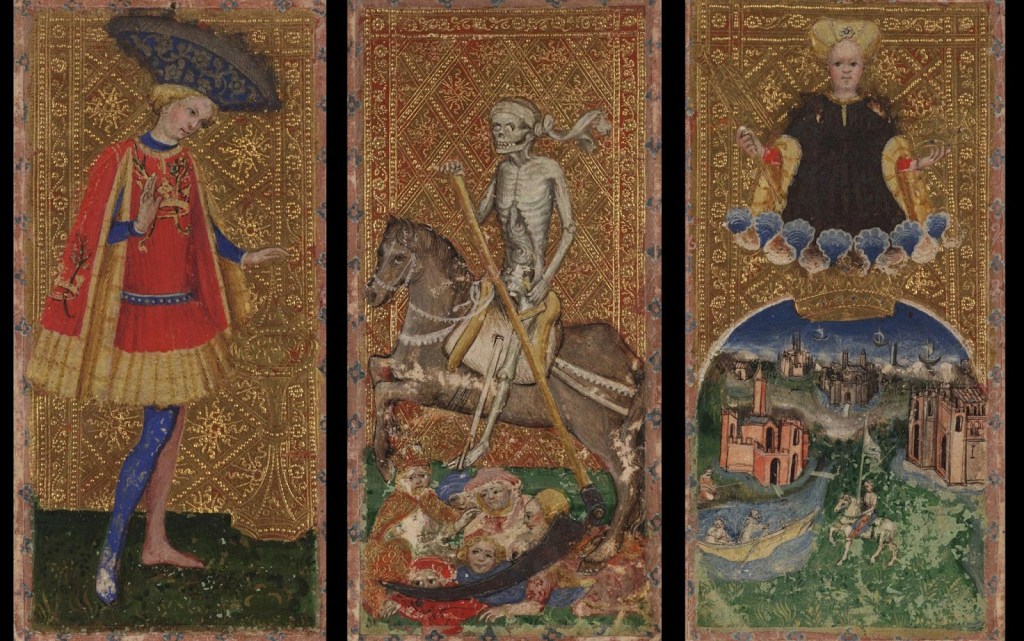
Bộ bài Tarot Visconti di Modrone, sản xuất tại Ý vào năm 1466. Bộ sưu tập được bảo quản tại Thư viện Sách Hiếm và Bản Thảo Beinecke, thuộc Đại học Yale.
Có những dấu hiệu cho thấy căn phòng khách này không hề giống những căn phòng bình thường ở khu ngoại ô. Đầu tiên, chúng ta cần nhớ rằng đây là Glastonbury. Sau đó, là không thể không chú ý đến chiếc nến thơm, bức tượng Phật, chiếc vải che chiếc tivi, và một chiếc hộp gỗ cũ kỹ trên bàn phụ, được quấn bằng lụa đen. Trong đó chứa 78 lá bài tarot. Tôi đến Glastonbury với tư cách là một ‘querent’ – một thuật ngữ mà những người làm nghề xem tarot dùng để gọi khách hàng của họ. Theo truyền thống, ‘querent’ sẽ mang theo ít nhất một câu hỏi. Nhưng tôi không chỉ có một mà là nhiều câu hỏi. Nếu tarot không thể tiên đoán tương lai, vậy lý do gì nó vẫn tồn tại đến ngày nay? Tarot đã duy trì sự hiện diện của mình như thế nào qua bao thế hệ, không chỉ như một vật phẩm mà còn là một nghi lễ, một văn bản, và một phần không thể thiếu của văn hóa dân gian châu Âu?
Khi tôi khám phá các hiệu sách ở Glastonbury, bên cạnh những kệ sách về vòng tròn đá, pha lê, và Kabbalah, tôi tình cờ phát hiện ra hàng loạt các kệ sách dành riêng cho tarot. Phần lớn các sách được viết bởi những người thực hành xem tarot, mang lại những bản giải thích tương tự về nguồn gốc huyền thoại của chúng. Các lá bài Tarot được cho là chứa đựng trí tuệ cổ xưa, chủ yếu từ Ai Cập cổ đại (nhưng cũng bao gồm ảnh hưởng từ văn hóa Kabbalah hay Celtic). Một số nhà nghiên cứu tarot cho rằng những người tiên tri Romany chính là những người bảo tồn kiến thức cổ xưa này, dựa trên quan niệm lâu đời ở châu Âu rằng ‘người gypsy’ có nguồn gốc từ Ai Cập cổ đại.
Ý tưởng cho rằng bộ bài tarot đã bí mật tồn tại qua thời gian, vượt qua cả sự sụp đổ của nền văn minh Ai Cập cổ kính, bắt nguồn từ một sự kiện khá bất ngờ và cụ thể: Paris năm 1781 – một thời kỳ mà Pháp đầy rẫy những hội bí mật và các câu lạc bộ tư nhân. Trong số này, một số nhóm có quan điểm chính trị cực đoan, sẵn lòng khởi xướng những thay đổi lớn sắp xảy ra. Hầu hết tự nhận mình có khả năng tiếp cận những kiến thức huyền bí mà không phải ai cũng biết.
Hội Tam Điểm là một trong những hội bí mật nổi tiếng nhất, tuyên bố rằng họ thừa hưởng truyền thống từ các Hiệp Sĩ Templar, thậm chí còn truy tìm nguồn gốc từ những người xây dựng Đền Solomon. Nhưng đây chỉ là một phần nhỏ trong một “bữa tiệc” huyền bí đa dạng, mà bất cứ ai quan tâm đến thời đại “New Age” hiện nay đều quen thuộc: Rosicrucianism, Thần học, Swedenborgianism, Mesmerism, Martinism và Hermeticism – tất cả đều được cho là có nguồn gốc từ vị thần Ai Cập cổ đại Thoth. Các truyền thống và ý tưởng huyền bí này được mọi người tìm hiểu, phát triển và thậm chí tạo ra mới từ con số không.
Thời đại đó sau này được gọi là ‘Chống Khai sáng’ – hay cụ thể hơn, là Phản Khai sáng, theo cách mà Isaiah Berlin mô tả. Một phần, nó xuất phát từ sự say mê với cái huyền bí, kỳ ảo trong nền văn hóa Lãng mạn, dù rằng sự phản đối quyền lực của giáo hội và chính phủ độc tài cũng là một yếu tố không kém phần quan trọng. Sự khám phá những bí mật “tối tăm” được coi là một phản biện về mặt trí tuệ và đạo đức đối với chủ nghĩa siêu duy lý của thời đại ‘khai sáng’. Emanuel Schikaneder, qua lời của bản opera The Magic Flute (1791) do Mozart sáng tác, đã minh họa rõ ràng sự đối lập này bằng cách đưa Nữ Hoàng Đêm – một biểu tượng đầy bí ẩn và nguy hiểm, vào vai trò mẫu hệ – đối đầu với Sarastro, một linh mục hướng về ánh sáng, thuộc Hội Tam Điểm, tôn thờ Isis và Osiris.
Vào đầu những năm 1780, Ai Cập cổ đại bất ngờ trở thành chủ đề được yêu thích rộng rãi ở Paris. (Không chỉ ở Paris, biểu tượng lớn của nước Mỹ với hình ảnh của kim tự tháp và mắt Masonic cũng đã được tạo ra vào năm 1782.) Từ năm 1781 đến 1785, Giuseppe Balsamo, một người Italia tự xưng là Bá tước Cagliostro, đã thành lập một ‘nghi lễ’ của Hội Tam điểm mang đậm phong cách Ai Cập. Đến năm 1785, hội quán của Cagliostro nổi tiếng với việc trưng bày tượng các vị thần Ai Cập, hình tượng cổ và cả một con cò ibis bảo tàng cùng với một con cá sấu được ướp.
Một nhân vật nổi bật khác của Hội Tam điểm ở Paris, cũng là một học giả và mục sư Tin lành, là Antoine Court de Gébelin. Vào năm 1781, ông công bố tập thứ tám của ‘Le Monde primitif, analysé et comparé avec le monde moderne’, trong đó ông say mê tìm kiếm những sự giống nhau về ngôn ngữ và biểu tượng qua các thời đại. Trong một đoạn nổi bật, ông kể lại một lần ông ghé thăm ‘Madame la C d’H’, nơi bà đang chơi bài với một số phụ nữ khác. Court de Gébelin đã bất ngờ cảm thấy một niềm tin mạnh mẽ. Ông phỏng đoán:
Giả sử tôi bảo rằng có một tác phẩm cổ đại của Ai Cập vẫn còn tồn tại đến ngày nay, một cuốn sách đã trốn thoát khỏi những đám cháy đã thiêu rụi những thư viện lộng lẫy của họ, và cuốn sách ấy chứa đựng những bài học tinh túy nhất về những chủ đề hết sức thú vị… Nếu tôi nói thêm rằng cuốn sách này đã được lan truyền rộng rãi khắp châu Âu, và trong vài thế kỷ qua, ai trong chúng ta cũng đã sở hữu chúng… rằng những tri thức sâu sắc ấy lại chỉ được nhìn nhận như một mớ những hình ảnh kỳ khôi ngộ nghĩnh, không mang ý nghĩa gì thâm sâu hơn những gì vẽ trên chúng… liệu các bạn có nghĩ tôi đang nói đùa không?
Ngược lại, Court de Gébelin khẳng định rằng sự thật này là ‘cực kỳ đúng đắn’. Bộ bài Tarot thực sự là một quyển sách bí mật với 78 trang – những gì còn lại của Cuốn sách Thoth huyền bí, đã bị thất lạc. Nó chưa từng được ai chú ý tới trước đây vì bộ bài này quá ‘ít được coi trọng’.
Một điều thú vị từ lời tiết lộ của Court de Gébelin là Madame la C d’H và nhóm bạn của bà ấy không hề dùng bộ bài tarot để xem bói, một ý tưởng mà vào thời đó chưa ai nghĩ tới, mà chỉ dùng chúng để chơi cho vui. Trò chơi tarot đòi hỏi người chơi phải tham gia đấu thầu và giành chiến thắng trong từng ván bài, khá giống với cách chơi bridge.
Bộ bài tarot bao gồm bốn loại bài chính: kiếm, cốc, đồng tiền và gậy, tương đương với bích, cơ, rô và nhép trong bộ bài truyền thống. Lá ‘Le Fou’ (còn gọi là ‘kẻ ngốc’ hay quân Joker) được xem như một lá bài đặc biệt quan trọng, và còn có thêm một lá ‘hiệp sĩ’ nằm giữa quân J và Q. Điều đáng chú ý hơn, bộ bài tarot còn có một bộ phận đặc biệt gồm các lá bài được trang trí cầu kỳ, gọi là ‘các lá át chủ bài’. Trên thực tế, trong tiếng Anh, chúng được gọi là ‘trumps’, phản ánh sự bí ẩn và huyền bí của chúng.
Người ta từng cho rằng bốn loại bài liên kết với bốn caste trong xã hội Ấn Độ Vedic, bốn tầng lớp xã hội thời Trung Cổ gồm quý tộc, giáo phẩm, thương nhân và nông dân, cũng như bốn đức tính chính của Plato: Dũng Cảm, Thận Trọng, Tiết Độ và Công Bằng – cùng nhiều nhóm bốn khác. Cụ thể hơn, chúng được tìm thấy có nguồn gốc từ các biểu tượng bài chơi cổ của Trung Quốc gồm Tiền Mặt, Chuỗi Tiền, Vạn Chuỗi và Chục Vạn Chuỗi.
Tuy nhiên, nguồn gốc trực tiếp của bộ bài tarot ở châu Âu chỉ được khám phá vào năm 1939, khi nhà khảo cổ học Leo Mayer tìm thấy một bộ bài tarot Mamluk từ thế kỷ 15 ở Cung điện Topkapi, Istanbul. Sự tương đồng giữa chúng thực sự gây ấn tượng. Trẻ em khi được nhận vào quân đội nô lệ Mamluk thường được thăng tiến qua các cấp bậc từ phục vụ, sĩ quan đến khassakiyah, hay chiến binh ưu tú. Những chiến binh khassakiyah được giao giữ các biểu tượng quyền lực như cốc (người đưa cốc), kiếm (người cầm kiếm), và gậy chơi polo – những biểu tượng này thường được khắc họa trên đồng tiền. Có vẻ như cây gậy polo đã được các nhà làm bài tarot ở Ý thời Phục Hưng, những người không rõ về nó, chuyển đổi thành cây gậy hoặc nhép khi mô phỏng bộ bài từ phương Đông.
Dù lý thuyết về nguồn gốc Mamluk được nhiều người ưa chuộng, chưa thể khẳng định nó hoàn toàn chính xác. Ngoài ra, lý thuyết này cũng không giải thích được sự xuất hiện của bộ bài riêng biệt bao gồm 21 lá bài với tên gọi đặc biệt như Pháp Sư, Nữ Hoàng, Tháp, Mặt Trăng,… tổng cộng 22 lá, nếu tính cả lá Thằng Ngốc. Những lá bài này ra đời muộn hơn và được giới quý tộc thời kỳ Phục Hưng ở Ý sử dụng, như được ám chỉ từ tên gọi ban đầu của bộ bài tarot. Ở Ý thế kỷ 15, người ta gọi bộ bài này là trionfi, lấy cảm hứng từ ‘những chiến thắng’, tức là các cuộc diễu hành lễ hội với chủ đề ngụ ngôn, mà từ đó, những chiếc xe hoa trong các lễ hội hiện đại được xem là kế thừa trực tiếp.
Ngay từ những ngày đầu tiên của tarot, các nghệ nhân làm bài đã lựa chọn một cách khéo léo từ nhiều nền văn hóa đa dạng, áp dụng những hình tượng ngụ ngôn mà họ thấy phù hợp.
Những người nghiên cứu Tarot, phần lớn không phải là các nhà học thuật chính thống, đã bỏ công sức từ bao giờ để tìm kiếm một hệ thống đồng nhất cho những biểu tượng trên các lá bài chiến thắng, hay còn gọi là ‘bài tẩy’. Vào năm 1966, thủ thư Gertrude Moakley đã kết nối chúng với loạt thơ I Trionfi của Petrarch, một công trình đã được minh họa nhiều lần, kể lại cuộc diễu hành của những nhân vật ngụ ngôn như Tình Yêu, Sự Trinh Tiết, Cái Chết, Danh Vọng, Thời Gian và Vĩnh Cửu. Đến năm 1972, tác giả nổi tiếng viết về huyền bí, Paul Huson, đã liên hệ chúng với truyền thống nghệ thuật Danse Macabre của thời kỳ cuối trung cổ, nơi một loạt nhân vật tương tự như trong bài Tarot – bao gồm cả Giáo Hoàng, Hoàng Đế, và Thần Chết – tiến hành tới nơi an nghỉ cuối cùng. Mới đây nhất, trong tác phẩm ‘A Cultural History of Tarot’ phát hành năm 2009, nhà nghiên cứu người Úc Helen Farley đã làm sáng tỏ mối tương quan ngụ ngôn giữa các lá bài tẩy và những giá trị của Filippo Maria Visconti, Công tước Milan vào đầu thế kỷ 15, người đã sáng tạo nên bộ bài được vẽ sơn có ảnh hưởng lớn nhất, theo như được biết đến.
Tuy nhiên, Farley cũng nhận định rằng các chủ đề của Tarot được ‘lấy cảm hứng từ một bể các biểu tượng chung’. Việc một nhân vật ngụ ngôn cụ thể nào đó xuất hiện trong một phiên bản bài tarot cụ thể nào đó có thể chỉ là do sự ngẫu nhiên hoặc chọn lựa đại khái vậy thôi. Bộ bài từ cuối thế kỷ 15 mang tên ‘Sola-Busca’, có nguồn gốc từ Venice hoặc Ferrarese, giới thiệu một dàn nhân vật chủ yếu từ thời Cổ Điển và lấy cảm hứng từ giả kim thuật. Một bộ bài Florentine sơ khai với 97 lá cũng bổ sung thêm các lá bài tẩy mang tên từ ba đức tính thần học (Đức Tin, Hy Vọng, Bác Ái), bốn yếu tố và 12 cung hoàng đạo, trong khi bộ bài ‘tiêu chuẩn’ của Visconti-Sforza, vì một số lý do, lại chỉ bao gồm ba trong số các đức tính chính yếu: Thiếu Sự Thận Trọng.
Ngay từ những ngày đầu tiên của bộ bài tarot, các nghệ nhân làm ra các bộ bài đã lựa chọn tổng hợp từ những nền văn hóa đa dạng, khéo léo lựa lấy những ý nghĩa ngụ ngôn mà họ cảm thấy phù hợp nhất. Sự huyền bí của các biểu tượng đã làm tăng thêm phần quyến rũ cho quá trình này. Thế nên, quả thực là bất ngờ khi ý tưởng sử dụng tarot cho mục đích bói toán lại mất một thời gian dài mới xuất hiện. Nhưng, cũng giống như nguồn gốc Ai Cập cổ đại được cho là của những lá bài, ý tưởng này chỉ thực sự bắt đầu phổ biến vào những năm 1780.
Không lâu sau khi Court de Gébelin công bố công trình của mình, Jean-Baptiste Alliette, một người bán tranh kiêm nhà chiêm tinh, đã viết một loạt sách và bản thảo với bút danh ‘Etteilla’ – tức là tên ông viết ngược lại, giới thiệu về một phương pháp thú vị để giải trí bằng bộ bài tarot. Ông đã tái sắp xếp thứ tự các lá bài để chúng ‘chính xác’ phản ánh ý nghĩa huyền bí của Ai Cập và chiêm tinh học Hermetic, kế đến là việc áp dụng các kỹ thuật bốc bài theo phong cách cartomancy mà ông đã mô tả trong những công trình trước đó của mình. Nhờ vậy, người chơi có thể liên kết các ý nghĩa sâu xa với từng lá bài họ rút được, tùy vào hướng mà các lá bài đó hướng đến.
Có thể phương pháp của Etteilla đã bị lãng quên, nếu như không có một người đàn ông khác, với tất cả tâm huyết của mình, đã chuyển tải những ý tưởng huyền bí của thế kỷ 18 sang ngôn ngữ huyền bí phổ biến ở thế kỷ 19. Alphonse-Louis Constant, một sinh viên chủng viện thất bại và từng là nhà cách mạng bị bắt giam, đã bị cuốn hút bởi Kabbalah và tự giới thiệu mình dưới bút danh Éliphas Lévi, một cái tên ông biến đổi từ tên gốc của mình sang tiếng Hê-bơ-rơ.
Constant/Lévi đã bị thu hút mạnh mẽ bởi sự trùng khớp giữa số lá bài tarot, số chữ cái trong bảng chữ cái Hê-bơ-rơ, và các bước trên Cây Sự Sống của Kabbalah – đều là 22. Ông đã phát triển một hệ thống tương quan bí ẩn, khởi xướng một xu hướng mới trong việc tìm kiếm các liên kết biểu tượng giữa các lá bài và truyền thống tri thức huyền bí, kết hợp chiêm tinh học, Mesmerism, thuật giả kim và Kabbalah. Lévi tuyên bố rằng chỉ cần có bộ bài tarot và biết cách sử dụng, ngay cả một tù nhân cũng có thể ‘đạt được trí tuệ vĩ đại, và có thể thảo luận về mọi chủ đề với kiến thức sâu rộng và khả năng tranh luận không ai sánh kịp’.
Tarot có mối liên kết mật thiết với các trò chơi không kém gì với thế giới huyền bí
Những người nghiên cứu về huyền bí tại các quốc gia nói tiếng Anh đã nghiền ngẫm tác phẩm của Lévi và tin tưởng vào những lời ông truyền đạt. Các nhà truyền bá chính của hệ thống tarot dựa trên kabbalah của ông là các thành viên của Hội Hermetic Order of the Golden Dawn vào cuối thế kỷ 19. Hội này, được biết đến với những bí mật ma thuật và esoteric, đã thu hút nhiều người nổi tiếng và nhà thơ như Aleister Crowley, William Butler Yeats và Arthur Edward Waite. Crowley tạo dấu ấn mạnh mẽ với bộ bài Thoth tarot do Lady Frieda Harris vẽ, và được trưng bày ở Phòng trưng bày Berkeley tại London năm 1942. Đóng góp của Yeats và Waite còn ấn tượng hơn nữa, họ đã đưa vào tarot những yếu tố từ truyền thống Celtic và Arthurian, trong khi Waite cùng với họa sĩ người Mỹ Pamela Colman Smith, đã sáng tạo ra bộ bài tarot được sử dụng cho việc bói toán mà ngày nay gần như đã trở thành tiêu chuẩn trong cộng đồng nói tiếng Anh.
Mặc dù bộ bài tarot đã được khám phá một cách kỹ lưỡng và sáng tạo, nhưng phương pháp sử dụng chúng của các những người bói bài tarot thường ít được nhắc đến, có lẽ bởi vì nguồn gốc quen thuộc của chúng. Việc bói toán bằng bài, hay cartomancy, có thể đã tồn tại từ khi bài được tạo ra, gắn với các phong tục dân gian như mở ngẫu nhiên Kinh Thánh (Bibliomancy) hay rút thăm của người La Mã. Tuy nhiên, cartomancy chỉ trở nên phổ biến sau khi tarot ‘huyền bí’ được giới thiệu vào những năm 1780.
Nhân vật đáng chú ý nhất có lẽ là Marie Anne Lenormand, một nhà tiên tri nổi tiếng của thế kỷ 19. Bà sử dụng một bộ bài 36 lá, không phải bắt nguồn từ Ai Cập cổ đại hay Kabbalah, mà là từ một trò chơi Đức được ra đời vào khoảng năm 1800 – Trò Chơi Hy Vọng. Các lá bài được sắp xếp theo hình vuông, và người chơi di chuyển quân bài của mình quanh bàn, giống như trên bàn cờ truyền thống, với mục tiêu tìm đường về nhà.
Mặc dù không được chú ý nhiều, nhưng tarot lại có mối liên kết mật thiết với các trò chơi không kém gì với thế giới huyền bí. Khi Michael Dummett, một nhà triết học, giới thiệu cuốn sử học về Tarot đầu tiên với cái nhìn hoài nghi và học thuật vào năm 1980, ông đã gặp phải sự phản đối kịch liệt vì đã nhấn mạnh rằng Tarot là một trò chơi hơn là những ý nghĩa huyền bí của nó. William Empson, một nhà thơ, thậm chí còn viết thư phản đối lên Tạp chí London Review of Books vào tháng 9 năm 1980, khẳng định rằng ‘không thể nào những người ở thời Phục Hưng lại tốn công tạo ra tarot mà không gắn vào đó những ý nghĩa biểu tượng’; ông ta cũng nói rằng ‘các lá bài trong tarot toát lên một sự bí ẩn không thể phủ nhận’ và rằng bộ bài này khó có thể ‘chỉ dùng để chơi trò chơi’. Dummett đã trả lời rằng: ‘Những người trí thức, học giả và những người nghiêm túc khác thường xem thường việc chơi bài là một hoạt động không quan trọng’, nhưng tại các triều đình Ý đầu kỷ nguyên Phục Hưng, ‘đàn ông và phụ nữ đã coi trọng và đánh giá cao các trò chơi này, không xem chúng chỉ như là những trò tiêu khiển nhỏ bé.’
Ngày nay, tarot vẫn giữ được sức hấp dẫn của mình. Dù có một số lượng nhỏ người hâm mộ tarot theo hướng huyền bí, nhưng cũng có không ít người thích nghiên cứu, sưu tầm, hoặc đơn giản chỉ chơi cho vui. Tarot được cho là khá ưa chuộng trong số giới trẻ và thanh thiếu niên, điều mà tôi cũng được nghe kể gần đây – và là nhận định mà nhà nhân chủng học Laura Miller đưa ra trong nghiên cứu năm 2011 của mình về tarot, mô tả nó như ‘một sở thích ít được biết đến của văn hóa thiếu nữ tại Nhật Bản’. Ngày nay, tarot không chỉ là một bộ bài nữa mà còn xuất hiện cùng với các sản phẩm huyền bí khác được quảng cáo rộng rãi, như bảng ouija – một sản phẩm do một nhà phát minh và luật sư người Mỹ tạo ra và bán ra như một trò chơi gia đình vào những năm 1890. Tóm lại, Tarot có thể được xem như là một tinh túy của trí tuệ dân gian, mà bạn có thể sở hữu với một khoản tiền nhỏ. Đa số những bộ bài này đều đi kèm với một cuốn sách nhỏ màu trắng, nằm gọn trong hộp, cung cấp những hướng dẫn cơ bản về cách dùng và ý nghĩa của các lá bài.
Những người yêu thích bài tarot thường được phân vào hai phe: phe thứ nhất tin rằng tarot giúp họ tiếp cận và khám phá những kiến thức sâu kín trong tiềm thức của mình, một quan điểm được coi là khá nhẹ nhàng. Trong khi đó, phe còn lại coi tarot như một cầu nối với thế giới tâm linh, thậm chí là mang lại sức mạnh siêu nhiên, một quan điểm mạnh mẽ hơn. Điều này có thể giải thích tại sao người ta thường bọc bài tarot trong những tấm vải đen hoặc vải quý, không chỉ để tôn vinh chúng như những cuốn sách thiêng liêng mà còn để tạo ra một hình ảnh đặc biệt ấn tượng.
Julie, người xem tarot cho tôi, lại kết hợp cả hai quan điểm này. Cô ấy xem bài tarot như một phương tiện hỗ trợ mà thôi. ‘Mỗi lá bài có ý nghĩa riêng của nó’, và việc chúng xuất hiện ở vị trí nào trong bản đọc giúp cô ấy hiểu rõ hơn về ý nghĩa đó – nhưng quan trọng hơn, Julie luôn lắng nghe tiếng nói từ ‘phía bên kia’ của bản thân, nơi cảm xúc, trực giác và suy tư được đề cao. Đối với cô, việc đọc bài tarot không phải là để tiên đoán tương lai mà là để ‘đồng điệu’ với những linh cảm sâu sắc nhất trong mình. ‘Tương lai không phải là cái đã định sẵn,’ cô nói, ‘bạn có rất nhiều lựa chọn, và đôi khi, việc đọc bài giúp bạn thấy rõ những khả năng đó.’
Trước khi gặp Julie và tìm hiểu về Tarot, tôi luôn nghĩ rằng việc đọc bài chỉ là một kỹ thuật ‘đọc lạnh’ khách hàng, không khác gì cách Sherlock Holmes quan sát những chi tiết nhỏ để đưa ra những phỏng đoán tinh tế, có thể dễ dàng thay đổi hoặc thu hồi. Ray Hyman, trong bài viết nổi tiếng của mình trên tạp chí Skeptical Inquirer vào năm 1977, đã đưa ra ‘những lời khuyên chung’ thông qua 13 điểm, bao gồm việc ‘khiến khách hàng hợp tác’ và ‘sử dụng kỹ thuật “câu cᔑ để khách hàng tự mình tiết lộ thông tin. Kế đến, bạn chỉ cần sắp xếp lại những thông tin đó thành một bản tóm tắt rõ ràng và trình bày lại với họ. Còn về bài Tarot, chúng được nhắc đến như một ‘mánh khóe’, giúp người đọc lạnh thu hút sự chú ý và tạo ra một không gian quyến rũ, đồng thời có thêm thời gian để tư vấn, dù họ có vẻ như đang tham khảo ý nghĩa các lá bài.
Tuy nhiên, việc bói bài Tarot không chỉ giới hạn ở những dự đoán đơn giản hay mang tính tiêu cực. Chính những người tìm đến Tarot cũng là một phần quan trọng không thể thiếu trong quá trình này. Sự thú vị này được Bertram Forer, một nhà tâm lý học, phát hiện ra vào năm 1949. Ông đã yêu cầu một nhóm sinh viên ở Los Angeles thực hiện một bài kiểm tra, mà ông gọi là ‘Bảng Đánh Giá Sở Thích’. Khi trả kết quả, Forer nói với họ rằng những kết quả này dựa trên bài kiểm tra của họ. Nhưng thực tế, ông đã sử dụng 13 nhận định chung chung từ các bản horoscope trên báo, như ‘Bạn có nhiều tiềm năng chưa khám phá’ hoặc ‘Đôi khi bạn rất năng động và thân thiện, nhưng cũng có lúc bạn lại trở nên kín đáo và dè dặt’. Thật bất ngờ, phải không? Bạn có thấy mình trong những mô tả đó không?
Mỗi sinh viên sau đó được yêu cầu đánh giá độ chính xác của bài kiểm tra này trên một thang điểm từ 0 đến 5, với 5 là chính xác tuyệt đối. Điều ngạc nhiên là điểm trung bình mà họ đưa ra là 4,26. Với niềm tin rằng mình không dễ bị lừa, tôi đã trao đổi với Christopher French, một nhà tâm lý học chuyên về niềm tin siêu hình tại Đại học Goldsmiths, London. Anh ấy giải thích rằng, hầu hết các mô tả tính cách trong bài kiểm tra của Forer thực chất là ‘những phát biểu đa nghĩa về trạng thái con người – đó là lý do chúng có sức hấp dẫn mạnh mẽ’. French còn nói thêm với học trò của mình rằng, nếu những mô tả này không phản ánh đúng bạn, ‘có lẽ bạn thực sự gặp vấn đề tâm lý nào đó’. Tuy nhiên, ý nghĩa chung chung, mơ hồ của những phát biểu này chỉ là một phần; qua thí nghiệm của Forer, chúng ta thấy rằng những phát biểu này không bị coi là chung chung mà lại được cảm nhận một cách cực kỳ cá nhân.
Khi một lần bói Tarot không chính xác, chúng ta dễ dàng lờ đi hoặc quên mất. Nhưng khi nó đúng, chúng ta lại cảm thấy như thể mình đã khám phá ra bí mật của vũ trụ.
Lợi ích của ‘Hiệu ứng Forer’ đối với người đọc bài Tarot thực sự là không thể bỏ qua, đặc biệt khi chúng ta nhận ra rằng hiệu ứng này còn trở nên mạnh mẽ hơn qua cách thức bói bài kết hợp với ngôn từ huyền bí, theo như Hyman đã mô tả, chứ không phải là yếu đi. Sự thiên vị xác nhận cũng đóng một vai trò quan trọng. Bản năng tự nhiên của chúng ta là muốn tin vào điều mình đã tin, và chỉ chú ý đến những thông tin xác nhận cho niềm tin đó, làm chúng ta cảm thấy hạnh phúc hơn. Vì vậy, khi một lần bói Tarot không chính xác, chúng ta dễ dàng lờ đi hoặc quên mất. Nhưng khi nó đúng, chúng ta lại cảm thấy như thể mình đã khám phá ra bí mật của vũ trụ.
Cơ bản, việc đọc Tarot trở nên thú vị và có vẻ như mang lại kết quả ‘thực sự’ bởi vì chúng ta, trong tư cách là những ‘nạn nhân tự nguyện’ của những định kiến nhận thức của mình, dưới tác động của việc nhận diện mẫu hình sai lệch – hay apophenia, liên kết các thông tin không liên quan thành một câu chuyện có ý nghĩa, nơi chúng ta là nhân vật chính. (Và thực tế, những lời khen ngợi càng làm tăng cường hiệu ứng này. Chẳng hạn, sau khi được đọc Tarot, tôi cảm thấy hài lòng với những gì Julie mô tả về mình, như thể cô ấy đã thấy được bản chất tốt đẹp, sâu sắc và yêu thương trong tôi.)
Từ xưa đến nay, việc lưu tâm đến bối cảnh mà thông điệp xuất hiện luôn mang lại ích lợi cho con người. Tuy nhiên, như Hyman kết luận, ‘Cơ chế mạnh mẽ này đôi khi lại mất hút trong những tình huống không có thông điệp thực sự nào được truyền đạt.’
Câu hỏi vẫn còn đó: Liệu những người đọc Tarot chỉ là những người tốt bụng nhưng quá nhẹ dạ cả tin, hay họ thực sự là những kẻ chẳng tin vào điều gì thiêng liêng, chỉ muốn lợi dụng lòng tin của người khác? Đáng chú ý, hiệu ứng Forer đã được nhà tâm lý học Paul Meehl đổi tên thành “hiệu ứng Barnum”, theo tên của P.T. Barnum, người tổ chức xiếc nổi tiếng với những trò lừa đảo. Ngoài việc tổ chức các buổi biểu diễn như “Nàng tiên cá Fiji”, “Tom Thumb” đầu tiên, Barnum cũng dành thời gian để vạch trần những gì ông coi là những trò lừa đảo còn tệ hơn của các nhà ngoại cảm và thầy bói, qua cuốn sách “The Humbugs of the World” (1866), mô tả các trò lừa đảo, ảo tưởng, và những kẻ lừa đảo qua mọi thời đại.
Trong buổi đọc Tarot của mình, tôi thực sự ấn tượng với cách Julie nhấn mạnh đến những chi tiết nhỏ như là một lời cảnh báo. “Cảm giác như là mình đang điều chỉnh sóng radio vậy,” Julie giải thích. “Đôi khi, thông tin mà tôi nhận được không được rõ ràng, nên tôi mong bạn sẽ giúp tôi hiểu rõ hơn… Và nếu có lúc tôi đi sai hướng, đừng ngần ngại chỉ bảo tôi nhé.” Cô ấy muốn tôi không để sự nghi ngờ cản trở quá trình trải nghiệm. “Bạn càng mở lòng, tôi càng có thể cảm nhận và nhận được nhiều thông tin hơn… Hãy coi như chúng ta đang chia sẻ năng lượng với nhau.”
French thường cho rằng, Tarot chỉ là một phương pháp đọc ngẫu nhiên không mục đích, nhưng với Julie, tôi cảm nhận được sự chân thành từ cô. Cách cô đọc bài Tarot cho tôi như thể cô đang theo dõi linh cảm của mình. “Sự chia sẻ năng lượng” mà Julie muốn thực hiện, theo một cách nào đó, giống như chúng tôi đang có một cuộc đối thoại đầy ý nghĩa. Cô ấy nhấn mạnh tầm quan trọng của việc tôi mở lòng với trải nghiệm này, điều này không khác gì lời khuyên của một nhà tâm lý học.
Tarot, theo một cách nào đó, không khác gì phân tâm học, một phương pháp cũng dựa trên mối quan hệ giữa người thực hành và khách hàng
Quan trọng hơn, Julie đã thực sự giúp tôi nhìn nhận sâu sắc hơn. Cô ấy nhận ra ngay sự hoài nghi của tôi đối với Tarot, dù rằng tôi vẫn hy vọng một điều gì đó. Cô ấy cũng rất chính xác khi chỉ ra sự xung đột trong tôi giữa việc sử dụng lý trí phân tích với việc viết dựa trên trực giác – giữa sự quan tâm của tôi đến các hệ thống tín ngưỡng và sự nghi ngờ của tôi về chúng. Cô ấy còn khiến tôi suy ngẫm về mối quan hệ gia đình từ những góc độ mà tôi chưa từng nghĩ tới. Khi buổi đọc kết thúc, có một khoảng lặng 30 giây khi Julie hỏi tôi có thêm câu hỏi nào không. Đó không phải là sự im lặng do ngạc nhiên hay ngượng ngùng, mà là sự trầm tư, suy ngẫm. Đó là một khoảng lặng khiến người ta cảm thấy tò mò.
Có lẽ, chính Julie đã giải đáp cho câu hỏi mà tôi đã tự hỏi từ đầu: “Tại sao bộ bài Tarot vẫn được sử dụng?” Tarot, theo một cách nào đó, thực sự mang lại tri thức – dù rằng đó có thể chỉ là một truyền thống do con người tạo ra, chứ không phải là sản phẩm của bất kỳ thế lực thần bí nào. Đó là một hệ thống để biểu đạt những khao khát và quan tâm về mặt tình cảm. Đây là một hệ thống đóng kín, không dựa trên bằng chứng cụ thể, nhưng mặt khác, nó không khác biệt nhiều so với phân tâm học – một truyền thống được hệ thống hóa một cách bài bản, nơi mà hiệu quả cuối cùng phụ thuộc vào mối quan hệ giữa khách hàng và người thực hành.
Carl Jung quả thực từng rất mê mẩn Tarot. Tuy nhiên, ông không hiểu biết hoàn toàn về chúng; ông nhầm tưởng rằng Tarot bắt nguồn từ người Gypsy và thậm chí còn cho rằng chúng có thể xuất phát từ các nguyên mẫu sâu kín – những biểu tượng đầy ẩn ý và đáng tin cậy mà không thể được giải thích một cách triệt để, dù là dưới hình thức biểu tượng hay ẩn dụ. Vào thập niên 1960 hoặc một thời gian ngắn trước đó, ông bắt đầu thử nghiệm với Tarot và những hình thức bói toán khác tại Viện Zurich của mình. Ông đã mô tả rõ ràng nhất về Tarot trong những buổi hội thảo kín đáo vào đầu những năm 1930:
Đây là những hình ảnh tâm lý, những biểu tượng mà chúng ta có thể tương tác, giống như tiềm thức luôn vận động với nội dung của nó. Chúng kết hợp theo những cách thức đặc biệt, và mỗi sự kết hợp đều tương ứng với các sự phát triển khác nhau trong lịch sử loài người… và vì thế, chúng phù hợp với một phương pháp trực giác nhằm hiểu biết dòng chảy của cuộc sống, thậm chí là dự đoán các sự kiện tương lai, hoặc ít nhất là giúp chúng ta hiểu rõ hơn về tình hình hiện tại.
Trong cuốn ‘Truyền thống Huyền bí’ phát hành năm 2005, nhà sử học David S Katz đã phân tích kỹ lưỡng việc lý thuyết phân tâm, đặc biệt là của Jung, bị ảnh hưởng nặng nề từ văn hóa huyền bí như thế nào. Sự kết hợp giữa mục đích trị liệu và yếu tố bí ẩn của huyền bí đã trở nên cực kỳ cuốn hút đối với phong trào New Age. Farley đã nhận xét rằng các lá bài Tarot chính là công cụ tiêu biểu nhất của thời đại mới, linh hoạt biến đổi từ việc giải trí, xem bói sang việc “chữa lành.”
Điều này còn bao gồm cả việc tự chữa lành. Julie đã chia sẻ về quãng thời gian cô phải đối mặt với lo âu và trầm cảm, cũng như cách cô đã trở nên sáng suốt hơn sau những trải nghiệm khó khăn. “Tôi xem những lần bói bài của mình như một cách chữa lành,” cô nói, “miễn sao tôi có thể giúp được ai đó, đó mới là điều quan trọng.” Một ngày, khi đi dạo trên phố chính của Glastonbury, tôi đã lên một cầu thang sau một hiệu sách, nơi có biển chỉ dẫn đến một phòng bói bài Tarot, cùng với các dịch vụ như cân bằng năng lượng shaman bằng giọng hát, trống, lắc, kết nối lại tâm hồn, chữa lành qua việc viết sáng tạo và massage mô sâu. Đây không phải là bói bài Tarot thông thường. Tờ rơi quảng cáo cho biết người đọc bài này “từ nhỏ đã rất đồng cảm và có khả năng kết nối trực giác với mọi người”, và đã “phát triển một khả năng chữa lành mạnh mẽ trong khi đọc bài.”
Có lẽ họ đã làm được điều đó. Thể hiện sự khinh thường thay vì nghi ngờ luôn dễ dàng hơn. Lévi đã từng viết về Lenormand rằng “đầu cô ấy chứa đầy những kiến thức chưa được tiêu hóa”, dù anh cũng công nhận “bản năng trực giác của cô ấy ít khi sai lầm”. Từ đó về sau, những người hoài nghi cũng giữ quan điểm tương tự với những người đọc bài tarot. Để khẳng định chắc chắn, cần có một nghiên cứu xã hội học, nhưng có vẻ như tarot đã trở thành phương tiện liệu pháp cho những người, theo một cách nào đó, không tìm thấy chỗ đứng trong hệ thống giáo dục truyền thống. Rõ ràng là tarot phát triển mạnh ở những nơi như Brighton và Glastonbury, chứ không phải ở Cambridge và Hampstead.
Nếu nhìn vào một khía cạnh rộng lớn hơn, những câu chuyện bí ẩn giả tạo về tarot thực sự tiết lộ một phần sự thật, dù xung quanh chúng là những thông tin không cần thiết. Những lá bài này không phải là di sản cuối cùng từ một truyền thống tri thức cổ xưa, huyền bí nào cả. Chúng cũng không phải là “Cuốn sách thất lạc của Thoth”. Nhưng chúng là dấu ấn đặc biệt của truyền thống tri thức bí ẩn từ thời Phục Hưng ở Châu Âu, và mang đến một phương pháp trị liệu đơn giản, phổ biến và dễ tiếp cận. Suy ngẫm về ý nghĩa và tầm quan trọng của bốn đức hạnh, cũng như về Thời gian, Tình yêu và Cái chết, qua hình ảnh của Người Treo Cổ, Thiên Thần và Chiếc Bánh Xe May Mắn, đều mang lại giá trị nhất định. Ngay cả việc thiền định về Kẻ Ngốc cũng không ngoại lệ.
PHẦN BÌNH LUẬN:
| Nhà văn trì hoãn Là một người từng đọc bài tarot và cũng từng tìm đến những buổi đọc bài, tôi nhận thấy rằng các lá bài tarot không chỉ đơn thuần là công cụ mà còn là cầu nối giúp người đọc bài tarot phản chiếu bản thân người tìm kiếm qua đó. Thực chất, người đến xem đang không ý thức được rằng họ chính là người đang tiết lộ cho người đọc biết những điều họ cần nghe. Một người đọc bài giỏi sẽ nhận ra điều này và phản hồi lại một cách tinh tế. Có thể coi đây là hiệu ứng giả dược, nhưng lại hoàn toàn phụ thuộc vào những gì người tìm kiếm mang đến. Người đọc bài như đang ‘cho phép’ họ cảm nhận, hành động và suy nghĩ một cách tự nhiên để họ tự giải quyết vấn đề của mình. Nếu thiếu đi người đọc bài và quá trình đọc bài, họ khó có thể vượt qua được rào cản nội tâm, những điều đang cản trở bản thân tiến lên phía trước hay kìm hãm hành động của mình. Một người đọc bài tốt sẽ hướng dẫn họ tìm ra lối đi. Ngược lại, một người đọc bài không giỏi không những vô ích mà còn có thể gây hại, bởi vì họ phá vỡ một loại ‘hợp đồng trị liệu’ bất thành văn, đã được thiết lập ngay khi người tìm kiếm quyết định tin tưởng gửi gắm. Cả hiệu ứng nocebo lẫn placebo đều có thể xuất hiện. Chính vì vậy, việc lựa chọn cẩn thận và chăm sóc là vô cùng quan trọng. Câu hỏi liệu một lợi ích có thực sự là lợi ích hay không là một câu hỏi thú vị nhưng cũng dễ gây nhầm lẫn. Điều này xuất phát từ suy nghĩ rằng mọi thứ không được khoa học giải thích thì không thực sự tồn tại, hoặc chỉ là sản phẩm của trí tưởng tượng, như thể trí tưởng tượng không mang lại giá trị nào. Bạn có lợi ích đó hoặc bạn không có. Không có cái gọi là lợi ích ‘không thực’ hay nhược điểm ‘không thực’. Việc bạn nghĩ rằng mình cảm thấy tốt hơn và việc bạn thực sự cảm thấy tốt hơn không có sự khác biệt. Việc cảm thấy tốt hơn là một bằng chứng thực tế, không quan trọng nguyên nhân từ đâu. Tôi không chắc chắn mối quan hệ này hoạt động như thế nào, tôi chỉ cố gắng mô tả một cách tốt nhất những gì tôi thấy diễn ra. Tôi biết qua kinh nghiệm rằng nó hiệu quả, nhưng mọi thứ đều phụ thuộc vào cá nhân và hoàn cảnh cụ thể. Dĩ nhiên, mọi thứ đều có thể thất bại, ai cũng có thể thất bại. Về việc bị từ chối với lý do ‘họ chỉ nói những gì bạn muốn nghe’ – đúng vậy! Chính xác là như vậy. Bởi vì đó chính là những gì bạn CẦN nghe để tiếp tục bước đi. Nhưng việc họ nói ra điều đó mang lại sức mạnh của sự xác thực từ bên ngoài, và một niềm tin, sự an ủi mà bạn, vì lý do nào đó, không cho phép bản thân mình cảm nhận. |
| Marina Benjamin Phản hồi này thực sự mang lại giá trị cho bài viết, không chỉ bởi bạn đã chỉ rõ cách mà những buổi đọc bài hoạt động, mà còn bởi cái nhìn sâu sắc về việc, khi nói đến vấn đề tình cảm, việc ‘cảm thấy tốt hơn’ và ‘tin rằng mình cảm thấy tốt hơn’ thực chất đều là cùng một điều cả. |
| gabriel romero ricardo Tôi là một người đọc bài Tarot, và tôi cảm thấy thật sự hạnh phúc khi thấy có bài viết nào đó phản ánh quan điểm của mình. Thực sự thì, tôi không chỉ hoàn toàn đồng tình với quan điểm rằng những phương pháp huyền bí giống như một loại ‘thuốc giả’ về mặt cảm xúc (một cách tích cực, hy vọng mọi người hiểu ý tôi), mà tôi còn luôn nhấn mạnh điều này trong cách tôi tiến hành các buổi đọc Tarot của mình, đảm bảo người đến xin xem luôn rõ ràng về điều này. Tôi không mấy mặn mà với những buổi đọc Tarot quá mức huyền bí và tôi tự hào khi làm cho chúng trở nên thực tế, mang tính ứng dụng và có ích cho việc trị liệu hơn. Các biểu tượng trong lá bài là cách để mở lời, giúp người ta bộc bạch, giống như trong hầu hết các phương pháp trị liệu khác. Tôi phát hiện ra rằng trong đa số các lần đọc, khi người đó đang thực sự lo lắng hay bồn chồn về điều gì đó (điều này thường xảy ra khi ai đó đến xem bài Tarot), ngay khi tôi giải thích lá bài đầu tiên, họ thường phản ứng là ‘Đúng rồi! Đó chính là tôi đấy!’ hoặc ‘Chính xác là những gì tôi đang nghĩ!’ kể cả khi sau khi trò chuyện thêm, tôi nhận ra rằng lá bài đó thực sự không liên quan gì đến hoàn cảnh của họ. Các biểu tượng trên lá bài, cùng với cách đọc tốt, giúp mọi người mở lòng về vấn đề của mình, và tôi chủ yếu là lắng nghe và đưa ra một số lời khuyên, mà tôi chỉ cần điều chỉnh một chút cho phù hợp với lá bài. Cách tiếp cận của tôi không hẳn là quá huyền bí, nhưng tôi vẫn yêu thích nó và mọi người thực sự cảm thấy biết ơn. À, đây là lần đầu tiên tôi viết bài trên diễn đàn này nhưng tôi thực sự yêu mến blog này, đây là blog tuyệt vời nhất, nói thật đấy. |
| Nicola Williams Gabriel, bạn giống hệt như người bói tarot mà tôi mong đợi 🙂 |
| Darnell Nelson Tôi đang băn khoăn về một vấn đề từ lâu. Liệu có sự khác biệt thực sự giữa việc cung cấp một phương pháp trị liệu có cơ sở khoa học, có thể đo lường được với việc chỉ làm cho ai đó cảm thấy tốt hơn trong suy nghĩ của họ không? Lấy ví dụ trong y học, các biện pháp điều trị homeopathy thường khiến người ta cảm thấy tốt hơn nhưng thực tế không mang lại lợi ích khoa học cụ thể nào. Cùng lý thuyết đó, đối với tarot, dù không có bằng chứng khoa học nào chứng minh lợi ích cụ thể, nhưng nếu mọi người cảm thấy được lợi từ nó, liệu nó có thể được coi là một hình thức trị liệu theo một cách khác, tương tự nhưng không giống hẳn không? Nói một cách khác, liệu chúng ta có nên bác bỏ một phương pháp trị liệu không dựa trên khoa học khi mà thực tế có người hưởng lợi từ nó? Tôi hy vọng đã diễn đạt ý của mình một cách đủ rõ ràng để mọi người hiểu. |
| Jeff Hrusko Tôi đã áp dụng bài tarot khi hỗ trợ các bạn trẻ gặp khó khăn, không phải vì tôi tin chúng có phép màu, mà là để khơi gợi những suy nghĩ, cảm xúc tiềm ẩn trong họ. Cách tôi làm giống như là: ‘Bài này bảo rằng có một trở ngại đang cản trở bạn, một thử thách mà bạn sẽ vượt qua được. Bạn có nghĩ ra đó là trở ngại gì không?’ Phương pháp này thực sự mang lại hiệu quả cao, và tôi luôn kiêng kỵ không bao giờ đề cập đến những điều tiêu cực. Tôi cũng chẳng bao giờ áp dụng theo đúng nghĩa đen của các quyển sách giải thích bài tarot. Có lẽ, đây chính là cái gọi là hiệu ứng Forer, khi mà mọi người thấy chính mình trong những thông tin được cho là ‘được cá nhân hóa’ dành riêng cho họ… Nhưng quan trọng nhất, nó đã giúp các bạn trẻ nhận diện và vượt qua các thách thức của bản thân. |
| Andrew Galley Phần làm tôi thấy thú vị nhất trong bài viết này chính là về mặt lịch sử. Tôi thực sự bị cuốn hút bởi cách mà tarotology trở thành ví dụ điển hình cho việc làm cho một thứ gì đó trở nên huyền bí hơn bằng cách gán cho nó một nguồn gốc cổ xưa một cách khó tin. Ý tôi không phải là xem thường; trái lại, điều này khiến tôi suy ngẫm về việc cảm giác kết nối với thời cổ đại – cái gọi là ‘nguyên thủy’ – luôn hiện hữu trong hiện tại. Có nghĩa là, dù cho là cái cổ xưa, nó vẫn luôn tồn tại ngay tại đây, giống như một thế giới khác, tương tự như những gì Jung đã nghĩ về khi ông ta nghiên cứu về vô thức. Điều này cũng giống như các câu chuyện và huyền thoại về khởi nguyên của thế giới diễn ra vào một thời điểm không xác định, bao gồm cả ‘ngày xửa ngày xưa’. Một chi tiết nhỏ, bộ bài tarot duy nhất mà tôi từng có là một bộ bài mang tính chất mới lạ, liên kết với một trò chơi, và trong đó, bộ Cốc được gọi là bộ Nguyên Thủy, biểu tượng cho khoảng thời gian nền móng này (cũng như thời kỳ tận thế, điều ngược lại với ‘ngày xửa ngày xưa’, khi chúng ta dự đoán về những lời tiên tri của sự hủy diệt và khám phá…). |
| Nepomuk Onderdonk Tôi nhìn nhận lý trí như một công cụ để khám phá những vấn đề nằm ở bề mặt, tầng ngoài cùng của thực tại, và với vai trò là một chuyên gia công nghệ thông tin, tôi chắc chắn biết trân trọng giá trị của nó. Tuy nhiên, đối với những tầng sâu hơn của sự thật, qua việc học hỏi từ các công án Thiền, tôi đã nhận ra từ lâu rằng lý trí không phải là công cụ đủ mạnh để lặn vào những bí ẩn sâu kín, điều này trái ngược hoàn toàn với suy nghĩ của những người theo chủ nghĩa duy lý, duy vật và vô thần ở khắp mọi nơi. Vì thế, bản thân tôi chỉ là người duy lý ở phần nhỏ bé nhất – ngón út bên tay trái; còn lại tôi tự nhận mình là một kẻ không theo lý, một pháp sư, và tôi thấy đó mới thực sự là công cụ cổ xưa, mạnh mẽ giúp chúng ta khám phá bản chất của sự tồn tại. Đây là công cụ mà chúng ta có chung với mọi sinh vật, chứ không chỉ giới hạn trong số những người hiện đại, có tư duy hạn hẹp, thuộc một phân nhóm nhỏ của loài người tự xưng là ‘sapiens’, những người ‘thiếu sâu sắc, không bi kịch, không theo đường tuyến, chống lại sự thiêng liêng, không có cơ sở và phản đối tính phổ quát, luôn hoài nghi những chân lý tuyệt đối’. Là một người không màng đến lý lẽ, tôi không khỏi cảm thấy mình bị dò xét bởi những người mê muội chủ nghĩa duy lý xung quanh, những người mà theo tôi thấy cũng chẳng khác gì mọi sinh vật khác về mức độ phi lý, dù họ cứ mãi ôm chặt lấy ‘lý trí’ và ‘chủ nghĩa khoa học’ như thể đó là tôn giáo, như thể đó là tất cả những gì quan trọng nhất của chúng ta, làm cho bất kỳ ai không thuộc về họ trở nên ‘vô nghĩa’, ‘không đáng để khoa học quan tâm’ hay ‘lý trí’. Họ dường như luôn nghi ngờ bất kỳ ai không thuộc về giáo phái của mình là nguy hiểm, có thể gây hại, trí tưởng tượng của họ luôn chạy đua vào những hỗn loạn, suy đồi mỗi khi nghĩ về ai đó hoặc cái gì đó không được nuôi dưỡng trong khuôn khổ của họ, và vì thế, những người này chỉ xứng đáng bị khinh rẻ và bị loại bỏ. Trái lại, tôi lại thấy thế giới ‘phi lý’ trong các bản kinh cổ và thế giới tâm linh của chaman đầy vẻ đẹp, bình yên, thuần khiết, rõ ràng và sâu sắc. Tôi cho rằng chính những người ‘duy lý’ kia mới thực sự sống trong động thái đồi trụy, với khuynh hướng chiến tranh cũng như phát triển những công nghệ làm giảm giá trị bản chất của thiên nhiên, tất cả đều là sản phẩm của một thế giới ngầm đáng sợ mang tên ‘khoa học’ và ‘lý trí’. Một điều kỳ lạ nữa trong quan điểm của những người tin vào lý trí là họ đòi hỏi mọi hành động ‘tâm linh’ muốn được coi là ‘chính đáng’ cần phải tuân thủ một cách chính xác theo những phương pháp cổ xưa. Trong cuốn sách về đề tài bất tử trong Đạo giáo có tựa đề ‘Sống Lâu Như Trời Đất’, tác giả đã kể lại một cuộc tranh luận ở Trung Quốc thế kỷ thứ 5 do Ge Hong đề xuất; khi đó, cũng có một cuộc tranh luận tương tự, nửa số người thực hành là các pháp sư hay người theo đuổi thuyết bất tử Đạo giáo, họ cố gắng giữ gìn những phương pháp truyền thống đã được lưu truyền từ lâu, trong khi nửa kia lại cho rằng việc sáng tạo ra một phương pháp mới cũng là điều hợp lệ, thường là sau khi họ đã nghiên cứu nhiều quan điểm khác nhau được truyền lại và từ đó tìm ra mối liên hệ cá nhân và riêng tư với Đạo, với vũ trụ, thường qua thử nghiệm và sai lầm cũng như những hiểu biết đột ngột, và họ nói rằng bất cứ thứ gì cũng có thể trở thành phương pháp hợp lệ để giao tiếp với cái thiêng liêng, miễn là nó đủ ‘tinh tế và cao thượng’. Tôi luôn tự hỏi, nếu tôi tìm thấy nguồn cảm hứng từ điều gì đó mà tôi cảm nhận được liên quan đến vẻ đẹp thiêng liêng của sự hoàn chỉnh, và nguồn cảm hứng ấy được biểu hiện qua chính bản thân tôi, giúp ích cho cả bản thân và những người xung quanh, thì liệu điều đó có phải là phép màu không? |
| Người dùng cũ Tôi không quan tâm liệu tarot và các phương pháp thần bí khác có mang lại lợi ích trị liệu hay không. George Bernard Shaw đã diễn đạt nó hay hơn bao giờ hết: ‘Việc một người có đức tin hạnh phúc hơn một người hoài nghi cũng không khác gì việc một người say rượu hạnh phúc hơn một người tỉnh táo. Hạnh phúc của sự cả tin là một thứ hạnh phúc rẻ tiền và nguy hiểm, và hoàn toàn không phải là một điều cần thiết trong cuộc sống.’ |
| Daniel Self Chắc chắn là bài tarot và những phương pháp huyền bí khác mang lại những lợi ích trị liệu nhất định. Nhưng, như nhiều người đã nói, việc sử dụng thuốc giải trí cũng có thể đem lại lợi ích nhưng vẫn được xem là không tốt cho sức khỏe. Liệu đây có phải là một phương pháp tốt không? Tôi không chắc. Cái mà tôi cảm thấy băn khoăn về tarot không phải là phần huyền bí, mà là cách một số người sử dụng nó không đúng đắn. Nếu bạn tin vào tarot và có thể thuyết phục người khác tin tưởng vào nó, thì đó là việc của bạn. Tôi có thể thấy nó thật lạ lùng, nhưng vẫn còn một cơ hội nhỏ bé là tôi sai. Tuy nhiên, nếu bạn khiến người khác tin rằng tarot thực sự có hiệu quả, trong khi bản thân bạn lại nghĩ rằng nó chỉ là trò đồng cảm và lừa dối, thì đó không phải là chuyện tốt. Bạn đang dắt mũi họ. Đó là hành động lừa dối và hiệu quả của liệu pháp này dựa trên sự lừa dối ấy. Không nên sau một lần bói bài mà nói ‘à, dù sao thì cũng chỉ để vui vẻ một chút…’ hoặc ‘tôi đã khiến bạn tin phải không?’. Ngay cả khi bạn chỉ quan tâm đến mặt thực tế, và nói ‘nó hiệu quả, không cần bàn cãi nữa’… thì thực tế, nó chỉ hiệu quả với người khác, chứ không phải với bạn, người đang đọc. Bạn quá thông minh để bị lừa. Vậy khi bạn cần trị liệu, bạn cần một kẻ lừa dối khéo léo hơn sao? Tôi cảm thấy đó không phải là điều mọi người mong đợi. |
| Tony Reardon Liệu thành công của phương pháp này có phụ thuộc vào vấn đề thực sự mà người đó đang gặp phải không? Khi một người chỉ cảm thấy hơi buồn, không được thoải mái, hoặc đơn giản là chán chường, thì việc thay đổi cảm xúc của họ chính là giải pháp cho vấn đề – cảm xúc của họ là nơi mọi vấn đề bắt đầu. Tôi có linh cảm rằng đa số mọi người tìm đến những người như thầy bói tarot với tâm trạng tương tự như tác giả; tức là họ vừa hoài nghi, vừa tò mò, có thể là để tìm chút niềm vui, chứ không phải họ thực sự đang tìm kiếm giải pháp cho một vấn đề nào đó. Tuy nhiên, đối với những ai đang đối mặt với những khó khăn lớn trong cuộc sống, thì việc cảm thấy tốt hơn có lẽ không phải là lời giải. Chẳng hạn, nếu một người không thể hòa thuận với bạn đời, tại nơi làm việc, hoặc đang chịu gánh nặng nợ nần nghiêm trọng, họ cần những lời khuyên thực tế và nghiêm túc, có thể cần phải vượt ra ngoài việc chỉ là phản chiếu và khẳng định những suy nghĩ của chính họ. Nhưng rồi, liệu phản chiếu suy nghĩ của bản thân mình có phải chính là điều mà các bác sĩ tâm thần ‘thực thụ’ áp dụng trong liệu pháp phân tâm không? |
| James McConnachie – TÁC GIẢ Cực kỳ thú vị với phản hồi này. Tôi tán thành phần lớn ý kiến của bạn. Có một xu hướng loại bỏ những lý do phức tạp đằng sau việc mọi người tìm đến bói bài Tarot. Và tôi thấy rằng, đa số mọi người khá là có khả năng dung hòa giữa sự hoài nghi và sự cởi mở trong suy nghĩ của mình. Tôi nghĩ bạn đã bao quát được sự rộng lớn trong bình luận của mình. Tuy nhiên, tôi muốn phân biệt giữa nhà phân tâm học và bác sĩ tâm thần. Cá nhân tôi cảm thấy rằng, nhóm trước giống như một giáo phái được trang trí bằng vẻ ngoài của một nghề nghiệp (mặc dù vẫn được thực hành bởi một số cá nhân vô cùng xuất sắc)… |
| Jan Limpens Vấn đề không nằm ở chỗ liệu pháp này có hiệu quả hay không – bởi vì có thể, chúng đều mang lại kết quả nhất định ở một mức độ nào đó. Mấu chốt ở đây là cách suy nghĩ mê tín đi kèm theo đó. Khi tư duy kiểu này chiếm lĩnh tâm trí một người, họ trở nên mù quáng trước nhiều quan điểm sai lầm, thường xuyên dẫn đến những quyết định và hành động lầm lạc. Hơn nữa, suy nghĩ này còn lan truyền ra xung quanh như một dịch bệnh, vì chỉ những thành công được phô bày ra ngoài. Dù cho pháp thuật đó có thể mang lại hiệu quả, tôi vẫn cho rằng cái giá phải trả là quá cao, nhất là khi xung quanh ta có biết bao lựa chọn khác không dựa vào ma thuật. |
| Hans Konstapel Phần lớn các phương pháp trị liệu hiện nay không mang lại lợi ích bởi vì chúng không hòa nhập với bản chất của cuộc sống. Việc rời xa dòng chảy tự nhiên của cuộc sống chính là nguyên nhân khiến nhiều người đối mặt với các vấn đề về tâm lý và sức khỏe. Tarot và những hệ thống tương tự như một mô hình minh họa cho chu kỳ sống, từ đó giúp bạn tìm lại được giai đoạn phù hợp trong cuộc đời mình. |
| Owen Roberts Bài viết này cùng các ý kiến đều xuất phát từ quan điểm tôn giáo cho rằng, những hiện tượng như thần giao cách cảm là không có thật. Thực tế, chẳng có bằng chứng nào khẳng định sự không tồn tại của những hiện tượng tâm linh này, cũng như không có chứng cứ nào chứng minh chúng tồn tại. Vì vậy, một niềm tin cứng nhắc về vấn đề này thực chất chỉ là một lập trường dựa trên đức tin. Duy nhất lập trường không chấp nhận mà chỉ xem xét (thuyết bất khả tri) mới là cách tiếp cận hợp lý nhất. Tôi đã là người đọc bài Tarot suốt 35 năm nay và cũng dạy một khóa học kéo dài một năm. Tôi không bao giờ nhìn vào mặt khách hàng mình, mà chỉ tập trung vào những lá bài. Tôi không đặt câu hỏi để kiểm tra xem mình có đang đi đúng hướng hay không, cũng không cố gắng ‘đọc vị’ họ. Công việc của tôi là chỉ nhìn vào lá bài và phát biểu một cách nhanh chóng. Tôi thường xuyên nói ra những điều cụ thể như ‘bạn ăn quá nhiều cơm’, và sau đó mới biết họ chủ yếu ăn bánh gạo, hay như ‘bạn bị đau ở ruột già 2 giờ sau bữa sáng mỗi ngày do không dung nạp được gluten’, mặc dù người đó chưa bao giờ nhắc tới vấn đề tiêu hóa của mình và cảm thấy kinh ngạc với sự chính xác của tôi. Tôi thường xác nhận được những sự thật mà bình thường tôi không thể nào biết được. Lý do tôi làm được như vậy là bởi vì tôi đang kết nối và nhận thông điệp từ Thiên Thần của Tarot, mà tôi nghe thấy như một giọng nói rõ ràng bên tai phải. Những gì tôi làm không thể được giải thích qua bài viết này. Khi dạy Tarot, tôi dành phần lớn thời gian khóa học để phát triển khả năng nhận thức tâm linh, giúp học viên của tôi có thể làm được như tôi. Tôi có tỉ lệ thành công lên đến 90% với học viên, thông qua việc áp dụng các phương pháp truyền thống phát triển năng lực tâm linh từ các nền văn hóa pháp sư cổ truyền của phương Tây và bản địa. Phần lớn những người đọc bài Tarot không đạt được trình độ như tôi. Họ có phần non kém trong đào tạo và thường mắc lỗi như đã nói. Để đạt được cấp độ mà tôi đang làm việc, đòi hỏi nhiều năm cần mẫn và kiên trì. Tuy nhiên, cũng có không ít người đọc giỏi như tôi, và chúng tôi cảm thấy tuyệt vọng với những thông tin vô bổ mà đa số mang lại. Mọi chuyện liên quan đến liệu pháp qua đối thoại và tương tự đều có ích, và tôi chúc mừng những ai cung cấp dịch vụ đó. Nhưng tôi không làm như vậy. Tôi mang đến cho mọi người những hiểu biết mà họ không thể có được bằng cách nào khác. Và tôi không bàn luận về những điều đó, chỉ đơn giản truyền đạt thông điệp. Tôi không tiên đoán tương lai, bởi vì tôi tin rằng nó không cố định, do đó không thể tiên đoán. Tôi chỉ có thể nói cho họ biết họ có thể sẽ đi đến đâu nếu mọi thứ không thay đổi, nhưng đó là giới hạn của tôi. Các lá bài Tarot là biểu tượng nguyên mẫu, do đó chúng có thể được sử dụng trong nhiều phương pháp trị liệu tâm lý. Tuy nhiên, những lá bài chỉ là hiện thân vật lý của những thực thể tâm linh sống động mà chúng ta có thể tương tác. Đó mới là bản chất thực sự của Tarot. Mọi cái gọi là liệu pháp nói chuyện chỉ là cách mọi người tận dụng tốt nhất những gì họ có khi họ không thể giao tiếp trực tiếp, có ý thức với những sinh thể ở thế giới tâm linh. |
| Nicola Williams Trong một buổi bán đồ cũ không mấy nổi bật ở Bắc Carolina, trên hành trình lái xe khắp nước Mỹ sau những năm tháng đại học đầy biến động, tôi đã trải qua lần đầu tiên với bài Tarot – và tôi mong đó không phải là lần cuối. Cảm giác của tôi lúc đó khá giống với tác giả: vừa hoài nghi vừa tò mò. Lúc ấy, tôi không thể nghĩ ra câu hỏi cụ thể nào, nhưng nếu nhìn lại, có lẽ tôi đã hỏi ‘Mình nên làm gì với cuộc đời này?’ hoặc ‘Bước tiếp theo là gì?’. Tôi không nhớ rõ chúng tôi đã trò chuyện những gì, hay những lá bài nào xuất hiện, nhưng tôi rời đi với một hướng đi mới mẻ và rõ ràng hơn cho tương lai, cảm thấy cực kỳ thanh thản và giải tỏa. Từ trải nghiệm đó và suy luận của tác giả, tôi nhận ra rằng Tarot giống như một phương pháp tư vấn – tôi ‘tìm kiếm lời khuyên’, và giống như trong liệu pháp, tôi chẳng hề được chỉ dẫn cụ thể ‘nên làm gì’. Thay vào đó, những điều được đề cập đã chạm đến trái tim tôi, như thể tôi đã biết câu trả lời từ lâu. Tôi cảm thấy trải nghiệm tarot của mình giống như khi đọc thơ, Kinh thánh, các câu chuyện thần thoại, tử vi, hay bất kỳ điều gì tương tự. Có những bài học sâu sắc mà chúng ta có thể tìm thấy, giúp dẫn lối cho cuộc sống của mình. Những bài học này thường xoay quanh những chủ đề nhất định, tương tự như trong tarot hay văn học, chúng được liên kết với những hình ảnh hoặc nhân vật kiểu mẫu cụ thể. Chúng giúp chúng ta kết nối với điều gì đó, có lẽ sâu thẳm trong ta đã biết, những điều mà ta cần được nghe, và dường như chúng ta được phép suy ngẫm sâu hơn về chúng, chỉ đơn giản vì những điều này được truyền đạt bởi người khác. Hoàn toàn xa lạ với bất kỳ điều gì huyền bí, tôi cảm thấy quy trình này thực sự tuyệt vời và vô cùng con người. Một ý tưởng từ Aeon của Abeba Birhane đã hoàn toàn chạm đến tâm trạng của tôi trong buổi tarot đó, qua bài viết về cách chúng ta xây dựng nên con người mình qua những cuộc đối thoại: ‘Hãy tưởng tượng đến khoảnh khắc lấp lánh ấy, khi một nhà thơ chạm đến điều gì đó bạn đã cảm nhận nhưng chưa từng biết cách diễn đạt; hoặc khi bạn đang vật lộn để gom góp suy nghĩ của mình, nhưng rồi mọi thứ bỗng trở nên rõ ràng trong cuộc trò chuyện với một người bạn… Sự thật không phải được sinh ra hay tìm thấy trong đầu của một cá nhân, mà nó được hình thành từ sự tìm kiếm chung của con người về sự thật.’ |
| paleologue O Phần lớn những người theo chủ nghĩa lý trí thường xem Tarot chỉ là những điều mê tín, không dành nhiều thời gian để suy ngẫm về nó. Tuy nhiên, trong tay người thực hành giỏi, Tarot có thể tiết lộ những bí ẩn trong tâm hồn của một người một cách đến nỗi gần gũi với sự thật một cách ngạc nhiên. Có một người đàn ông vô gia cư từng sống trên phố Wisconsin Ave ở DC, người được phép tự do ở một quán cà phê vỉa hè xinh đẹp suốt ngày dài, mỗi ngày, chỉ vì anh ta luôn giữ cho nơi này sạch sẽ (với chiếc chổi và thùng rác của mình) và không hành xử lạ lùng. Nhưng lý do thực sự là vì những vị khách thường xuyên, hầu hết là những bà lão sống một mình tới đây uống trà, rất thích sự hiện diện của anh. Anh thường đọc vận mệnh cho họ mà không cần bài Tarot, nhưng lại sử dụng ngôn ngữ của Tarot. Mọi người gọi anh là ‘Người Mặt Trăng’. Rõ ràng là anh ta có vấn đề về não. Nhiều quá trình suy nghĩ mà chúng ta coi là bình thường đều nằm ngoài khả năng của anh. Nhưng năng lực đọc vị con người thực sự của anh ấy lại vô cùng phi thường. Giống như một người giỏi xem chỉ tay, anh ấy có thể đưa bạn trở về tuổi thơ, mô tả những cảm xúc đầu tiên và dẫn dắt bạn qua từng năm tháng… cho đến khi bạn tự nhận ra mình đã trở thành người như thế nào hôm nay. Anh ấy là một bảo vật của cộng đồng. Tarot thực sự có ích. Kinh Dịch cũng vậy, nó hoạt động rất tốt. Nhưng thực chất, đó chỉ là công cụ cho người đọc biết cách sử dụng. Phép màu không nằm ở những lá bài… mà ở chính người đọc. |
| Mark Green Quý vị cần biết rằng từ ‘gypsy’ gây ra nhiều tổn thương và được coi là lời xúc phạm nặng nề với người Roma, nhóm dân tộc mà từ này đề cập đến. Xin hãy tránh sử dụng từ ngữ này. |
| Gerald Moonen Tôi đã theo đuổi con đường tâm linh suốt đời mình. Tôi đã trải qua những giai đoạn tự hoàn thiện, vượt qua và nhận ra giá trị tâm linh của bản thân. Theo kinh nghiệm cá nhân, chúng ta là linh hồn đang tạm trú trong cơ thể này, và mục tiêu của chúng ta ở đời là để giải thoát cho linh hồn, hay nói cách khác, là đạt được sự giác ngộ. Tôi tin rằng, miễn là ta mở lòng, chúng ta sẽ được các hướng dẫn viên tâm linh giúp đỡ. Tôi dùng từ ‘biết’ thay vì ‘tin’ bởi vì tôi đã ngừng tin vào bất cứ điều gì từ rất lâu. Theo kinh nghiệm của tôi, các phương tiện như bói toán có khả năng làm cầu nối để chúng ta giao tiếp với hướng dẫn viên tâm linh và nhận được sự hướng dẫn của họ. Lá bài Tarot, que bói ở châu Á và Kinh Dịch đều là những công cụ có thể sử dụng cho mục đích này. Riêng với tôi, Kinh Dịch là công cụ hữu ích nhất; mỗi khi tôi có thắc mắc, câu trả lời tôi nhận được luôn chính xác đến không ngờ. Tôi đã nhận được sự hỗ trợ và chỉ dẫn không ngừng từ người hướng dẫn tâm linh của mình thông qua việc dùng Kinh Dịch. |
| Lorraine Caplan Việc này thực sự gây ấn tượng mạnh với tôi khi tôi mới đọc lại ‘Bộ ba Deptford’ của Davies. Tác phẩm chứa đựng nhiều yếu tố của học thuyết Jung và nghệ thuật bói bài Tarot. Nó vẫn giữ được giá trị theo thời gian, điều mà một số cuốn sách khác tôi từng đọc lại không làm được. |
| Dana Zikas Hồi còn nhỏ, tôi từng chơi thử với bộ bài tarot và tìm hiểu về chiêm tinh. Thật lạ, và có lẽ nó cũng chứng minh một phần, rằng nhiều quan điểm trong bài viết này, tôi đã từng ủng hộ từ khi còn rất trẻ, khoảng 15 hoặc 16 tuổi đấy! Bấy lâu nay tôi không còn làm ‘bói’ nữa, nhưng tôi nghĩ mình vẫn giữ khoảng 3 hoặc 4 bộ bài khác nhau ở đâu đó trong tủ. Tôi luôn rất mê mẩn những bản vẽ nghệ thuật đa dạng trên từng lá bài. Thậm chí không lâu lắm, tôi còn mua cho cô con gái nhỏ của mình một bộ bài được thiết kế dựa trên các tác phẩm của Tolkien, thật thú vị! |
| harry smith Khoảng hai mươi năm trước, tôi có dịp gặp một người có khả năng nhìn thấu tâm linh, người đó còn sử dụng cả đá nữa. Dù biết rằng bà ấy chủ yếu áp dụng những kỹ thuật đoán mò, tôi vẫn rời đi với cảm giác mình đã hiểu thêm nhiều điều về bản thân và cuộc sống, những điều mà cho đến nay vẫn còn nguyên giá trị. ‘Thử thách mới biết,’ mọi chuyện tùy thuộc vào từng người, quanh ta không thiếu những kẻ giả mạo. Tôi cũng nhận thấy bà ấy nói về quá khứ và hiện tại rất giỏi, nhưng lại trở nên bối rối và không chắc chắn khi dự đoán về tương lai. |
| Conrad Spoke Có một chi tiết nhỏ mà tác giả đã không nhắc đến trong mối quan hệ giữa người đọc và người hỏi: đó là tiền bạc. Trong tất cả những dịch vụ mà người đọc bài Tarot tự tin cung cấp – từ việc hiểu rõ tâm trạng, tiên đoán tương lai, đến chữa lành – thì kết quả chắc chắn nhất có thể thấy được chỉ là việc làm nhẹ ví của khách hàng mà thôi. |
| Paul H. Mình là một nhà trị liệu tâm lý theo phương pháp truyền thống và mình biết công việc của mình không hẳn là khoa học cứng nhắc. Nhưng ít ra, nó cũng gắn bó với thực tế, chứ không phải là một mớ bòng bong, lý thuyết suông. Mình tin chắc là mấy anh chị ở Scienceblogs.com đang thích thú lắm với bài viết này. |
| S B Con người giữ vững niềm tin vào đủ thứ vì tính hữu ích của nó, chứ không phải vì sự thật của nó. Có nghĩa là, bạn có thể sống và hành động như thể một điều gì đó là sự thật để xem kết quả của niềm tin đó mang lại như thế nào. Bạn hoàn toàn có thể thử nghiệm với cuộc sống của mình, tự mình quyết định dựa trên những gì xảy ra. Tuy nhiên, tôi không chắc liệu mọi người có thực sự hiểu rõ mọi chuyện diễn ra như thế nào không. Hay là không có cái gọi là chuyện gì diễn ra một cách ‘thực sự’? Rõ ràng, chúng ta đang nói về chất lượng cuộc sống ở đây, chứ không phải là những giả định có thể kiểm chứng dễ dàng hơn, như việc một quả bóng sẽ rơi xuống hay bay đi nếu bạn buông nó. |
| Ken Baskin Mình đã có một thời gian mê mẩn việc bói bài Tarot. Ban đầu, mình chỉ nghĩ đó là trò vui, chẳng qua là giải trí mà thôi. Nhưng rồi, dần dần có người bắt đầu tìm đến, nhiệt tình cảm ơn mình. Và rồi, một lần mình đọc bài cho mẹ, người mà bấy lâu nay mình chưa hề liên lạc. Bà ấy thực sự kinh ngạc về độ chính xác của lần bói đó. Suy ngẫm về nó, mình nhận ra rằng, việc đọc bài của mình không chỉ dựa vào ý nghĩa của các lá bài mà còn từ ‘khí chất’, ‘linh cảm’ mà mình cảm nhận được từ người đối diện. Mình nghĩ là, việc bói bài Tarot có thể mang lại lợi ích như một liệu pháp tâm lý, nhưng cái quan trọng không phải là bài mà là người bói. Các lá bài giúp mình tập trung tư duy, làm cơ sở để mình có thể cảm nhận và hiểu người khác ở một tầng mức sâu sắc hơn, ngoài lẽ thường. |
Bài viết này của James McConnachie.
James McConnachie là một nhà báo, nhà văn và biên tập viên người Anh. Công trình của anh đã được đăng tải trên các tờ báo lớn như The Sunday Times, The Spectator và New Scientist, cùng nhiều ấn phẩm khác. Hiện tại, anh đang trong quá trình biên soạn một cuốn tiểu sử dành cho một ngọn núi, dự kiến sẽ được Bloomsbury phát hành.
Bài viết được chỉnh sửa bởi Marina Benjamin.
Ngày 24 tháng 5 năm 2017
https://aeon.co/essays/tarot-cards-a-tool-of-cold-tricksters-or-wise-therapists
Tập Đọc là một báo song ngữ Tiếng Anh – Tiếng Việt, với chú thích từ mới, cung cấp bản dịch, phiên bản bài đọc nói (báo tiếng), và danh sách từ mới miễn phí cho cộng đồng. Dự án được duy trì từ năm 2020 đến nay, hiện đã ra trên 80 số.
Các bài viết được đăng trên Tập Đọc không nhất thiết phản ánh quan điểm, thái độ và góc nhìn của người biên tập. Người đọc nên hình thành quan điểm và đánh giá của riêng mình trong cuộc đối thoại giữa bản thân người đọc và tác giả, trong quá trình đọc bài của riêng mình. Việc chỉ đọc những người viết mà ta đồng ý cũng giống như chỉ chịu nói chuyện với những ai khen mình vậy: dễ chịu, nhưng nguy hiểm.
Hope this helps.
Nếu bạn muốn ủng hộ bất cứ dự án nào của mình, mình xin rất biết ơn. Mọi sự ủng hộ, dù nhỏ, đều sẽ rất có ý nghĩa trong việc giúp mình có động lực, hoặc có khả năng tiếp tục các công việc phi lợi nhuận này.
Mọi ủng hộ xin gửi về số tài khoản: 0491 0000 768 69. Chủ tài khoản: Nguyễn Tiến Đạt, ngân hàng Vietcombank, chi nhánh Thăng Long.

Đà Nẵng, ngày 4.3.2024
Nguyễn Tiến Đạt (sutucon)


 Tập Đọc
Leave a comment