Coyotes, dingoes and wolves are all dogs, as intelligent and loyal as our familiars. Our treatment of them is unconscionable.
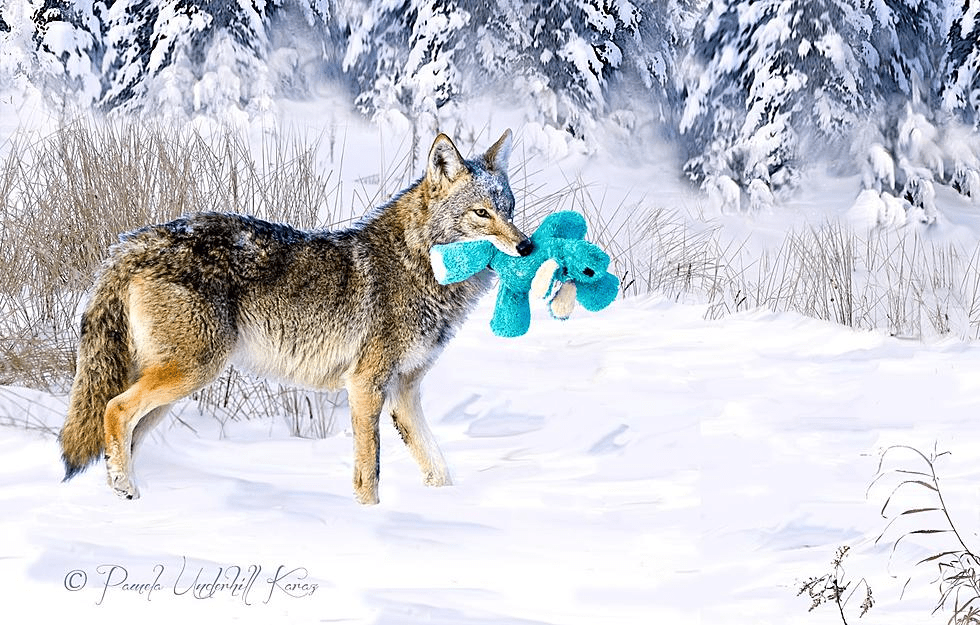
Photographed by Pamela Underhill Karaz
Drinking her coffee one sunny winter morning, Pamela Karaz looked out the window of her home in upstate New York and saw a coyote walking up the driveway. It was an uncommon sight – coyotes tend to be secretive – but what happened next was even more surprising. The coyote marked a tree with his scent, strolled across her yard, sniffed at a few tracks and then noticed a bright blue plush toy Karaz had bought a few days earlier for Bristol, her golden retriever.
Bristol had left the toy outside, as was her habit. Now the coyote sniffed it, picked it up in his mouth, dropped it, picked it up again. Then the coyote started to have fun. ‘He tossed it up in the air. It fell down. He picked it up again and bucked around,’ Karaz said. ‘At no point do I ever think he thought it was prey. He wasn’t trying to tear it apart. He was literally playing with it, like a dog.’ This went on for about 10 minutes before the coyote trotted away with the toy still in his mouth.
Karaz is a wildlife photographer, and the photos she took had a moment of internet fame. They resonated: a fierce wild animal, behaving like a pet! Or, as Karaz noted, like a dog. Which of course coyotes are, albeit dogs who embody the very complicated relationship of humanity to canines.


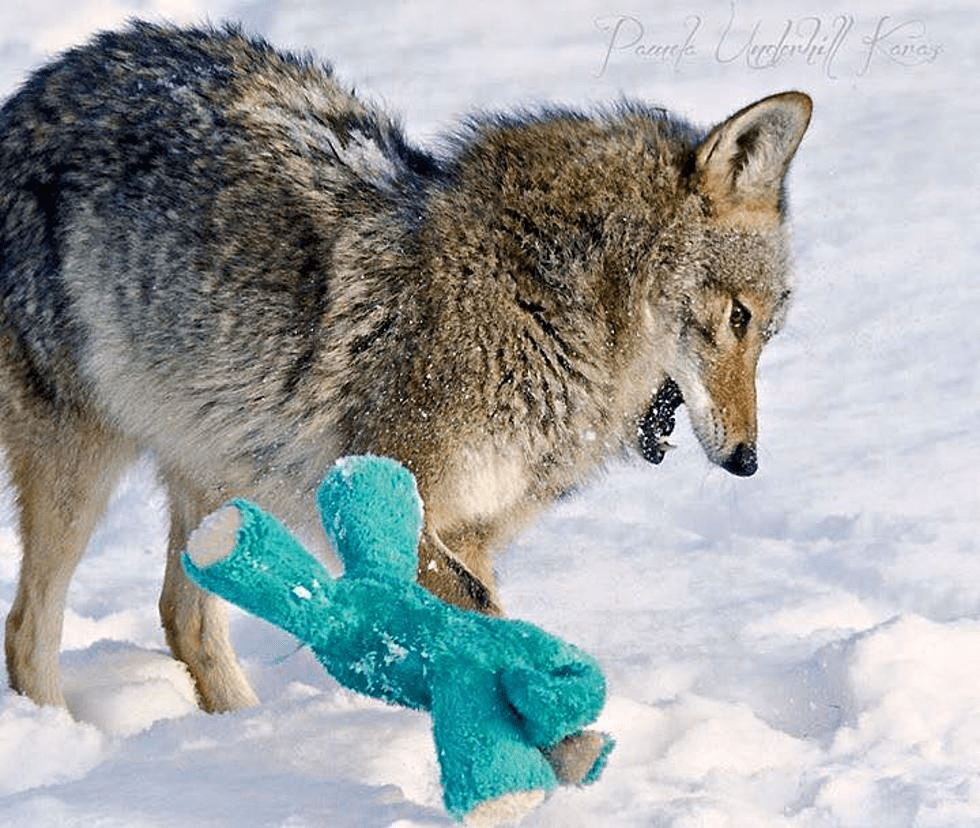


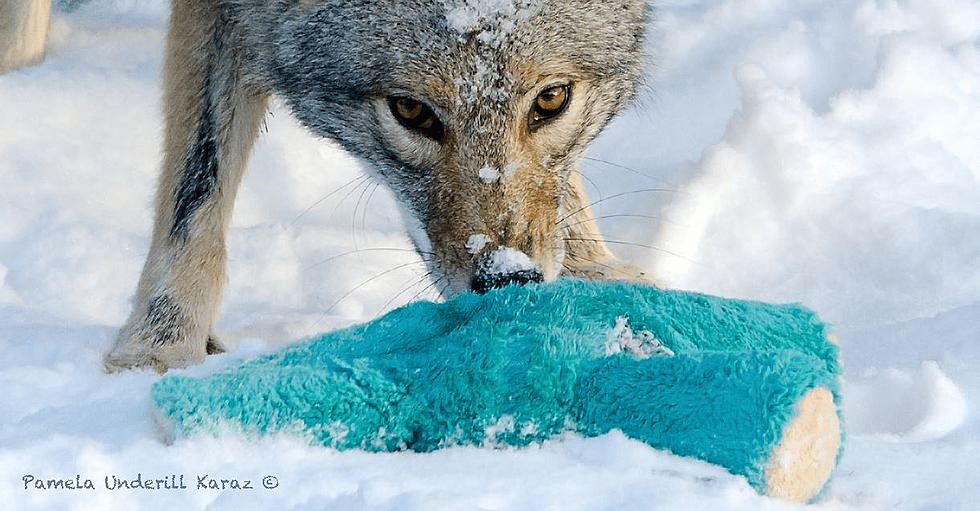
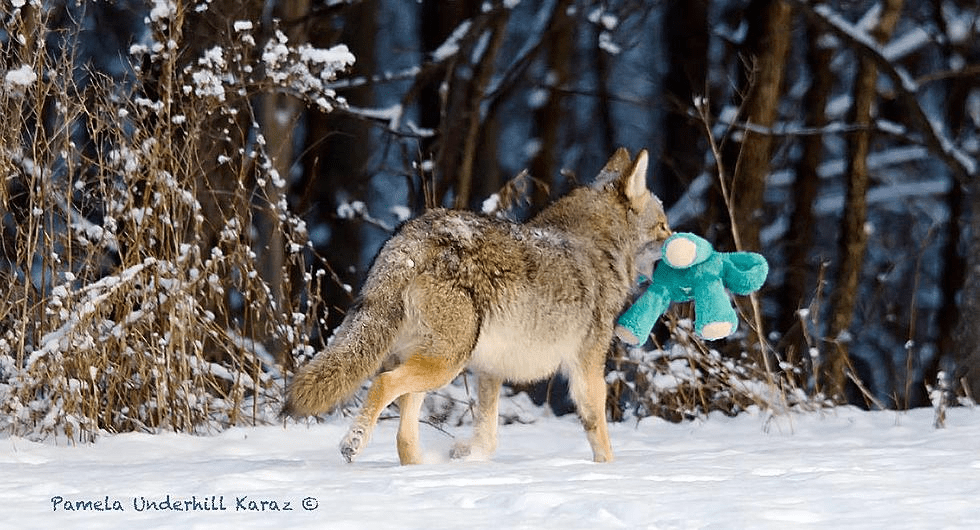
“Toy Thief” – Photographed by Pamela Underhill Karaz
Some dogs exist inside the circle of human domesticity: beloved companions and friends, respected and often pampered. They sleep in our homes, sometimes in our beds. We buy them plush toys. Other dogs live outside, free and independent. They possess the essential cognitive and emotional faculties as our dogs; domestication has introduced refinements, but the raw material was already there. They have personalities, memories, love their pups, and are devoted to their packs. Every so often, they play with toys we don’t bring inside.
They’re also treated arbitrarily: sometimes respected, sometimes ignored, and frequently persecuted with extreme prejudice if not outright cruelty. It’s a dissonant state of affairs, and one that sometimes makes me wonder about the future of wild dogs. Not about whether they’ll survive through this century and beyond, but what sort of lives they’ll lead. Whether they’ll thrive or live on our margins, fearful and broken, a perpetually abused canine underclass.
Coyotes
Karaz, who considers her dogs to be family, is a coyote advocate. To her, they’re just wild dogs trying to survive. But if she’d wanted to kill that coyote and had a hunting licence, she could have. For $22, or $100 for out-of-state residents, people can kill as many coyotes as they want for six months a year in nearly all of New York state – which, compared with most parts of the United States, is quite restrictive. In many states, coyotes can be killed year-round, day or night, in just about any way: poisoned, lured into range with electronic calls that mimic their voices, chased from planes, shot with semi-automatic assault weapons or sniper rifles. They live in killing fields.
Coyote-killing is different from hunting deer, elk or so-called game birds, traditions that are steeped in an ethos of stewardship, provision and even fairness. It’s killing for fun. YouTube abounds with videos that revel in the death of a coyote; in many parts of the western US, so-called coyote derbies are common, documented in photographs of stacked bodies – the kinds of photos we associate with the rapaciousness of the 19th-century frontier.
The advocacy group Project Coyote in northern California estimates that 500,000 coyotes are killed every year in the US, roughly one-fifth by the federal government for the purpose of reducing harm to livestock (the effectiveness of which is scientifically debatable) and the rest for their fur, to increase populations of prey animals we’d prefer to shoot ourselves, or simply for pleasure. ‘Think of a 35-pound dog, lying on the couch, and people doting on it,’ said the ecologist Shelley Alexander, leader of the Canid Conservation Science Lab at the University of Calgary in Canada. ‘But coyotes, some people enjoy killing, even torturing. And they’re the same animal.’
For Alexander, this disparity challenges the fundamentals of conservation – not just the obvious institutions and organisations, but the mindset guiding human concern with the natural world. A few small advocacy groups and the Humane Society, which is powerful but generally viewed as an animal welfare organisation, raise objections to the cruelty of coyote killing. But mainstream conservationists tend to be silent on it or, in the case of governmental wildlife agencies, actively support it. Even among those who don’t like it, says Alexander, wanton killing is tolerated because coyotes reproduce quickly. Their populations are not threatened. It’s populations and species, rather than individuals, that are the focus of wildlife management for conservation.
“In cities and suburbs across the US, coyotes have been greeted with unease and fascination, symbols of wild nature in unexpected places.”
That animals have inner lives, a fact made abundantly clear by cognitive science and animal behaviour research, is not considered in these calculations. Nor are the ethical considerations that naturally follow from those insights. Which isn’t to say conservationists don’t care about animals as thinking, feeling individuals – many do – but those concerns are considered separately. Individual lives matter only when there’s few of them, and coyotes are in no danger of extinction.
Quite the opposite. Indeed, coyotes respond to persecution by increasing their breeding rates. Kill some, and soon there’s more than before, though survivors endure the pain of loss and upheaval. ‘These are animals who are intelligent, have unique personalities and family lives,’ said Kevin Bixby, executive director of the Southwest Environmental Center in New Mexico. ‘Individuals are not just automatons. One coyote is not necessarily replaceable.’
In the past few decades, coyotes have taken up residence in cities and suburbs across the US. There, they’ve been greeted with both unease and fascination, symbols of wild nature in unexpected places. I’m sometimes uncomfortable with that characterisation: coyotes might be symbolic, but they’re also, like Karaz said, just dogs trying to survive. Of more importance is a little-asked question: what sort of lives are urban coyotes leading?
I put the question to Alexander. It depends where they are, she said. Some live peacefully amid lots of green space. Many live in constant fear and stress. They’re harassed by people and our dogs, hit by cars, spooked by strange noises, and end up eating garbage. Yet Stan Gehrt, an ecologist at Ohio State University who studies the Chicago area’s booming coyote population, offered a different view. Suburbs, he said, are great life for coyotes. Even downtown, where there’s traffic, human disturbance and other hardships, Chicago’s coyotes are in excellent health.
‘All of it is much better than unprotected rural areas,’ said Gehrt, ‘where they will be shot and killed.’ Not long ago, Chicago’s city council passed an ordinance forbidding animal control officers from harming coyotes unless they had a track record of threatening or attacking people. It’s the opposite of the traditional approach, and suggests that cities could become oases of peace and security for creatures persecuted in more rural areas.
As for Karaz’s coyote, he trotted away with the toy in his mouth. She hasn’t seen him again, but her own dogs still have a habit of leaving their toys outside. Occasionally, she finds them in the woods nearby.
Dingoes
Shortly after his arrival at the Evelyn Downs cattle station in South Australia, on a routine patrol of the nearly 900-square-mile property, the ecologist Adam O’Neill encountered a pack of dingoes. Roughly a dozen of the tawny, medium-sized dogs were tearing a dead calf to pieces: five feeding on the body, and the rest skulking nearby, fighting for their turn. Watching the scene, O’Neill considered whether to shoot them. After all, though he and his fellow ecologist Arian Wallach were at Evelyn Downs to study its natural communities, they were also tasked with managing its cattle.
Before becoming a scientist, O’Neill had made his living as a professional hunter, hired by Australian landowners to kill invasive and unwanted animals. He knew how to use his gun. He was also tired of killing, which is why he’d become an ecologist. Reflecting on the cruelty often shown to animals in that part of the world, O’Neill used his rifle’s scope to examine one of the dingoes. The dog, he thought, looked desperate.
It’s an impression that might once have been denounced as anthropomorphic. In a few shrinking circles, it might still be. Who’s to say whether an animal is desperate? Yet to anyone who’s known a dog well it won’t seem implausible at all, and the Evelyn Downs dingoes likely had good reason.
In Australia, killing dingoes is a basic part of livestock management. Between poisoning, shooting and fencing, there are few places where dingoes are left alone. The constant assault disrupts pack relationships and atomises families, leaving behind what O’Neill would describe as ‘young, unruly, displaced refugees… just a bunch of poor lost souls living in a world of turmoil’. He lowered his gun.
Apart from being compassionate, it was also a sensible research decision. The ubiquity of dingo persecution has made it difficult to appreciate their natural behaviours and roles. Even when present, they’re often not functioning in stable packs. O’Neill and Wallach were especially interested in understanding the ecology of a landscape with healthy dingoes, and even hoped to show that a successful cattle operation might be run without killing them.
In the months following O’Neill’s mercy, the dingoes found their level. They formed packs, established territories and stopped killing calves, instead focusing their attentions on wild prey. O’Neill regularly encountered their tracks, but only rarely saw them in the flesh. ‘When they’re socially stable, they virtually disappear from sight,’ he said. ‘I’ve noticed this throughout the whole of my working life.’
O’Neill attributes it to the development of a local canine culture, with lessons passed down between generations: don’t mess with the two-legs and their property. In healthy families, he said, ‘they are invariably well-behaved. I guess what it all comes down to is mutual respect. We respect their right to keep breathing, and they respect our rights as owners of resources in a shared landscape.’
Which might again seem like anthropomorphism. People don’t usually think about animals possessing such sophisticated value systems. Yet dingoes, like other wild dogs, routinely navigate complex social scenarios, and animal culture is a burgeoning area of research. Customs taught to offspring and shared between groups can shape local behaviour in important ways. What O’Neill suggests is at least a plausible hypothesis. And dingoes living in stable packs, learning their landscapes and passing hunting lessons between generations would certainly have less need for the risky pickings offered by livestock.
The Evelyn Downs dingoes soon assumed their natural position as apex predators, a term for creatures who live at the top of food chains, eating other animals but not themselves being eaten. It’s a role they’ve played for the past several thousand years, and – along with hunting and habitat management by the continent’s indigenous inhabitants – one that shaped Australia’s thriving pre-colonial communities of life.
As a rule, apex predators are the bosses of nature’s regulatory system, promoting ecological richness and stability by suppressing irruptions of prey and smaller predators. ‘They allow the number and variety of species occupying any given area to be higher,’ said Wallach, now a research fellow at the University of Technology Sydney and co-founder with O’Neill of the Dingo for Biodiversity Project. ‘In a nutshell, large predators make the world green.’
“As a conservation strategy, killing foxes and cats has caused extraordinary suffering while failing in its aim of reducing their populations.”
In their uninterrupted presence, ecologies gravitate towards what once would have been called balance, but is better understood as dynamic equilibrium: nothing gets out of control. There are many examples. Eliminating mountain lions from a landscape, for example, can lead to dramatically increased deer populations, which in turn means a loss of streamside vegetation and declines in aquatic life. After sea otters were hunted to near-extinction off North America’s western coast, exploding sea-urchin populations devoured the great kelp beds that formed aquatic forest ecosystems; when otters returned, so did the kelp and the life they supported. And at Evelyn Downs, the presence of dingoes regulated, among many other creatures, foxes and cats.
That observation – also described in other studies elsewhere on the continent – is especially relevant in light of the country’s ongoing ecological turmoil. Australia has the world’s highest mammalian extinction rate; dozens of native species are declining or endangered, a fact blamed in part on an onslaught of foxes and cats, which were introduced by European colonists and found rich pickings among creatures unprepared by evolution to withstand their predations.
‘Having dingoes is a great and very practical way to effectively control the smaller predators,’ said Mike Letnic, a conservation biologist at the University of New South Wales whose own research traces many of Australia’s ecological problems to the absence of dingoes. More dingoes means more of the species now declining so precipitously – more bilbies and rock wallabies and kowari, more malleefowl and painted dragons – and more stable populations of species such as kangaroo and emu that are prone to overpopulation remedied by controversial extermination campaigns.
Until now, the conservation approach to feral predators has been to focus on killing foxes and cats, a strategy that’s caused extraordinary suffering while failing miserably in its aim of reducing their populations. Wallach considers this ethically reprehensible, ecologically senseless and a terrible way of getting people to respect the natural world. She identifies as a compassionate conservationist: part of a small but growing movement in conservation to promote biodiversity while respecting animals as individuals.
‘Dingoes will do a better job of it than we’ll ever do,’ said Letnic of their biodiversity-protecting ways. Yet they’re not allowed to do that job. Not only are dingoes killed by the livestock industry, says Wallach, but also as a form of environmental management, either as a favour to sheep and cattle pastoralists or inadvertently, with poisons intended for the animals they would otherwise keep under control.
Killing, say Letnic and Wallach, offers an easy and misleading out. Meanwhile, the Australian government announced last year its intent of killing 2 million wild cats in the next several years. Ecologists recently began trials of a trap designed to spray poison onto cats, who will then lick it off their fur and die after days of seizures and vomiting. Somehow this is preferable to simply allowing wild dogs to live. It continues to be easier to kill than to coexist.
Wolves
Whereas most coyotes and dingoes live and die in anonymity, many wolves are known as individuals – tracked by scientists, even named and followed by a fascinated, often adoring public.
There’s OR-4, the alpha male of Oregon’s Imnaha pack, who was killed this spring after, old and sick, he turned to hunting livestock. Or his son, OR-7, whose 1,000-mile walkabout made him the first known wolf in nearly a century to visit California. He eventually returned north, met a mate and sired a litter of pups – a much happier story than that of Echo, the first wolf seen in the Grand Canyon in more than 70 years, who was shot in late 2014 by a hunter who supposedly mistook her for a coyote.
Most emblematic of all, though, are the wolves of Yellowstone National Park. Canine celebrities since their mid-1990s reintroduction, their histories are as detailed and dramatic as Nordic sagas, but have taken a tragic turn over the past several years as hunting groups and western state wildlife agencies lobbied to remove gray wolves from the federal list of endangered species. Many of Yellowstone’s wolves have been shot and killed after stepping outside the park’s boundaries; they literally cross from one world into another, from a place where their lives are respected to one where they are not.
That dynamic captures tensions surrounding wolves throughout much of the US. Nearly a century after being almost completely exterminated, protection under the Endangered Species Act has allowed their numbers to rise again. The rise is relative – there are still just a few thousand in the continental US, occupying a small fraction of their historical range – but their species-level existence is not quite so precarious. Across the western and upper midwestern states, people are now fighting over what to do with them.
The nitty-gritty of wildlife agency proposals, court decisions and voter referenda are confusing to trace, but certain themes are universal. From one point of view, the lives of individual wolves have value, and should not be taken except to prevent otherwise unavoidable human harm. From another, individual wolves are members of populations that might annually be reduced without eliminating them altogether. And others would be happy to see the entire wolf population reduced. Wolves who previously were protected are now being killed for fun, or for reasons poorly supported by fact.
Killing wolves to prevent attacks on livestock, for example, doesn’t seem to work very well. It makes sense if individuals misbehave, as in the case of OR-4, but quota-based killing with no regard for which wolves are being targeted is likely to backfire: packs are destabilised, territorial fights ensue, and livestock attacks tend to rise. The social fabric is torn. And in places where wolves are killed to enhance populations of deer or elk, there are usually better alternatives available.
Take the case of 527, a famed Yellowstone wolf shot by a man who said he wanted to help elk. Many hunters blamed wolves for dramatic regional elk declines over the past two decades; the real culprits, though, turned out to be a loss of summer habitat and a change in predation by grizzly bears, who’d turned to elk after non-native trout released by fishermen into Lake Yellowstone outcompeted native fish on whom the bears had feasted. Wolves made a convenient scapegoat. Ditto in Idaho and British Columbia, where killing wolves is largely a distraction from more important habitat issues.
Again and again, research shows that rationales for state-sanctioned wolf hunts are flimsy. Yet that science, say wolf advocates, is ignored or applied inconsistently. This was a recurring frustration at a Humane Society-organised carnivore research conference I attended last year: having expected that the best available science would be used to guide decisions, researchers and advocates find that it’s not.
A deeper issue was evident too: one that gets at the very fundaments of how human society interacts with the non-human world. Almost invariably, government wildlife agencies are funded by sales of licences for hunting, fishing and trapping, and are strongly biased towards the treatment of wild animals as resources to be managed for human consumption. Many wolf advocates argue that such agencies, especially at the state level, can’t be trusted to be fair or – crucially – democratic.
That arrangement is the foundation of what’s known as the North American Model of Wildlife Conservation, codified early in the 20th century following the precipitous decline of now-common animals such as white-tailed deer, bison and elk, and focused on managing predator populations in order to maximise hunters’ favoured species. In many ways, that model has been successful, yet it’s also showing its age. Hunting is less popular than it once was; at the same time, there’s an ever-swelling number of people who care about animal welfare. At present, they’re largely excluded from wildlife management. At best, their views might be entertained by officials, but rarely are they shared.
As noted in ‘Predators and the Public Trust’ (2015), an article published in the journal Biological Reviews by researchers critical of the North American model, government wildlife agencies tend to see those who advocate for animal welfare as a threat to their work. And indeed, those values do challenge the treatment of animals as a resource – yet they also mean that those agencies no longer represent the public they’re supposed to serve, but just one interest group.
“Rather than thinking of wolves as belonging to us, we might think of them as citizens of their own wild nation.”
To the authors of that Biological Reviews paper, including the ecologist Adrian Treves of the University of Wisconsin-Madison and the environmental scientist Jeremy Bruskotter of the Ohio State University, recreational wolf hunting violates the bedrock legal principle that wildlife belongs to everyone, not just a few people who would claim them. The Yellowstone wolves have embodied this literally. Inside the park, they belong to every American; outside it they belong to people who would hunt them. And that, in turn, is a microcosm of the passage of wolves from federal endangered-species protection to state-level management.
There are complications to this view that wildlife is a matter of public trust and shared ownership. There’s a case to be made that, so long as wolves are not completely eliminated, hunting them is compatible with the public trust: it’s not individual animals who belong to everyone, the argument goes, but populations and species across time. From the other end of the spectrum, animal rights advocates object to the idea that animals might be owned by anybody apart from themselves. As Sue Donaldson and Will Kymlicka argue in Zoopolis: A Political Theory of Animal Rights (2011), the logic guiding our treatment of wild animals is broadly that of colonialism – or perhaps even slavery. We do with them as we please, regarding them as subject entirely to the human realm. Rather than thinking of wolves as belonging to us, we might think of them as citizens of their own wild nation.
In practical terms, though, Zoopolis and ‘Predators and the Public Trust’ end up in the same place: calling for political institutions and processes to include people who speak for animal welfare and interests. For every hunter on a state wildlife commission there should be someone who argues on behalf of the animals. Rather than starting with a stacked deck, the full range of both science and ethics would be considered.
If this sounds radical, it’s not. Something similar is already happening in California, where the state’s five-person Fish and Game commission now includes two who don’t hunt. Contrary to some fears, many types of hunting do continue in the state – but practices that are socially unpopular and offer no ecological benefit, such as coyote derbies and bobcat trapping, have been banned. Wolves remain protected as endangered.
But California is a progressive state. Such an arrangement will not come so easily elsewhere, especially in relation to wolves. ‘The 21-year old controversy over wolf restoration in the West is not really about wolves,’ wrote Ralph Maughan, the founder of the Greater Yellowstone Coalition conservation group, in an op-ed published this spring in the Idaho State Journal. ‘It has become another “values” contest.’
Anti-wolf sentiment is frequently intertwined with conservative politics, gun rights, rural disenfranchisement and a distrust of government. Which could help to explain why research on non-lethal prevention of wolf/livestock conflicts hasn’t found much traction among ranchers. It also hints at a troubling possibility: Maughan speculates that regional ecologies might eventually be shaped as much by political as by natural features, producing red state/blue state distributions of wildlife.
Yet there’s reason for optimism, too. The Wood River Wolf Project, an Idaho-sited collaboration of ranchers, wildlife officials and conservationists working to show how wolves and livestock can coexist, has been successful. Though it’s usually the methods, such as guard dogs, range riders and remotely monitored packs, that get the headlines, the project’s success is as much about people and relationships.
‘You start small and build from there,’ said Suzanne Stone, a wolf restoration officer with the advocacy group Defenders of Wildlife. ‘It takes time. Being able to sit down and have a cup of coffee.’ Which applies to democracy generally, and is its saving grace. Whatever our disagreements in principle with strangers, we can often sit down and figure out something in good faith with neighbours. And if political representation of animal interests might not yet be practical everywhere, for every species, it might at least start with wolves, coyotes and dingoes.
After all, to speak on their behalf reflects both the spirit of democracy and the inescapability of animal intelligence, especially among these close cousins of humankind’s best friends. To treat them so differently from the dogs we love is hypocritical. It sets a bad example – one that makes it a little easier to stigmatise and mistreat fellow human beings. As the ethicist William Lynn argues: ‘Wolves are not just good for ecosystem health. They are critical to the moral health of a society.’
By Brandon Keimis
Brandon Keimis a science, nature and technology writer whose work has appeared in The Atlantic, WIRED, National Geographic News, Scientific American Mind and the Guardian, among others. He divides his time between Bangor, Maine and Washington DC.
Edited by Brigid Hains
4,000 words
15 November 2016
https://aeon.co/essays/why-aren-t-coyotes-dingoes-and-wolves-treated-like-our-dogs
Bạn có thể tải miễn phí bộ học liệu được xây dựng từ bài đọc này tại đây:
https://drive.google.com/drive/folders/1guWWSXwYVo0vD5M7PokfwpoHH1N5RdrH?usp=sharing
Tập Đọc (literally means “Reading Together”) is a bilingual English-Vietnamese journal featuring new word annotations, translations, spoken word versions (audio articles), and a free vocabulary list for the community. The project has been maintained since 2020 and has published over 80 issues to date.
Readers should be advised that the articles published in Tập Đọc do not necessarily reflect the views, attitudes, and perspectives of the editors. Readers are encouraged to form their own opinions and evaluations through a dialogue between themselves and the authors during their reading process. Only reading writers with whom one agrees is akin to only engaging in conversations with those who compliment you: it’s comfortable, but dangerous.
Hope this helps.
If you wish to support any of my projects, I would be profoundly grateful. Any support, no matter how small, will be significantly meaningful in helping me stay motivated or continue these non-profit efforts.
Please send your support to account number: 0491 0000 768 69. Account holder: Nguyễn Tiến Đạt, Vietcombank, Thăng Long branch.

Đà Nẵng, Thứ Hai ngày 26.2.2024
Nguyễn Tiến Đạt (sutucon)
BẢNG CHÚ THÍCH TỪ MỚI
| STT | Từ | Loại từ | Phiên âm | Nghĩa tiếng Anh | Nghĩa tiếng Việt |
|---|---|---|---|---|---|
| 1 | coyotes | noun | /kɔɪˈəʊtiz/ | a species of canine native to North America, known for its adaptability to both wild and urban environments; coyotes are smaller than wolves and are often characterized by their grayish-brown to yellowish-brown fur. | sói đồng cỏ |
| 2 | dingoes | noun | /ˈdɪŋɡəʊz/ | wild dogs native to Australia, though there is debate over whether they are a species of their own or a subspecies of wolves; they are known for their sandy to reddish-brown fur and have a significant role in aboriginal culture. | chó dingo |
| 3 | wolves | noun | /wʊlvz/ | large canines that are the ancestors of domestic dogs; wolves are social animals, living in packs and are known for their complex communication methods, including howling. | chó sói |
| 4 | familiars | noun | /fəˈmɪliəz/ | often used in the context of witchcraft and folklore, referring to animals believed to have spiritual connections or magical powers; in a modern context, it can refer to pets with whom one has a close bond. | thú cưng linh thiêng (in the context of witchcraft and folklore); thú cưng thân thiết (in a modern context) |
| 5 | treatment | noun | /ˈtriːtmənt/ | the manner in which someone behaves towards or deals with someone or something. | cách đối xử |
| 6 | unconscionable | adjective | /ʌnˈkɒnʃᵊnəbᵊl/ | not right or reasonable; unethically or unjustifiably excessive. | không thể chấp nhận được |
| 7 | upstate New York | noun phrase | /ˌʌpˈsteɪt/ /njuː/ /jɔːk/ | a region of New York state located north of New York City and Westchester County, known for its rural areas, towns, and smaller cities, as well as natural landscapes and parks. | phần Bắc của tiểu bang New York |
| 8 | secretive | adjective | /sɪˈkriːtɪv/ | inclined to keep one’s thoughts, feelings, or affairs to oneself; not open or forthcoming. | kín đáo, giữ kín |
| 9 | scent | noun | /sɛnt/ | a distinctive smell, especially one that is pleasant or one used for tracking by animals. | mùi hương |
| 10 | plush toy | noun phrase | /plʌʃ/ /tɔɪ/ | a soft toy made out of plush fabric and stuffing, designed to be cuddly and comforting. | đồ chơi bông |
| 11 | golden retriever | noun phrase | /ˈɡəʊldᵊn/ /rɪˈtriːvə/ | a popular breed of dog known for its friendly, tolerant attitude and golden-colored coat. | chó Golden Retriever |
| 12 | literally | adverb | /ˈlɪtᵊrᵊli/ | in a literal manner or sense; exactly, used to emphasize the truth and accuracy of a statement or description. | theo nghĩa đen |
| 13 | trotted away | verb phrase | /ˈtrɒtɪd/ /əˈweɪ/ | to move at a pace faster than a walk, characterized by the moment when all feet are off the ground simultaneously but slower than a run, typically used to describe the movement of a horse or dog. | đi nhanh, lướt nhanh |
| 14 | a wildlife photographer | noun phrase | /ə/ /ˈwaɪldlaɪf/ /fəˈtɒɡrəfə/ | a person who specializes in taking photographs of wildlife and natural environments. | nhiếp ảnh gia chụp động vật hoang dã |
| 15 | resonated | verb | /ˈrɛzəˌneɪtɪd/ | to produce or be filled with a deep, full, reverberating sound or to evoke or suggest images, memories, and emotions. | vang dội |
| 16 | fierce | adjective | /fɪəs/ | having or displaying an intense or ferocious aggressiveness. | mãnh liệt, dữ dội |
| 17 | albeit | conjunction | /ɔːlˈbiːɪt/ | although; even if. | mặc dù |
| 18 | embody | verb | /ɪmˈbɒdi/ | to represent (something) in a clear and obvious way; to be an expression of or give a tangible or visible form to an idea, quality, or feeling. | thể hiện, biểu hiện |
| 19 | canines | noun (plural) or adjective (depending on context) | /ˈkænaɪnz/ | relating to dogs or other members of the dog family (canidae). | loài chó |
| 20 | human domesticity | noun phrase | /ˈhjuːmən/ /ˌdəʊmɛˈstɪsəti/ | the condition or quality of being domestic or living closely with humans, often referring to animals that have been tamed and are kept by humans as pets or for companionship. | sự thuần hóa bởi con người |
| 21 | beloved | adjective | /bɪˈlʌvɪd/ | deeply loved; cherished. | yêu dấu, được yêu mến |
| 22 | companions | noun (plural) | /kəmˈpænjənz/ | friends; ones who spend a lot of time with another or others, sharing experiences. | bạn đồng hành |
| 23 | pampered | verb (past tense) or adjective | /ˈpæmpəd/ | treated with excessive care, comfort, and indulgence. | được nuông chiều |
| 24 | cognitive and emotional faculties | noun phrase | /ˈkɒɡnɪtɪv/ /ænd/ /ɪˈməʊʃᵊnᵊl/ /ˈfækᵊltiz/ | the mental abilities and emotional capacities that enable thinking, learning, and feeling. | năng lực nhận thức và cảm xúc |
| 25 | refinements | noun (plural) | /rɪˈfaɪnmənts/ | improvements or enhancements, often in behavior, manners, or morals. | sự tinh tế, cải thiện |
| 26 | the raw material | noun phrase | /ðə/ /rɔː/ /məˈtɪəriəl/ | the basic or inherent features, qualities, or resources before processing or development. | nguyên liệu thô |
| 27 | pups | noun (plural) | /pʌps/ | young dogs; offspring of dogs. | chó con |
| 28 | devoted to | adjective phrase | /dɪˈvəʊtɪd/ /tuː/ | very loving or loyal. | tận tâm với |
| 29 | arbitrarily | adverb | /ˈɑːbɪtrərɪli/ | based on random choice or personal whim, rather than any reason or system. | một cách tùy tiện |
| 30 | persecuted with extreme prejudice | verb phrase | /ˈpɜːsɪkjuːtɪd/ /wɪð/ /ɪkˈstriːm/ /ˈprɛʤədɪs/ | treated with hostility and violence in a very severe manner, often with a lack of fair judgment. | bị áp bức với sự thiên vị cực đoan |
| 31 | cruelty | noun | /ˈkruːəlti/ | callous indifference to or pleasure in causing pain and suffering. | sự tàn nhẫn |
| 32 | dissonant | adjective | /ˈdɪsᵊnənt/ | lacking harmony; conflicting or at variance. | không hòa hợp, mâu thuẫn |
| 33 | state of affairs | noun phrase | /steɪt/ /ɒv/ /əˈfeəz/ | the situation or set of circumstances at a particular time and place. | tình hình, hoàn cảnh |
| 34 | thrive | verb | /θraɪv/ | grow or develop well or vigorously. | phát triển mạnh mẽ |
| 35 | margins | noun (plural) | /ˈmɑːʤɪnz/ | the edges or outskirts; often used metaphorically to refer to a position of lesser importance or status. | lề lưới, bên lề |
| 36 | perpetually | adverb | /pəˈpɛʧuəli/ | continuously; in a way that never ends or changes. | mãi mãi, liên tục |
| 37 | abused | verb (past tense) or adjective | /əˈbjuːzd/ | mistreated; subjected to harmful, injurious, or offensive treatment. | bị lạm dụng |
| 38 | canine | adjective or noun (depending on context) | /ˈkeɪnaɪn/ | relating to dogs. | thuộc về chó |
| 39 | underclass | noun | /ˈʌndəklɑːs/ | a social group at the lowest social stratum in any country or community, often characterized by poverty and lack of opportunities. | tầng lớp thấp nhất trong xã hội |
| 40 | advocate | noun or verb (depending on context) | /ˈædvəkeɪt/ | a person who supports or promotes the interests of a cause or group. | người ủng hộ, bảo vệ |
| 41 | hunting licence | noun phrase | /ˈhʌntɪŋ/ /ˈlaɪsᵊns/ | a permit required to hunt animals, indicating legal permission. | giấy phép săn bắn |
| 42 | restrictive | adjective | /rɪˈstrɪktɪv/ | imposing limitations or restrictions. | hạn chế |
| 43 | poisoned | verb (past tense) or adjective | /ˈpɔɪzᵊnd/ | administered poison to kill or harm. | bị đầu độc |
| 44 | lured into range | verb phrase | /lʊəd/ /ˈɪntuː/ /reɪnʤ/ | enticed or tempted to come within a specific distance for a particular purpose, such as hunting. | dụ vào tầm ngắm |
| 45 | mimic | verb | /ˈmɪmɪk/ | imitate, especially for the purpose of entertainment or ridicule. | bắt chước |
| 46 | semi-automatic assault weapons | noun phrase | /ˈsɛmi/-/ˌɔːtəˈmætɪk/ /əˈsɔːlt/ /ˈwɛpənz/ | firearms that can automatically reload after each shot but require the shooter to manually pull the trigger for each shot. | vũ khí tấn công bán tự động |
| 47 | sniper rifles | noun phrase | /ˈsnaɪpə/ /ˈraɪfᵊlz/ | high-precision, long-range rifles designed for accurate shooting. | súng trường bắn tỉa |
| 48 | elk | noun | /ɛlk/ | a large deer with antlers found in north american and east asian forests. | nai sừng tấm |
| 49 | so-called | adjective | /ˈsəʊˈkɔːld/ | named or called by this term, but possibly misleading or inaccurate. | cái gọi là |
| 50 | game birds | noun phrase | /ɡeɪm/ /bɜːdz/ | birds hunted for sport or food. | chim được phép săn bắn |
| 51 | steeped in | phrase (used like an adjective) | /stiːpt/ /ɪn/ | surrounded by; fully immersed in a particular quality or condition. | ngập tràn trong; hoàn toàn đắm chìm trong một đặc tính hoặc tình trạng cụ thể. |
| 52 | ethos | noun | /ˈiːθɒs/ | the characteristic spirit, beliefs, and moral values of a culture, era, or community. | tinh thần đặc trưng, niềm tin và giá trị đạo đức của một nền văn hóa, kỷ nguyên, hoặc cộng đồng. |
| 53 | stewardship | noun | /ˈstjuːədʃɪp/ | the responsible overseeing and protection of something considered worth caring for and preserving. | sự quản lý và bảo vệ trách nhiệm đối với điều gì đó được coi là đáng giá và cần được bảo tồn. |
| 54 | provision | noun | /prəˈvɪʒᵊn/ | the action of providing or supplying something for use. | hành động cung cấp hoặc chuẩn bị sẵn sàng cho việc sử dụng. |
| 55 | abounds with | phrase (used like a verb) | /əˈbaʊndz/ /wɪð/ | exists in large numbers or amounts. | tồn tại ở số lượng lớn hoặc dồi dào. |
| 56 | derbies | noun, plural | /ˈdɑːbiz/ | competitions or contests, particularly in sports. | các cuộc thi đấu hoặc tranh tài, đặc biệt là trong thể thao. |
| 57 | documented | adjective (past participle used as an adjective) | /ˈdɒkjəmɛntɪd/ | recorded, with evidence provided. | được ghi chép, có bằng chứng cung cấp. |
| 58 | associate with | phrase (used like a verb) | /əˈsəʊʃiət/ /wɪð/ | connect or link something with something else. | kết nối hoặc liên kết điều gì đó với điều gì khác. |
| 59 | rapaciousness | noun | /rəˈpeɪʃəsnəs/ | aggressive greed or grasping behavior. | lòng tham mạnh mẽ hoặc hành vi giành giật. |
| 60 | the 19th-century frontier | noun phrase | /ðə/ /ˈnaɪnˈtiːŋθ/-/ˈsɛnʧᵊri/ /ˈfrʌntɪə/ | referring to the american west during the 1800s, known for its expansion and exploration. | liên quan đến miền Tây nước Mỹ trong thế kỷ 19, nổi tiếng với sự mở rộng và khám phá. |
| 61 | advocacy group | noun phrase | /ˈædvəkəsi/ /ɡruːp/ | an organization that seeks to influence public policy and opinion in support of a particular cause or issue. | một tổ chức tìm cách ảnh hưởng đến chính sách và ý kiến công chúng ủng hộ một nguyên nhân hoặc vấn đề cụ thể. |
| 62 | the federal government | noun phrase | /ðə/ /ˈfɛdᵊrᵊl/ /ˈɡʌvᵊnmənt/ | the national government of a country. | chính phủ liên bang của một quốc gia. |
| 63 | livestock | noun, uncountable or plural | /ˈlaɪvstɒk/ | farm animals raised for commercial purposes, such as meat, milk, or wool. | gia súc được nuôi để kinh doanh, chẳng hạn như thịt, sữa, hoặc lông. |
| 64 | scientifically debatable | phrase (used like an adjective) | /ˌsaɪənˈtɪfɪkᵊli/ /dɪˈbeɪtəbᵊl/ | subject to question or dispute based on scientific evidence or principles. | chủ đề có thể bị nghi vấn hoặc tranh cãi dựa trên bằng chứng hoặc nguyên tắc khoa học. |
| 65 | prey animals | noun phrase | /preɪ/ /ˈænɪmᵊlz/ | animals that are hunted and eaten by other animals. | động vật mà bị săn đuổi và ăn thịt bởi động vật khác. |
| 66 | disparity | noun | /dɪˈspærəti/ | a great difference. | sự chênh lệch lớn. |
| 67 | the fundamentals | noun phrase | /ðə/ /ˌfʌndəˈmɛntᵊlz/ | the basic or foundational principles of a subject or skill. | các nguyên tắc cơ bản hoặc nền tảng của một chủ đề hoặc kỹ năng. |
| 68 | institutions | noun, plural | /ˌɪnstɪˈtjuːʃᵊnz/ | established laws, practices, or customs. | các luật lệ, phong tục, hoặc tục lệ đã được thiết lập. |
| 69 | the mindset | noun phrase | /ðə/ /ˈmaɪndsɛt/ | the established set of attitudes held by someone. | bộ óc đã được thiết lập của ai đó. |
| 70 | an animal welfare organisation | noun phrase | /ən/ /ˈænɪmᵊl/ /ˈwɛlfeər/ /ˌɔːɡᵊnaɪˈzeɪʃᵊn/ | an organization that focuses on the well-being of animals. | một tổ chức tập trung vào sự an lành của động vật. |
| 71 | raise objections to | phrase (used like a verb) | /reɪz/ /əbˈʤɛkʃᵊnz/ /tuː/ | express disapproval or opposition. | bày tỏ sự phản đối hoặc chống đối. |
| 72 | mainstream conservationists | noun phrase | /ˈmeɪnstriːm/ /ˌkɒnsəˈveɪʃᵊnɪsts/ | those within the dominant or widely accepted conservation movement, often focusing on the preservation of species and natural habitats. | những người bảo tồn chính thống, thường tập trung vào việc bảo tồn các loài và môi trường tự nhiên. |
| 73 | wanton killing | noun phrase | /ˈwɒntən/ /ˈkɪlɪŋ/ | reckless, unprovoked, or unnecessary killing. | việc giết chóc một cách liều lĩnh, không được kích động hoặc không cần thiết. |
| 74 | tolerated | adjective (past participle used as an adjective) | /ˈtɒləreɪtɪd/ | allowed or permitted, especially with reluctance. | được cho phép hoặc được phép, đặc biệt là với sự miễn cưỡng. |
| 75 | reproduce | verb | /ˌriːprəˈdjuːs/ | to produce offspring through sexual or asexual means. | sinh sản qua phương pháp tình dục hoặc vô tính. |
| 76 | survivors | noun, plural | /səˈvaɪvəz/ | those who remain alive after an event in which others have died or been destroyed. | những người còn sống sót sau một sự kiện mà người khác đã chết hoặc bị hủy diệt. |
| 77 | endure | verb | /ɪnˈdjʊə/ | suffer patiently; withstand. | chịu đựng kiên nhẫn; chống chịu. |
| 78 | upheaval | noun | /ʌpˈhiːvᵊl/ | a violent or sudden change or disruption to something. | một sự thay đổi hoặc gián đoạn đột ngột hoặc bạo lực đối với điều gì đó. |
| 79 | executive director | noun phrase | /ɪɡˈzɛkjətɪv/ /daɪˈrɛktə/ | the highest-ranking officer or administrator in an organization, responsible for managing day-to-day operations. | giám đốc điều hành cao nhất hoặc quản trị viên trong một tổ chức, chịu trách nhiệm quản lý hoạt động hàng ngày. |
| 80 | automatons | noun, plural | /ɔːˈtɒmətᵊnz/ | individuals who act in a mechanical, routine manner, without active intelligence. | những cá nhân hành động theo một cách máy móc, theo thói quen, mà không có sự thông minh chủ động. |
| 81 | replaceable | adjective | /rɪˈpleɪsəbᵊl/ | able to be substituted or replaced by another similar entity. | có thể được thay thế bằng một thực thể tương tự khác. |
| 82 | taken up residence | phrase (past participle phrase used like a verb) | /ˈteɪkᵊn/ /ʌp/ /ˈrɛzɪdᵊns/ | established a home or settled in a place. | thiết lập một ngôi nhà hoặc định cư tại một nơi. |
| 83 | greeted with | phrase (used like a verb) | /ˈɡriːtɪd/ /wɪð/ | met or received in a particular way. | được đón tiếp hoặc nhận một cách cụ thể. |
| 84 | unease | noun | /ˌʌnˈiːz/ | a feeling of discomfort or worry. | cảm giác không thoải mái hoặc lo lắng. |
| 85 | fascination | noun | /ˌfæsɪˈneɪʃᵊn/ | intense interest or attraction. | sự quan tâm hoặc hấp dẫn mạnh mẽ. |
| 86 | characterisation | noun (british spelling; “characterization” in american english) | /ˌkærɪktəraɪˈzeɪʃᵊn/ | the description or portrayal of someone or something in a particular way. | sự mô tả hoặc miêu tả ai đó hoặc cái gì đó theo một cách cụ thể. |
| 87 | a little-asked question | noun phrase | /ə/ /ˈlɪtᵊl/-/ɑːskt/ /ˈkwɛsʧən/ | a question that is rarely asked or considered. | một câu hỏi hiếm khi được hỏi hoặc xem xét. |
| 88 | amid | preposition | /əˈmɪd/ | in the middle of; surrounded by. | ở giữa; xung quanh bởi. |
| 89 | harassed | adjective (past participle used as an adjective) | /həˈræst/ | subjected to aggressive pressure or intimidation. | bị áp lực hoặc e dọa một cách hung hăng. |
| 90 | spooked | adjective (past participle used as an adjective) | /spuːkt/ | startled or frightened. | bị giật mình hoặc sợ hãi. |
| 91 | booming | adjective | /ˈbuːmɪŋ/ | experiencing rapid growth; flourishing. | đang trải qua sự tăng trưởng nhanh chóng; đang phát triển mạnh. |
| 92 | suburbs | noun, plural | /ˈsʌbɜːbz/ | residential areas on the outskirts of a city. | các khu vực dân cư ở ngoại ô thành phố. |
| 93 | downtown | noun (can also be used as an adjective in some contexts) | /ˈdaʊntaʊn/ | the commercial center of a city. | trung tâm thương mại của một thành phố. |
| 94 | disturbance | noun | /dɪˈstɜːbᵊns/ | disruption; something that interrupts normal conditions. | sự gián đoạn; điều gì đó làm gián đoạn các điều kiện bình thường. |
| 95 | hardships | noun, plural | /ˈhɑːdʃɪps/ | severe suffering or deprivation. | sự khổ cực nặng nề hoặc thiếu thốn. |
| 96 | in excellent health | phrase (used like an adjective) | /ɪn/ /ˈɛksᵊlᵊnt/ /hɛlθ/ | in a very good physical condition. | trong tình trạng sức khỏe rất tốt. |
| 97 | ordinance | noun | /ˈɔːdɪnəns/ | a piece of legislation enacted by a municipal authority. | một quy định được ban hành bởi một cơ quan quản lý đô thị. |
| 98 | had a track record of | phrase (used like a verb) | /hæd/ /ə/ /træk/ /ˈrɛkɔːd/ /ɒv/ | had a history or past record of certain behaviors or actions. | có lịch sử hoặc bản ghi về các hành vi hoặc hành động nhất định. |
| 99 | oases | noun, plural | /əʊˈeɪsiːz/ | places of peace, safety, or happiness in the midst of trouble or difficulty. | những nơi bình yên, an toàn, hoặc hạnh phúc giữa lúc khó khăn hoặc thách thức. |
| 100 | occasionally | adverb | /əˈkeɪʒnəli/ | from time to time; not regularly. | từ thời gian này đến thời gian khác; không thường xuyên. |
| 101 | cattle | noun | /ˈkætᵊl/ | domesticated bovines farmed for their meat, milk, or hides, or used for labor. | gia súc |
| 102 | a routine patrol | noun phrase | /ə/ /ruːˈtiːn/ /pəˈtrəʊl/ | regularly conducted surveillance or inspection activity to monitor a specific area or situation. | tuần tra định kỳ |
| 103 | ecologist | noun | /ɪˈkɒləʤɪst/ | a scientist who studies the relationships between living organisms and their environment. | nhà sinh thái học |
| 104 | tawny | adjective | /ˈtɔːni/ | a warm sandy color of a lion’s coat. | màu nâu vàng, màu da báo |
| 105 | medium-sized | adjective | /ˈmiːdiəm/-/saɪzd/ | neither large nor small in size; of a size that is in the middle of a range. | cỡ vừa |
| 106 | calf | noun | /kɑːf/ | a young bovine animal, especially a domestic cow or bull in its first year. | bê, nghé |
| 107 | skulking | present participle verb (used as an adjective or a verb depending on context) | /ˈskʌlkɪŋ/ | moving stealthily or furtively; lurking. | lén lút, trốn tránh |
| 108 | invasive | adjective | /ɪnˈveɪsɪv/ | referring to species that are not native to a specific location and have a tendency to spread, which can cause damage to the environment, human economy, or health. | xâm lấn |
| 109 | unwanted | adjective | /ʌnˈwɒntɪd/ | not desired or needed; unwelcome. | không mong muốn |
| 110 | reflecting on | phrasal verb | /rɪˈflɛktɪŋ/ /ɒn/ | thinking deeply or carefully about something. | suy ngẫm về |
| 111 | rifle’s scope | noun phrase | /ˈraɪfᵊlz/ /skəʊp/ | a sighting device on a rifle used to aim more accurately by magnifying the target. | ống ngắm của súng trường |
| 112 | examine | verb | /ɪɡˈzæmɪn/ | inspect or look at closely. | kiểm tra, xem xét |
| 113 | desperate | adjective | /ˈdɛspᵊrət/ | feeling, showing, or involving a hopeless sense that a situation is so bad as to be impossible to deal with. | tuyệt vọng |
| 114 | impression | noun | /ɪmˈprɛʃᵊn/ | an idea, feeling, or opinion about something or someone, often formed without conscious thought or on the basis of little evidence. | ấn tượng |
| 115 | denounced | past participle verb (used as an adjective or a verb depending on context) | /dɪˈnaʊnst/ | publicly declare to be wrong or evil. | lên án, phê bình |
| 116 | anthropomorphic | adjective | /ˌænθrəpəˈmɔːfɪk/ | attributing human characteristics or behavior to a god, animal, or object. | nhân hóa |
| 117 | implausible | adjective | /ɪmˈplɔːzəbᵊl/ | not seeming reasonable or probable; failing to convince. | không thuyết phục, không có vẻ hợp lý |
| 118 | livestock management | noun phrase | /ˈlaɪvstɒk/ /ˈmænɪʤmənt/ | the rearing and managing of farm animals for the production of food, fiber, and other products. | quản lý gia súc |
| 119 | atomises | verb (third person singular present tense) | /ˈætəʊmaɪzɪz/ | breaks down into small, separate parts. | phân tách thành những phần nhỏ, riêng lẻ |
| 120 | unruly | adjective | /ʌnˈruːli/ | disorderly and disruptive and not amenable to discipline or control. | bất trị, không kiểm soát được |
| 121 | displaced refugees | noun phrase | /dɪˈspleɪst/ /ˌrɛfjʊˈʤiːz/ | people who have been forced to leave their usual place of residence, typically due to war, persecution, or natural disaster. | người tị nạn bị di dời |
| 122 | lost souls | noun phrase | /lɒst/ /səʊlz/ | individuals who are perceived as lacking direction or purpose in life. | những linh hồn lạc lối |
| 123 | a world of turmoil | noun phrase | /ə/ /wɜːld/ /ɒv/ /ˈtɜːmɔɪl/ | a situation or state of great disturbance, confusion, or uncertainty. | thế giới đầy rối ren |
| 124 | compassionate | adjective | /kəmˈpæʃᵊnət/ | feeling or showing sympathy and concern for others. | đầy lòng thương xót |
| 125 | sensible | adjective | /ˈsɛnsəbᵊl/ | chosen in accordance with wisdom or prudence; likely to be of benefit. | hợp lý, sáng suốt |
| 126 | ubiquity | noun | /juːˈbɪkwəti/ | the fact of appearing everywhere or of being very common. | sự phổ biến khắp nơi |
| 127 | ecology | noun | /ɪˈkɒləʤi/ | the branch of biology that deals with the relations of organisms to one another and to their physical surroundings. | sinh thái học |
| 128 | territories | noun (plural) | /ˈtɛrɪtᵊriz/ | areas defended by animals or groups against others as their own. | lãnh thổ |
| 129 | in the flesh | adverbial phrase | /ɪn/ /ðə/ /flɛʃ/ | in person; physically present. | trực tiếp, tận mắt |
| 130 | socially stable | adjective phrase | /ˈsəʊʃᵊli/ /ˈsteɪbᵊl/ | describing a situation where social structures and relationships are maintained without significant change or conflict. | ổn định về mặt xã hội |
| 131 | virtually | adverb | /ˈvɜːʧuəli/ | almost or nearly as described, but not completely or according to strict definition. | hầu như, gần như |
| 132 | attributes | verb (third person singular present tense) or noun (plural depending on context) | /ˈætrɪbjuːts/ | regards something as being caused by. | quy cho |
| 133 | invariably | adverb | /ɪnˈveərɪəbᵊli/ | in every case or on every occasion; always. | luôn luôn, không đổi |
| 134 | well-behaved | adjective | /wɛl/-/bɪˈheɪvd/ | acting in a manner that is socially correct and polite. | cư xử tốt |
| 135 | anthropomorphism | noun | /ˌænθrəpəˈmɔːfɪzᵊm/ | the attribution of human traits, emotions, or intentions to non-human entities. | sự nhân hóa |
| 136 | sophisticated | adjective | /səˈfɪstɪkeɪtɪd/ | having, revealing, or involving a great deal of worldly experience and knowledge of fashion and culture. | tinh vi, phức tạp |
| 137 | routinely | adverb | /ruːˈtiːnli/ | regularly; typically. | thường xuyên, định kỳ |
| 138 | navigate | verb | /ˈnævɪɡeɪt/ | plan and direct the route or course of a ship, aircraft, or other form of transportation, especially by using instruments or maps. | điều hướng, lèo lái |
| 139 | social scenarios | noun phrase | /ˈsəʊʃᵊl/ /sɪˈnɑːriəʊz/ | situations that involve interactions between individuals or groups within a society. | tình huống xã hội |
| 140 | a burgeoning area | noun phrase | /ə/ /ˈbɜːʤᵊnɪŋ/ /ˈeəriə/ | a rapidly growing or expanding field of study or interest. | lĩnh vực đang phát triển mạnh |
| 141 | offspring | noun | /ˈɒfsprɪŋ/ | a person’s child or children; the young of an animal. | con cái |
| 142 | plausible | adjective | /ˈplɔːzəbᵊl/ | (of an argument or statement) seeming reasonable or probable. | có vẻ hợp lý |
| 143 | hypothesis | noun | /haɪˈpɒθɪsɪs/ | a supposition or proposed explanation made on the basis of limited evidence as a starting point for further investigation. | giả thuyết |
| 144 | assumed | past participle verb (used as an adjective or a verb depending on context) | /əˈsjuːmd/ | taken to be the case or to be true; accepted. | giả định |
| 145 | apex predators | noun phrase | /ˈeɪpɛks/ /ˈprɛdətəz/ | predators at the top of a food chain, with no predators of their own. | động vật săn mồi ở đỉnh của chuỗi thức ăn |
| 146 | food chains | noun phrase | /fuːd/ /ʧeɪnz/ | a hierarchical series of organisms each dependent on the next as a source of food. | chuỗi thức ăn |
| 147 | continent | noun | /ˈkɒntɪnənt/ | one of the earth’s main large landmasses. | lục địa |
| 148 | indigenous inhabitants | noun phrase | /ɪnˈdɪʤɪnəs/ /ɪnˈhæbɪtᵊnts/ | the original inhabitants of a place; native people. | cư dân bản địa |
| 149 | pre-colonial | adjective | /priː/-/kəˈləʊniəl/ | before the period of european colonization. | trước thời kỳ thuộc địa |
| 150 | regulatory system | noun phrase | /ˌrɛɡjəˈleɪtᵊri/ /ˈsɪstəm/ | a system designed to control or govern conduct. | hệ thống quản lý, kiểm soát |
| 151 | in a nutshell | phrase (used to introduce a summary) | /ɪn/ /ə/ /ˈnʌtʃɛl/ | in summary; in brief. | tóm lại |
| 152 | uninterrupted | adjective | /ˌʌnˌɪntəˈrʌptɪd/ | not broken or interrupted; continuous. | không gián đoạn |
| 153 | presence | noun | /ˈprɛzᵊns/ | the state or fact of existing, occurring, or being present. | sự hiện diện |
| 154 | gravitate towards | verb phrase | /ˈɡrævɪteɪt/ /təˈwɔːdz/ | move towards or be attracted to a place, person, or thing. | hấp dẫn về phía, bị thu hút về phía |
| 155 | dynamic | adjective | /daɪˈnæmɪk/ | characterized by constant change, activity, or progress. | động, linh hoạt |
| 156 | equilibrium | noun | /ˌɛkwɪˈlɪbriəm/ | a state of physical balance or a calm state of mind. | trạng thái cân bằng |
| 157 | eliminating | verb (gerund/participle form) | /ɪˈlɪmɪneɪtɪŋ/ | completely removing or getting rid of something. | loại bỏ hoàn toàn |
| 158 | streamside vegetation | noun phrase | /striːmsaɪd/ /ˌvɛʤɪˈteɪʃᵊn/ | plants that grow along the banks of streams or rivers. | thảm thực vật ven suối |
| 159 | aquatic life | noun phrase | /əˈkwætɪk/ /laɪf/ | plants and animals that live in water. | đời sống dưới nước |
| 160 | near-extinction | noun phrase | /nɪər/-/ɪkˈstɪŋkʃᵊn/ | a state in which a species is very close to becoming extinct. | gần tuyệt chủng |
| 161 | kelp | noun | /kɛlp/ | large seaweeds belonging to the brown algae family, found in underwater forests in shallow oceans. | tảo bẹ |
| 162 | regulated | verb (past participle, used as an adjective) | /ˈrɛɡjəleɪtɪd/ | controlled or maintained to ensure proper functioning or behavior. | được điều chỉnh, quản lý |
| 163 | relevant | adjective | /ˈrɛləvᵊnt/ | closely connected or appropriate to what is being done or considered. | có liên quan, thích hợp |
| 164 | in light of | phrase (used to introduce a consideration) | /ɪn/ /laɪt/ /ɒv/ | considering; taking into account. | xét đến, dựa vào |
| 165 | turmoil | noun | /ˈtɜːmɔɪl/ | a state of great disturbance, confusion, or uncertainty. | tình trạng hỗn loạn |
| 166 | mammalian | adjective | /məˈmeɪliən/ | relating to mammals. | thuộc về động vật có vú |
| 167 | onslaught | noun | /ˈɒnslɔːt/ | a fierce or destructive attack. | cuộc tấn công dữ dội |
| 168 | withstand | verb | /wɪðˈstænd/ | remain undamaged or unaffected by; resist. | chống chịu, chịu đựng |
| 169 | predations | noun | /prɪˈdeɪʃᵊnz/ | the preying of one animal on others. | hành vi săn mồi |
| 170 | absence | noun | /ˈæbsᵊns/ | the state of being away from a place or person. | sự vắng mặt |
| 171 | precipitously | adverb | /prɪˈsɪpɪtəsli/ | very steeply or rapidly. | một cách dốc đứng, nhanh chóng |
| 172 | prone to | adjective phrase | /prəʊn/ /tuː/ | likely to suffer from, do, or experience something, typically something regrettable or unwelcome. | có khuynh hướng, dễ mắc phải |
| 173 | controversial | adjective | /ˌkɒntrəˈvɜːʃᵊl/ | giving rise or likely to give rise to public disagreement. | gây tranh cãi |
| 174 | extermination | noun | /ɪkˌstɜːmɪˈneɪʃᵊn/ | killing or destroying completely. | sự tiêu diệt hoàn toàn |
| 175 | feral | adjective | /ˈfɛrᵊl/ | (especially of an animal) in a wild state, especially after escape from captivity or domestication. | hoang dã (động vật) |
| 176 | suffering | noun (gerund/participle form) | /ˈsʌfᵊrɪŋ/ | the state of undergoing pain, distress, or hardship. | sự đau khổ |
| 177 | failing miserably | verb phrase | /ˈfeɪlɪŋ/ /ˈmɪzərəbli/ | completely unsuccessful in achieving a goal. | thất bại thảm hại |
| 178 | reprehensible | adjective | /ˌrɛprɪˈhɛnsəbᵊl/ | deserving censure or condemnation. | đáng quở trách |
| 179 | senseless | adjective | /ˈsɛnsləs/ | lacking common sense; wildly foolish. | vô lý, thiếu suy nghĩ |
| 180 | compassionate conservationist | noun phrase | /kəmˈpæʃᵊnət/ /ˌkɒnsəˈveɪʃᵊnɪst/ | a conservationist who seeks to protect biodiversity while also considering the welfare of individual animals. | nhà bảo tồn thiên nhiên đầy lòng thương xót |
| 181 | biodiversity | noun | /ˌbaɪəʊdaɪˈvɜːsəti/ | the variety of life in the world or in a particular habitat or ecosystem. | đa dạng sinh học |
| 182 | pastoralists | noun | /ˌpæstəˈrɑːliɪsts/ | people who raise livestock, especially in rural areas. | người chăn nuôi gia súc |
| 183 | inadvertently | adverb | /ˌɪnədˈvɜːtᵊntli/ | without intention; accidentally. | một cách vô tình |
| 184 | misleading | verb (gerund/participle form, used as an adjective) | /mɪsˈliːdɪŋ/ | giving the wrong idea or impression. | gây hiểu lầm |
| 185 | trials | noun | /traɪəlz/ | tests of the performance, qualities, or suitability of someone or something. | các thử nghiệm |
| 186 | seizures | noun | /ˈsiːʒəz/ | sudden attacks or convulsions, often a symptom of epilepsy. | cơn co giật |
| 187 | vomiting | verb (gerund/participle form) | /ˈvɒmɪtɪŋ/ | eject matter from the stomach through the mouth. | nôn mửa |
| 188 | coexist | verb | /ˌkəʊɪɡˈzɪst/ | exist at the same time or in the same place. | cùng tồn tại |
| 189 | anonymity | noun | /ˌænɒnˈɪməti/ | the condition of being anonymous; lack of outstanding, individual, or unusual features; impersonality. | tình trạng ẩn danh |
| 190 | tracked | verb (past participle, used as an adjective) | /trækt/ | followed or monitored the movements, progress, or other changes in someone or something. | được theo dõi |
| 191 | named | verb (past participle, used as an adjective) | /neɪmd/ | given a name to; identified by a particular title. | được đặt tên |
| 192 | fascinated | verb (past participle, used as an adjective) | /ˈfæsɪneɪtɪd/ | strongly attracted and interested. | bị mê hoặc |
| 193 | adoring | verb (gerund/participle form, used as an adjective) | /əˈdɔːrɪŋ/ | showing much love and admiration. | yêu mến |
| 194 | the alpha male | noun phrase | /ði/ /ˈælfə/ /meɪl/ | the dominant male animal in a particular group. | con đực thống lĩnh |
| 195 | walkabout | noun | walkabout | a journey on foot undertaken by an australian aboriginal in order to live in the traditional manner. | cuộc đi bộ của người Aborigine Australia để sống theo phong tục truyền thống |
| 196 | sired | verb (past tense) | /ˈsaɪəd/ | fathered. | làm cha, sinh ra |
| 197 | a litter of pups | noun phrase | /ə/ /ˈlɪtər/ /ɒv/ /pʌps/ | a group of young dogs born to the same mother at the same time. | một ổ chó con |
| 198 | supposedly | adverb | /səˈpəʊzɪdli/ | according to what is generally assumed or believed (often used to indicate that the speaker doubts the truth of the statement). | được cho là |
| 199 | emblematic | adjective | /ˌɛmbləˈmætɪk/ | serving as a symbol of a particular quality or concept; symbolic. | tượng trưng, biểu tượng |
| 200 | nordic sagas | noun phrase | /ˈnɔːdɪk/ /ˈsɑːɡəz/ | stories from norse and icelandic literature, telling the adventures of norse and viking heroes. | các sử thi Bắc Âu |
| 201 | have taken a tragic turn | phrase (specifically, a verb phrase) | /hæv/ /ˈteɪkᵊn/ /ə/ /ˈtræʤɪk/ /tɜːn/ | changed direction in a way that leads to a sad or disastrous outcome. | đã rẽ sang một hướng bi thảm |
| 202 | lobbied | verb (past tense) | /ˈlɒbiɪd/ | attempted to influence (legislators or public officials) on a particular issue. | vận động hành lang |
| 203 | endangered species | noun phrase | /ɪnˈdeɪnʤəd/ /ˈspiːʃiːz/ | species of animals or plants that are seriously at risk of extinction. | các loài có nguy cơ tuyệt chủng |
| 204 | boundaries | noun (plural) | /ˈbaʊndᵊriz/ | real or imagined lines that mark the edge or limit of something. | ranh giới |
| 205 | dynamic | adjective | /daɪˈnæmɪk/ | the forces or properties that stimulate growth, development, or change within a system or process. | động lực |
| 206 | tensions | noun (plural) | /ˈtɛnʃᵊnz/ | mental or emotional strain, often resulting from conflicting situations or beliefs. | căng thẳng |
| 207 | act | noun | /ækt/ | short for a legislative act or statute. | đạo luật |
| 208 | relative | adjective | /ˈrɛlətɪv/ | considered in relation or in proportion to something else. | tương đối |
| 209 | the continental us | noun phrase | /ðə/ /ˌkɒntɪˈnɛntᵊl/ /ʌs/ | the area of the united states of america that is located on the continent of north america. | lục địa Hoa Kỳ |
| 210 | a small fraction of | phrase (specifically, a quantifier phrase) | /ə/ /smɔːl/ /ˈfrækʃᵊn/ /ɒv/ | a very small part or segment of the whole. | một phần nhỏ của |
| 211 | precarious | adjective | /prɪˈkeəriəs/ | not securely held or in position; dangerously likely to fall or collapse. | không ổn định, nguy hiểm |
| 212 | the nitty-gritty of | phrase (indicating the core or fundamental parts of something) | /ðə/ /ˈnɪti/-/ˈɡrɪti/ /ɒv/ | the most important aspects or practical details of a subject or situation. | cái cốt lõi của |
| 213 | proposals | noun (plural) | /prəˈpəʊzᵊlz/ | plans or suggestions put forward for consideration or discussion by others. | đề xuất |
| 214 | court decisions | noun phrase | /kɔːt/ /dɪˈsɪʒᵊnz/ | outcomes of legal proceedings in a court. | quyết định của tòa án |
| 215 | voter referenda | noun phrase | /ˈvəʊtə/ /ˌrɛfəˈrɛndə/ | votes by the electorate on a single political question that has been referred to them for a direct decision. | trưng cầu dân ý |
| 216 | universal | adjective | /ˌjuːnɪˈvɜːsᵊl/ | applicable everywhere or in all cases; general. | phổ quát |
| 217 | misbehave | verb | /ˌmɪsbɪˈheɪv/ | fail to conduct oneself in accordance with the accepted standards of behavior. | cư xử không đúng mực |
| 218 | quota-based | adjective | /ˈkwəʊtə/-/beɪst/ | relating to or denoting a system or policy that establishes a fixed quantity or percentage. | dựa trên hạn ngạch |
| 219 | backfire | verb | /ˌbækˈfaɪə/ | (of a plan or action) to have the opposite effect to what was intended. | phản tác dụng |
| 220 | destabilised | verb (past tense) | /ˌdiːˈsteɪbᵊlaɪzd/ | made less stable or more likely to change. | làm mất ổn định |
| 221 | territorial fights | noun phrase | /ˌtɛrɪˈtɔːriəl/ /faɪts/ | conflicts over territory or dominion between groups or individuals. | tranh chấp lãnh thổ |
| 222 | the social fabric | noun phrase | /ðə/ /ˈsəʊʃᵊl/ /ˈfæbrɪk/ | the fundamental structure of society, consisting of its members and their relationships with each other. | cấu trúc xã hội |
| 223 | alternatives | noun (plural) | /ɒlˈtɜːnətɪvz/ | one of two or more available possibilities. | các lựa chọn khác |
| 224 | famed | adjective | /feɪmd/ | known about by many people; famous. | nổi tiếng |
| 225 | culprits | noun (plural) | /ˈkʌlprɪts/ | persons responsible for a crime or other misdeed. | thủ phạm |
| 226 | grizzly bears | noun phrase | /ˈɡrɪzli/ /beəz/ | large predatory bears found in western north america. | gấu grizzly |
| 227 | non-native | adjective | /nɒn/-/ˈneɪtɪv/ | not originating from the place where found or being considered. | không phải bản địa |
| 228 | trout | noun (singular or plural) | /traʊt/ | a type of freshwater fish that is often farmed or caught for food. | cá hồi trắng |
| 229 | outcompeted | verb (past tense) | /aʊtkəmˈpiːtɪd/ | surpassed (someone) in competition. | vượt trội hơn trong cạnh tranh |
| 230 | feasted | verb (past tense) | /ˈfiːstɪd/ | ate and drank lavishly. | đã ăn uống thỏa thích |
| 231 | scapegoat | noun | /ˈskeɪpɡəʊt/ | a person or thing that is blamed for the wrongdoings, mistakes, or faults of others. | người hoặc vật bị đổ lỗi |
| 232 | rationales | noun (plural) | /ˌræʃəˈnɑːlz/ | sets of reasons or logical bases for a course of action or belief. | lý lẽ |
| 233 | state-sanctioned | adjective | /steɪt/-/ˈsæŋkʃᵊnd/ | officially approved and enforced by a government or state. | được nhà nước chấp thuận |
| 234 | flimsy | adjective | /ˈflɪmzi/ | insufficiently strong or solid. | yếu ớt |
| 235 | inconsistently | adverb | /ˌɪnkənˈsɪstᵊntli/ | not staying the same throughout. | không nhất quán |
| 236 | recurring | adjective | /rɪˈkɜːrɪŋ/ | occurring again periodically or repeatedly. | tái diễn |
| 237 | frustration | noun | /frʌsˈtreɪʃᵊn/ | the feeling of being upset or annoyed as a result of being unable to change or achieve something. | sự thất vọng |
| 238 | carnivore | noun | /ˈkɑːnɪvɔː/ | an animal that feeds on flesh. | động vật ăn thịt |
| 239 | fundaments | noun (plural, less common form of “fundamentals”) | /ˈfʌndəmənts/ | the foundations or most important parts of something. | nền tảng |
| 240 | trapping | noun (gerund form, indicating the act of) | /ˈtræpɪŋ/ | the act of catching animals, especially by means of traps. | bẫy bắt |
| 241 | are strongly biased towards | phrase (verb phrase indicating a strong inclination) | /ɑː/ /ˈstrɒŋli/ /ˈbaɪəst/ /təˈwɔːdz/ | have a strong inclination or preference for one thing over others, often in a way that is considered to be unfair. | có thiên hướng mạnh mẽ về |
| 242 | human consumption | noun phrase | /ˈhjuːmən/ /kənˈsʌmpʃᵊn/ | the use of resources or products by humans for food, drink, or other needs. | tiêu thụ của con người |
| 243 | codified | verb (past tense) | /ˈkɒdɪfaɪd/ | arranged (laws or rules) into a systematic code. | hệ thống hóa |
| 244 | precipitous | adjective | /prɪˈsɪpɪtəs/ | dangerously high or steep. | dốc nghiêng, hiểm trở |
| 245 | showing its age | phrase (verb phrase indicating something is becoming outdated due to age) | /ˈʃəʊɪŋ/ /ɪts/ /eɪʤ/ | becoming outdated or less effective or appealing because of age or long use. | lộ rõ dấu hiệu lão hóa |
| 246 | ever-swelling | adjective | /ˈɛvə/-/ˈswɛlɪŋ/ | continuously increasing or growing in size or number. | không ngừng tăng lên |
| 247 | excluded from | verb phrase | /ɪksˈkluːdɪd/ /frɒm/ | not part of; left out of. | bị loại trừ khỏi |
| 248 | be entertained by | verb phrase | /biː/ /ˌɛntəˈteɪnd/ /baɪ/ | be considered or taken into account by. | được xem xét, được quan tâm bởi |
| 249 | article | noun | /ˈɑːtɪkᵊl/ | a piece of writing included with others in a newspaper, magazine, or other publication. | bài báo |
| 250 | journal | noun | /ˈʤɜːnᵊl/ | a periodical publication intended to further the progress of science, usually by reporting new research. | tạp chí khoa học |
| 251 | interest group | noun phrase | /ˈɪntrɛst/ /ɡruːp/ | a group of people working together to achieve or prevent changes in public policy without trying to be elected. | nhóm lợi ích |
| 252 | recreational | adjective | /ˌrɛkriˈeɪʃᵊnᵊl/ | relating to or denoting activity done for enjoyment when one is not working. | liên quan đến hoạt động giải trí |
| 253 | the bedrock | noun phrase | /ðə/ /ˈbɛdˈrɒk/ | the fundamental principles on which something is based. | nền tảng cơ bản |
| 254 | embodied | verb (past participle used adjectivally) | /ɪmˈbɒdɪd/ | be an expression of or give a tangible or visible form to (an idea, quality, or feeling). | thể hiện hoặc mang hình hài cho (một ý tưởng, chất lượng, hoặc cảm xúc) |
| 255 | a microcosm of | noun phrase | /ə/ /ˈmaɪkrəʊkɒzm/ /ɒv/ | a small, representative system having analogies to a larger system in constitution, configuration, or development. | một thế giới thu nhỏ của |
| 256 | there’s a case to be made that | phrase (modal verb phrase) | /ðeəz/ /ə/ /keɪs/ /tuː/ /biː/ /meɪd/ /ðæt/ | it can be argued or reasonably claimed. | có thể lập luận rằng |
| 257 | is compatible with | verb phrase | /ɪz/ /kəmˈpætəbᵊl/ /wɪð/ | can coexist or work together in combination without conflict. | tương thích với |
| 258 | from the other end of the spectrum | prepositional phrase | /frɒm/ /ði/ /ˈʌðər/ /ɛnd/ /ɒv/ /ðə/ /ˈspɛktrəm/ | looking at a situation from a completely different perspective or position. | nhìn từ một góc độ hoàn toàn khác |
| 259 | colonialism | noun | /kəˈləʊniəlɪzᵊm/ | the policy or practice of acquiring full or partial political control over another country, occupying it with settlers, and exploiting it economically. | chủ nghĩa thực dân |
| 260 | slavery | noun | /ˈsleɪvᵊri/ | the state of being a slave or the practice of owning slaves. | chế độ nô lệ |
| 261 | on behalf of | prepositional phrase | /ɒn/ /bɪˈhɑːf/ /ɒv/ | representing; in the interest or aid of | thay mặt cho; vì lợi ích hoặc giúp đỡ của |
| 262 | starting with a stacked deck | gerund phrase | /ˈstɑːtɪŋ/ /wɪð/ /ə/ /stækt/ /dɛk/ | beginning with unfair advantages or conditions that favor one side. | bắt đầu với những lợi thế hoặc điều kiện không công bằng |
| 263 | radical | adjective | /ˈrædɪkᵊl/ | relating to or affecting the fundamental nature of something; far-reaching or thorough. | liên quan đến bản chất cơ bản của điều gì đó; triệt để hoặc sâu rộng |
| 264 | progressive | adjective | /prəʊˈɡrɛsɪv/ | favoring or implementing social reform or new, liberal ideas. | ủng hộ hoặc thực hiện cải cách xã hội hoặc ý tưởng mới, tiến bộ |
| 265 | controversy | noun | /ˈkɒntrəvɜːsi/ | a prolonged public dispute, debate, or contention; disagreement in opinion. | một cuộc tranh cãi công khai kéo dài; bất đồng quan điểm |
| 266 | an op-ed | noun phrase | /ən/ op-/ɛd/ | an opinion editorial; an article in which the writer expresses their personal opinion on an issue of public interest. | một bài viết ý kiến; một bài báo mà tác giả bày tỏ quan điểm cá nhân về một vấn đề công cộng |
| 267 | sentiment | noun | /ˈsɛntɪmənt/ | a view or attitude toward a situation or event; an opinion. | quan điểm hoặc thái độ đối với một tình huống hoặc sự kiện; một ý kiến |
| 268 | intertwined with | verb phrase (past participle used adjectivally) | /ˌɪntəˈtwaɪnd/ /wɪð/ | connected or linked closely. | liên kết chặt chẽ với |
| 269 | rural disenfranchisement | noun phrase | /ˈrʊərəl/ /ˌdɪsɪnˈfrænʧaɪzmənt/ | the state of being deprived of rights, especially the right to vote, in rural areas. | tình trạng bị tước quyền, đặc biệt là quyền bầu cử, ở khu vực nông thôn |
| 270 | non-lethal | adjective | /nɒn/-/ˈliːθᵊl/ | not causing death. | không gây tử vong |
| 271 | hasn’t found much traction | verb phrase | /ˈhæzᵊnt/ /faʊnd/ /mʌʧ/ /ˈtrækʃᵊn/ | has not gained popularity or acceptance. | không nhận được sự phổ biến hoặc chấp nhận |
| 272 | ranchers | noun (plural) | /ˈrɑːnʧəz/ | people who own or manage a ranch. | những người sở hữu hoặc quản lý một trang trại chăn nuôi |
| 273 | hints at | verb phrase | /hɪnts/ /æt/ | suggests or implies something indirectly. | ám chỉ hoặc ngụ ý một cách gián tiếp |
| 274 | speculates | verb | /ˈspɛkjəleɪts/ | forms a theory or conjecture about a subject without firm evidence. | đưa ra lý thuyết hoặc phỏng đoán về một đề tài mà không có bằng chứng vững chắc |
| 275 | red state/blue state | noun phrase | /rɛd/ /steɪt///bluː/ /steɪt/ | terms used in the united states to refer respectively to conservative and liberal states, based on their predominant voting behavior. | thuật ngữ được sử dụng ở Hoa Kỳ để chỉ lần lượt các bang bảo thủ và tiến bộ, dựa vào hành vi bỏ phiếu chủ yếu của họ |
| 276 | optimism | noun | /ˈɒptɪmɪzᵊm/ | hopefulness and confidence about the future or the successful outcome of something. | sự lạc quan và tin tưởng vào tương lai hoặc kết quả thành công của một điều gì đó |
| 277 | saving grace | noun phrase | /ˈseɪvɪŋ/ /ɡreɪs/ | a redeeming quality or factor that makes something or someone otherwise unacceptable or unpleasant acceptable or pleasing. | một đặc điểm hoặc yếu tố cứu cánh làm cho điều gì đó hoặc ai đó không chấp nhận được hoặc khó chịu trở nên chấp nhận được hoặc dễ chịu |
| 278 | in good faith | adverbial phrase | /ɪn/ /ɡʊd/ /feɪθ/ | with sincerity; honestly. | với lòng chân thành; một cách trung thực |
| 279 | the inescapability of | noun phrase | /ði/ /ˌɪnɪˌskeɪpəˈbɪləti/ /ɒv/ | the state of being unable to be avoided or denied. | tình trạng không thể tránh khỏi hoặc phủ nhận được |
| 280 | humankind’s best friends | noun phrase | /ˈhjuːmənˈkaɪndz/ /bɛst/ /frɛndz/ | a reference to dogs, often considered to be close companions to humans. | ám chỉ đến chó, thường được coi là bạn đồng hành gần gũi với con người |
| 281 | hypocritical | adjective | /ˌhɪpəˈkrɪtɪkᵊl/ | behaving in a way that suggests one has higher standards or more noble beliefs than is the case. | hành xử theo cách mà ngụ ý rằng một người có tiêu chuẩn cao hơn hoặc niềm tin cao cả hơn thực tế |
| 282 | stigmatise | verb (British spelling; “stigmatize” in American spelling) | /ˈstɪɡmətaɪz/ | describe or regard as worthy of disgrace or great disapproval. | mô tả hoặc coi là đáng bị xấu hổ hoặc phản đối mạnh mẽ |
| 283 | mistreat | verb | /ˌmɪsˈtriːt/ | treat (a person or animal) badly, cruelly, or unfairly. | đối xử tệ bạc, tàn nhẫn, hoặc không công bằng với (một người hoặc động vật) |
| 284 | ethicist | noun | /ˈɛθɪkɪst/ | a person who studies or writes about ethics. | một người nghiên cứu hoặc viết về đạo đức |
BÀI TẬP ĐIỀN TỪ
| STT | Câu điền từ | Bản dịch tiếng Việt |
|---|---|---|
| 1 | ………………………………………………………… that increased funding in public education leads to better societal outcomes. | Có một trường hợp được đưa ra rằng việc tăng tài trợ cho giáo dục công sẽ dẫn đến kết quả xã hội tốt hơn. |
| 2 | The ………………………………………………………… between rich and poor countries has been exacerbated by the pandemic. | Sự chênh lệch giữa các nước giàu và nước nghèo ngày càng trở nên trầm trọng hơn do đại dịch. |
| 3 | Climbing without proper equipment is …………………………………………………………. | Leo núi mà không có thiết bị thích hợp là bấp bênh. |
| 4 | The ………………………………………………………… are rich with tales of adventure and bravery. | Truyền thuyết Bắc Âu rất phong phú với những câu chuyện phiêu lưu và lòng dũng cảm. |
| 5 | The political ………………………………………………………… led to the establishment of a new government. | Biến động chính trị dẫn đến việc thành lập một chính phủ mới. |
| 6 | The hunter ………………………………………………………… the deer …………………………………………………………, ensuring a clear shot. | Người thợ săn dụ vào tầm bắn con nai, đảm bảo bắn rõ ràng. |
| 7 | ………………………………………………………… over access to freshwater resources are common in the region. | Các cuộc tranh giành lãnh thổ về việc tiếp cận nguồn tài nguyên nước ngọt là điều phổ biến trong khu vực. |
| 8 | ………………………………………………………… play a key role in maintaining ecological balance through livestock management. | Người chăn nuôi đóng vai trò quan trọng trong việc duy trì cân bằng sinh thái thông qua quản lý chăn nuôi. |
| 9 | Disney movies often feature ………………………………………………………… by giving animals human emotions and motivations. | Các bộ phim của Disney thường đề cao thuyết nhân cách hóa bằng cách mang lại cho động vật những cảm xúc và động lực của con người. |
| 10 | Technology has become woven into …………………………………………………………, changing how we communicate. | Công nghệ đã trở thành kết cấu xã hội, thay đổi cách chúng ta giao tiếp. |
| 11 | Rainbow ………………………………………………………… are prized by anglers for their fight and flavor. | cá hồi cầu vồng được những người câu cá đánh giá cao về sức chiến đấu và hương vị của chúng. |
| 12 | The farmer checked on his ………………………………………………………… early in the morning to ensure they were all accounted for. | Người nông dân kiểm tra gia súc của mình vào sáng sớm để đảm bảo chúng đều được kiểm kê. |
| 13 | The ………………………………………………………… climate change highlights the urgency of global efforts to reduce greenhouse gas emissions. | Tính không thể tránh khỏi của biến đổi khí hậu nêu bật tính cấp bách của những nỗ lực toàn cầu nhằm giảm phát thải khí nhà kính. |
| 14 | ………………………………………………………… are essential to the agricultural industry, often working vast expanses of land to raise livestock. | Chủ trang trại rất cần thiết cho ngành nông nghiệp, thường làm việc trên những vùng đất rộng lớn để chăn nuôi. |
| 15 | The city’s population is …………………………………………………………, causing concern for the infrastructure. | Dân số thành phố ngày càng tăng, gây lo ngại về cơ sở hạ tầng. |
| 16 | In North America, ………………………………………………………… are known for their adaptability to both wild and urban environments. | Ở Bắc Mỹ, sói đồng cỏ được biết đến với khả năng thích ứng với cả môi trường hoang dã và thành thị. |
| 17 | The new technology ………………………………………………………… the process, creating a more efficient workflow. | Công nghệ mới nguyên tử hóa quy trình, tạo ra quy trình làm việc hiệu quả hơn. |
| 18 | The city council passed an ………………………………………………………… banning plastic bags in supermarkets. | Hội đồng thành phố đã thông qua sắc lệnh cấm túi nhựa trong siêu thị. |
| 19 | Whether climate change is ………………………………………………………… is still a topic of discussion among some experts. | Liệu biến đổi khí hậu có gây tranh cãi về mặt khoa học hay không vẫn là chủ đề thảo luận của một số chuyên gia. |
| 20 | The current ………………………………………………………… regarding climate change demands immediate and collective action from all countries. | Tình trạng hiện tại liên quan đến biến đổi khí hậu đòi hỏi phải có hành động tập thể và ngay lập tức từ tất cả các quốc gia. |
| 21 | Success is often ………………………………………………………… to hard work and determination. | Thành công thường tương đối với sự chăm chỉ và quyết tâm. |
| 22 | It is often ………………………………………………………… that students will have done the required reading before class. | Người ta thường giả định rằng học sinh sẽ đọc xong những bài đọc bắt buộc trước khi đến lớp. |
| 23 | Epileptic ………………………………………………………… require immediate medical attention. | Động kinh co giật cần được chăm sóc y tế ngay lập tức. |
| 24 | Protecting ………………………………………………………… is essential for maintaining healthy ecosystems. | Bảo vệ đời sống dưới nước là điều cần thiết để duy trì hệ sinh thái lành mạnh. |
| 25 | Changing one’s ………………………………………………………… towards learning can significantly improve their educational outcomes. | Thay đổi tư duy của một người đối với việc học có thể cải thiện đáng kể kết quả học tập của họ. |
| 26 | Conservationists argue that certain ………………………………………………………… should not be hunted to preserve biodiversity. | Các nhà bảo tồn lập luận rằng không nên săn bắt một số loài chim để bảo tồn đa dạng sinh học. |
| 27 | It’s important to find solutions that are ………………………………………………………… to the problem at hand. | Điều quan trọng là tìm ra giải pháp có liên quan cho vấn đề hiện tại. |
| 28 | A ………………………………………………………… captures the beauty of nature through the lens of a camera. | Một nhiếp ảnh gia động vật hoang dã ghi lại vẻ đẹp của thiên nhiên qua ống kính máy ảnh. |
| 29 | When you walk into a room, your ………………………………………………………… can immediately affect the mood. | Khi bạn bước vào phòng, sự hiện diện của bạn có thể ảnh hưởng ngay đến tâm trạng. |
| 30 | Formulating a solid ………………………………………………………… is the first step in any scientific research. | Xây dựng một giả thuyết vững chắc là bước đầu tiên trong bất kỳ nghiên cứu khoa học nào. |
| 31 | An ………………………………………………………… on climate change was featured in this month’s magazine. | Một bài báo về biến đổi khí hậu đã được đăng trên tạp chí tháng này. |
| 32 | His success was ………………………………………………………… due to his relentless dedication and a bit of luck. | Thành công của anh ấy hầu như là nhờ sự cống hiến không ngừng nghỉ và một chút may mắn. |
| 33 | Vikings are often ………………………………………………………… as fearless warriors in ………………………………………………………… . | Người Viking thường được miêu tả là những chiến binh dũng cảm trong các câu chuyện Bắc Âu. |
| 34 | The news reported that the country was in ………………………………………………………… following the recent political upheaval. | Tin tức đưa tin rằng đất nước đang ở trong một thế giới hỗn loạn sau biến động chính trị gần đây. |
| 35 | Asia is the largest ………………………………………………………… by land area. | Châu Á là lục địa lớn nhất tính theo diện tích đất liền. |
| 36 | ………………………………………………………… are social animals, known for living in packs and their complex communication methods. | Sói là động vật sống theo bầy đàn, được biết đến là loài sống theo bầy đàn và có phương thức giao tiếp phức tạp. |
| 37 | ………………………………………………………… have no natural enemies and are crucial for maintaining the balance of ecosystems. | Động vật ăn thịt đỉnh không có kẻ thù tự nhiên và rất quan trọng trong việc duy trì sự cân bằng của hệ sinh thái. |
| 38 | The ………………………………………………………… played happily in the backyard, unaware of the world beyond. | Những chú chó con vui vẻ chơi đùa ở sân sau, không biết gì về thế giới bên ngoài. |
| 39 | The company’s ………………………………………………………… led to unethical practices that harmed both the environment and local communities. | Sự tham lam của công ty đã dẫn đến những hành vi phi đạo đức gây tổn hại cho cả môi trường và cộng đồng địa phương. |
| 40 | The forest ………………………………………………………… wildlife, from small insects to large mammals. | Rừng có rất nhiều động vật hoang dã, từ côn trùng nhỏ đến động vật có vú lớn. |
| 41 | The lion’s ………………………………………………………… coat blended perfectly with the savannah grasslands. | Bộ lông màu hung của sư tử hòa quyện hoàn hảo với đồng cỏ thảo nguyên. |
| 42 | ………………………………………………………… aim to protect all forms of life, recognizing their intrinsic value. | Các nhà bảo tồn nhân ái đặt mục tiêu bảo vệ mọi dạng sống, công nhận giá trị nội tại của chúng. |
| 43 | Farmers rely on ………………………………………………………… not just for food production but also for the agricultural economy. | Nông dân dựa vào vật nuôi không chỉ để sản xuất lương thực mà còn cho nền kinh tế nông nghiệp. |
| 44 | The politician was ………………………………………………………… by the media for his controversial statements. | Chính trị gia này đã bị giới truyền thông tố cáo vì những phát biểu gây tranh cãi của mình. |
| 45 | Only the strongest materials can ………………………………………………………… such extreme conditions. | Chỉ những vật liệu bền nhất mới có thể chịu được những điều kiện khắc nghiệt như vậy. |
| 46 | Artists often see the beauty in …………………………………………………………, transforming it into something extraordinary. | Các nghệ sĩ thường nhìn thấy vẻ đẹp trong nguyên liệu thô, biến nó thành một thứ gì đó phi thường. |
| 47 | She ………………………………………………………… her success to hard work and perseverance. | Cô ấy cho rằng thành công của mình là nhờ sự chăm chỉ và kiên trì. |
| 48 | The ban on ………………………………………………………… is a contentious issue in the debate over gun control. | Lệnh cấm vũ khí tấn công bán tự động là một vấn đề gây tranh cãi trong cuộc tranh luận về kiểm soát súng. |
| 49 | The dog was neither large nor small, but rather …………………………………………………………. | Con chó không lớn cũng không nhỏ, mà là cỡ trung bình. |
| 50 | After years of travel, they finally ………………………………………………………… in a quiet village. | Sau nhiều năm du hành, cuối cùng họ cũng đến nơi cư trú tại một ngôi làng yên tĩnh. |
| 51 | Identifying the ………………………………………………………… behind pollution is crucial for finding a solution. | Việc xác định thủ phạm đằng sau tình trạng ô nhiễm là rất quan trọng để tìm ra giải pháp. |
| 52 | Efforts to lift the ………………………………………………………… out of poverty must be multifaceted, addressing education, employment, and healthcare. | Những nỗ lực để đưa tầng lớp dưới thoát khỏi đói nghèo phải có nhiều mặt, giải quyết vấn đề giáo dục, việc làm và chăm sóc sức khỏe. |
| 53 | The government’s ………………………………………………………… of masks during the pandemic helped to curb the spread of the virus. | Việc cung cấp khẩu trang của chính phủ trong thời kỳ đại dịch đã giúp hạn chế sự lây lan của vi rút. |
| 54 | The thief was ………………………………………………………… in the shadows, waiting for the right moment to escape. | Tên trộm lẩn trốn trong bóng tối, chờ thời cơ thích hợp để trốn thoát. |
| 55 | He helped her, ………………………………………………………… the fact that they had been arguing just moments before. | Anh ấy đã giúp cô ấy, mặc dù thực tế là họ vừa mới cãi nhau vài phút trước đó. |
| 56 | Understanding ………………………………………………………… can help you excel in your job. | Hiểu được sự thật sâu sắc có thể giúp bạn hoàn thành xuất sắc công việc của mình. |
| 57 | After the lights flickered, the cat was visibly …………………………………………………………. | Sau khi ánh đèn nhấp nháy, con mèo rõ ràng là ma quái. |
| 58 | The ………………………………………………………… of the disaster are working together to rebuild their community. | Những người sống sót sau thảm họa đang cùng nhau xây dựng lại cộng đồng của họ. |
| 59 | Traveling companions often share unforgettable experiences and become lifelong …………………………………………………………. | Những người bạn đồng hành thường chia sẻ những trải nghiệm khó quên và trở thành những người bạn đồng hành suốt đời. |
| 60 | ………………………………………………………… is a traditional method for capturing wildlife for fur trading. | Bẫy là một phương pháp truyền thống để bắt động vật hoang dã để buôn bán lông thú. |
| 61 | The advertisement was criticized for being ………………………………………………………… about the product’s benefits. | Quảng cáo bị chỉ trích là gây hiểu lầm về lợi ích của sản phẩm. |
| 62 | This rule is …………………………………………………………, applying to all public schools in the country. | Quy tắc này là phổ quát, áp dụng cho tất cả các trường công lập trong cả nước. |
| 63 | The cliff’s ………………………………………………………… drop made it a favorite spot for thrill-seekers. | Độ dốc dốc đứng của vách đá khiến nơi đây trở thành địa điểm yêu thích của những người thích cảm giác mạnh. |
| 64 | Animal rights activists argue that to ………………………………………………………… animals for entertainment or profit is both unethical and cruel. | Các nhà hoạt động vì quyền động vật cho rằng việc ngược đãi động vật để giải trí hoặc thu lợi là vừa phi đạo đức vừa tàn nhẫn. |
| 65 | The local ………………………………………………………… group has launched a campaign to promote renewable energy sources. | Nhóm vận động địa phương đã phát động một chiến dịch thúc đẩy các nguồn năng lượng tái tạo. |
| 66 | The community rallied together to alleviate the ………………………………………………………… caused by the natural disaster. | Cộng đồng cùng nhau đoàn kết để giảm bớt đau khổ do thiên tai gây ra. |
| 67 | He took her comments …………………………………………………………, not realizing she was joking. | Anh ấy tiếp thu nhận xét của cô ấy theo nghĩa đen mà không nhận ra cô ấy đang nói đùa. |
| 68 | Many people enjoy the scenic beauty and natural landscapes of ………………………………………………………… during the fall season. | Nhiều người thích thú với vẻ đẹp danh lam thắng cảnh và cảnh quan thiên nhiên của ngoại ô New York trong mùa thu. |
| 69 | A ………………………………………………………… dog is often more unpredictable than a domesticated one. | Một con chó hoang dã thường khó đoán hơn một con chó đã được thuần hóa. |
| 70 | The old computer system is …………………………………………………………, struggling with modern software. | Hệ thống máy tính cũ có tuổi đang phải vật lộn với phần mềm hiện đại. |
| 71 | The ………………………………………………………… nature of technology means new gadgets are always on the horizon. | Bản chất động của công nghệ có nghĩa là các tiện ích mới luôn xuất hiện. |
| 72 | The security team conducted ………………………………………………………… around the facility to prevent unauthorized access. | Đội an ninh đã tiến hành một cuộc tuần tra định kỳ xung quanh cơ sở để ngăn chặn sự truy cập trái phép. |
| 73 | Learning to ………………………………………………………… through the busy city streets took some time. | Học cách định hướng qua những con phố đông đúc trong thành phố mất một thời gian. |
| 74 | For an experiment to yield valid results, it’s crucial that observations be …………………………………………………………. | Để một thí nghiệm mang lại kết quả hợp lệ, điều quan trọng là các quan sát phải không bị gián đoạn. |
| 75 | Her ability to admit mistakes has been a ………………………………………………………… during the negotiations, earning her respect from all parties. | Khả năng thừa nhận sai lầm của cô ấy là một ân huệ cứu rỗi trong quá trình đàm phán, khiến cô ấy nhận được sự tôn trọng từ tất cả các bên. |
| 76 | The child was always …………………………………………………………, never causing any trouble. | Đứa trẻ luôn cư xử tốt, không bao giờ gây rắc rối. |
| 77 | Many argue that every ………………………………………………………… works to influence governmental policy, even if their methods and goals vary widely. | Nhiều người cho rằng mọi nhóm lợi ích đều nỗ lực gây ảnh hưởng đến chính sách của chính phủ, ngay cả khi phương pháp và mục tiêu của họ rất khác nhau. |
| 78 | The ………………………………………………………… publishes cutting-edge research in environmental science. | Tạp chí xuất bản nghiên cứu tiên tiến về khoa học môi trường. |
| 79 | The ………………………………………………………… poet will be honored at the ceremony. | Nhà thơ nổi tiếng sẽ được vinh danh tại buổi lễ. |
| 80 | The evidence ………………………………………………………… the possibility of water on Mars, exciting scientists and space enthusiasts alike. | Bằng chứng gợi ý về khả năng có nước trên Sao Hỏa, khiến các nhà khoa học cũng như những người đam mê không gian phấn khích. |
| 81 | A lion is an example of a …………………………………………………………, primarily hunting other animals for food. | Sư tử là một ví dụ về động vật ăn thịt, chủ yếu săn các động vật khác để làm thức ăn. |
| 82 | The ………………………………………………………… dog refused to leave the cozy bed its owner had prepared. | Con chó được nuông chiều không chịu rời khỏi chiếc giường ấm cúng mà người chủ đã chuẩn bị sẵn. |
| 83 | Environmental groups ………………………………………………………… heavily for stricter pollution controls. | Các nhóm môi trường vận động hành lang mạnh mẽ để kiểm soát ô nhiễm chặt chẽ hơn. |
| 84 | She felt ………………………………………………………… tired after working three jobs to support her family. | Cô cảm thấy liên tục mệt mỏi sau khi làm ba công việc để nuôi sống gia đình. |
| 85 | The bird carefully fed its ………………………………………………………… in the nest. | Con chim cẩn thận cho đứa con của nó ăn trong tổ. |
| 86 | The error was made ………………………………………………………… , without any intention to harm. | Lỗi được thực hiện vô tình, không có ý định gây hại. |
| 87 | Effective ………………………………………………………… involves ensuring the health and productivity of all animals on the farm. | Quản lý vật nuôi hiệu quả liên quan đến việc đảm bảo sức khỏe và năng suất của tất cả vật nuôi trong trang trại. |
| 88 | The results were ………………………………………………………… positive, showing improvement in every test. | Kết quả luôn luôn khả quan, cho thấy sự cải thiện trong mọi thử nghiệm. |
| 89 | Political upheavals have ………………………………………………………… the country’s economy. | Những biến động chính trị đã làm mất ổn định nền kinh tế đất nước. |
| 90 | Politicians who advocate for environmental conservation while supporting polluting industries are often called …………………………………………………………. | Các chính trị gia ủng hộ việc bảo tồn môi trường trong khi hỗ trợ các ngành công nghiệp gây ô nhiễm thường bị gọi là đạo đức giả. |
| 91 | The ………………………………………………………… of the protagonist in the novel was both complex and intriguing. | Tính cách của nhân vật chính trong cuốn tiểu thuyết vừa phức tạp vừa hấp dẫn. |
| 92 | The ceremony took place ………………………………………………………… ancient ruins, adding to its mystique. | Buổi lễ diễn ra giữa những tàn tích cổ xưa, làm tăng thêm vẻ huyền bí của nó. |
| 93 | Dogs have an incredible ability to follow a …………………………………………………………, which is useful in various tracking activities. | Chó có một khả năng đáng kinh ngạc là theo dõi mùi hương, rất hữu ích trong các hoạt động theo dõi khác nhau. |
| 94 | The mysterious artifact found in the ancient tomb caused much ………………………………………………………… among archaeologists. | Cổ vật bí ẩn được tìm thấy trong ngôi mộ cổ đã gây ra nhiều sự khó chịu cho các nhà khảo cổ học. |
| 95 | The ………………………………………………………… of certain species is a pressing environmental concern. | Tình trạng sắp tuyệt chủng của một số loài nhất định là mối lo ngại cấp bách về môi trường. |
| 96 | The ………………………………………………………… death penalty has been a topic of ethical debate. | Hình phạt tử hình do nhà nước phê chuẩn đã là một chủ đề tranh luận về đạo đức. |
| 97 | Meeting her hero ………………………………………………………… was an unforgettable experience. | Gặp gỡ người hùng của cô ấy bằng xương bằng thịt là một trải nghiệm khó quên. |
| 98 | The stories of the ………………………………………………………… are filled with tales of hardship and adventure. | Những câu chuyện về biên giới thế kỷ 19 chứa đầy những câu chuyện về khó khăn và phiêu lưu. |
| 99 | Traditional ………………………………………………………… often resist change even when it’s necessary for progress. | Các thể chế truyền thống thường chống lại sự thay đổi ngay cả khi nó cần thiết cho sự tiến bộ. |
| 100 | The …………………………………………………………, native to Australia, plays a significant role in Aboriginal culture. | Dingoes, có nguồn gốc từ Úc, đóng một vai trò quan trọng trong văn hóa thổ dân. |
| 101 | Soldiers braced themselves for the ………………………………………………………… of the battle. | Những người lính chuẩn bị sẵn sàng cho sự tấn công của trận chiến. |
| 102 | The recent policy change has sparked a great deal of …………………………………………………………, with people on both sides of the issue voicing strong opinions. | Sự thay đổi chính sách gần đây đã gây ra rất nhiều tranh cãi, trong đó người dân của cả hai phía về vấn đề này đều bày tỏ quan điểm mạnh mẽ. |
| 103 | ………………………………………………………… in rural communities has become a critical issue, highlighting the need for more equitable political representation. | Tước quyền công dân ở nông thôn ở các cộng đồng nông thôn đã trở thành một vấn đề quan trọng, nêu bật sự cần thiết phải có sự đại diện chính trị công bằng hơn. |
| 104 | The proposal was ………………………………………………………… skepticism by the board members. | Đề xuất này đã bị các thành viên hội đồng chào đón hoài nghi. |
| 105 | The ………………………………………………………… era is a significant focus in the study of history and anthropology. | Thời kỳ tiền thuộc địa là một trọng tâm quan trọng trong việc nghiên cứu lịch sử và nhân học. |
| 106 | The ………………………………………………………… of wildlife in the forest was condemned by environmentalists. | Việc giết hại bừa bãi động vật hoang dã trong rừng đã bị các nhà bảo vệ môi trường lên án. |
| 107 | Many people had to ………………………………………………………… extreme conditions during the migration. | Nhiều người đã phải chịu đựng những điều kiện khắc nghiệt trong quá trình di cư. |
| 108 | Developing ………………………………………………………… is crucial for understanding complex social behaviors. | Phát triển khả năng nhận thức và cảm xúc là rất quan trọng để hiểu các hành vi xã hội phức tạp. |
| 109 | Smoking in public places is no longer ………………………………………………………… in many cities. | Hút thuốc ở nơi công cộng không còn được chấp nhận ở nhiều thành phố. |
| 110 | A strong ………………………………………………………… is essential for maintaining public health and safety. | Một hệ thống quản lý mạnh mẽ là điều cần thiết để duy trì sức khỏe và an toàn cộng đồng. |
| 111 | The abolition of ………………………………………………………… was a pivotal moment in history, marking a significant step towards human rights and freedom. | Việc bãi bỏ chế độ nô lệ là một thời điểm then chốt trong lịch sử, đánh dấu một bước tiến quan trọng hướng tới nhân quyền và tự do. |
| 112 | Many families are moving to the ………………………………………………………… in search of a quieter life. | Nhiều gia đình đang chuyển đến vùng ngoại ô để tìm kiếm một cuộc sống yên tĩnh hơn. |
| 113 | The ………………………………………………………… for the new policy were outlined in the proposal. | Cơ sở lý luận cho chính sách mới đã được nêu trong đề xuất. |
| 114 | Dealing with ………………………………………………………… can be a major challenge in any endeavor. | Đối phó với sự thất vọng có thể là một thách thức lớn trong bất kỳ nỗ lực nào. |
| 115 | Different species can ………………………………………………………… peacefully in the same habitat. | Các loài khác nhau có thể cùng tồn tại hòa bình trong cùng một môi trường sống. |
| 116 | His opinions on the matter have been …………………………………………………………, changing from one day to the next. | Ý kiến của ông ấy về vấn đề này không nhất quán, thay đổi từ ngày này sang ngày khác. |
| 117 | Any ………………………………………………………… to their daily routine would upset the children. | Bất kỳ sự xáo trộn nào đối với thói quen hàng ngày của họ sẽ khiến bọn trẻ khó chịu. |
| 118 | The Amazon rainforest is known for its incredible ………………………………………………………… . | Rừng nhiệt đới Amazon được biết đến với sự đa dạng sinh học đáng kinh ngạc. |
| 119 | The classroom became ………………………………………………………… when the teacher stepped out for a moment. | Lớp học trở nên ngỗ ngược khi giáo viên bước ra ngoài trong chốc lát. |
| 120 | In folklore, ………………………………………………………… are animals believed to have spiritual connections or magical powers. | Trong văn hóa dân gian, người quen là những động vật được cho là có mối liên hệ tâm linh hoặc sức mạnh ma thuật. |
| 121 | His ………………………………………………………… from the meeting was noted by all. | Tất cả mọi người đều ghi nhận sự vắng mặt của anh ấy trong cuộc họp. |
| 122 | Only ………………………………………………………… of the population is required for a study sample. | Chỉ một phần nhỏ dân số được yêu cầu cho một mẫu nghiên cứu. |
| 123 | Immigrants are often ………………………………………………………… the benefits of citizenship. | Những người nhập cư thường bị loại trừ khỏi những lợi ích của quyền công dân. |
| 124 | ………………………………………………………… work tirelessly to ensure that animals are treated humanely. | Một tổ chức bảo vệ động vật làm việc không mệt mỏi để đảm bảo rằng động vật được đối xử nhân đạo. |
| 125 | Critics argue that the evidence is too ………………………………………………………… to support the theory. | Các nhà phê bình cho rằng bằng chứng quá mỏng manh để hỗ trợ cho lý thuyết này. |
| 126 | A single classroom can be seen as ………………………………………………………… the larger educational system, with its diversity reflecting broader societal dynamics. | Một lớp học duy nhất có thể được coi là một mô hình thu nhỏ của hệ thống giáo dục lớn hơn, với sự đa dạng của nó phản ánh động lực xã hội rộng lớn hơn. |
| 127 | ………………………………………………………… illustrate how energy moves from one organism to another in the natural world. | Chuỗi thức ăn minh họa cách năng lượng di chuyển từ sinh vật này sang sinh vật khác trong thế giới tự nhiên. |
| 128 | The issue of climate change is a ………………………………………………………… concern, requiring global action. | Vấn đề biến đổi khí hậu là mối quan ngại thường xuyên, đòi hỏi phải có hành động toàn cầu. |
| 129 | The ………………………………………………………… of democracy are liberty, justice, and equality. | Nền tảng của dân chủ là tự do, công bằng và bình đẳng. |
| 130 | Entering the competition ………………………………………………………… deck made it difficult for smaller teams to feel they had a fair chance. | Việc tham gia cuộc thi bắt đầu bằng một bộ bài xếp chồng lên nhau khiến các đội nhỏ hơn khó cảm thấy mình có cơ hội công bằng. |
| 131 | The technology sector has been ………………………………………………………… over the past decade. | Lĩnh vực công nghệ đã bùng nổ trong thập kỷ qua. |
| 132 | The speech ………………………………………………………… with the audience, evoking strong emotions and memories. | Bài phát biểu gây tiếng vang với khán giả, gợi lên những cảm xúc và kỷ niệm mạnh mẽ. |
| 133 | ………………………………………………………… is why some species adapt to urban environments while others do not. | Một câu hỏi nhỏ là tại sao một số loài thích nghi với môi trường đô thị trong khi những loài khác thì không. |
| 134 | The lawyer spoke ………………………………………………………… the community, advocating for more inclusive zoning laws. | Luật sư đã phát biểu thay mặt cộng đồng, ủng hộ luật phân vùng toàn diện hơn. |
| 135 | ………………………………………………………… , eating chocolate every day is good for you. | Được cho là, ăn sôcôla mỗi ngày sẽ tốt cho bạn. |
| 136 | Charging such high prices for basic necessities is considered ………………………………………………………… by most societies. | Việc tính giá cao như vậy cho các nhu yếu phẩm cơ bản được hầu hết các xã hội coi là vô lương tâm. |
| 137 | The athlete was ………………………………………………………… after recovering from a serious injury. | Vận động viên này có sức khỏe tuyệt vời sau khi bình phục sau chấn thương nghiêm trọng. |
| 138 | After being startled, the dog …………………………………………………………, leaving the curious onlookers behind. | Sau khi giật mình, con chó bỏ chạy, bỏ lại những người tò mò đứng xem. |
| 139 | The ………………………………………………………… of the rare bird species was crucial for the conservation effort. | Tài liệu về các loài chim quý hiếm rất quan trọng cho nỗ lực bảo tồn. |
| 140 | Before purchasing the antique, she took her time to ………………………………………………………… it for any signs of damage. | Trước khi mua đồ cổ, cô ấy đã dành thời gian để kiểm tra nó xem có dấu hiệu hư hỏng nào không. |
| 141 | Children who ………………………………………………………… in class may face suspension. | Trẻ em có hành vi sai trái trong lớp có thể bị đình chỉ học. |
| 142 | She raised ………………………………………………………… , all of whom were adopted into loving homes. | Cô ấy đã nuôi một lứa chó con, tất cả chúng đều được nhận nuôi trong những ngôi nhà yêu thương. |
| 143 | ………………………………………………………… aim to protect entire ecosystems, believing this approach benefits all species. | Các nhà bảo tồn chính thống đặt mục tiêu bảo vệ toàn bộ hệ sinh thái, tin rằng phương pháp này mang lại lợi ích cho tất cả các loài. |
| 144 | The debate over …………………………………………………………/………………………………………………………… often reflects deeper ideological divisions within the country. | Cuộc tranh luận về bang đỏ/bang xanh thường phản ánh sự chia rẽ ý thức hệ sâu sắc hơn trong nước. |
| 145 | After the party was over, the pile of unwashed dishes was certainly …………………………………………………………. | Sau khi bữa tiệc kết thúc, đống bát đĩa chưa rửa chắc chắn là không mong muốn. |
| 146 | Gandhi’s life ………………………………………………………… the principles of nonviolence and civil disobedience. | Cuộc đời của Gandhi thể hiện các nguyên tắc bất bạo động và bất tuân dân sự. |
| 147 | Economic ………………………………………………………… can lead to widespread public unrest if not addressed. | Căng thẳng kinh tế có thể dẫn đến tình trạng bất ổn công cộng lan rộng nếu không được giải quyết. |
| 148 | The idea that a small fish could live out of water was completely ………………………………………………………… to her. | Ý tưởng rằng một con cá nhỏ có thể sống ngoài nước là hoàn toàn không hợp lý đối với cô ấy. |
| 149 | The possibility of life on other planets is ………………………………………………………… scientists. | Khả năng có sự sống trên các hành tinh khác là được các nhà khoa học giải trí. |
| 150 | The ………………………………………………………… of the charity was praised for her dedication to child welfare. | Giám đốc điều hành của tổ chức từ thiện được khen ngợi vì sự cống hiến của cô ấy cho phúc lợi trẻ em. |
| 151 | The ………………………………………………………… was particularly interested in the effects of urban development on local bird populations. | Nhà sinh thái học đặc biệt quan tâm đến tác động của sự phát triển đô thị đối với quần thể chim địa phương. |
| 152 | Such behavior is ………………………………………………………… and cannot be tolerated. | Hành vi như vậy là đáng trách và không thể dung thứ được. |
| 153 | In the wild, ………………………………………………………… are top predators, playing a crucial role in the ecosystem. | Trong tự nhiên, gấu xám Bắc Mỹ là loài săn mồi hàng đầu, đóng vai trò quan trọng trong hệ sinh thái. |
| 154 | The negotiations ………………………………………………………… a tragic turn, making resolution seem more distant than ever. | Các cuộc đàm phán đã có một bước ngoặt bi thảm, khiến cho việc giải quyết dường như trở nên xa vời hơn bao giờ hết. |
| 155 | Trust and mutual respect are ………………………………………………………… of a healthy relationship. | Sự tin tưởng và tôn trọng lẫn nhau là nền tảng của một mối quan hệ lành mạnh. |
| 156 | Recent ………………………………………………………… have changed how privacy laws are interpreted. | Quyết định của tòa án gần đây đã thay đổi cách giải thích luật về quyền riêng tư. |
| 157 | Effective waste management involves ………………………………………………………… harmful substances from the environment. | Quản lý chất thải hiệu quả liên quan đến việc loại bỏ các chất có hại khỏi môi trường. |
| 158 | With advancements in technology, many jobs have become …………………………………………………………. | Với những tiến bộ trong công nghệ, nhiều công việc đã trở thành có thể thay thế được. |
| 159 | Many gardeners consider kudzu to be an ………………………………………………………… plant because it can quickly take over an area. | Nhiều người làm vườn coi sắn dây là một loại cây xâm lấn vì nó có thể nhanh chóng chiếm diện tích. |
| 160 | ………………………………………………………… forests are vital for marine biodiversity. | Rừng tảo bẹ rất quan trọng đối với đa dạng sinh học biển. |
| 161 | Learning ………………………………………………………… of a new language can be challenging but rewarding. | Học các nguyên tắc cơ bản của một ngôn ngữ mới có thể khó khăn nhưng bổ ích. |
| 162 | In nature, animals ………………………………………………………… to ensure the survival of their species. | Trong tự nhiên, động vật sinh sản để đảm bảo sự sống còn của loài chúng. |
| 163 | Her first ………………………………………………………… of the city was that it was incredibly vibrant and full of life. | Ấn tượng đầu tiên của cô về thành phố là nó vô cùng sôi động và tràn đầy sức sống. |
| 164 | ………………………………………………………… are essential for long-distance marksmanship competitions. | Súng bắn tỉa rất cần thiết cho các cuộc thi thiện xạ đường dài. |
| 165 | The 2022 ………………………………………………………… rejected the proposed amendment to reduce taxes. | Cuộc trưng cầu dân ý năm 2022 đã bác bỏ đề xuất sửa đổi để giảm thuế. |
| 166 | The bald eagle is ………………………………………………………… of American freedom. | Con đại bàng đầu trọc là biểu tượng của sự tự do của nước Mỹ. |
| 167 | Many argue that animal testing is a form of …………………………………………………………, showing little regard for the well-being of the test subjects. | Nhiều người cho rằng thử nghiệm trên động vật là một hình thức tàn ác, ít quan tâm đến sức khỏe của đối tượng thử nghiệm. |
| 168 | The ………………………………………………………… is known for its golden-colored coat and friendly attitude. | Chó săn vàng được biết đến với bộ lông màu vàng và thái độ thân thiện. |
| 169 | Studying ………………………………………………………… helps us understand how living things interact with their environment. | Nghiên cứu sinh thái học giúp chúng ta hiểu cách các sinh vật sống tương tác với môi trường của chúng. |
| 170 | The ………………………………………………………… is often busier during the holiday season. | Trung tâm thành phố thường bận rộn hơn trong kỳ nghỉ lễ. |
| 171 | The chef’s culinary skills were both ………………………………………………………… and impressive. | Kỹ năng nấu nướng của đầu bếp vừa tinh vi vừa ấn tượng. |
| 172 | The journalist’s ………………………………………………………… criticized the government’s lack of action on climate change, calling for immediate reforms. | một bài xã luận của nhà báo đã chỉ trích việc chính phủ thiếu hành động đối với vấn đề biến đổi khí hậu, kêu gọi cải cách ngay lập tức. |
| 173 | The discussion between the two musicians was ………………………………………………………… because their ideas about music theory did not align. | Cuộc thảo luận giữa hai nhạc sĩ bất hòa vì ý tưởng của họ về lý thuyết âm nhạc không thống nhất với nhau. |
| 174 | The scientist explained how the new technology ………………………………………………………… traditional energy sources, potentially revolutionizing the industry. | Nhà khoa học giải thích cách công nghệ mới tương thích với các nguồn năng lượng truyền thống, có khả năng cách mạng hóa ngành công nghiệp. |
| 175 | Being ………………………………………………………… about one’s personal life can sometimes lead to misunderstandings among friends. | Việc bí mật về cuộc sống cá nhân của một người đôi khi có thể dẫn đến hiểu lầm giữa bạn bè. |
| 176 | The child was ………………………………………………………… by his guardians, leading to intervention by social services. | Đứa trẻ bị người giám hộ lạm dụng dẫn đến sự can thiệp của các cơ quan dịch vụ xã hội. |
| 177 | Every child dreams of having a ………………………………………………………… to cuddle with at night. | Mọi đứa trẻ đều mơ ước có một đồ chơi sang trọng để âu yếm vào ban đêm. |
| 178 | The new regulations are too …………………………………………………………, making it difficult for small businesses to comply. | Các quy định mới quá hạn chế, khiến các doanh nghiệp nhỏ khó tuân thủ. |
| 179 | A successful team is often ………………………………………………………… , adapting to new challenges with ease. | Một nhóm thành công thường năng động, dễ dàng thích nghi với những thử thách mới. |
| 180 | After a long week of work, going hiking in the nearby national park is a wonderful ………………………………………………………… activity. | Sau một tuần dài làm việc, đi bộ đường dài ở công viên quốc gia gần đó là một hoạt động giải trí tuyệt vời. |
| 181 | Negotiating the ………………………………………………………… of personal space can be challenging in crowded cities. | Việc đàm phán ranh giới không gian cá nhân có thể là một thách thức ở các thành phố đông đúc. |
| 182 | The term “ethical hunting” is considered ………………………………………………………… by those who oppose the practice. | Thuật ngữ “săn bắn có đạo đức” được những người phản đối hành vi này coi là cái gọi như vậy. |
| 183 | The panda is an …………………………………………………………, with numbers decreasing alarmingly each year. | Gấu trúc là một loài có nguy cơ tuyệt chủng, với số lượng giảm đáng báo động mỗi năm. |
| 184 | Despite its size, the small cat was …………………………………………………………, defending its territory against larger animals. | Bất chấp kích thước của nó, con mèo nhỏ vẫn dữ dằn, bảo vệ lãnh thổ của mình trước những động vật lớn hơn. |
| 185 | He often felt like one of the ………………………………………………………… wandering through life without purpose. | Anh thường cảm thấy mình như một trong những linh hồn lạc lối lang thang trong cuộc sống không có mục đích. |
| 186 | People often ………………………………………………………… those who share similar interests or values. | Mọi người thường bị thu hút bởi những người có cùng sở thích hoặc giá trị. |
| 187 | An ………………………………………………………… often contributes to discussions on moral dilemmas, providing insights on right and wrong. | Một nhà đạo đức học thường đóng góp vào các cuộc thảo luận về những tình huống khó xử về mặt đạo đức, cung cấp những hiểu biết sâu sắc về đúng và sai. |
| 188 | Comedians often ………………………………………………………… public figures to elicit laughter from their audience. | Các diễn viên hài thường bắt chước các nhân vật của công chúng để khơi gợi tiếng cười từ khán giả của họ. |
| 189 | ………………………………………………………… recent developments, we need to reassess our strategy. | Trước những diễn biến gần đây, chúng ta cần đánh giá lại chiến lược của mình. |
| 190 | He ………………………………………………………… visits the museum to admire the new exhibits. | Anh ấy thỉnh thoảng đến thăm bảo tàng để chiêm ngưỡng những hiện vật mới. |
| 191 | This area is ………………………………………………………… flooding during the rainy season. | Khu vực này dễ bị lũ lụt trong mùa mưa. |
| 192 | The museum is ………………………………………………………… history, offering a comprehensive look into the past. | Bảo tàng đắm mình trong lịch sử, mang đến cái nhìn toàn diện về quá khứ. |
| 193 | The government has made several ………………………………………………………… to improve public health. | Chính phủ đã đưa ra một số đề xuất để cải thiện sức khỏe cộng đồng. |
| 194 | Meditation aims to help individuals achieve a state of ………………………………………………………… . | Thiền nhằm mục đích giúp các cá nhân đạt được trạng thái cân bằng. |
| 195 | Many people dream of visiting ………………………………………………………… outside of Hawaii and Alaska. | Nhiều người mơ ước được đến thăm lục địa Hoa Kỳ bên ngoài Hawaii và Alaska. |
| 196 | His ………………………………………………………… for the project’s success is contagious, inspiring the whole team to push forward. | Sự lạc quan của anh ấy đối với sự thành công của dự án có tính lan truyền, truyền cảm hứng cho cả nhóm cùng tiến về phía trước. |
| 197 | ………………………………………………………… species can sometimes threaten local wildlife populations. | Các loài không phải bản địa đôi khi có thể đe dọa quần thể động vật hoang dã địa phương. |
| 198 | He spent the evening ………………………………………………………… his life choices and wondering what he could have done differently. | Anh ấy đã dành cả buổi tối suy ngẫm những lựa chọn trong cuộc sống của mình và tự hỏi mình có thể làm gì khác đi. |
| 199 | The king ………………………………………………………… many heirs throughout his reign. | Nhà vua đã chọn nhiều người thừa kế trong suốt triều đại của mình. |
| 200 | He was considered ………………………………………………………… by his peers. | Anh ấy được các đồng nghiệp coi là nam alpha. |
| 201 | The history of ………………………………………………………… has left a deep impact on the countries that were colonized, affecting their development and international relations. | Lịch sử chủ nghĩa thực dân đã để lại ảnh hưởng sâu sắc đến các nước bị thuộc địa, ảnh hưởng đến sự phát triển và quan hệ quốc tế của các nước đó. |
| 202 | The concept of ………………………………………………………… originates from indigenous Australian culture. | Khái niệm walkabout bắt nguồn từ văn hóa bản địa của Úc. |
| 203 | The hunter adjusted his ………………………………………………………… to get a better view of the distant deer. | Người thợ săn điều chỉnh ống ngắm của súng trường để nhìn rõ hơn con nai ở xa. |
| 204 | Feeling …………………………………………………………, he made one last effort to solve the puzzle. | Cảm thấy tuyệt vọng, anh ấy nỗ lực lần cuối để giải câu đố. |
| 205 | Some community members ………………………………………………………… to the construction of the new factory due to environmental concerns. | Một số thành viên cộng đồng phản đối việc xây dựng nhà máy mới do lo ngại về môi trường. |
| 206 | The public’s ………………………………………………………… towards the proposed environmental regulation is generally positive, despite some opposition. | Tình cảm của công chúng đối với quy định môi trường được đề xuất nói chung là tích cực, mặc dù có một số phản đối. |
| 207 | When facing a problem, it’s wise to consider all …………………………………………………………. | Khi đối mặt với một vấn đề, điều khôn ngoan là xem xét tất cả các lựa chọn thay thế. |
| 208 | The CEO assured the board that the merger was undertaken …………………………………………………………, with the best interests of all stakeholders in mind. | Giám đốc điều hành đảm bảo với hội đồng quản trị rằng việc sáp nhập được thực hiện với thiện chí, luôn quan tâm đến lợi ích tốt nhất của tất cả các bên liên quan. |
| 209 | In modern societies, people often feel like …………………………………………………………, going through their daily routines without much thought. | Trong xã hội hiện đại, mọi người thường cảm thấy mình giống như máy tự động, thực hiện các công việc hàng ngày mà không cần suy nghĩ nhiều. |
| 210 | Dogs are often referred to as …………………………………………………………, offering companionship and loyalty. | Chó thường được coi là người bạn tốt nhất của loài người, mang đến tình bạn và lòng trung thành. |
| 211 | Only in a nurturing environment do individuals truly …………………………………………………………. | Chỉ trong môi trường được nuôi dưỡng, các cá nhân mới thực sự phát triển. |
| 212 | The scientist was ………………………………………………………… for her groundbreaking research. | Nhà khoa học này đã được đặt tên vì nghiên cứu mang tính đột phá của mình. |
| 213 | His theory seemed ………………………………………………………… until new evidence was presented. | Lý thuyết của ông có vẻ hợp lý cho đến khi bằng chứng mới được đưa ra. |
| 214 | The issues of poverty and education are deeply ………………………………………………………… with each other, indicating that solving one may help address the other. | Các vấn đề nghèo đói và giáo dục có mối liên hệ sâu sắc với nhau, cho thấy rằng việc giải quyết vấn đề này có thể giúp giải quyết vấn đề kia. |
| 215 | Despite his efforts, he ended up ………………………………………………………… . | Bất chấp những nỗ lực của mình, cuối cùng anh ấy vẫn thất bại thảm hại. |
| 216 | The decision to choose the restaurant was made …………………………………………………………, without any particular reason. | Quyết định chọn nhà hàng được đưa ra tùy tiện mà không có lý do cụ thể. |
| 217 | To ………………………………………………………… someone because of their beliefs or lifestyle choices is to marginalize and disrespect them. | kỳ thị ai đó vì niềm tin hoặc lựa chọn lối sống của họ là gạt ra ngoài lề và thiếu tôn trọng họ. |
| 218 | Spotting an ………………………………………………………… in the wild is a breathtaking experience for nature enthusiasts. | Phát hiện nai sừng tấm trong tự nhiên là một trải nghiệm ngoạn mục đối với những người đam mê thiên nhiên. |
| 219 | Training your ………………………………………………………… friend requires patience, understanding, and positive reinforcement. | Việc huấn luyện người bạn chó của bạn đòi hỏi sự kiên nhẫn, hiểu biết và sự củng cố tích cực. |
| 220 | Politicians often use ………………………………………………………… to deflect criticism. | Các chính trị gia thường sử dụng vật tế thần để làm chệch hướng những lời chỉ trích. |
| 221 | The community faced many ………………………………………………………… during the economic downturn. | Cộng đồng phải đối mặt với nhiều khó khăn trong thời kỳ kinh tế suy thoái. |
| 222 | People tend to ………………………………………………………… luxury brands with high quality and exclusivity. | Mọi người có xu hướng liên kết với những thương hiệu xa xỉ có chất lượng cao và độc quyền. |
| 223 | Invasive species have ………………………………………………………… many native species for resources. | Các loài xâm lấn đã vượt mặt nhiều loài bản địa về nguồn tài nguyên. |
| 224 | The puppy quickly became a ………………………………………………………… member of their family. | Chú chó con nhanh chóng trở thành một thành viên được yêu quý trong gia đình họ. |
| 225 | With a few …………………………………………………………, the old house looked as good as new. | Với một vài tinh chỉnh, ngôi nhà cũ trông vẫn đẹp như mới. |
| 226 | To understand complex theories, it’s often helpful to explain them …………………………………………………………. | Để hiểu các lý thuyết phức tạp, việc giải thích chúng một cách ngắn gọn thường rất hữu ích. |
| 227 | Clinical ………………………………………………………… are conducted to evaluate new medical treatments. | Thử nghiệm lâm sàng được tiến hành để đánh giá các phương pháp điều trị y tế mới. |
| 228 | She ………………………………………………………… the spirit of the community with her generous actions. | Cô ấy thể hiện tinh thần của cộng đồng bằng những hành động hào phóng của mình. |
| 229 | As an ………………………………………………………… for children’s rights, she campaigns tirelessly to ensure their protection and well-being. | Là một người ủng hộ quyền trẻ em, cô vận động không mệt mỏi để đảm bảo sự bảo vệ và hạnh phúc cho các em. |
| 230 | The whistleblower was ………………………………………………………… by the company to prevent further leaks. | Người tố cáo đã bị công ty quấy rối để ngăn chặn rò rỉ thêm. |
| 231 | The topic became ………………………………………………………… , sparking heated debates online. | Chủ đề này đã trở nên gây tranh cãi, làm dấy lên những cuộc tranh luận sôi nổi trên mạng. |
| 232 | The annual sailing ………………………………………………………… attracts competitors from all over the world. | Giải đua thuyền derbies hàng năm thu hút các đối thủ từ khắp nơi trên thế giới. |
| 233 | After eating spoiled food, she began ………………………………………………………… . | Sau khi ăn đồ hư, cô ấy bắt đầu nôn mửa. |
| 234 | In the wild, ………………………………………………………… must constantly evade their predators to survive. | Trong tự nhiên, động vật săn mồi phải liên tục trốn tránh kẻ săn mồi để sinh tồn. |
| 235 | Genetic engineering is ………………………………………………………… of research with many potential applications. | Kỹ thuật di truyền là một lĩnh vực nghiên cứu đang phát triển với nhiều ứng dụng tiềm năng. |
| 236 | Political ………………………………………………………… can lead to widespread uncertainty and distress. | Tình trạng hỗn loạn chính trị có thể dẫn đến sự bất ổn và đau khổ lan rộng. |
| 237 | The water supply was …………………………………………………………, causing health issues for the entire community. | Nguồn nước bị bị nhiễm độc, gây ra các vấn đề sức khỏe cho toàn bộ cộng đồng. |
| 238 | Throughout history, many have been ………………………………………………………… for their beliefs or identities. | Trong suốt lịch sử, nhiều người đã bị bức hại với thành kiến cực đoan vì niềm tin hoặc danh tính của họ. |
| 239 | He was ………………………………………………………… his cause, tirelessly working to make a difference. | Anh ấy tận tâm vì mục tiêu của mình, làm việc không mệt mỏi để tạo ra sự khác biệt. |
| 240 | The king ………………………………………………………… on the abundance of the harvest. | Nhà vua ăn mừng về mùa màng bội thu. |
| 241 | ………………………………………………………… provides crucial habitat for many species. | Thảm thực vật ven suối cung cấp môi trường sống quan trọng cho nhiều loài. |
| 242 | Laws are ………………………………………………………… to ensure public safety and order. | Luật pháp được quy định để đảm bảo an ninh trật tự công cộng. |
| 243 | She ………………………………………………………… visited the park every Saturday to feed the ducks. | Cô ấy thường xuyên đến công viên vào thứ bảy hàng tuần để cho vịt ăn. |
| 244 | The police ………………………………………………………… the suspect’s movements before making an arrest. | Cảnh sát theo dõi hành tung của nghi phạm trước khi bắt giữ. |
| 245 | War and conflict have made them …………………………………………………………. | Chiến tranh và xung đột đã khiến họ trở thành những người tị nạn phải di dời. |
| 246 | The ………………………………………………………… with which someone deals with others can greatly affect their relationship. | Cách đối xử mà ai đó đối xử với người khác có thể ảnh hưởng lớn đến mối quan hệ của họ. |
| 247 | The new privacy ………………………………………………………… has sparked a heated debate among citizens. | Đạo luật quyền riêng tư mới đã gây ra một cuộc tranh luận sôi nổi giữa các công dân. |
| 248 | Environmental ………………………………………………………… is crucial in combating deforestation and pollution. | Quản lý môi trường là rất quan trọng trong việc chống phá rừng và ô nhiễm. |
| 249 | The ………………………………………………………… movement seeks to address inequalities within society, advocating for policies that ensure fair treatment for all. | Phong trào tiến bộ tìm cách giải quyết sự bất bình đẳng trong xã hội, ủng hộ các chính sách đảm bảo đối xử công bằng cho tất cả mọi người. |
| 250 | Wolves and other ………………………………………………………… have played a significant role in human cultures throughout history. | Chó sói và các loài răng nanh khác đã đóng một vai trò quan trọng trong nền văn hóa loài người trong suốt lịch sử. |
| 251 | Many children’s stories feature ………………………………………………………… animals that talk and behave like humans. | Nhiều câu chuyện dành cho trẻ em kể về những con vật được nhân cách hóa nói và cư xử giống con người. |
| 252 | The ………………………………………………………… of smartphones has dramatically changed the way we communicate. | Sự phổ biến của điện thoại thông minh đã thay đổi đáng kể cách chúng ta giao tiếp. |
| 253 | The ………………………………………………………… heart has a complex system of circulation. | Tim động vật có vú có hệ thống tuần hoàn phức tạp. |
| 254 | Her ………………………………………………………… approach made her well-loved by all her friends. | Cách tiếp cận từ bi của cô ấy khiến cô ấy được tất cả bạn bè yêu mến. |
| 255 | The ………………………………………………………… have a deep connection to their land and traditions. | Cư dân bản địa có mối liên hệ sâu sắc với vùng đất và truyền thống của họ. |
| 256 | In modern society, ………………………………………………………… can range from workplace dynamics to online interactions. | Trong xã hội hiện đại, các kịch bản xã hội có thể bao gồm từ sự năng động ở nơi làm việc đến tương tác trực tuyến. |
| 257 | The study suggests that media coverage ………………………………………………………… certain viewpoints. | Nghiên cứu cho thấy rằng các phương tiện truyền thông đưa tin rất thiên về những quan điểm nhất định. |
| 258 | The new policy is …………………………………………………………, limiting imports to 10,000 tons a year. | Chính sách mới là dựa trên hạn ngạch, hạn chế nhập khẩu ở mức 10.000 tấn một năm. |
| 259 | A community’s ………………………………………………………… can often be understood through its traditions and practices. | Đặc tính của một cộng đồng thường có thể được hiểu thông qua các truyền thống và tập quán của cộng đồng đó. |
| 260 | Natural ………………………………………………………… plays a crucial role in maintaining ecological balance. | Các loài săn mồi tự nhiên đóng một vai trò quan trọng trong việc duy trì cân bằng sinh thái. |
| 261 | Despite its potential benefits, the concept of …………………………………………………………-………………………………………………………… weaponry ………………………………………………………… in military strategy discussions. | Bất chấp những lợi ích tiềm tàng của nó, khái niệm vũ khí không gây chết người không được chú ý nhiều trong các cuộc thảo luận về chiến lược quân sự. |
| 262 | Before going deer hunting, one must obtain a ………………………………………………………… to ensure the activity is conducted legally. | Trước khi đi săn hươu, người ta phải có giấy phép săn bắn để đảm bảo hoạt động này được tiến hành hợp pháp. |
| 263 | The law was ………………………………………………………… in 1882, making it easier to understand. | Luật này đã được hệ thống hóa vào năm 1882, khiến nó dễ hiểu hơn. |
| 264 | Making decisions without all the facts is ………………………………………………………… . | Đưa ra quyết định mà không có tất cả sự thật là vô nghĩa. |
| 265 | Desert travelers view ………………………………………………………… as critical refuges from the harsh environment. | Du khách sa mạc xem ốc đảo là nơi ẩn náu quan trọng khỏi môi trường khắc nghiệt. |
| 266 | The community was known for being …………………………………………………………. | Cộng đồng này được biết đến là ổn định về mặt xã hội. |
| 267 | The documentary ………………………………………………………… the lives and habits of wolves in the wild. | Bộ phim tài liệu thu hút cuộc sống và thói quen của loài sói trong tự nhiên. |
| 268 | Animals mark their ………………………………………………………… to keep intruders at bay. | Động vật đánh dấu lãnh thổ của chúng để ngăn chặn những kẻ xâm nhập. |
| 269 | The ………………………………………………………… of invasive species is sometimes considered necessary. | Việc tiêu diệt các loài xâm lấn đôi khi được coi là cần thiết. |
| 270 | The cow gently nudged her ………………………………………………………… towards the feeding area. | Con bò nhẹ nhàng đẩy con bê của mình về phía khu vực cho ăn. |
| 271 | The celebrity enjoyed ………………………………………………………… , rarely being recognized in public. | Người nổi tiếng thích giấu tên, hiếm khi được công nhận trước công chúng. |
| 272 | Viewing the problem ………………………………………………………… can help us understand the challenges faced by those in rural areas. | Nhìn nhận vấn đề từ phía bên kia của quang phổ có thể giúp chúng ta hiểu được những thách thức mà những người ở khu vực nông thôn phải đối mặt. |
| 273 | Cats have adapted well to …………………………………………………………, becoming beloved members of many families. | Mèo đã thích nghi tốt với sự thuần dưỡng của con người, trở thành thành viên yêu quý của nhiều gia đình. |
| 274 | The new proposal is seen as ………………………………………………………… because it seeks to fundamentally change the way corporations are taxed. | Đề xuất mới được coi là cấp tiến vì nó tìm cách thay đổi căn bản cách thức đánh thuế các tập đoàn. |
| 275 | Housing prices have dropped ………………………………………………………… in recent months. | Giá nhà đất đã giảm đáng kể trong những tháng gần đây. |
| 276 | Plans to cut funding for the arts program …………………………………………………………, resulting in increased donations. | Kế hoạch cắt giảm tài trợ cho chương trình nghệ thuật phản tác dụng, dẫn đến số tiền quyên góp tăng lên. |
| 277 | In many countries, ………………………………………………………… plays a crucial role in setting environmental regulations. | Ở nhiều nước, chính phủ liên bang đóng vai trò quan trọng trong việc thiết lập các quy định về môi trường. |
| 278 | Often, people living on the ………………………………………………………… of society feel overlooked by the mainstream. | Thông thường, những người sống bên lề xã hội cảm thấy bị xã hội phổ thông coi thường. |
| 279 | Wheat and corn are grown for …………………………………………………………. | Lúa mì và ngô được trồng để con người tiêu dùng. |
| 280 | The company ………………………………………………………… delivering excellent customer service. | Công ty có thành tích cung cấp dịch vụ khách hàng xuất sắc. |
| 281 | The economist ………………………………………………………… that the recent downturn is only temporary, suggesting a rebound in the next quarter. | Nhà kinh tế suy đoán rằng sự suy thoái gần đây chỉ là tạm thời, cho thấy sự phục hồi trong quý tới. |
| 282 | It was a ………………………………………………………… decision to bring an umbrella, given the cloudy sky. | Đó là một quyết định hợp lý khi mang theo ô khi trời nhiều mây. |
ĐÁP ÁN
- There’s a case to be made that increased funding in public education leads to better societal outcomes.
- The disparity between rich and poor countries has been exacerbated by the pandemic.
- Climbing without proper equipment is precarious.
- The Nordic sagas are rich with tales of adventure and bravery.
- The political upheaval led to the establishment of a new government.
- The hunter lured into range the deer, ensuring a clear shot.
- Territorial fights over access to freshwater resources are common in the region.
- Pastoralists play a key role in maintaining ecological balance through livestock management.
- Disney movies often feature anthropomorphism by giving animals human emotions and motivations.
- Technology has become woven into the social fabric, changing how we communicate.
- Rainbow trout are prized by anglers for their fight and flavor.
- The farmer checked on his cattle early in the morning to ensure they were all accounted for.
- The inescapability of climate change highlights the urgency of global efforts to reduce greenhouse gas emissions.
- Ranchers are essential to the agricultural industry, often working vast expanses of land to raise livestock.
- The city’s population is ever-swelling, causing concern for the infrastructure.
- In North America, coyotes are known for their adaptability to both wild and urban environments.
- The new technology atomises the process, creating a more efficient workflow.
- The city council passed an ordinance banning plastic bags in supermarkets.
- Whether climate change is scientifically debatable is still a topic of discussion among some experts.
- The current state of affairs regarding climate change demands immediate and collective action from all countries.
- Success is often relative to hard work and determination.
- It is often assumed that students will have done the required reading before class.
- Epileptic seizures require immediate medical attention.
- Protecting aquatic life is essential for maintaining healthy ecosystems.
- Changing one’s mindset towards learning can significantly improve their educational outcomes.
- Conservationists argue that certain game birds should not be hunted to preserve biodiversity.
- It’s important to find solutions that are relevant to the problem at hand.
- A wildlife photographer captures the beauty of nature through the lens of a camera.
- When you walk into a room, your presence can immediately affect the mood.
- Formulating a solid hypothesis is the first step in any scientific research.
- An article on climate change was featured in this month’s magazine.
- His success was virtually due to his relentless dedication and a bit of luck.
- Vikings are often depicted as fearless warriors in Nordic sagas.
- The news reported that the country was in a world of turmoil following the recent political upheaval.
- Asia is the largest continent by land area.
- Wolves are social animals, known for living in packs and their complex communication methods.
- Apex predators have no natural enemies and are crucial for maintaining the balance of ecosystems.
- The pups played happily in the backyard, unaware of the world beyond.
- The company’s rapaciousness led to unethical practices that harmed both the environment and local communities.
- The forest abounds with wildlife, from small insects to large mammals.
- The lion’s tawny coat blended perfectly with the savannah grasslands.
- Compassionate conservationists aim to protect all forms of life, recognizing their intrinsic value.
- Farmers rely on livestock not just for food production but also for the agricultural economy.
- The politician was denounced by the media for his controversial statements.
- Only the strongest materials can withstand such extreme conditions.
- Artists often see the beauty in the raw material, transforming it into something extraordinary.
- She attributes her success to hard work and perseverance.
- The ban on semi-automatic assault weapons is a contentious issue in the debate over gun control.
- The dog was neither large nor small, but rather medium-sized.
- After years of travel, they finally taken up residence in a quiet village.
- Identifying the culprits behind pollution is crucial for finding a solution.
- Efforts to lift the underclass out of poverty must be multifaceted, addressing education, employment, and healthcare.
- The government’s provision of masks during the pandemic helped to curb the spread of the virus.
- The thief was skulking in the shadows, waiting for the right moment to escape.
- He helped her, albeit the fact that they had been arguing just moments before.
- Understanding the nitty-gritty of can help you excel in your job.
- After the lights flickered, the cat was visibly spooked.
- The survivors of the disaster are working together to rebuild their community.
- Traveling companions often share unforgettable experiences and become lifelong companions.
- Trapping is a traditional method for capturing wildlife for fur trading.
- The advertisement was criticized for being misleading about the product’s benefits.
- This rule is universal, applying to all public schools in the country.
- The cliff’s precipitous drop made it a favorite spot for thrill-seekers.
- Animal rights activists argue that to mistreat animals for entertainment or profit is both unethical and cruel.
- The local advocacy group has launched a campaign to promote renewable energy sources.
- The community rallied together to alleviate the suffering caused by the natural disaster.
- He took her comments literally, not realizing she was joking.
- Many people enjoy the scenic beauty and natural landscapes of upstate New York during the fall season.
- A feral dog is often more unpredictable than a domesticated one.
- The old computer system is showing its age, struggling with modern software.
- The dynamic nature of technology means new gadgets are always on the horizon.
- The security team conducted a routine patrol around the facility to prevent unauthorized access.
- Learning to navigate through the busy city streets took some time.
- For an experiment to yield valid results, it’s crucial that observations be uninterrupted.
- Her ability to admit mistakes has been a saving grace during the negotiations, earning her respect from all parties.
- The child was always well-behaved, never causing any trouble.
- Many argue that every interest group works to influence governmental policy, even if their methods and goals vary widely.
- The journal publishes cutting-edge research in environmental science.
- The famed poet will be honored at the ceremony.
- The evidence hints at the possibility of water on Mars, exciting scientists and space enthusiasts alike.
- A lion is an example of a carnivore, primarily hunting other animals for food.
- The pampered dog refused to leave the cozy bed its owner had prepared.
- Environmental groups lobbied heavily for stricter pollution controls.
- She felt perpetually tired after working three jobs to support her family.
- The bird carefully fed its offspring in the nest.
- The error was made inadvertently, without any intention to harm.
- Effective livestock management involves ensuring the health and productivity of all animals on the farm.
- The results were invariably positive, showing improvement in every test.
- Political upheavals have destabilised the country’s economy.
- Politicians who advocate for environmental conservation while supporting polluting industries are often called hypocritical.
- The characterisation of the protagonist in the novel was both complex and intriguing.
- The ceremony took place amid ancient ruins, adding to its mystique.
- Dogs have an incredible ability to follow a scent, which is useful in various tracking activities.
- The mysterious artifact found in the ancient tomb caused much unease among archaeologists.
- The near-extinction of certain species is a pressing environmental concern.
- The state-sanctioned death penalty has been a topic of ethical debate.
- Meeting her hero in the flesh was an unforgettable experience.
- The stories of the 19th-century frontier are filled with tales of hardship and adventure.
- Traditional institutions often resist change even when it’s necessary for progress.
- The dingoes, native to Australia, plays a significant role in Aboriginal culture.
- Soldiers braced themselves for the onslaught of the battle.
- The recent policy change has sparked a great deal of controversy, with people on both sides of the issue voicing strong opinions.
- Rural disenfranchisement in rural communities has become a critical issue, highlighting the need for more equitable political representation.
- The proposal was greeted with skepticism by the board members.
- The pre-colonial era is a significant focus in the study of history and anthropology.
- The wanton killing of wildlife in the forest was condemned by environmentalists.
- Many people had to endure extreme conditions during the migration.
- Developing cognitive and emotional faculties is crucial for understanding complex social behaviors.
- Smoking in public places is no longer tolerated in many cities.
- A strong regulatory system is essential for maintaining public health and safety.
- The abolition of slavery was a pivotal moment in history, marking a significant step towards human rights and freedom.
- Many families are moving to the suburbs in search of a quieter life.
- The rationales for the new policy were outlined in the proposal.
- Dealing with frustration can be a major challenge in any endeavor.
- Different species can coexist peacefully in the same habitat.
- His opinions on the matter have been inconsistently, changing from one day to the next.
- Any disturbance to their daily routine would upset the children.
- The Amazon rainforest is known for its incredible biodiversity.
- The classroom became unruly when the teacher stepped out for a moment.
- In folklore, familiars are animals believed to have spiritual connections or magical powers.
- His absence from the meeting was noted by all.
- Only a small fraction of the population is required for a study sample.
- Immigrants are often excluded from the benefits of citizenship.
- An animal welfare organisation works tirelessly to ensure that animals are treated humanely.
- Critics argue that the evidence is too flimsy to support the theory.
- A single classroom can be seen as a microcosm of the larger educational system, with its diversity reflecting broader societal dynamics.
- Food chains illustrate how energy moves from one organism to another in the natural world.
- The issue of climate change is a recurring concern, requiring global action.
- The fundaments of democracy are liberty, justice, and equality.
- Entering the competition starting with a stacked deck made it difficult for smaller teams to feel they had a fair chance.
- The technology sector has been booming over the past decade.
- The speech resonated with the audience, evoking strong emotions and memories.
- A little-asked question is why some species adapt to urban environments while others do not.
- The lawyer spoke on behalf of the community, advocating for more inclusive zoning laws.
- Supposedly, eating chocolate every day is good for you.
- Charging such high prices for basic necessities is considered unconscionable by most societies.
- The athlete was in excellent health after recovering from a serious injury.
- After being startled, the dog trotted away, leaving the curious onlookers behind.
- The documented of the rare bird species was crucial for the conservation effort.
- Before purchasing the antique, she took her time to examine it for any signs of damage.
- Children who misbehave in class may face suspension.
- She raised a litter of pups, all of whom were adopted into loving homes.
- Mainstream conservationists aim to protect entire ecosystems, believing this approach benefits all species.
- The debate over red state/blue state often reflects deeper ideological divisions within the country.
- After the party was over, the pile of unwashed dishes was certainly unwanted.
- Gandhi’s life embodied the principles of nonviolence and civil disobedience.
- Economic tensions can lead to widespread public unrest if not addressed.
- The idea that a small fish could live out of water was completely implausible to her.
- The possibility of life on other planets is be entertained by scientists.
- The executive director of the charity was praised for her dedication to child welfare.
- The ecologist was particularly interested in the effects of urban development on local bird populations.
- Such behavior is reprehensible and cannot be tolerated.
- In the wild, grizzly bears are top predators, playing a crucial role in the ecosystem.
- The negotiations have taken a tragic turn, making resolution seem more distant than ever.
- Trust and mutual respect are the bedrock of a healthy relationship.
- Recent court decisions have changed how privacy laws are interpreted.
- Effective waste management involves eliminating harmful substances from the environment.
- With advancements in technology, many jobs have become replaceable.
- Many gardeners consider kudzu to be an invasive plant because it can quickly take over an area.
- Kelp forests are vital for marine biodiversity.
- Learning the fundamentals of a new language can be challenging but rewarding.
- In nature, animals reproduce to ensure the survival of their species.
- Her first impression of the city was that it was incredibly vibrant and full of life.
- Sniper rifles are essential for long-distance marksmanship competitions.
- The 2022 voter referenda rejected the proposed amendment to reduce taxes.
- The bald eagle is emblematic of American freedom.
- Many argue that animal testing is a form of cruelty, showing little regard for the well-being of the test subjects.
- The golden retriever is known for its golden-colored coat and friendly attitude.
- Studying ecology helps us understand how living things interact with their environment.
- The downtown is often busier during the holiday season.
- The chef’s culinary skills were both sophisticated and impressive.
- The journalist’s an op-ed criticized the government’s lack of action on climate change, calling for immediate reforms.
- The discussion between the two musicians was dissonant because their ideas about music theory did not align.
- The scientist explained how the new technology is compatible with traditional energy sources, potentially revolutionizing the industry.
- Being secretive about one’s personal life can sometimes lead to misunderstandings among friends.
- The child was abused by his guardians, leading to intervention by social services.
- Every child dreams of having a plush toy to cuddle with at night.
- The new regulations are too restrictive, making it difficult for small businesses to comply.
- A successful team is often dynamic, adapting to new challenges with ease.
- After a long week of work, going hiking in the nearby national park is a wonderful recreational activity.
- Negotiating the boundaries of personal space can be challenging in crowded cities.
- The term “ethical hunting” is considered so-called by those who oppose the practice.
- The panda is an endangered species, with numbers decreasing alarmingly each year.
- Despite its size, the small cat was fierce, defending its territory against larger animals.
- He often felt like one of the lost souls wandering through life without purpose.
- People often gravitate towards those who share similar interests or values.
- An ethicist often contributes to discussions on moral dilemmas, providing insights on right and wrong.
- Comedians often mimic public figures to elicit laughter from their audience.
- In light of recent developments, we need to reassess our strategy.
- He occasionally visits the museum to admire the new exhibits.
- This area is prone to flooding during the rainy season.
- The museum is steeped in history, offering a comprehensive look into the past.
- The government has made several proposals to improve public health.
- Meditation aims to help individuals achieve a state of equilibrium.
- Many people dream of visiting the continental US outside of Hawaii and Alaska.
- His optimism for the project’s success is contagious, inspiring the whole team to push forward.
- Non-native species can sometimes threaten local wildlife populations.
- He spent the evening reflecting on his life choices and wondering what he could have done differently.
- The king sired many heirs throughout his reign.
- He was considered the alpha male by his peers.
- The history of colonialism has left a deep impact on the countries that were colonized, affecting their development and international relations.
- The concept of walkabout originates from indigenous Australian culture.
- The hunter adjusted his rifle’s scope to get a better view of the distant deer.
- Feeling desperate, he made one last effort to solve the puzzle.
- Some community members raise objections to the construction of the new factory due to environmental concerns.
- The public’s sentiment towards the proposed environmental regulation is generally positive, despite some opposition.
- When facing a problem, it’s wise to consider all alternatives.
- The CEO assured the board that the merger was undertaken in good faith, with the best interests of all stakeholders in mind.
- In modern societies, people often feel like automatons, going through their daily routines without much thought.
- Dogs are often referred to as humankind’s best friends, offering companionship and loyalty.
- Only in a nurturing environment do individuals truly thrive.
- The scientist was named for her groundbreaking research.
- His theory seemed plausible until new evidence was presented.
- The issues of poverty and education are deeply intertwined with each other, indicating that solving one may help address the other.
- Despite his efforts, he ended up failing miserably.
- The decision to choose the restaurant was made arbitrarily, without any particular reason.
- To stigmatise someone because of their beliefs or lifestyle choices is to marginalize and disrespect them.
- Spotting an elk in the wild is a breathtaking experience for nature enthusiasts.
- Training your canine friend requires patience, understanding, and positive reinforcement.
- Politicians often use scapegoats to deflect criticism.
- The community faced many hardships during the economic downturn.
- People tend to associate with luxury brands with high quality and exclusivity.
- Invasive species have outcompeted many native species for resources.
- The puppy quickly became a beloved member of their family.
- With a few refinements, the old house looked as good as new.
- To understand complex theories, it’s often helpful to explain them in a nutshell.
- Clinical trials are conducted to evaluate new medical treatments.
- She embodied the spirit of the community with her generous actions.
- As an advocate for children’s rights, she campaigns tirelessly to ensure their protection and well-being.
- The whistleblower was harassed by the company to prevent further leaks.
- The topic became controversial, sparking heated debates online.
- The annual sailing derbies attracts competitors from all over the world.
- After eating spoiled food, she began vomiting.
- In the wild, prey animals must constantly evade their predators to survive.
- Genetic engineering is a burgeoning area of research with many potential applications.
- Political turmoil can lead to widespread uncertainty and distress.
- The water supply was poisoned, causing health issues for the entire community.
- Throughout history, many have been persecuted with extreme prejudice for their beliefs or identities.
- He was devoted to his cause, tirelessly working to make a difference.
- The king feasted on the abundance of the harvest.
- Streamside vegetation provides crucial habitat for many species.
- Laws are regulated to ensure public safety and order.
- She routinely visited the park every Saturday to feed the ducks.
- The police tracked the suspect’s movements before making an arrest.
- War and conflict have made them displaced refugees.
- The treatment with which someone deals with others can greatly affect their relationship.
- The new privacy act has sparked a heated debate among citizens.
- Environmental stewardship is crucial in combating deforestation and pollution.
- The progressive movement seeks to address inequalities within society, advocating for policies that ensure fair treatment for all.
- Wolves and other canines have played a significant role in human cultures throughout history.
- Many children’s stories feature anthropomorphic animals that talk and behave like humans.
- The ubiquity of smartphones has dramatically changed the way we communicate.
- The mammalian heart has a complex system of circulation.
- Her compassionate approach made her well-loved by all her friends.
- The indigenous inhabitants have a deep connection to their land and traditions.
- In modern society, social scenarios can range from workplace dynamics to online interactions.
- The study suggests that media coverage are strongly biased towards certain viewpoints.
- The new policy is quota-based, limiting imports to 10,000 tons a year.
- A community’s ethos can often be understood through its traditions and practices.
- Natural predations plays a crucial role in maintaining ecological balance.
- Despite its potential benefits, the concept of non-lethal weaponry hasn’t found much traction in military strategy discussions.
- Before going deer hunting, one must obtain a hunting licence to ensure the activity is conducted legally.
- The law was codified in 1882, making it easier to understand.
- Making decisions without all the facts is senseless.
- Desert travelers view oases as critical refuges from the harsh environment.
- The community was known for being socially stable.
- The documentary fascinated the lives and habits of wolves in the wild.
- Animals mark their territories to keep intruders at bay.
- The extermination of invasive species is sometimes considered necessary.
- The cow gently nudged her calf towards the feeding area.
- The celebrity enjoyed anonymity, rarely being recognized in public.
- Viewing the problem from the other end of the spectrum can help us understand the challenges faced by those in rural areas.
- Cats have adapted well to human domesticity, becoming beloved members of many families.
- The new proposal is seen as radical because it seeks to fundamentally change the way corporations are taxed.
- Housing prices have dropped precipitously in recent months.
- Plans to cut funding for the arts program backfire, resulting in increased donations.
- In many countries, the federal government plays a crucial role in setting environmental regulations.
- Often, people living on the margins of society feel overlooked by the mainstream.
- Wheat and corn are grown for human consumption.
- The company had a track record of delivering excellent customer service.
- The economist speculates that the recent downturn is only temporary, suggesting a rebound in the next quarter.
- It was a sensible decision to bring an umbrella, given the cloudy sky.
MỘT CÂU CHUYỆN VỀ BA LOÀI CHÓ
Sói đồng cỏ, chó dingo và chó sói đều là những loài chó, sở hữu trí thông minh và lòng trung thành không kém gì những con thú cưng thân thuộc của chúng ta. Thế nhưng, cách chúng ta đang đối xử với chúng thật sự không thể chấp nhận được.

Ảnh chụp bởi Pamela Underhill Karaz
Trong một buổi sáng nắng đẹp của mùa đông, Pamela Karaz đang thưởng thức ly cà phê của mình thì qua cửa sổ nhà ở vùng ngoại ô New York, cô bắt gặp hình ảnh của một con sói đồng cỏ (coyote) lững thững bước lên lối đi. Đây là cảnh tượng hiếm gặp, bởi sói đồng cỏ thường rất kín đáo, nhưng điều xảy ra sau đó còn bất ngờ hơn. Con sói đánh dấu lãnh thổ bằng cách để lại mùi của mình trên một cái cây, sau đó nó băng qua sân, ngửi ngửi chỗ này chỗ kia, rồi phát hiện ra một món đồ chơi màu xanh mà Karaz mới mua cho Bristol, chú chó Golden Retriever của mình, vài ngày trước.
Bristol thường để đồ chơi của nó ngoài sân, và lần này cũng không ngoại lệ. Con sói đồng cỏ liền ngửi món đồ chơi, tung bổng nó lên bằng miệng, rồi lại thả xuống, sau đó nhặt lên một lần nữa. Và rồi, nó bắt đầu chơi đùa. “Nó tung đồ chơi lên không, rồi đợi cho món đồ chơi rơi xuống. Sau đó nó lại nhặt lên, và nhảy múa xung quanh món đồ chơi,” Karaz kể lại. “Tôi chưa bao giờ thấy nó coi món đồ chơi đó như một con mồi. Nó không hề cố gắng xé toạc nó ra. Nó chơi với món đồ chơi đúng như cách một con chó thường làm.” Cuộc chơi kéo dài khoảng 10 phút trước khi con sói đồng cỏ đi mất, vẫn mang theo món đồ chơi trong miệng.
Karaz, một nhiếp ảnh gia chuyên về động vật hoang dã, đã ghi lại được những khoảnh khắc này, và chúng nhanh chóng trở nên nổi tiếng trên mạng. Mọi người thực sự cảm thấy thích thú: một con thú dữ, lại có những hành vi giống hệt như thú cưng! Hay nói cách khác, giống như một con chó. Điều này dĩ nhiên không lạ, bởi vì sói đồng cỏ vốn dĩ cũng là họ hàng xa của chó – một loài chó đang đại diện cho mối quan hệ phức tạp giữa con người và các sinh vật thuộc họ nhà chó.


“Kẻ trộm đồ chơi” – Ảnh chụp bởi Pamela Underhill Karaz
Có những chú chó được sống trong vòng tay yêu thương của con người: là bạn đồng hành đáng quý, được tôn trọng và chiều chuộng không ít. Chúng được ngủ trong nhà, thậm chí là trên giường của chúng ta. Chúng ta mua cho chúng những món đồ chơi mềm mại, xinh xắn. Nhưng cũng có những chú chó khác, sống tự do bên ngoài, không lệ thuộc vào ai. Dù sự thuần hóa bởi con người đã giúp phát triển những khả năng đáng quý cho chó, nhưng tất cả những tài năng bẩm sinh, chúng đã có sẵn từ trước rồi, và các họ hàng nhà chó khác cũng đều chia sẻ các tài năng đó. Chúng có tính cách riêng, trí nhớ, yêu thương con cái và gắn bó với đàn của mình. Đôi khi, chúng cũng tìm thấy niềm vui trong những món đồ chơi mà chúng ta không mang vào nhà.
Cách chúng ta đối xử với chúng cũng rất khác biệt: lúc được trân trọng, lúc lại bị bỏ rơi, thậm chí là bị đối xử một cách tàn nhẫn và bất công. Điều này tạo nên một thực tế đầy mâu thuẫn, khiến tôi không khỏi trăn trở về tương lai của những chú chó hoang. Tôi không chỉ lo lắng về khả năng chúng có thể tồn tại được qua thế kỷ này hay không, mà còn về cuộc sống mà chúng sẽ phải trải qua. Về việc liệu chúng sẽ sống thịnh vượng hay chỉ là một bóng đen mờ nhạt bên lề xã hội, luôn sợ hãi và dễ bị tổn thương, như một tầng lớp bị đày đọa không hồi kết.
Sói đồng cỏ
Karaz, người coi những chú chó của mình như thành viên trong gia đình, cũng là một người bảo vệ cho quyền lợi của sói đồng cỏ. Đối với cô, chúng chỉ là những chú chó hoang đang tìm cách sinh tồn mà thôi. Tuy nhiên, nếu cô muốn giết một con sói đồng cỏ và có giấy phép săn, cô hoàn toàn có thể làm được điều đó. Chỉ với 22 đô la, hoặc 100 đô la đối với những người không sống trong tiểu bang, ai cũng có thể săn bắt không giới hạn số lượng sói đồng cỏ trong vòng sáu tháng mỗi năm ở gần như toàn bộ tiểu bang New York. Và so với phần lớn các khu vực khác ở Hoa Kỳ, đây còn là một quy định thậm chí có thể coi là khá giới hạn. Trong nhiều bang khác, việc giết sói đồng cỏ có thể diễn ra quanh năm, kể cả ngày lẫn đêm, bằng mọi cách: từ việc đầu độc, dùng tiếng gọi điện tử giả tiếng đồng loại để lôi kéo chúng, rượt đuổi từ trên máy bay, hay sử dụng vũ khí bán tự động hoặc súng bắn tỉa. Chúng sống trong những mảnh đất mà cái chết luôn rình rập.
Việc săn giết sói đồng cỏ hoàn toàn khác với việc săn hươu, nai, hay các loại chim săn mà người ta thường làm với tinh thần trách nhiệm, làm để cung cấp thực phẩm, và thậm chí là để đảm bảo sự công bằng. Đây là việc giết chóc cho vui. Trên YouTube, không thiếu những video thể hiện niềm vui sướng trước cái chết của sói đồng cỏ; ở nhiều nơi ở phía Tây nước Mỹ, các cuộc thi săn sói đồng cỏ rất phổ biến, được minh chứng qua những bức ảnh chất đống xác sói đồng cỏ – những hình ảnh khiến ta nhớ lại sự tham lam và tàn bạo của miền biên giới nước Mỹ vào thế kỷ 19.
Nhóm vận động Project Coyote tại Bắc California ước lượng có đến 500.000 con sói đồng cỏ bị giết hàng năm ở Mỹ. Trong số đó, khoảng một phần năm được chính phủ liên bang tiêu diệt nhằm giảm thiểu thiệt hại cho gia súc, mặc dù tính hiệu quả của biện pháp này vẫn còn là đề tài gây nhiều tranh cãi trong giới khoa học. Phần lớn những cái chết còn lại của sói đồng cỏ là do nhu cầu lấy lông, muốn tăng số lượng con mồi cho việc săn bắn, hoặc đơn giản chỉ là vì thú vui cá nhân. Nhà sinh vật học Shelley Alexander, người đứng đầu Phòng thí nghiệm Khoa học Bảo tồn Canid tại Đại học Calgary ở Canada, đã phát biểu: “Hãy tưởng tượng một con chó nặng 16kg đang nằm dài trên ghế sofa và được mọi người yêu quý, vuốt ve. Nhưng đối với sói đồng cỏ, có người lại thấy thích thú trong việc giết hại, thậm chí là tra tấn chúng. Và chúng đều là cùng một loài cả đấy.”
Theo quan điểm của Alexander, sự khác biệt này không chỉ thách thức các nguyên tắc cơ bản của việc bảo tồn, mà còn là thách thức đối với cả tư duy và thái độ của con người với thế giới tự nhiên. Chỉ có một số ít tổ chức vận động nhỏ lẻ và Tổ chức Xã hội Nhân đạo (the Humane Society) – một tổ chức mạnh mẽ nhưng thường được xem như là một tổ chức chăm sóc động vật – lên tiếng phản đối sự tàn bạo trong việc giết hại sói đồng cỏ. Tuy nhiên, phần lớn các nhà bảo tồn truyền thống lại không lên tiếng hoặc thậm chí, trong trường hợp của các cơ quan quản lý động vật hoang dã thuộc chính phủ, còn tích cực ủng hộ hành động này. Alexander cho biết, ngay cả những người không ủng hộ việc giết chóc một cách vô tội vạ cũng phải chấp nhận nó, bởi vì sói đồng cỏ sinh sản rất nhanh và quần thể của chúng không hề bị đe dọa. Trong quản lý động vật hoang dã với mục đích bảo tồn, người ta thường tập trung vào bảo vệ quần thể và loài hơn là các cá thể.
“Ở khắp các thành phố và vùng ngoại ô tại Mỹ, sự xuất hiện của sói đồng cỏ đã gây ra cảm giác lo lắng lẫn thích thú, trở thành biểu tượng của thiên nhiên hoang dã nơi không ai ngờ tới.”
Rõ ràng là động vật có thế giới nội tâm của riêng mình, điều mà khoa học nhận thức và nghiên cứu về hành vi động vật đã minh chứng một cách đầy đủ. Tuy nhiên, điều này lại không hay được tính đến. Cũng như vậy, những vấn đề đạo đức phát sinh từ những hiểu biết này cũng không hay được xem xét đến. Điều này không có nghĩa là những người bảo tồn thiên nhiên không quan tâm đến động vật như những cá thể biết suy nghĩ, cảm nhận – thực tế thì nhiều người trong số họ rất quan tâm – nhưng những mối quan tâm này thường được coi là một vấn đề riêng biệt. Cuộc sống của từng cá thể chỉ trở nên quan trọng khi số lượng của chúng ít ỏi, và sói đồng cỏ thì không hề đứng trước nguy cơ tuyệt chủng.
Ngược lại, sói đồng cỏ thực sự thích nghi với sự đàn áp bằng cách tăng cường tỷ lệ sinh sản. Hãy giết chúng đi, bạn sẽ thấy số lượng của chúng sớm tăng lên nhiều hơn trước, mặc dù những cá thể sống sót phải gánh chịu nỗi đau mất mát và xáo trộn. Kevin Bixby, giám đốc điều hành của Trung tâm Môi trường Tây Nam ở New Mexico, đã nói: “Những sinh vật này rất thông minh, có tính cách và cuộc sống gia đình riêng biệt. Mỗi cá thể không đơn giản chỉ là một cỗ máy. Một con sói đồng cỏ không thể đơn giản được thay thế bằng một con khác.”
Trong vài thập kỷ gần đây, sói đồng cỏ đã tìm cách sinh sống ở các thành phố và khu vực ngoại ô khắp nước Mỹ. Tại những nơi này, chúng được đón nhận với cảm xúc lẫn lộn giữa lo lắng và hứng thú, trở thành biểu tượng của thiên nhiên hoang dã nằm ngay giữa những nơi không ai ngờ tới. Đôi khi, tôi cảm thấy không thoải mái với cách mô tả như vậy: sói đồng cỏ có thể là biểu tượng của thế giới tự nhiên thật đấy, nhưng như Karaz đã nói, chúng cũng chỉ đơn giản là những chú chó đang cố gắng sinh tồn mà thôi. Câu hỏi quan trọng hơn cần được đặt ra là: sói đồng cỏ sống ở đô thị có cuộc sống như thế nào?
Tôi đã hỏi Alexander chính câu hỏi này. Cô ấy nói rằng điều đó tùy thuộc vào nơi chúng sinh sống. Có những con sống trong bình yên, giữa những không gian xanh mướt. Nhưng cũng có không ít con phải sống trong sự sợ hãi và căng thẳng liên tục, bị con người lẫn chó của chúng ta quấy rầy, bị xe cán, hoảng sợ bởi những âm thanh lạ lẫm, và cuối cùng phải tìm thức ăn trong thùng rác. Tuy nhiên, Stan Gehrt, một nhà sinh thái học tại Đại học Bang Ohio, người đã nghiên cứu về quần thể sói đồng cỏ đang tăng nhanh ở khu vực Chicago, lại có một quan điểm khác. Ông cho rằng, vùng ngoại ô thực sự là một nơi tuyệt vời để sói đồng cỏ sinh sống. Thậm chí ngay cả ở trung tâm thành phố, nơi có sự đông đúc của giao thông, sự xáo trộn từ con người và nhiều khó khăn khác, sói đồng cỏ của Chicago vẫn duy trì được sức khỏe xuất sắc.
Gehrt nhận định, “Tất cả những điều này đều tốt hơn nhiều so với ở những khu vực nông thôn không được bảo vệ, nơi chúng có thể bị bắn chết.” Mới đây, hội đồng thành phố Chicago đã thông qua một đạo luật cấm các nhân viên kiểm soát động vật gây hại cho sói đồng cỏ, trừ khi chúng có hành vi đe dọa hoặc tấn công người. Đây là một cách tiếp cận hoàn toàn trái ngược với phương pháp truyền thống, và mở ra một góc nhìn mới rằng các thành phố có thể trở thành những ốc đảo của hòa bình và an toàn cho những sinh vật thường bị đàn áp ở các khu vực nông thôn.
Về phần con sói đồng cỏ mà Karaz bắt gặp, nó đã nhẹ nhàng bước đi với món đồ chơi trong miệng. Cô ấy không gặp lại nó nữa, nhưng những chú chó của cô vẫn tiếp tục duy trì thói quen đem đồ chơi để ra ngoài sân. Đôi khi, cô tìm thấy chúng ẩn mình trong khu rừng gần đó.
Chó dingo
Ngay sau khi Adam O’Neill đặt chân đến trạm chăn nuôi bò Evelyn Downs ở Nam Úc, trong một lần tuần tra khu vực rộng lớn gần 900 dặm vuông này, ông bắt gặp một bầy chó dingo. Khoảng mười con chó màu vàng cám, kích thước vừa phải, đang xé xác một con bê chết: năm con đang ngấu nghiến cái xác, còn những con khác đứng gần đó, tranh giành nhau để đến lượt mình. Nhìn cảnh tượng đó, O’Neill phân vân không biết có nên nổ súng hay không. Dù rằng anh và đồng nghiệp, nhà sinh thái học Arian Wallach, đến Evelyn Downs để nghiên cứu về các cộng đồng tự nhiên nơi này, họ cũng có nhiệm vụ quản lý đàn bò.
Trước khi trở thành một nhà khoa học, O’Neill đã từng làm nghề thợ săn chuyên nghiệp, được các chủ đất ở Úc thuê để tiêu diệt những loài động vật xâm hại và không mong muốn. Anh ta biết cách sử dụng súng của mình. Nhưng anh cũng đã mệt mỏi với việc giết chóc, đó là lý do anh chuyển sang làm sinh thái học. Suy ngẫm về sự tàn nhẫn mà con người thường xuyên đối xử với động vật ở khu vực này, O’Neill đã dùng ống ngắm của súng để quan sát một trong những con dingo. Lũ chó, anh cảm nhận, trông có vẻ rất tuyệt vọng.
Cảm giác này có lẽ đã từng bị chỉ trích là đang áp đặt cảm xúc con người lên động vật. Ở một số nơi, điều này vẫn còn được tranh cãi. Làm sao có thể khẳng định một con vật thực sự đang, hay thậm chí là có khả năng cảm thấy tuyệt vọng? Tuy nhiên, với bất kỳ ai đã từng thực sự hiểu về chó, điều này không hề xa lạ, và có lẽ, những chú chó dingo tại Evelyn Downs thực sự có lý do của mình.
Ở Úc, việc giết chó dingo được xem như một phần không thể thiếu trong công việc quản lý gia súc. Qua nhiều phương pháp như đầu độc, bắn giết, và lập hàng rào, hầu như không còn nơi nào chó dingo được để yên. Sự tấn công không ngừng này đã phá vỡ mối quan hệ giữa các bầy đàn và làm tan rã các gia đình chó dingo, để lại sau lưng hình ảnh mà O’Neill đã mô tả là “những đứa trẻ trốn chạy, không chốn dung thân… chỉ là những hồn ma bơ vơ sống trong cõi đời đầy rối ren.” Anh ấy đã cất súng lại.
Không chỉ thể hiện lòng nhân ái, đây còn là một quyết định sáng suốt trong nghiên cứu. Việc săn đuổi chó dingo trở nên phổ biến đến mức khó có thể nhìn nhận đúng đắn về hành vi và vai trò tự nhiên của chúng. Đôi khi chúng xuất hiện nhưng lại không sống trong bầy đàn ổn định. O’Neill và Wallach đặc biệt quan tâm đến việc khám phá hệ sinh thái của một vùng đất có quần thể chó dingo khỏe mạnh, thậm chí còn hy vọng chứng minh rằng có thể vận hành việc chăn nuôi gia súc thành công mà không cần giết chúng.
Sau quyết định từ bi của O’Neill, bầy chó dingo đã tìm ra vị thế của mình. Chúng tổ chức thành bầy đàn, xác định lãnh thổ và đã ngừng giết hại bê con, thay vào đó là tập trung vào các con mồi hoang dã. O’Neill thường xuyên bắt gặp dấu chân của chúng, nhưng chỉ thỉnh thoảng mới thấy chúng trực tiếp. Anh ấy nói: “Khi chúng có một xã hội ổn định, chúng hầu như biến mất khỏi tầm mắt. Tôi đã nhận thấy điều này trong suốt sự nghiệp của mình.”
O’Neill giải thích rằng, điều này là do sự phát triển của một nền văn hóa chó địa phương, với những bài học được truyền từ thế hệ này sang thế hệ khác: không làm phiền đến “đám sinh vật hai chân” và tài sản của họ. Anh ấy cho biết, trong những gia đình khỏe mạnh, “chúng luôn biết cách ứng xử phải phép. Có lẽ, tất cả đều xuất phát từ sự tôn trọng lẫn nhau. Chúng tôi tôn trọng quyền được sống của chúng, và chúng tôn trọng quyền sở hữu của chúng tôi trên mảnh đất chung này.”
Có vẻ như chúng ta lại đang nói về việc áp đặt tính cách con người lên động vật. Thông thường, mọi người không nghĩ rằng động vật lại có những hệ thống giá trị phức tạp như thế. Nhưng chó dingo, cũng như các loài chó hoang khác, thường xuyên phải đối mặt và xoay sở với những tình huống xã hội rắc rối, và lĩnh vực văn hóa trong xã hội động vật đang ngày càng được chú ý nghiên cứu. Những truyền thống được truyền dạy cho con cái và được chia sẻ giữa các nhóm có thể tạo nên sự khác biệt lớn trong cách hành xử ở từng quần thể động vật tại mỗi địa phương. Điều O’Neill đề xuất, ít nhất cũng là một giả thuyết đáng để xem xét. Và rõ ràng là, những chú chó dingo sống trong các bầy đàn ổn định, hiểu rõ địa hình nơi chúng sống, và truyền đạt kinh nghiệm săn mồi qua các thế hệ, sẽ ít phải phụ thuộc vào việc săn lùng gia súc – một hành động đầy rủi ro.
Chó dingo ở Evelyn Downs nhanh chóng chiếm lấy vị thế tự nhiên của mình là những kẻ săn mồi hàng đầu, những sinh vật đứng đầu chuỗi thức ăn, ăn thịt các loài khác nhưng lại không bị bất kỳ loài nào săn đuổi. Đây là vai trò mà chúng đã đảm nhận từ hàng nghìn năm nay, và – cùng với việc săn bắn và quản lý môi trường sống bởi người dân bản địa của lục địa – đã góp phần tạo nên các cộng đồng sinh thái phong phú trước thời kỳ thuộc địa của Úc.
Nhìn chung, những kẻ săn mồi hàng đầu được xem là những “ông trùm” trong hệ thống điều tiết tự nhiên, hỗ trợ sự phong phú và ổn định sinh thái bằng cách kiểm soát sự bùng phát của con mồi và các kẻ săn mồi nhỏ hơn. Wallach, hiện là nhà nghiên cứu tại Đại học Công nghệ Sydney và là đồng sáng lập viên của Dự án Dingo cho Đa dạng Sinh học (the Dingo for Biodiversity Project) cùng với O’Neill, đã nói: “Chúng giúp cho số lượng và mức độ đa dạng của các loài sinh sống trong một khu vực nào đó được nâng cao. Nói một cách ngắn gọn, những loài thú săn mồi lớn giúp thế giới này xanh tươi trở lại.”
“Với mục đích như là một chiến lược bảo tồn, việc săn giết cáo và mèo đã mang lại những nỗi đau khổ không lường, nhưng lại không đạt được mục tiêu làm giảm số lượng của chúng.”
Khi không có sự can thiệp của con người, các hệ sinh thái đều tự tìm tới một trạng thái mà trước đây hay được gọi là “cân bằng” (balance), nhưng thực chất lại gần với khái niệm “cân bằng động” (dynamic equilibrium) hơn: mọi thứ đều được kiểm soát, không có gì vượt quá giới hạn. Biết bao ví dụ điển hình có thể được kể ra. Hãy lấy việc loại bỏ sư tử núi (mountain lion) khỏi một khu vực cụ thể, chẳng hạn, có thể khiến số lượng hươu tăng vọt, dẫn đến sự biến mất của thảm thực vật ven suối, từ đó lại còn dẫn thêm đến sự sụt giảm về số lượng các loài thủy sinh. Khi rái cá bị săn đến gần như tuyệt chủng ở ngoài khơi bờ biển phía Tây của Bắc Mỹ, số lượng nhím biển tăng vọt không kiểm soát, và chúng đã ăn sạch các rừng tảo bẹ lớn, nơi là nhà của hệ sinh thái rừng dưới nước; khi rái cá trở lại, rừng tảo bẹ và những sinh vật mà chúng nuôi dưỡng cũng quay trở lại. Tại Evelyn Downs, sự có mặt của chó dingo giúp kiểm soát số lượng của nhiều loài khác như cáo và mèo.
Quan sát này – cũng được mô tả trong các nghiên cứu khác trên khắp lục địa Úc – trở nên đặc biệt quan trọng trong bối cảnh của những biến động sinh thái liên tục mà đất nước này đang trải qua. Úc đang đối mặt với tỷ lệ tuyệt chủng động vật có vú cao nhất thế giới; hàng chục loài đặc hữu đang trong tình trạng suy giảm hoặc đứng trước nguy cơ tuyệt chủng, một phần nguyên nhân là do sự xâm nhập của cáo và mèo, được mang đến bởi các nhà thám hiểm châu Âu và đã tìm thấy một “miền đất hứa”, đầy những loài sinh vật không được tiến hóa để chống lại chúng.
Mike Letnic, một nhà sinh vật học bảo tồn tại Đại học New South Wales, người đã nghiên cứu về những vấn đề sinh thái của Úc liên quan đến sự vắng mặt của chó dingo, phát biểu rằng: “Việc có mặt của chó dingo là một biện pháp hiệu quả và thực tế để kiểm soát những loài săn mồi nhỏ hơn”. Sự tăng số lượng của chó dingo có nghĩa là nhiều loài đang giảm sút nhanh chóng như chuột đất (bilby), chuột túi wallaby (rock wallaby), và chuột kowari (kowari), cùng với sự ổn định hơn của quần thể những loài như kangaroo và emu, những loài thường xuyên phải đối mặt với nguy cơ tăng dân số quá mức và được giải quyết bằng những chiến dịch tiêu diệt gây tranh cãi.
Cho đến nay, phương pháp bảo tồn thường áp dụng với các loài săn mồi hoang dã như cáo và mèo là tiêu diệt chúng, một chiến lược không những gây đau khổ lớn mà còn thất bại trong việc giảm bớt số lượng của chúng. Wallach cho rằng, cách làm này không chỉ thiếu trách nhiệm về mặt đạo đức, mà còn không mang lại ý nghĩa sinh thái và là cách tồi tệ trong việc khuyến khích mọi người tôn trọng thiên nhiên. Bà tự nhận mình là một người bảo tồn với tình thương: thuộc về một nhóm nhỏ nhưng đang dần lớn mạnh trong lĩnh vực bảo tồn, luôn tìm cách thúc đẩy sự đa dạng sinh học và tôn trọng cuộc sống của từng cá thể động vật.
Letnic đã nói: “Chó dingo sẽ làm công việc bảo vệ đa dạng sinh học này tốt hơn chúng ta rất nhiều.” Nhưng thực tế, chúng không được phép thực hiện nhiệm vụ này. Wallach cho biết, không chỉ ngành công nghiệp chăn nuôi săn lùng giết chết chó dingo, mà chúng còn bị tiêu diệt như một phần của việc quản lý môi trường – dù là do người ta cố tình tiêu diệt chúng nhằm ưu ái cho những người chăn nuôi cừu và bò, hay do chúng không may mà ăn nhầm các bả độc vốn được đặt để giết những con vật khác, những con vật mà lẽ ra chó dingo đã có thể giúp giữ trong tầm kiểm soát.
Theo Letnic và Wallach, việc giết chóc chỉ là một lựa chọn dễ dàng hơn, và không chỉ có thế, còn là một lựa chọn sai lầm. Trong khi đó, chính phủ Úc đã thông báo năm ngoái về kế hoạch tiêu diệt 2 triệu cá thể mèo hoang trong những năm tới. Các nhà sinh thái học gần đây đã bắt đầu thử nghiệm một loại bẫy được thiết kế để phun chất độc lên mèo, sau đó chúng sẽ tự liếm chất độc và chết sau vài ngày với cơn co giật và nôn mửa. Cách này, không hiểu sao, lại được cho là tốt hơn việc để cho chó hoang sống. Việc giết hại vẫn tiếp tục được xem là giải pháp dễ dàng hơn là tìm cách sống chung.
Chó sói
Trong khi phần lớn các cá thể sói đồng cỏ và chó dingo sống một cuộc đời kín đáo, và qua đời mà không ai biết đến, thì nhiều con chó sói lại được biết đến như những cá thể đặc biệt – chúng được các nhà khoa học ghi chép, thậm chí còn được đặt tên và nhận được sự quan tâm, thậm chí là sự yêu mến từ công chúng.
Như trường hợp của OR-4, con sói đực đầu đàn của bầy sói vùng Imnaha ở Oregon, đã bị giết vào mùa xuân này sau khi nó già yếu và bắt đầu săn lùng gia súc. Hay con trai của nó, OR-7, đã đi bộ một quãng đường dài 1.000 dặm, trở thành con sói đầu tiên sau gần một thế kỷ ghé thăm California. Sau cùng, nó quay về phía bắc, tìm được bạn đời và sinh ra một bầy con – một kết cục hạnh phúc hơn nhiều so với Echo, con sói đầu tiên xuất hiện tại Grand Canyon sau hơn 70 năm, đã bị một thợ săn bắn chết vào cuối năm 2014 vì nhầm lẫn nó là sói đồng cỏ.
Nhưng, những con sói ở vườn quốc gia Quốc gia Yellowstone mới thực sự là biểu tượng. Từ khi được đưa trở lại về nơi hoang dã vào giữa những năm 1990, chúng đã trở thành những nhân vật nổi tiếng, với những câu chuyện về đời sống của chúng đầy ắp những tình tiết phức tạp và thú vị như những thiên sử thi thần thoại Bắc Âu vậy. Tuy nhiên, những câu chuyện ấy đã trở nên bi kịch trong những năm gần đây, khi các nhóm săn bắn và cơ quan quản lý động vật hoang dã của các bang miền Tây đã vận động để loại bỏ sói xám ra khỏi danh sách các loài động vật có nguy cơ tuyệt chủng. Nhiều con sói của Yellowstone đã bị bắn chết khi chúng vô tình băng qua ranh giới của vườn quốc gia, từ một thế giới nơi mà cuộc sống của chúng được trân trọng, sang một thế giới khác nơi mà chúng không được nhìn nhận như vậy.
Diễn biến này phản ánh những mâu thuẫn xoay quanh vấn đề về loài sói ở khắp Hoa Kỳ. Gần một thế kỷ sau khi suýt bị diệt vong hoàn toàn, việc được bảo hộ dưới Đạo luật Bảo vệ Loài Nguy Cấp (the Endangered Species Act) đã giúp số lượng của chúng phục hồi trở lại. Mặc dù sự tăng trưởng chỉ là tương đối – số lượng chúng vẫn chỉ là vài nghìn con trên lục địa Hoa Kỳ, và chỉ chiếm một phần nhỏ trong lãnh thổ từng có của mình – nhưng sự tồn tại của loài sói giờ đây không còn mong manh như trước. Ở các bang miền Tây và miền Bắc Trung Tây, câu chuyện tranh luận về cách xử lý với chúng ngày càng trở nên gay gắt.
Các chi tiết cụ thể trong đề xuất của cơ quan quản lý động vật hoang dã, quyết định của tòa án và kết quả của các cuộc trưng cầu ý dân có thể khiến người ta bối rối khi cố gắng theo dõi. Tuy nhiên, một số vấn đề lại được chia sẻ rộng rãi. Từ một góc độ, mỗi con sói là quý giá và cuộc sống của chúng không nên bị tước đoạt đi trừ khi để ngăn chặn mối hại đến con người một cách không thể tránh khỏi. Từ một góc độ khác, các cá thể sói là một phần của quần thể sói, có thể được giảm bớt hàng năm mà không cần phải loại bỏ hoàn toàn cả quần thể. Có những người chỉ đơn giản là muốn thấy số lượng sói giảm đi. Những con sói trước kia được bảo vệ giờ đây lại bị giết cho vui, hoặc với những lý do không dựa trên bằng chứng vững chắc.
Ví dụ, việc giết sói để ngăn chặn chúng tấn công gia súc có vẻ không hiệu quả. Trong trường hợp cá thể sói cư xử không đúng mực, như trường hợp của OR-4, thì việc này có thể được chấp nhận, nhưng việc áp dụng hạn ngạch giết chóc mà không quan tâm đến việc lựa chọn mục tiêu cụ thể nào đang bị giết có thể sẽ phản tác dụng: làm mất ổn định trong bầy đàn, gây ra các cuộc chiến giành lãnh thổ, và cuối cùng là tăng số vụ tấn công gia súc. Cấu trúc xã hội của cả một quần thể bị xé nát. Và tại những nơi cho phép giết sói nhằm tăng số lượng hươu hoặc nai, thường có những phương án thay thế khác hữu hiệu hơn nhiều.
Xét về trường hợp của con sói 527 nổi tiếng ở Yellowstone, bị một người đàn ông bắn chết vì lý do muốn giúp đỡ đàn nai sừng tấm. Rất nhiều thợ săn đã chỉ trích sói đồng cỏ là nguyên nhân khiến số lượng nai sừng tấm giảm mạnh trong hai mươi năm qua. Tuy nhiên, thực tế, nguyên nhân thực sự lại là do mất mát môi trường sống mùa hè và sự thay đổi trong việc săn mồi của gấu xám Bắc Mỹ (grizzly bear) – chúng đã quay sang săn nai sau khi loài cá hồi không phải giống bản địa, được thả bởi ngư dân vào Hồ Yellowstone, đã cạnh tranh và chiếm ưu thế so với loài cá bản địa mà gấu từng săn đuổi. Sói trở thành một cái cớ tiện lợi để người ta đổ lỗi. Điều tương tự cũng xảy ra ở Idaho và British Columbia, nơi việc săn sói chủ yếu chỉ là để làm dư luận phân tâm khỏi những vấn đề quan trọng hơn về môi trường sống.
Lại một lần nữa, nghiên cứu đã chỉ ra rằng, những lý do được đưa ra để ủng hộ việc săn sói do nhà nước phê duyệt thực sự rất yếu ớt. Nhưng, theo các nhà bảo vệ sói, những nghiên cứu khoa học đó lại thường xuyên bị lờ đi hoặc không được áp dụng một cách nhất quán. Điều này đã tạo ra sự thất vọng lớn tại hội nghị nghiên cứu về các loài động vật ăn thịt do Hiệp hội Nhân đạo (Humane Society) tổ chức, mà tôi đã tham gia hồi năm ngoái: mọi người kỳ vọng những nghiên cứu khoa học tốt nhất tại thời điểm hiện tại sẽ là kim chỉ nam cho các quyết định, nhưng rồi thấy rằng điều đó đã không xảy ra.
Một vấn đề sâu kín hơn cũng được bộc lộ: đó là cách mà xã hội loài người chúng ta tương tác với thế giới tự nhiên. Gần như không tránh khỏi, các cơ quan quản lý động vật hoang dã của chính phủ được tài trợ chủ yếu qua việc bán giấy phép săn bắn, câu cá và bẫy động vật, và họ có xu hướng xem động vật hoang dã như là tài nguyên để quản lý vì lợi ích của con người. Rất nhiều người bảo vệ sói cho rằng những cơ quan này, đặc biệt ở cấp độ tiểu bang, không đáng tin cậy để đảm bảo sự công bằng hoặc – quan trọng hơn – là đảm bảo sự dân chủ của hoạt động này.
Mô hình này được xem là nền móng của cái mà chúng ta gọi là Mô hình Bảo tồn Động vật Hoang dã Bắc Mỹ (the North American Model of Wildlife Conservation), được hình thành từ đầu thế kỷ 20 sau khi chứng kiến sự giảm sút nhanh chóng của nhiều loài động vật ngày nay trở nên phổ biến như hươu đuôi trắng, bò rừng, và nai. Mô hình này tập trung vào việc điều chỉnh số lượng động vật ăn thịt nhằm tăng cường số lượng loài mà các thợ săn ưa chuộng. Mô hình này đã phần nào thành công, nhưng cũng đang bộc lộ những hạn chế theo thời gian. Săn bắn không còn được ưa chuộng như trước, trong khi số lượng người quan tâm đến quyền lợi của động vật ngày càng tăng. Họ phần lớn bị loại trừ khỏi quá trình quản lý động vật hoang dã. Trong trường hợp tốt nhất, quan điểm của họ có thể được lắng nghe, nhưng ít khi được chấp nhận.
Như đã được chỉ ra trong bài viết “Những loài thú săn mồi và sự tin tưởng của công chúng” (Predators and the Public Trust) (2015) đăng trên tạp chí Đánh giá Sinh học (Biological Reviews) bởi các nhà nghiên cứu phê bình mô hình Bắc Mỹ, các cơ quan quản lý động vật hoang dã của chính phủ thường xem những người bảo vệ quyền lợi động vật như một mối đe dọa cho công việc của họ. Và quả thực, những quan điểm này đặt ra thách thức đối với việc xem động vật như một nguồn tài nguyên. Nhưng, điều đó cũng có nghĩa là những cơ quan này không còn đại diện cho quyền lợi của công chúng mà họ phục vụ, mà chỉ phản ánh quan điểm của một nhóm lợi ích nhất định.
“Thay vì xem sói là của riêng loài người, chúng ta nên nhìn nhận chúng như những công dân tự do của vùng đất hoang dã mà chúng sinh sống.”
Với các tác giả của bài báo trên tạp chí Đánh giá Sinh học (Biological Reviews), bao gồm nhà sinh vật học Adrian Treves từ Đại học Wisconsin-Madison và nhà khoa học môi trường Jeremy Bruskotter từ Đại học Bang Ohio, việc săn sói để giải trí đã vi phạm một nguyên tắc cơ bản của pháp luật, đó là: động vật hoang dã thuộc về tất cả mọi người, chứ không chỉ thuộc về một số ít người muốn coi chúng như tài sản của riêng mình. Loài chó sói ở Yellowstone là minh chứng sống cho điều này. Trong vườn quốc gia, chúng thuộc về tất cả người dân Mỹ; khi bước ra khỏi vườn quốc gia, chúng lại thuộc về những kẻ chỉ muốn săn giết chúng. Điều này phản ánh một cách thu nhỏ sự chuyển giao quyền quản lý sói, từ bảo vệ một loài có nguy cơ tuyệt chủng ở cấp liên bang sang quản lý ở cấp bang.
Có những vấn đề phức tạp trong quan điểm xem động vật hoang dã như một tài sản công cộng và được sở hữu chung bởi cộng đồng. Một lập luận có thể được đưa ra rằng, miễn là loài sói không bị tận diệt hoàn toàn, thì việc săn bắn chúng vẫn tương thích với trách nhiệm cộng đồng: không phải là các cá thể động vật thuộc về mọi người, mà là toàn bộ quần thể và các loài theo thời gian mới là thứ thuộc về tất cả mọi người. Ở một phía khác, các nhà bảo vệ quyền lợi động vật lại phản đối quan điểm rằng động vật có thể thuộc sở hữu của bất kỳ ai ngoài chính bản thân chúng. Như Sue Donaldson và Will Kymlicka đã tranh luận trong “Zoopolis: Một Lý thuyết Chính trị về Quyền lợi Động vật” (Zoopolis: A Political Theory of Animal Rights) (2011), cách chúng ta đối xử với động vật hoang dã chủ yếu dựa trên lý thuyết thực dân – hoặc thậm chí là nô lệ. Chúng ta làm gì tùy thích với chúng, xem chúng hoàn toàn thuộc quyền kiểm soát của loài người. Thay vì xem sói là của riêng loài người, chúng ta nên nhìn nhận chúng như những công dân tự do của vùng đất hoang dã mà chúng sinh sống.
Trên thực tế, cả “Zoopolis: Một Lý thuyết Chính trị về Quyền lợi Động vật” (Zoopolis: A Political Theory of Animal Rights) và “Những loài thú săn mồi và sự tin tưởng của công chúng” (Predators and the Public Trust) cuối cùng đều hướng tới một mục tiêu chung: kêu gọi cho việc những người đại diện cho lợi ích và phúc lợi của động vật phải được quyền tham gia vào các cơ quan và quy trình chính trị. Bên cạnh mỗi thợ săn trong ủy ban về động vật hoang dã của các tiểu bang, nên có ít nhất một người đứng ra bảo vệ quyền lợi của động vật. Điều này giúp đảm bảo rằng, ngay từ ban đầu, cả khoa học lẫn đạo đức đều được xem xét một cách toàn diện, thay vì chỉ áp dụng một cách tiếp cận thiên vị.
Điều này có vẻ như là một ý tưởng táo bạo, nhưng thực ra lại không mới lạ. Ở California, một hiện tượng tương tự đã diễn ra, khi ủy ban Câu cá và Săn bắn (Fish and Game commission) gồm 5 thành viên của bang giờ đây bao gồm cả 2 người không tham gia săn bắn. Ngược lại với những lo ngại của một số người, việc săn bắn nhiều loại động vật vẫn tiếp tục diễn ra trong bang – tuy nhiên, những hoạt động săn bắn không được cộng đồng ủng hộ và không mang lại lợi ích sinh thái, như những cuộc thi săn sói đồng cỏ và bẫy linh miêu đuôi cộc (bobcat), đã bị cấm. Sói vẫn được bảo vệ như loài có nguy cơ tuyệt chủng.
Tuy nhiên, California là một tiểu bang có xu hướng tiến bộ. Một cơ cấu như vậy không phải lúc nào cũng dễ dàng áp dụng ở những nơi khác, đặc biệt là khi nói đến vấn đề sói. Ralph Maughan, người sáng lập nhóm bảo tồn Greater Yellowstone Coalition, đã viết trong một bài ý kiến đăng trên Tạp chí bang Idaho (Idaho State Journal) vào mùa xuân này rằng: “Cuộc tranh luận về việc đưa trở lại về nơi hoang dã loài sói ở phía Tây đã kéo dài tới 21 năm, và nó không chỉ đơn thuần là về sói. Đó đã trở thành một cuộc đấu tranh giữa các giá trị đạo đức.”
Sự phản đối sói thường đi kèm với quan điểm chính trị bảo thủ, quyền sử dụng súng, cảm giác bị bỏ rơi và tước đoạt quyền lợi của người dân nông thôn (rural disenfranchisement) và sự thiếu tin tưởng vào chính phủ. Điều này có thể giải thích vì sao những nghiên cứu về các biện pháp tránh dẫn đến việc giết hại trong việc ngăn chặn xung đột giữa sói và gia súc không thực sự nhận được sự quan tâm từ các chủ trại. Nó còn mở ra một khả năng đáng lo ngại: Maughan đưa ra suy đoán rằng, về lâu dài, cấu trúc sinh thái của các khu vực có thể sẽ bị ảnh hưởng nhiều bởi chính trị chứ không chỉ bởi những yếu tố tự nhiên, dẫn đến việc phân bố động vật hoang dã theo ranh giới của các bang theo quan điểm chính trị.
Dẫu vậy, vẫn có những tia hy vọng. Dự án Sói sông Wood (The Wood River Wolf Project) tại Idaho, nơi có sự cộng tác giữa các chủ trang trại, cán bộ bảo tồn và các nhà môi trường, đã thành công trong việc chứng minh rằng sói và gia súc có thể sống hòa bình cùng tồn tại. Mặc dù thứ hay được báo chí đưa tin là các phương pháp được áp dụng – như dùng chó để canh gác gia súc, cho người cưỡi ngựa tuần tra đi kèm đàn gia súc (range rider), hay việc giám sát từ xa các bầy sói – thành công của dự án không chỉ là nhờ vào những điều đó, mà còn bởi sự chung tay, hợp tác giữa các bên liên quan, qua đó xây dựng nên những mối quan hệ bền chặt.
Suzanne Stone, một nhân viên có trách nhiệm đưa loài sói trở về nơi hoang dã của tổ chức bảo vệ Động vật Hoang dã (Defenders of Wildlife), nói rằng: “Mọi việc đều bắt đầu từ những bước nhỏ và phát triển từ đấy. Điều này đòi hỏi thời gian, đòi hỏi các bên liên quan có thể bình tĩnh cùng nhau ngồi xuống, uống một tách cà phê.” Điều này cũng giống như cách hoạt động của một nền dân chủ, và là điều giúp một nền dân chủ có thể trường tồn vững mạnh. Dẫu có bất kỳ khác biệt nào về quan điểm với những người lạ, chúng ta vẫn thường tìm cách ngồi lại với nhau, tìm ra giải pháp một cách chân thành với những người hàng xóm của mình. Và dù việc đại diện chính trị cho quyền lợi của các loài động vật có thể chưa thực sự khả thi ở mọi nơi, với mọi loài, nhưng có lẽ, nó nên bắt đầu với loài sói, sói đồng cỏ và chó dingo.
Sau cùng, việc bảo vệ chúng không chỉ thể hiện tinh thần dân chủ, mà còn cho thấy sự thật không thể phủ nhận về trí thông minh của động vật, nhất là đối với những loài có quan hệ họ hàng gần gũi với “người bạn tốt nhất” của con người. Việc đối xử quá khác biệt với chúng so với cách chúng ta yêu quý những con chó nhà thực sự là một sự đạo đức giả. Điều này tạo ra một tiền lệ xấu, làm cho việc kỳ thị và ngược đãi lẫn nhau giữa con người trở nên dễ dàng hơn. Như nhà đạo đức học William Lynn đã tranh luận: “Sói không chỉ có lợi cho sức khỏe của hệ sinh thái. Chúng còn là yếu tố then chốt cho sức khỏe đạo đức của xã hội.”
Viết bởi Brandon Keimis
Brandon Keim là một tác giả chuyên viết về khoa học, thiên nhiên và công nghệ, với các bài viết đã được đăng trên The Atlantic, WIRED, National Geographic News, Scientific American Mind và the Guardian, cùng nhiều ấn phẩm khác. Anh chia thời gian sống giữa Bangor, Maine và Washington DC.
Biên tập bởi Brigid Hains
Dài 4.000 từ
Ngày 15 tháng 11 năm 2016
https://aeon.co/essays/why-aren-t-coyotes-dingoes-and-wolves-treated-like-our-dogs
Tập Đọc là một báo song ngữ Tiếng Anh – Tiếng Việt, với chú thích từ mới, cung cấp bản dịch, phiên bản bài đọc nói (báo tiếng), và danh sách từ mới miễn phí cho cộng đồng. Dự án được duy trì từ năm 2020 đến nay, hiện đã ra trên 80 số.
Các bài viết được đăng trên Tập Đọc không nhất thiết phản ánh quan điểm, thái độ và góc nhìn của người biên tập. Người đọc nên hình thành quan điểm và đánh giá của riêng mình trong cuộc đối thoại giữa bản thân người đọc và tác giả, trong quá trình đọc bài của riêng mình. Việc chỉ đọc những người viết mà ta đồng ý cũng giống như chỉ chịu nói chuyện với những ai khen mình vậy: dễ chịu, nhưng nguy hiểm.
Hope this helps.
Nếu bạn muốn ủng hộ bất cứ dự án nào của mình, mình xin rất biết ơn. Mọi sự ủng hộ, dù nhỏ, đều sẽ rất có ý nghĩa trong việc giúp mình có động lực, hoặc có khả năng tiếp tục các công việc phi lợi nhuận này.
Mọi ủng hộ xin gửi về số tài khoản: 0491 0000 768 69. Chủ tài khoản: Nguyễn Tiến Đạt, ngân hàng Vietcombank, chi nhánh Thăng Long.

Đà Nẵng, ngày 26.2.2024
Nguyễn Tiến Đạt (sutucon)






 Tập Đọc
Leave a comment