National assembly votes to end trade in dog meat, thanks to its canine-loving leaders
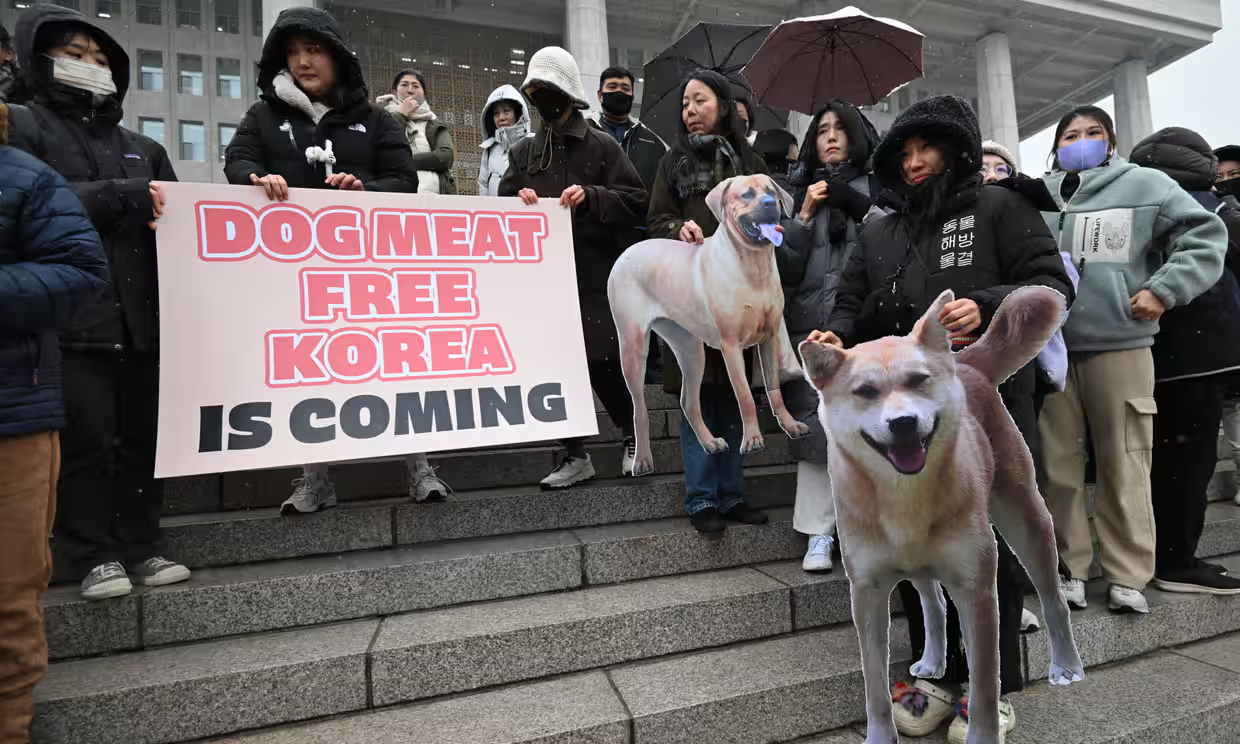
Animal rights activists hold placards outside the national assembly in Seoul welcoming the bill banning the dog meat trade. Photograph: Jung Yeon-Je/AFP/Getty Images
Like most young South Koreans, Annie Ko rarely ate dog meat, but her annual visits to a restaurant serving the dish did little to trouble her conscience. And she was only vaguely aware of the international criticism that led to last week’s vote to ban the breeding, slaughter and sale of dog meat in the country.
It was when she volunteered as an interpreter for Humane Society International that her views on eating dog meat – a tradition some claim goes back centuries – changed dramatically.
Her volunteer work took her to farms that breed dogs for slaughter, their meat eventually ending up in stews and other dishes that devotees claim help fend off fatigue caused by the country’s hot and humid summers.
Then she adopted DeeJay, who had been rescued from a dog farm. “I’d had a year or two to witness what actually goes on at dog farms before I got my dog … it was an important learning experience,” said Ko, a member of the Seoul-based electric rock duo Love X Stereo.

Annie Ko with her rescue dog DeeJay. Photograph: Annie Ko
“When you’re at a restaurant, you don’t really see the process, but that changes once you’re at a farm and see how horrible the situation is, how badly the dogs are treated and how they carry all these diseases … stuff that makes you feel that this is wrong in so many ways.”
Over the years, activists have documented the cruelty of the industry. Dogs are subjected to deplorable conditions, confined to cages amid putrid surroundings infested with diseases and faeces, and often left with untreated wounds. They are fed discarded food waste, often containing harmful ingredients. They are strangulated by hanging, beaten, or even electrocuted, sometimes over prolonged periods.
Breeders, many of whom are older and see the dog meat trade as a way out of poverty, argue that conditions have improved in recent times.
‘The political narrative changed’
Despite the horrors highlighted by campaigners, few politicians appeared willing to act. Consumption has been in decline for decades and is now largely confined to older South Koreans who want a fix of culinary nostalgia. But the industry is no financial minnow. There are about 1,150 farms, while 1,600 restaurants sell dog meat dishes, according to the agriculture ministry. Activists say as many as 1 million dogs a year are slaughtered.
In 2022, activists found an unlikely ally in the incoming president Yoon Suk-yeol and his wife, Kim Keon Hee.
Voters knew that Yoon, a conservative, would take a tougher stance on North Korea’s nuclear programme and attempt to roll back the progressive domestic policies of his liberal predecessor, Moon Jae-in. But no one identified him as an ally in the campaign that culminated in the national assembly’s recent decision to make the dog meat trade illegal from 2027.
Yoon and Kim, who own several dogs, had made no secret of their opposition to dog meat consumption. According to government data, there are more than 6 million pet dogs in South Korea, and demand for dog meat is at an all-time low. A recent Korea Research International opinion poll commissioned by the animal rights group Aware found 93% of people had no intention of eating dog meat, while 82% supported a ban, up from 73% in 2022.
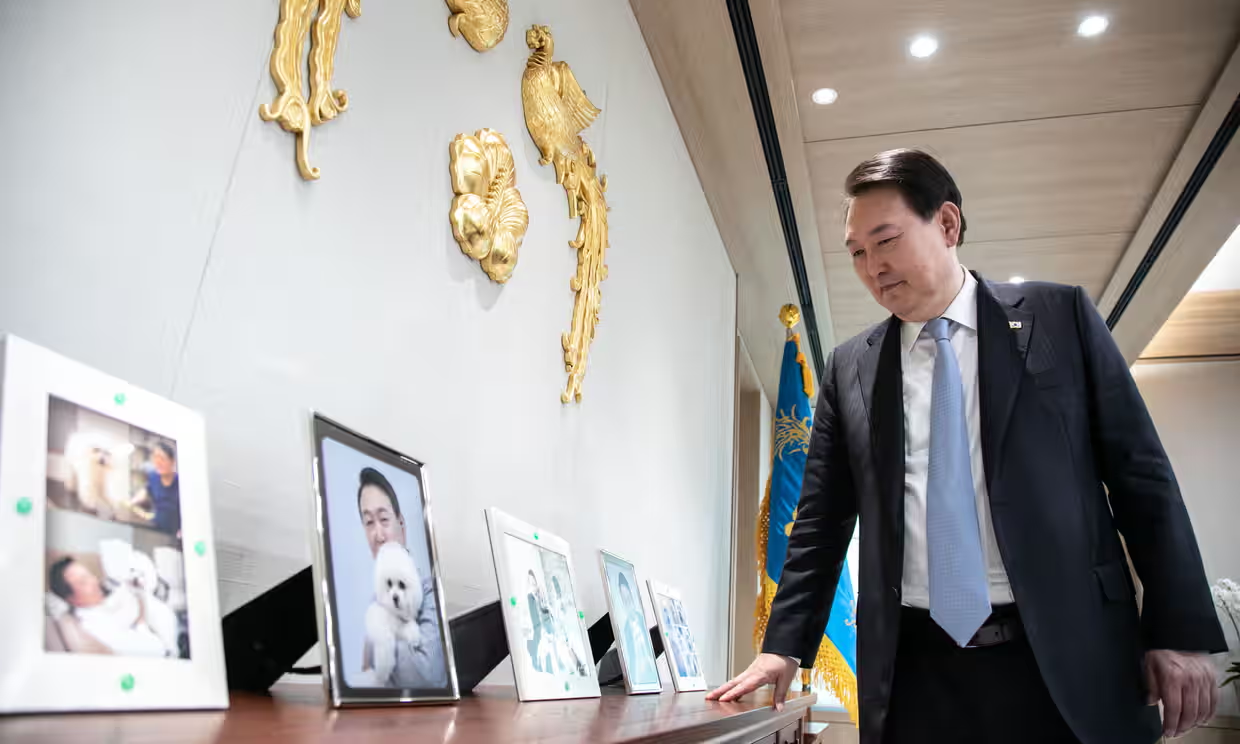
The South Korean president, Yoon Seok-yeol looks at the photos of him and his dogs in his office. He and his wife have made no secret of their opposition to the dog meat trade. Photograph: The Washington Post/Getty Images
In the national assembly, 208 voted for the ban, with just two abstentions. “The political narrative changed very quickly,” Ko said. “And I think that has a lot to do with the current government.”
The agriculture minister, Song Mi-ryung, said criminalising the trade reflected South Korea’s transformation into a society that prioritises animal welfare. “Now is the time for the government to take action to swiftly resolve the issue of dog meat consumption,” she said.
Many have credited Moon, who was president from 2017-22, with boosting the campaign against the trade. In 2017, he adopted Tori, a rescue dog, and four years later suggested the time had come to ban the consumption of dog meat.
‘People want animals as companions’
The law includes a three-year grace period before the ban comes into effect, and financial help for breeders, but many in the industry condemned it as an attack on their way of life.
Joo Young-bong, the head of a nationwide association of dog meat farmers, said producers were in a “state of despair”.
“Prohibiting what people eat has no precedent in history,” Joo said in a radio interview. “People have recovered their health and improved their wellbeing after eating dog meat. We are aware that consumption has been falling, but it is absurd to ban people from eating what they like. It feels like we’ve become a ‘dog republic’. There are more people walking around with dogs than there are holding babies.”
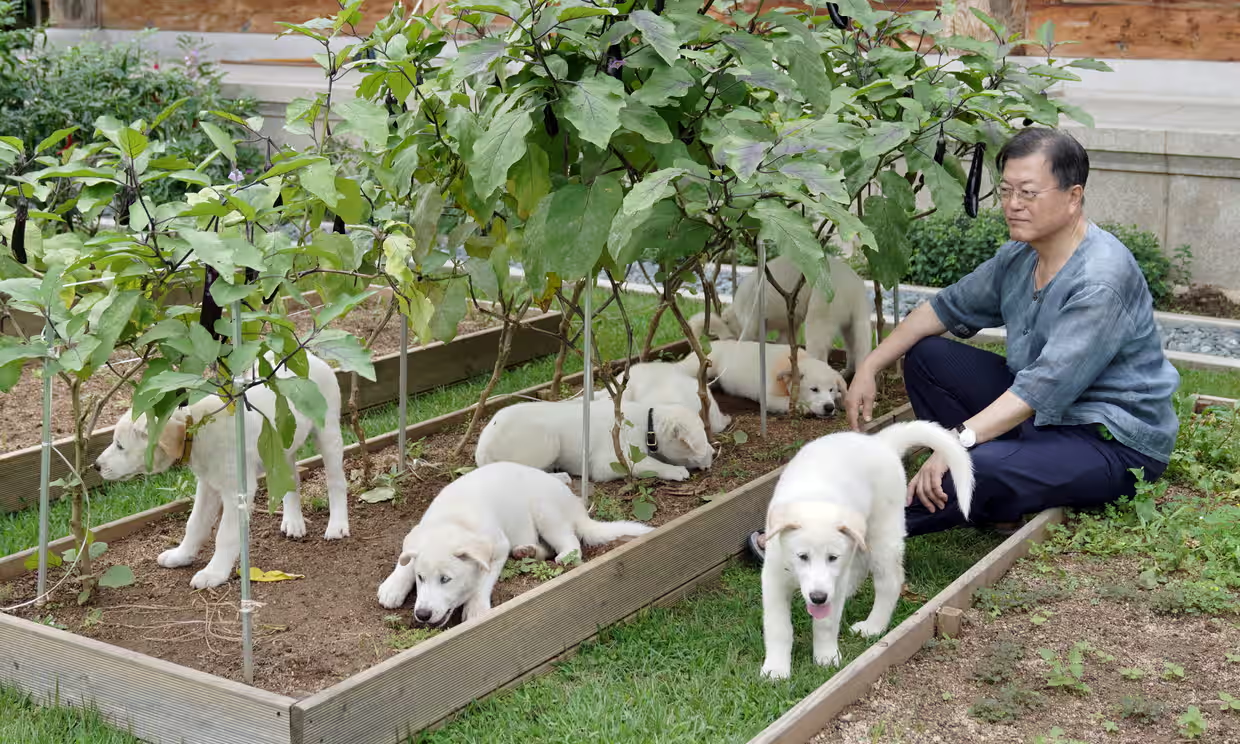
Former South Korean president Moon Jae-in is credited with boosting the campaign against dog meat. Photograph: Cheong Wa Dae/EPA
Kim Dong-hyun, a Seoul-based film-maker and owner of a Maltese dog, had doubts about condemning the entire industry. “I don’t think old practices will die out that easily,” he said. “The focus should be on fostering better conditions and removing the cruelty element for these animals rather than outright opposition. At the same time, I wonder if this is realistic when some say that beating a dog to death makes it taste better.”
Others said the law would end widespread suffering. “Like many of my friends, I was tricked into eating dog meat as a child,” said Kim Seo-hyun, a student in Gyeonggi province. “Older generations say it’s good for our health, but knowing the cruel way dogs are treated makes me sick, and I am happy it is finally being banned.”
Ko acknowledged that dog meat was a source of protein after the war, when millions of Koreans battled poverty and malnutrition. “Dogs were everywhere then, so I think they were an obvious choice,” she said. “But these days, people want animals as companions.”
Bạn có thể tải miễn phí bộ học liệu được xây dựng từ bài đọc này tại đây:
https://drive.google.com/drive/folders/1T3ob94OEXn9tAusXu8Ay2eXzrppruQ9b?usp=sharing
BẢNG CHÚ THÍCH TỪ MỚI
| STT | Từ mới | Phiên âm | Nghĩa tiếng Anh | Nghĩa tiếng Việt |
|---|---|---|---|---|
| 1 | slaughter | /ˈslɔːtə/ | the killing of animals, typically for food | sự giết mổ |
| 2 | national assembly | /ˈnæʃᵊnᵊl/ /əˈsɛmbli/ | a legislative body, often of a country, responsible for making and passing laws | quốc hội |
| 3 | trade | /treɪd/ | the action of buying, selling, or exchanging goods and services | thương mại |
| 4 | canine | /ˈkeɪnaɪn/ | relating to dogs; dog-like | thuộc về chó |
| 5 | animal rights | /ˈænɪmᵊl/ /raɪts/ | the idea that animals have rights similar to humans, particularly the right to be free from exploitation and abuse | quyền lợi động vật |
| 6 | activists | /ˈæktɪvɪsts/ | people who campaign for political or social change | nhà hoạt động |
| 7 | placards | /ˈplækɑːdz/ | signs or notices for public display, often used in protests or demonstrations | biển hiệu, bảng |
| 8 | bill | /bɪl/ | a proposed law presented for discussion and approval | dự luật |
| 9 | annual | /ˈænjuəl/ | occurring once every year | hàng năm |
| 10 | dish | /dɪʃ/ | a specific preparation of food, served as part of a meal | món ăn |
| 11 | interpreter | /ɪnˈtɜːprətə/ | a person who translates spoken words from one language to another | người phiên dịch |
| 12 | international criticism | /ˌɪntəˈnæʃᵊnᵊl/ /ˈkrɪtɪsɪzᵊm/ | negative feedback or condemnation from countries or organizations around the world | sự chỉ trích quốc tế |
| 13 | stews | /stjuːz/ | dishes of meat and vegetables cooked slowly in liquid | món hầm |
| 14 | devotees | /ˌdɛvəʊˈtiːz/ | people who are very interested in and enthusiastic about someone or something | người hâm mộ, người tận tâm |
| 15 | fend off | /fɛnd/ /ɒf/ | to defend oneself against an attack or unwanted approach | chống lại, đẩy lùi |
| 16 | fatigue | /fəˈtiːɡ/ | extreme tiredness resulting from mental or physical exertion or illness | mệt mỏi |
| 17 | humid | /ˈhjuːmɪd/ | having a high amount of moisture in the air | ẩm ướt |
| 18 | adopted | /əˈdɒptɪd/ | took into one’s family through legal means, usually referring to a child or pet | đã nhận nuôi |
| 19 | documented | /ˈdɒkjəmɛntɪd/ | recorded in detail | đã được ghi chép |
| 20 | cruelty | /ˈkruːəlti/ | deliberate and harmful behavior that causes pain and suffering | sự tàn nhẫn |
| 21 | deplorable | /dɪˈplɔːrəbᵊl/ | deserving strong condemnation; shockingly bad | đáng lên án |
| 22 | confined to cages | /kənˈfaɪnd/ /tuː/ /ˈkeɪʤɪz/ | kept in a restricted area or space, typically with bars | giam trong lồng |
| 23 | amid | /əˈmɪd/ | surrounded by; in the middle of | giữa |
| 24 | putrid | /ˈpjuːtrɪd/ | decaying or rotting and emitting a fetid smell | thối rữa |
| 25 | infested with | /ɪnˈfɛstɪd/ /wɪð/ | overrun by something, typically harmful, like pests or diseases | bị nhiễm |
| 26 | faeces | /ˈfiːsiːz/ | waste matter discharged from the bowels; excrement | phân |
| 27 | untreated wounds | /ˌʌnˈtriːtɪd/ /wuːndz/ | injuries that have not received medical attention | vết thương không được điều trị |
| 28 | discarded | /dɪˈskɑːdɪd/ | thrown away; disposed of | bỏ đi, loại bỏ |
| 29 | strangulated | /ˈstræŋɡjəleɪtɪd/ | prevented from flowing (often referring to blood flow) or suffocated | bị bóp nghẹt |
| 30 | electrocuted | /ɪˈlɛktrəkjuːtɪd/ | injured or killed by electric shock | bị điện giật |
| 31 | prolonged periods | /prəʊˈlɒŋd/ /ˈpɪəriədz/ | extended lengths of time | khoảng thời gian dài |
| 32 | breeders | /ˈbriːdəz/ | people who raise animals, typically for selling | những người nhân giống |
| 33 | narrative | /ˈnærətɪv/ | a spoken or written account of connected events; a story | câu chuyện, bản thuật |
| 34 | horrors | /ˈhɒrəz/ | greatly distressing or disturbing experiences | những điều kinh hoàng |
| 35 | consumption | /kənˈsʌmpʃᵊn/ | the using up of a resource | sự tiêu thụ |
| 36 | culinary nostalgia | /ˈkʌlɪnᵊri/ /nɒˈstælʤə/ | longing for traditional cooking or food from the past | hoài niệm ẩm thực |
| 37 | minnow | /ˈmɪnəʊ/ | a small or unimportant entity, especially in business | nhỏ bé, không quan trọng |
| 38 | unlikely ally | /ʌnˈlaɪkli/ /ˈælaɪ/ | a supporter or partner who is surprising or unexpected | đồng minh không ngờ tới |
| 39 | conservative | /kənˈsɜːvətɪv/ | a person who is averse to change and holds traditional values | bảo thủ |
| 40 | progressive domestic policies | /prəʊˈɡrɛsɪv/ /dəʊˈmɛstɪk/ /ˈpɒləsiz/ | forward-thinking and reformative government strategies within a country | chính sách nội địa tiến bộ |
| 41 | liberal predecessor | /ˈlɪbᵊrᵊl/ /ˈpriːdɪsɛsə/ | a person who held a position before, typically with more open and progressive views | người tiền nhiệm tự do |
| 42 | culminated in | /ˈkʌlmɪneɪtɪd/ /ɪn/ | reached a climax or point of highest development | đạt đến đỉnh điểm |
| 43 | opposition to | /ˌɒpəˈzɪʃᵊn/ /tuː/ | strong disagreement with or disapproval of something | phản đối |
| 44 | demand for | /dɪˈmɑːnd/ /fɔː/ | the desire of consumers to purchase goods or services | nhu cầu về |
| 45 | commissioned by | /kəˈmɪʃᵊnd/ /baɪ/ | officially asked or hired to do something | được ủy thác bởi |
| 46 | abstentions | /əbˈstɛnʃᵊnz/ | acts of refraining from voting | sự kiêng cử |
| 47 | criminalising | /ˈkrɪmɪnᵊlaɪzɪŋ/ | making something illegal | hình sự hóa |
| 48 | prioritises | /praɪˈɒrɪˌtaɪzɪz/ | treats as more important than other things | ưu tiên |
| 49 | swiftly | /ˈswɪftli/ | quickly or promptly | nhanh chóng |
| 50 | credited | /ˈkrɛdɪtɪd/ | acknowledged or recognized as having done something | được công nhận |
| 51 | rescue dog | /ˈrɛskjuː/ /dɒɡ/ | a dog that has been saved from a harmful situation or environment | chó cứu hộ |
| 52 | grace period | /ɡreɪs/ /ˈpɪəriəd/ | a period immediately following the deadline for an obligation during which a late penalty that would have been imposed is waived | thời gian ân hạn |
| 53 | condemned | /kənˈdɛmd/ | expressed complete disapproval of; criticized strongly | bị lên án |
| 54 | prohibiting | /prəˈhɪbɪtɪŋ/ | formally forbidding something by law or rule | cấm |
| 55 | precedent | /ˈprɛsɪdᵊnt/ | an earlier event or action regarded as an example or guide to be considered in subsequent similar circumstances | tiền lệ |
| 56 | wellbeing | /ˌwɛlˈbiːɪŋ/ | the state of being comfortable, healthy, or happy | sức khỏe và hạnh phúc |
| 57 | republic | /rɪˈpʌblɪk/ | a state in which supreme power is held by the people and their elected representatives, and which has an elected or nominated president rather than a monarch | cộng hòa |
| 58 | fostering | /ˈfɒstərɪŋ/ | encouraging or promoting the development of something | nuôi dưỡng, phát triển |
| 59 | outright | /ˈaʊtraɪt/ | completely or immediately | hoàn toàn, ngay lập tức |
| 60 | widespread | /ˈwaɪdsprɛd/ | found or distributed over a large area or number of people | phổ biến |
| 61 | poverty | /ˈpɒvəti/ | the state of being extremely poor | nghèo đói |
| 62 | malnutrition | /ˌmælnjuːˈtrɪʃᵊn/ | lack of proper nutrition caused by not having enough to eat, not eating enough of the right things, or being unable to use the food that one does eat | sự suy dinh dưỡng |
BÀI TẬP ĐIỀN TỪ
| STT | Câu điền từ | Bản dịch tiếng Việt |
|---|---|---|
| 1 | The ………………………………………………………… is an important legislative body that debates and passes laws. | Quốc hội là cơ quan lập pháp quan trọng có chức năng tranh luận và thông qua luật. |
| 2 | A ………………………………………………………… is given to businesses to comply with the new regulations. | Gia hạn được dành cho các doanh nghiệp để tuân thủ các quy định mới. |
| 3 | It’s important to ………………………………………………………… stress to maintain good health. | Điều quan trọng là phải chống lại căng thẳng để duy trì sức khỏe tốt. |
| 4 | The documentary revealed the ………………………………………………………… faced by refugees. | Bộ phim tài liệu tiết lộ những nỗi kinh hoàng mà người tị nạn phải đối mặt. |
| 5 | The criminal was ………………………………………………………… as a form of capital punishment. | Tên tội phạm bị bóp cổ như một hình thức tử hình. |
| 6 | The living conditions in the shelter were ………………………………………………………… and needed improvement. | Điều kiện sống ở nơi trú ẩn tồi tệ và cần được cải thiện. |
| 7 | The novel’s ………………………………………………………… captures the essence of the protagonist’s journey. | Lời kể của cuốn tiểu thuyết nắm bắt được bản chất cuộc hành trình của nhân vật chính. |
| 8 | Environmental ………………………………………………………… often campaign against deforestation. | các nhà hoạt động môi trường thường vận động chống lại nạn phá rừng. |
| 9 | Dog ………………………………………………………… often face criticism for their breeding practices. | Người chăn nuôi chó thường phải đối mặt với những lời chỉ trích về phương pháp chăn nuôi của họ. |
| 10 | The farm had to deal with the disposal of …………………………………………………………. | Trang trại phải giải quyết vấn đề xử lý phân. |
| 11 | Mental ………………………………………………………… is as important as physical health. | Sức khỏe tinh thần cũng quan trọng như sức khỏe thể chất. |
| 12 | The ………………………………………………………… was adopted from a local animal shelter. | Chú chó cứu hộ được nhận nuôi từ một nơi trú ẩn động vật ở địa phương. |
| 13 | The ………………………………………………………… to reform healthcare was introduced in parliament. | dự luật cải cách hệ thống chăm sóc sức khỏe đã được giới thiệu tại quốc hội. |
| 14 | ………………………………………………………… smoking in public places has led to cleaner air. | Cấm hút thuốc ở nơi công cộng đã giúp không khí trong lành hơn. |
| 15 | The court decision set a new ………………………………………………………… for future cases. | Quyết định của tòa án đã đặt ra một tiền lệ mới cho các vụ án trong tương lai. |
| 16 | The group expressed its ………………………………………………………… the new regulation. | Nhóm bày tỏ sự phản đối quy định mới. |
| 17 | His ………………………………………………………… views clashed with the more modern ideas of his colleagues. | Quan điểm bảo thủ của ông xung đột với những ý tưởng hiện đại hơn của đồng nghiệp. |
| 18 | The ………………………………………………………… smell indicated that the food had spoiled. | Mùi thối rữa cho thấy thực phẩm đã bị hỏng. |
| 19 | The old traditions won’t ………………………………………………………… without resistance. | Những truyền thống cũ sẽ không chết đi nếu không có sự phản kháng. |
| 20 | Despite its size, the small company proved to be a tough ………………………………………………………… in the industry. | Bất chấp quy mô của mình, công ty nhỏ này tỏ ra là một công ty nhỏ bé khó tính trong ngành. |
| 21 | The scientist was ………………………………………………………… for his contributions to renewable energy. | Nhà khoa học này đã được ghi nhận vì những đóng góp của ông cho năng lượng tái tạo. |
| 22 | There has been a growing ………………………………………………………… eco-friendly products. | Nhu cầu về sản phẩm thân thiện với môi trường ngày càng tăng. |
| 23 | The ………………………………………………………… had implemented several policies that were now being reversed. | Người tiền nhiệm theo chủ nghĩa tự do đã thực hiện một số chính sách hiện đang bị đảo ngược. |
| 24 | The campaign focuses on the risks of ………………………………………………………… among children. | Chiến dịch tập trung vào nguy cơ suy dinh dưỡng ở trẻ em. |
| 25 | Cases of animals being ………………………………………………………… are unfortunately still reported. | Rất tiếc, những trường hợp động vật bị điện giật vẫn được báo cáo. |
| 26 | His administration aimed to introduce ………………………………………………………… to improve education. | Chính quyền của ông nhằm mục đích đưa ra các chính sách đối nội tiến bộ để cải thiện giáo dục. |
| 27 | The ………………………………………………………… of poverty in the region is a major concern. | Tình trạng nghèo đói phổ biến trong khu vực là mối quan tâm lớn. |
| 28 | The charity ………………………………………………………… children’s rights and welfare. | Tổ chức từ thiện ưu tiên quyền và phúc lợi của trẻ em. |
| 29 | The climate in the tropics is very …………………………………………………………. | Khí hậu ở vùng nhiệt đới rất ẩm. |
| 30 | The kitchen was ………………………………………………………… cockroaches, which was a health hazard. | Nhà bếp bị nhiễm gián, gây nguy hiểm cho sức khỏe. |
| 31 | The program aimed at ………………………………………………………… positive relationships in the community. | Chương trình nhằm mục đích nuôi dưỡng các mối quan hệ tích cực trong cộng đồng. |
| 32 | Animal ………………………………………………………… is condemned by various welfare organizations. | Hành vi tàn ác đối với động vật bị nhiều tổ chức phúc lợi khác nhau lên án. |
| 33 | The old furniture was ………………………………………………………… and replaced with new pieces. | Đồ nội thất cũ đã được loại bỏ và thay thế bằng đồ mới. |
| 34 | The research project ………………………………………………………… with the publication of the final report. | Dự án nghiên cứu đạt đến đỉnh điểm việc xuất bản báo cáo cuối cùng. |
| 35 | ………………………………………………………… are essential in ensuring ethical treatment of animals. | Quyền động vật rất cần thiết trong việc đảm bảo đối xử có đạo đức với động vật. |
| 36 | Protesters held ………………………………………………………… to show their opposition to the new policy. | Người biểu tình giơ bảng biểu ngữ để thể hiện sự phản đối của họ đối với chính sách mới. |
| 37 | ………………………………………………………… the act of jaywalking could reduce pedestrian accidents. | Hình sự hóa hành vi đi ẩu có thể làm giảm tai nạn cho người đi bộ. |
| 38 | Her favorite ………………………………………………………… at the restaurant is the spicy chicken curry. | Món yêu thích của cô tại nhà hàng là cà ri gà cay. |
| 39 | They ………………………………………………………… a child and gave him a loving home. | Họ nhận nuôi một đứa trẻ và cho nó một mái ấm tình thương. |
| 40 | The policy was ………………………………………………………… by the industry as unfair. | Chính sách này đã bị ngành lên án là không công bằng. |
| 41 | The ………………………………………………………… of energy drinks has risen among young people. | Mức tiêu thụ nước tăng lực trong giới trẻ ngày càng tăng. |
| 42 | The journalist ………………………………………………………… the events of the political rally. | Nhà báo ghi lại các sự kiện của cuộc biểu tình chính trị. |
| 43 | The museum holds an ………………………………………………………… exhibition of contemporary art. | Bảo tàng tổ chức triển lãm hàng năm về nghệ thuật đương đại. |
| 44 | The organization aims to combat ………………………………………………………… in developing countries. | Tổ chức này nhằm mục đích chống lại nghèo đói ở các nước đang phát triển. |
| 45 | The ………………………………………………………… between countries has increased significantly in the globalized world. | Thương mại giữa các quốc gia đã tăng lên đáng kể trong thế giới toàn cầu hóa. |
| 46 | The temple is a place of worship for many …………………………………………………………. | Ngôi chùa là nơi thờ cúng của nhiều tín đồ. |
| 47 | The government passed a law to end the ………………………………………………………… of endangered species. | Chính phủ đã thông qua luật chấm dứt việc tàn sát các loài có nguy cơ tuyệt chủng. |
| 48 | Many households have a ………………………………………………………… pet, such as a dog or a cat. | Nhiều hộ gia đình nuôi thú cưng chó, chẳng hạn như chó hoặc mèo. |
| 49 | Many people experience ………………………………………………………… when they eat traditional dishes from their childhood. | Nhiều người trải qua nỗi nhớ ẩm thực khi ăn những món ăn truyền thống từ thuở ấu thơ. |
| 50 | His ………………………………………………………… were serious and required immediate medical attention. | Vết thương chưa được điều trị của anh ấy rất nghiêm trọng và cần được chăm sóc y tế ngay lập tức. |
| 51 | The animals were …………………………………………………………, living in small and cramped spaces. | Các con vật bị nhốt trong lồng, sống trong không gian nhỏ hẹp và chật chội. |
| 52 | There were several ………………………………………………………… during the vote on the controversial law. | Đã có một số bỏ phiếu trắng trong cuộc bỏ phiếu về luật gây tranh cãi. |
| 53 | The discovery was made ………………………………………………………… the ruins of the ancient city. | Việc phát hiện được thực hiện giữa tàn tích của thành phố cổ. |
| 54 | The negotiations went on for …………………………………………………………, stretching over several months. | Các cuộc đàm phán đã diễn ra trong thời gian kéo dài, kéo dài trong vài tháng. |
| 55 | He enjoys cooking ………………………………………………………… on cold winter days. | Anh ấy thích nấu món hầm vào những ngày mùa đông lạnh giá. |
| 56 | The country transitioned from a monarchy to a …………………………………………………………. | Đất nước chuyển từ chế độ quân chủ sang cộng hòa. |
| 57 | The rescue operation was conducted ………………………………………………………… to save the trapped miners. | Hoạt động cứu hộ được tiến hành nhanh chóng để cứu những người thợ mỏ bị mắc kẹt. |
| 58 | After a long day of work, she felt a deep sense of …………………………………………………………. | Sau một ngày dài làm việc, cô cảm thấy mệt mỏi sâu sắc. |
| 59 | The politician was an ………………………………………………………… for environmental reform. | Chính trị gia này là một đồng minh không chắc chắn cho cải cách môi trường. |
| 60 | She worked as an ………………………………………………………… at the international conference. | Cô ấy làm thông dịch viên tại hội nghị quốc tế. |
| 61 | The company faced ………………………………………………………… due to its environmentally harmful practices. | Công ty đã phải đối mặt với sự chỉ trích quốc tế do các hoạt động có hại cho môi trường. |
| 62 | The research was ………………………………………………………… a renowned scientific institution. | Nghiên cứu được ủy thác bởi một tổ chức khoa học nổi tiếng. |
ĐÁP ÁN
- The National assembly is an important legislative body that debates and passes laws.
- A grace period is given to businesses to comply with the new regulations.
- It’s important to fend off stress to maintain good health.
- The documentary revealed the horrors faced by refugees.
- The criminal was strangulated as a form of capital punishment.
- The living conditions in the shelter were deplorable and needed improvement.
- The novel’s narrative captures the essence of the protagonist’s journey.
- Environmental activists often campaign against deforestation.
- Dog breeders often face criticism for their breeding practices.
- The farm had to deal with the disposal of faeces.
- Mental wellbeing is as important as physical health.
- The rescue dog was adopted from a local animal shelter.
- The bill to reform healthcare was introduced in parliament.
- Prohibiting smoking in public places has led to cleaner air.
- The court decision set a new precedent for future cases.
- The group expressed its opposition to the new regulation.
- His conservative views clashed with the more modern ideas of his colleagues.
- The putrid smell indicated that the food had spoiled.
- The old traditions won’t die out without resistance.
- Despite its size, the small company proved to be a tough minnow in the industry.
- The scientist was credited for his contributions to renewable energy.
- There has been a growing demand for eco-friendly products.
- The liberal predecessor had implemented several policies that were now being reversed.
- The campaign focuses on the risks of malnutrition among children.
- Cases of animals being electrocuted are unfortunately still reported.
- His administration aimed to introduce progressive domestic policies to improve education.
- The widespread of poverty in the region is a major concern.
- The charity prioritises children’s rights and welfare.
- The climate in the tropics is very humid.
- The kitchen was infested with cockroaches, which was a health hazard.
- The program aimed at fostering positive relationships in the community.
- Animal cruelty is condemned by various welfare organizations.
- The old furniture was discarded and replaced with new pieces.
- The research project culminated in the publication of the final report.
- Animal rights are essential in ensuring ethical treatment of animals.
- Protesters held placards to show their opposition to the new policy.
- Criminalising the act of jaywalking could reduce pedestrian accidents.
- Her favorite dish at the restaurant is the spicy chicken curry.
- They adopted a child and gave him a loving home.
- The policy was condemned by the industry as unfair.
- The consumption of energy drinks has risen among young people.
- The journalist documented the events of the political rally.
- The museum holds an annual exhibition of contemporary art.
- The organization aims to combat poverty in developing countries.
- The trade between countries has increased significantly in the globalized world.
- The temple is a place of worship for many devotees.
- The government passed a law to end the slaughter of endangered species.
- Many households have a canine pet, such as a dog or a cat.
- Many people experience culinary nostalgia when they eat traditional dishes from their childhood.
- His untreated wounds were serious and required immediate medical attention.
- The animals were confined to cages, living in small and cramped spaces.
- There were several abstentions during the vote on the controversial law.
- The discovery was made amid the ruins of the ancient city.
- The negotiations went on for prolonged periods, stretching over several months.
- He enjoys cooking stews on cold winter days.
- The country transitioned from a monarchy to a republic.
- The rescue operation was conducted swiftly to save the trapped miners.
- After a long day of work, she felt a deep sense of fatigue.
- The politician was an unlikely ally for environmental reform.
- She worked as an interpreter at the international conference.
- The company faced international criticism due to its environmentally harmful practices.
- The research was commissioned by a renowned scientific institution.
Cách người Hàn Quốc yêu chó và cấm giết mổ lấy thịt loài vật nuôi này
Quốc hội Hàn Quốc đã bỏ phiếu chấm dứt ngành công nghiệp buôn bán thịt chó, nhờ vào các nhà lãnh đạo yêu chó của nước này.

Các nhà hoạt động vì quyền động vật giăng biểu ngữ bên ngoài tòa nhà quốc hội ở Seoul để hoan nghênh dự luật cấm buôn bán thịt chó. Ảnh chụp: Jung Yeon-Je/AFP/Getty Images
Giống như hầu hết thanh niên Hàn Quốc, Annie Ko hiếm khi ăn thịt chó, nhưng việc cô đến thăm một nhà hàng phục vụ món ăn này hàng năm không khiến lương tâm cô phải lo lắng. Và cô chỉ biết mơ hồ về những lời chỉ trích từ bạn bè quốc tế, thứ đã dẫn đến cuộc bỏ phiếu tuần trước nhằm cấm chăn nuôi, giết mổ và bán thịt chó ở nước này.
Khi cô tình nguyện làm thông dịch viên cho Tổ chức Nhân đạo Quốc tế, quan điểm của cô về việc ăn thịt chó – một truyền thống mà một số người cho rằng đã có từ nhiều thế kỷ trước – đã thay đổi đáng kể.
Công việc tình nguyện của cô đưa cô đến các trang trại nuôi chó để giết thịt, nơi mà từ đó thịt của các chú chó được dùng làm món hầm và các món ăn khác mà những người “tôn sùng” thịt chó ở nước này cho rằng giúp chống lại sự mệt mỏi gay ra bởi mùa hè nóng ẩm ở nước này.
Sau đó cô nhận nuôi DeeJay, một chú chó đã được giải cứu khỏi một trang trại chó. Ko, thành viên của nhóm nhạc rock điện tử Love X Stereo tại Seoul, cho biết: “Tôi đã có một hoặc hai năm để chứng kiến những gì thực sự diễn ra ở các trang trại nuôi chó trước khi tôi có được chú chó của mình… đó là một trải nghiệm học hỏi quan trọng”.
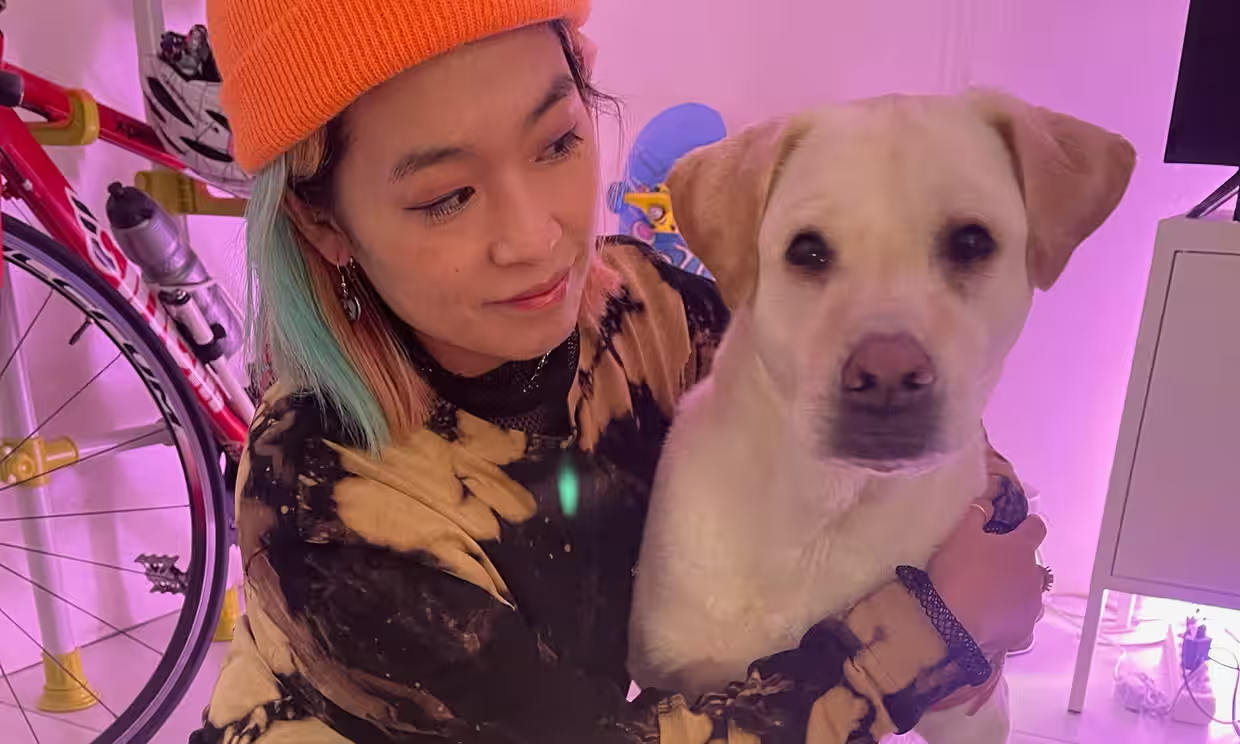
Annie Ko cùng chú chó mà cô giải cứu, tên DeeJay. Ảnh: Annie Ko
“Khi bạn ở nhà hàng, bạn không thực sự nhìn thấy quy trình giết mổ động vật, nhưng điều đó sẽ thay đổi khi bạn ở trang trại và thấy tình hình khủng khiếp như thế nào, những con chó bị đối xử tệ như thế nào và chúng mang tất cả những căn bệnh này như thế nào… thứ khiến bạn cảm thấy điều này thật là quá sai trái, trên đủ mọi phương diện.”
Trong những năm qua, các nhà hoạt động đã ghi lại sự tàn ác của ngành này. Chó phải chịu những điều kiện tồi tệ, bị nhốt trong chuồng giữa môi trường xung quanh thối nát, tràn ngập bệnh tật và phân, và thường bị bỏ lại với những vết thương không được chữa trị. Chúng được cho ăn thức ăn thừa, thường chứa các thành phần có hại. Chúng bị siết cổ bằng cách treo cổ, đánh đập hoặc thậm chí bị điện giật, đôi khi trong thời gian kéo dài.
Những người chăn nuôi, nhiều người lớn tuổi và coi việc buôn bán thịt chó là một cách thoát nghèo, cho rằng điều kiện sống của chó nuôi lấy thịt đã được cải thiện trong thời gian gần đây.
‘Cục diện chính trị đã thay đổi’
Bất chấp những nỗi kinh hoàng được các nhà vận động nhấn mạnh, rất ít chính trị gia tỏ ra sẵn sàng hành động. Mức tiêu dùng đã giảm trong nhiều thập kỷ, và hiện nay phần lớn chỉ giới hạn ở những người Hàn Quốc lớn tuổi muốn tìm lại cảm giác hoài cổ về ẩm thực. Nhưng ngành nuôi chó lấy thịt này không hề là một ngành “tép riu” về khía cạnh lợi ích tài chính mà nó đem lại. Theo Bộ Nông nghiệp Hàn Quốc, có khoảng 1150 trang trại nuôi chó lấy thịt, và có đến 1600 nhà hàng bán các món thịt chó. Các nhà hoạt động cho biết có tới 1 triệu con chó bị giết thịt mỗi năm.
Vào năm 2022, các nhà hoạt động đã tìm thấy một đồng minh không ngờ tới, đó chính là tổng thống sắp nhậm chức Yoon Suk-yeol và vợ ông, Kim Keon Hee.
Các cử tri biết rằng Yoon, một người bảo thủ, sẽ có lập trường cứng rắn hơn đối với chương trình hạt nhân của Triều Tiên và cố gắng đảo ngược các chính sách đối nội tiến bộ của người tiền nhiệm theo chủ nghĩa tự do, Moon Jae-in. Nhưng không ai nhận ra ông còn là đồng minh trong một chiến dịch mà đỉnh điểm là đã dẫn đến quyết định gần đây của quốc hội Hàn Quốc, coi việc buôn bán thịt chó là bất hợp pháp, tính từ năm 2027 trở đi.
Vợ chồng tổng thống Yoon và Kim, những người mà bản thân họ cũng nuôi nhiều chú chó, không giấu giếm thái độ phản đối của họ đối với việc ăn thịt chó. Theo dữ liệu của chính phủ, có hơn 6 triệu con chó được nuôi làm thú cưng ở Hàn Quốc, và nhu cầu về ăn thịt chó đang ở mức thấp nhất mọi thời đại. Một cuộc thăm dò dư luận gần đây của Korea Research International, do nhóm bảo vệ quyền động vật Aware ủy quyền tiến hành, cho thấy 93% người dân nước này không có ý định ăn thịt chó, trong khi 82% ủng hộ lệnh cấm, tăng từ 73% vào năm 2022.
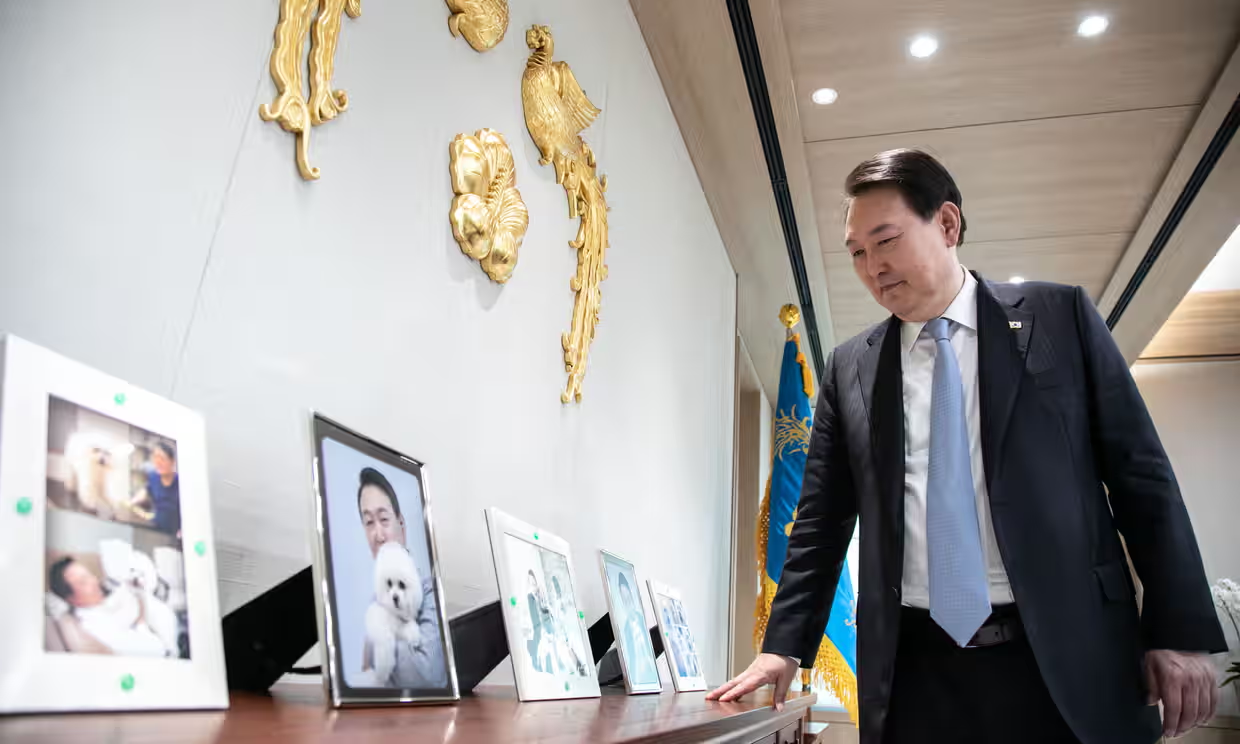
Tổng thống Hàn Quốc Yoon Seok-yeol xem những bức ảnh của ông và những chú chó trong văn phòng của ông. Vợ chồng ông không hề giấu giếm việc phản đối việc buôn bán thịt chó. Ảnh chụp: The Washington Post/Getty Images
Trong quốc hội, 208 người đã bỏ phiếu ủng hộ lệnh cấm, chỉ có hai phiếu trắng. “Cục diện chính trị đã thay đổi rất nhanh,” Ko nói. “Và tôi nghĩ điều đó có liên quan nhiều đến chính phủ hiện tại.”
Bộ trưởng Nông nghiệp Song Mi-ryung cho biết, việc hình sự hóa hoạt động buôn bán động vật phản ánh sự chuyển đổi của Hàn Quốc thành một xã hội ưu tiên phúc lợi động vật. Bà nói: “Bây giờ là lúc chính phủ phải hành động để nhanh chóng giải quyết vấn đề tiêu thụ thịt chó”.
Nhiều người đã ghi nhận ông Moon, người giữ chức tổng thống từ năm 2017-2022, là người đã xúc tiến bước đầu tiên trong chiến dịch chống lại ngành công nghiệp thịt chó này. Năm 2017, ông đã nhận nuôi Tori, một chú chó được giải cứu từ trại nuôi chó thịt, và 4 năm sau đó, ông là một trong những người lên ý kiến cho rằng đã đến lúc phải cấm tiêu thụ thịt chó tại Hàn Quốc.
‘Mọi người muốn động vật làm bạn đồng hành’
Luật bao gồm thời gian ân hạn ba năm trước khi lệnh cấm có hiệu lực và hỗ trợ tài chính cho người chăn nuôi, nhưng nhiều người trong ngành lên án đây là một cuộc tấn công vào lối sống của họ.
Joo Young-bong, người đứng đầu hiệp hội nông dân nuôi thịt chó toàn quốc, cho biết các nhà sản xuất đang ở trong “trạng thái tuyệt vọng”.
Joo nói trong một cuộc phỏng vấn trên đài phát thanh: “Việc cấm người dân ăn đồ gì là một việc chưa từng có tiền lệ trong lịch sử. “Mọi người đã phục hồi sức khỏe và cải thiện sức khỏe sau khi ăn thịt chó. Chúng tôi biết rằng mức tiêu thụ đang giảm nhưng thật vô lý khi cấm mọi người ăn những gì họ thích. Có cảm giác như chúng ta đã trở thành một ‘nước cộng hòa chó’. Có nhiều người dắt chó đi dạo hơn là bế trẻ sơ sinh.”
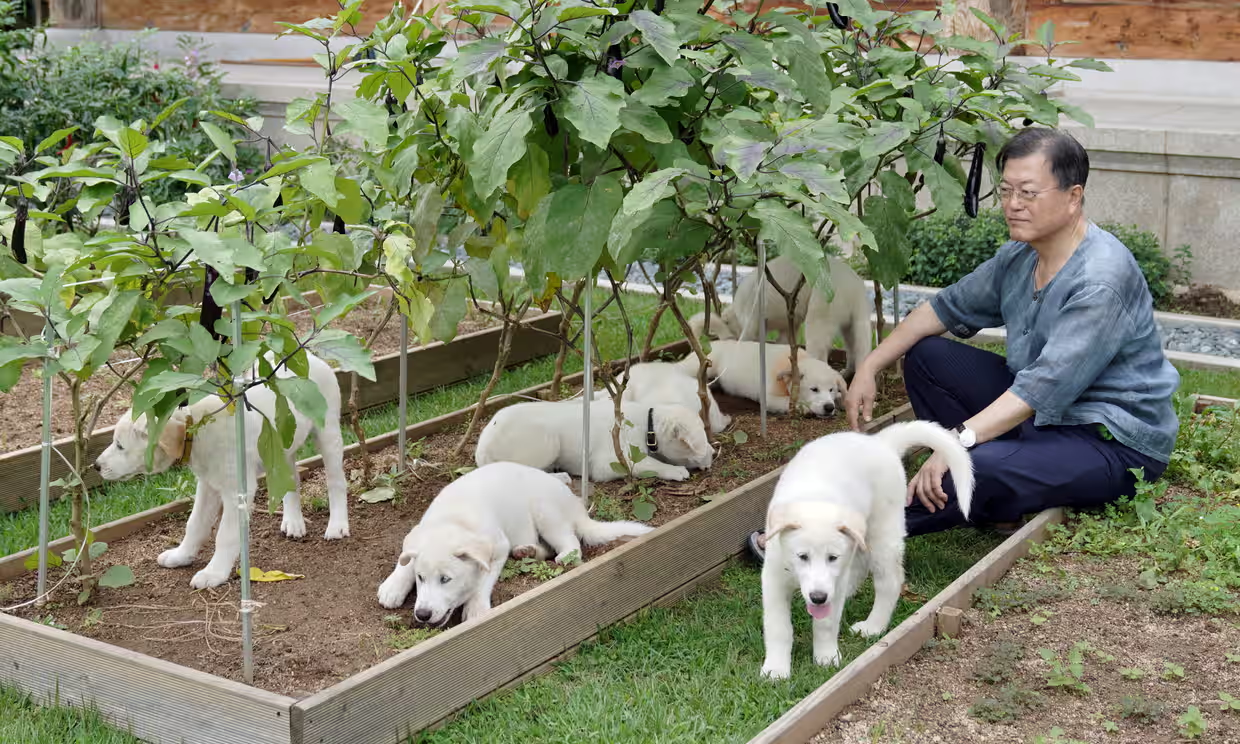
Cựu tổng thống Hàn Quốc Moon Jae-in được cho là người thúc đẩy chiến dịch chống thịt chó.
Ảnh chụp: Cheong Wa Dae/EPA
Kim Dong-hyun, một nhà làm phim có trụ sở tại Seoul và là chủ của một chú chó Malta, đã nêu ra những nghi ngại về việc lên án toàn bộ ngành công nghiệp này. Ông nói: “Tôi không nghĩ những tập quán cũ sẽ dễ dàng bị lụi tàn như vậy”. “Trọng tâm nên là thúc đẩy các điều kiện tốt hơn và loại bỏ yếu tố tàn ác đối với những con vật này, thay vì phản đối chúng hoàn toàn. Nhưng tuy thế, tôi cũng tự hỏi liệu có thực tế không khi một số người nói rằng đánh chết một con chó sẽ khiến nó ngon hơn.”
Những người khác cho rằng luật này sẽ chấm dứt sự hành hạ dã man đang tràn ngập khắp nơi đối với loài chó. Kim Seo-hyun, một sinh viên ở tỉnh Kyunggi, cho biết: “Giống như nhiều người bạn của tôi, tôi bị lừa ăn thịt chó khi còn nhỏ”. “Các thế hệ lớn tuổi nói rằng ăn thịt chó tốt cho sức khỏe của chúng tôi, nhưng tôi biết sự đối xử tàn nhẫn với chó khiến tôi phát ốm, và tôi rất vui vì cuối cùng nó đã bị cấm.”
Ko thừa nhận thịt chó là nguồn cung cấp protein sau chiến tranh, khi hàng triệu người Hàn Quốc phải đương đầu với nghèo đói và suy dinh dưỡng. Cô nói: “Khi đó chó có ở khắp mọi nơi nên tôi nghĩ chúng là một lựa chọn hiển nhiên. “Nhưng ngày nay, mọi người muốn động vật làm bạn đồng hành.”
Raphael Rashid in Seoul and Justin McCurry in Tokyo
Fri 19 Jan 2024 01.00 GMT
Guardian News and Media. (2024, January 19). How South Korea fell in love with dogs and banned their slaughter for meat. The Guardian. https://www.theguardian.com/world/2024/jan/19/south-korea-dog-meat-ban

Tập Đọc là một báo song ngữ Tiếng Anh – Tiếng Việt, với chú thích từ mới, cung cấp bản dịch, phiên bản bài đọc nói (báo tiếng) cùng bộ thẻ từ mới Quizlet/Anki, và danh sách từ mới miễn phí cho cộng đồng. Dự án được duy trì từ năm 2020 đến nay, hiện đã ra trên 60 số.
Các bài viết được đăng trên Tập Đọc không nhất thiết phản ánh quan điểm, thái độ và góc nhìn của người biên tập. Người đọc nên hình thành quan điểm và đánh giá của riêng mình trong cuộc đối thoại giữa bản thân người đọc và tác giả, trong quá trình đọc bài của riêng mình. Việc chỉ đọc những người viết mà ta đồng ý cũng giống như chỉ chịu nói chuyện với những ai khen mình vậy: dễ chịu, nhưng nguy hiểm.
Hope this helps.
Nếu bạn muốn ủng hộ bất cứ dự án nào của mình, mình xin rất biết ơn. Mọi sự ủng hộ, dù nhỏ, đều sẽ rất có ý nghĩa trong việc giúp mình có động lực, hoặc có khả năng tiếp tục các công việc phi lợi nhuận này.
Mọi ủng hộ xin gửi về số tài khoản: 0491 0000 768 69. Chủ tài khoản: Nguyễn Tiến Đạt, ngân hàng Vietcombank, chi nhánh Thăng Long.

Đà Nẵng, ngày 4.2.2024
Nguyễn Tiến Đạt (sutucon)




 Tập Đọc
Leave a comment